Industrial Vehicle Short Stroke Forklift Lift Cylinder
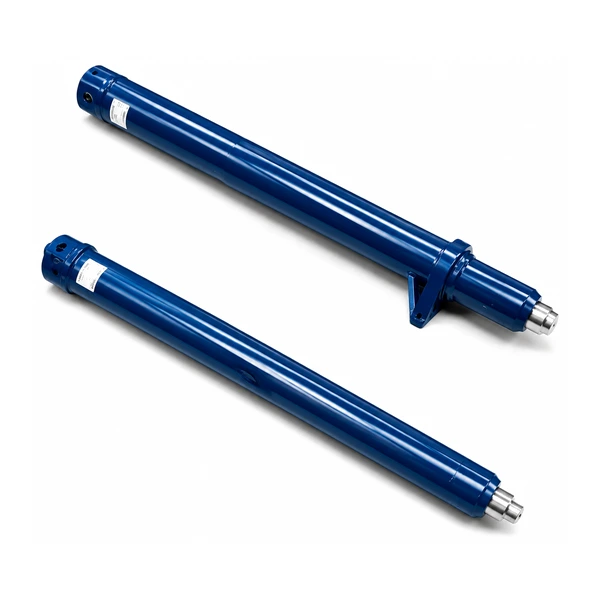
27 PARTS
OEM CUSTOM
Industrial Vehicle Short Stroke Lift Cylinder
Every multi-stage forklift mast contains at least one short stroke lift cylinder — the inner cylinder that provides free-lift travel before the mast rails begin to separate. Its stroke is typically 500–900 mm — less than half the main lift cylinder's 1,500 mm — because it operates entirely within the collapsed height of the innermost mast rail. Making it any longer would increase the retracted mast height and defeat the purpose of a compact multi-stage design. Korea Ever-Power builds this cylinder as an OEM custom product with 27 integrated components — check valve, oil pipe, and chain sprocket included — because each mast design has unique rail lengths, chain ratios, and clearance constraints that dictate a unique cylinder stroke.
Why Short Stroke — The Engineering Logic Behind Limited-Travel Lift Cylinders
The term "short stroke" sometimes creates the impression of a compromise — a cylinder that cannot reach as far as a "normal" one. In reality, the short stroke is an engineering decision driven by the physical constraint of the mast envelope. The cylinder's retracted length (closed length) plus its stroke must fit within the inner rail's collapsed height. A longer stroke would require a taller inner rail, which would require a taller outer rail, which would increase the overall mast height and reduce the forklift's ability to enter low-clearance buildings, shipping containers, and multi-storey car parks.
The Space Constraint
A triplex mast with 6,000 mm maximum lift height has a collapsed height of approximately 2,200 mm. The short lift cylinder must fit entirely within the inner channel — typically 1,800–2,000 mm of available space. Subtracting mounting hardware and the piston assembly leaves approximately 700–900 mm for usable stroke. This is not a design compromise — it is a dimensional fact dictated by the mast geometry.
The Chain Multiplier
The chain sprocket on the piston rod creates a 2:1 stroke multiplication. When the cylinder extends 800 mm, the carriage rises 1,600 mm — the chain doubles the travel. This means a short stroke cylinder with an 800 mm stroke delivers the same carriage travel as a hypothetical 1,600 mm direct-acting cylinder, but fits in half the vertical space. The sprocket is not an accessory — it is the mechanism that makes the short-stroke / compact-mast design possible.
Where the Short Stroke Cylinder Operates in the Mast Staging Sequence
Understanding the lift sequence of a multi-stage mast explains why the short stroke cylinder exists, when it operates, and why its stroke cannot be changed independently of the mast design.
Free Lift (Short Stroke Cylinder)
The short stroke cylinder extends first, raising the carriage and forks inside the collapsed mast. The mast rails do not move — the overall mast height stays constant. This allows the operator to raise the forks to pick up a pallet without increasing the forklift's overall height. Free-lift travel is typically 150–300 mm of actual fork rise (75–150 mm of cylinder stroke × 2 chain ratio).
Full Free-Lift (Short Stroke Continues)
The short stroke cylinder continues to extend through its remaining stroke. The carriage continues to rise inside the still-collapsed mast. On a Full Free-Lift (FFL) triplex mast, this stage provides 1,200–1,600 mm of carriage rise (600–800 mm cylinder stroke × 2) — enough to lift a pallet to the first shelf level of a standard warehouse rack without any mast extension.
Mast Extension (Main Lift Cylinder)
Once the short stroke cylinder reaches full extension, hydraulic flow transfers to the main lift cylinders (one per mast channel). The mast rails now begin to telescope — each stage extending sequentially until the carriage reaches maximum lift height. The main lift cylinders have 1,500 mm strokes to cover the remaining lift range. The short stroke cylinder remains fully extended and acts as a structural column during this phase.
Product Specification
| Product Type | Custom short stroke lift cylinder for industrial vehicles and forklifts |
| Acting Type | Single-acting (standard) / Double-acting available |
| Architecture | 27 components — check valve + oil pipe + sprocket integrated |
| Reference Weight | 45 kg (varies by bore, stroke, configuration) |
| Body Material | 20# carbon steel / 45# medium carbon steel |
| Seal Options | Parker, NOK, Hallite, Busak Shamban |
| Certification | ISO 9001:2015, ISO 14001, ISO 45003 |
| Quality | 100% tested + video inspection + machinery test report |
| Service / MOQ | OEM + ODM / 1 piece |
| Annual Capacity | 1,200,000 cylinders / year (all product types) |
| Shipping | Crate or pallet · Port: Shanghai / Ningbo |
Stroke Selection Engineering — How to Determine the Correct Short Stroke Length
The stroke length of a short lift cylinder is not a product specification that the buyer selects from a menu — it is an output of the mast design calculation. Changing the stroke by even 10 mm changes the free-lift height, the mast collapsed height, and the chain tension at maximum load. The following parameters must be defined before the stroke can be calculated.
| Design Input | How It Affects Stroke |
|---|---|
| Inner Rail Collapsed Height | Sets the maximum retracted length of the cylinder. Stroke = rail height − closed length − mounting hardware − clearance. |
| Required Free-Lift Height | Determines the minimum stroke. Free-lift height ÷ chain ratio (2:1) = minimum stroke. E.g., 1,400 mm free-lift ÷ 2 = 700 mm minimum stroke. |
| Chain Ratio | Standard 2:1. Some heavy-duty masts use 3:1 or 4:1 compound sheaves, which reduce the required stroke proportionally but increase chain tension. |
| Mast Type (Duplex / Triplex) | Duplex masts use longer short-stroke cylinders (longer inner rail). Triplex masts use shorter short-stroke cylinders (shorter inner rail with 3-stage telescoping). |
| Bore Diameter | Does not directly set the stroke, but bore affects the piston assembly length, which reduces the available stroke within the inner rail space. |
Provide the inner rail length, the required free-lift distance, and the chain configuration. Korea Ever-Power calculates the cylinder stroke, bore, and closed length to fit the mast geometry exactly — accounting for piston assembly length, sprocket protrusion, check valve housing depth, and rod end clearance.
27-Component Assembly
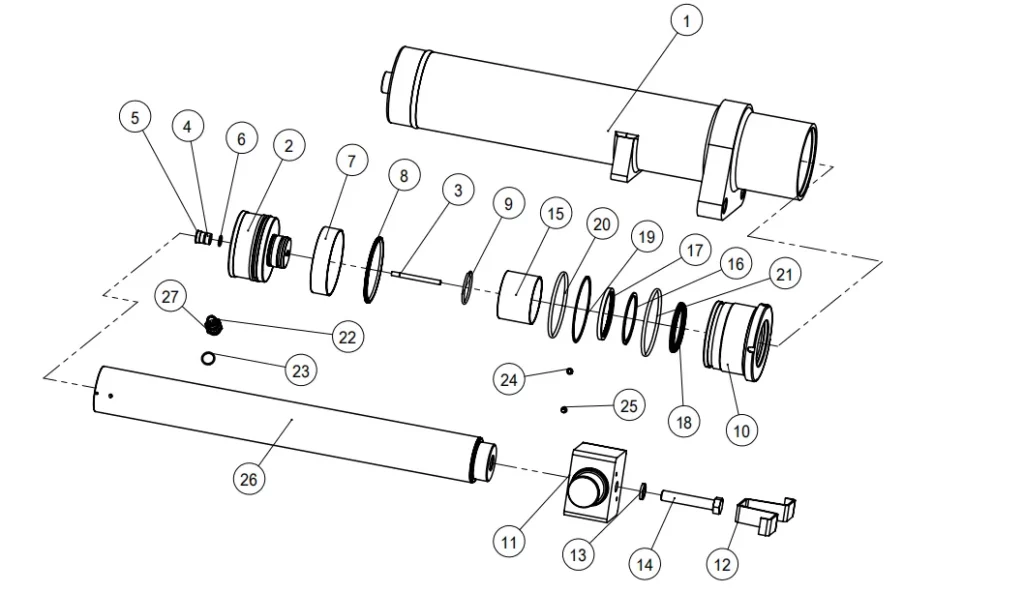
| # | Component | # | Component | # | Component |
|---|---|---|---|---|---|
| 1 | Cylinder Housing Assy | 10 | Guide Bush | 19 | Back-Ring |
| 2 | Piston | 11 | Sprocket Seat ◆ | 20 | O-Ring |
| 3 | Oil Pipe ◆ | 12 | Sprocket Cover ◆ | 21 | O-Ring |
| 4 | Check Valve ◆ | 13 | Spring Washers | 22 | Grease Nipple |
| 5 | Circlips for Hole | 14 | Hex Bolt | 23 | O-Ring |
| 6 | O-Ring | 15 | Du Bush | 24 | Washer |
| 7 | Wear-Ring | 16 | Back-Ring | 25 | Screws |
| 8 | Hole Seal | 17 | Rod Seal | 26 | Piston Rod |
| 9 | Round Wire | 18 | Dust Wiper | 27 | Plug |
◆ Integrated subsystem components — check valve (load holding), oil pipe (internal flow routing), sprocket seat and cover (chain drive). All 27 components available as individual spare parts.
Short Stroke Lift Cylinder — Technical Questions
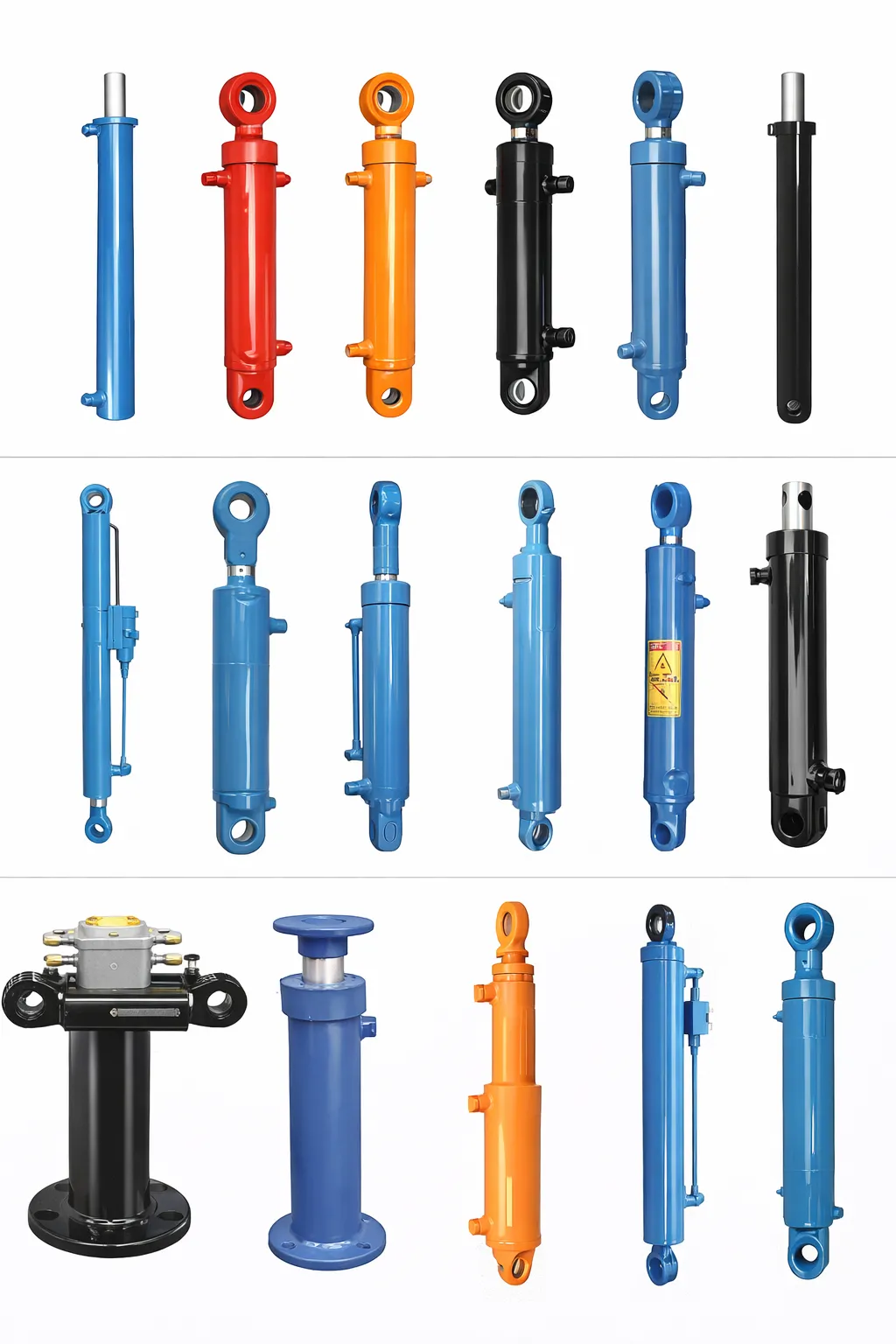
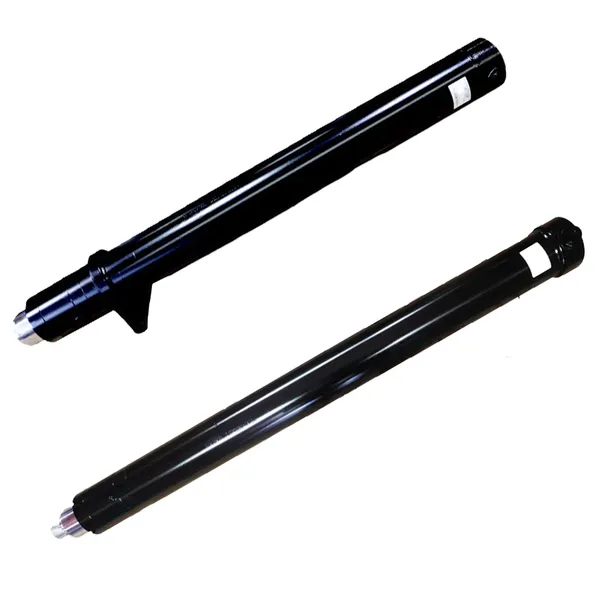
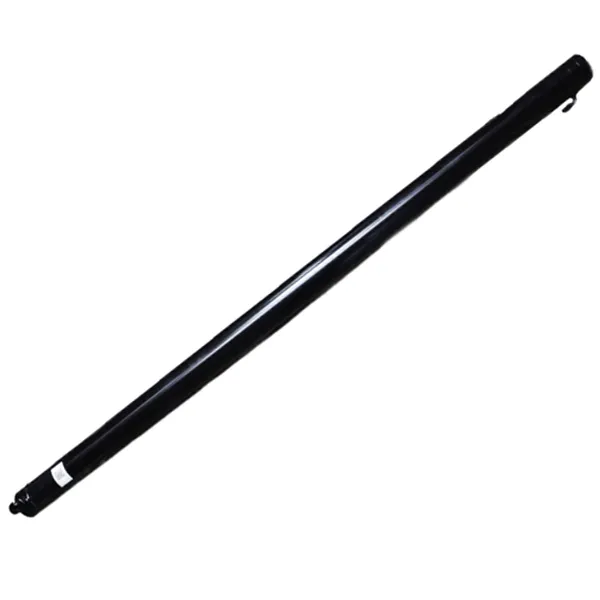
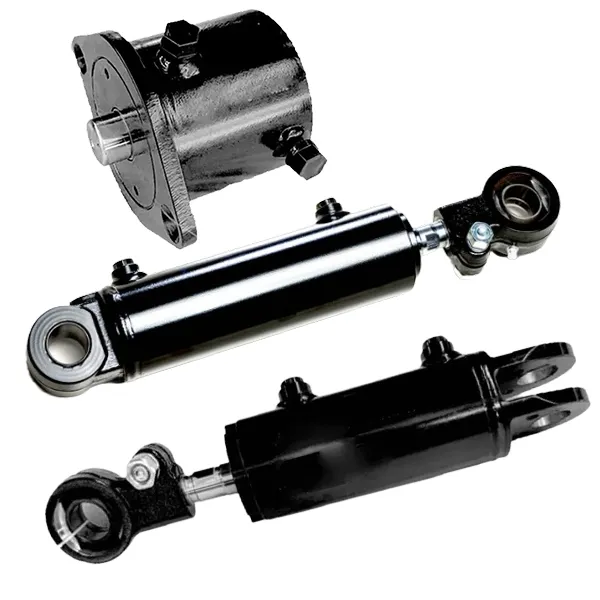
Standard Catalogue Lift Cylinders
معلومات إضافية
| Editor | Cxm |
|---|
منتجات ذات صلة
-

Forklift Steering Cylinder | EP-HCYY11112002 Model
-
Forklift Short Lifting Cylinder | Bore Φ75–95mm | Free-Lift Stage
-
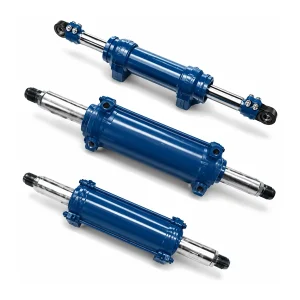
Tractor & Forklift Hydraulic Steering Cylinder — OEM Cross-Industry Power Steering Cylinder
-
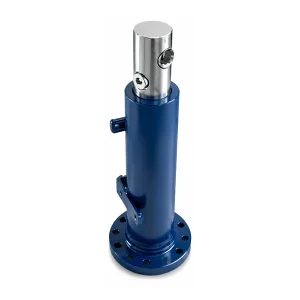
Lift Hydraulic Cylinder for Cart — Pallet Truck Lift Cylinder
-
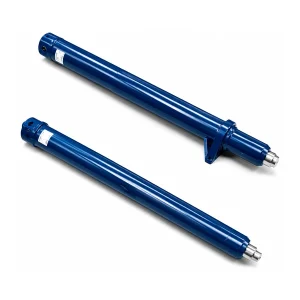
Forklift Short Lifting Hydraulic Cylinder — Free-Lift Cylinder with Integrated Check Valve and Sprocket System
-
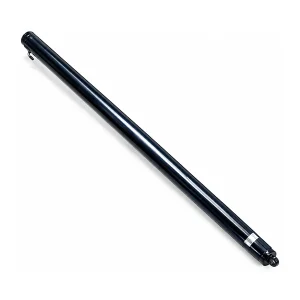
Forklift Lifting Hydraulic Cylinder — Single-Acting Mast Lift Cylinder
-
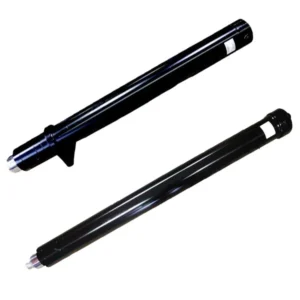
Forklift Short Lifting Hydraulic Cylinder
-
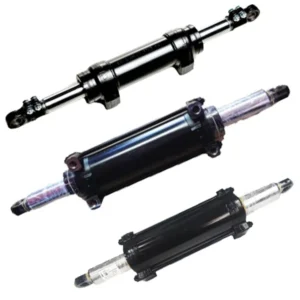
Forklift Steering Hydraulic Cylinder