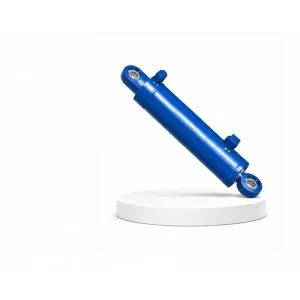
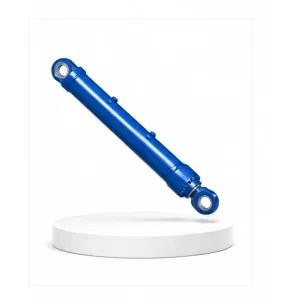
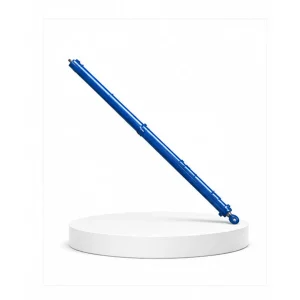
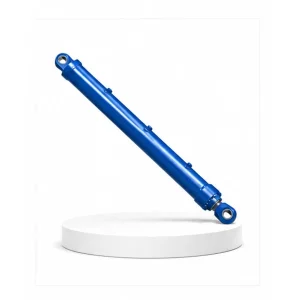
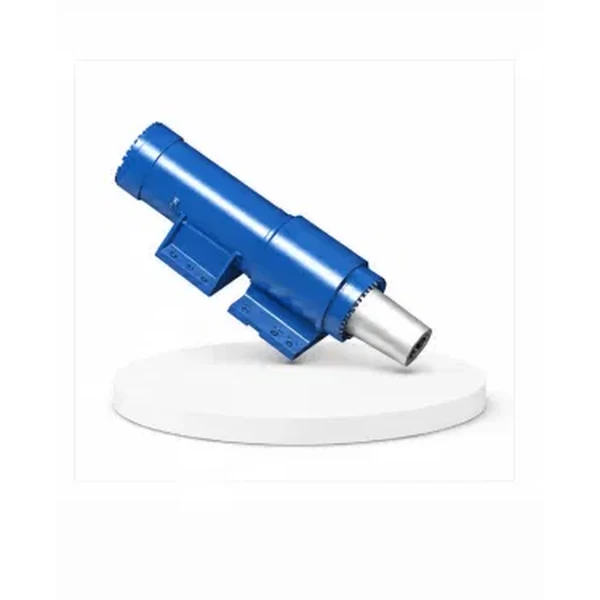
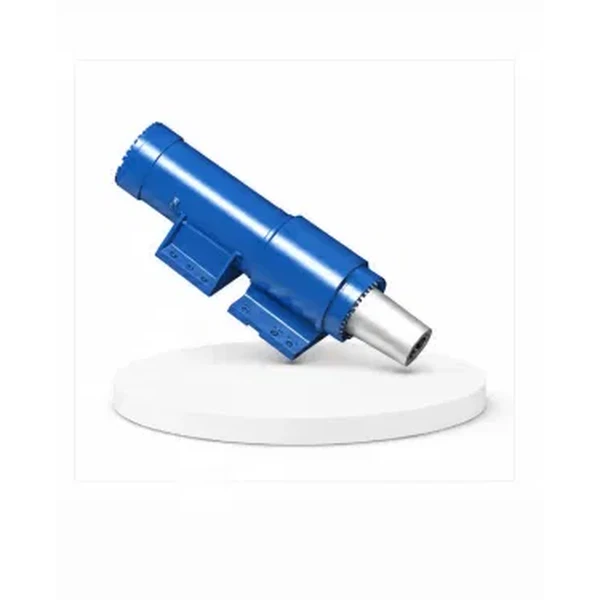
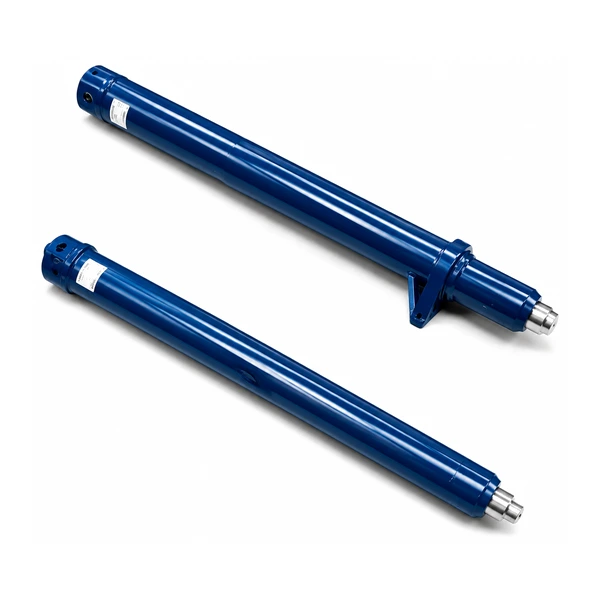
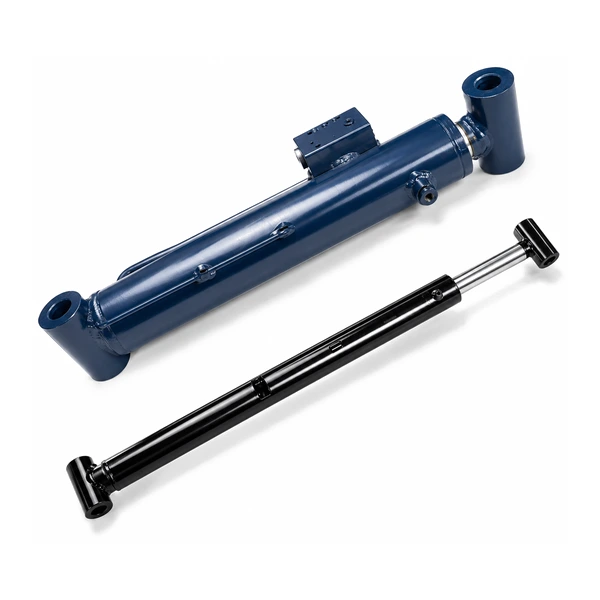
Mining Dump Truck Front Suspension Cylinder
Front vs Rear Suspension — Same Specs, Completely Different Jobs
The front and rear suspension cylinders share the same bore range (150–450 mm), stroke (≤400 mm), and pressure (38 MPa) — but they serve fundamentally different engineering roles. The front suspension carries a nearly constant load: the engine (typically 30–70 tonnes on an ultra-class truck), the cab, the front chassis structure, and approximately 15–25% of the payload weight transferred through the chassis. This load changes by only 20–40% between empty and loaded trips.
The rear suspension (#30), in contrast, sees a load swing of up to 10:1 — from the empty body weight (60–200 tonnes) to the full body-plus-payload (260–600 tonnes). This dramatic difference means the front and rear suspension cylinders are tuned with entirely different nitrogen pre-charge pressures, damping orifice sizes, and spring rates — even though their physical dimensions may be identical.
Korea Ever-Power manufactures front and rear suspension cylinders as a matched system within the mobile machinery hydraulic cylinder range — tuned for the specific truck model's axle load distribution.
Technical Specifications
| Parameter | Specification |
|---|---|
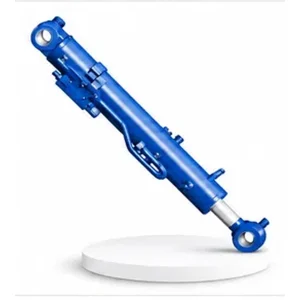
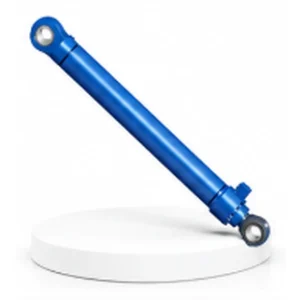
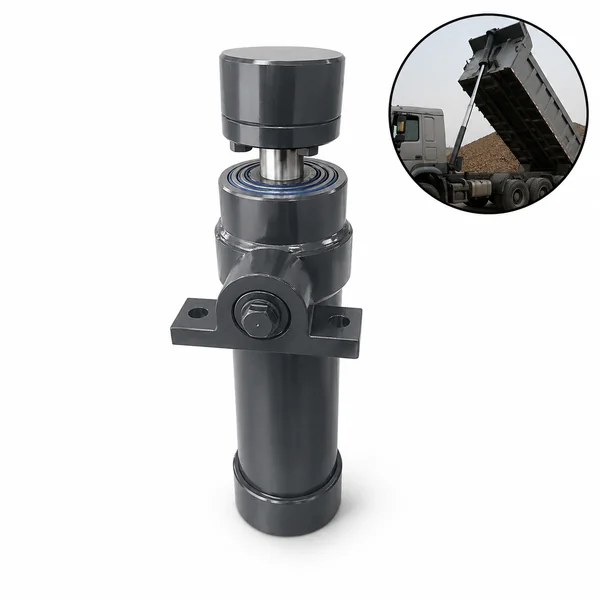
| Product | Mining Dump Truck Front Suspension Cylinder |
| Function | Support weight, absorb, and eliminate vibration |
| Bore Diameter | 150 mm – 450 mm |
| Rod Diameter | 120 mm – 400 mm |
| Stroke | ≤ 400 mm |
| Working Pressure | Maximum 38 MPa |
| Application | Mining Dump Truck (front axle) |
| Certification | ISO 9001 · 100% tested · gas pre-charge certified |
Why the Front Suspension Must Protect the Steering — A Job the Rear Doesn't Have
The front wheels steer the truck. The steering geometry — caster angle, camber, toe-in — is set to precise values by the suspension's ride height. If the front suspension compresses unevenly (one side lower than the other), the steering pulls to one side, and the driver must correct continuously. At 60 km/h on a narrow haul road with a 200-metre drop on one side, steering pull is not an inconvenience — it is a safety hazard.
The two front suspension cylinders must have identical nitrogen pre-charge pressures — any difference causes unequal ride height, which tilts the steering axis and induces pull. Korea Ever-Power charges both front cylinders on the same calibrated nitrogen station, to within ±0.5 bar, and ships them as a verified matched pair.
The nitrogen gas provides a progressive spring rate: soft at small displacements (for ride comfort over continuous haul-road corrugations) and stiff at large displacements (to prevent metal-to-metal contact during severe bumps). The pre-charge pressure and the gas volume are calculated to ensure the suspension never bottoms out at the worst-case haul-road impact speed. Contact the Korea Ever-Power engineering team for gas spring calculations.
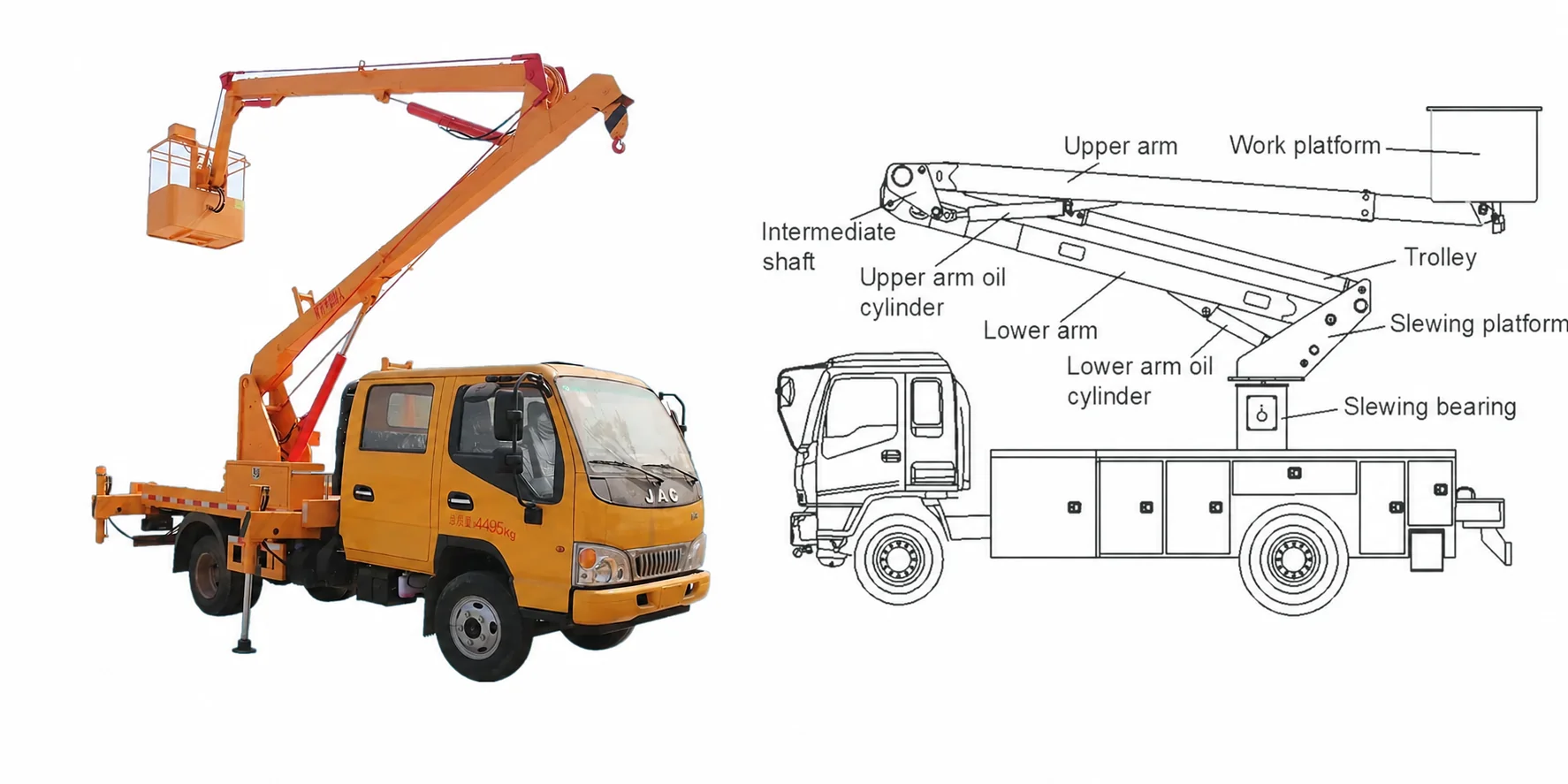
Millions of Cycles on Unpaved Roads — The Endurance Challenge
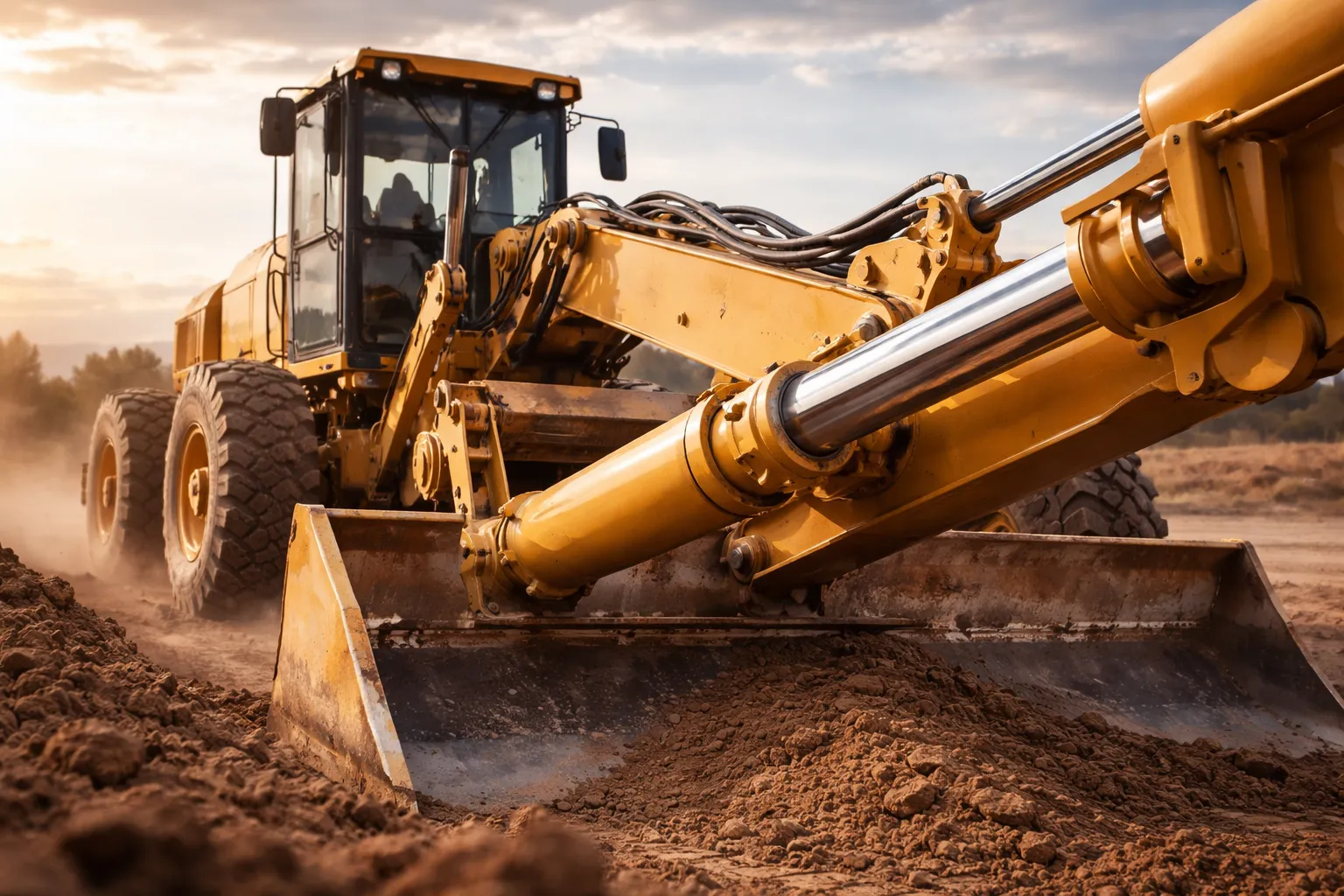
Mine haul roads are graded gravel — not paved. Even a well-maintained haul road has continuous corrugations, ruts, and potholes that produce 5–30 suspension cycles per second at cruising speed. The front wheels hit every imperfection first (the rear wheels follow the same ruts, pre-warned by the front suspension's response). Over 60,000 operating hours at 500+ hours per year of road travel, the front suspension cylinders accumulate tens of millions of compression-rebound cycles.
This cycle count rivals the crane suspension cylinder (#20) — but the mining front suspension operates at far higher pressures (38 MPa vs 35 MPa), larger bores (up to 450 mm vs 180 mm), and in far worse contamination (silica mine dust vs road splash). The combination of high cycle count, high pressure, large bore, and extreme contamination makes the mining front suspension cylinder one of the most demanding seal applications in the mobile hydraulic cylinder industry.
Korea Ever-Power specifies low-friction PTFE-bronze guide rings, polyurethane seals rated for -40 °C to +100 °C, and 80 µm chrome plating for mine-dust resistance. The damping orifice is precision flow-calibrated (±5% of target flow rate) to ensure matched damping between the left and right front struts.
Manufacturing Process
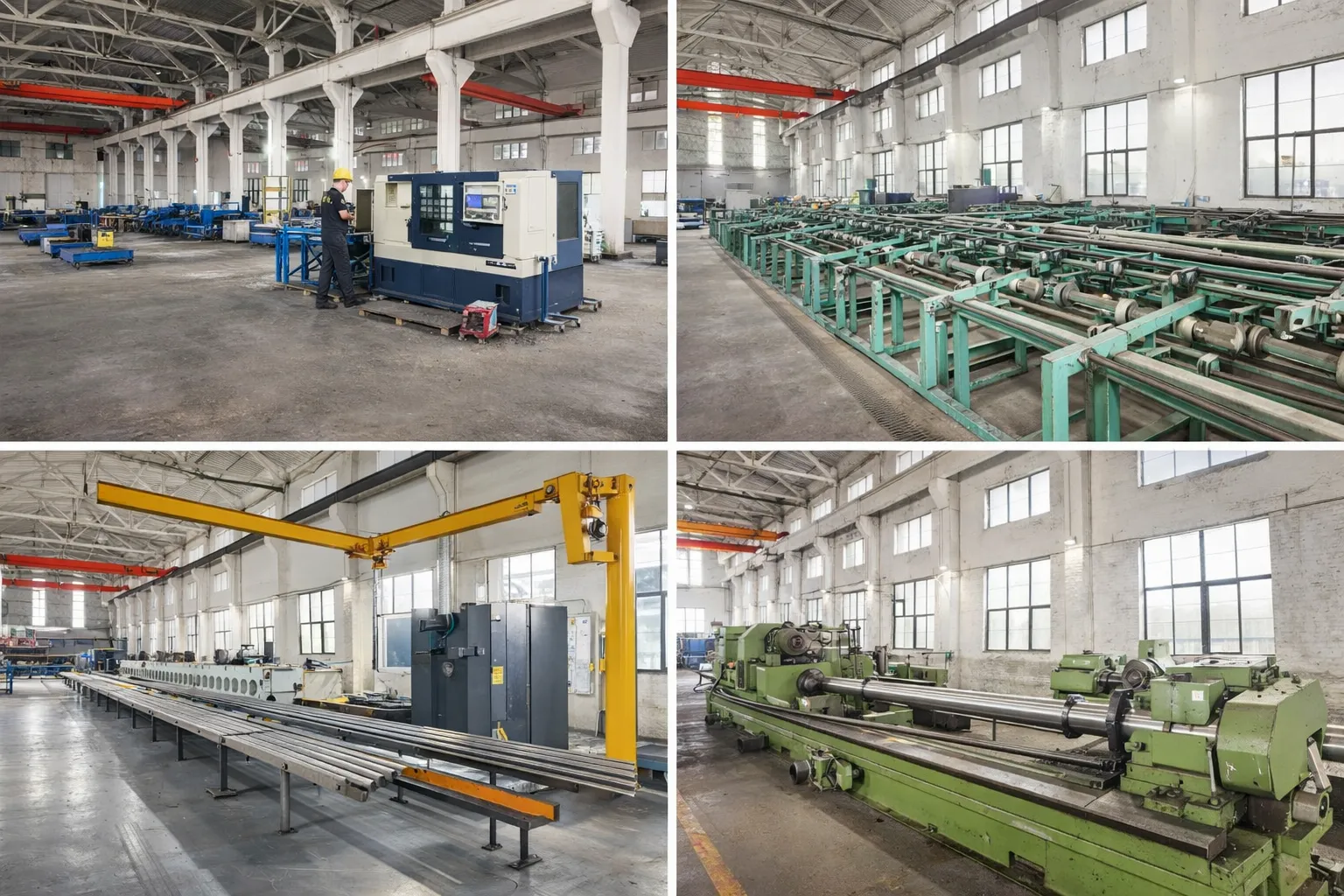
The large bore (up to 450 mm — the widest in the entire 31-product mobile machinery catalogue) is honed to Ra 0.2–0.4 µm. The rod-to-bore ratio is the highest of any product in this catalogue (120–400 mm rod inside a 150–450 mm bore), leaving a narrow annular oil space that must be precisely concentric — concentricity ≤0.1 mm TIR. The integrated nitrogen accumulator chamber is machined from the same forging as the cylinder barrel, eliminating a potential leak path at a weld joint.
Hydrostatic tested at 1.5× rated pressure (57 MPa). Damping-rate tested at specified piston velocities. Nitrogen pre-charge set and certified on a calibrated station — both front cylinders charged in sequence on the same station to ensure ±0.5 bar matching. Every front suspension cylinder pair is shipped with a gas-charge certificate specifying the exact pre-charge pressure.
OEM & ODM
FAQ
Related Categories
معلومات إضافية
| Editor |
|---|