Professional 5 Stage Telescopic Dump Truck Hydraulic Cylinder
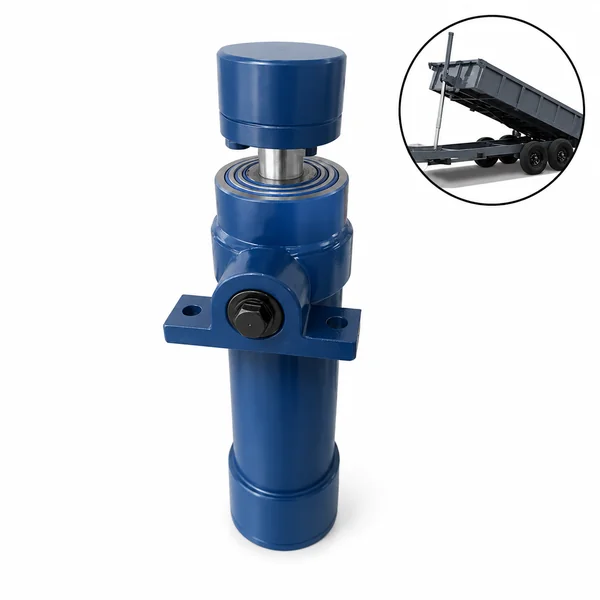
5-STAGE · PROFESSIONAL
Professional 5 Stage
Dump Truck Cylinder
When One Cylinder Isn't Enough
Most dump trucks use a single telescopic hydraulic cylinder — one cylinder, centred between the chassis rails, tipping the dump body. But some applications require two cylinders working in parallel: one on each side. This dual-cylinder configuration is used when the payload exceeds a single cylinder's capacity, when the dump body is too wide for stable single-point tipping, or when the frame geometry cannot accommodate one large-bore cylinder but can fit two smaller-bore cylinders.
Synchronised Extension
ISO 9001
Korea Ever-Power manufactures 5-stage telescopic cylinders in matched pairs for dual-cylinder hoist configurations. "Matched pairs" means both cylinders are manufactured to the same specification with dimensional tolerances tight enough to ensure synchronised extension — both cylinders extend at the same rate under the same hydraulic pressure, keeping the dump body level during tipping. This page explains when dual-cylinder hoists are the correct choice and the engineering considerations for pairing two telescopic cylinders on one dump truck.
Professional 5 Stage Matched Pair — Parameters
| Stage Count | 5 stages |
| Bore / Rod / Stroke / Pin | 2–6″ / 1.125–4″ / 4–100″ / 0.5–2″ |
| Port Options | G / SAE / NPT / M |
| Configuration | Single cylinder OR matched pair for dual-cylinder hoists |
| Body / Certification | Steel / ISO 9001 / 100% pressure tested |
| Lead Time / Warranty | 25–35 days / 1 year |
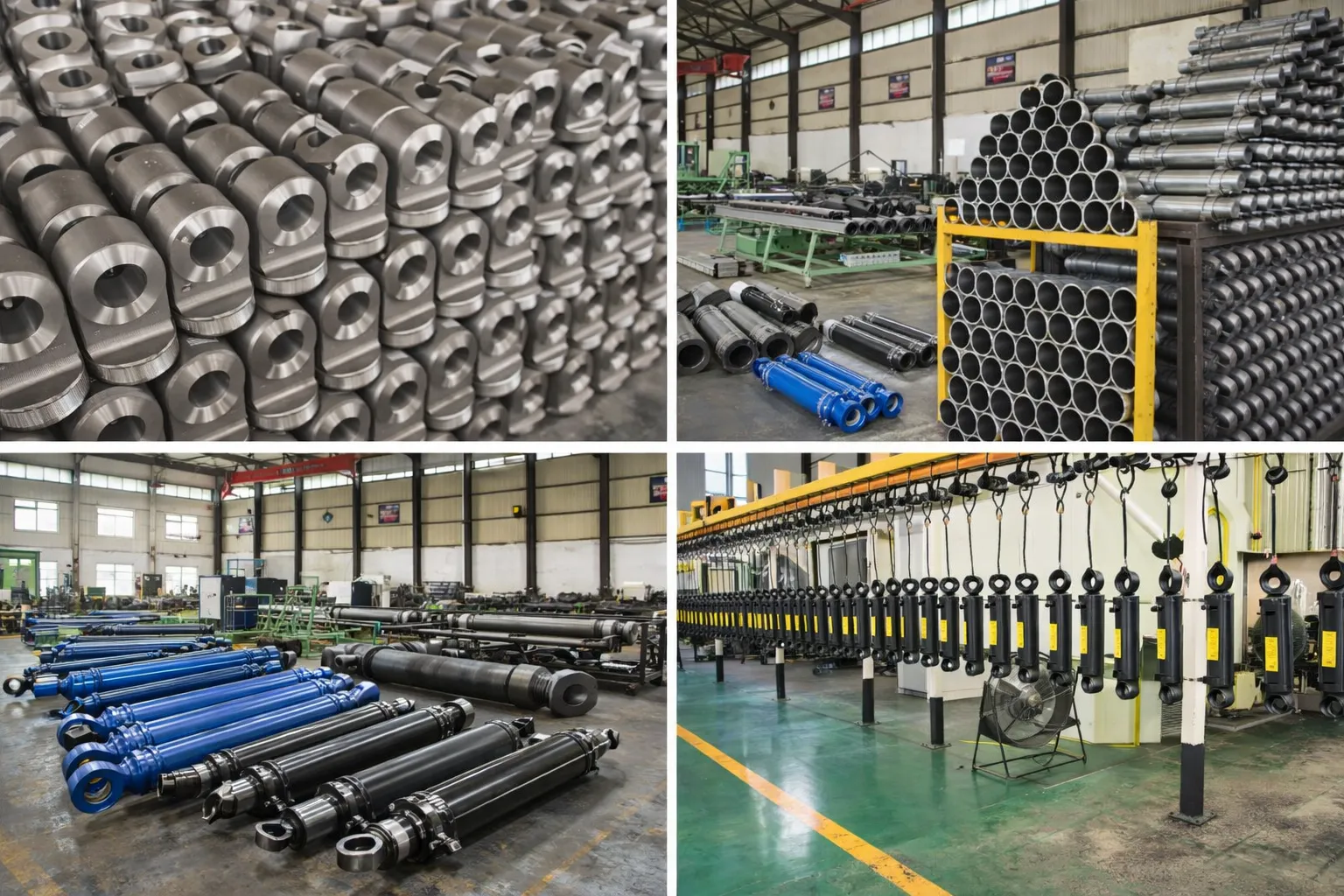
Three Scenarios Where Dual-Cylinder Hoists Are the Correct Choice
A single-cylinder hoist is simpler, cheaper, and sufficient for the majority of dump trucks. Dual-cylinder hoists add cost, complexity (two sets of hoses, synchronisation requirements), and space — they are only justified when the application genuinely needs them. The following three scenarios represent the engineering cases where dual cylinders provide a benefit that a single cylinder cannot.
Payload Exceeds Single-Cylinder Capacity
Large dump trucks carrying 30–50+ tonnes may require more lifting force than a single 6-inch bore cylinder can produce at the available system pressure. Rather than exceeding the bore range (which would require non-standard manufacturing), two cylinders at 4–5 inch bore each produce double the force — within the standard bore range. Each cylinder operates within its rated capacity, and the combined force tips the heavy body reliably. This approach also provides redundancy: if one cylinder develops a seal leak, the other cylinder can still hold the body in a partially tipped position until the truck reaches the workshop.
Extra-Wide Dump Bodies
Standard dump bodies are approximately 2.3–2.5 metres wide — a single centre-mounted cylinder tips the body evenly. But some specialised dump bodies (agricultural grain trucks, wide-bed construction haulers) are 2.8–3.5 metres wide. A single centre-mounted cylinder on an extra-wide body creates an unstable tipping geometry: the body tends to twist or flex during tipping because the lifting force is applied at a single point far from the body edges. Two cylinders — one on each side — apply force at two points spanning the body width, eliminating the twist and providing stable, level tipping across the full body width.
Frame Cannot Accommodate One Large-Bore Cylinder
Some chassis frame geometries (cross-members, fuel tanks, exhaust systems, air tanks) block the centre position where a single large-bore cylinder would mount. Two smaller-bore cylinders can be positioned outboard — one on each side of the obstruction — fitting into frame spaces that a single large-bore cylinder cannot. This is common on truck chassis that were not originally designed for dump body conversion: the existing frame components cannot be relocated, so the cylinders must fit around them.
Synchronisation — Keeping Both Cylinders Extending at the Same Rate
The critical engineering challenge in a dual-cylinder hoist is synchronisation: both cylinders must extend at the same speed so the dump body rises level rather than tilting to one side. If one cylinder extends faster than the other, the body tips sideways — creating a dangerous instability and uneven structural loading on the hoist frame.
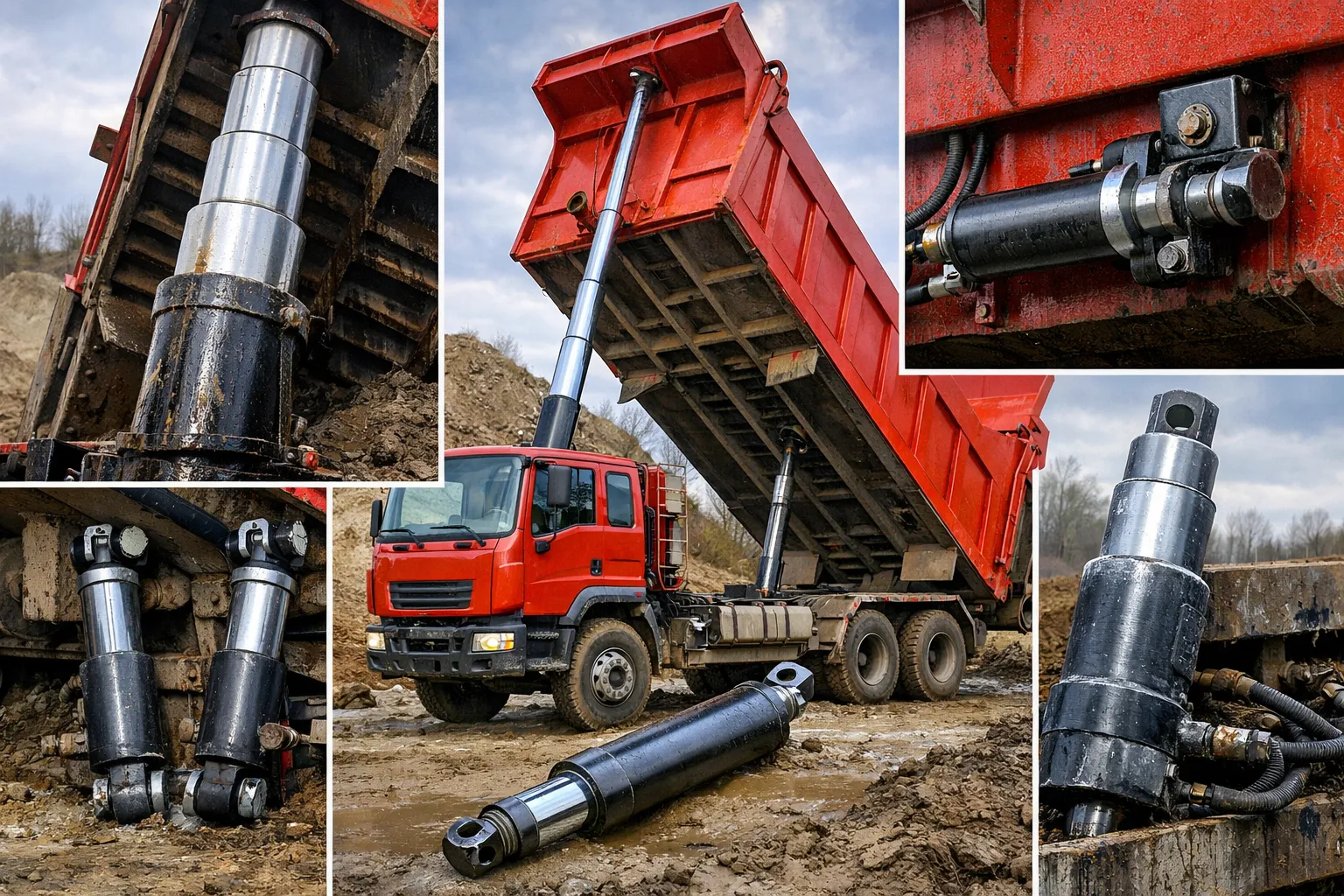
Matched manufacturing tolerances
The primary synchronisation method is manufacturing precision. If both cylinders have identical bore diameters (within tight tolerance), the same hydraulic flow produces the same extension speed in both. Korea Ever-Power manufactures matched pairs on the same production run with dimensional matching verified — both cylinders' bore diameters are measured and paired to be within ±0.05 mm of each other. This inherent dimensional match provides passive synchronisation without additional hydraulic circuitry.
Flow divider valve (active synchronisation)
For applications requiring precise synchronisation (tilting platforms, precision discharge), a flow divider valve can be installed between the pump and the two cylinders. The flow divider splits the pump output into two equal flows — one to each cylinder — regardless of load differences between the two sides. Flow dividers add cost and a small pressure drop, but provide the tightest synchronisation possible. For most dump truck tipping applications, matched manufacturing tolerances provide adequate synchronisation without a flow divider.
When ordering for a dual-cylinder hoist, specify "matched pair" in the order. Korea Ever-Power will manufacture both cylinders in the same production batch, verify dimensional matching, and mark them as a pair (sequential serial numbers). Do not mix cylinders from different production batches or different suppliers — even small dimensional differences can cause synchronisation problems. Browse the full telescopic cylinder range for matched pair availability.
Single vs Dual Cylinder Hoist — Engineering Trade-Offs
| Factor | Single Cylinder | Dual Cylinder (Matched Pair) |
|---|---|---|
| Total lifting force | 1× cylinder force | 2× cylinder force |
| Tipping stability (wide bodies) | Single-point lift | Two-point lift (more stable) |
| Individual cylinder bore | Larger bore needed | Smaller bore per cylinder |
| Hydraulic lines | 1 set (simpler) | 2 sets (more complex) |
| Cost | Lower | Higher (2 cylinders + flow divider) |
| Redundancy | None — single point of failure | Partial — one can hold if other leaks |
| Tipping speed | Faster (all flow to one cyl) | Slower (flow split between two) |
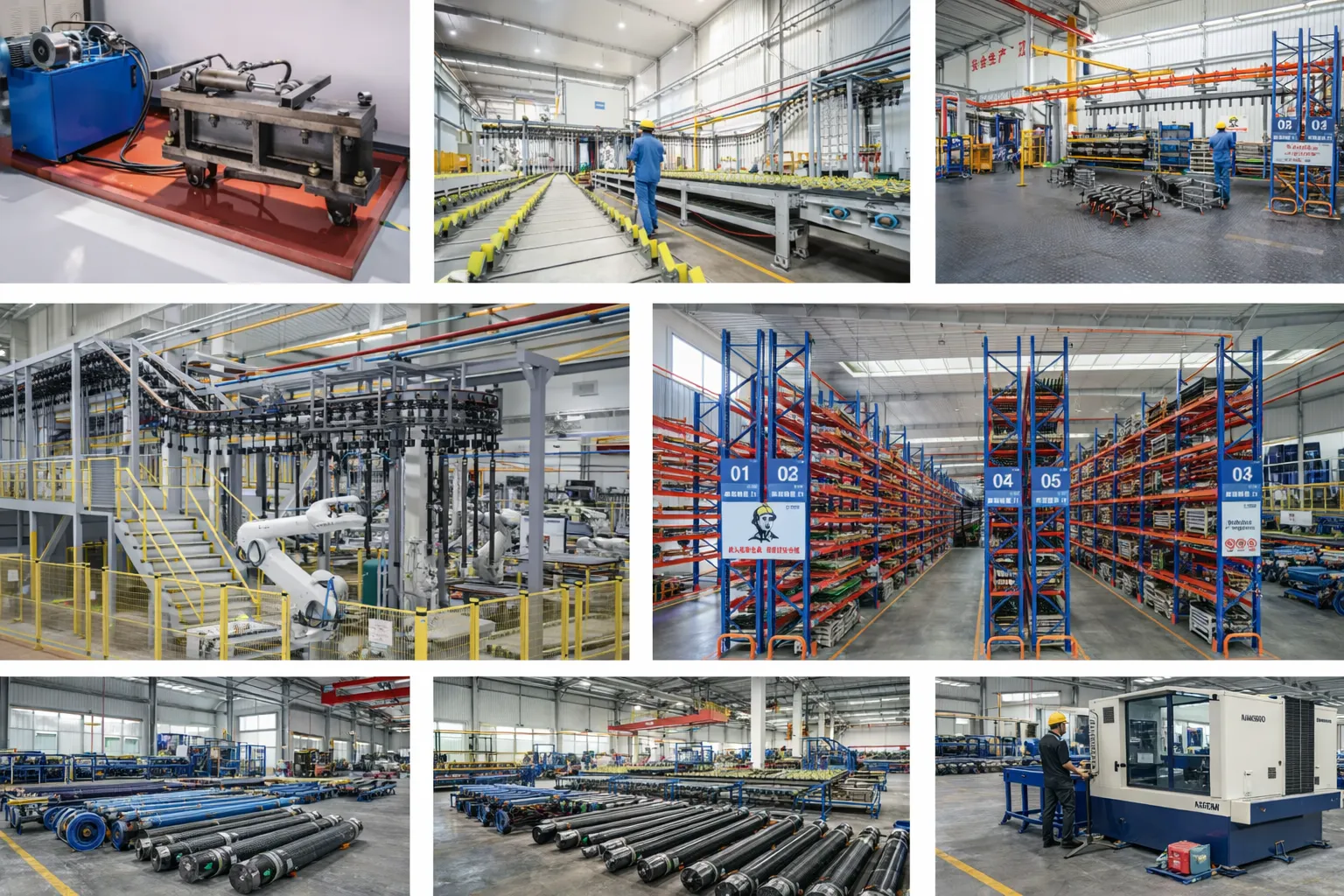
OEM & ODM — Ordering Matched Pairs
Dual-Cylinder Hoist FAQ
Field Reports
Our 40-tonne off-highway dump trucks exceed the capacity of a single 6-inch bore cylinder at our system pressure. We use matched pairs of 5-stage 5-inch bore cylinders — one on each side. The Ever-Power matched pairs have bore tolerance within 0.03 mm between the two cylinders in each set. Without a flow divider, the tipping synchronisation is within 10 mm across the full stroke — acceptable for bulk material tipping. 20 matched pairs (40 cylinders) delivered over 12 months, all dimensionally matched. The dual-cylinder redundancy also gives our operators confidence — if one cylinder develops a minor leak, the other holds the body while they lower it safely.
Our grain trucks have 3.2-metre wide dump bodies — a single centre-mounted cylinder caused the body to twist during tipping, cracking the hinge welds. Switched to dual Ever-Power 5-stage cylinders, one on each side of the body. The two-point lift eliminated the twist completely — the body rises level and the hinge loading is evenly distributed. We use a simple tee fitting (no flow divider) and the matched manufacturing tolerances keep the synchronisation within 15 mm across the full stroke. 6 matched pairs, all performing well after 8 months of grain harvest tipping.
We convert cargo truck chassis to dump body configuration. Some chassis have a large fuel tank and exhaust silencer in the centre — blocking the single-cylinder mounting position. Two smaller 5-stage cylinders fit outboard on each side of the obstructions. Four stars because the dual-cylinder setup requires twice the hose plumbing and a flow divider to ensure level tipping — the total conversion cost was about 2.5× a single-cylinder hoist. But there was simply no space for a single large-bore cylinder on these chassis. The Ever-Power matched pairs solved the space problem while providing adequate force for our 15-tonne dump bodies.
Other Hydraulic Cylinder Categories
معلومات إضافية
| Editor | Cxm |
|---|
منتجات ذات صلة
-
Hot Sale Double Acting Small Dump Truck Telescopic Hydraulic Cylinder
-
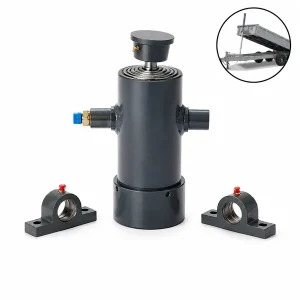
New Arrival Double Acting Dump Truck Telescopic Hydraulic Cylinder For Sale
-
Low Price Double Acting Small Dump Truck Telescopic Hydraulic Cylinder
-

High Quality Small Hydraulic Cylinder Telescopic Hydraulic Cylinder For Dump Truck
-
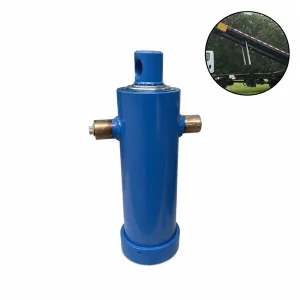
Guaranteed Quality Mini Dump Truck Hydraulic Cylinders
-
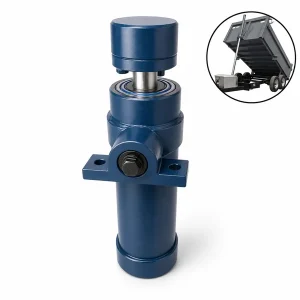
Quality Manufacturing 2 Stage Hydraulic Cylinder
-
Effective 5 Stage Telescopic Small Dump Truck Hydraulic Cylinder
-
2 Stage Small Dump Truck Hydraulic Cylinder — Multistage Telescopic