Trailing Suction Dredger Heave Compensation Cylinder
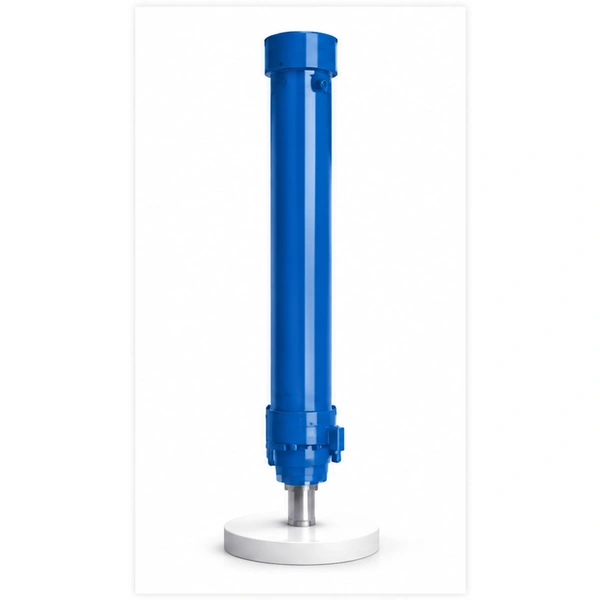
Trailing Suction Dredger Heave Compensation Cylinder
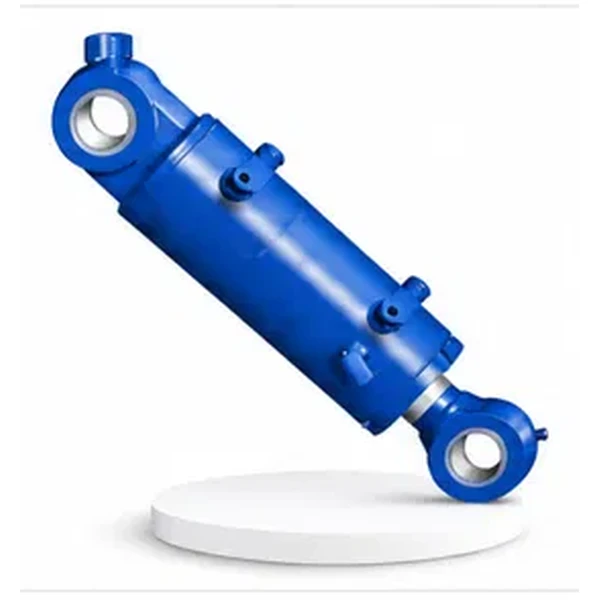
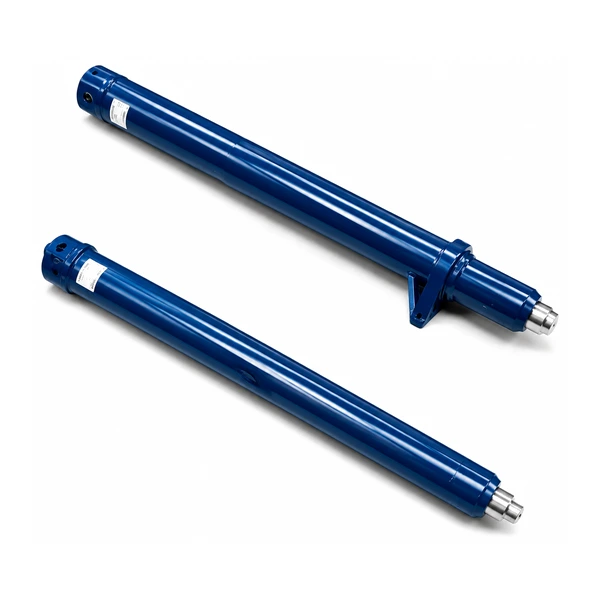
The sea moves. The draghead must not. When a trailing suction dredger rides 2-metre swells, the hull rises and falls — but the draghead must stay pressed against the seabed at constant force. The heave compensation cylinder absorbs the wave motion, extending and retracting with every wave to keep the suction pipe stable.
Technical Specifications
| Parameter | Specification |
|---|---|
| Product Name | Trailing Suction Dredger Heave Compensation Cylinder |
| Features | Compensate relative displacement of draghead and hull during wave heave |
| Bore Diameter | Up to 400 mm |
| Rod Diameter | Up to 360 mm |
| Stroke | Up to 4,000 mm |
| Thrust Force | Maximum 1,600 KN |
| Working Pressure | Up to 32 MPa |
| Temperature Range | -40 °C to +100 °C |
| Application | Trailing Suction Dredger |
How Heave Compensation Keeps the Draghead on the Seabed
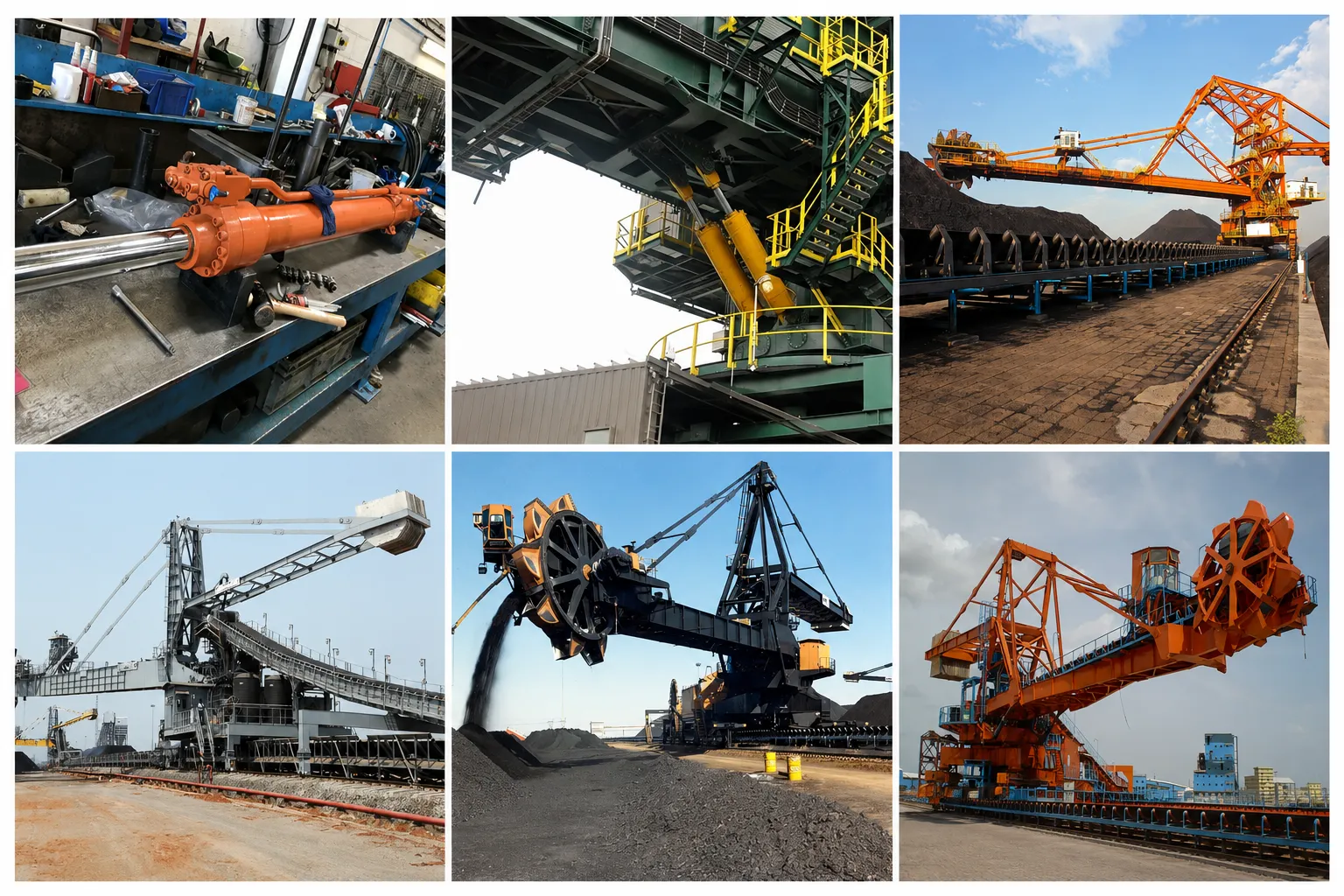
A trailing suction dredger (TSHD) sails over the dredging area at 1–3 knots while a draghead on the seabed sucks up sediment through a trailing suction pipe. The pipe hangs from the hull into the water, and the draghead drags along the bottom. In calm water, this works smoothly — but in waves, the hull heaves up and down by 1–4 metres with every swell cycle (5–10 seconds per wave).
Without heave compensation, this vertical hull motion would lift the draghead off the seabed on every wave crest (losing suction) and slam it into the bottom on every trough (risking structural damage). The heave compensation cylinder solves this by acting as a spring-damper between the hull and the suction pipe: when the hull rises, the cylinder extends to pay out slack; when the hull falls, the cylinder retracts to take up the excess. The draghead pressure on the seabed stays nearly constant throughout the wave cycle.
The system uses a nitrogen gas accumulator connected to the cylinder — the gas provides a pneumatic spring force that can be tuned to match the draghead weight and desired seabed contact pressure. Korea Ever-Power supplies the heave compensation cylinder with matched accumulator sizing within the offshore hydraulic cylinder range.
Passive vs Active Heave Compensation
Heave compensation systems for trailing suction dredgers fall into two categories. The choice affects cylinder design, system complexity, and performance in heavy seas:
Korea Ever-Power supplies heave compensation cylinders for both passive (standard) and active (with position sensor and servo-valve mounting provisions) systems. Contact the Korea Ever-Power hydraulic cylinder engineering team for system selection guidance.
Key Design Parameters for Heave Compensation Cylinders
Selecting and sizing a heave compensation cylinder requires matching the cylinder's dynamic response to the vessel's wave-motion characteristics. The critical parameters are:
- Heave amplitude — the maximum vertical hull displacement in the design sea state. A 6,000 m³ TSHD operating in the North Sea may experience 2–4 metres of heave in sea state 4–5. The cylinder stroke must exceed this amplitude with safety margin.
- ⏱️ Heave period — the wave period determines the piston velocity requirement. A 7-second wave period with 3-metre amplitude produces peak piston velocities of approximately 1.3 m/s — the seals, guides, and oil flow path must handle this speed without cavitation or pressure spikes.
- ⚖️ Draghead contact force — the desired seabed contact pressure of the draghead determines the nitrogen pre-charge pressure. Too much contact force damages the draghead and consumes excess towing power; too little allows the draghead to lift off the seabed during wave crests.
- Accumulator volume — the gas accumulator volume determines the spring stiffness of the compensation system. A larger accumulator produces a softer spring (better compensation) but takes more space. Korea Ever-Power calculates the optimal accumulator volume for each TSHD model and operating sea state.
Why Dredging Fleets Choose Korea Ever-Power
- ⏱ Fast turnaround — 8–12 weeks standard, 5–6 weeks emergency. Every day of TSHD downtime costs USD 50,000–120,000 in lost production.
- Factory-direct pricing — 20–40% below European OEM equivalents. No distributor chain. The engineer who designs your cylinder is in the same building as the machine that makes it.
- Retrofit and reverse-engineering — existing vessel? Send the old cylinder or its drawing. Korea Ever-Power will match dimensions and upgrade the seals, surface treatment, and valve integration.
- Classification society documentation — BV, DNV, LR, ABS, CCS. Material certificates, welding procedures, witnessed testing — aligned with your vessel's flag state and class requirements.
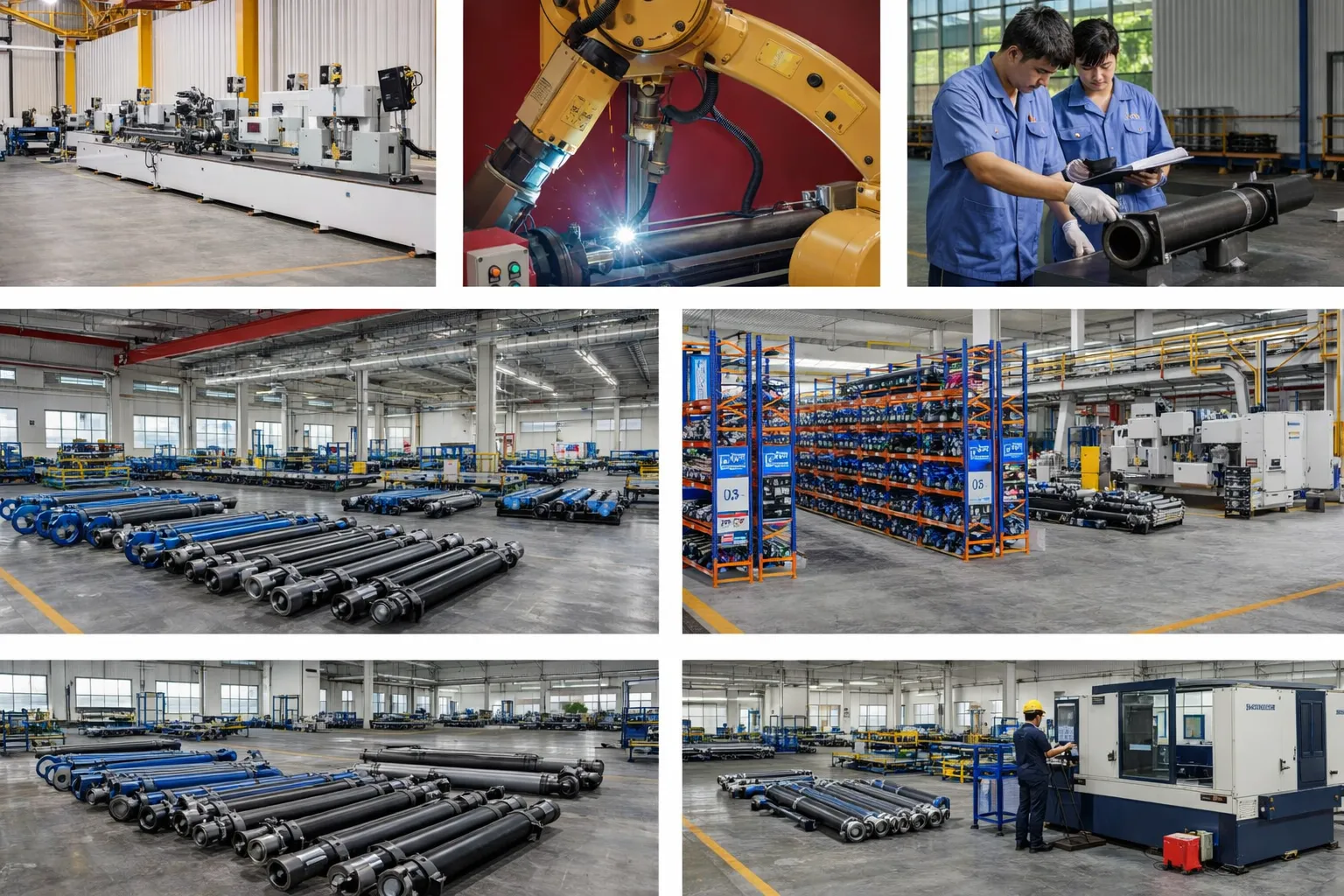
Heave Compensation Cylinder OEM & ODM
Frequently Asked Questions
Common questions about the trailing suction dredger heave compensation cylinder answered by Korea Ever-Power engineers:
What Our Customers Say
"The heave compensation on our 8,000 m³ TSHD used to lose draghead contact in anything above sea state 3. We replaced the original cylinders with Korea Ever-Power units and retuned the accumulator pre-charge — now we maintain contact up to sea state 4.5. The longer stroke (3,600 mm vs 2,800 mm original) gives us more travel for bigger swells."
Capt. J. Pedersen — Dredge Master, Denmark
"The high rod-to-bore ratio (360/400 mm) of the heave comp cylinder makes the annular area very small — which is exactly what you want for a heave compensation system. The cylinder moves fast with minimal oil volume change, responding instantly to wave motion. Good engineering understanding from the Korea Ever-Power team."
Dr. K. Weston — Hydrodynamics Lead, UK consultancy
"Reliable heave compensation cylinders for our 4,500 m³ TSHD. We operate mainly in the North Sea, so the -40 °C seal rating gives us comfortable margin for winter dredging. One minor point: the paint on the barrel exterior started showing rust spots after 18 months — recommend specifying marine-grade epoxy over the standard primer for exposed installations."
F. Nielsen — Fleet Maintenance, Norway
"We ordered 4 heave compensation cylinders as part of a suction pipe overhaul. The cylinders were delivered pre-filled with the specified hydraulic oil and nitrogen-charged to the correct pre-charge pressure — ready to install without any field setup. Saved us a full day of commissioning time."
I. Pereira — Ship Engineer, Brazil
"Third TSHD we've fitted with Korea Ever-Power heave compensation. Consistent quality across all three orders (2023, 2024, 2025). The integrated gas charging valve and pressure gauge on each cylinder makes routine pre-charge checks a 5-minute job instead of the hour-long procedure our old design required."
W. Zhang — Technical Superintendent, Chinese dredging fleet
Related Hydraulic Cylinder Categories
معلومات إضافية
| Editor |
|---|
منتجات ذات صلة
-
Reach Stacker Telescopic Cylinder
-
Reach Stacker Luffing Cylinder
-
Empty Container Stacker Side Shift Cylinder
-

Trailing Suction Dredger Overflow Cylinder
-
Ro-Ro Platform Jacking Cylinder
-
Pile Driving Barge Luffing Cylinder
-
Drilling Platform Steel Wire Rope Tensioner Cylinder
-

Offshore Crane A Type Mast Crane Luffing Cylinder