
Drum Brake Cylinder for Crawler Crane
Engineered exclusively for critical winch control, delivering absolute holding power, specialized sealing to eradicate internal leakage, and unyielding structural resilience against severe hoisting impacts.
Product Overview & Core Industrial Value
Operating heavy lifting equipment within the construction machinery industry demands absolute certainty in payload control. A modern crawler crane is constructed to manipulate massive concrete forms, industrial components, and heavy steel girders across highly unstable terrain. However, the fundamental ability of the crane to safely hold and precisely lower these immense weights depends entirely on the mechanical integrity of its drum system. At the operational core of this heavy-duty mechanical arrangement is the Drum Brake Cylinder. This highly specialized fluid power actuator is directly responsible for engaging and releasing the heavy friction bands or disc calipers on the hoisting winch. When a multi-ton payload is suspended high above a populated and congested job site, the physical clamping force generated by this specific actuator is the solitary mechanical barrier preventing a catastrophic free-fall.
Winch braking operations present a uniquely hostile engineering environment that is fundamentally different from standard linear actuation. Unlike a primary boom lift cylinder that moves smoothly through its linear stroke to raise or lower an arm, a braking actuator experiences incredibly high-frequency engagement cycles. More destructively, when a rapidly descending heavy load is arrested quickly by the operator, the sudden deceleration of mass sends a massive kinetic shockwave through the mechanical linkage and directly into the hydraulic fluid circuit—a violent phenomenon recognized in mechanical engineering as hoisting impact. Standard commercial hydraulic components simply lack the structural rigidity and the advanced sealing architecture to survive these severe hydrostatic pressure spikes. Over time, the intense pressure forces standard internal rubber seals to deform, extrude, and tear. This leads directly to the most dangerous failure mode in lifting operations: internal leakage. Internal leakage causes an undetectable decay in holding pressure inside the cylinder, allowing the suspended load to slip uncommanded toward the ground.
As a veteran hydraulic cylinder manufacturer, our entire mechanical engineering philosophy is centered on systematically eliminating these exact failure modes. We have developed a premium Drum Brake Hydraulic Cylinder series constructed with highly specialized impact-resistant sealing matrices and exceptionally rigid steel alloy structures. By upgrading your winch drives with our engineered solutions, fleet operators and project managers in South Korea, Japan, Taiwan, and the broader Asian infrastructure market can ensure total compliance with the most stringent safety regulations. The industrial value of our heavy-duty product is measured not merely in its extended operational lifespan, but in the absolute peace of mind it provides to rigging crews handling critical, high-tonnage lifts.
Technical Parameters & Material Configuration
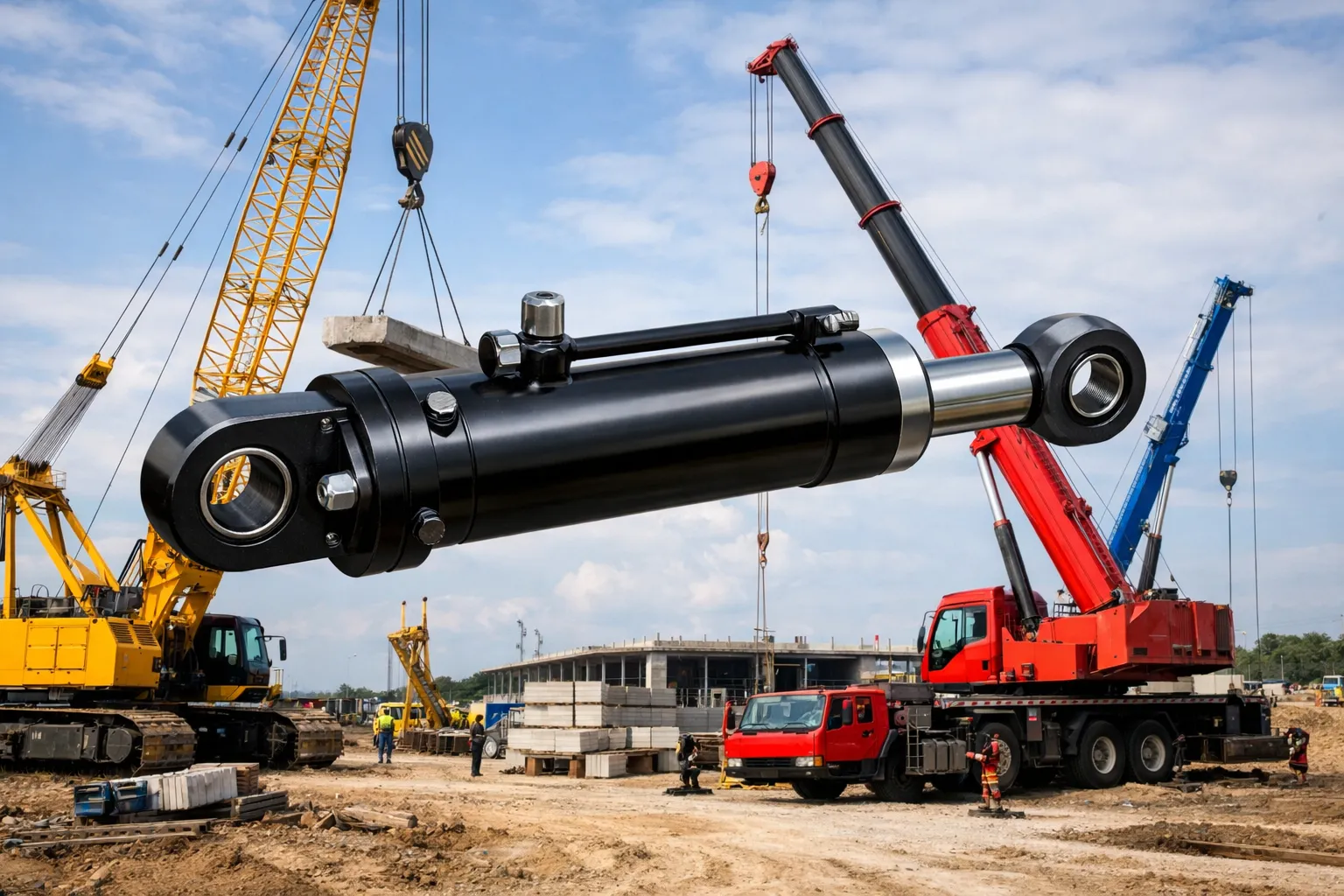
Mechanical reliability begins long before the final assembly process; it starts with precise material selection and uncompromising geometric tolerancing. The engineering data tables below outline the strict manufacturing specifications and metallurgical choices that govern the production of our winch braking solutions. These parameters are strictly calibrated to mitigate the exact kinetic stresses experienced during heavy crawler crane operations.
| Industry | Equipment Category | Subsystem / Action | Cylinder Name | Action Type | Structure Type |
|---|---|---|---|---|---|
| Construction Machinery | Crawler Crane | Drum System | Drum Brake Cylinder | Double Acting | Piston Cylinder |
| Manufacturing Structure | Material System | Surface Treatment | Operating Condition | Typical Failure Mode | Recommended Configuration |
|---|---|---|---|---|---|
| Welded | Q345D Low Alloy Steel | Chrome Plating | Hoisting Impact | Frequent Braking | Internal Leakage | Specialty Sealing |
The specification of Q345D low-alloy, high-strength structural steel is a highly calculated engineering decision designed to combat mechanical failure. The “D” grade designation indicates that this specific material has undergone rigorous Charpy V-notch impact testing, ensuring it maintains its high yield strength and aggressively resists brittle fracture even in sub-zero working environments down to minus twenty degrees Celsius. When a heavy load is braked abruptly, the welded joints and the barrel wall of the cylinder experience intense shear and hoop stresses. Q345D steel provides the exceptional weldability and rigid structural integrity required to prevent the cylinder barrel from elastically ballooning outward under extreme hydrostatic pressure. Furthermore, the external rod is finished with an industrial hard chrome plating process, protecting the finely machined steel surface from the abrasive airborne concrete dust and coastal moisture frequently encountered on major construction sites. Ultimately, this robust welded steel structure houses our proprietary specialty sealing matrix, ensuring the actuator remains entirely impenetrable to fluid bypass.
Functional Dynamics in Winch Operations
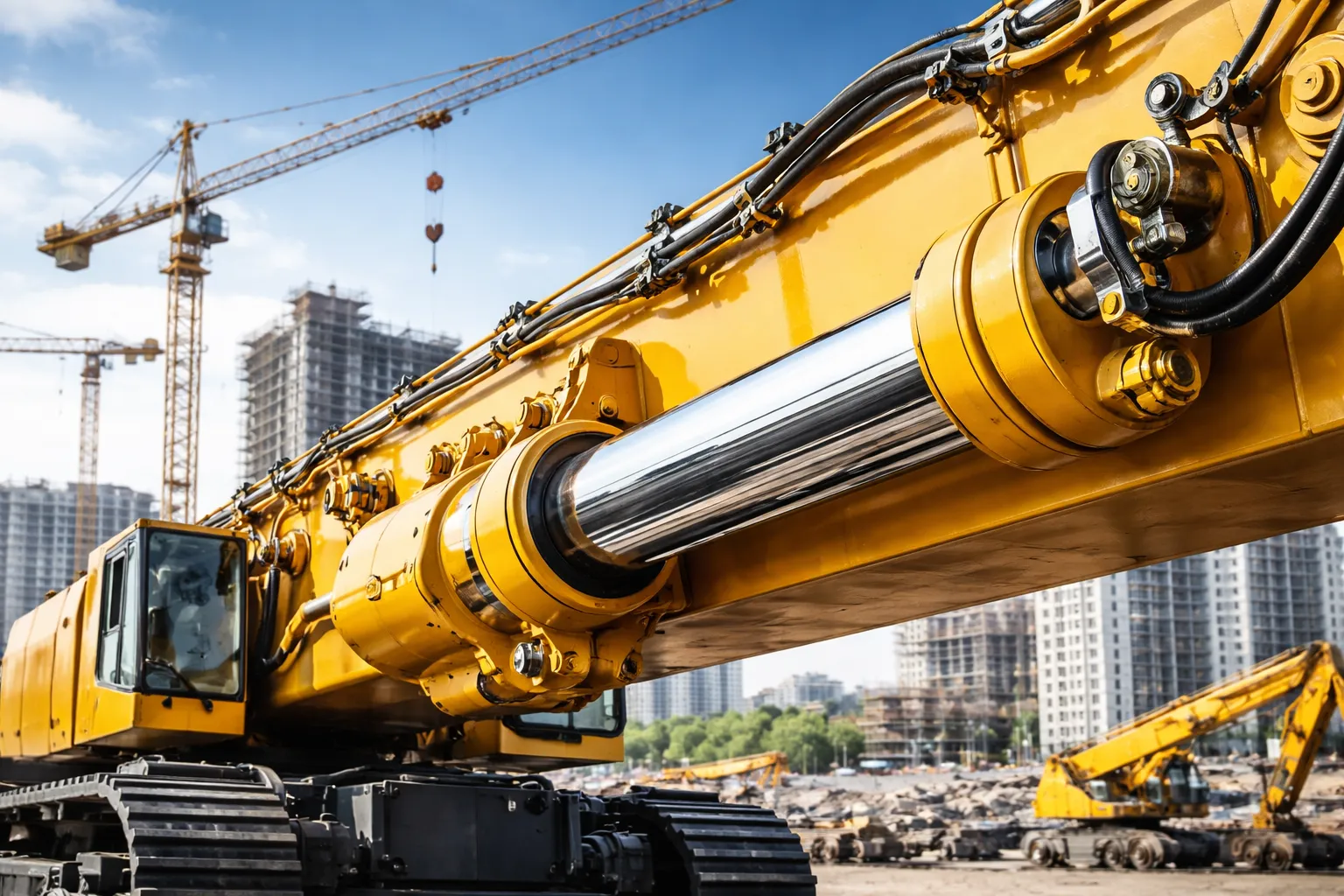
Comprehending the internal fluid dynamics is essential for field technicians and equipment engineers responsible for fleet safety. The winch drum of a crawler crane is essentially a massive, grooved steel spool responsible for winding the heavy wire rope that raises and lowers the hook block. Surrounding the outer flange of this rotating drum is a heavy-duty friction band or caliper braking system. The Drum Brake Cylinder acts as the exclusive mechanical muscle that tightly engages this friction material against the drum’s spinning surface.
Because controlled load release and powered brake application are equally critical, this system must operate entirely as a fully proportional double acting hydraulic cylinder. When the operator pushes the control lever to release the brake and lower a payload, highly pressurized hydraulic fluid is actively pumped into the rod-end port of the cylinder. This pulls the hydraulic cylinder piston inward, physically creating clearance between the brake shoe and the drum, allowing for smooth, free rotation of the winch. Conversely, when the brake pedal is depressed, or an emergency stop protocol is triggered, high-pressure fluid is blasted into the base-end port. This hydraulic force drives the piston outward with massive linear power, clamping the brake band tightly against the drum to arrest the load. Because it is a double-acting mechanism, the operator has precise, metered control over the clamping force, allowing for the smooth, millimeter-accurate lowering of delicate payloads without jarring the entire crane structure, a level of control impossible to achieve with a single-acting spring-return design.
OEM Compatibility and Aftermarket Fleet Upgrades
When heavy machinery operates in remote locations or on tight, high-penalty construction schedules, sourcing reliable replacement components can quickly become a logistical nightmare. Equipment rental firms and civil engineering contractors simply cannot afford to halt multi-million dollar projects while waiting months for overseas shipments of original factory components. Our centralized manufacturing facility specializes in reverse-engineering and producing exact dimensional aftermarket replacements for the drum braking systems of major global heavy equipment brands, including Kobelco, Hitachi, Manitowoc, IHI, Liebherr, Sany, Zoomlion, and XCMG.
Technical Clarification: The heavy machinery brand names mentioned within this engineering document are strictly utilized to indicate physical dimensional compatibility and mounting styles to assist our B2B procurement clients with accurate parts matching. We operate as a completely independent manufacturing entity and hold no trademark affiliation, sponsorship, or endorsement from these respective OEM corporations.
Integrating our engineered aftermarket hydraulic rams is not simply about replacing a broken part; it is about actively upgrading your machine’s structural weak points. We guarantee the perfect alignment of clevis pins, trunnion bearing dimensions, retracted closed lengths, and hydraulic fluid port threads, allowing your mechanics to perform a swift, zero-modification installation directly on the job site. If your maintenance budget is being drained by the endless cycle of fixing hydraulic cylinders that cannot withstand local job site rigors, replacing them with our upgraded materials provides a permanent, high-strength solution. This proactive approach significantly lowers the overall long-term hydraulic cylinder price by drastically reducing replacement frequency, eliminating fluid loss, and preventing catastrophic downtime. Explore our comprehensive precision fabrication capabilities by visiting our hydraulic cylinder product index.
Five Core Technical Advantages
The fundamental difference between a standard mass-produced commercial component and a highly engineered industrial actuator lies deep within the details of its construction and material science. We have systematically integrated five proprietary advancements into our Drum Brake Hydraulic Cylinder design to ensure maximum reliability and safety:
1. Specialized Anti-Leak Sealing Technology
Frequent braking generates rapid, violent pressure spikes that can easily extrude, deform, and tear standard NBR rubber seals. To combat this destructive force, we utilize a highly specialized sealing matrix composed of premium polyurethane and Polytetrafluoroethylene (PTFE) composite materials, structurally supported by rigid anti-extrusion backup rings. These specialized seals dynamically adapt and maintain their structural integrity under extreme hydrostatic pressure, creating an impenetrable barrier against internal fluid bypass. This sealing technology is the absolute key to eliminating load slip and guaranteeing operational safety.
2. High-Rigidity Q345D Welded Construction
The sudden halting of a heavy suspended load transfers intense kinetic shock directly into the cylinder’s mounting points and the barrel itself. Utilizing Q345D low-alloy steel provides a vastly superior yield strength compared to basic commercial carbon steel tubing. Our automated robotic submerged arc welding process ensures deep, uniform weld penetration at all joints, creating a highly rigid structure capable of absorbing massive hoisting impact forces without suffering metal fatigue or dangerous weld cracking over years of service.
3. Advanced Hard Chrome Plating Processing
The exterior rod of any actuator operating near a winch drum is constantly exposed to abrasive airborne metallic dust, grit, and environmental moisture. We apply a precisely controlled, exceptionally thick layer of hard chrome plating to the induction-hardened steel rod surface. This creates an incredibly hard, low-friction finish featuring microscopic cracks that perfectly retain lubricating hydraulic oil. It aggressively resists scratching, prevents environmental rust, and drastically extends the service life of the external polyurethane wiper seals.
4. Thermal Stability and Heat Dissipation
Rapid, continuous winch operation generates significant mechanical friction and heat within the braking circuit. Excessive heat severely thins the hydraulic oil and permanently degrades internal elastomer components, leading to brake fade. Our cylinder designs feature computationally optimized internal porting to reduce fluid restriction and turbulence. Paired with our high-temperature tolerant seal compounds, the cylinder maintains consistent operational fluid viscosity and powerful braking performance even during non-stop, multi-shift concrete pouring applications in the extreme summer heat.
5. Precision CNC Piston Machining
An internal seal is only as effective as the metal surfaces it interacts with. The internal steel barrel and the hydraulic cylinder piston are machined using state-of-the-art multi-axis CNC equipment to achieve aerospace-grade geometric concentricity and a mirror-like micro-finish. This ultra-tight machining tolerance ensures perfectly uniform pressure distribution across the entire face of the seal, preventing uneven wear and guaranteeing exceptionally smooth, judder-free braking action during critical load placement.
Autonomous Manufacturing & Strict Quality Control
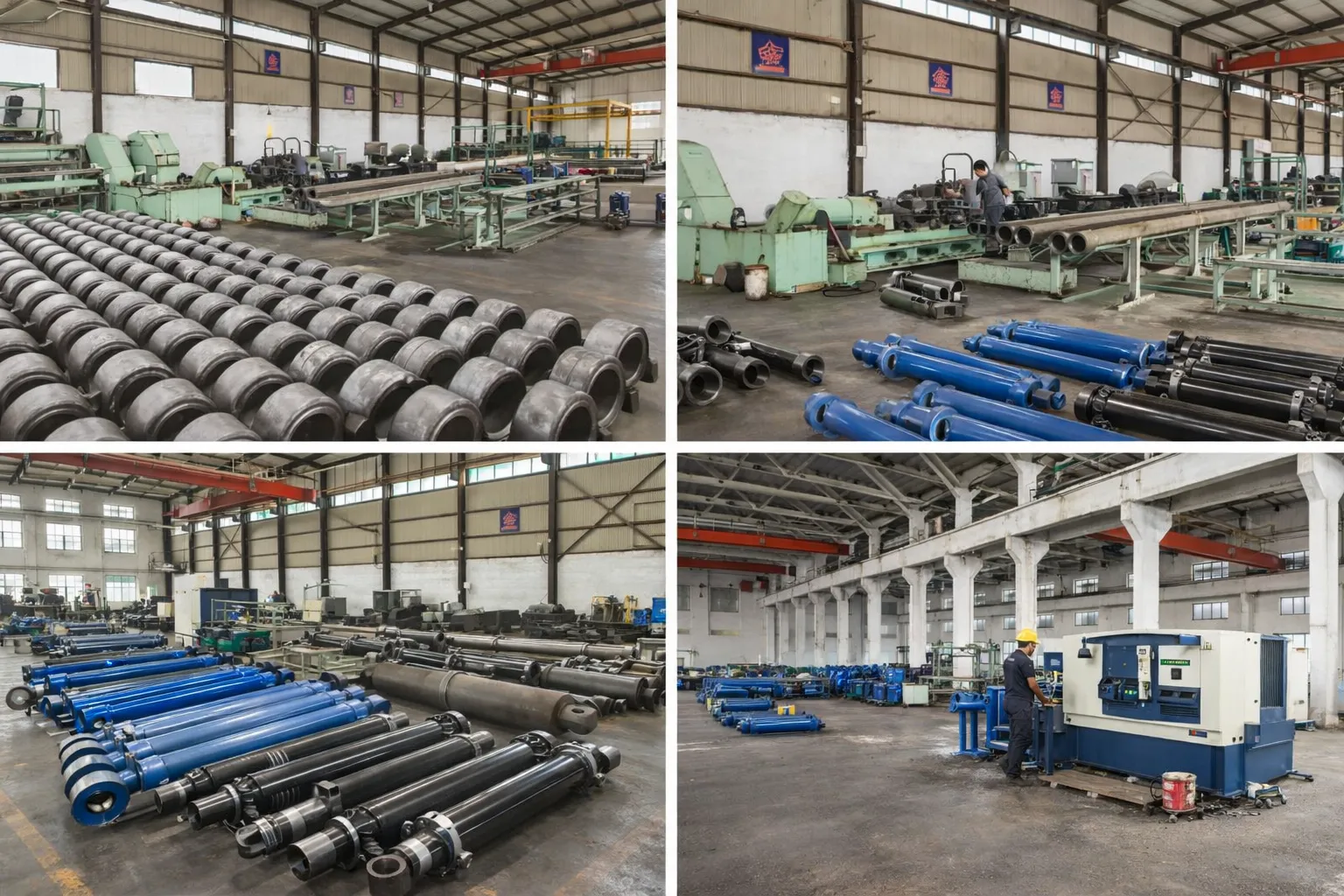
Uncompromising quality assurance is not merely a final inspection step; it is a continuous, rigorous process integrated into every single stage of our fabrication. As an autonomous, fully integrated manufacturing facility, we retain absolute control over the entire lifecycle of our hydraulic components. Raw Q345D steel billets are spectroscopically analyzed upon delivery to confirm their exact chemical composition and structural integrity. Throughout the heavy machining phase, digital micrometers and laser alignment tools constantly verify that every barrel and rod strictly meets our exacting dimensional blueprint standards.
Our unyielding commitment to job site safety dictates our internal testing protocols. We flatly reject the standard industry practice of randomized batch sampling. Instead, one hundred percent of the fully assembled units undergo rigorous hydrostatic dynamic testing. Each individual Drum Brake Cylinder is securely mounted to a computerized diagnostic test bench and cycled repeatedly at fluid pressures reaching 150% of its maximum rated operational load. Our engineers meticulously monitor digital transducers for any micro-drops in holding pressure that would indicate internal seal bypass. Only units that pass this punishing test with a perfect, zero-leakage score are cleared for painting and shipment. Finally, each component is permanently etched with a unique serial number, providing absolute testing traceability and long-term accountability for our B2B partners.
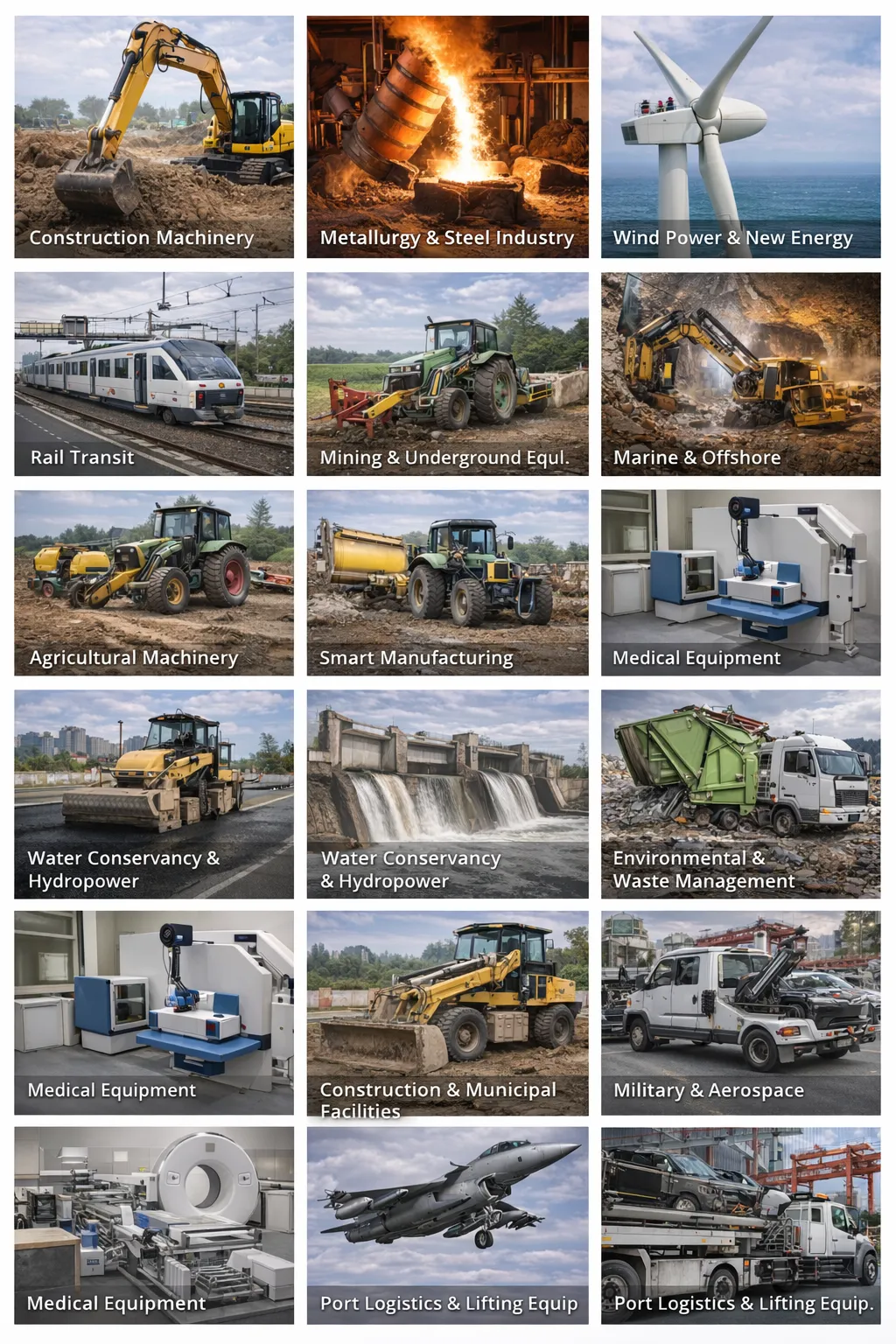
Typical Industry Application Scenarios
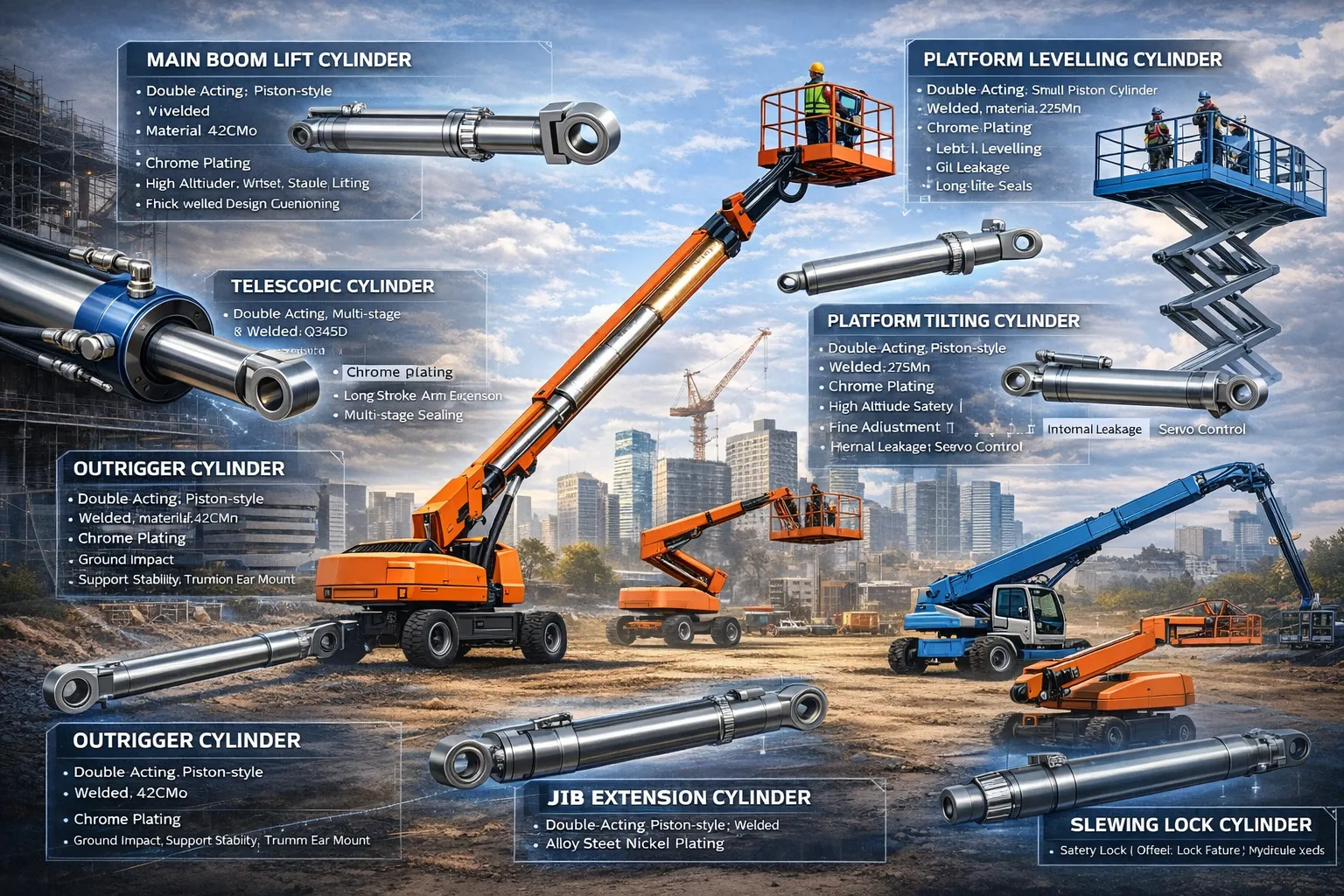
While heavily optimized for the severe, repetitive demands of crawler crane winch systems, the exceptional holding power and dynamic shock resistance of these specialized units make them highly sought after across various heavy industrial sectors:
- Construction Machinery: Essential for main and auxiliary hoist drums on crawler cranes, heavy-duty tower cranes, and deep foundation rotary piling rigs, providing fail-safe load suspension.
- Offshore & Marine Lifting: Shipboard deck cranes, pipe-laying vessels, and offshore oil rig anchor-handling winches rely heavily on these robust braking cylinders to withstand corrosive salt environments and violent ocean swells.
- Metallurgy & Heavy Manufacturing: Massive overhead bridge cranes moving heavy ladles of molten steel utilize specialized, heat-resistant variations of these cylinders for critical, high-temperature load holding.
- Mining & Extraction: Deep underground mine shaft hoists and massive open-pit dragline excavators require fail-safe braking mechanisms to transport personnel and heavy ore safely without fail.
- Specialized & Custom Logistics: Heavy railcar movers, massive shipyard transporters, and specialized heavy-haul transport winches use these components to secure loads during high-stress transit.
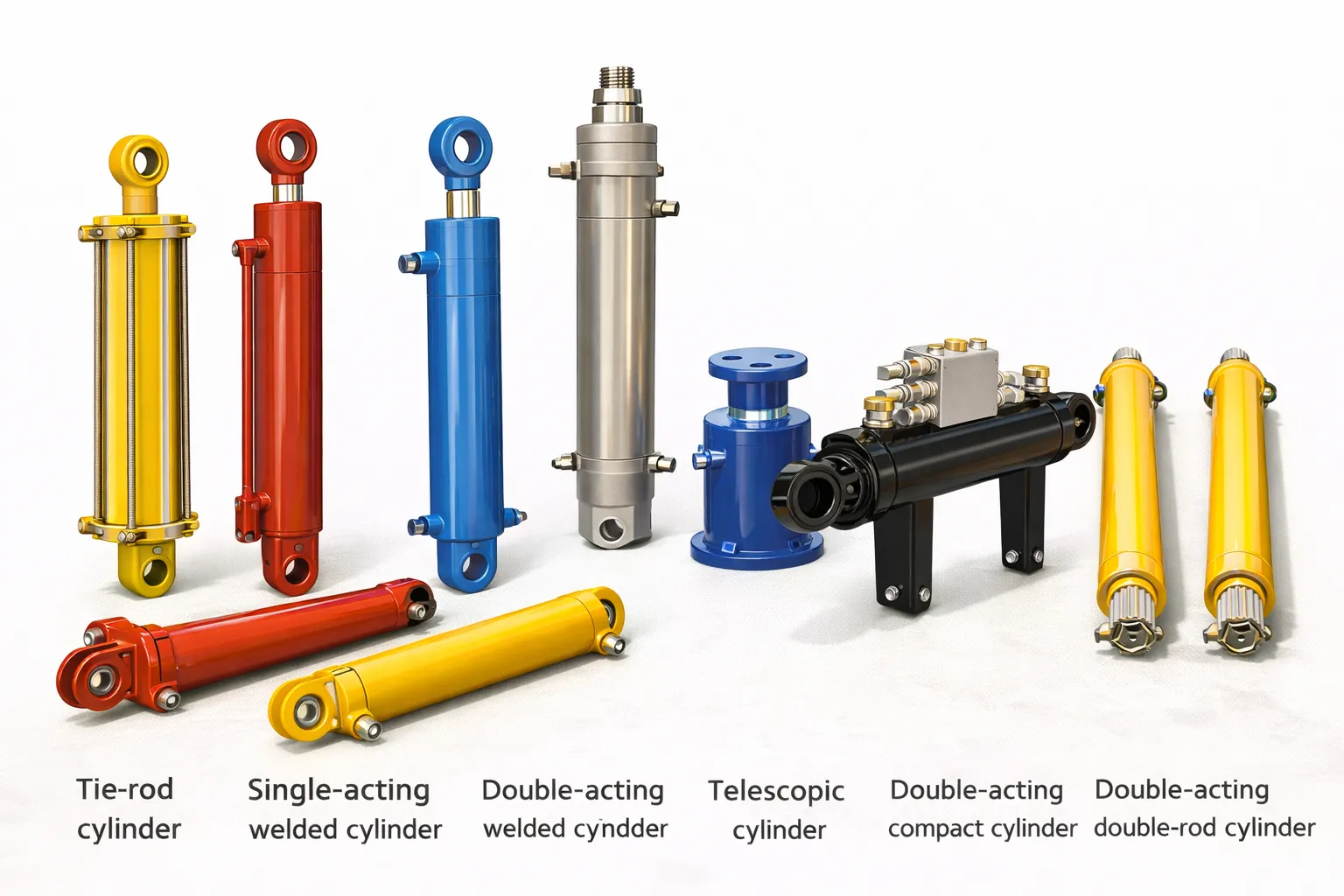
Comparative Analysis: Standard vs. Engineered Performance
Procurement decisions based solely on finding the lowest initial hydraulic cylinder price invariably result in exponentially higher downstream costs due to premature equipment failure, ruined brake linings, and massive project delays. The comparative matrix below clearly illustrates the stark mechanical differences between mass-market commercial actuators and our highly engineered braking solutions.
| Component Feature | Ordinary Commercial Cylinders | Our High-Performance Cylinders |
|---|---|---|
| Structural Material | Basic carbon steel. High risk of weld fatigue and microscopic barrel distortion under shock loads. | Q345D low-alloy steel. Exceptional yield strength easily absorbs severe hoisting impacts. |
| Sealing Matrix | Standard NBR rubber O-rings. Tears easily under sudden pressure spikes, causing critical internal leakage. | Specialized Polyurethane/PTFE composite with anti-extrusion rings. Guarantees zero-leakage. |
| Machining Tolerance | Loose tolerances to maximize factory output speed. Results in uneven seal wear and slow load slipping. | CNC aerospace-grade concentricity. Ensures perfectly uniform holding pressure distribution. |
| Quality Assurance | Random batch statistical sampling. Defective units easily reach the end-user on the job site. | 100% individual hydrostatic pressure testing at 150% operating limits before shipment. |
Verified Global Field Applications & Case Studies
Our engineered components actively support massive, high-stakes infrastructure projects across the Asian market and globally. Below are five verified engineering case studies demonstrating the practical impact of our technology in resolving critical field issues:
1. Resolving Winch Slip in South Korean Port Construction
Client: Maritime Infrastructure Contractor, Busan (November 2024)
Application: Main lifting drum brakes on a fleet of 250-ton crawler cranes.
The Challenge & Contact: The contractor was experiencing dangerous, slow load drift when holding massive precast concrete caissons over the freezing harbor water. Diagnostic tests revealed the OEM brake cylinders were suffering from internal fluid bypass due to seal shrinkage in the extreme cold, compounded by frequent hoisting impacts. They located our technical data sheets online via a B2B portal search for zero-leakage solutions and emailed our engineering support desk.
The Result: We rapidly manufactured and air-freighted custom Drum Brake Cylinder units featuring our specialized cold-weather composite sealing matrix and Q345D steel construction. The load slipping was completely eliminated immediately upon installation.
“The uncommanded load drift was completely eradicated the day we installed the new parts. Holding multi-ton concrete blocks steady over the harbor is no longer a safety concern for our operators in the winter.” — Mr. Choi D., Site Safety Director.
2. Overcoming Severe Hoisting Impact in Japan
Client: Urban Foundation Engineering Group, Osaka (March 2025)
Application: Heavy-duty winch systems on deep foundation rotary drilling rigs.
The Challenge & Contact: Dropping and abruptly halting massive steel drill strings caused violent hoisting impacts that literally deformed and ballooned the standard carbon steel brake cylinders on the rigs, causing the seals to blow out and disabling the machinery. The project manager reached out to us at a regional industrial machinery exhibition seeking a major structural upgrade.
The Result: We supplied heavily upgraded units fabricated entirely from high-yield Q345D alloy steel, featuring thick-walled construction and reinforced mounting trunnions designed specifically to absorb extreme hoisting impact without deformation.
“These actuators absorbed the kinetic shocks without any structural yielding. They have endured multiple severe shock loads during high-speed drilling operations without a single failure or drop in hydraulic pressure.” — K. Yamamoto, Chief Engineer.
3. Thermal Endurance for Logistics in Taiwan
Client: Heavy Infrastructure Construction Firm, Taichung (July 2025)
Application: Continuous hoisting operations during high-speed concrete pouring for a bridge project.
The Challenge & Contact: Non-stop braking operations in high ambient summer temperatures caused the hydraulic fluid to overheat, rapidly degrading the rubber seals in their winch brakes and forcing daily halts for urgent hydraulic cylinder repair. They emailed our technical support desk seeking a permanent high-temperature solution.
The Result: We engineered drop-in replacements utilizing high-temperature Viton special seals and optimized internal fluid porting to dramatically enhance heat dissipation during the frequent, rapid braking cycles.
“We run continuous shifts in the summer heat without losing braking pressure. The thermal stability of these units is remarkable, preventing any seal degradation or dangerous loss of braking power.” — Lin W., Operations Manager.
4. Reliability in Harsh Mining Environments in Vietnam
Client: Open-Pit Mining Corporation, Quang Ninh (October 2025)
Application: Heavy dragline excavator drum braking systems handling massive buckets of ore.
The Challenge & Contact: Highly abrasive airborne coal dust was heavily scoring the chrome rods of their actuators, tearing the wiper seals, and severely contaminating the hydraulic fluid system. They found our manufacturing capabilities through an online search for robust, heavy-duty hydraulic parts.
The Result: We delivered custom heavy-duty cylinders featuring an advanced, extra-thick layer of micro-cracked hard chrome plating and dual-lip polyurethane wiper seals designed to forcefully eject abrasive debris before it could enter the gland assembly.
“The rods look pristine despite the extremely abrasive mining environment. These engineered parts have dramatically increased the maintenance intervals of our draglines and stopped the fluid contamination completely.” — Nguyen V., Chief Mechanic.
5. Rapid Overhaul for Equipment Rentals in Thailand
Client: Heavy Equipment Leasing Firm, Bangkok (January 2026)
Application: Fleet-wide preventative maintenance on a mixed fleet of aging crawler cranes preparing for a mega-dam project.
The Challenge & Contact: The leasing firm faced a massive backlog of cranes requiring brake overhaul but was constrained by exorbitant OEM part costs and 5-month lead times. They reached out via our portal seeking to lower their overall component costs without sacrificing fleet safety and to stop constantly fixing hydraulic cylinders with weak aftermarket kits.
The Result: By providing exact dimensional aftermarket replacements based on their schematics, we allowed them to overhaul their drum systems rapidly at a highly favorable B2B hydraulic cylinder price, getting their cranes back on active lease in just 5 weeks.
“Standardizing our fleet with your components saved our maintenance budget. The build quality easily rivals the original factory equipment, and the fitment was perfect across all our different crane brands.” — S. Chai, Procurement Director.
Frequently Asked Questions (FAQ)
For engineering firms and procurement teams evaluating high-stakes fluid power components, having access to clear technical answers is vital. Below are the most common inquiries regarding our heavy-duty braking solutions:
How exactly do special seals prevent internal leakage during a hoisting impact?
During a sudden stop, fluid pressure inside the barrel can spike to double its normal working limit in fractions of a second. Standard rubber seals deform under this pressure and get pushed into the tiny clearance gap between the piston and the barrel, causing tearing and leakage. Our specialized sealing matrix includes rigid backup rings made of advanced polymers. These rings block the gap, physically preventing the softer sealing material from extruding, thus maintaining a perfect hydrostatic fluid lock even under violent impacts.
What is the functional difference between a single acting and a double acting hydraulic cylinder in this braking application?
A single-acting mechanism relies on fluid pressure for one direction (usually engaging the brake) and a mechanical spring to return it. This is insufficient for the precise control needed in heavy crawler cranes. Our systems utilize a double acting hydraulic cylinder, meaning highly pressurized fluid is actively used to both forcefully engage and smoothly retract the brake band. This powered dual-action provides the operator with infinitely greater proportional control over lowering heavy payloads safely and prevents the brake from dragging.
Do you supply individual replacement parts for field maintenance?
Yes, we support our B2B clients completely. We understand that field technicians require immediate access to hydraulic cylinder components to minimize expensive crane downtime. We supply OEM-quality replacement specialty seal kits, individual hydraulic cylinder piston heads, and heavy-duty mounting pins to ensure your team can execute rapid hydraulic cylinder repair directly on the job site without needing to ship the entire unit back to our manufacturing facility.
What dictates the final hydraulic cylinder price for custom B2B orders?
For bulk or custom applications, the hydraulic cylinder price is determined by the bore diameter (which dictates the necessary clamping force), the operational pressure requirements, and the specific steel grades requested (such as upgrading to Q345D). Because we handle all machining, welding, and hydrostatic testing in-house as a direct manufacturer, we are able to bypass intermediary distributors, providing our partners with highly competitive, factory-direct pricing for premium engineering.
Why is Q345D steel explicitly required for these braking systems?
Standard commercial carbon steel lacks the necessary impact toughness. When a massive weight is braked abruptly, the hydraulic pressure inside the cylinder spikes violently. Q345D is a high-yield, low-alloy structural steel that absorbs these severe hoop and shear stresses without elastically ballooning or fracturing. This structural rigidity ensures the internal bore remains perfectly cylindrical, which is absolutely required for the seals to prevent fluid leakage over a long operational lifespan.
Can these actuators withstand cold-weather environments in Northern Asia?
Yes. By exclusively utilizing Q345D alloy steel, the mechanical structure retains its critical impact toughness in sub-zero temperatures down to -20 degrees Celsius, preventing brittle fracture. Furthermore, if you specify cold-weather operation during your engineering consultation, we will equip the unit with specialized low-temperature polyurethane seals that retain their elasticity and sealing capability well below freezing, ensuring your braking systems remain safe and leak-free.
Can you manufacture replacement parts for obsolete or discontinued cranes?
Absolutely. A major advantage of partnering with a direct manufacturer is our extensive reverse-engineering capability. If you operate legacy machinery where the OEM no longer produces spare parts, simply provide us with the dimensional drawings or a sample unit. We can precisely machine custom barrels, rods, and mounting brackets to ensure your older equipment remains fully functional and safe to operate.
What testing is performed before the cylinders are shipped?
We perform 100% individual testing. Every assembled cylinder is connected to a hydrostatic test rig and cycled at 150% of its maximum rated operational pressure. We monitor digital transducers for any microscopic pressure drops that would indicate internal seal bypass. Additionally, all critical structural welds undergo ultrasonic non-destructive testing (NDT) to ensure there are no hidden fatigue cracks or voids before the product leaves our facility.
How does hard chrome plating extend the life of the cylinder?
The exposed rod is constantly bombarded by abrasive dust, dirt, and moisture. Our thick layer of hard chrome plating creates an incredibly hard surface that resists scratching and scoring. Crucially, the chrome layer features a microscopic crack network that retains a thin film of lubricating oil. This reduces friction against the external wiper seals, preventing them from tearing and blocking environmental contaminants from entering the hydraulic fluid.
Ensure Total Safety in Your Heavy Lifting Operations
Do not allow sub-standard seals and weak commercial steel structures to compromise the safety of your job site or the profitability of your fleet. Upgrade your winch systems with braking components engineered specifically to defeat internal leakage and survive violent hoisting impacts. Whether you need immediate aftermarket replacements or are designing a completely new drum mechanism, our engineering team is ready to deliver precise, high-performance solutions. Explore our full capabilities by visiting our homepage at hydrauliccylindersprice.com.
Editor: Cxm


























