Dethatcher Claw Lift Cylinder for Lawn Dethatcher
Precision-engineered to permanently defeat rod pitting caused by acidic grass sap and morning dew. We combine a compact, lightweight welded architecture with advanced dust wiper technology to provide flawless depth control and absolute zero-leak reliability for commercial turf management fleets.
Strategic Product Overview: Precision Turf Management and Fluid Power Reliability
In the highly meticulous and visually demanding field of professional turf management—spanning championship golf courses, elite sports stadiums, and sprawling municipal parks—maintaining the biological health of the soil profile is the foundation of the entire operation. Over successive growing seasons, a dense, impermeable layer of dead grass stems, shallow roots, and decomposing organic debris accumulates directly above the topsoil. This stifling layer, scientifically known as thatch, acts as a suffocating physical barrier. It actively prevents critical irrigation water, atmospheric oxygen, and expensive liquid fertilizers from effectively penetrating the active root zone. To eradicate this barrier and rejuvenate the grass, agronomists rely heavily on commercial lawn dethatchers, also referred to as scarifiers or verticutters. These sophisticated agricultural implements utilize a rapidly rotating horizontal shaft equipped with dozens of sharp steel spring tines or rigid claws to physically slice through the turf and extract the dead material. However, the exact depth at which these tines engage the earth must be regulated with absolute millimeter accuracy to avoid destroying the healthy grass crowns. The singular mechanical component entrusted with setting, holding, and rapidly adjusting this vital cutting depth is the Dethatcher Claw Lift Cylinder.
While this specific lifting mechanism operates under a relatively “light load” compared to heavy earthmoving equipment, the environmental exposure is profoundly hostile to fluid power systems. When dethatchers operate in the early morning hours, the turf is heavily saturated with dew. The high-speed spinning claws kick up a continuous, wet slurry of abrasive topsoil, silica sand, and highly acidic, freshly cut grass sap directly onto the exposed rod of the hydraulic cylinder. Standard commercial actuators are severely compromised by this localized micro-climate. Wet, acidic grass clippings cling tenaciously to standard “flash” chrome plating. If the cylinder lacks a specialized metallurgical defense mechanism, this acidic moisture initiates rapid galvanic corrosion, commonly known in the industry as rod pitting. Once the rod develops microscopic rust craters, those tiny, jagged edges act exactly like coarse sandpaper. Every time the operator commands the lift cylinder to retract, the pitted rod is dragged forcefully across the internal hydraulic cylinder piston seals, instantly shredding them to pieces. The immediate consequence is a catastrophic fluid leak. In professional turf management, dripping hot hydraulic oil directly onto a pristine golf green causes instantaneous, irreversible chemical turf burn. This toxic spill costs thousands of dollars in sod replacement and forces groundskeeping crews to waste valuable daylight hours frantically fixing hydraulic cylinders rather than preparing the course for play.
Operating as a highly specialized and globally integrated hydraulic cylinder manufacturer, our engineering division has designed a comprehensive, highly targeted solution to permanently resolve rod pitting and environmental contamination in turf equipment. Our custom-engineered Dethatcher Claw Lift Hydraulic Cylinder utilizes a compact, lightweight welded carbon steel structure that is perfectly suited for the tight dimensional constraints of small landscaping machinery, minimizing the overall weight to prevent unwanted soil compaction. To combat the corrosive environment, we apply a specialized, ultra-thick anti-rust hard chrome treatment to the rod. Most crucially, we integrate an aggressive, heavy-duty polyurethane dust wiper ring specifically profiled to physically shear wet, acidic grass off the rod before it can enter the seal gland. By upgrading your commercial mower and dethatcher fleet with our specialized hydraulic parts, you guarantee absolute depth consistency, eliminate the financial liability of oil spills on high-value turf, and secure years of flawless, leak-free operation.
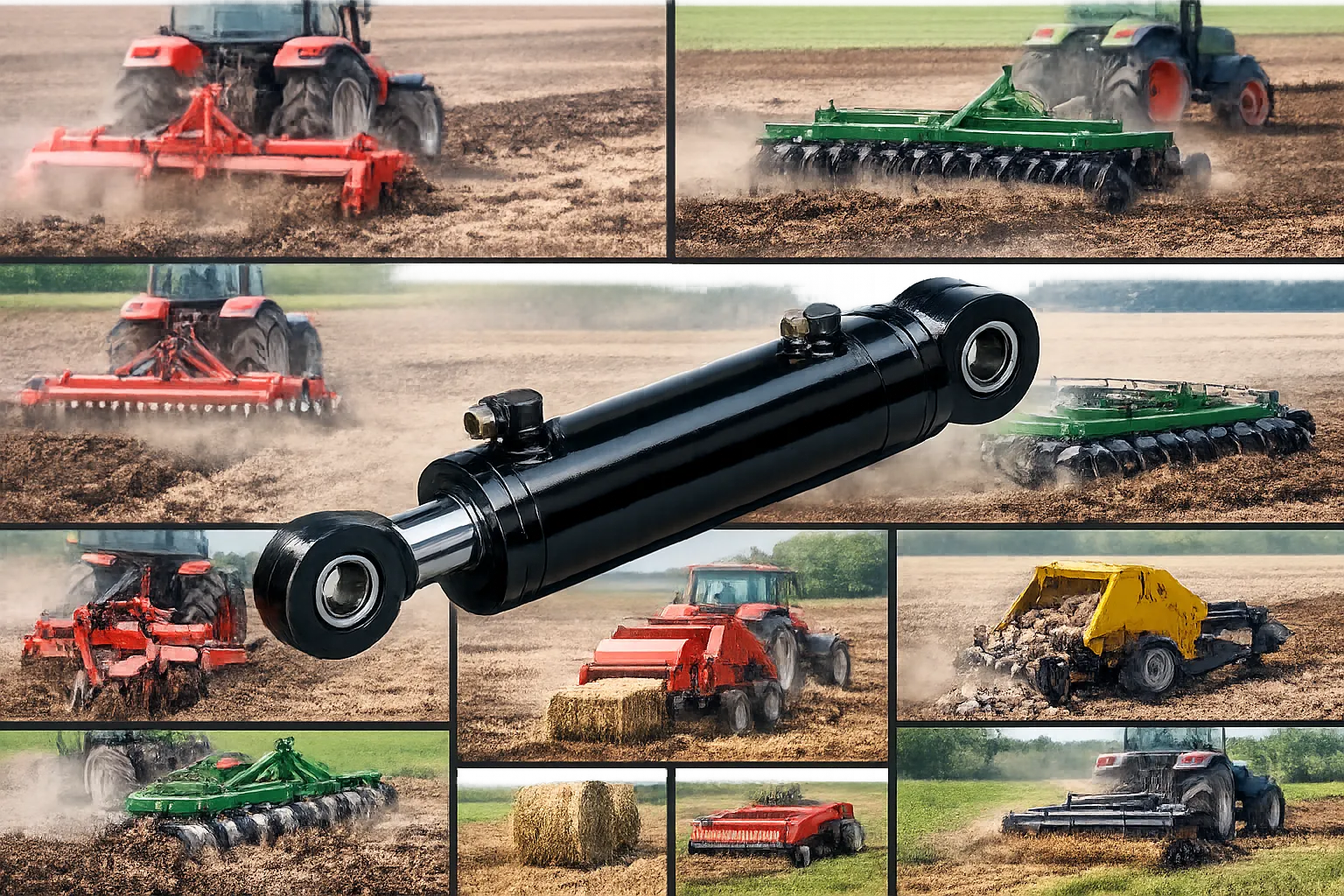
Comprehensive Engineering Specifications
Optimizing a fluid power component for light-load, high-moisture agricultural applications requires highly targeted material selection to balance extreme reliability with commercial viability. The engineering matrix below details the rigorous baseline parameters of our compact dethatching actuators. For procurement managers sourcing heavily armored components for larger mobile equipment, we invite you to extensively review our broader manufacturing capabilities within our complete hydraulic cylinder product catalog.
Operational Fluid Dynamics: Absolute Rigid Depth Control
Comprehending the exact fluid mechanics of this small-bore component is critical for recognizing why cheap, standard actuators cause catastrophic turf damage. Controlling a rapidly rotating, claw-equipped drum over undulating turf requires active hydraulic force in two distinct directions. A single acting hydraulic cylinder is entirely inappropriate and operationally dangerous here. A single-acting unit relies purely on the deadweight of the implement to lower itself into the turf; it cannot actively force the claws down if they ride up over a thick, resistant mat of dry thatch. Consequently, this depth-control mechanism must be engineered strictly as a double acting hydraulic cylinder. This precise fluid configuration utilizes highly pressurized oil from the tractor or turf-vehicle’s auxiliary pump to actively drive the rod outward, mechanically lifting the implement for transport or tight turns, and actively retracting the rod to powerfully pull the spinning drum down to the exact calibrated depth necessary for healthy aeration.
The true engineering test occurs when the operator locks the hydraulic valve to hold the set depth. As the tractor advances, the high-speed rotating claws violently bite into the thatch and topsoil. This action generates a continuous, rapid upward kinetic force, attempting to push the heavy drum out of the turf. This upward force translates directly into a severe static pressure spike within the rod-end chamber of the cylinder. If the internal seals are manufactured from inferior rubber, or if they have been compromised by a rusted, pitted rod, high-pressure fluid will microscopically weep past the hydraulic cylinder piston. Because hydraulic fluid is incompressible, this internal bypass is the singular physical reason the cylinder rod extends on its own, allowing the dethatcher to slowly drift upward and completely miss the vital thatch layer.
By deploying our specialized hydraulic rams, we systematically defeat this implement drift. We start by ensuring the rod remains immaculately smooth through advanced anti-rust treatments and thickened hard chrome plating, completely preventing the corrosive pitting that initiates seal damage. We then integrate a tight-tolerance, CNC-honed carbon steel barrel that mates perfectly with high-grade, low-friction pressure seals. This creates an impenetrable hydrostatic lock. Regardless of the intense, continuous vibration from the spinning claws, the fluid remains trapped exactly where it needs to be, ensuring the dethatcher maintains a mathematically flat, perfectly level cut across the entire sports field or fairway without scalping the turf.
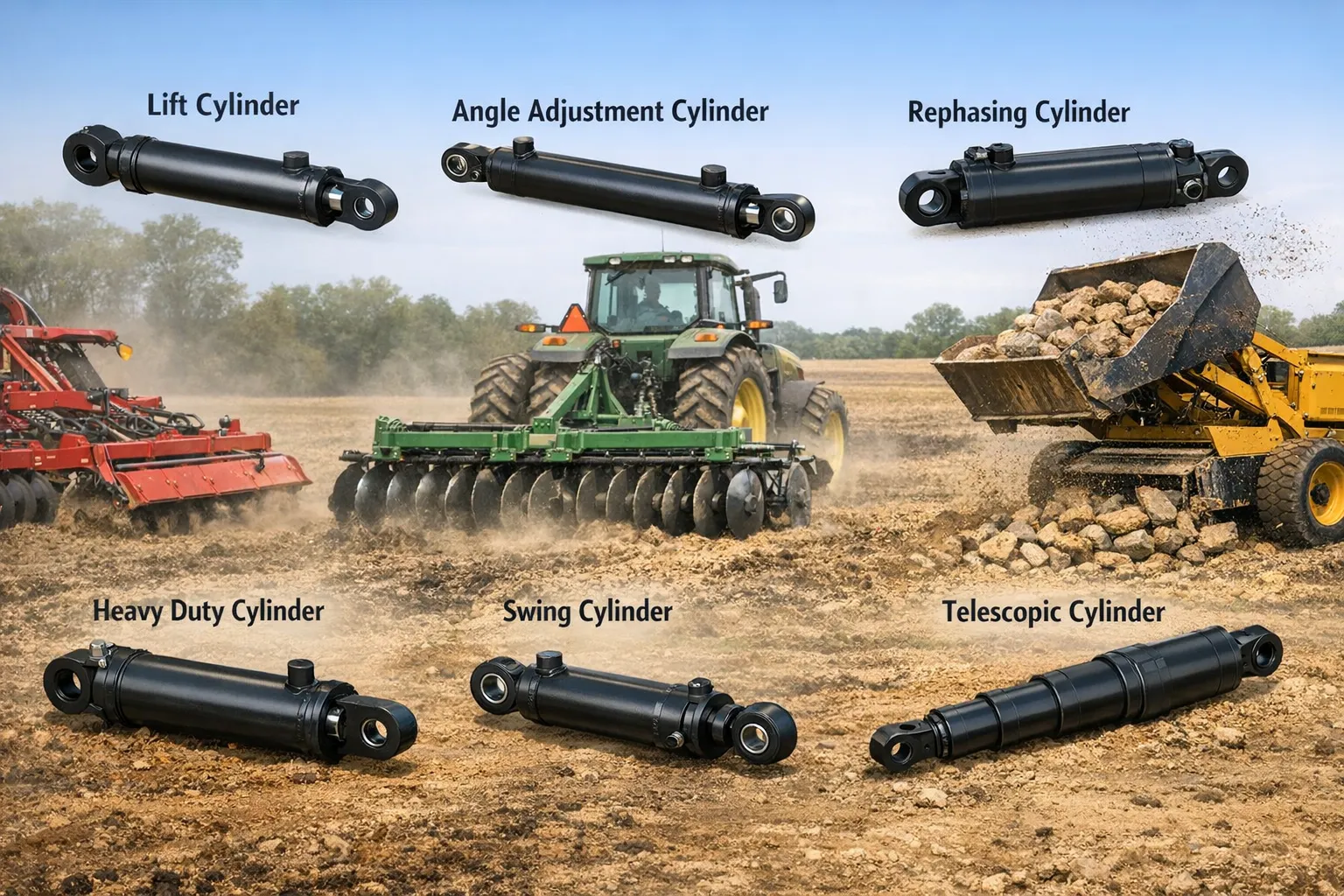
Seamless Aftermarket Upgrades for Commercial Turf Fleets
Commercial turf managers, landscaping contractors, and golf course superintendents operate under exceptionally tight, highly visible maintenance schedules. When a dethatcher starts leaking hydraulic fluid onto a pristine putting green, or fails to hold its cutting depth, the equipment must be sidelined immediately to prevent further damage. Relying on overpriced factory original components that take weeks to ship through a cumbersome dealership network is not a viable operational strategy. We meticulously engineer our compact aftermarket hydraulic cylinder models to serve as rapid, dimensionally exact mechanical upgrades for the industry’s most relied-upon commercial turf equipment. Our strict CNC manufacturing tolerances guarantee that critical installation metrics—including exact closed pin-to-pin lengths, total stroke dimensions, specific clevis or cross-tube mounting widths, and precise hydraulic port thread pitches—perfectly mirror your existing machinery for rapid field installation directly in your maintenance facility.
We continuously manufacture highly corrosion-resistant structural replacements for heavy-duty dethatchers, verticutters, and deep-tine aerators manufactured by premier global turf brands such as Toro, John Deere Golf, Jacobsen, Ryan, Wiedenmann, Classen, and Turfco, as well as implements driven by compact utility tractors from Kubota, Kioti, TYM, and LS Mtron. (Please be fully advised: The inclusion of these specific original equipment manufacturer brand names is strictly intended to assist turf mechanics and B2B procurement officers in accurately cross-referencing dimensional compatibility and structural application intent. We operate exclusively as an independent manufacturer of premium hydraulic cylinder components and assert no trademark affiliation or corporate endorsement by these entities.)
By choosing to confidently retrofit your vulnerable factory equipment with our specialized, anti-corrosion actuators, you actively bypass highly inflated dealership parts pricing while permanently curing the systemic rod-pitting vulnerabilities inherent in standard commercial designs. This strategic maintenance upgrade significantly optimizes your operational reliability and long-term hydraulic cylinder price metrics by completely eliminating the catastrophic risk of leaking hot oil onto a championship green.
Core Technological Defenses: Eradicating Chemical Corrosion
Preventing a hydraulic actuator from dissolving and leaking in a highly acidic, perpetually damp organic environment requires targeted surface engineering and aggressive contamination exclusion. The following technical pillars explicitly define why our compact cylinders survive and thrive where generic, off-the-shelf actuators rapidly corrode:
1. Advanced Anti-Rust Processing & Hard Chrome
Standard commercial cylinders use an incredibly thin layer of flash chrome that is instantly compromised by acidic damp grass, leading to microscopic rust craters. We subject our carbon steel rods to a specialized, multi-stage pre-treatment anti-rust process before applying a thickened layer of hard chrome plating. This dual-layer metallurgical defense system establishes an impenetrable galvanic barrier, completely rejecting the chemical oxidation that causes rod pitting.
2. Aggressive Polyurethane Dust Wiper
The primary vector for internal seal destruction is wet debris bypassing the front gland housing. Basic rubber wiper seals simply roll over caked-on mud and wet grass clippings, dragging them inside. We equip our cylinder glands with a highly aggressive, stiff polyurethane scraper ring. This acts exactly like a rigid plastic blade, physically and violently shearing off sticky organic debris and silica sand before it can ever touch the primary high-pressure fluid seals.
3. Monolithic Welded Architecture
The continuous, high-frequency chatter generated by a heavy drum of spinning steel claws will rapidly vibrate generic tie-rod cylinders loose, stretching the bolts and causing external oil weeping. Our heavy-duty small-bore models utilize automated, deep-penetration submerged arc welding to permanently fuse the base caps directly to the steel barrel. This creates an unyielding, monolithic pressure vessel completely immune to mechanical resonance.
4. Precision CNC Mirror-Honed Bore
The slightest machining imperfection on the internal barrel wall will act like sandpaper against the piston seals during rapid micro-adjustments. We utilize advanced automated honing machines to achieve a mirror-like internal surface finish of Ra 0.2 to 0.4 micrometers. This flawless smoothness drastically reduces internal friction, completely eliminating seal “stiction” and ensuring the implement adjusts depth with absolute, silky smoothness.
5. Ultra-Low Friction Sealing Technology
Because dethatching requires constant, tiny hydraulic inputs to find the perfect depth, the piston cannot bind or grab the barrel wall. We outfit our precision-honed barrels with advanced composite sealing matrices, utilizing low-friction PTFE-blended (Teflon) guide rings. This configuration drastically reduces internal drag, allowing for flawlessly smooth, judder-free millimeter adjustments across the highly sensitive turf surface.
6. Specialized Anti-Rust External Primer
To combat the high ambient humidity of golf courses and park environments, the external carbon steel barrel and mounting clevises are subjected to a rigorous multi-stage preparation process before painting. We apply a heavy-duty industrial epoxy-based anti-rust coating that permanently seals the steel away from the atmosphere, ensuring the cylinder remains structurally sound and visually clean for years without rusting.
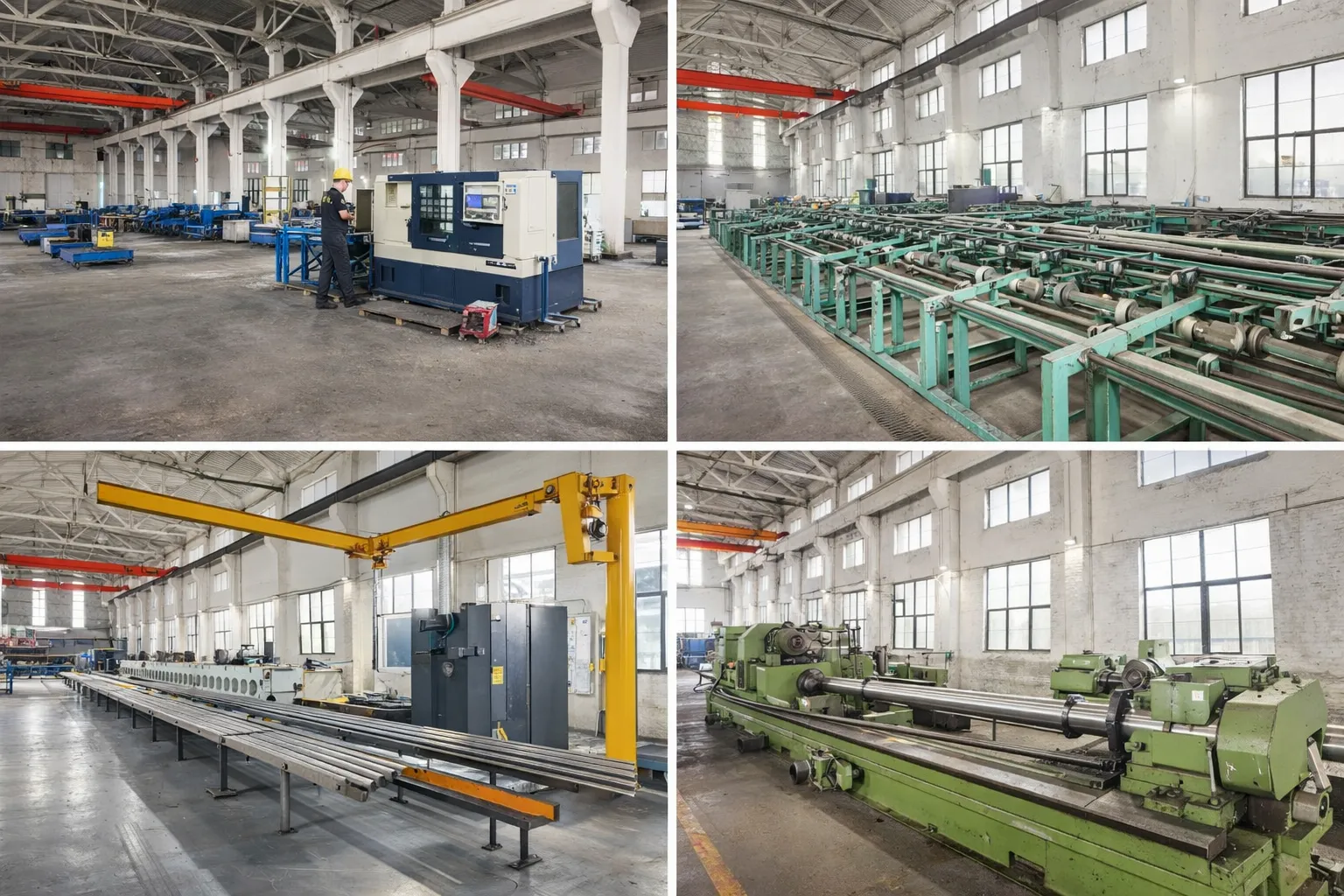
Autonomous Manufacturing and Rigorous Quality Control
Absolute mechanical reliability in a highly sensitive turf environment cannot be achieved by simply assembling cheap, outsourced components; it must be systematically manufactured into the actuator from the raw steel upwards. By operating a highly capitalized, vertically integrated factory, we maintain absolute sovereign control over the entire production lifecycle. When the raw carbon steel billets and tubing arrive at our loading docks, they undergo immediate material spectrometry and ultrasonic non-destructive testing (NDT) to verify their exact elemental composition and detect any sub-surface metallurgical flaws that could cause a leak under operational pressure.
The internal fluid architecture of our hydraulic parts is sculpted using advanced, multi-axis CNC turning and milling centers. This intense robotic automation allows us to consistently achieve incredibly tight diametrical tolerances on the seal grooves and heavy threaded glands. This mathematical precision is strictly necessary to ensure the high-grade seals are compressed perfectly—tight enough to hold the hydrostatic lock, but loose enough to prevent thermal friction drag. Following the automated robotic welding phase, every single critical structural seam undergoes secondary testing to confirm maximum weld penetration and the total lack of internal slag inclusions.
Crucially, before any Dethatching Claw Lift Cylinder is authorized for global export, it must survive an uncompromising 100% factory pressure testing protocol. The units are securely mounted to highly calibrated hydraulic test benches and intensely pressurized to 1.5 times their maximum rated operational capacity. We conduct stringent static holding tests to mathematically verify absolute zero internal fluid bypass across the piston, ensuring the heavy dethatcher drum will not drift or sink during a critical landscaping pass. Every passing cylinder is then permanently laser-etched with a unique alphanumeric serial number, providing absolute lifetime material traceability for our commercial B2B partners.
Cross-Industry Adaptability of Precision Light-Load Actuators
While the external mounting geometry of this specific unit is optimized for commercial turf management implements, the foundational fluid power engineering—specifically the integration of advanced anti-corrosion treatments and aggressive dust wipers to defeat damp organic environments—is highly demanded across multiple specialized light-duty industrial sectors.
- Compact Civil Earthworks: The exact same compact, vibration-resistant welded technology is essential for operating the small leveling blades and steering dampeners on mini-excavators utilized within the construction machinery industry.
- Greenhouse & Nursery Automation: The precise, low-friction adjustment capabilities and high moisture resistance make these small actuators ideal for positioning ventilation hatches and automated irrigation booms in the wind power and new energy sectors.
- Marine & Coastal Infrastructure: The supreme chemical and oxidation resistance provided by our specialized thick hard chrome plating makes these systems a premier choice for actuating light-load hatches exposed to salt spray in the marine and offshore industry.
Comparative Analysis: Standard Commercial vs. High-Corrosion Resistance
Evaluating the true commercial value of a turf management actuator requires analyzing the total cost of downtime. Purchasing a cheap, generic cylinder inevitably leads to rapid rod pitting, ruined turf from hydraulic oil leaks, and continuous, expensive repair bills. The comparative matrix below definitively illustrates why upgrading to our specialized corrosion-resistant components is a fundamentally sound agronomic and business decision.
Proven Global Field Performance: B2B Case Studies
The theoretical excellence of combining aggressive polyurethane scrapers with heavy anti-rust treatments is definitively proven every spring in the grueling, damp realities of commercial landscaping. Below are documented cases detailing how our high-precision fluid power solutions have systematically resolved chronic hydraulic failures for major turf management partners across the Asian market.
Case Study 1: Eradicating Rod Pitting on a South Korean Championship Golf Course
Location & Client: Jeju Island, South Korea — A premier championship golf resort managing extensive, highly manicured bentgrass fairways subjected to heavy coastal humidity and continuous irrigation.
The Challenge: During the intensive spring dethatching program in 2024, the groundskeeping crew faced a severe maintenance crisis. The highly acidic, wet thatch was aggressively adhering to the exposed cylinder rods of their heavy-duty Toro verticutters. Within three weeks, the standard OEM rods were heavily pitted with rust. These microscopic pits rapidly shredded the internal seals, leading to disastrous hydraulic fluid leaks directly onto the pristine fairways, instantly killing large patches of expensive turf and halting the renovation program.
Contact & Solution: The head superintendent located our specialized engineering capabilities through a technical web search targeting solutions for hydraulic cylinder repair and corrosion resistance. We rapidly manufactured and air-freighted a fleet-wide retrofit batch of our Dethatching Claw Lift Cylinder, explicitly outfitted with our dual-layer anti-rust processed rods and aggressive polyurethane debris scrapers.
The Result: After installation, rod pitting was completely eliminated. The aggressive scrapers sheared off the wet thatch flawlessly. The fleet completed the entire spring and autumn renovation cycles with zero fluid leaks on the course, preserving the turf and the resort’s prestigious reputation.
Case Study 2: Conquering Implement Drift in Hokkaido, Japan
Location & Client: Hokkaido, Japan — A large-scale municipal parks department responsible for maintaining hundreds of hectares of public sports fields and recreational lawns.
The Challenge: To maximize efficiency, the tractor operators pulled wide, heavy-duty dethatchers at relatively high speeds. The intense kinetic chatter of the claws hitting the soil caused the standard OEM cylinders to suffer from internal fluid bypass. The dethatchers would slowly drift upward as the tractors moved, completely missing the thatch layer in large sections and forcing the crews to perform extensive, time-wasting rework.
Contact & Solution: The department’s lead mechanic contacted us directly via our website portal seeking a more stable holding mechanism. Our engineering team prescribed our specialized small cylinders featuring high-grade pressure seals mated perfectly to CNC mirror-honed barrels to create an unbreakable hydrostatic lock.
The Result: Implement drift was entirely eradicated. Once the operators set the hydraulic depth on the console, the heavy rotating drums stayed rigidly locked into the turf profile regardless of machine vibration, ensuring a perfectly uniform cut across the entire park system.
Case Study 3: Supplying Premium Reliability to a Taiwanese OEM Builder
Location & Client: Taichung, Taiwan — A specialized manufacturer of compact utility tractors and highly tailored turf management attachments exporting throughout the Southeast Asian market.
The Challenge: To maintain their premium brand reputation, the manufacturer needed to source highly dependable, leak-proof actuators for their new line of commercial dethatchers. The cheap, locally sourced standard cylinders they initially tested utilized tie-rod construction. The intense vibration of the dethatching drum quickly vibrated these cylinders loose, causing unacceptable external oil weeping during pre-launch field trials.
Contact & Solution: Searching the global trade directory for a highly capable hydraulic cylinder manufacturer, their head of engineering connected with us. We established a bulk-supply protocol, providing 100% pressure-tested units featuring our fully welded, vibration-immune monolithic architecture and premium dust scrapers.
The Result: The OEM successfully launched their new implement line with flawless, leak-proof hydraulic lifting capabilities, entirely eliminating field warranty claims and securing exceptional reviews from commercial landscapers.

Frequently Asked Questions
We prioritize absolute engineering transparency. To assist professional landscapers, OEM designers, and procurement managers in thoroughly qualifying our precise fluid power solutions, we have detailed comprehensive answers to the most common technical inquiries regarding our turf management actuators.
1. Why does the cylinder rod on my dethatcher constantly get rusty and pitted?
Rod pitting in turf environments is caused by chemical corrosion, not just moisture. When you dethatch, you kick up grass sap, which is highly acidic. Standard rubber wiper seals simply smear this sticky sap over the rod rather than removing it. When the acidic moisture sits on thin commercial chrome, it initiates galvanic corrosion, creating sharp rust pits that eventually tear your internal seals. We solve this permanently by applying high-quality micro-cracked chrome and using a stiff, aggressive polyurethane scraper that physically shears the sap off the rod, keeping it perfectly clean and rust-free.
2. Are these compact lift units structurally compatible with single acting hydraulic systems?
No. Controlling the exact depth of the spinning dethatching claws across undulating turf requires active, powered hydraulic force in both directions. A single acting hydraulic cylinder relies purely on gravity to lower the implement, which can be sluggish and lead to uneven turf penetration. Therefore, these precise actuators are exclusively engineered as a double acting hydraulic cylinder, ensuring the operator has instantaneous, rigid mechanical control to push the claws down and snap them back up instantly.
3. Why does my current cylinder “jerk” when I try to make tiny depth adjustments?
This jerking motion is known as “stick-slip” or stiction. It occurs when cheap internal rubber seals grip the rough interior walls of standard drawn steel tubing too tightly. When hydraulic pressure builds up, the seal suddenly breaks free, causing the rod to shoot forward uncontrollably. We engineer our units with a precision CNC mirror-honed bore (Ra 0.2-0.4μm) and low-friction polyurethane seals, which completely eliminates stiction and allows for flawlessly smooth, millimeter-precise rod extensions.
4. How does your factory-direct model justify the hydraulic cylinder price compared to generic replacements?
By partnering with us, you are conducting business directly with the originating manufacturing facility, entirely bypassing the heavy markups imposed by trading companies and regional turf equipment dealerships. The price reflects direct-from-factory access to compact welded architecture, CNC mirror-honing, advanced anti-corrosion chrome, and rigorous 100% factory pressure testing. This strategic investment drastically lowers your long-term total cost of ownership by eliminating continuous mid-season oil leaks and turf damage.
5. Can you rapidly accommodate specific pin sizes and stroke lengths for custom turf machinery?
Yes. Custom mechanical engineering is a foundational aspect of our manufacturing operations. While we strictly stock compact configurations that seamlessly replace global OEM dimensions, our technical department can rapidly adjust the bore diameter, specific stroke length, closed pin-to-pin dimensions, and end connections to precisely match the unique kinematics of your specific lawn scarifier or dethatcher.
6. What are the standard lead times for manufacturing and exporting a bulk order to South Korea or Japan?
By maintaining a heavily stocked, vertically integrated inventory of raw carbon steel and pre-machined internal components, our standard manufacturing, automated welding, and pressure testing cycles typically require 25 to 35 days for bulk commercial landscaping orders. Subsequent ocean freight logistics to major destinations in South Korea, Japan, or Taiwan generally add 5 to 10 days. We routinely synchronize our production schedules tightly with critical spring landscaping demands.
7. Can our fleet mechanics execute routine fixing hydraulic cylinders maintenance on these units at our own shop?
Absolutely. We deliberately engineer our equipment for high fleet maintainability. Because our cylinders utilize easily accessible, threaded glands rather than cheap welded-shut designs, routine internal inspection and seal replacement can be executed efficiently by your personnel using standard shop tools. We provide comprehensive, exact-match OEM-grade replacement seal and wiper kits globally to support your off-season maintenance intervals.
8. Why use carbon steel instead of a heavy-duty alloy like 42CrMo?
In professional turf management, the goal is always to minimize the footprint and weight of the machinery to prevent damaging soil compaction on delicate greens. Lifting a dethatcher tine chassis is a “light load” operation; it doesn’t involve the massive kinetic impacts of earthmoving. Therefore, utilizing a premium carbon steel provides more than enough structural rigidity while keeping the overall implement weight optimally low. Using heavy alloys here would just add unnecessary deadweight and cost.
Secure Your Turf Quality and Eliminate Oil Leaks
The aesthetic perfection of your managed properties and the profitability of your seasonal renovation contracts should never be compromised by a pitted cylinder rod dripping oil onto a fairway. By upgrading your commercial turf machinery with our highly responsive, corrosion-resistant Dethatching Claw Lift Cylinder, you definitively ensure that your implements will maintain absolute millimeter precision without suffering a catastrophic loss of hydraulic seal integrity.
Editor: Cxm