Blade Open/Close Cylinder for Cotton Topping Machines
Carbon steel with heavy chrome rod, integrated dust wiper, and optional protective boot. Prevents the rod pitting and seal contamination that shut down topper blades mid-season.
Rod Pitting Starts Invisible. By Mid-Season, It Has Destroyed the Seal.
The blade open/close cylinder on a cotton topper is one of the most abused components on the entire machine. It sits exposed at the cutting head, surrounded by a continuous cloud of cotton lint, leaf fragments, fine soil particles, and plant sap. Every time the blade opens or closes, the piston rod extends or retracts through this debris field. Without effective protection, the chrome surface picks up micro-scratches from embedded particles within the first few hours of operation. Those scratches develop into pits as moisture and plant acids settle into the damaged chrome. Within two to three weeks of daily topping, the pitting is severe enough that the rod seal can no longer maintain contact with the rod surface, and oil starts weeping past the gland.
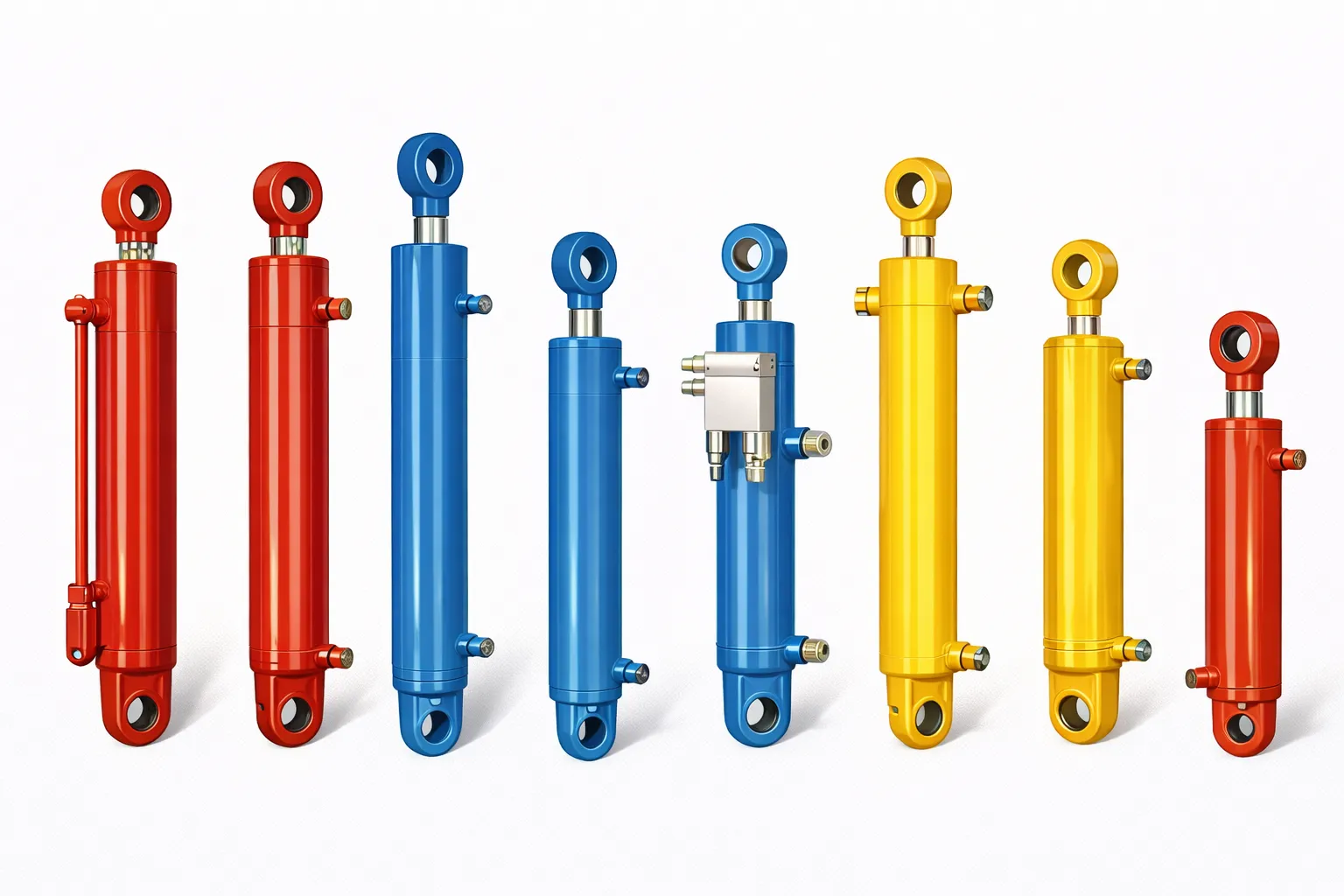
This progression from invisible micro-scratching to visible leakage is the most common failure pattern for blade hydraulic cylinder units on cotton topping machines worldwide. It is not a matter of seal quality or rod hardness alone. It is a contamination management problem. The debris must be kept off the rod surface entirely, because once the chrome is pitted, even the best seal cannot maintain a leak-free interface.
Our blade open/close cylinder addresses this failure mode with a layered protection approach: a heavy-duty PU wiper ring that strips debris from the rod during retraction, an optional simple rubber boot that shields the entire rod travel zone from direct particle contact, and a chrome plating thickness of 20 micrometers minimum with micro-polish to reduce the surface roughness that gives particles places to lodge. It is a double acting hydraulic cylinder in a compact welded carbon steel body, sized to fit the tight blade head assemblies on tractor-mounted and self-propelled cotton toppers.
From Scratch to Pit to Leak: The Three Stages of Rod Surface Failure and How to Break the Chain
Understanding the progression of rod pitting helps explain why simple seal replacement does not fix the problem and why surface protection is the real solution.
| Stage | What Happens | Time Frame | Our Prevention |
|---|---|---|---|
| Stage 1: Micro-Scratching | Airborne soil particles and cotton stem fragments land on the exposed rod. When the rod retracts, these particles are dragged past the wiper seal, cutting microscopic grooves into the chrome surface. | First 20 – 50 operating hours | PU wiper ring removes debris before retraction. Optional rubber boot eliminates particle contact entirely. |
| Stage 2: Pitting | Moisture from dew, irrigation overspray, and plant sap collects in the scratches. Chemical interaction between the moisture and exposed base metal beneath the damaged chrome creates corrosion pits that widen and deepen with each wet-dry cycle. | 50 – 150 operating hours | 20+ micron chrome with micro-polish reduces scratch depth. Thicker chrome takes longer to penetrate to base metal even when scratched. |
| Stage 3: Seal Failure | The pitted rod surface can no longer provide a smooth sealing interface. The seal lip rides over the pits, losing contact pressure at each pit location. Oil weeps past the seal in a pattern that worsens progressively as pits deepen and multiply. | 150 – 300 operating hours | By preventing stages 1 and 2, stage 3 never occurs. Boot-protected cylinders show zero pitting after 1,000+ hours. |
The key insight is that rod pitting is not an inevitable consequence of field use. It is the result of allowing abrasive particles to contact the chrome surface. Our protection strategy breaks the chain at stage 1, and for the most severe environments, the rubber boot eliminates the contact opportunity entirely.

How a Blade Open/Close Cylinder Works on a Cotton Topper
The cutting head on a mechanical cotton topper uses either a scissor-type blade pair or a set of spinning discs. On scissor-type heads, the blade open/close cylinder controls the jaw opening: extending the rod pushes the blades apart to accept the plant stem, and retracting closes the blades to make the cut. On disc-type heads, the cylinder may control a guard or deflector position that determines the cutting zone geometry.
The cycle is rapid and repetitive. In a dense cotton stand, the blades may open and close 30 to 60 times per minute as the machine moves down the row. Each cycle involves a full-stroke extension and retraction of the hydraulic cylinder rod, exposing the chrome surface to the particle-laden environment at the cutting head with every stroke. Unlike the boom arm lift cylinder that makes small micro-adjustments, the blade cylinder makes full-stroke movements repeatedly, maximizing the rod’s exposure to airborne debris.
The blade cutting action itself generates additional debris: shredded plant tissue, released cotton lint, and fine dust from dried leaves. This debris cloud is densest at exactly the location where the cylinder rod is exposed, making the blade open/close cylinder the single most contamination-exposed component on the entire topping machine.
Technical Specifications
| Specification | Available Range |
|---|---|
| Bore Diameter | 25 mm – 50 mm |
| Rod Diameter | 14 mm – 28 mm |
| Stroke Length | 30 mm – 150 mm |
| Working Pressure | Up to 14 MPa (2,030 PSI) |
| Action Type | Double Acting |
| Structure | Small Welded Piston Cylinder |
| Body Material | Carbon Steel (S45C / AISI 1045) |
| Piston Rod | Carbon Steel, Hard Chrome 20+ micron, Micro-Polished |
| Body Finish | Black Oxide + Epoxy Paint |
| Piston Seal | Standard PU Compact Seal |
| Rod Seal | NBR + PTFE Back-up Ring |
| Dust/Debris Protection | PU Wiper Ring + Optional Simple Rubber Boot |
| Mounting | Clevis, Pin Eye, Custom Bracket |
| Port Thread | BSP / NPT / Metric |
| Operating Temperature | -15 C to +80 C |
| Environment Rating | Extreme Dust / Cotton Lint / Plant Debris |
Five Protection Features That Keep the Rod Clean and the Seal Intact
Heavy-Duty PU Wiper Ring
Sharp-edged polyurethane wiper at the outermost gland position strips cotton lint, leaf debris, and soil particles from the rod surface during every retraction stroke. The wiper material is harder than standard rubber wipers, maintaining its edge geometry through thousands of full-stroke cycles per day without deforming or losing its scraping effectiveness.
Optional Simple Rubber Protective Boot
For the worst contamination environments, a simple accordion-fold rubber boot covers the entire rod travel zone. The boot compresses as the rod extends and expands as it retracts, maintaining a sealed enclosure. Unlike precision bellows boots used on sprayer cylinders, this is a simple, low-cost design that can be field-replaced in minutes if it gets torn by a stray branch. It provides complete particle exclusion at a fraction of the cost of a precision bellows system.
20+ Micron Hard Chrome with Micro-Polish
Chrome thickness of 20 micrometers minimum provides a deep protective layer that takes significantly longer to scratch through than the 10 to 15 micron chrome used on standard agricultural cylinders. The micro-polish step reduces rod surface roughness to below Ra 0.1, eliminating the micro-valleys where particles lodge and initiate scratching.
Compact Welded Body with Epoxy Coating
The cylinder body is compact enough to mount within the blade head assembly without protruding beyond the machine guard envelope. Epoxy paint coating on the body resists the mild chemical attack from cotton plant sap and pesticide residue that accumulates on all exposed surfaces during topping operations.
Reinforced Port Bosses for Vibration Environment
The blade head vibrates with every cut cycle. Port bosses are welded with reinforcement and CNC-threaded after welding for tight fitting engagement. This prevents the gradual loosening that causes nuisance drips at port connections during extended topping runs.
Application Scenarios
Scissor-Type Cotton Topper Blade Heads: The primary application. Blade open/close cylinders on scissor-type cutting heads cycle 30 to 60 times per minute at the epicenter of the debris cloud generated by the cutting action.
Rotary Disc Topper Guard Position: Disc-type cutting heads use small cylinders to position guards or deflectors that control the cut zone. The contamination exposure is similar to scissor heads.
Tobacco Topping Blade Mechanisms: Mechanical tobacco topping uses comparable blade mechanisms in equally dusty environments. The protective boot option is especially valuable for tobacco, which generates heavy plant sap residue that accelerates rod corrosion. These are typical custom hydraulic cylinder applications where standard catalog units fail within weeks.
Pruning and Trimming Machine Blade Actuators: Mechanical pruning equipment for orchards and vineyards uses blade open/close cylinders in similar debris-heavy environments.
Hedgerow Cutting Equipment: Roadside and agricultural hedgerow cutters use blade actuator cylinders exposed to branch fragments, leaf mulch, and soil particles. The protective boot and heavy chrome rod apply directly to these machines.

Manufacturing and Quality Control
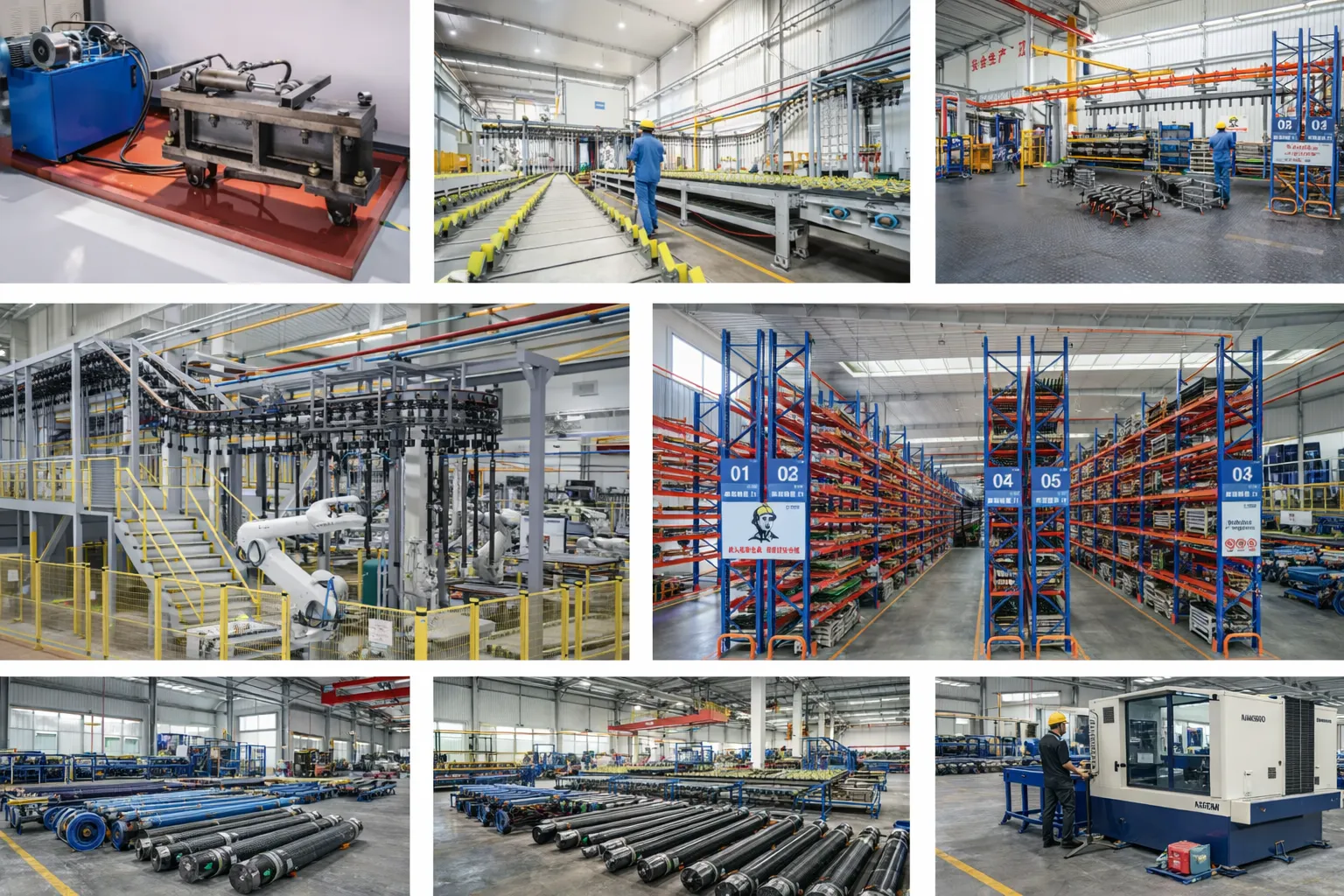
Built in-house in our ISO 9001 certified facility. Carbon steel tube and rod verified by spectrometer. Bores honed to Ra 0.2. Rods ground to h7, chrome plated to 20+ micron, and micro-polished to Ra 0.1. Chrome thickness verified by eddy current gauge on every rod. MIG welded by certified operators. Clean-room assembly with filtered oil flush. 100% pressure tested at 1.5 times rated pressure for three minutes. Protective boots tested for fit and compression clearance before shipment. Serial numbered with ten-year traceability. Material and test certificates included as standard.
Standard Small Cylinder vs. Our Blade Open/Close Cylinder
| Contamination-Relevant Metric | Standard Cylinder | Our Blade Cylinder |
|---|---|---|
| Rod Pitting Onset | 50 – 150 hours | 1,000+ hours (with boot) |
| Chrome Thickness | 10 – 15 micron | 20+ micron (micro-polished) |
| Debris Protection | None or basic rubber wiper | PU wiper + optional rubber boot |
| Time to First Seal Replacement (cotton dust) | 2 – 4 weeks | Full season (8+ weeks) |
| Body Coating Resistance to Plant Sap | Standard paint (peels in weeks) | Epoxy (lasts full season) |
Customer Case Studies
Miryang City, Gyeongsangnam-do, South Korea
Customer: Cotton topping equipment OEM producing machines for Korean and export markets
How They Found Us: Engineering team contacted us after experiencing chronic warranty returns for blade cylinder rod pitting. Inquiry in January 2025.
Results: After equipping their 2025 model with our boot-protected cylinders, warranty returns for blade cylinder pitting dropped from 22% of machines to under 2%. Cylinder replacement frequency fell from every 3 weeks to once per season at most.
“Rod pitting was our most embarrassing warranty problem. Customers thought the whole machine was poorly made. Adding the boot-protected cylinder fixed it completely.” – Mr. Yang, Engineering Manager, September 2025
Sacheon City, Gyeongsangnam-do, South Korea
Customer: Agricultural equipment dealer specializing in cotton and tobacco topping machinery
How They Found Us: Referral from an OEM customer. Trial order in March 2025.
Results: 20 blade cylinders tested across customer machines during the 2025 season. Zero pitting-related replacements. The dealer now stocks these as their primary aftermarket blade cylinder.
“Blade cylinder replacements were a weekly event during peak topping. These went the full season. My parts counter staff actually noticed the drop in cylinder orders.” – Mr. Min, Parts Manager, October 2025
Yamagata Prefecture, Japan
Customer: Agricultural R&D center testing mechanical topping for specialty cotton varieties in northern Japan
How They Found Us: Found our hydraulic cylinders for agricultural machinery through a Google search in April 2025.
Results: Research requires consistent blade performance throughout the trial period. Previous cylinders needed seal replacement during the 4-week trial window, compromising data. Our boot-protected cylinders completed the full trial with zero maintenance.
“Mid-trial maintenance invalidates our data collection. These cylinders ran the entire trial period without attention, which is exactly what research equipment needs.” – Dr. Saito, Crop Research Lead, August 2025
Faisalabad District, Pakistan
Customer: Cotton topping equipment distributor serving Punjab cotton operations
How They Found Us: Found our website in July 2024. Trial order in September 2024.
Results: Punjab cotton dust is among the most abrasive environments for exposed cylinder rods. Our boot-protected cylinders completed the full 2024 topping campaign (6 weeks, 45+ C daily temperatures) with zero rod pitting. The distributor tripled their 2025 order volume.
“Before, we shipped spare blade cylinders with every topping machine because we knew they would need replacing within three weeks. Now we do not need to include spares at all.” – Mr. Abbas, Sales Director, November 2024
Hatay Province, Turkey
Customer: Cotton machinery OEM producing toppers for Turkish cotton regions and Middle East export
How They Found Us: Met at Adana Agriculture Fair, March 2025. Sample evaluation April 2025.
Results: OEM endurance testing showed zero visible pitting after 500 hours of simulated blade cycling with dust injection. Previous supplier’s cylinders showed pitting at 80 hours. The OEM approved our blade cylinder for standard equipment on their entire topper line.
“We accelerated our dust test to find the failure point. After 500 hours, we stopped because there was no failure to find. That has never happened with any blade cylinder we tested before.” – Mr. Acar, Test Lab Supervisor, July 2025
Frequently Asked Questions
What causes rod pitting on cotton topper blade cylinders?
What bore size is used for cotton topper blade open/close cylinders?
How long does the protective rubber boot last before replacement?
What is the lead time and do you ship to cotton regions?
Stop Rod Pitting Before It Starts
Tell us your blade head configuration and topping environment. We will recommend the right protection level and deliver a quotation within 48 hours.
Editor: Cxm