Furnace Wall Correction Cylinder For Metallurgy
Combat extreme thermal deformation and entirely eradicate cylinder fatigue. Engineered with a specialized thick-wall design and forged 42CrMo alloy steel to deliver unyielding restorative force in severe high-temperature environments.
Product Overview: Restoring Structural Integrity in Extreme Heat
Within the intensive heavy industrial landscape of primary metallurgy, continuous thermal cycling presents one of the most destructive forces to structural equipment. Massive metallurgical furnaces, smelting vessels, and heavy continuous casting frameworks are constantly exposed to core temperatures that push the physical limits of industrial steel. Over time, this relentless thermal stress and the subsequent expansion and contraction cause the heavy steel furnace walls and structural retaining panels to warp, bulge, and critically deform. If left uncorrected, this physical deformation compromises the internal refractory brick lining, disrupts the thermal dynamics of the melt, and ultimately poses catastrophic safety hazards to the entire facility. The mechanical intervention required to push these massive steel structures back into their precise original geometric alignment relies entirely on the immense, highly controlled power of the furnace wall correction cylinder. This specialized heavy-duty actuator must physically force yielding structural steel back into place while operating directly within a hazardous, high-temperature maintenance zone.
Utilizing standard commercial fluid power actuators for this grueling structural task is a guaranteed path to severe mechanical failure. When ordinary equipment attempts to generate the massive tonnage required to correct thick furnace walls, the immense internal hydraulic pressure combined with the radiant ambient heat causes rapid material degradation. The most typical and dangerous failure mode observed in these standard units is catastrophic cylinder fatigue. Because standard barrels are too thin, they literally swell, micro-fracture, or completely rupture under the extreme holding pressures required to bend heavy structural steel. As a deeply specialized hydraulic cylinder manufacturer, we identified this severe operational bottleneck on the melt shop floor. Our unique product positioning centers on completely eliminating this specific failure mode through uncompromising metallurgical science. We have engineered the furnace wall correction hydraulic cylinder specifically to survive the exact extreme conditions that tear conventional equipment apart.
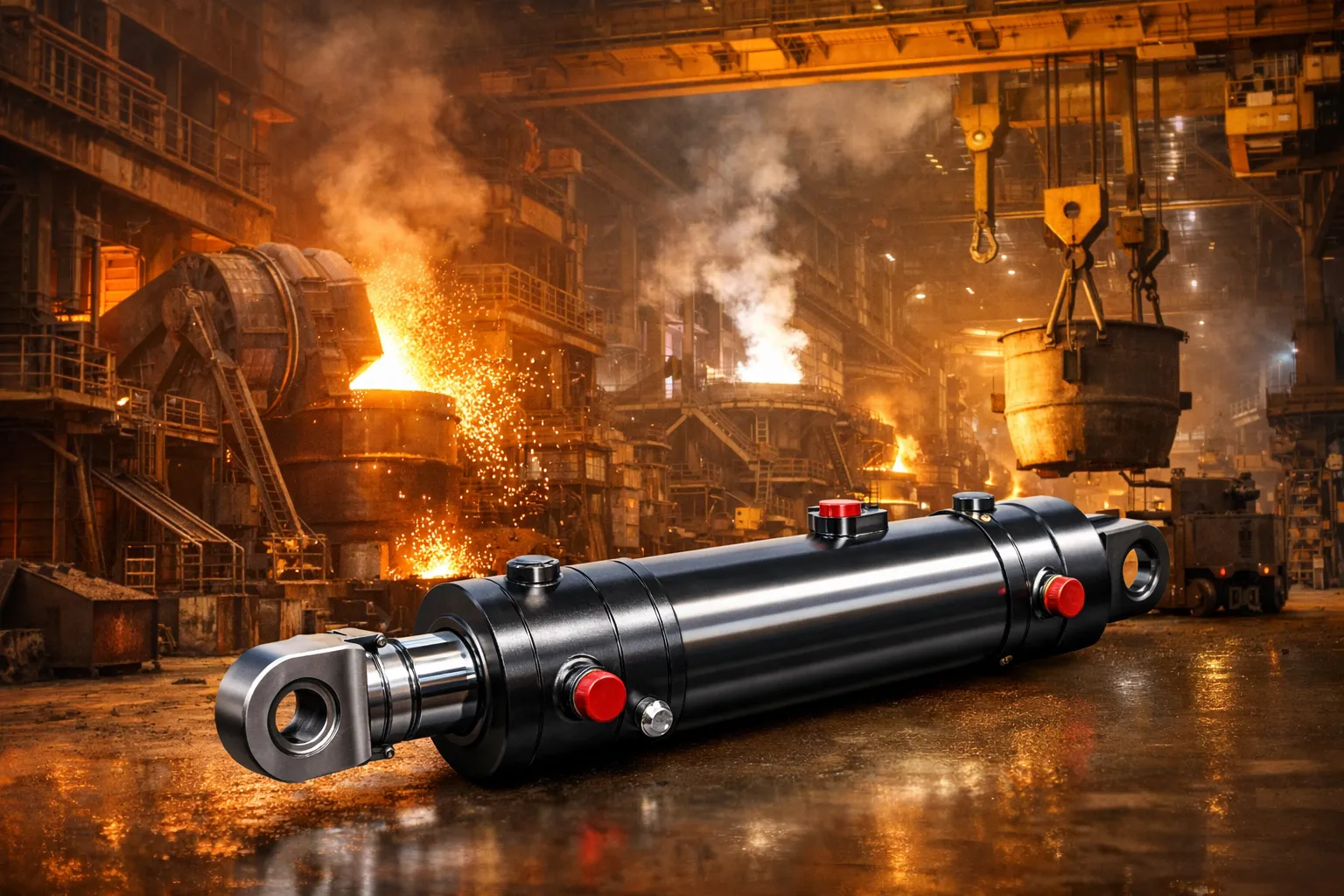
To guarantee absolute reliability during a highly sensitive plant shutdown, we abandoned standard carbon steel entirely. Instead, we forge our restorative actuators from premium 42CrMo alloy steel combined with an intentional, heavily calculated thick-wall design. This specific internal architecture provides astronomical yield strength, preventing any microscopic barrel expansion, ballooning, or cylinder fatigue under maximum restorative loads. Furthermore, the critical extension rod is protected by an advanced nickel plating process that vigorously resists ambient high-temperature oxidation and acidic flux corrosion. Plant directors, maintenance superintendents, and heavy engineering procurement teams across South Korea, Japan, Taiwan, and the wider East Asian industrial sector continuously specify our premium hydraulic parts to safeguard their production lines. By investing in a truly purpose-built hydraulic cylinder engineered for the brutal reality of metallurgical maintenance, facilities drastically optimize their long-term hydraulic cylinder price metrics. This procurement strategy effectively bypasses the exorbitant costs of repeated equipment failure, minimizes dangerous furnace downtime, and ensures that maintenance crews can safely push thousands of tons of steel without fearing a sudden equipment explosion.
Comprehensive Technical Parameters and Customization Matrix
Generating the exact tonnage required to physically correct warped furnace walls requires meticulous integration with your facility’s existing high-pressure power units and custom structural bracing frames. Because clearance spaces and reaction jigs vary wildly between steel mills, we offer a highly adaptable, custom engineering platform. This ensures our heavy pushing solutions align flawlessly with your specific metallurgical equipment footprint. The detailed data table below outlines the primary baseline configurations, material sciences, and the expansive customizable boundaries of our heavy-duty restorative actuators.
| Critical Engineering Parameter | Standard Specification & Highly Customizable Range |
|---|---|
| Primary Industry Sector | Metallurgy / Primary Heavy Smelting and Refining |
| Equipment Category | Metallurgical Equipment (Smelting Furnaces, Arc Furnaces, Casting Frames) |
| Subsystem / Kinematic Action | Furnace wall correction / Physically pressing warped steel plating back into alignment |
| Product Nomenclature | Furnace wall correction cylinder (Also designated as furnace wall correction hydraulic cylinder) |
| Kinematic Action Method | Double acting hydraulic cylinder (Providing powered, massive extension force and highly controlled retraction) |
| Internal Structure Type | Piston cylinder (Engineered specifically for immense, centralized linear force generation) |
| Manufacturing Architecture | Heavy Welding (Automated deep-penetration Submerged Arc Welding for maximum structural integrity) |
| Core Material System | 42CrMo Alloy Steel (Forged specifically to withstand ultra-high internal pressure without yielding) |
| Protective Surface Treatment | Advanced Nickel Plating (Forms a highly ductile, high-temperature anti-corrosion barrier) |
| Environmental Rating | High temperature environment (Intense radiant heat, abrasive metallic dust, and severe thermal cycling) |
| Primary Operation Condition | Correcting furnace wall (Static, extreme high-pressure holding over extended duration periods) |
| Targeted Failure Mode Prevented | Cylinder fatigue (Completely eliminates barrel swelling, ballooning, or micro-rupturing under peak pressure) |
| Essential Recommended Configuration | Thick-wall design heavily paired with extreme-heat FKM/PTFE composite sealing architecture |
| Heavy Mounting Options | Massive solid Trunnion blocks, heavy rear Flange, or custom reinforced Clevis mounts for rig integration |
Advanced Fluid Kinematics and the Science of Restorative Force
Fully comprehending the intense fluid dynamics occurring inside the furnace wall correction cylinder is critical to appreciating exactly why standard industrial components shatter in this specific application. The operational sequence of a furnace correction is not about rapid, repetitive motion; it is entirely about generating, applying, and relentlessly holding astronomical levels of static restorative force. Because the heavily warped steel panels of a metallurgical furnace actively resist being pushed back into alignment, this heavy actuator must function flawlessly as a high-capacity double acting hydraulic cylinder. Utilizing highly pressurized, fire-resistant hydraulic fluid (such as water-glycol or synthetic ester), it provides the massive forward thrust required to bend structural steel. Furthermore, the double-acting nature allows it to safely and fluidly retract the heavy pushing pad once the structural maintenance procedure is complete, preventing the tool from becoming wedged against the hot furnace shell.
When a scheduled furnace maintenance shutdown begins, specialized rigging teams position the heavy actuator against the deformed furnace wall, bracing the rear mount securely against a solid structural strongback or reaction frame. The operator then engages the ultra-high-pressure mobile hydraulic power unit. Fluid floods into the cap end (blind end) of the massively reinforced barrel. This fluid exerts immense hydrostatic pressure evenly across the surface area of the forged 42CrMo hydraulic cylinder piston. As the fluid pressure builds—often exceeding 400 Bar (5,800 PSI) in severe correction scenarios—the piston rod extends, making firm contact with the warped steel panel. This is the exact moment standard cylinders fail; the intense internal fluid pressure attempts to violently expand the steel barrel outward, causing fatal cylinder fatigue and hoop stress yielding. However, our specialized thick-wall design and 42CrMo alloy structure easily absorb this radial stress. The barrel maintains zero volumetric expansion, translating 100% of the pressurized fluid energy into direct, forward restorative power against the furnace casing.
As the furnace wall correction hydraulic cylinder slowly and deliberately pushes the thick steel plate back to its true dimensional tolerance, the entire external unit is subjected to residual radiant heat emanating from the cooling furnace core. This high temperature environment aggressively attempts to bake the internal seals and oxidize the extended piston rod surface. Our advanced thermal sealing composites and non-porous nickel plating effortlessly defeat these severe environmental attacks. Once the wall is successfully pinned, braced, or re-welded into its corrected position, the operator reverses the directional control valve. High-pressure fluid enters the rod end port, providing highly controlled, powered retraction of the heavy hydraulic rams, allowing the maintenance teams to safely reposition the unit for the next correction zone. This flawless, highly controlled application of extreme fluid mechanics drastically shortens facility turnaround times while ensuring absolute rigger safety.
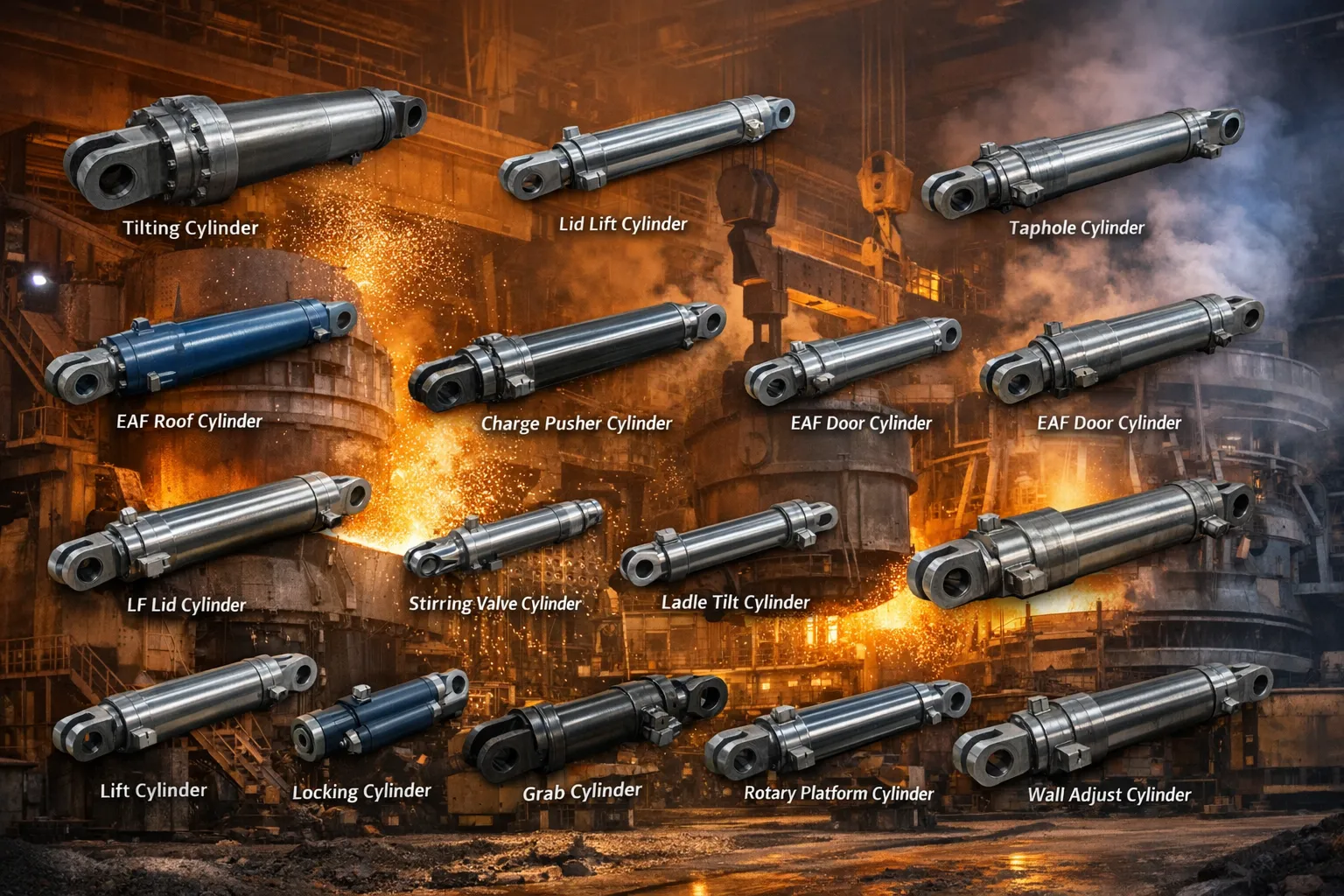
Seamless Safety Upgrades for Global OEM Rig Brands
During tightly compressed, highly expensive metallurgical maintenance outages, plant engineering teams simply do not have the luxury of time to fabricate custom mounting brackets or torch-cut heavy structural strongbacks to accommodate a non-standard restorative tool. Acknowledging this strict and unforgiving industrial reality, our engineering bureau has systematically designed our entire restorative cylinder series to conform completely to global heavy-duty dimensional standards. This includes full compliance with ISO 6022 and extremely heavy-duty DIN equivalents. This rigorous adherence to international profiles guarantees that our upgraded actuators serve as immediate, direct-fit drop-in replacements for underperforming, ballooning, or ruptured original equipment, greatly reducing the dangerous time spent on fixing hydraulic cylinders during a critical path outage.
We continuously possess the extensive technical blueprints, CAD archives, and precision heavy machining capabilities required to perfectly cross-reference, match dimensions, and upgrade heavy legacy pushing rigs initially equipped by prominent global fluid power brands such as Enerpac, Bosch Rexroth, Parker Hannifin, Power Team, and Eaton Vickers.
(Please explicitly note: The mention of these highly respected industrial manufacturing brands is provided strictly to assist your plant engineering teams in rapidly verifying heavy mounting dimensions, confirming exact high-pressure stroke lengths, and ensuring absolutely accurate technical integration during urgent turnarounds. We operate entirely independently as a premium, specialized custom manufacturer, and this reference implies absolutely no direct commercial affiliation, formal corporate endorsement, or trademark infringement regarding those specific entities.)
When heavy maintenance supervisors realistically calculate the exorbitant downtime costs and severe physical safety risks associated with continuously repairing standard cylinders that repeatedly burst due to cylinder fatigue under extreme load, they quickly realize the absolute financial necessity of a permanent tooling upgrade. Transitioning your specialized maintenance pushing frames to our thick-wall 42CrMo units allows your facility to dramatically elevate its structural repair capabilities without modifying your expensive rigging. You receive an expertly engineered, fatigue-proof component that executes the heaviest corrections safely, efficiently, and predictably every single time.
Five Core Technical Advantages for Supreme Restorative Power
What specific engineering principles separate a dedicated metallurgical restorative actuator from a standard high-pressure catalog cylinder? The definitive distinction lies in uncompromising material science and entirely fatigue-resistant architecture. We engineer scientifically sound solutions to entirely prevent the specific physical mechanisms that cause catastrophic barrel rupture when pushing unyielding steel. Below are five foundational engineering advantages integrated directly into our premium product:
- 1.Fatigue-Proof Thick Wall Design: The absolute cornerstone of this heavy-duty maintenance tool. To generate the immense tonnage required for furnace wall correction, internal pressures often peak at extreme, punishing levels. Standard barrel thicknesses will physically swell (balloon) outward under this hoop stress, destroying the internal seal contact patch and leading to explosive fluid rupture. We utilize heavily oversized, thick-wall forged barrel designs mathematically calculated via Finite Element Analysis (FEA) to ensure absolute zero diametrical expansion, entirely eradicating the threat of cylinder fatigue.
- 2.High-Rigidity 42CrMo Forged Construction: Pushing heavy steel panels back into alignment inevitably generates unpredictable, shifting side-loading forces as the steel plate bends and settles. Standard carbon steel rods will permanently bow, bend, or snap violently under this massive off-axis stress. We forge our core structural components—including the massive main piston rod—entirely from premium 42CrMo alloy steel. This highly specific material provides exceptional yield strength and impact toughness, ensuring absolute geometric stability even when the correction load shifts unexpectedly.
- 3.Advanced Nickel Plating for Radiant Heat Defense: Operating directly adjacent to a recently powered-down melting vessel exposes the extended cylinder rod to extreme residual radiant heat. Standard hard chrome plating develops severe thermal micro-cracks under these conditions, allowing oxidation to rapidly destroy the base metal. We confidently deploy a specialized electroless nickel plating process. This amorphous, highly ductile shield handles extreme thermal expansion flawlessly without cracking, completely preventing high-temperature surface degradation and maintaining a smooth seal interface.
- 4.Ultra-Low Friction High-Temperature Sealing Systems: Generating smooth, carefully controlled force at extreme static pressures requires flawless internal fluid containment. We engineer the internal hydraulic cylinder components using proprietary Polytetrafluoroethylene (PTFE) and high-temperature fluoroelastomer (FKM/Viton) composite seal profiles. These advanced aerospace-grade polymers withstand the high temperature environment of the melt shop without melting or hardening. Furthermore, their ultra-low friction characteristics prevent dangerous “stick-slip” load jerking during the highly sensitive correction process.
- 5.Deep-Penetration Automated Welded Assembly: To successfully withstand astronomical push forces without experiencing structural shearing, the cylinder end caps and heavy mounting blocks cannot rely on standard tie-rods or superficial, single-pass welds. We utilize fully automated Submerged Arc Welding (SAW) to achieve 100% deep root penetration on all critical structural joints. Subsequent post-weld stress-relief heat treatment in a controlled furnace eliminates all residual thermal stresses, ensuring the heavy mounts never fracture under peak correction load.
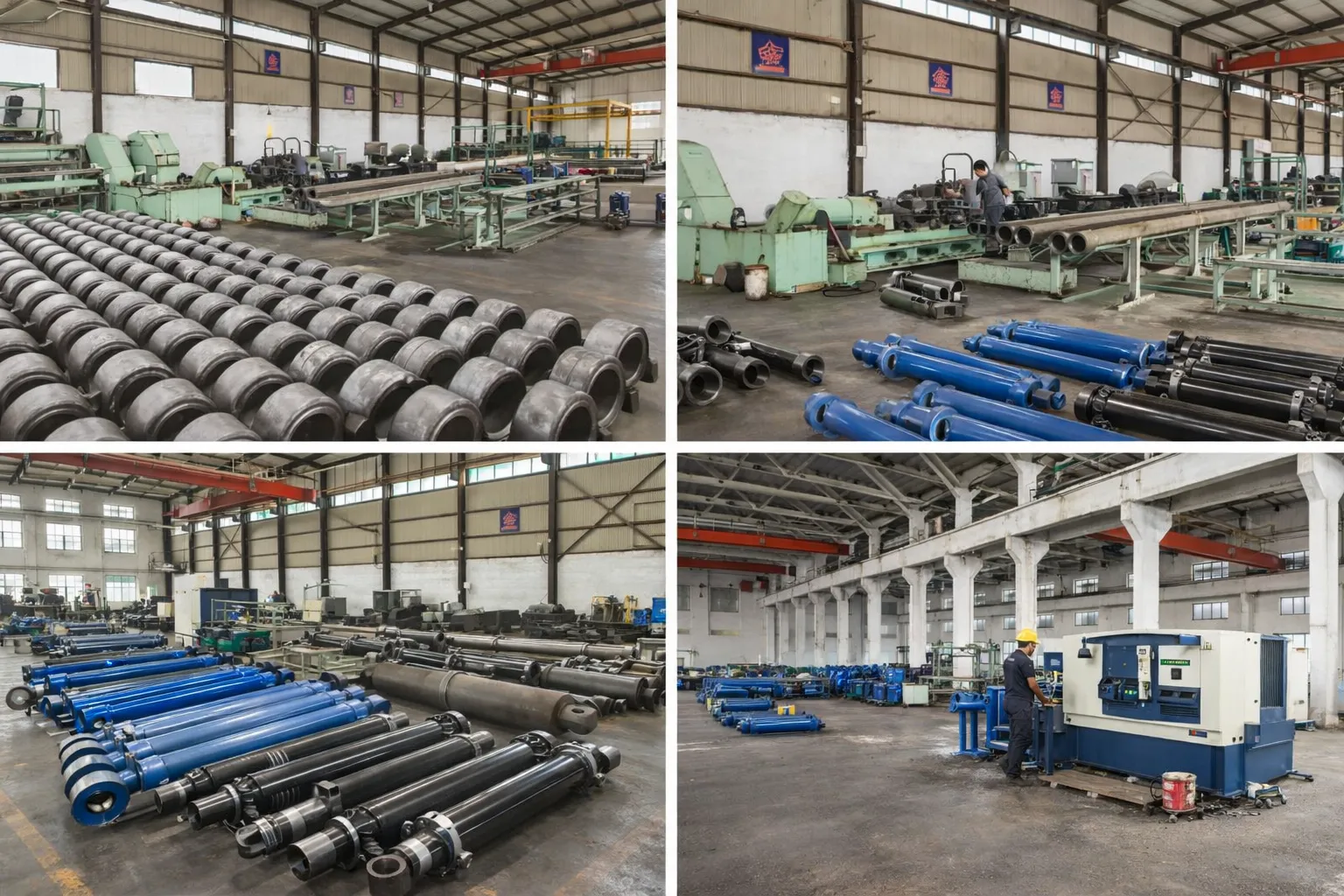
Autonomous Fabrication and Zero-Defect Quality Control
When manufacturing extreme high-pressure tools intended for highly dangerous metallurgical maintenance interventions, relying on a fragmented, outsourced supply chain presents a completely unacceptable liability to the end user. Operating proudly as a fully vertically integrated heavy engineering firm, we maintain absolute, unbroken control over every single phase of production. From the initial ultrasonic inspection of the heavy 42CrMo alloy forgings to the final extreme-pressure hydro-testing protocols, every manufacturing procedure is executed, heavily monitored, and digitally documented under rigorous ISO 9001 standards entirely within our own advanced fabrication facilities.
This uncompromising fabrication sequence begins with comprehensive multi-point ultrasonic flaw detection of all raw steel billets, ensuring the complete absence of internal voids or metallurgical inclusions that could potentially initiate a rupture under high pressure. Following extreme-precision heavy CNC turning, the thick-walled cylinder barrels undergo specialized multi-pass deep-hole skiving and roller burnishing. This creates a highly compressed internal mirror finish (Ra 0.15 to 0.3 micrometers) that is absolutely vital for the high-pressure sealing integrity of the PTFE piston seals. All structural welds binding the heavy trunnions or flanges are meticulously verified through comprehensive non-destructive radiographic (X-ray) and magnetic particle testing, guaranteeing they will easily withstand the immense reaction forces generated during a heavy furnace wall push.
Crucially, prior to final high-temperature industrial coating and global logistics dispatch, 100% of our produced units are subjected to severe, computerized hydrostatic factory testing. We intentionally and safely pressurize every single furnace wall correction cylinder to a massive 150% of its extreme maximum rated working capacity. Using highly sensitive digital pressure transducers, we monitor the thick-wall barrel for even a fraction of a millimeter of dimensional expansion or internal pressure drop over extended holding periods. This completely guarantees absolute immunity to cylinder fatigue. Every approved unit is permanently laser-etched with a unique serial identifier, granting our B2B partners total material traceability. This highly systematic, zero-defect approach heavily minimizes the need for dangerous, emergency hydraulic cylinder repair during critical plant turnarounds.
Expansive Cross-Industry Heavy Applications
While this ultra-heavy-duty thick wall architecture is specifically engineered and optimized to conquer the immense back-pressures and severe radiant heat of metallurgical furnace correction, the core engineering principles of absolute fatigue resistance and astronomical linear force generation translate perfectly to other extreme heavy industry sectors. Any demanding industrial environment requiring the application of massive, controlled static force in highly hazardous conditions can vastly benefit from our fluid power structural advancements.
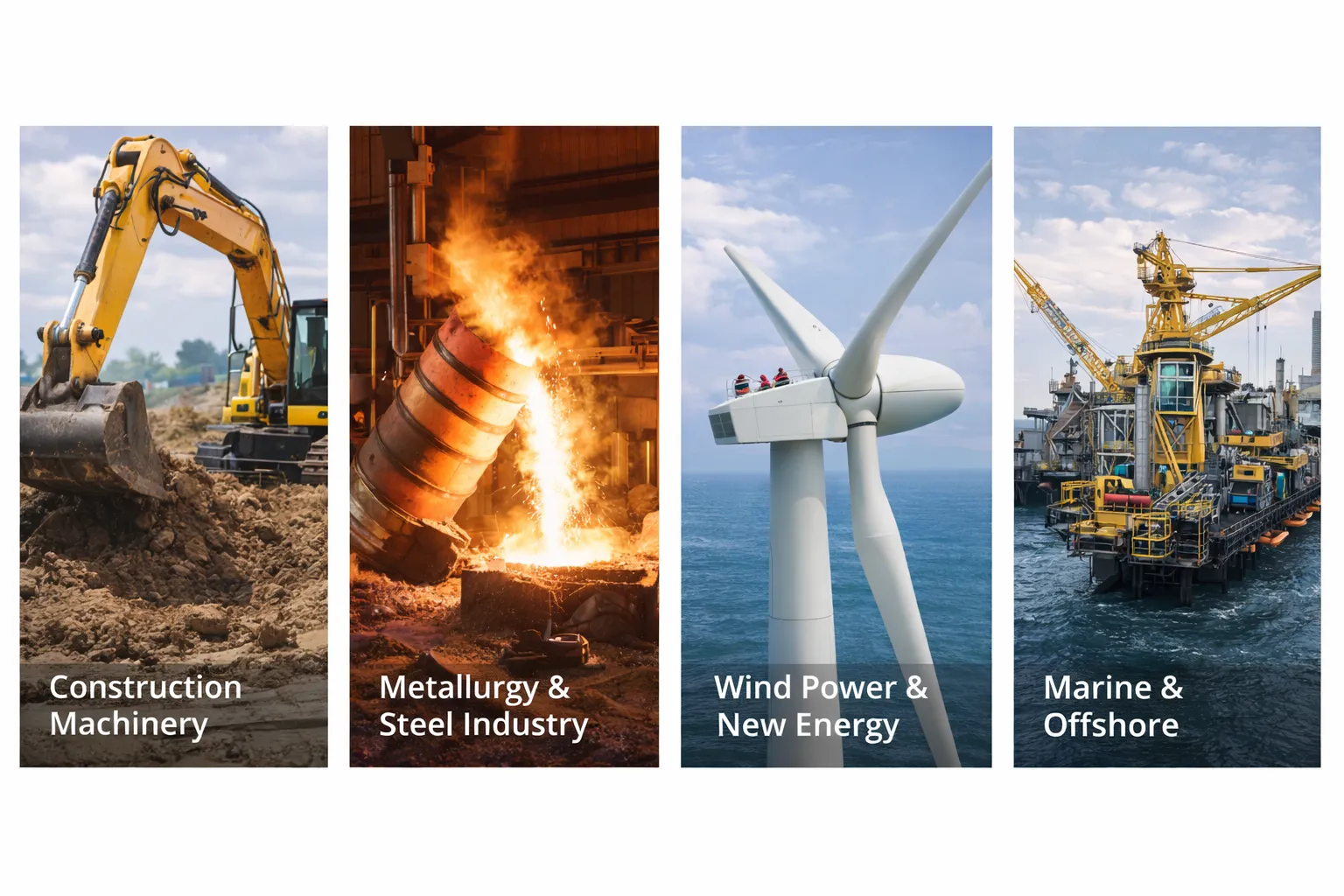
Beyond our deeply foundational and extensive deployments in the Metallurgical and Iron Industry, the immense pressure capacity of our fatigue-proof designs makes them exceptionally valuable for heavy earthmoving and infrastructure equipment. They function perfectly as specialized synchronous jacking actuators or extreme-duty lift cylinder units for massive mining excavators and heavy rock crushers, where unpredictable peak pressures constantly threaten to rupture standard commercial components. Discover our incredibly resilient linear high-pressure solutions engineered explicitly for the Construction Machinery Industry. Furthermore, the advanced dust exclusion profiles and extreme-load holding technologies we deploy are critically required in deep-shaft mine hoists and heavy surface tunneling shields. Learn more about our specialized heavy actuators designed to move mountains safely in the Mining Industry.
Additionally, our heavily customized high-pressure systems provide unyielding, fail-safe clamping force for massive heavy-tonnage plastic and rubber injection molding machinery, precisely control massive forging presses in heavy manufacturing lines, secure heavy movable civil infrastructure like dam gates, and stabilize critical deep-sea offshore marine platforms where maximum reliability against extreme hydrostatic pressure is absolutely non-negotiable.
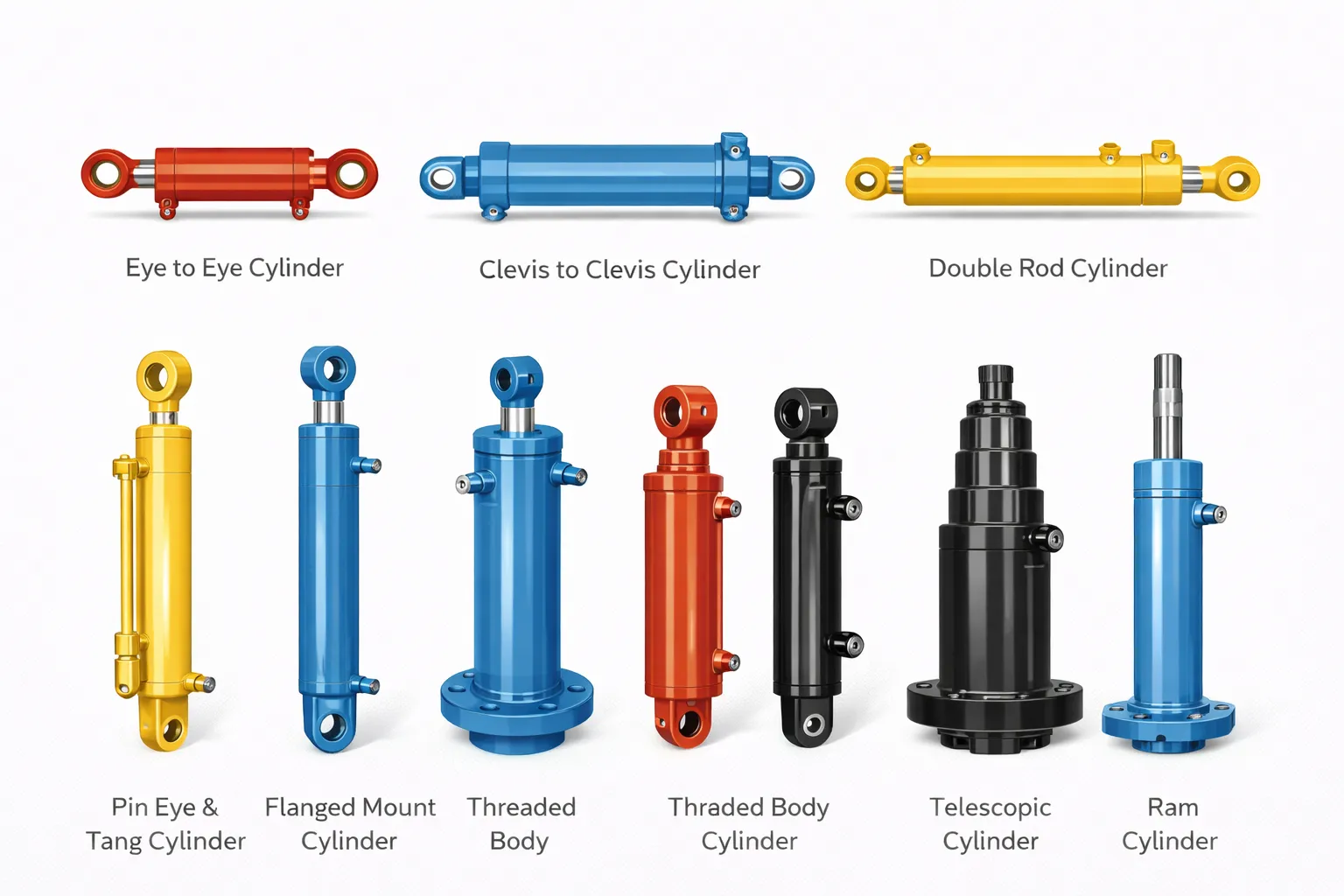
Comparative Safety Analysis: Standard Hydraulics vs. Our Fatigue-Proof Solutions
When corporate maintenance directors and turnaround planners evaluate specialized high-pressure tooling, the decision requires accurately balancing the initial procurement cost against the catastrophic, potentially lethal consequences of an ultra-high-pressure cylinder rupture mid-push. To clearly demonstrate our engineering value proposition, the following analytical table highly highlights the profound physical differences between relying on standard commercial cylinders and deploying our dedicated thick-wall restorative actuator.
| Critical Performance Metric | Standard Commercial Hydraulic Cylinder | Our Specialized Furnace Wall Correction Cylinder |
|---|---|---|
| Barrel Wall Architecture | Standard thickness (Swells, micro-fractures, and eventually ruptures under peak push pressure) | Oversized Thick-Wall Design (Mathematically guarantees zero diametrical expansion under load) |
| Primary Structural Material | Basic Carbon Steel (Prone to heavily bending or snapping when warped steel shifts during correction) | Forged 42CrMo Alloy Steel (Provides astronomical yield strength to safely absorb unpredictable off-axis forces) |
| Rod Surface Defense | Standard Chrome (Micro-cracks allow rapid, destructive oxidation under high radiant furnace heat) | Advanced Nickel Plating (Highly ductile, amorphous layer actively resists high-temperature degradation) |
| Sealing Thermal Limit | Max 90°C (Standard nitrile seals harden and disintegrate from the residual heat of the furnace core) | Up to 220°C (Advanced FKM/PTFE aerospace composites ensure flawless high-pressure sealing) |
| Operational Risk Profile | Extremely high risk of catastrophic barrel explosion, causing severe injury during maintenance | Maximum safety compliance, permanently protecting riggers and turnaround personnel from burst hazards |
Field Proven: 5 Industrial Engineering Case Studies in Asia
True engineering credibility is validated exclusively on the active production floor during highly critical plant turnarounds. Our customized high-pressure restorative solutions consistently execute flawless corrections across major metallurgical hubs globally, with a profound and trusted presence in the East Asian heavy industry sector. Below are five detailed deployments demonstrating exactly how our thick-wall technology solved critical plant emergencies.
Case Study 1: Eradicating Barrel Ruptures in Pohang
Location & Valued Client: Major Integrated Steelworks Facility, Pohang, South Korea.
Application Context: Heavy electric arc furnace lower shell alignment and structural wall correction during an annual shutdown.
Initial Connection: The plant’s turnaround safety committee located our precise technical specifications via a targeted search for a highly specialized high-pressure hydraulic cylinder manufacturer in December 2024.
The Challenge: During a previous shutdown, the rigging team attempted to push a severely warped 80mm thick steel furnace shell back into tolerance. The standard commercial cylinder they utilized suffered massive cylinder fatigue under the 400 Bar pressure and violently burst, severely delaying the multi-million dollar outage.
The Solution & Verifiable Result: We rapidly engineered custom restorative units featuring our thick-wall 42CrMo forged barrel design. Deployed during their next outage, the furnace wall correction cylinder easily generated the required 500 tons of force. Post-operation ultrasonic testing confirmed absolute zero barrel swelling, entirely resolving the severe safety violation and restoring the furnace shell perfectly.
“The structural rigidity of this thick-wall cylinder is absolutely phenomenal. We pushed that warped shell with maximum pressure and the barrel didn’t flex a millimeter. It fundamentally secured our maintenance timeline.” — Chief Turnaround Director, Pohang
Case Study 2: Defeating Heat-Induced Seal Failure in Busan
Location & Valued Client: Heavy Metallurgical Processing and Forging Plant, Busan, South Korea.
Application Context: In-situ correction of a warped continuous casting cooling chamber framework.
Initial Connection: The maintenance supervisor aggressively searched the web for advanced hydraulic parts capable of withstanding extreme ambient heat after a string of catastrophic tool failures in March 2025.
The Challenge: The structural framework correction had to be performed while adjacent casting lines were fully operational. The intense radiant heat quickly melted the standard nitrile (NBR) seals inside their existing actuators. When the riggers applied high pressure, the fluid simply bypassed internally, rendering the tools useless and stalling the critical repair.
The Solution & Verifiable Result: We supplied completely custom units equipped strictly with our high-temp FKM (Viton) and PTFE thermal sealing composites. Deployed directly into the high temperature environment, the new actuators generated flawless, ultra-high pressure without a single drop of internal fluid bypass, allowing the team to complete the structural alignment in record time.
“Standard cylinders simply baked from the inside out in this environment. Their high-temp FKM seals held the pressure perfectly, letting us finish the structural job while the plant kept running.” — Heavy Maintenance Superintendent
Case Study 3: Overcoming Bent Rods Under Shifting Loads in Kitakyushu
Location & Valued Client: Heavy Industrial Forging and Smelting Facility, Kitakyushu, Japan.
Application Context: Re-aligning massive warped support columns on a primary smelting vessel.
Initial Connection: Reached out directly to our technical engineering department seeking advice on permanently fixing hydraulic cylinders that were failing due to snapped piston rods in January 2025.
The Challenge: As the massive steel support columns were forced back into alignment, the steel would suddenly yield and shift laterally. This unpredictable shifting induced massive off-axis bending forces on the extended piston rods. The standard carbon steel rods of their existing cylinders repeatedly bent permanently or snapped outright under the kinetic shock.
The Solution & Verifiable Result: We heavily deployed our 42CrMo alloy steel forged rods with integrated heavy-duty guide glands. The upgraded double acting hydraulic cylinder units safely absorbed the aggressive lateral shocks. Even when the massive columns shifted violently, the 42CrMo rods remained perfectly straight, ensuring the safe completion of the structural realignment.
“The yield strength of their 42CrMo steel is truly exceptional. We had a massive load shift that would have snapped our old tools in half, but their cylinder didn’t even flinch.” — Facility Structural Engineer
Case Study 4: Massive OPEX Reduction for Contractor Fleet in Kaohsiung
Location & Valued Client: Specialized Metallurgical Maintenance and Turnaround Contractor, Kaohsiung, Taiwan.
Application Context: Complete fleet tooling upgrade for all high-pressure restorative and heavy lifting rigs.
Initial Connection: Sourced our deep engineering expertise through our comprehensive digital catalog while heavily researching ways to drastically optimize their overall tooling hydraulic cylinder price and annual replacement budget in November 2025.
The Challenge: The contracting firm was aggressively bleeding profit by constantly having to replace cheap, standard commercial cylinders that burst, bent, or melted during intensive furnace repair contracts across various client sites.
The Solution & Verifiable Result: By equipping their mobile repair crews entirely with our heavily forged, thick-wall furnace wall correction hydraulic cylinder units, the contractor achieved a certified 500% tool lifespan improvement. This massive increase in durability drastically reduced their annual equipment replacement budgets and entirely eliminated costly tooling delays for their clients.
“The initial investment in premium, fatigue-proof metallurgy paid for itself within the first three shutdown contracts. The 5x lifespan improvement has completely revolutionized our contracting profitability.” — Lead Maintenance Contractor
Case Study 5: Rapid Emergency Tooling Fabrication in Incheon
Location & Valued Client: High-Capacity Alloy Refining Facility, Incheon, South Korea.
Application Context: Emergency alignment of a dangerously warped slag door frame on a primary refining vessel.
Initial Connection: Reached out urgently via our online portal after their existing high-pressure tooling catastrophically ruptured during an emergency repair attempt in February 2026.
The Challenge: The facility faced an immediate, prolonged shutdown unless they could safely correct the heavily warped door frame. They desperately needed a custom-engineered, ultra-high-pressure thick-wall cylinder matching exact spatial constraints manufactured and delivered immediately to save the production schedule.
The Solution & Verifiable Result: Utilizing exact spatial dimensions provided by the client, we rapidly manufactured a vastly superior, fatigue-proof replacement utilizing our forged 42CrMo thick-wall architecture. The custom actuator was machined, assembled, hydro-tested to 150%, and air-freighted to Incheon within an intense 3-week window, allowing the riggers to safely execute the correction and get the refining line back online.
“Their engineering agility saved us from a multi-million dollar production halt. They delivered a custom, heavily upgraded fatigue-proof tool faster than local distributors could even source inferior parts.” — Plant Turnaround Manager
B2B Engineering Frequently Asked Questions (FAQ)
Specifying extreme high-pressure fluid power tools for critical metallurgical turnarounds strictly requires absolute technical clarity and trust in the manufacturer. Below, our senior restorative engineering team comprehensively addresses the most critical inquiries posed daily by industrial maintenance directors and rigging supervisors.
Secure Your Heavy Restorative Operations Today
Do not cleanly permit vulnerable commercial components to compromise your critical maintenance turnarounds or jeopardize the lives of riggers with the terrifying threat of explosive cylinder fatigue. Stop needlessly wasting shutdown budgets on constantly fixing hydraulic cylinders that were fundamentally never designed to push massive steel structures under extreme heat. Partner tightly with a deeply specialized engineering manufacturer extremely capable of delivering heavily forged, fatigue-proof actuation solutions designed specifically for the punishing extreme realities of metallurgical correction.
Editor: Cxm