Guide Frame Swing Cylinder for Tillage Machinery
Purpose-built for chain trencher guide wheels. We combine high-strength 27SiMn steel with heavy-duty dust exclusion seals to keep your guide frame locked on target, preventing drift and leaks in the most abrasive agricultural environments.
Product Overview: The Challenge of High-Dust Trenching
When preparing agricultural land for subsurface drainage or laying irrigation pipes, chain trenchers do the hardest work. These machines use a heavy, rotating cutting chain to physically rip through compacted soil, clay, and subterranean root systems. The accuracy of the trench—its exact depth and its straight-line trajectory—is dictated by the forward guide wheel assembly. Steering this massive iron frame left or right, and holding it steady against the violent bucking of the digging chain, is the job of the Guide Frame Swing Cylinder. If this steering component loses its holding pressure, the wheel drifts, the trench goes crooked, and your crew wastes hours on manual rework.
As a seasoned hydraulic cylinder manufacturer, we know that commercial trenching is an incredibly hostile environment for fluid power. Digging dry earth throws up thick clouds of abrasive silica dust and dirt. A standard commercial hydraulic oil cylinder usually fails quickly here. The fine dust settles onto the extended chrome rod. When the rod retracts, standard rubber wiper seals fail to scrape it clean. The silica dust is dragged right into the barrel, acting like grinding paste against the internal hydraulic cylinder piston seals. This causes rapid seal wear, internal fluid bypass, and immediate steering drift. Fleet mechanics end up spending valuable daylight hours fixing hydraulic cylinders instead of advancing the project.
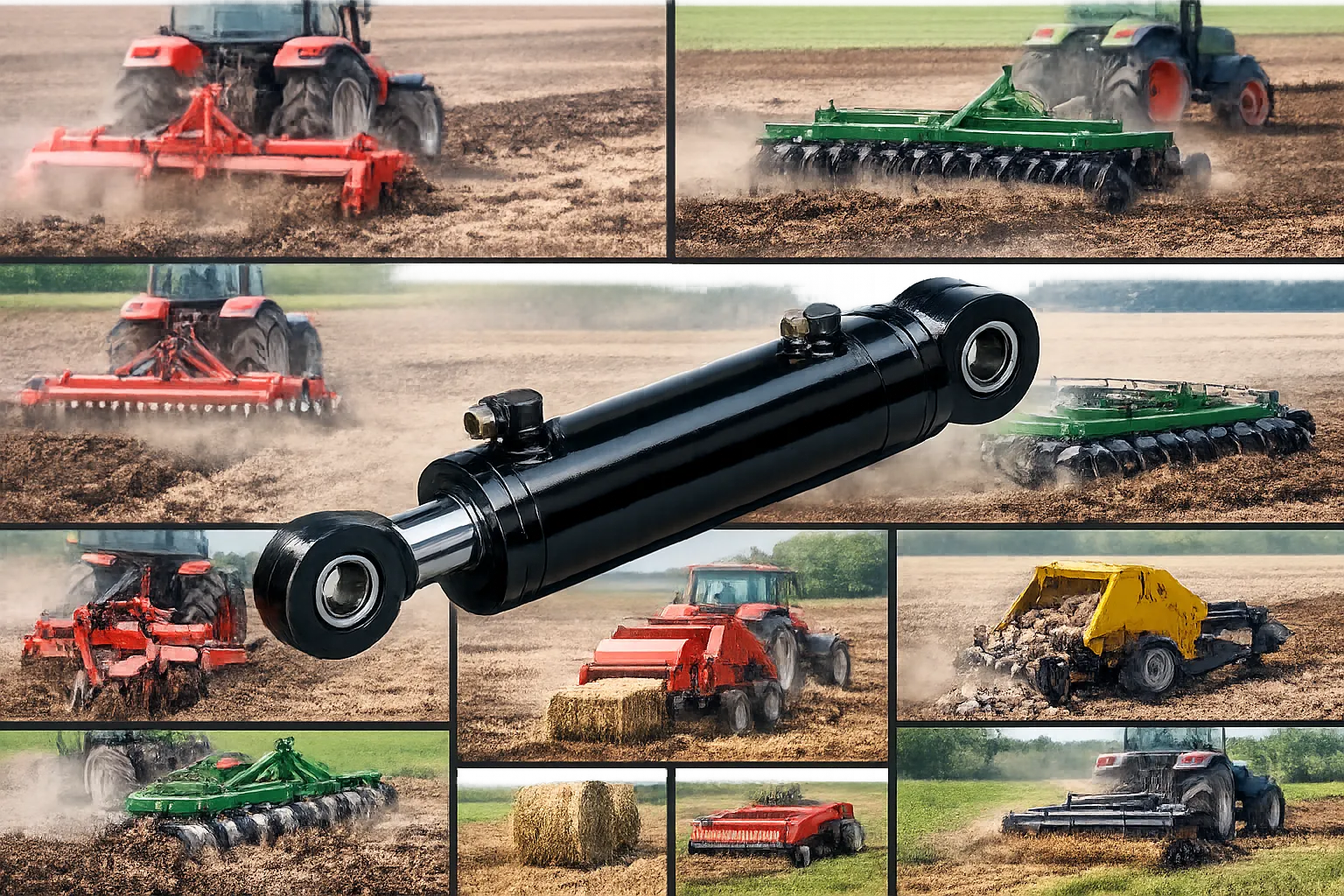
We designed our Guide Frame Swing Hydraulic Cylinder specifically to defeat dust. By upgrading the baseline metallurgy to 27SiMn alloy steel to handle rock strikes, and integrating a highly aggressive polyurethane dust scraper, we physically block the dirt from entering the system. Relying on our specialized hydraulic parts ensures your equipment maintains a perfect trajectory, saving you fuel, reducing mechanical wear on your tractor, and keeping your planting schedule on track.
Technical Specifications & Operating Parameters
Proper integration into heavy tillage machinery requires exact dimensional matching and the right material choices. The table below outlines the specific engineering parameters of our trencher guidance actuators. If you are a procurement manager looking to upgrade other parts of your fleet, we invite you to review our full hydraulic cylinder product category.
| System Parameter | Specification | Engineering Logic |
|---|---|---|
| Target Industry | Agriculture / Earthmoving | Built for off-highway vibration and rough terrain. |
| Equipment Category | Tillage Machinery | Handles the heavy drag loads of soil excavation. |
| Subsystem | Chain trencher guide wheel | Controls the lateral steering and trajectory. |
| Cylinder Designation | Guide frame swing cylinder | The main actuator pushing and pulling the wheel. |
| Action Mode | Double acting | Provides powered hydraulic force in both directions. |
| Structure Type | Piston cylinder | Precision honed bore for tight pressure sealing. |
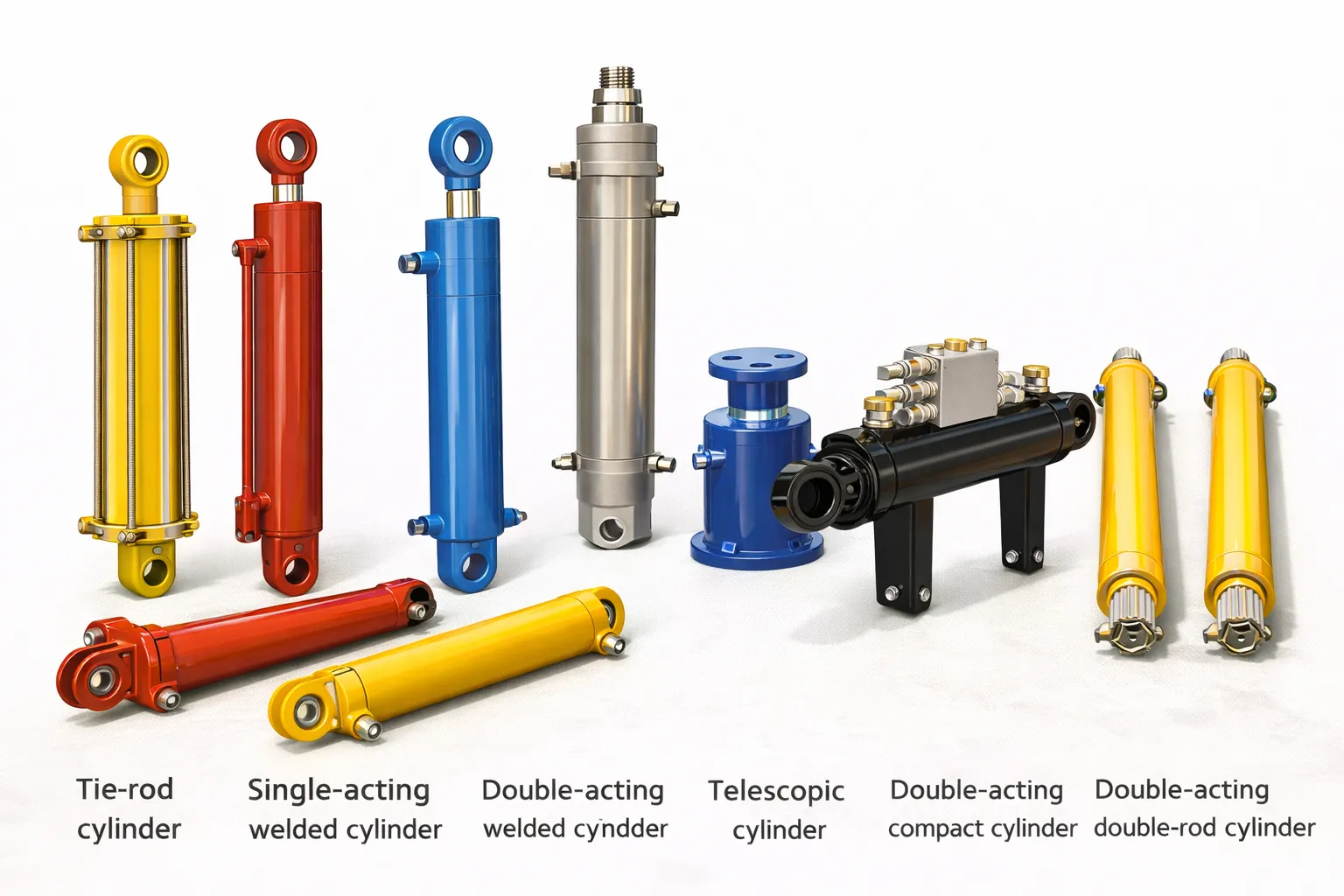
| Manufacturing Structure | Welded type | Prevents the barrel from vibrating loose over time. |
| Core Material System | 27SiMn Alloy Steel | High yield strength resists bending during rock strikes. |
| Surface Treatment | Chrome plated | Hard surface resists scratching from flying stones. |
| Environmental Grade | High dust | Operates continuously in clouds of abrasive dirt. |
| Working Condition | Adjusting guide frame position | Needs smooth movement and rigid holding power. |
| Typical Failure Mode | Seal wear | Silica dust enters the barrel and grinds the O-rings. |
| Recommended Config | Add dust wiper + wear-resistant polyurethane seal | Physically blocks dirt from reaching the internal fluid. |
Working Principle: Powering the Trencher Guide
To steer a heavy iron guide wheel against the resistance of compacted earth, you need active hydraulic force in both directions. A single acting hydraulic cylinder is useless here because it relies on gravity or a weak spring to retract. Therefore, we manufacture this unit strictly as a double acting hydraulic cylinder. It uses pressurized fluid from the tractor’s auxiliary pump to forcefully push and pull the guide frame.
When the operator shifts the valve to swing the wheel outward, high-pressure fluid enters the cap end (base) of the cylinder. This fluid pushes against the flat face of the piston, driving the heavy chrome rod out. This smoothly pivots the guide frame, adjusting the trenching angle. To bring the wheel back inward, the operator reverses the valve. Fluid now enters the rod end, pulling the piston back while the cap-end fluid returns to the reservoir.
The most important part of this process is what happens when the operator lets go of the lever. The valve closes, trapping the fluid inside the cylinder. As the trencher digs forward, the guide wheel hits rocks and roots, trying to force the cylinder to move. Because liquids cannot be compressed, and our wear-resistant seals prevent any fluid from bypassing the piston, the cylinder acts like a solid steel bar. It locks the guide wheel perfectly in place, keeping your trench straight.
OEM Replacement and Fleet Maintenance
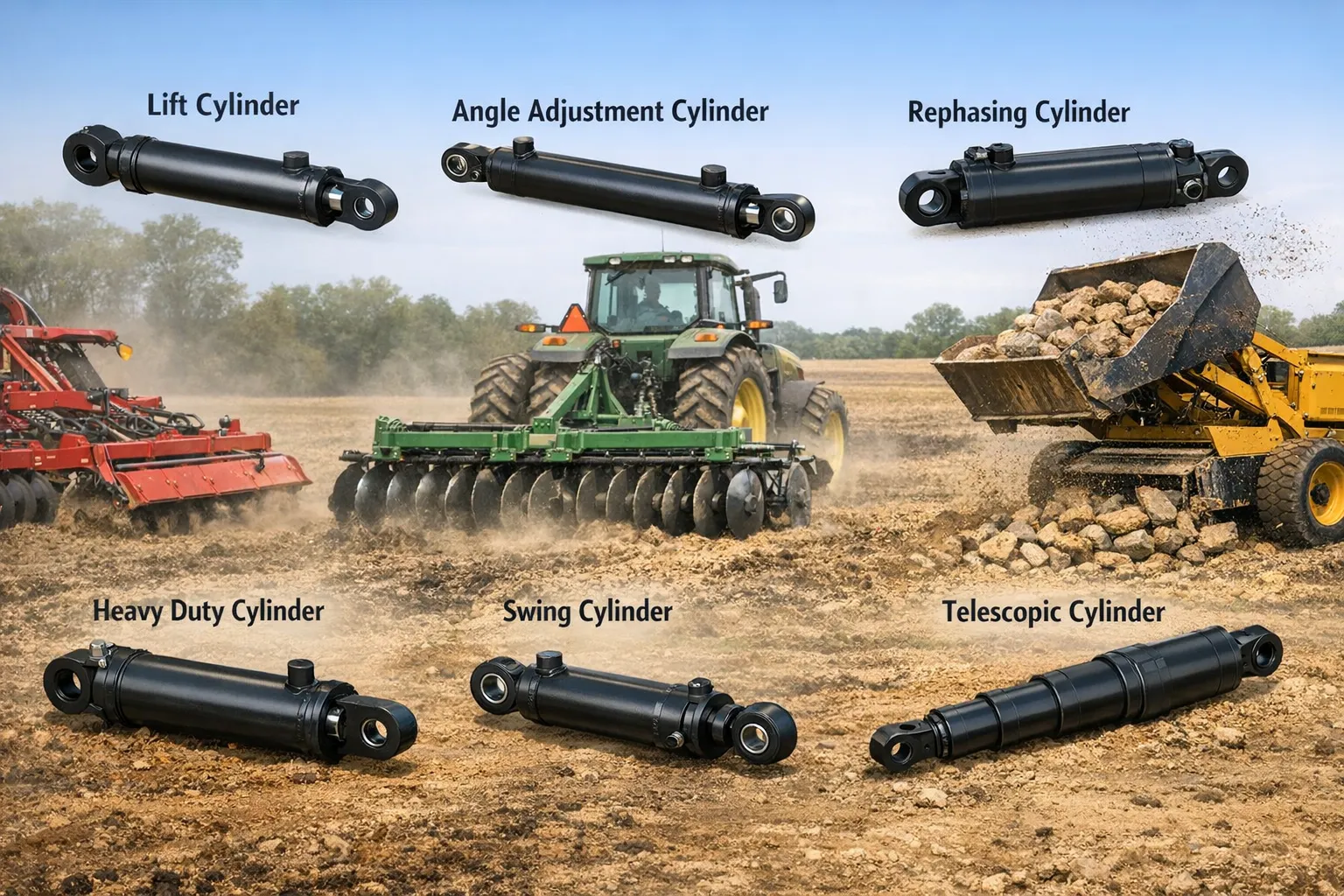
When a cylinder starts leaking in the field, waiting weeks for a factory replacement part costs you money. We design our aftermarket hydraulic rams to be direct drop-in replacements for your machinery. We match the exact pin hole sizes, the retracted length, the stroke, and the hydraulic port threads. Your mechanics can unpin the old, leaking unit and bolt ours right in using standard tools.
We regularly supply replacement steering and lift cylinder parts for trenchers and tractor attachments made by brands like Ditch Witch, Vermeer, Toro, Barreto, and attachments for LS Mtron, TYM, and Daedong tractors. (Note: We mention these OEM brand names only to help mechanics cross-reference sizes. We are an independent factory and are not affiliated with these brands.)
Upgrading to our specialized hydraulic cylinder components gives you better dust protection while bypassing high dealership markups, offering a much better hydraulic cylinder price for your maintenance budget.
Core Technical Advantages for High-Dust Environments
Building a cylinder that survives constant exposure to silica dirt requires specific upgrades over standard commercial designs. Here is how we engineer our cylinders to last longer in the field:
1. High-Strength 27SiMn Steel
Standard 1045 carbon steel can dent or bend when the guide wheel hits a buried rock. We forge our barrels and rods from 27SiMn (Silicon-Manganese) alloy. This metal has a much higher yield strength, allowing it to absorb sudden shocks without bending the rod or swelling the barrel.
2. Aggressive Dust Wiper
This is the most critical defense. Instead of a thin rubber wiper, we install a stiff, dual-lip polyurethane dust scraper in the gland. It acts like a hard plastic blade, physically scraping caked mud and fine silica dust off the chrome rod before it can get inside the cylinder.
3. Polyurethane Pressure Seals
Standard nitrile rubber seals degrade fast from the heat and friction of continuous steering adjustments. Our internal seals are made of high-temperature polyurethane. They resist tearing and wear, holding fluid tightly to prevent the guide frame from drifting.
4. Micro-Cracked Hard Chrome
The rod is constantly hit by flying dirt. We apply a thick (25+ micron) layer of hard chrome plating. It protects the steel core from rock dents, while tiny micro-cracks in the chrome hold a microscopic film of oil to keep the wiper seals lubricated.
5. Fully Welded Construction
Trenchers vibrate aggressively. Cylinders held together by long tie-rods eventually shake loose and leak. We weld the end caps directly to the barrel using automated arc welding, creating a solid single piece that ignores vibration.
6. Low-Friction CNC Honing
To keep the seals from overheating during long digging runs, the inside of the barrel must be perfectly smooth. We CNC hone the bore to a mirror finish. Less friction means less heat, which makes the seals last significantly longer.
Manufacturing Quality and Testing
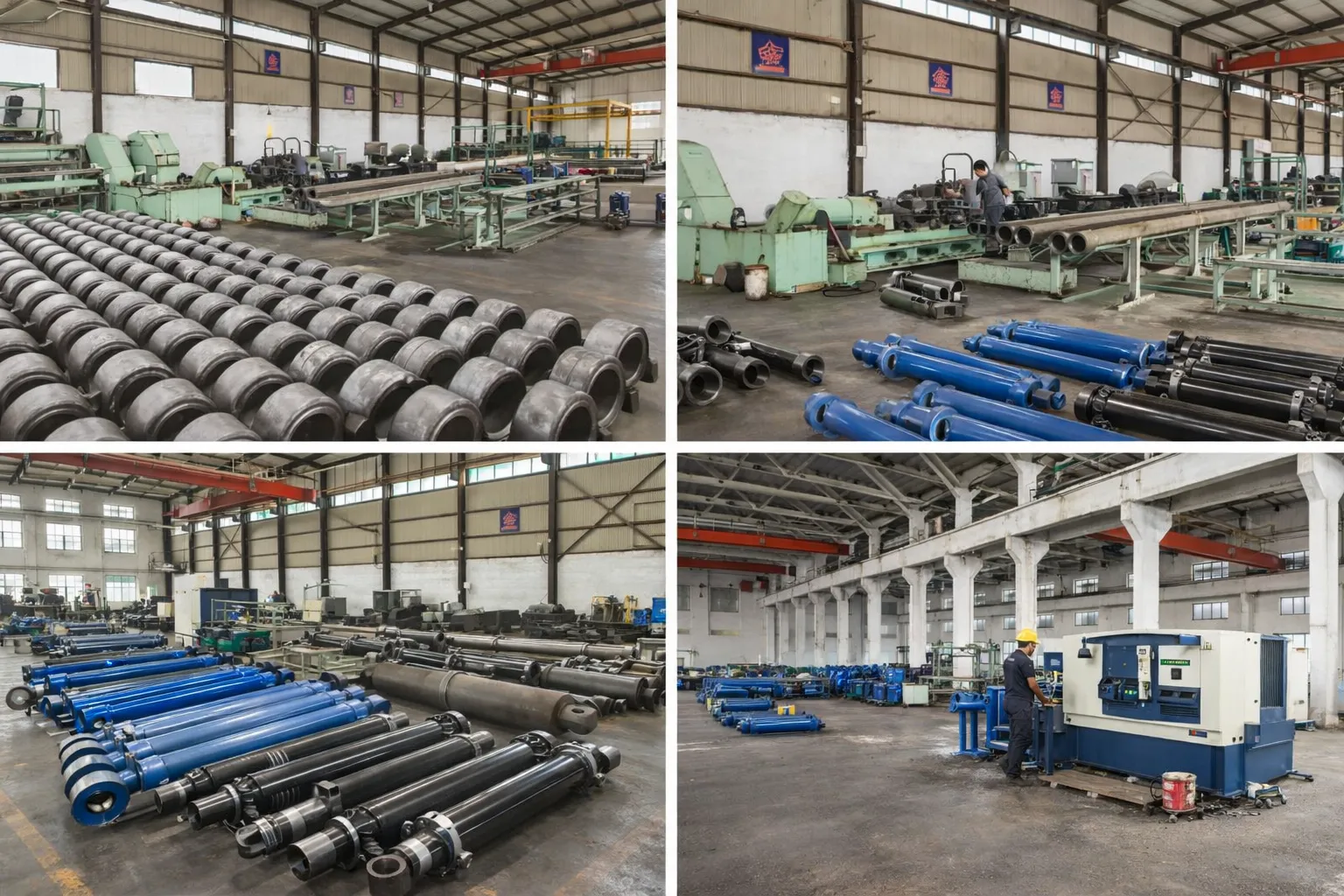
Reliability starts with good metal and tight machining. We don’t just assemble parts; we manufacture them from raw steel. When the 27SiMn steel billets arrive at our factory, we scan them ultrasonically to check for any hidden cracks or weak spots inside the metal. We machine the seal grooves on precision CNC lathes to make sure the polyurethane seals fit tightly without rolling or twisting.
After the automated welding process is complete, every single cylinder is routed to our testing department. We mount the cylinder to a hydraulic test bench and pump it up to 1.5 times its normal working pressure. We close the valves and watch the gauges. If the pressure drops even slightly, it means fluid is bypassing the piston or weeping from a weld, and that cylinder fails. Only units that hold pressure perfectly get a serial number etched into the barrel and are packed for shipping.
Applications Beyond Agriculture
The technology we use to keep dirt out of trenchers works perfectly in other heavy industries where dust ruins equipment:
- Earthmoving: Bulldozers and excavators working in dry dirt need strong wiper seals. Check out our solutions for the construction machinery industry.
- Quarries and Extraction: Rock dust is highly abrasive. Our welded 27SiMn bodies are ideal for the mining industry.
- Cable Laying: Installing underground transmission lines uses the same heavy trenchers. We supply parts for the wind power and new energy sectors.
Comparative Analysis: Standard Aftermarket vs. Our High-Dust Cylinder
Buying the cheapest replacement cylinder usually costs you more in downtime. Here is a clear look at why our specialized cylinders save you money in the long run.
| Feature | Standard Commercial Cylinder | Our High-Dust Swing Cylinder |
|---|---|---|
| Dust Exclusion | Basic rubber wiper; allows silica dirt to enter. | Stiff Polyurethane scraper; physically blocks mud and dust. |
| Internal Seals | Standard NBR O-rings; wear out fast from dirt friction. | Polyurethane composite seals; resist tearing and wear. |
| Metal Strength | 1045 Carbon Steel; can bend when hitting rocks. | 27SiMn Alloy; high yield strength prevents bending. |
| Vibration Resistance | Tie-rod bolts stretch and loosen, causing leaks. | Welded body; ignores vibration completely. |
| Maintenance Cost | High; requires fixing leaks mid-season. | Low; install it and keep trenching. |
Field Success: B2B Case Studies
Good engineering proves itself in the dirt. Here are a few examples of how our dust-resistant cylinders helped equipment operators in Asia stop fixing leaks and start digging.
Case Study 1: Stopping Guide Wheel Drift in South Korea
Location & Client: Gyeongsangbuk-do, South Korea — An agricultural cooperative laying subsurface drainage pipes in dry spring soil.
The Problem: The dry dirt created extreme silica dust. Their OEM cylinders were leaking after just 200 hours because the dust destroyed the seals. The guide wheels kept drifting, causing crooked trenches.
The Solution: They found our factory while looking for hydraulic cylinder repair solutions online. We shipped them our swing cylinders with the polyurethane dust scraper.
The Result: They ran the trenchers for two full seasons with zero leaks. Quote: “The rods stay completely clean now. We stopped replacing seals in the field and finally finished the piping on schedule.” – Mr. Park, Fleet Manager.
Case Study 2: Handling Rock Strikes in Japan
Location & Client: Hokkaido, Japan — A commercial potato farm trenching in abrasive volcanic ash soil (Andosols).
The Problem: Besides the abrasive ash ruining seals, the digging chain frequently hit buried rocks. The sudden shock was actually bending the standard 1045 steel rods on their steering and lift cylinder units.
The Solution: We provided them with cylinders made entirely of 27SiMn alloy steel with 25-micron chrome plating.
The Result: The stronger steel absorbed the rock impacts without bending. Quote: “The stronger alloy handles the sudden rock strikes that used to bend our equipment. Very tough parts.” – Kenji S., Farm Owner.
Case Study 3: Supplying a Rebuilder in Taiwan
Location & Client: Taichung, Taiwan — An equipment repair shop rebuilding trenchers for local orchards.
The Problem: They were buying cheap local hydraulic parts that rusted in the humidity and leaked quickly, causing angry customers to return the machines under warranty.
The Solution: They contacted us for a bulk supply of reliable cylinders with high-quality chrome and PU seals.
The Result: Warranty returns stopped completely. Quote: “The build quality is much better than what we had before. Plus, buying direct from the factory gives us great pricing.” – Lin W., Shop Owner.
Frequently Asked Questions
Here are answers to common questions we get from mechanics and procurement teams about our trenching cylinders.
1. Why does my trencher guide wheel keep drifting to the side?
Drift happens when fluid leaks past the piston inside the cylinder. In trenching, this is usually because silica dust got past the wiper seal and scratched the internal seals. Our polyurethane dust scraper prevents this dirt from getting inside, stopping the drift.
2. Why is 27SiMn alloy steel better than standard steel?
Trenching is violent. Standard 1045 steel can bend when you hit a big rock. 27SiMn has silicon and manganese added, which gives it a much higher yield strength. It absorbs the shock without bending the rod or swelling the barrel.
3. Will this work if my tractor only has a single acting hydraulic setup?
No. To steer a heavy guide frame through dirt, you need hydraulic pressure to push it out and pull it back. A single acting hydraulic cylinder can’t pull back against the soil. You need a double acting setup.
4. Do you sell the repair kits for these cylinders?
Yes, we provide exact-fit seal kits. Because we use threaded glands, your mechanics can open the cylinder with standard tools and replace the polyurethane seals and wipers if they ever wear out.
5. How long does shipping to South Korea or Japan take?
Production in our factory takes about 25 to 30 days for bulk orders. Ocean freight to major ports in Korea, Japan, or Taiwan usually adds another 5 to 10 days. We plan carefully to hit your seasonal deadlines.
6. Can you match the pin size on my specific machine?
Yes. We can manufacture cylinders to match your exact OEM specifications, including the pin hole diameter, stroke length, and port sizes, so the new cylinder drops right into place.
Stop Losing Time to Leaking Steering Cylinders
Don’t let a cheap rubber wiper seal stop your entire trenching project. By upgrading to our high-strength 27SiMn cylinders with heavy-duty polyurethane dust exclusion, you ensure your guide wheel stays locked on target, keeping your trenches straight and your machines running.
Editor: Cxm