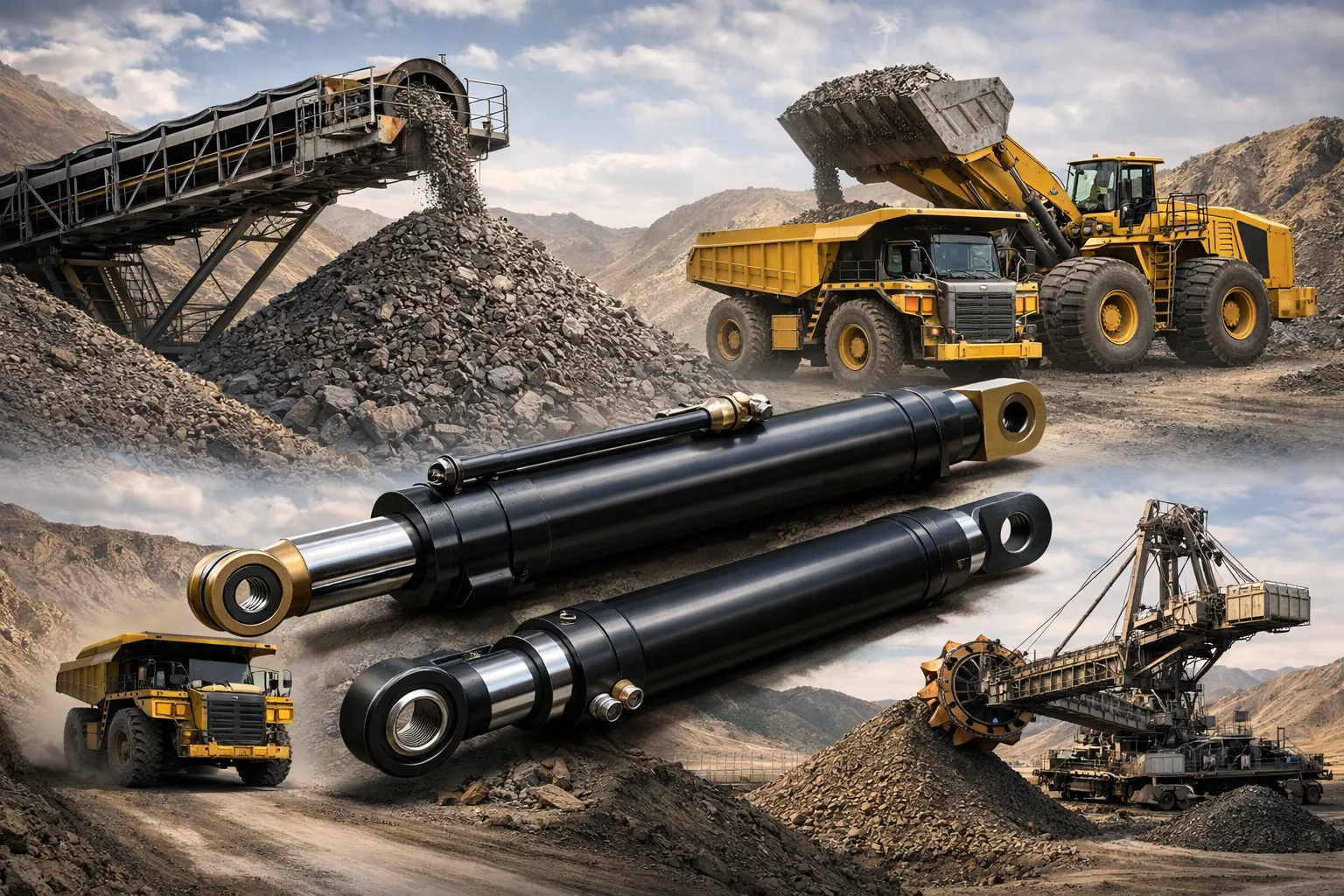
Product Overview: The Core of Bulk Material Handling Operations
In massive coastal ports, bustling heavy metallurgical plants, and expansive open-pit mines across South Korea, Japan, Taiwan, and the broader Asia-Pacific region, stacker reclaimer equipment stands as the absolute backbone of raw material logistics. These colossal machines continuously move millions of tons of coal, iron ore, bauxite, and aggregate daily. At the very center of this relentless volumetric material flow is the hopper subsystem, which dictates the precise loading and discharging of these heavy materials onto the main conveyor belts. Controlling the massive steel gates of these hoppers requires a specialized linear actuator that can withstand brutal mechanical punishment. This is the precise engineering domain of the hopper door cylinder. When this specific component operates flawlessly, the entire facility meets its rigorous production targets. Conversely, when an inadequate actuator fails, the resulting bottleneck halts the entire conveying network, incurring devastating financial losses measured by the minute.
As an internationally trusted hydraulic cylinder manufacturer, we recognize that standard commercial fluid power components are fundamentally incapable of surviving the extreme conditions inherent to mining equipment and bulk logistics. The operational environment for a stacker reclaimer is universally hostile. It is constantly saturated with abrasive particles that relentlessly attack the external sealing mechanisms. Simultaneously, the sheer weight of rocks dropping into the hopper generates massive, sudden impact forces that transfer directly into the equipment structure. Our extensive failure analysis across hundreds of industrial sites has proven that these specific conditions inevitably lead to one dominant failure mode: severe rod wear and subsequent catastrophic seal failure. When the rod becomes scored by dust, the entire fluid power system begins to hemorrhage pressure, leading to total operational failure and an emergency need for complex hydraulic cylinder repair.
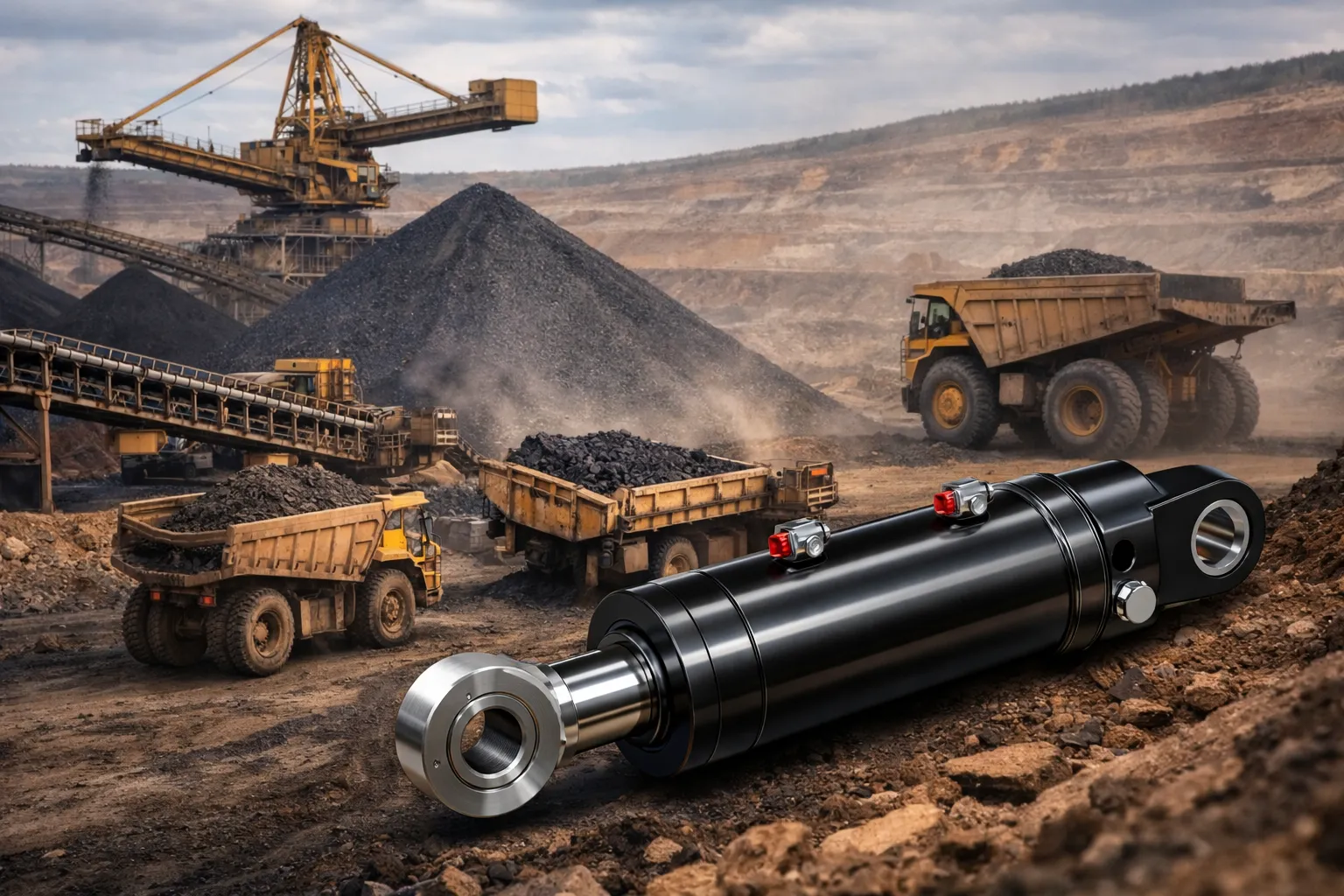
To permanently resolve this critical industry vulnerability, our heavy engineering teams have developed a bespoke hopper door hydraulic cylinder engineered from the ground up to dominate these severe environments. By integrating a high-strength alloy steel structure with an advanced reinforced sealing ring configuration and heavy-duty nickel plating, we provide a permanent, robust solution against abrasive particles and heavy impact. We do not simply supply replacement hydraulic parts; we partner with site maintenance directors to drastically reduce their total cost of ownership. If your operational budget is bleeding due to constantly fixing hydraulic cylinders that were never built for the reality of heavy mining, upgrading to our purpose-built actuation systems will restore absolute reliability to your bulk material handling network, all at a highly competitive hydraulic cylinder price.
Comprehensive Technical Specifications and Configuration
Precision in engineering specification is non-negotiable when dealing with heavy industrial machinery. The following table outlines the rigorous standardized parameters and the broad customization capabilities of our hopper door cylinder series. Every metric has been specifically calibrated to combat the known failure modes of stacker reclaimer operations, specifically targeting rod wear caused by abrasive particles.
| Engineering Attribute | Specification Data & Customization Range |
|---|---|
| Target Industry Focus | Mining Equipment / Heavy Bulk Logistics |
| Primary Equipment Category | Stacker Reclaimer Equipment / Automated Shiploaders |
| Subsystem / Action Target | Hopper Door / Material Flow Gate Control |
| Product Designation | Hopper door cylinder / Hopper door hydraulic cylinder |
| Action Mechanism | Double acting hydraulic cylinder (Powered extension and retraction) |
| Internal Structure Type | Heavy-Duty Piston Cylinder |
| Manufacturing Assembly | Deep-Penetration Welded Assembly (Eliminates tie-rod failure) |
| Core Material System | High-Tensile Alloy Steel (Optimized for massive fracture toughness) |
| Rod Surface Treatment | Heavy Nickel Plating (Superior anti-corrosion and low friction) |
| Environment Grade | Extreme: Abrasive Particles | Heavy Impact forces |
| Condition Feature | Continuous rod wear mitigation under high-frequency operation |
| Typical Failure Mode Solved | Premature rod wear, scoring, and subsequent fluid bypass |
| Recommended Configuration | Reinforced Sealing Ring technology with heavy-duty tandem dust scrapers |
| Mounting Options | Trunnion, Clevis, Spherical Bearing, Flange (Customizable to OEM frame) |
Operational Dynamics: Engineering Unyielding Control
To fully grasp the vital importance of a specialized hopper door cylinder, one must examine the specific fluid dynamics required to manipulate massive steel structures under dynamic load. The heavy steel gates of a stacker reclaimer hopper cannot rely on gravity to close; they must forcefully push through falling rocks, densely packed coal, and wet, sticky ores to seal the flow. Therefore, our design operates exclusively as a true double acting hydraulic cylinder. In such demanding applications, utilizing a single acting hydraulic cylinder that relies solely on gravity or a weak internal spring for retraction is completely unviable and inherently dangerous. This crucial double-acting configuration utilizes highly pressurized hydraulic fluid to deliver immense, controlled mechanical force in both the extending and retracting strokes. This grants the equipment operator absolute control over the aperture of the gate, allowing for precise volumetric feeding to the conveyor belts below.
When the plant’s programmable logic controller signals the hopper to close, high-pressure hydraulic fluid is instantly driven into the cap end of the cylinder housing. This fluid exerts tremendous force against the full surface area of the internal hydraulic cylinder piston. The massive linear force overcomes the friction of the hinges and the resistance of the flowing material, extending the rod and driving the heavy steel door shut. When opening is required, fluid is redirected to the rod end. Pushing against the annular area of the piston, it forcefully pulls the door open, safely holding it back while tons of material drop through.
During these operations, the actuator is continuously subjected to shockwaves as heavy aggregate drops into the hopper. A standard actuator will buckle or suffer from fluid bypass under this extreme kinetic impact. Our heavily welded alloy steel architecture ensures that the hydraulic rams act as solid steel structural members when hydrostatically locked, absorbing the impact without allowing the door to drift open. This unwavering stability protects the conveyor belts below from being suddenly overloaded by accidental material surges, thereby safeguarding the entire mechanical ecosystem of the facility.
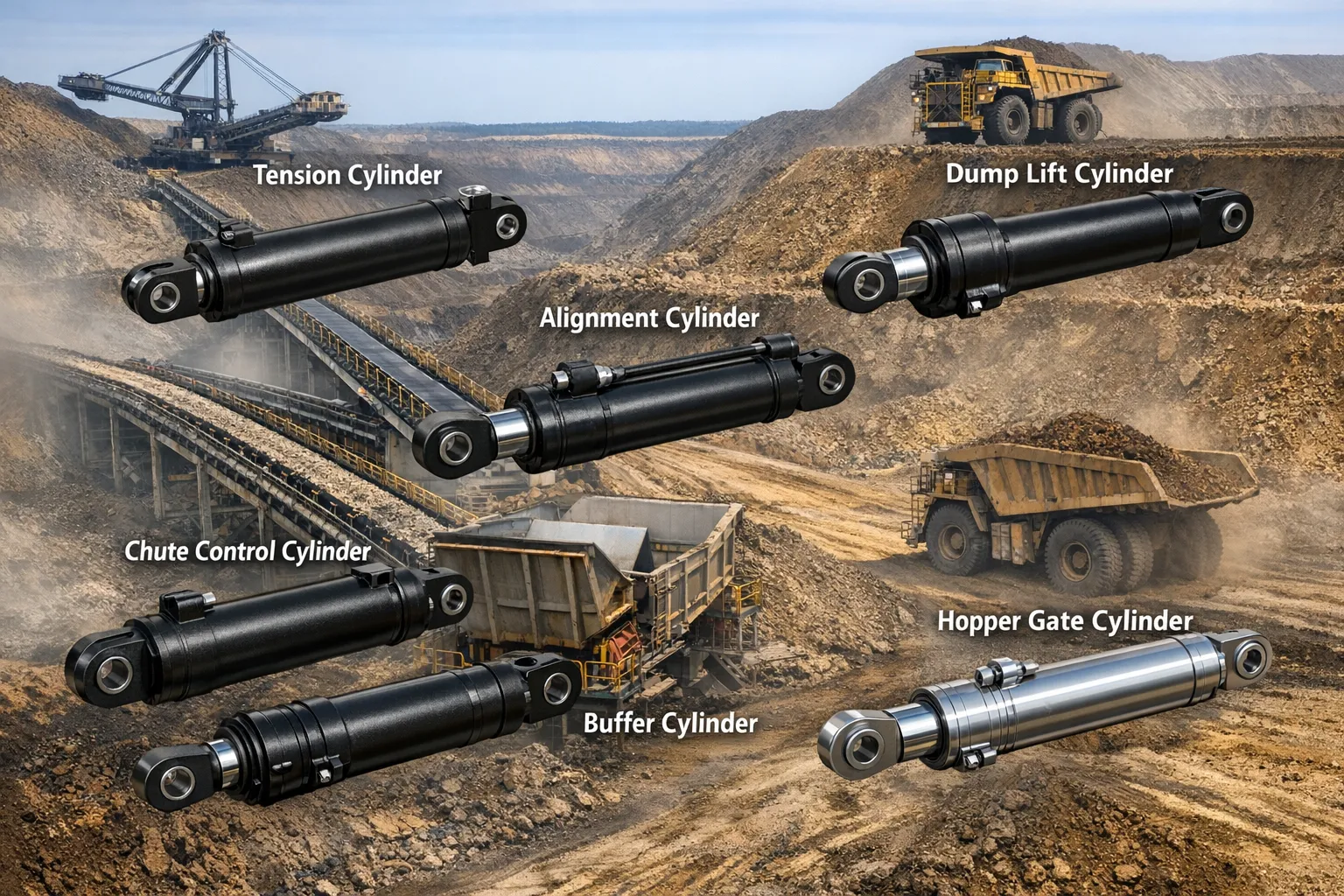
Flawless OEM Fleet Integration and Compatibility
We deeply understand that for maintenance engineers at major ports or mining sites, the downtime required to physically alter a machine frame to fit aftermarket hydraulic parts is simply unacceptable. To provide maximum value, our engineering teams have precisely mapped the dimensional requirements of the most prevalent stacker reclaimers operating globally. We manufacture our heavy-duty hopper door hydraulic cylinder as a direct, drop-in engineering upgrade. By exactingly matching the retracted length, pin diameters, stroke distance, and hydraulic port threads, installation is fast, safe, and requires absolutely no welding or frame modification on site.
Our advanced actuation solutions are routinely deployed as superior upgrades to original equipment on machines built by leading global manufacturers such as Doosan, Hyundai Heavy Industries, Komatsu, Hitachi, Volvo, ThyssenKrupp, Sandvik, and Caterpillar (CAT).
Engineering Disclaimer: The explicit referencing of these specific corporate brands is strictly for technical fitment compatibility and sizing reference to assist industrial buyers in selecting the right component. We operate as an entirely independent, premier hydraulic cylinder manufacturer and hold no official affiliation or trademark rights with these respective OEMs. If you need incredibly robust replacement components without the inflated OEM price tag, our bespoke engineering is your optimal solution.
Five Pillars of Dominant Technical Superiority
Standard cylinders fail rapidly on a stacker reclaimer because they are fundamentally outmatched by the environment. By meticulously analyzing the primary failure mode—rod wear caused by abrasive particles—we have engineered five critical technological advantages into our hopper door cylinder to guarantee unprecedented operational longevity:
1. Reinforced Sealing Ring Technology
Because abrasive particles are the primary destroyer of hydraulic cylinder components, we completely overhauled the gland architecture. We employ a customized, reinforced sealing ring system featuring heavy-duty polyurethane primary seals backed by rigid guide rings. Externally, an aggressive tandem scraper system physically shears off hardened mud, ice, and silica dust before the rod retracts into the barrel. This total exclusion of contaminants guarantees that the internal fluid remains pristine, significantly extending the life of the entire system and preventing rod wear.
2. Advanced Nickel Plating Surface Treatment
Standard hard chrome is brittle and micro-porous, making it highly susceptible to acidic mine runoff and coastal salt air. To combat this and further mitigate rod wear, we utilize an advanced heavy nickel plating process for the external rod surface. Nickel provides vastly superior ductility and flawless corrosion resistance. More importantly, its exceptionally low surface friction actively resists the adhesion of sticky ores and wet coal dust, preventing the abrasive buildup that typically leads to severe scoring and catastrophic seal failure.
3. High-Rigidity Welded Alloy Steel Construction
The hopper door experiences massive, asymmetrical impact when tons of raw material are dumped from above. Standard tie-rod cylinders stretch and shift under this impact, leading to immediate fluid leaks. Our design utilizes a 100% thick-walled alloy steel barrel, perfectly united with the end caps and trunnions via automated deep-penetration submerged arc welding. This creates a monolithic, highly rigid structure capable of absorbing brutal kinetic shock without ever suffering from metal fatigue or structural separation.
4. Zero-Bypass Internal Piston Architecture
Holding a heavy steel gate partially open to strictly meter material flow requires absolute hydrostatic locking. If fluid bypasses the hydraulic cylinder piston, the door will drift, leading to severe spillage and conveyor belt misalignment. We CNC machine the internal bore of the cylinder to exacting micro-inch tolerances and fit specialized bi-directional, zero-leakage composite seals. This guarantees that once the valve commands a specific position, the cylinder locks completely solid, regardless of the vibrating load crashing against the gate.
5. Optimized Thermal Stability and Continuous Duty Life
Stacker reclaimers often operate 24 hours a day, generating significant heat within the fluid power system due to continuous throttling. High temperatures degrade standard rubber seals rapidly. We resolve this by enlarging the internal hydraulic fluid porting to drastically reduce throttling friction. Combined with high-temperature resistant elastomers in critical static areas, our design runs noticeably cooler under high-frequency operation, effectively doubling the thermal fatigue life of the actuator and massively reducing required hydraulic cylinder repair intervals.
Autonomous Manufacturing and Unyielding Quality Control
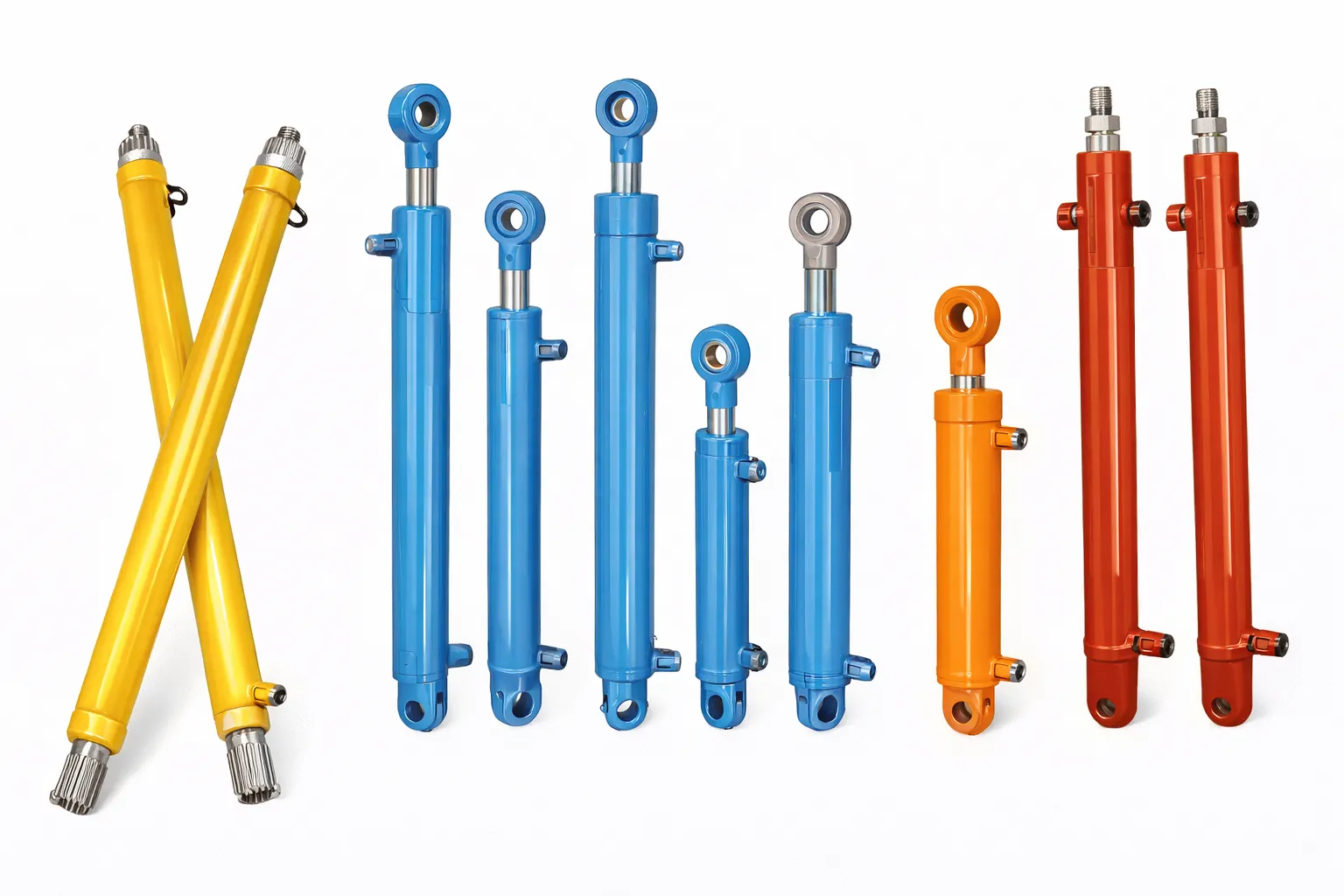
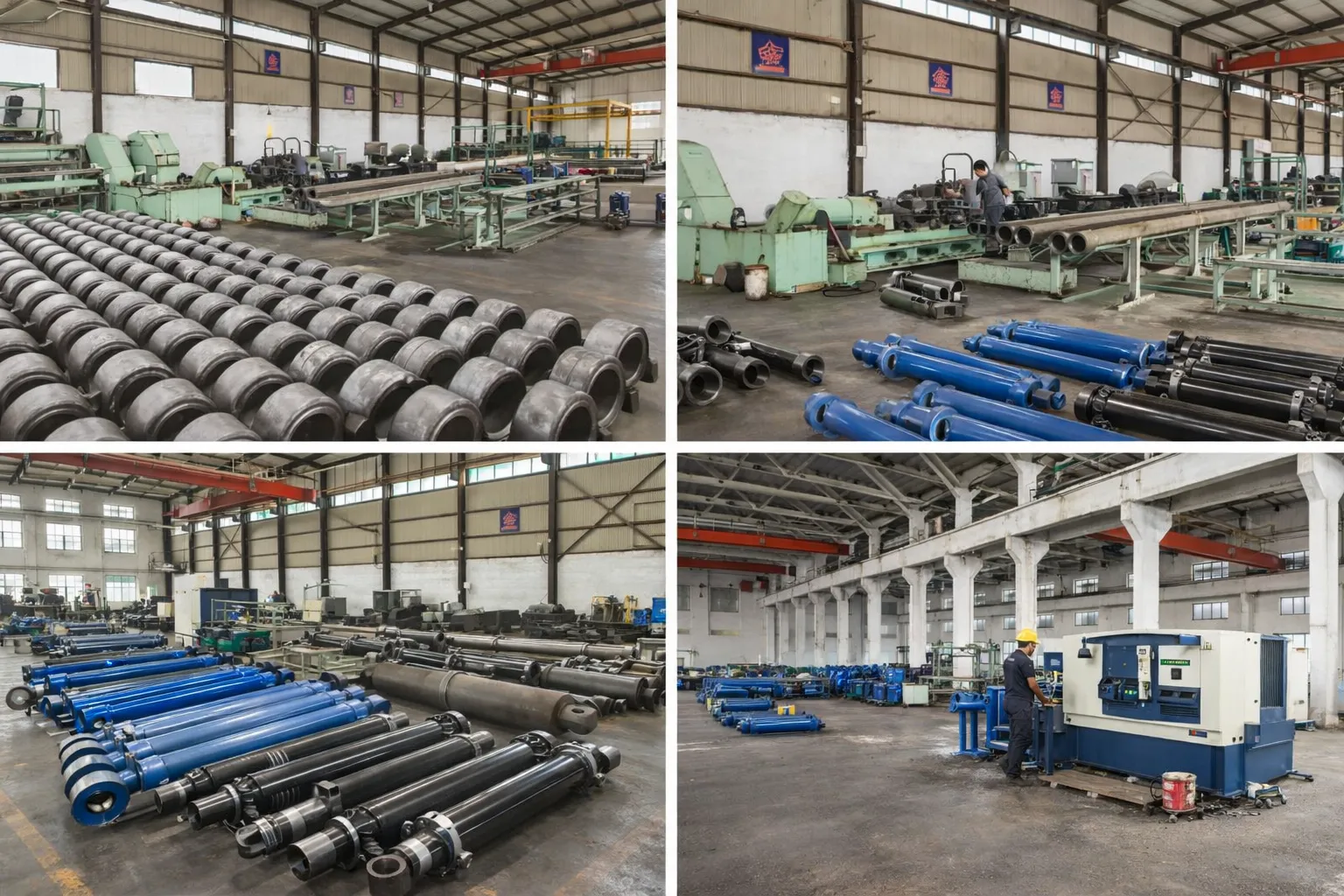
The exceptional field reliability of our products is not accidental; it is explicitly engineered through an entirely autonomous manufacturing ecosystem. By keeping every phase of production strictly in-house, we maintain absolute authority over quality. Starting with the metallurgical inspection of incoming high-tensile alloy steel billets, through to the precision CNC turning of rods and the deep-hole boring of barrels, our manufacturing floor operates to extreme precision tolerances. This total control allows us to eliminate the geometric inconsistencies often found in outsourced components, ensuring every hopper door cylinder fits and performs flawlessly.
Our quality control protocols are arguably the most punishing in the industry. Before any hydraulic cylinder is crated for global shipping, it must endure a 100% factory acceptance pressure test. This involves static proof-load testing at 150% of the maximum rated operating pressure. We mathematically verify complete structural integrity and absolute zero-leakage seal performance. Furthermore, all load-bearing structural welds are subjected to ultrasonic non-destructive testing (NDT) to ensure there are no microscopic subsurface voids. A permanent laser-etched serial number is applied to each unit, archiving the specific material heat codes and CAD drawings to guarantee fast, exact replacement part traceability for decades.
Empowering Critical Heavy Industries Globally
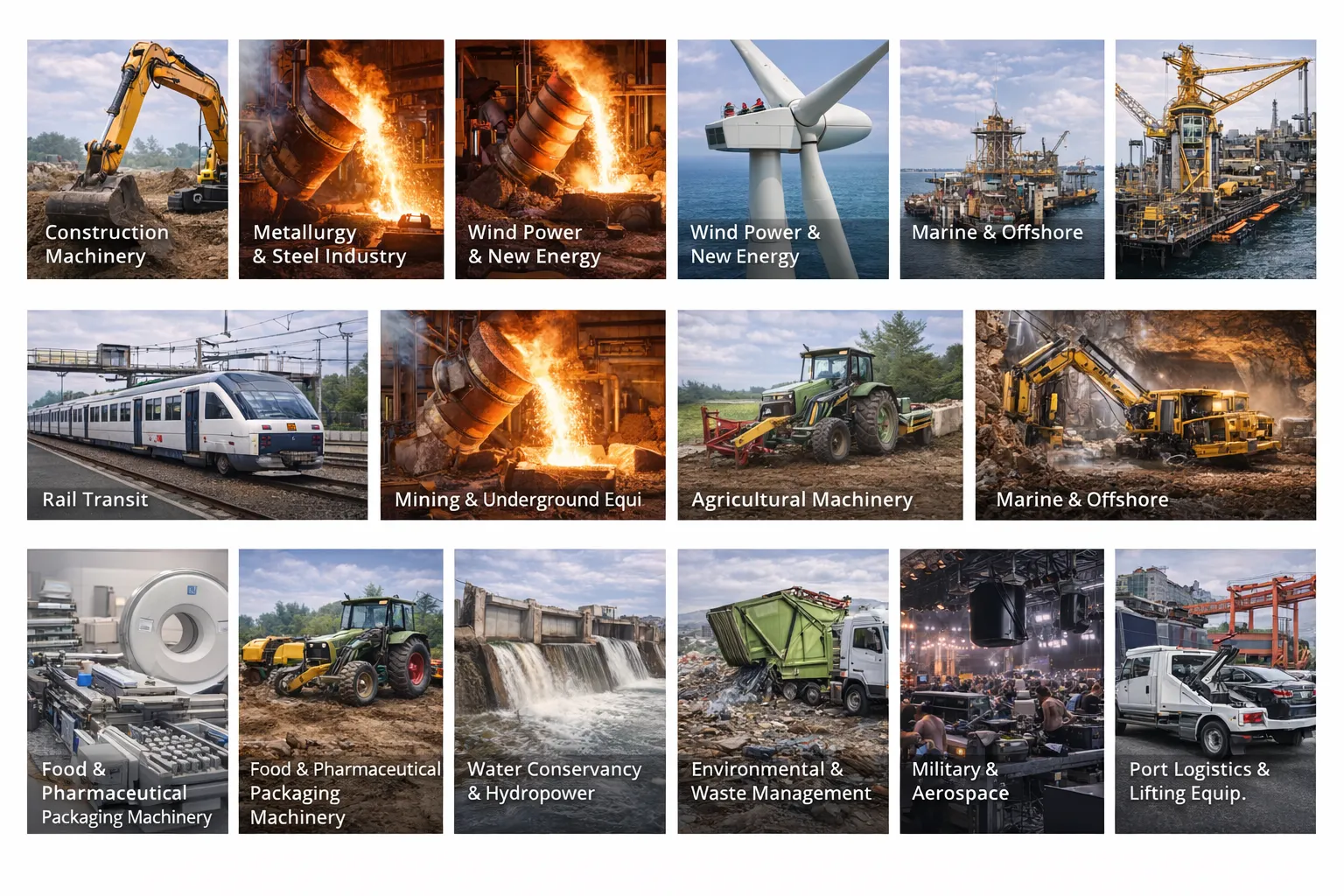
While precisely engineered for the punishing realities of stacker reclaimer hoppers, the intrinsic strength, impact absorption, and total contaminant exclusion of our technology make it highly sought after across a wide array of heavy industrial sectors. Whether acting as a primary material gate controller or as a rugged lift cylinder for heavy attachments, our solutions consistently outlast the competition.
- Mining and Excavation: Flawlessly controlling material flow in highly abrasive, deep-pit operations and massive overland conveying networks. Discover our robust solutions for the mining industry.
- Construction Machinery: Upgrading the resilience of heavy earth-moving equipment, ensuring exact hopper and bucket positioning in severe, rocky terrain. View our upgrades for the construction machinery industry.
- Metallurgy and Steel Manufacturing: Operating seamlessly in incredibly high-temperature zones, managing abrasive slag hoppers, continuous casting gates, and heavy furnace doors where standard seals melt.
- Port Logistics and Bulk Handling: Resisting intense coastal salt corrosion via nickel plating while actuating massive ship-loader spouts and continuous bulk carrier unloaders.
- Renewable Energy Biomass: Regulating the unpredictable flow of abrasive wood chips, municipal waste, and agricultural byproducts into high-pressure boiler feed hoppers.
Comparative Analysis: Standard Market Cylinders vs. Our High-Performance Solution
Procurement teams must evaluate the true total cost of ownership rather than just the initial sticker price. The upfront hydraulic cylinder price is negligible compared to the massive financial losses incurred when a whole terminal stops due to a single blown seal caused by rod wear. Here is how our purpose-built hopper technology contrasts with mass-produced, off-the-shelf commercial alternatives.
| Engineering Metric | Ordinary Commercial Cylinder | Our High-Performance Hopper Door Cylinder |
|---|---|---|
| Rod Surface Treatment | Standard Hard Chrome (Micro-porous, prone to salt-air rust) | Heavy Nickel Plating (Impenetrable anti-corrosion & low friction) |
| Contaminant Resistance | Basic single-lip rubber wiper; destroyed quickly by abrasive particles | Reinforced sealing ring with tandem metal-encased scrapers |
| Impact Load Tolerance | Low (Tie-rods physically stretch under dropping material shock) | Extreme (Thick alloy steel and deep-penetration welding absorb shock) |
| Gate Holding Precision | Drifts open over time due to inevitable internal fluid bypass | Zero-bypass piston cylinder seals provide rock-solid hydrostatic lock |
| Operational ROI | High frequency of catastrophic failure; devastating downtime costs | Massively extended maintenance intervals; exceptionally high ROI |
Proven Global Success: 5 Transformative Real-World Implementations
Our highly specialized engineering has systematically eliminated mechanical bottlenecks for industry leaders across the Asia-Pacific. We let our field results dictate our reputation. Below are five verified case studies detailing how our robust actuation solutions have transformed operations in the most grueling environments imaginable.
Case Study 1: Gwangyang Steelworks Iron Ore Stacker Optimization
Location: South Korea (Deployed November 2024)
The Challenge: A major coastal steel terminal was facing severe operational delays. The dense, abrasive iron ore dust was aggressively bypassing the standard seals on their Hyundai stacker reclaimers, causing deep rod wear. The resulting hydraulic leaks forced them into a cycle of constantly fixing hydraulic cylinders every two months, incurring huge demurrage costs for waiting cargo ships.
How We Connected: The port’s lead mechanical engineer found our technical data sheets while specifically searching Google for a premium hydraulic cylinder manufacturer specializing in anti-abrasion technology.
The Solution & Result: We rapidly supplied custom hopper door cylinders featuring our heavy nickel plating and reinforced sealing rings. The abrasive fine dust was physically blocked from entering the system. Over the past 16 months, the port has recorded zero seal failures on the upgraded machines.
“The difference in durability is staggering. Replacing the standard chrome with their nickel-plated units solved our dust ingress problem completely. Our maintenance budget for these machines has dropped by 80%.” — Mr. Park Joon-ho, Port Maintenance Director
Case Study 2: Hokkaido Deep-Winter Coal Handling Upgrade
Location: Japan (Deployed February 2025)
The Challenge: A vital coal power plant was experiencing winter nightmares. Temperatures dropping to -25°C caused standard rubber seals to freeze, shatter, and leak. Furthermore, massive frozen chunks of coal were dropping into the hoppers, physically bending the weak tie-rods of their OEM commercial cylinders due to heavy impact.
How We Connected: They were referred to us by a heavy equipment distributor in Tokyo seeking tougher, cold-weather-rated aftermarket hydraulic rams.
The Solution & Result: We engineered custom high-impact resistant cylinders utilizing welded alloy steel and integrated aerospace-grade low-temperature seals. The heavy-duty structure completely absorbed the kinetic shock. Rod bending incidents were reduced to absolute zero throughout the harsh winter.
“The sheer physical rigidity of these units is phenomenal. The custom engineering fit perfectly into our existing Komatsu rigs without a single structural modification, and they survived the freeze effortlessly.” — Kenji Sato, Operations Director
Case Study 3: Taichung Port Bulk Handling Optimization
Location: Taiwan (Deployed August 2024)
The Challenge: Fine, highly abrasive cement dust was acting like grinding paste on the rods of their hopper actuators. This continuous abrasion led to rapid rod wear and allowed hydraulic fluid to leak onto the material below, creating environmental hazards and facility shutdowns.
How We Connected: Discovered via our extensive online portfolio detailing our reinforced sealing systems for abrasive environments.
The Solution & Result: We installed hopper door hydraulic cylinders featuring our heaviest-duty tandem dust scrapers and an ultra-hardened nickel plating. The scrapers effectively ejected the abrasive powder before it could cause damage, extending the component lifespan from a dismal 4 months to an ongoing 19 months of flawless service.
“The return on investment was immediate. By simply keeping the dust out, they stopped the leaks entirely. The hydraulic cylinder price was incredibly competitive given the extreme jump in reliability we experienced.” — Lin Chien-Yu, Plant Operations Manager
Case Study 4: Sulawesi Nickel Mine Corrosion Defeat
Location: Indonesia (Deployed December 2025)
The Challenge: Relentless tropical humidity combined with highly acidic laterite mineral runoff was rapidly rusting the external barrels and rods of their stacker hoppers. The severe corrosion pitted the steel, which then violently shredded the internal hydraulic parts upon retraction.
How We Connected: The mining conglomerate’s procurement division contacted us directly after reading our white paper on advanced metallurgical surface treatments.
The Solution & Result: We manufactured a batch of specialized cylinders with heavy nickel-plated rods and applied a proprietary, multi-layer marine-grade epoxy coating to the alloy steel barrels. The anti-corrosion barrier entirely halted the degradation. The cylinders remain spotless and fully operational after enduring an entire monsoon season.
“The acid and rain destroyed our previous OEM parts in months. Their epoxy and nickel combination is a game-changer for tropical mining environments. Truly exceptional engineering quality.” — Budi Santoso, Site Operations Lead
Case Study 5: Quang Ninh Coal Processing Precision Control
Location: Vietnam (Deployed March 2026)
The Challenge: The sticky, dense coal was forcing the hopper gates to slowly drift open under weight due to internal fluid bypass across poorly manufactured standard piston seals. This lack of volumetric control overloaded the downstream conveyor belts, causing massive spillage and frequent automated safety shutdowns.
How We Connected: Sourced by a leading international mining contractor looking for absolute precision fluid control solutions.
The Solution & Result: We provided customized actuators with ultra-tight CNC internal tolerances and zero-leakage piston cylinder architectures. Once commanded to hold a specific aperture, the gate remained hydrostatically locked in place perfectly. Conveyor overloading incidents were immediately reduced to zero.
“The hydrostatic locking capability is perfect. The doors hold their exact position regardless of the tons of wet ore pushing against them. We finally have total control over our material feed rate.” — Tran Van Minh, Chief Mechanical Engineer
Frequently Asked Questions (Engineering & Procurement Support)
Transparency and clear technical communication are the cornerstones of our client partnerships. Below are detailed answers to the most common questions our B2B clients ask regarding the specification and deployment of our high-durability actuation solutions against abrasive particles and heavy impact.
1. Exactly how does nickel plating outperform standard hard chrome against rod wear?
Standard hard chrome, while hard, contains microscopic cracks (micro-porosity) inherent to the electroplating process. Acidic moisture and extremely fine abrasive particles can lodge in these pores. Heavy nickel plating provides a continuous, incredibly smooth, and highly ductile surface. Its incredibly low coefficient of friction means sticky ores and aggressive coal dust cannot adhere to the rod, drastically reducing the abrasion that causes rod wear and protecting the internal hydraulic cylinder components.
2. What exactly constitutes a reinforced sealing ring?
We do not rely on a single rubber O-ring. A reinforced sealing ring system consists of an aggressive outer metal-encased polyurethane wiper to sheer off heavy mud, followed by a secondary scraper for fine silica dust. Behind these, the primary high-pressure seal is supported by rigid anti-extrusion guide rings. This multi-stage architecture guarantees that abrasive particles never breach the fluid chamber, which is the primary cause of sudden rod wear failure.
3. Why is constantly fixing hydraulic cylinders a poor strategy in bulk logistics?
Repeatedly fixing hydraulic cylinders of a standard commercial design is essentially throwing money away. If the metal barrel is already warped from impact or the rod is deeply scored, installing new seals will only result in another leak within weeks. The enormous labor costs and facility downtime required for continuous hydraulic cylinder repair completely dwarf the one-time investment of upgrading to our purpose-built, highly durable hopper door hydraulic cylinder.
4. Can you match the exact dimensions of our Doosan or Hyundai stacker reclaimers?
Yes. Our engineering department routinely develops direct drop-in replacements for all major heavy machinery brands. By providing us with the exact pin diameter, fully retracted length, and required stroke, we will manufacture a seamless, upgraded double acting hydraulic cylinder that bolts directly into your existing machine frame, requiring absolutely no on-site modification.
5. Can this heavily reinforced design be utilized as a primary lift cylinder?
Absolutely. While optimized for hopper gates, the fundamental strengths of this design—heavy-duty welded alloy steel, high impact tolerance, and superior sealing—make it an exceptional upgrade for any demanding application requiring a powerful lift cylinder, such as massive boom lifts on mining excavators or heavy structural erectors in construction environments.
6. What is the standard lead time for delivering these customized units to South Korea?
Because we are a fully autonomous manufacturing facility, our production agility is exceptionally high. Standard custom configurations are typically machined, assembled, and 100% factory tested within 15 to 25 days. Efficient sea freight to major ports like Busan or Incheon adds roughly 5-8 days, making our supply chain highly responsive to your maintenance turnaround schedules.
7. Will you provide seal kits and replacement parts in the future?
Yes. Every unit we dispatch is laser-etched with a unique serial number that corresponds to its permanent digital CAD file in our database. Whether you need a replacement rod guide, a new piston, or a specialized seal kit five years from now, we can instantly retrieve your exact specifications and supply the precise matching hydraulic parts rapidly.
Ready to Eradicate Material Flow Bottlenecks?
Do not allow fragile commercial actuators to compromise the immense productivity of your stacker reclaimer equipment. Partner directly with a specialized engineering factory dedicated strictly to conquering the harshest fluid power environments on earth. Provide us with your technical drawings or dimensional requirements, and we will engineer a permanent solution against rod wear and heavy impact.
Need to evaluate our broader capabilities? Explore our full range of products at our hydraulic cylinder catalog to understand our manufacturing depth. Our technical desk typically responds to B2B inquiries within 12 hours with precision CAD models and exact pricing structures.
Editor: Cxm