Outrigger Extension Cylinder for Concrete Machinery
Engineered to bear the ultimate structural load. Uncompromising stability and extreme deformation resistance for heavy-duty concrete pumping equipment.
Product Overview & Industrial Value
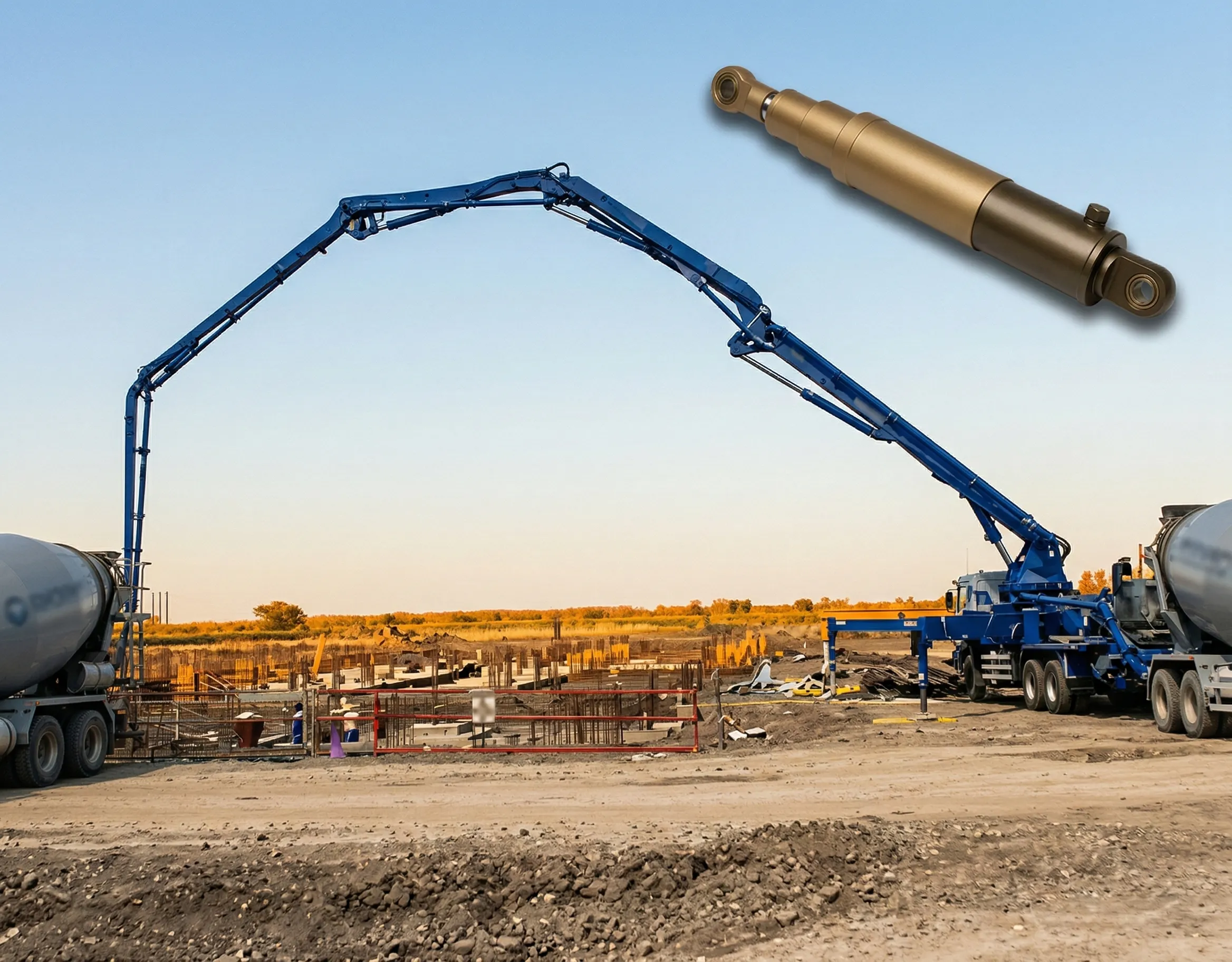
In the realm of heavy construction machinery, stability is not merely a feature; it is the absolute foundation of operational safety and efficiency. When a concrete pump truck extends its placing boom dozens of meters into the air, the entire center of gravity shifts dramatically. The immense dynamic forces, continuous vibrations, and the sheer weight of the machine itself are entirely transferred to the ground through the outrigger system. As a seasoned hydraulic cylinder manufacturer, we recognize that the outrigger extension cylinder is the unsung hero of this operation. If an outrigger fails, shifts, or deforms, the consequences are catastrophic, ranging from equipment destruction to fatal worksite accidents.
Our heavy-duty outrigger extension hydraulic cylinder is purposefully engineered to conquer the brutal realities of concrete construction sites. We do not build standard off-the-shelf actuators; our products are highly specialized structural components designed to withstand severe ground impact and continuous static loading. Many aftermarket suppliers utilize thin-walled tubes to cut down on the hydraulic cylinder price, which inevitably leads to the most common and dangerous failure mode: cylinder block deformation. Our unique market positioning focuses on zero-compromise structural integrity. By utilizing ultra-high-yield alloy steels and reinforced geometric designs, we provide fleet operators with hydraulic parts that guarantee absolute rigidity, ensuring that once the outriggers are deployed, the pump truck remains anchored like bedrock, regardless of the terrain or pumping intensity.
Detailed Technical Parameters
Precision engineering requires transparent data. The following specifications detail the core architecture of our concrete machinery outrigger solutions. For broader actuation needs across different equipment, please explore our full hydraulic cylinder catalog.
| Industry | Equipment Category | Sub-system / Action | Component Name | Action Mode | Structure Type |
|---|---|---|---|---|---|
| Construction Machinery | Concrete Pump Truck | Outrigger System | Outrigger extension cylinder | Double acting hydraulic cylinder | Piston type |
| Manufacturing Structure | Material System | Surface Treatment | Environmental Rating | Working Condition Features | Typical Failure & Solution Configuration |
| Heavy-duty Welded type | High-strength 42CrMo Alloy | Hard Chrome plated | Severe Ground impact & abrasion | Supporting the weight of the whole machine | Failure: Cylinder block deformation Solution: Thick-walled cylinder block + over-spec ear seat |
Kinematic and Structural Working Principle
To fully appreciate the necessity of high-grade engineering in an outrigger extension cylinder, one must understand its dual role: it is both a kinetic actuator and a static foundational pillar. Unlike a standard lift cylinder that continuously cycles up and down, the outrigger cylinder deploys, locks into position, and then must stubbornly refuse to move while absorbing tremendous forces.
Operating as a double acting hydraulic cylinder, fluid power is utilized for both the extension to the ground and the retraction back into the chassis. When the operator initiates the deployment sequence, highly pressurized hydraulic oil flows into the blind end of the cylinder barrel. This forces the hydraulic cylinder piston downward. The rod extends, pushing the outrigger pad firmly against the earth. Once the machine is lifted and leveled, the true test begins.
At this critical moment, integrated hydraulic pilot-operated check valves (often called holding valves or PO checks) lock the fluid inside the cylinder. The hydraulic fluid becomes a virtually incompressible solid column. Now, the cylinder transitions from a moving part to a rigid structural support. As the concrete pump operates, rhythmic pressure pulses and the sweeping motion of the heavy boom attempt to twist and push the chassis. All of this lateral and vertical kinetic energy is channeled directly into the outrigger extension hydraulic cylinder. If the barrel wall is too thin, the internal fluid pressure combined with external mechanical stress will cause the steel to bulge or warp—this is the dreaded cylinder block deformation. Our design fundamentally prevents this by employing an exceptionally thick-walled 42CrMo construction, ensuring the geometric shape remains perfectly cylindrical even under maximum overload scenarios.
Seamless Integration: Brand Compatibility Guide
Sourcing reliable replacement parts is a major challenge for fleet managers, especially in the competitive markets of South Korea and Southeast Asia where equipment uptime dictates profitability. Our engineering team has meticulously mapped the dimensional footprints, pin sizes, and fluid flow requirements to ensure our cylinders serve as direct, drop-in replacements for leading OEM machinery. (Please note: The following brand names are referenced strictly for dimensional compatibility, sizing, and technical selection purposes to assist our clients. We do not claim any affiliation with or endorsement by these respective trademark holders.)
- Everdigm & KCP: Direct dimensional crossover for X-style and swing-out outrigger systems highly prevalent in the South Korean market.
- Junjin: Engineered to match the specific stroke lengths and heavy-duty load requirements of their high-reach pump models.
- Putzmeister & Schwing: Compatible mounting for European-designed chassis configurations, meeting or exceeding their strict safety factor ratios.
- Sany & Zoomlion: Perfectly suited to replace factory-installed hydraulic rams on high-volume, aggressively cycled concrete machinery.
Five Unrivaled Technical Advantages
What elevates our outrigger extension cylinder from a generic part to an industrial-grade necessity? It is our refusal to cut corners in metallurgy and structural design. Here are the five core engineering pillars that define our superiority:
- Anti-Deformation Thick-Walled 42CrMo Construction: Standard cylinders often use basic #45 steel. We utilize 42CrMo, an ultra-high-strength chromium-molybdenum alloy steel known for its exceptional toughness and high yield strength. We deliberately over-engineer the wall thickness of the cylinder barrel. This massive increase in cross-sectional rigidity entirely eliminates the risk of cylinder block deformation when supporting the weight of the whole machine during violent pumping operations.
- Over-Spec Ear Seat and Trunnion Forging: The connection points (ear seats/clevises) endure brutal shear forces and ground impact when the outrigger pads hit uneven rocky terrain. Instead of standard welded brackets, our ear seats are forged from solid high-tensile steel and integrated using deep-penetration robotic welding. This over-spec design ensures the mounting points will never tear or fracture under heavy lateral stress.
- Zero-Creep Integrated Load Holding Technology: An outrigger that slowly sinks under load is a massive safety hazard. We machine custom manifolds directly into the cylinder head to house premium zero-leakage pilot-operated check valves. This eliminates external hosing vulnerabilities and guarantees that once the hydraulic cylinder piston extends, it remains locked in place for days without a single millimeter of creep.
- Extreme-Duty Chrome Plated Rod Defense: Outrigger rods are exposed to the worst elements: splashed wet concrete, abrasive silica dust, and corrosive mud. We apply a multi-layered, micro-cracked hard chrome plating process. This creates an armor-like shield that resists impact chipping and scoring, preventing contaminants from tearing the wiper seals and ruining the internal hydraulics.
- High-Impact Multi-Lip Sealing Matrix: Because the primary environmental rating involves ground impact and static shock, standard seals will deform and extrude. We employ a specialized urethane and PTFE sealing matrix backed by heavy-duty guide rings. This absorbs radial shock loads and completely seals the high-pressure fluid, drastically extending the mean time between failures and reducing the frequency of fixing hydraulic cylinders in the field.
Flawless Manufacturing & Traceable Quality Control
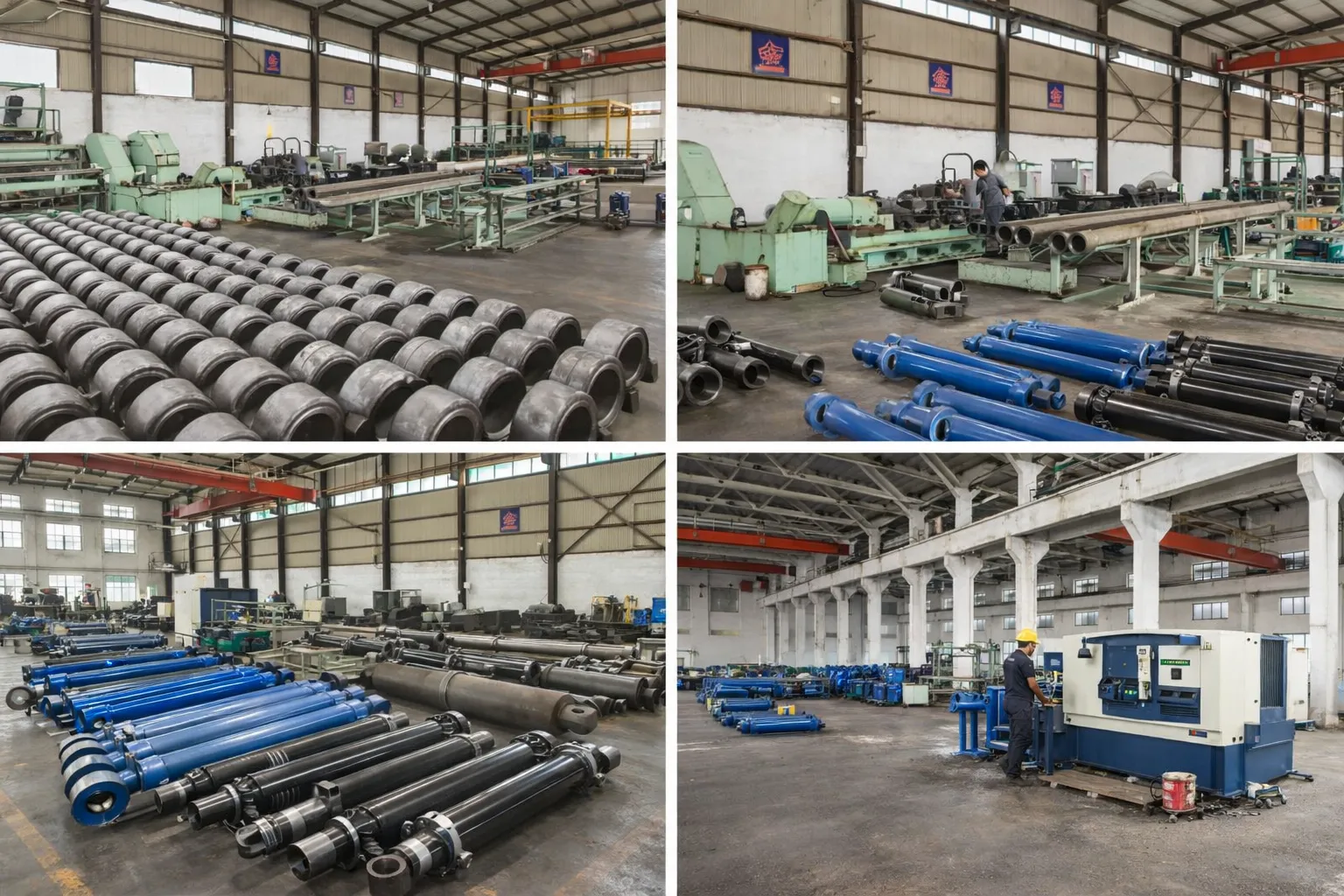
As a dedicated hydraulic cylinder manufacturer, we maintain absolute control over our production ecosystem. The integrity of an outrigger extension hydraulic cylinder cannot be verified by just looking at its exterior paint. It requires stringent metallurgical auditing.
Every batch of 42CrMo steel billet is subjected to ultrasonic non-destructive testing (NDT) to ensure there are no microscopic internal voids or slag inclusions that could propagate into cracks under load. Our heavy-duty lathes and deep-hole boring machines process the thick-walled barrels to exact geometric tolerances, followed by precision honing to achieve a mirror finish that maximizes seal longevity.
Furthermore, 100% of our outrigger cylinders undergo grueling hydraulic pressure testing before they leave the facility. We artificially induce pressures far exceeding the standard working limits to verify the integrity of the structural welds and the zero-leakage performance of the holding valves. Each unit is laser-engraved with a unique serial number, linking it to an immutable database of material certs, assembly technician IDs, and test bench results, providing our clients with absolute confidence and traceability.
Beyond Concrete: Broad Industrial Applications
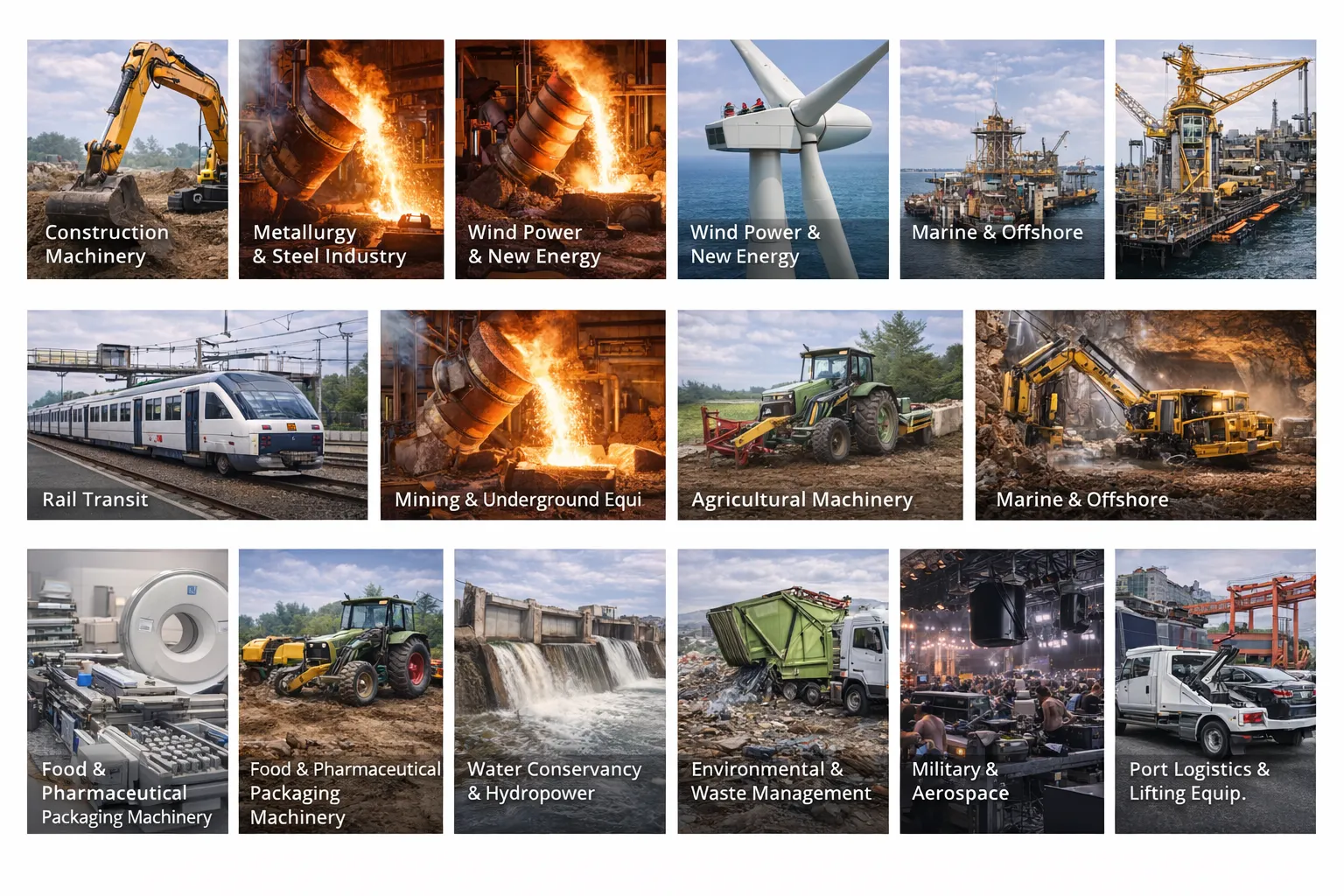
The robust engineering principles that make our outrigger cylinders essential for concrete pump trucks also render them invaluable across a spectrum of heavy industries requiring ultimate stabilization. You can view more scenarios in our dedicated construction machinery industry section.
- Mobile Cranes & Heavy Lifting: Providing the critical wide-stance stabilization needed when lifting massive payloads in port construction or high-rise steel erection.
- Rotary Drilling Rigs: Anchoring massive foundation drilling equipment against the immense rotational torque and downward thrust generated during rock boring.
- Specialty Rescue & Firefighting Vehicles: Ensuring aerial ladder trucks do not tip when extended over urban obstacles, where human lives depend on hydraulic reliability.
- Heavy Logistics Automation: Leveling and supporting massive mobile transport platforms (SPMTs) used to move bridges or ship sections.
- Mining & Quarry Operations: Stabilizing mobile crushers and screening plants subjected to constant, violent vibration from heavy rock processing.
Comparative Analysis: Standard vs. Heavy-Duty
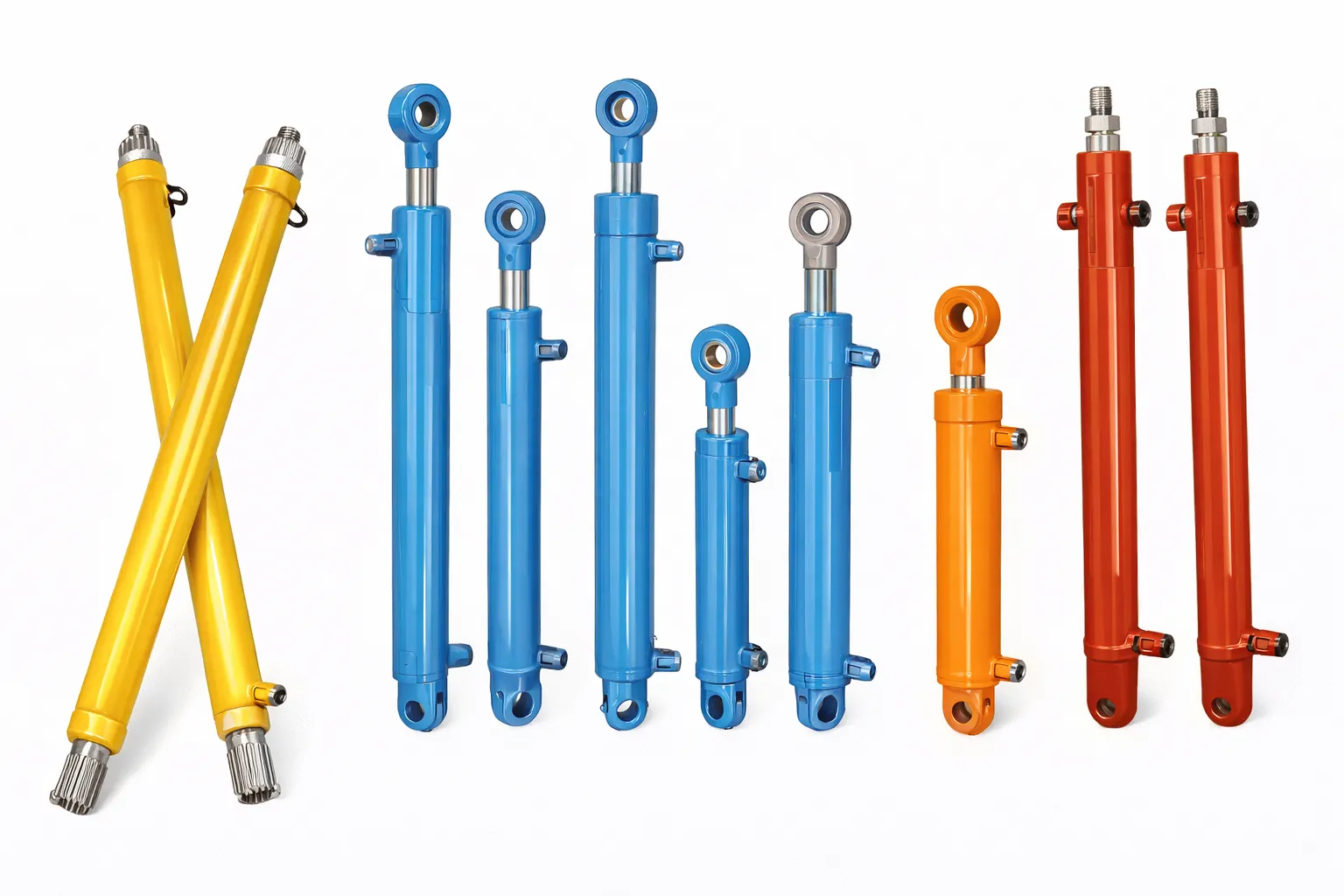
To clearly illustrate why procuring premium hydraulic parts is a superior financial decision, consider this technical breakdown comparing typical aftermarket outrigger cylinders against our heavy-duty solutions.
| Feature Focus | Standard Market Cylinder | Our Premium Outrigger Cylinder |
|---|---|---|
| Cylinder Material | Standard #45 Carbon Steel (Thin wall) | 42CrMo High-Yield Alloy (Thick-walled) |
| Deformation Risk | High risk under pump vibration | Effectively Eliminated |
| Mounting Points | Standard welded plates | Over-spec forged ear seats |
| Load Holding | Basic external check valves (Prone to creep) | Integrated zero-leakage holding manifolds |
| Rod Protection | Thin standard chrome (Prone to chipping) | Micro-cracked heavy hard chrome |
Proven Field Performance in Asia
Engineering theories must be validated by harsh reality. Our strong presence across South Korea and the broader Asian market proves our capability to eliminate downtime. Here are five instances where our heavy-duty cylinders solved critical operational crises.
1. Eradicating Cylinder Deformation in Fleet Operations
Location: Busan, South Korea
Client: Hanil Concrete Pumping Services
Application: 47m Boom Pump Trucks
Contact Route: Searched for “prevent outrigger cylinder deformation” on Google and read our technical blog.
Outcome: The client was experiencing recurring barrel bulging on cheaper aftermarket cylinders, leading to severe safety warnings. We supplied our thick-walled 42CrMo outrigger extension cylinder batch. Zero deformation reported after 18 months of intensive daily use.
“The sheer weight and solid build of these cylinders are impressive. We haven’t had a single truck grounded for outrigger issues since the switch. It completely justified the slightly higher initial hydraulic cylinder price.” — Mr. Kim Seo-joon, Maintenance Director
2. Resolving Outrigger Creep in Mobile Cranes
Location: Osaka, Japan
Client: Kansai Heavy Lift Co.
Application: 100-ton Mobile Terrain Cranes
Contact Route: Met our representatives at a heavy machinery expo in Tokyo.
Outcome: Their existing cylinders suffered from internal fluid bypass, causing the crane to lose level during long holds. Our integrated zero-leakage holding valve manifolds completely cured the sinking issue.
“Precision lifting requires absolute stability. Your cylinders lock in tight and do not give a fraction of a millimeter. Excellent engineering.” — Kenji Tanaka, Operations Chief
3. Surviving Brutal Ground Impact in Infrastructure
Location: Ho Chi Minh City, Vietnam
Client: VinaBuild Constructors
Application: Foundation Drilling Rigs
Contact Route: Reached out via our B2B website inquiry form.
Outcome: Operators were shearing off standard mounting brackets when deploying outriggers on rocky, uneven mud. Our over-spec forged ear seats took the massive ground impacts without cracking.
“We used to spend weeks fixing hydraulic cylinders just because the mounting eyes snapped off. Your forged trunnions are practically indestructible.” — Nguyen Hai, Lead Mechanic
4. Resisting Corrosion in Coastal Pumping
Location: Kaohsiung, Taiwan
Client: Formosa Coastal Engineering
Application: Port Seawall Concrete Pumping
Contact Route: Referral from an existing client.
Outcome: Saltwater spray and abrasive sand were destroying standard rod plating in months. Our micro-cracked hard chrome defense extended rod life by 300%, preventing seal tear.
“The salt air eats cheap metal for breakfast. Your cylinders still look and perform like new after a grueling typhoon season. Outstanding durability.” — Lin Wei-Ting, Project Manager
5. Upgrading Heavy Transport Stabilization
Location: Rayong, Thailand
Client: Siam Heavy Logistics
Application: Self-Propelled Modular Transporters (SPMT)
Contact Route: Discovered us through a LinkedIn engineering article.
Outcome: Needed high-tonnage stability during the loading of massive petrochemical modules. Our custom thick-walled outrigger extension hydraulic cylinder units provided the extreme load-bearing capacity required.
“When you are lifting a 500-ton module, you cannot have equipment doubt. These hydraulic legs are the strongest we have integrated into our fleet to date.” — Chaiwat S., Lead Fleet Engineer
Expert Procurement FAQ
For B2B buyers and chief engineers, clarity is paramount. Here are answers to common technical and commercial queries regarding our outrigger systems.
1. Why is 42CrMo steel specifically used for the cylinder block?
Standard carbon steel (#45) lacks the structural rigidity needed when a concrete pump transfers lateral shaking forces into the outrigger. 42CrMo is a chromium-molybdenum alloy with exceptionally high tensile and yield strength. It allows the barrel to absorb violent shock loads without undergoing permanent plastic deformation, ensuring the internal piston continues to move smoothly without jamming.
2. If we need to replace cylinders on older Korean brand pumps (e.g., Everdigm or KCP), will these fit?
Yes. We maintain a vast database of OEM dimensional drawings. Provide us with the original part number or basic pin-to-pin measurements, and we will supply a direct drop-in replacement that physically fits your chassis but offers vastly superior internal construction and load-holding capabilities.
3. What makes your cylinders resistant to internal creep/sinking?
Creep is usually caused by failing internal seals or poor external check valves. We use high-grade multi-lip polyurethane seals that do not bypass fluid under high static pressure. Furthermore, our load-holding valves are precisely machined directly into the cylinder head, eliminating the micro-leaks common in externally piped manifold blocks.
4. How does your pricing structure benefit bulk fleet upgrades?
Because we are the primary hydraulic cylinder manufacturer handling forging, machining, and assembly under one roof, we strip away distribution markups. Our hydraulic cylinder price is highly competitive for B2B fleet orders, often coming in significantly lower than OEM dealership prices while delivering a tougher, heavy-duty product.
5. Can we purchase seal kits from you for future hydraulic cylinder repair?
Absolutely. While our seals boast an extended MTBF, regular maintenance is eventually required. We supply exact-match, OEM-grade seal kits designed specifically for our cylinders, ensuring that any future hydraulic cylinder repair restores the unit to 100% factory holding strength.
6. What is the typical lead time for custom outrigger orders to South Korea?
For standard fleet replacement models (common 36m to 56m pump classes), we often have forgings ready, making lead times around 3 weeks. Shipping via sea freight to Busan or Incheon typically adds 3 to 5 days, ensuring your machinery is back operational swiftly.
7. Are your over-spec forged ear seats heavier than standard ones?
They add a negligible amount of weight but contribute massively to the yield strength. In the context of a 30-ton concrete pump truck, the extra few kilograms in the forged trunnions are entirely unnoticeable to the vehicle’s driving dynamics but are the key difference between surviving a hard ground impact and tearing a mount entirely.
Secure Your Fleet’s Foundation Today
Never compromise on the structural integrity of your heavy machinery. Deformed cylinders and creeping outriggers cost you time, money, and put your crew at risk. Partner with top-tier engineering experts. Share your machinery models or specific dimensional requirements with us, and we will engineer a rock-solid solution.
We guarantee a technical response to all B2B inquiries within 12 hours.
Editor: Cxm