Press-Fit Hydraulic Cylinder for Wheelset Press Machines
Engineered exclusively with a solid forged alloy steel body to permanently eradicate radial cylinder deformation under extremely high load conditions. The definitive fluid power solution delivering perfect, stutter-free linear tonnage for precision locomotive depot wheelset assembly operations.
Product Overview & Critical Industrial Value in Rail Transit Maintenance
The absolute safety and reliability of any major rail transit system—whether it is a high-speed commuter network navigating the dense urban corridors of South Korea or a heavy-duty freight line traversing the mountainous terrain of Japan—relies fundamentally on the mechanical integrity of its rolling stock wheelsets. The critical connection between the heavy steel train wheel and the forged axle is not achieved through welding, adhesives, or mechanical fasteners; it is established entirely through an extreme, high-precision interference fit. This metallurgical bonding requires forcing a slightly smaller wheel bore over a microscopically larger axle diameter. To accomplish this cold-pressing process safely, locomotive maintenance depots utilize massive horizontal wheelset press machines. The definitive mechanical core of these colossal industrial machines is the press-fit cylinder. This highly specialized hydraulic cylinder must consistently generate and sustain hundreds of tons of perfectly linear pushing force to safely seat the wheel without galling or scoring the critical axle surface.
Operating a press-fit hydraulic cylinder within the confines of a high-volume locomotive depot introduces a highly distinct set of extreme mechanical challenges. The most critical operational hazard is the sheer magnitude of the internal hydrostatic pressure required to generate anywhere from 200 to 500 tons of continuous pressing force. When standard industrial fluid power components, typically built from seamless drawn steel tubing, are subjected to these extremely high load thresholds, they inevitably suffer from a catastrophic failure mode known as cylinder body deformation. The immense internal fluid pressure causes the relatively thin-walled tubular barrel to stretch and balloon outward radially. When the barrel deforms, the precise internal clearance between the hydraulic cylinder piston and the cylinder wall expands uncontrollably. This radial expansion allows highly pressurized hydraulic fluid to instantly bypass the internal seals, resulting in a sudden, dangerous loss of pressing force. Furthermore, even microscopic barrel deformation causes the pressing action to stutter—a severe “stick-slip” phenomenon—which entirely ruins the computerized force-displacement curve required for safety certification. A flawed or stuttering pressing curve means the expensive wheelset must be immediately scrapped, causing severe financial loss, wasting valuable components, and grinding depot maintenance schedules to an absolute halt.
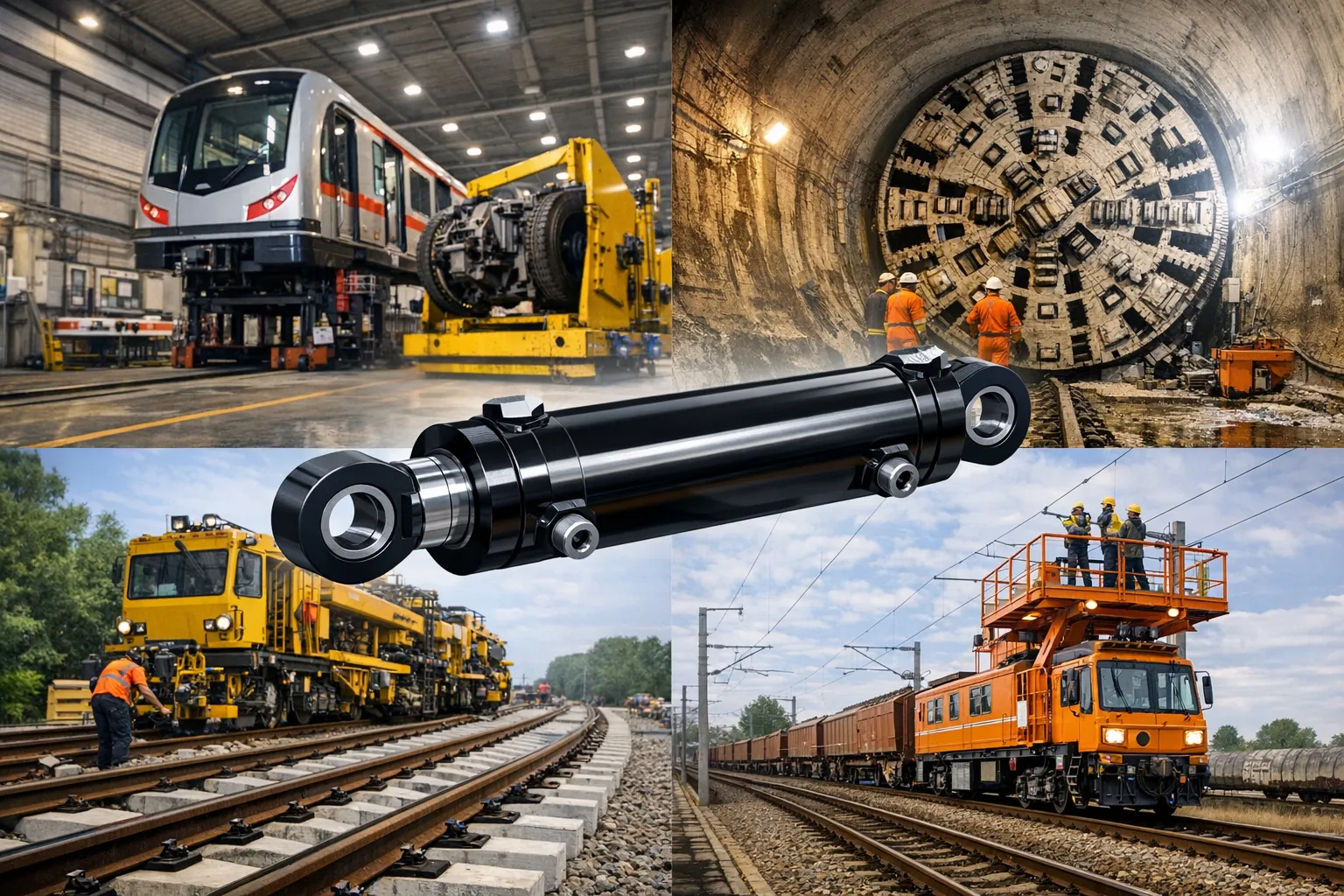
As an elite, vertically integrated hydraulic cylinder manufacturer with decades of specialized expertise in high-tonnage applications, we have completely re-engineered the metallurgical foundation of the pressing actuator to eliminate this specific failure mode entirely. We definitively reject the use of standard drawn tubing for this safety-critical railway application. Instead, our heavy-duty press-fit cylinder is manufactured directly from a solid forged alloy steel block. This massive forged cylinder body provides unyielding structural rigidity and immense hoop strength, guaranteeing absolutely zero radial deformation even when operating at maximum tonnage stall pressures. For rolling stock procurement managers, lead mechanical engineers, and depot directors looking to elevate their assembly precision and optimize their long-term hydraulic cylinder price by permanently preventing scrapped wheelsets and unscheduled equipment downtime, our forged fluid power solution represents the ultimate mechanical upgrade.
Technical Parameters & Forged Body Specifications
To interface flawlessly with the heavy cast-iron frames and complex mounting brackets of modern wheelset press machines, absolute dimensional accuracy and unparalleled metallurgical yield strength are strictly mandatory. The operational parameters of our pressing actuators are meticulously calibrated to absorb extreme internal pressures while delivering a perfectly smooth, stutter-free pushing stroke at micro-creep velocities. The comprehensive table below outlines our core engineering framework. Because we own and operate our own heavy forging presses and massive multi-axis CNC machining centers, we possess the precise engineering flexibility to customize stroke lengths, heavy-duty flange mountings, fluid port sizing, and total tonnage output to perfectly match the mechanical schematics and hydraulic power unit (HPU) capabilities of your specific depot machinery.
| Engineering Category | Specification Details & Engineering Customization Range |
|---|---|
| Industry Segment | Rail Transit Maintenance & Locomotive Overhaul Facilities |
| Equipment Category | Locomotive Depot Equipment / Horizontal Wheelset Press Machine |
| Subsystem / Action | Pressing Subsystem / High-tonnage wheelset pressing and unpressing |
| Cylinder Designation | Press-fit Cylinder / Press-fit Hydraulic Cylinder |
| Action Mechanism | Double Acting Hydraulic Cylinder (Guarantees active fluid control during both pressing and rapid retraction reset phases) |
| Structure Type | Heavy-Duty Piston Cylinder (Optimized for ultra-low-friction, high-force linear output) |
| Manufacturing Structure | Welded assembly with integrated heavy flange mounts for ultimate base stability |
| Material System | Alloy Steel Forging (42CrMo provides exceptional core yield strength against extreme hydrostatic hoop stress) |
| Surface Treatment | Thick Hard Chrome Plated (Ensures maximum wear resistance and perfect microscopic seal lubrication) |
| Environmental Condition | Extremely High Load (Requires continuous handling of 200 to 500-ton peak pressing forces) |
| Working Condition Feature | Press-fitting wheelsets with a mandatory requirement for a smooth, stutter-free force-displacement curve |
| Typical Failure Mode Prevented | Cylinder body deformation (ballooning), high-pressure fluid bypass, and stick-slip hesitation |
| Recommended Configuration | Forged Cylinder Body + Ultra-Low Friction PTFE Step-Seal Matrix |
Operational Mechanics & High-Tonnage Fluid Dynamics
To truly appreciate the absolute necessity of our forged engineering approach, one must closely observe the extreme physics occurring during a locomotive wheelset assembly sequence. The heavy forged steel locomotive axle is loaded into the press machine and clamped rigidly by the tailstock. The steel wheel, precisely machined with a central bore diameter intentionally smaller than the axle seat, is aligned perfectly in front of the advancing ram. The machine’s computerized proportional hydraulic valves open, routing highly pressurized, specialized synthetic fluid (often exceeding 350 to 450 bar) into the massive extension chamber of the cylinder. Because hydraulic fluid is physically incompressible, this rapid fluid influx generates an enormous, unyielding hydrostatic force. This concentrated kinetic energy forces the heavy, chrome-plated rod outward, physically ramming the cold steel wheel onto the axle hub. Throughout this intense process, the machine’s control computer continuously maps the distance traveled against the sheer force applied, generating a critical safety document known as a force-displacement curve. If this curve drops, spikes, or stutters at any point, the wheel fitment is deemed structurally unsafe for railway use.
The primary mechanical challenge occurs at peak tonnage. If the cylinder barrel is manufactured from a standard drawn steel tube, the intense internal pressure will physically force the metal to stretch outward in a process known as radial deformation. When the barrel balloons, the precision gap between the piston and the inner wall widens unnaturally. The high-pressure fluid immediately blows past the elastomer seals into the low-pressure side of the chamber. Instantly, the ram loses its pushing force, the wheel stops moving, the pressure drops, the barrel shrinks back, the seal re-engages, and the ram violently jerks forward again. This destructive cycle is known as the stick-slip phenomenon. It ruins the assembly graph and severely galls the axle surface. By utilizing a solid forged cylinder body, we provide a barrel wall so thick and metallurgically dense that radial deformation is mathematically impossible under designated loads. The hydraulic rams glide flawlessly from start to finish, ensuring a perfectly smooth, continuous press that guarantees a certified interference fit.
Following a successful wheel press, the mechanical system must reset rapidly to maintain the depot’s high throughput targets. This rigid operational requirement dictates the exclusive use of a double acting hydraulic cylinder architecture. We intentionally avoid any single acting hydraulic cylinder designs for this high-tonnage application. A passive mechanical return spring or a gravity-fed retraction system cannot effectively or swiftly pull back a massive steel pressing ram, especially if the heavy tooling becomes slightly wedged against the wheel hub. By routing high-pressure fluid directly to the rod-side chamber, our heavy-duty hydraulic parts actively and swiftly retract the pressing head. This powered retraction clears the machine bed immediately for the next heavy axle, drastically optimizing the overall cycle time of the maintenance depot and maximizing labor efficiency.
Seamless Equipment Upgrades & Legacy Machinery Compatibility
Rolling stock maintenance depots operate under incredibly strict overhaul schedules, rigid budget constraints, and severe national safety certifications. When a primary wheelset press machine goes offline due to a blown cylinder seal or a deformed barrel, the entire depot’s production capacity grinds to a devastating halt. Relying on legacy original equipment manufacturers (OEMs) located in Europe or North America for specialized replacement hydraulic cylinder components often results in unacceptable international shipping lead times—sometimes spanning several months—and monopolistic pricing structures that severely inflate your annual capital expenditure budget. We specifically engineer our high-tonnage fluid power components to serve as exact, dimensionally accurate drop-in upgrades, thoroughly bypassing these global supply chain bottlenecks and getting your facility back online rapidly.
Our dedicated mechanical reverse-engineering division precisely maps the heavy forged flange mounts, the extended stroke profiles, the rod end mounting geometries, and the high-flow fluid porting to ensure our components align flawlessly with the heavy cast-iron chassis structures of the world’s most prominent wheelset presses. If your depot mechanics are currently spending valuable downtime attempting to rebuild or fixing hydraulic cylinders originally supplied by major legacy railway machine tool manufacturers such as Hegenscheidt-MFD, Simmons Machine Tool Corporation, MAE Götzen, Nencki AG, or Niles-Simmons, our specialized forged units will fit your presses perfectly. They require absolutely no structural cutting, heavy welding modifications, or custom adapter plates to the machine frame. (Please note: The mention of these specific corporate brand names is done strictly for technical dimension cross-referencing and fleet compatibility identification to assist B2B procurement teams. We operate as a completely independent manufacturing entity and hold no trademark affiliation, sponsorship, or endorsement with these respective heavy machine tool builders.)
By systematically migrating to our forged alloy components during your scheduled hydraulic cylinder repair operations and comprehensive press machine overhaul schedules, you are fundamentally upgrading your equipment’s capability to handle extreme pressing loads safely and repeatedly. You achieve an elite tier of material reliability while securing an incredibly competitive procurement price, maximizing the purchasing power of your railway maintenance division without ever sacrificing an ounce of pressing precision or safety compliance.
Core Technical Advantages of Our Forged Actuators
Transitioning a standard industrial actuator into a highly specialized, ultra-high-pressure component capable of generating hundreds of tons of perfectly smooth linear force requires uncompromising enhancements in metallurgy, internal machining geometry, and seal architecture. Below are the definitive technological advantages built into every press-fit cylinder we meticulously manufacture on our factory floor.
- Solid Forged Alloy Steel Cylinder Body: This is the absolute cure for cylinder deformation. Instead of utilizing drawn or rolled steel tubing, we machine the entire barrel directly out of a solid, forged block of high-yield alloy steel. The forging process intensely compresses the metal grain structure, providing immense wall thickness and structural density. Under peak pressing loads of 500+ tons, the barrel remains completely rigid, preventing radial ballooning and ensuring absolutely zero fluid bypass.
- Ultra-Low Friction PTFE Sealing Technology: To achieve a flawless force-displacement curve, internal stick-slip friction must be completely eliminated. Standard rubber seals grip the bore too tightly at slow speeds. We utilize a proprietary stepped-lip sealing profile manufactured from advanced PTFE (Teflon) blends and bronze fillers, backed by elastomer energizers. This ultra-low friction matrix guarantees smooth, continuous movement of the piston even at microscopic crawl speeds under immense hydrostatic pressure.
- High-Rigidity Piston Rod Construction: The extended rod must transfer massive force without buckling or bowing. We manufacture the main rod from premium alloy steel forgings, ensuring exceptional column strength. This prevents microscopic bending during the press cycle, keeping the rod perfectly centered within the gland and preventing uneven, asymmetrical wear on the internal guide rings.
- Anti-Extrusion Backup Rings: At pressures exceeding 400 to 500 bar, hydraulic fluid attempts to forcefully squeeze standard rubber seals into the microscopic gap between the piston and the barrel. We engineer our seal matrices with heavy-duty thermoplastic backup rings. These rings physically bridge the gap under pressure, creating a solid wall that prevents the primary seal from extruding and blowing out, ensuring absolute fluid containment.
- Thick Micro-Cracked Hard Chrome Plating: The operating rod must remain perfectly smooth to protect the seals from shredding. We apply a specialized, extra-thick hard chrome plating that features a precisely controlled micro-crack network. This unique, ultra-hard surface provides an impenetrable barrier against mechanical scratching from ambient metal shavings in the depot, while effectively retaining a microscopic film of oil for continuous, perfect seal lubrication.
- Extended Fatigue Lifespan (FEA Validated): Through exhaustive finite element analysis (FEA) during the CAD design phase, we have optimized all internal fluid port pathways, heavy flange transition radii, and thread roots to completely eliminate microscopic stress concentration points. The physical metal structure is meticulously rated to endure decades of intense, pulsating high-pressure cycles without succumbing to metal fatigue, stress cracking, or bursting.
Autonomous Manufacturing & Unyielding Quality Control
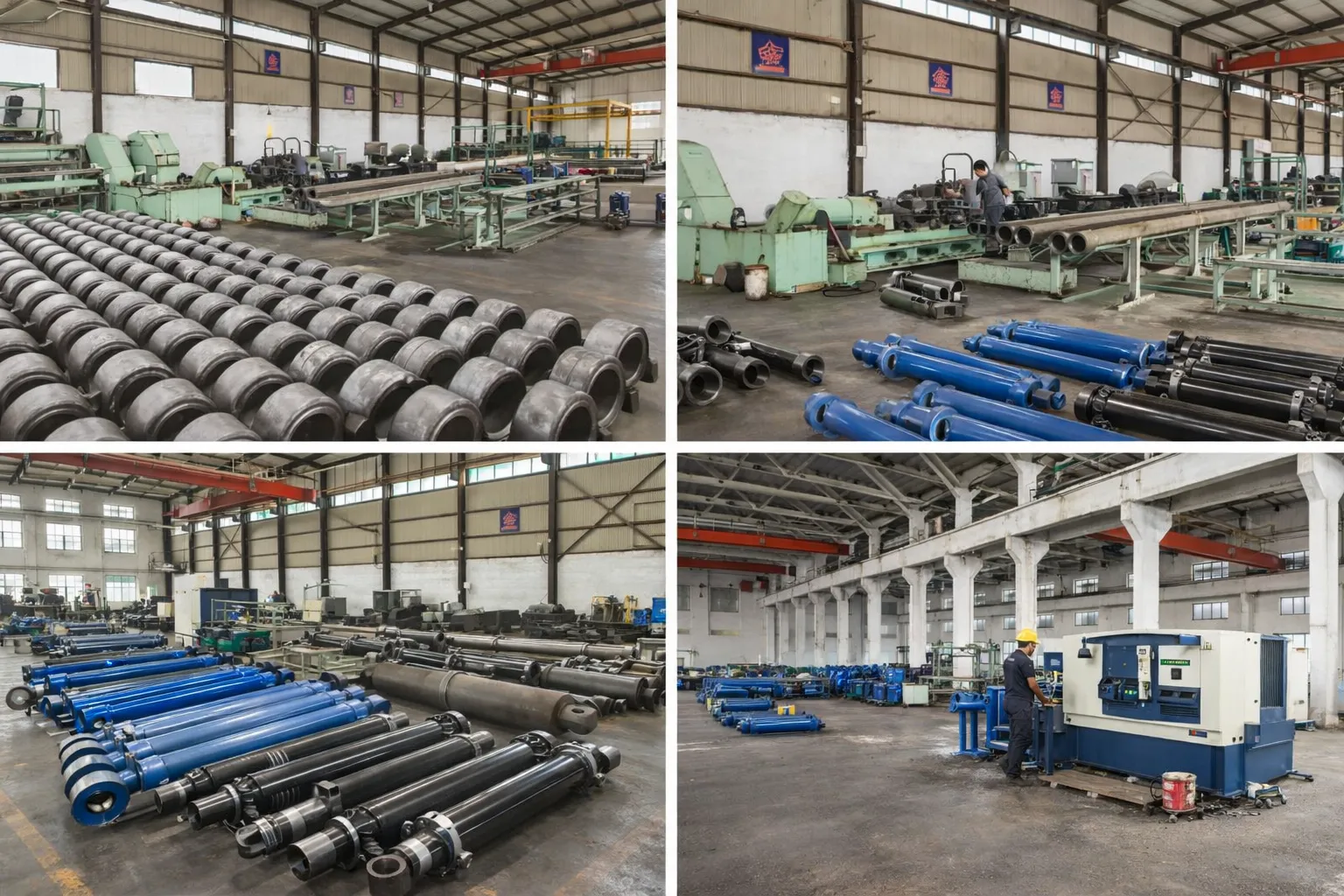
The exceptional survival rate and extreme precision of our heavy-duty equipment is not a matter of luck; it is strictly governed by the absolute control we maintain over our factory production floor. As a fully vertically integrated manufacturing facility, we do not rely on third-party outsourcing for our critical load-bearing forgings or precision metallurgical treatments. Raw alloy steel billets undergo rigorous spectrographic chemical analysis (OES) upon arrival to verify their precise elemental composition. Crucially, this is followed immediately by deep ultrasonic flaw detection (UT) scanning to ensure there are zero internal voids, microscopic slag inclusions, or structural fissures before the massive steel block is permitted to enter our heavy CNC machining centers.
Machining massive forged alloy blocks to exact, highly repeatable tolerances requires highly specialized heavy-duty tooling and continuous flood coolant. Our multi-axis CNC boring mills and turning centers achieve dimensional accuracies measured in exact micrometers. The internal bore of the forged barrel undergoes a highly specialized deep-hole honing and skiving process to create an impeccably smooth surface finish (Ra ≤ 0.2µm), which is the critical factor that drastically reduces internal friction and extends the life of the internal PTFE piston seals exponentially. Final assembly of all heavy components and delicate internal fluid seals occurs strictly inside positive-pressure, climate-controlled clean rooms, ensuring no ambient factory dust can contaminate the high-performance seal matrix prior to final torquing and closure.
Quality control for safety-critical railway assembly equipment must be uncompromisingly exhaustive. We subject 100% of our press-fit hydraulic cylinder production to severe static and dynamic pressure testing prior to dispatch. We utilize heavy-duty hydraulic test rigs to simulate maximum tonnage stall pressures, intentionally holding the cylinder at 150% of its rated working pressure for extended periods while closely monitoring precision digital gauges for the slightest internal fluid bypass, pressure drop, or exterior weeping. We also measure the exterior barrel for zero radial expansion during this test. Once a heavy-duty unit successfully passes this rigorous hydrostatic simulation, it is laser-marked with a permanent serial number. This strict protocol provides our B2B clients with complete digital traceability, linking the final product back to the original steel mill heat certificates, ultrasonic reports, and performance testing graphs.
Expansive Cross-Industry Heavy-Tonnage Applications
While the forged architecture and ultra-low friction seal technology detailed here are heavily calibrated for the exact precision requirements of a locomotive wheelset press, the core engineering principle of generating immense, deformation-free linear force translates perfectly into other severe heavy industrial manufacturing sectors.
For instance, the unyielding structural rigidity of our forged barrels is heavily relied upon within the metallurgical and iron industry. Massive metal extrusion presses, hot forging hammers, and heavy plate bending rolls require identical, deformation-free hydrostatic power; standard tube cylinders burst under these shock loads, while our forged units survive millions of cycles. Similarly, the ability to push with massive force in harsh, abrasive conditions makes these actuators highly sought after in the mining industry, serving as critical track-pin presses, filter press closure cylinders, and heavy equipment assembly rams. We also actively deploy highly robust variations of this high-tonnage technology as extremely reliable stabilization and main lift cylinder mechanisms within the heavy-duty payload environments of the construction machinery industry.
Comparative Analysis: Standard Tubing Cylinder vs. Forged Press-fit Cylinder
To objectively illustrate the massive operational divide between standard fluid power equipment and our highly specialized high-tonnage rail components, the following table compares basic off-the-shelf industrial cylinders against our forged pressing actuators. This vital engineering distinction heavily dictates the total lifecycle cost and ultimately determines whether your depot successfully assembles safe, certified wheelsets or destroys expensive rolling stock components through erratic operation.
| Performance Metric | Standard Commercial Hydraulic Cylinder | Our High-Performance Forged Press-fit Cylinder |
|---|---|---|
| Radial Deformation Defense | Seamless drawn steel tubing. Balloons and stretches outward radially under 300+ tons of pressure, causing massive internal fluid bypass. | Solid Forged Body. Immense wall thickness and grain density prevent all radial ballooning, maintaining perfect seal contact at all times. |
| Dynamic Thrust Smoothness | Standard NBR elastomer seals create high stick-slip friction, causing the ram to stutter and completely ruin the force-displacement assembly curve. | Ultra-low friction PTFE sealing matrix ensures perfectly smooth, continuous linear micro-motion for flawless axle assembly recording. |
| Structural Fatigue Life | Basic welded flanges on thin tubes fatigue rapidly under repeated shock loading and reactive force, eventually tearing the cylinder apart. | Integrated forged flanges and FEA-optimized geometries endure decades of high-pressure pulsation without cracking or shearing. |
| Rod Column Strength | Standard 1045 carbon steel rods compress and bow slightly under peak load, grinding heavily against the internal guide rings. | Premium alloy steel rod delivers superior column strength, maintaining perfect concentricity and preventing all internal scoring. |
| Total Cost of Ownership | Very High. Stuttering presses ruin highly expensive axles and wheels, leading to massive scrap costs and severe depot downtime. | Extremely Low. Guarantees 100% successful, certified assembly rates, protecting highly valuable locomotive components indefinitely. |
Proven Field Performance: Real-World Assembly Triumphs
Engineering specifications on paper must continually be validated by flawless, relentless performance in the high-pressure, critical environment of a live locomotive maintenance depot. Our high-performance fluid power solutions are actively trusted by major national railway authorities and private rolling stock overhaul contractors across Asia. Here are specific deployments demonstrating our success in resolving critical assembly failures for our B2B clients.
Case Study 1: Eradicating Cylinder Ballooning in South Korean KTX Depots
Location & Client: National High-Speed Rail Maintenance Facility, Seoul, South Korea (August 2024).
The Challenge: The depot’s primary 400-ton wheelset press began failing stringent safety quality checks. During the pressing of high-speed KTX axles, the machine’s force-displacement graph showed severe pressure drops and stuttering lines. Immediate inspection revealed that their OEM tube-style cylinder had suffered permanent radial deformation (ballooning) from years of high-load cycles, causing massive internal fluid bypass. The procurement team urgently searched for a specialized manufacturer capable of providing a structurally rigid solution to stop them from scrapping wheels that cost tens of thousands of dollars.
Our Solution & Result: They contacted us through our engineering portal. We rapidly reverse-engineered the flange mounts and supplied a heavy-duty press-fit cylinder featuring our solid forged alloy steel body. Following rapid installation, the depot reported perfectly smooth pressing curves. Over the next 18 months, they assembled over 3,000 wheelsets with absolutely zero radial deformation and zero scrapped axles, saving the facility immense capital and restoring audit compliance.
“The forged barrel design completely eliminated the ballooning issues that were bankrupting our assembly yields. Their profound understanding of hydrostatic physics is evident in the heavy-duty build quality. We have significantly increased our depot throughput and restored complete confidence in our safety metrics.” — Park Min-ho, Lead Depot Engineer.
Case Study 2: Conquering Stick-Slip Friction for Japanese Heavy Freight Locomotives
Location & Client: Private Heavy Freight Rail Overhaul Center, Nagoya, Japan (March 2025).
The Challenge: A massive depot handling exceptionally heavy freight locomotive axles required 500 tons of continuous force. Their existing cylinder utilized standard NBR seals that created severe stick-slip friction under maximum compression. The pressing ram would hesitate, build up extreme back-pressure, and then violently jerk forward. This juddering severely galled the axle surfaces and destroyed the metallurgical integrity of the interference fit, causing failed quality inspections.
Our Solution & Result: We supplied a precise drop-in replacement unit featuring our ultra-low friction PTFE sealing matrix and a highly polished, thick hard chrome ram. The new cylinder provided silky-smooth linear actuation without any hesitation, even at microscopic crawl speeds under 500 tons of load. The logistics firm operated the press continuously for two years without a single galled axle or rejected pressing graph.
“Finding a manufacturer who truly understands the destructive nature of stick-slip friction was critical for our assembly quality. The smooth linear performance of their cylinder is vastly superior to the OEM versions we previously relied upon. We trust these actuators implicitly to handle our heaviest locomotive axles.” — Kenichi Tanaka, Operations Director.
Case Study 3: Supplying Rapid Press Overhaul Solutions in Taiwan
Location & Client: Metro Transit Maintenance Facility, Taipei, Taiwan (November 2025).
The Challenge: Facing a massive mid-life overhaul schedule for their commuter rail fleet, the depot found that the original European machine tool manufacturer quoted an unacceptable 24-week lead time for a replacement 300-ton pressing cylinder. With a blown cylinder halting all wheelset production, they desperately needed a rapid, high-quality custom replacement to avoid catastrophic transit delays across the city.
Our Solution & Result: Utilizing their submitted CAD schematics and flange dimensions, we reverse-engineered and forged a completely customized, exact-fit replacement unit. We delivered the heavy-duty cylinder via air freight in just 7 weeks. The facility successfully restored their press machine on schedule, saving hundreds of thousands of dollars compared to legacy OEM pricing and avoiding major public transit disruptions.
“The speed of their engineering and heavy forging capability is incredible, and the mounting flanges fit our press frame perfectly. Securing such a highly competitive hydraulic cylinder price without sacrificing an ounce of pressing accuracy has made them our primary heavy parts supplier.” — Lin Wei, Senior Project Manager.
Frequently Asked Questions
For locomotive depot procurement managers, lead assembly mechanics, and rolling stock maintenance directors tasked with upgrading their heavy machine tools, we have compiled comprehensive, expert answers to the most common technical inquiries regarding our high-tonnage fluid power solutions.
1. Exactly why is a Forged Cylinder Body necessary for wheelset pressing?
2. What causes “stick-slip” juddering during a slow press, and how do you prevent it?
3. What is the typical production lead time for a heavy forged replacement cylinder?
4. Can you perform hydraulic cylinder repair on our existing, deformed OEM press cylinder?
5. Why is a Double Acting Cylinder required for a machine that only pushes in one direction?
6. Are your high-tonnage cylinders certified for safety and pressure retention?
Secure Flawless Wheelset Assembly with Unyielding Force
Cylinder deformation and stick-slip friction severely disrupt depot maintenance schedules and cause incredibly expensive axle rejections. Do not allow fragile commercial tubing to jeopardize your fleet’s safety and operational readiness. Partner directly with a premier engineering manufacturer capable of delivering extreme-duty, forged fluid power solutions meticulously calibrated to survive the immense tonnage of rail press operations. Supply us with your technical specifications, drawings, or OEM dimensions, and let us demonstrate how our engineered upgrades can maximize your depot efficiency while vastly reducing your long-term capital repair budget.
Editor: Cxm