Effective 5 Stage Telescopic Small Dump Truck Hydraulic Cylinder
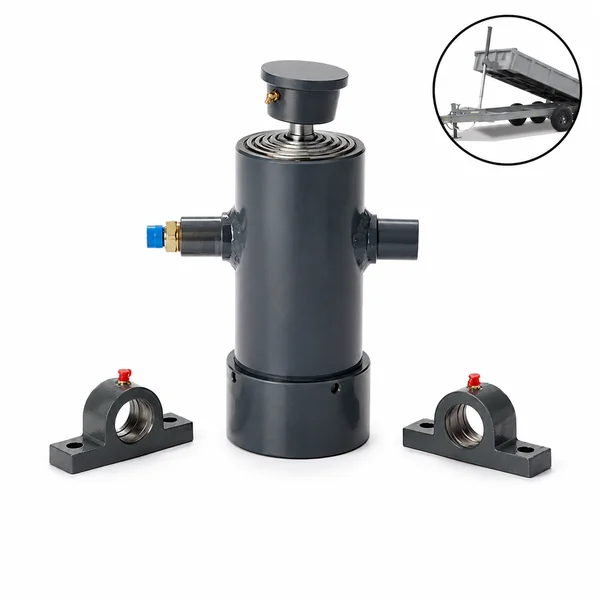
EXTREME COMPACTNESS
5 Stage Telescopic
Small Dump Truck
When the small truck needs the big truck's stroke.
Most small dump trucks use 2 or 3-stage telescopic cylinders. But some small dump trucks have frame geometries so constrained that even a 3-stage retracted length does not fit — and the 5-stage is the engineering solution that makes the impossible fit possible.
The 5-stage telescopic cylinder in a small dump truck is a niche application — but a real one. It occurs when a compact vehicle needs a long tipping stroke but has exceptionally limited frame depth: cab-over trucks where the engine sits above the front axle and the exhaust system occupies the frame rails, multi-purpose utility trucks where a crane, winch, or toolbox consumes the underframe space, and aftermarket dump body conversions on van-derived chassis that were never designed with tipping in mind. In each case, the 5-stage provides the stroke in a retracted package approximately 25–30% of the extended length — fitting into spaces that a 3-stage simply cannot reach.
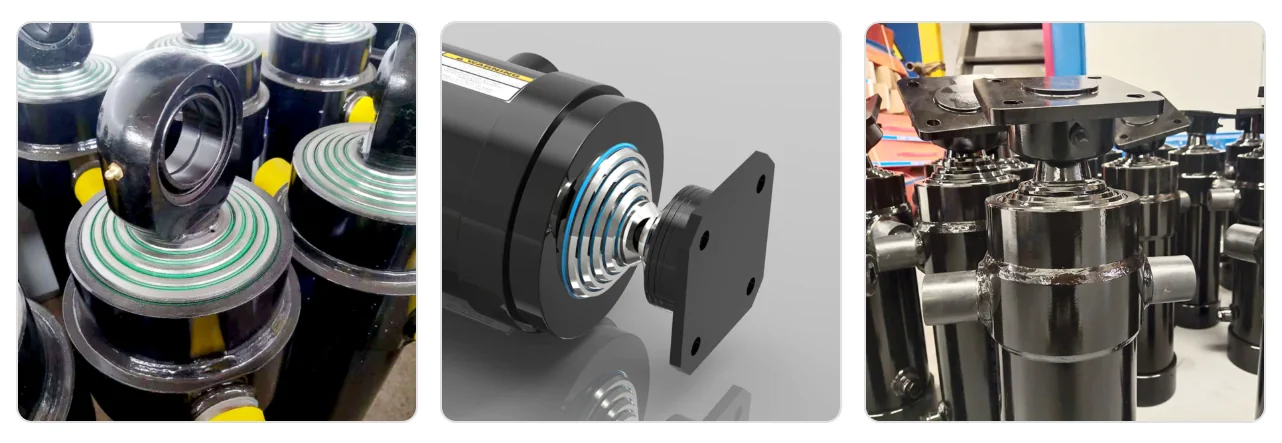
5 Stage Small Dump Truck Cylinder — Customisation Parameters
| Stage Count | 5 stages |
| Bore / Rod / Stroke / Pin | 2–6″ / 1.125–4″ / 4–100″ / 0.5–2″ (all customisable) |
| Port Options | G / SAE / NPT / M |
| Body / Certification | Steel / ISO 9001 |
| Target Vehicle | Small dump trucks with extreme frame constraints |
| Lead Time / Warranty | 25–35 days / 1 year |
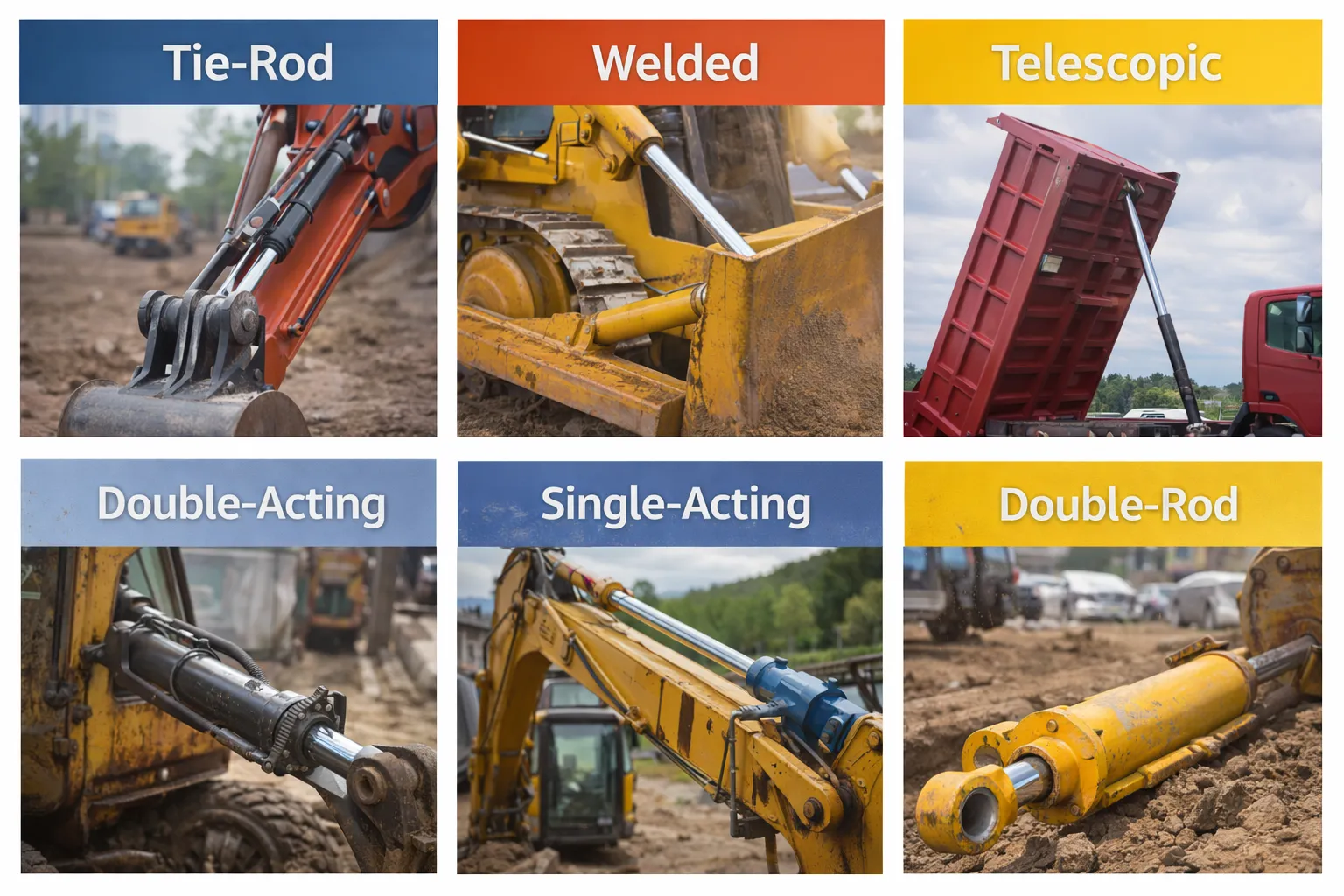
When a Small Dump Truck Needs 5 Stages — Three Real Scenarios
Cab-Over Tippers with Engine Intrusion
On cab-over-engine (COE) trucks, the engine sits above or between the front chassis rails. The exhaust system, turbocharger, and cooling plumbing occupy the underframe space that would otherwise accommodate the telescopic cylinder. The available cylinder depth may be only 200–300 mm — well below what a 2 or 3-stage can achieve. The 5-stage at 2–3 inch bore packs the required tipping stroke into this severely constrained envelope.
Multi-Purpose Utility Trucks
Utility trucks that combine a dump body with a rear-mounted crane, winch, or toolbox. The auxiliary equipment occupies the frame space behind the cab that would normally house the telescopic cylinder. The 5-stage allows the tipping cylinder to fit in the reduced space between the crane pedestal and the dump body floor — delivering the full tipping stroke from a retracted length that coexists with the auxiliary equipment.
Aftermarket Dump Body Conversions
Van-derived commercial vehicles (Sprinter, Transit, Ducato class) converted to dump body configuration. These chassis were designed for cargo vans, not tippers — the frame rail spacing, depth, and cross-member positioning were never intended to accommodate a tipping cylinder. The 5-stage telescopic cylinder is often the only configuration compact enough to retrofit into these non-standard frames without structural modification to the chassis.
What Makes a 5-Stage "Effective" in a Small Truck
A 5-stage telescopic cylinder in a small dump truck must be effective despite its reduced bore diameter at the innermost stage. "Effective" means the cylinder delivers the full tipping angle required to discharge the load — even though the 5th stage produces only 15–25% of the first stage's force.
Small dump trucks carry 1–5 tonnes — a fraction of a highway dump truck's 20–50 tonne payload. Even the 5th stage of a 2-inch bore telescopic cylinder at standard working pressure produces several kilonewtons of force — sufficient to tip a small dump body. The force reduction across 5 stages that would be problematic on a 30-tonne payload is entirely acceptable on a 3-tonne payload.
For small dump trucks, the primary selection criterion is physical fit — will the cylinder fit the frame? Force is rarely the limiting factor. The 5-stage is chosen because it fits, not because it produces more force than a 3-stage. In fact, a 3-stage at the same bore would produce more force on every stage — but it would be too long to fit the frame. The 5-stage trades force headroom for dimensional packaging, which is the correct engineering trade-off for this vehicle class.
OEM & ODM — Custom 5 Stage for Small Trucks
5 Stage Small Dump Truck — Technical FAQ
Field Reports
We convert Transit and Sprinter vans to dump body configuration for landscaping companies. The van chassis frame is only 280 mm deep — no 3-stage will fit. The Ever-Power 5-stage at 2-inch bore, 30-inch stroke retracts to 210 mm — fits our van frames with 70 mm clearance. 12 units installed across our conversion fleet, all performing well. The van-class customers don't understand stage counts — they just know the dump body works. That's the point.
Our cab-over tippers have the exhaust aftertreatment system occupying the space behind the cab. The available cylinder depth is 250 mm. Needed a 5-stage at 2.5-inch bore, 36-inch stroke, BSP ports. Ever-Power confirmed the retracted length at 240 mm — just fits. Four stars because the first batch of 5 had one cylinder where the 3rd stage extended slightly before the 2nd stage fully completed — an assembly sequencing issue that was corrected in the second batch. Other 4 cylinders and the entire second batch (10 units) were perfect.
Other Hydraulic Cylinder Categories
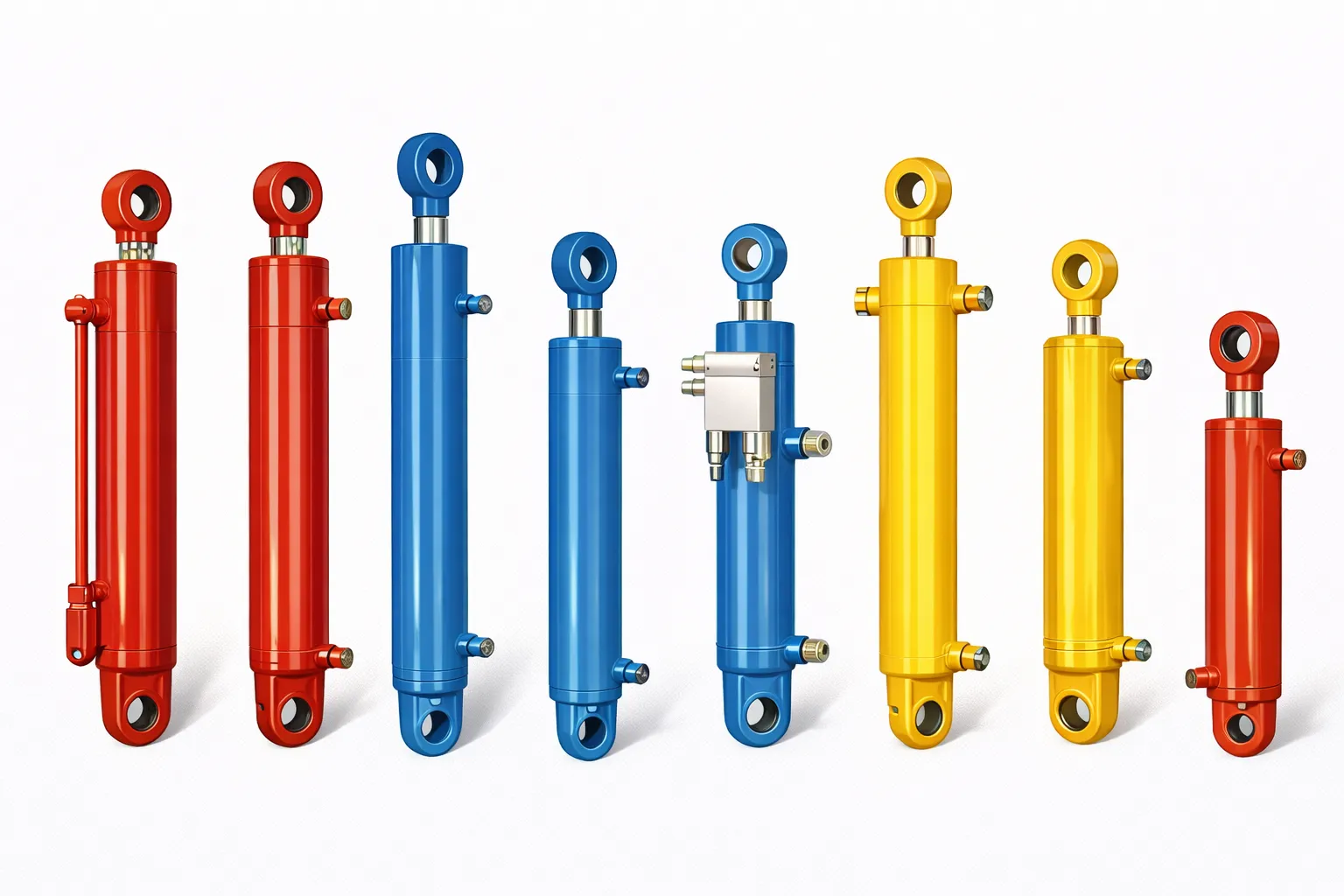
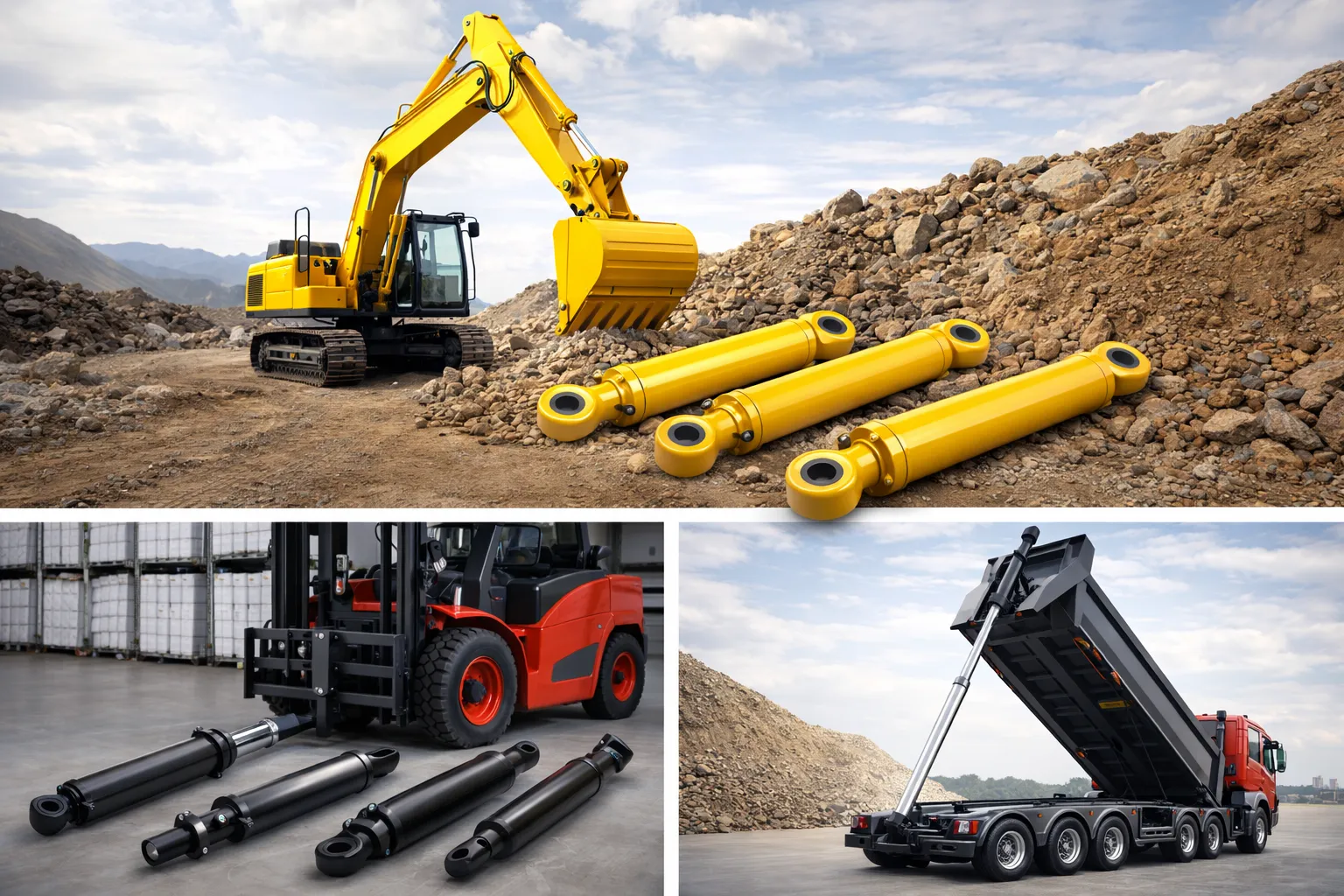
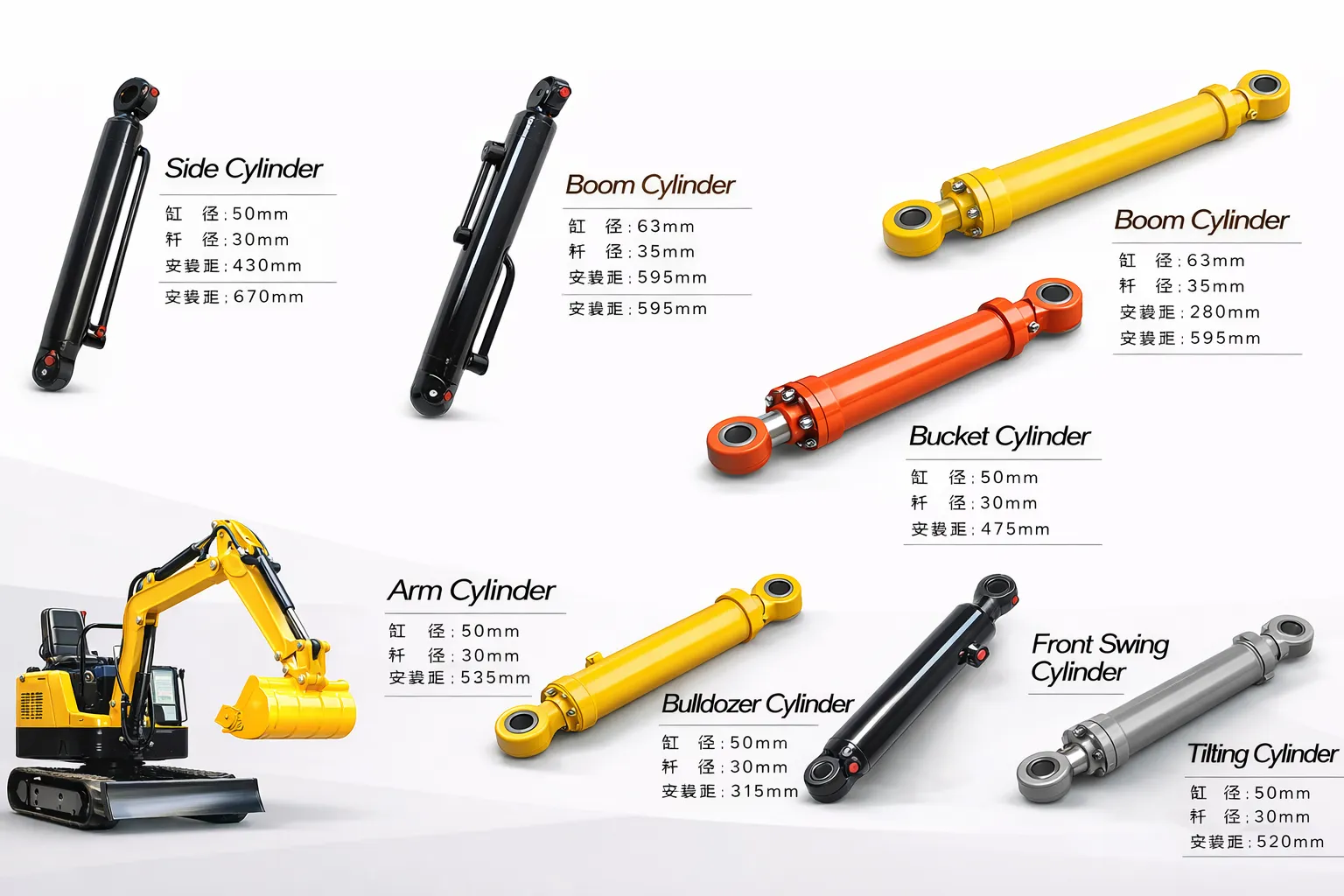
Related products
-
New Arrival Double Acting Dump Truck Telescopic Hydraulic Cylinder For Sale
-

High Quality Small Hydraulic Cylinder Telescopic Hydraulic Cylinder For Dump Truck
-
Factory Direct Sale Dump Truck Hydraulic Hoist Cylinder
-
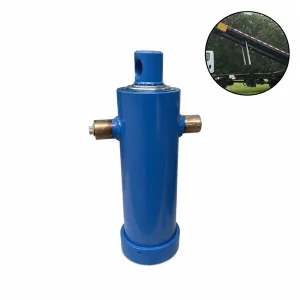
Cost Effective Double Acting Telescopic Hydraulic Cylinder for Sale
-
Professional Craftsmanship Dump Truck 4 Stage Hydraulic Cylinder
-
Good Quality 2 Stage Hydraulic Cylinder — Telescopic Hydraulic Cylinder For Sale
-
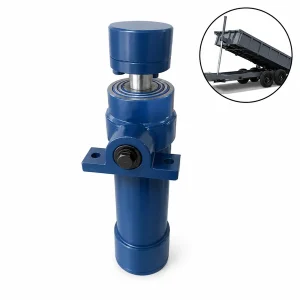
Strong Stable Telescopic Hydraulic Cylinder — Multistage for Dump Trailer
-
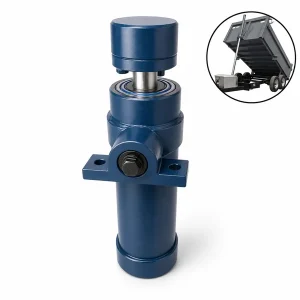
2 Stage Small Hydraulic Cylinder — Multistage Telescopic, Steel, Custom Bore 2–6 inch