Regulating Cylinder for Offshore Wind Foundation
Engineered with a 100% 316L stainless steel architecture to deliver absolute millimeter-precise jacket adjustment while completely defeating severe seawater corrosion.
Product Overview: The Core of Offshore Precision Leveling
The rapid expansion of the renewable energy sector has pushed wind farm installations further from the coastline and into significantly deeper, more turbulent ocean waters. Erecting massive offshore wind turbines requires a foundational base of absolute stability. The dominant structural method utilized for these deep-water installations is the steel jacket foundation. Before this multi-thousand-ton foundation is permanently piled and grouted to the seabed, it must be leveled with extreme mathematical precision. The critical mechanical actuator responsible for this monumental task is the Regulating Cylinder. This specialized high-tonnage fluid power component provides the exact position adjustment required to ensure the towering wind turbine above will stand perfectly vertical, mitigating long-term structural fatigue on the turbine blades and the nacelle bearings over its 25-year operational lifecycle.
Operating heavy machinery at the convergence of air, seawater, and crashing ocean waves presents one of the most destructive environments known to modern engineering. Standard industrial fluid power components fail rapidly in this subsea arena. The primary and most dangerous threat is severe corrosion damage. When a conventional painted carbon steel hydraulic cylinder is exposed to constant seawater splashing and highly concentrated atmospheric salt spray, the exposed piston rod and external barrel begin to pit and rust within a matter of weeks. This corrosion creates a rough, highly abrasive surface on the metal. As the rod retracts during leveling operations, these rusted pits act like a rasp, completely destroying the internal dynamic polyurethane seals. Once the seals are compromised, the pressurized hydraulic fluid leaks out, seawater floods the internal chamber, and the cylinder completely loses its holding pressure. This catastrophic failure can cause the entire multi-million-dollar jacket foundation to shift out of alignment during the critical grouting phase.
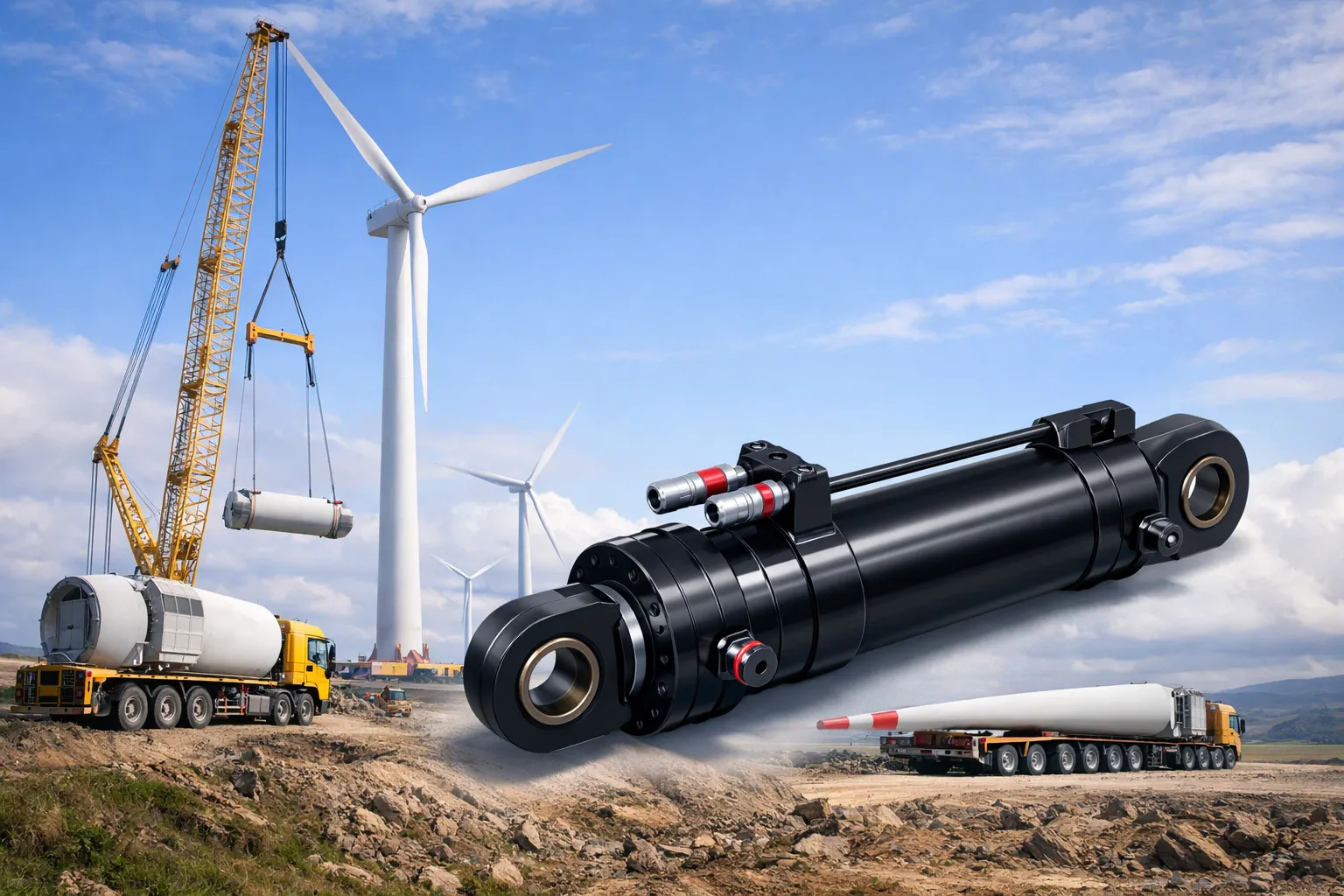
As a deeply specialized hydraulic cylinder manufacturer with decades of dedicated marine sector experience, our unique product positioning directly attacks this fatal engineering flaw. We have designed a purpose-built Regulating Hydraulic Cylinder that abandons traditional carbon steel entirely. Our subsea design mandates a 316L full material construction. By utilizing premium marine-grade 316L austenitic stainless steel for the barrel, end caps, trunnions, and piston rod, combined with an advanced heavy nickel plating surface treatment, we deliver an actuator that is fundamentally immune to the corrosive marine atmosphere. For offshore marine contractors and EPC firms operating in demanding regions like South Korea and the surrounding East Asian seas, specifying our 316L units eliminates the risk of mid-installation failure, prevents agonizingly expensive vessel downtime, and drastically optimizes the total hydraulic cylinder price over the life of the offshore project.
Engineered Technical Parameters for Subsea Operations
Designing equipment for offshore jacket adjustment requires strict adherence to demanding maritime engineering standards. Every specification must be meticulously calibrated to survive deep-water hydrostatic pressures and high-salinity exposure. Below is the technical parameter matrix defining our specialized leveling solutions. Operating as a vertically integrated facility, we offer extensive customization of stroke lengths and mounting styles to fit the precise geometry of your specific jacket foundation leveling tools.
| Engineering Attribute | Specification Details & Customization Range |
|---|---|
| Target Industry | Wind Power Generation / Marine Offshore |
| Equipment Category | Offshore Wind Power Foundation |
| Subsystem / Core Action | Jacket Adjustment / Pre-grout Position Leveling |
| Component Name | Regulating Cylinder |
| Action Mode | Double acting hydraulic cylinder |
| Mechanical Structure Type | Piston cylinder format |
| Manufacturing Assembly | Heavy-duty automated welding construction |
| Material System Architecture | 316L Full material (Barrel, Rod, End Caps, Ports) |
| Rod Surface Treatment | Nickel plated (High-phosphorus, micro-crack free barrier) |
| Environmental Exposure Rating | Seawater + Salt spray / Subsea immersion capable |
| Working Condition Feature | Position adjustment under massive static foundation loads |
| Typical Failure Mode Prevented | Corrosion damage leading to seal rupture and pressure loss |
| System Operating Pressure | Typically 21 MPa to 35 MPa (Customizable based on payload) |
| Installation Configuration | Marine Clevis, Heavy Trunnion, Subsea Flange |
Fluid Mechanics: The Exact Science of Foundation Leveling
Leveling a steel structure that weighs thousands of tons while it is being battered by aggressive ocean currents requires a mechanical actuator of immense power and microscopic control. This is where the internal fluid mechanics of our Regulating Hydraulic Cylinder excel. Operating strictly as a double acting hydraulic cylinder, the unit uses pressurized hydraulic fluid to actively dictate both the push and pull movements. This dual-chamber active control is absolutely vital; relying on a basic single acting hydraulic cylinder that uses gravity or load weight to retract is entirely unacceptable in subsea environments where marine growth and heavy sediment can easily obstruct mechanical movement.
During the active leveling operation, the offshore installation vessel pumps high-pressure, environmentally safe fluid into the base port of the cylinder. The hydrostatic pressure builds against the massive surface area of the internal hydraulic cylinder piston, generating a massive upward linear force. Because the internal bore of our 316L barrel is honed to a mirror-like finish and fitted with ultra-low friction PTFE composite seals, the thick stainless steel rod extends with absolute smoothness. There is zero stick-slip vibration. This allows the marine engineers on the surface to execute position adjustments in increments of single millimeters, slowly bringing the giant jacket foundation perfectly into a zero-degree vertical plumb line.
Once the exact vertical alignment is achieved, the fluid dynamic role shifts from movement to absolute mechanical containment. The leveling tool must hold the immense weight of the jacket entirely steady against the pushing force of the ocean tide while the specialized concrete grout is pumped into the seabed piles and allowed to cure. Any pressure bleed or microscopic fluid bypass inside the unit during this 24 to 48-hour curing window would result in a crooked foundation. Our custom valving and high-memory sealing matrix ensure that the fluid is mechanically locked inside the chamber, turning the lift cylinder into an unyielding pillar of solid 316L steel until the grout has reached its full compressive strength.
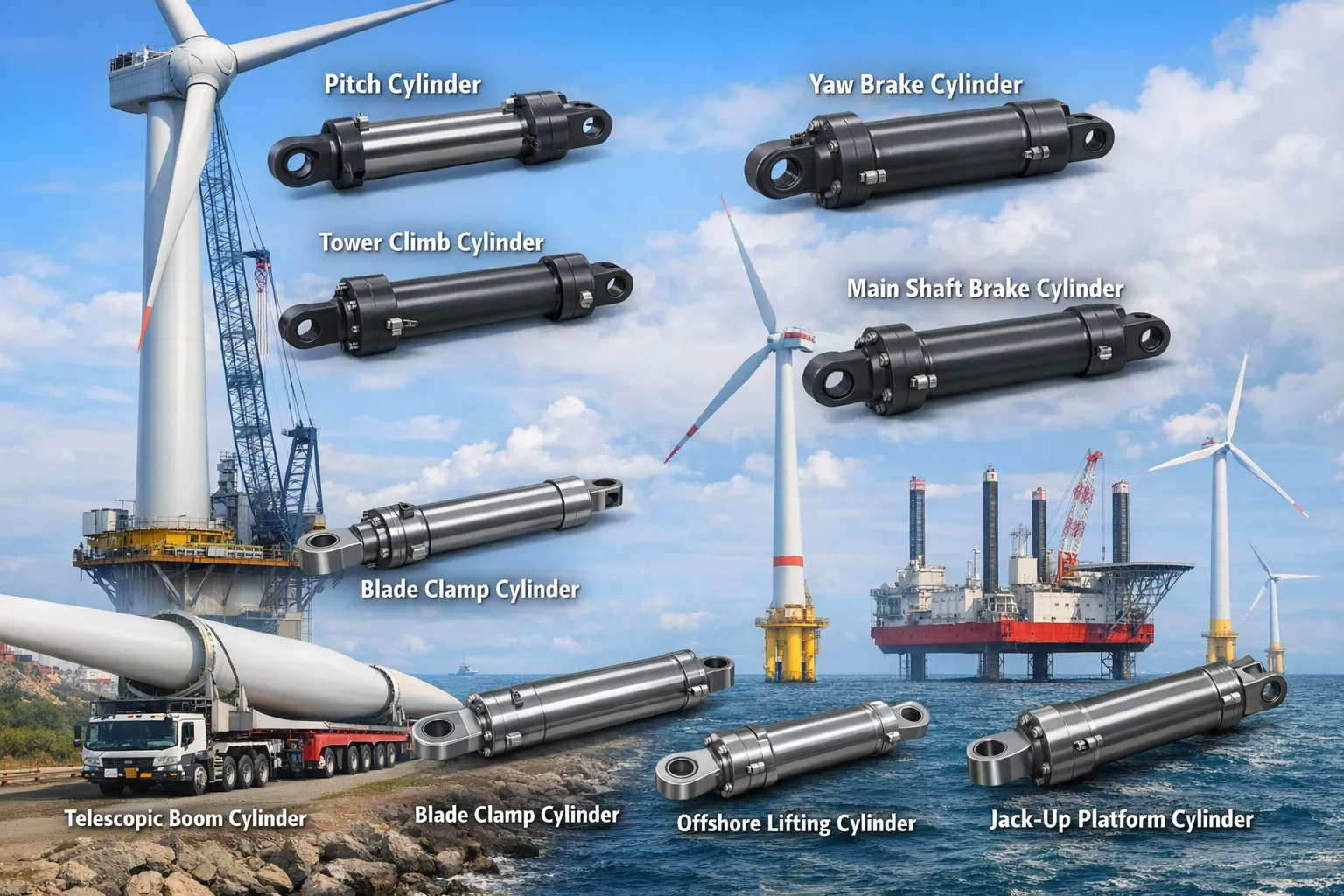
Direct Replacement for Legacy Offshore Brands
In the high-stakes world of offshore marine contracting, vessel downtime is measured in hundreds of thousands of dollars per day. If a leveling tool actuator fails due to corrosion, waiting months for an original equipment manufacturer (OEM) replacement part is financially disastrous. We actively solve this supply chain crisis by engineering highly durable hydraulic rams that serve as exact dimensional drop-in replacements for aging equipment originally supplied by legacy global manufacturers.
(Please note: The brand names mentioned below are used exclusively for the purpose of technical cross-referencing, verifying mounting dimensions, and assisting marine mechanics in fleet compatibility planning. This reference does not imply any OEM affiliation or trademark ownership.)
Whether your jacket installation frame currently relies on carbon steel units from Bosch Rexroth, Parker Hannifin, Enerpac, Eaton, or HYDAC, our engineering division can perfectly replicate the closed center-to-center pin lengths, trunnion diameters, stroke distances, and subsea fluid port threads. By switching to our direct-manufactured hydraulic parts, your procurement team completely bypasses slow distribution networks, securing a highly competitive factory-direct price. More critically, you actively upgrade the tool. By replacing heavily rusted painted steel components with our 316L full material architecture, you permanently eliminate the root cause of the failure, turning the difficult task of fixing hydraulic cylinders on a pitching deck into a rare, scheduled maintenance event rather than a mid-ocean emergency.
Eight Core Engineering Advantages of Our 316L Design
Manufacturing a reliable mechanical actuator for continuous immersion in the ocean requires highly specialized metallurgical knowledge and extreme machining precision. Here are the eight definitive technical advantages that elevate our subsea leveling units above standard industrial alternatives:
1. 316L Full Material Architecture
Standard marine epoxy paints eventually chip and fail during heavy handling. We build the entire Regulating Cylinder—including the heavy barrel tube, the internal piston, the front and rear end caps, and the mounting clevises—entirely from solid 316L austenitic stainless steel. The addition of molybdenum provides exceptional, deep-penetrating resistance to pitting and crevice corrosion caused by highly concentrated chloride environments.
2. Advanced Nickel Plating Surface Treatment
While 316L provides structural immunity to rust, the dynamic sliding surface of the rod requires extreme hardness to resist scratching from marine sediment. We apply a heavy chemical nickel-plating treatment to the stainless rod. This high-phosphorus deposit is completely uniform and free of the microscopic cracks found in standard hard chrome, creating a highly lubricious, impenetrable armor over the stainless steel base.
3. Ultra-Low Friction Subsea Sealing Matrix
Precision leveling requires the hydraulic cylinder piston to move without any sudden jerking (stick-slip). We utilize a proprietary sealing matrix featuring PTFE (Teflon) composite glide rings paired with highly resilient elastomers. This combination provides incredibly smooth micro-movements during the position adjustment phase, while simultaneously ensuring zero-drop pressure holding during the extended grout curing process.
4. Heavy-Duty Fusion Welded Construction
Offshore leveling tools are battered by violent tidal forces. Cylinders held together by long threaded tie-rods will stretch and eventually leak under these intense lateral and vibrational loads. Our design features a heavy-duty welded structure. The end caps and mounting trunnions are deep-penetration welded directly to the 316L barrel using automated inert gas shielding (TIG), creating a monolithic, incredibly rigid vessel.
5. Integrated Subsea Holding Valves
Running long rubber hoses from the surface vessel down to the seabed is inherently risky. If an underwater hose snags and ruptures, a standard unit would instantly depressurize and drop the load. We machine solid 316L manifolds welded directly to the cylinder ports, housing pilot-operated check valves. If line pressure is lost, these valves instantly snap shut, trapping the fluid inside the double acting hydraulic cylinder.
6. Bio-Fouling Scraper Technology
Equipment left submerged for even a few days will attract marine growth, barnacles, and calcareous deposits on the extended rod. If dragged inside, this hard growth will instantly shred the main pressure seals. Our heavy-duty rod gland incorporates an aggressive, sharp-lipped hard-polyurethane scraper ring that forcefully shears off all bio-fouling and sediment as the rod retracts, protecting the clean internal environment.
7. Deep-Water Pressure Compensation
Operating hundreds of meters below the surface means the external hydrostatic pressure is immense. Our engineering team designs the internal sealing configurations to account for this external pressure differential, preventing seawater from being forced past the wiper seals into the clean fluid circuit, thus preserving the integrity of the vessel’s entire hydraulic power unit (HPU) system.
8. Water-Glycol & EAL Fluid Compatibility
Environmental regulations in South Korea, Japan, and globally prohibit the use of toxic mineral oils in subsea tools. Our elastomeric compounds are chemically optimized to operate flawlessly with biodegradable ester-based Environmental Acceptable Lubricants (EALs) and water-glycol fluids without shrinking or swelling, ensuring compliance and long-term reliability.
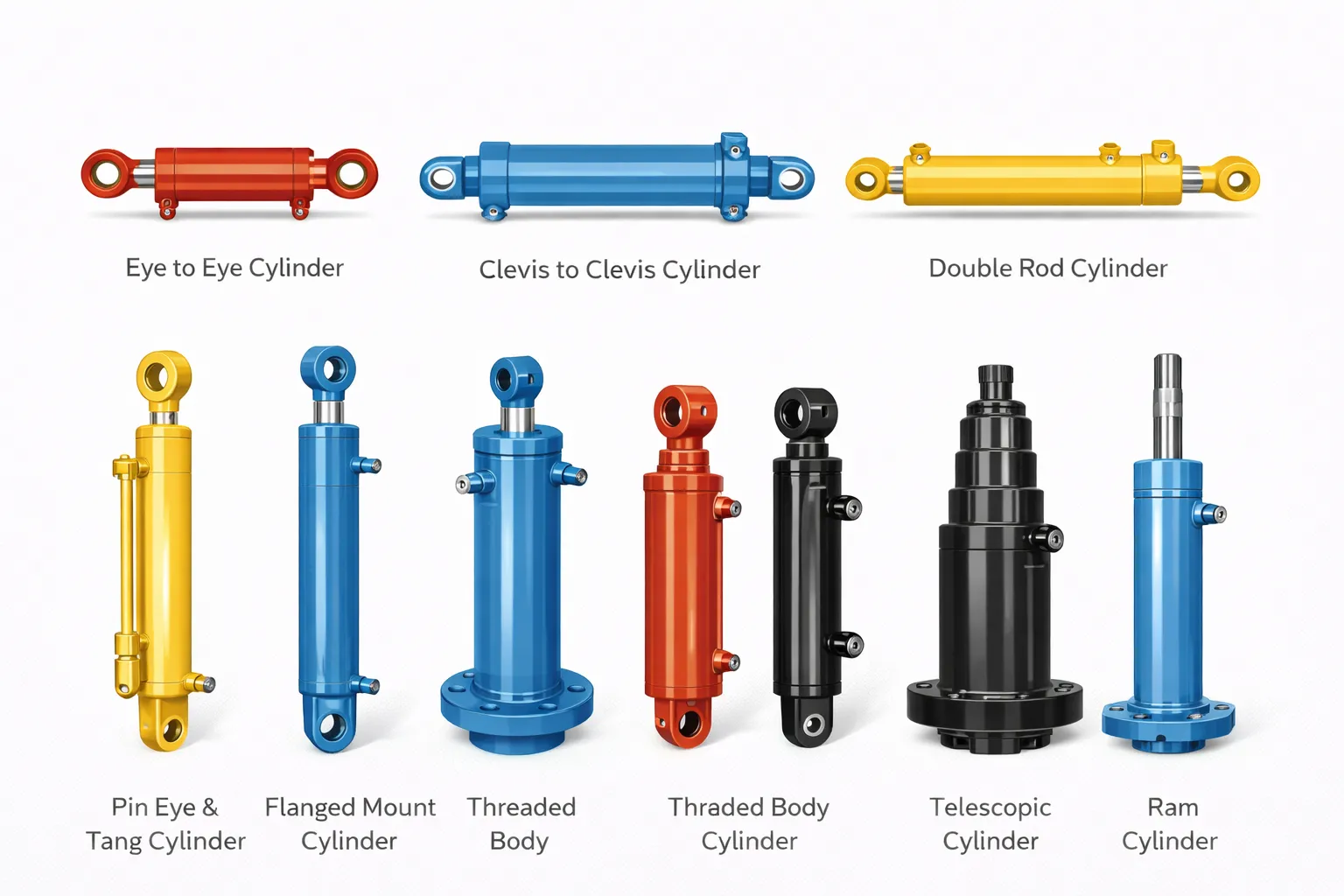
Uncompromising Manufacturing Process & Material Traceability
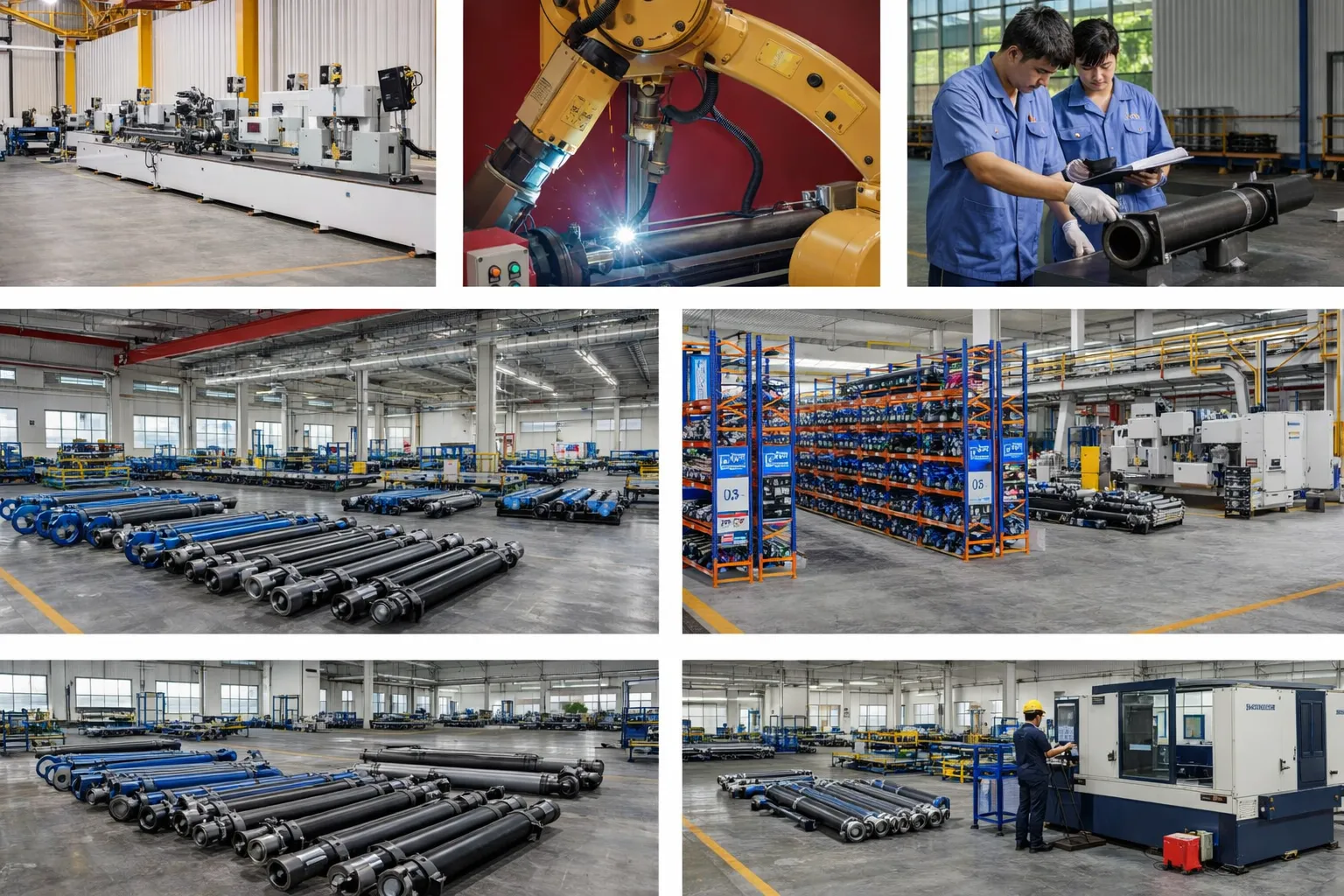
The exceptional durability of our offshore equipment is forged through rigorous, highly controlled manufacturing processes. Processing 316L stainless steel requires entirely different tooling, feeds, and speeds compared to soft carbon steel. As a fully integrated hydraulic cylinder manufacturer, we execute every critical step in-house. Upon arrival at our facility, the raw 316L steel billets undergo positive material identification (PMI) using spectrometry to strictly verify the chromium, nickel, and molybdenum content. The heavy-walled tubes are then subjected to deep-hole boring and specialized honing techniques designed specifically for austenitic stainless alloys, creating a flawless internal bore that maximizes the fatigue life of the internal dynamic seals.
Welding 316L for deep-water pressure applications requires elite craftsmanship. All load-bearing structural joints are completed using automated Tungsten Inert Gas (TIG) welding to prevent oxidation and carbide precipitation, which would otherwise lead to localized corrosion in seawater. Every critical weld seam is subjected to 100% non-destructive examination (NDE), typically through Ultrasonic Testing (UT) or Dye Penetrant Inspection (DPI), guaranteeing zero internal porosity or micro-cracking. Once assembled, 100% of our production batch undergoes severe factory hydrostatic testing. The units are pressurized to 1.5 times their working load to verify the absolute integrity of the seals, the burst strength of the barrel, and the instantaneous locking response of the integrated holding valves.
Furthermore, the offshore energy sector demands absolute documentation. Every finished hydraulic cylinder components and main assembly is permanently laser-etched with a unique serial number. We provide comprehensive data dossiers with every shipment, including the Mill Test Certificates (MTC 3.1) for all raw materials, the NDE weld reports, and the graphical readouts of the hydrostatic pressure tests. This total traceability ensures that EPC contractors can quickly validate the equipment for major international wind farm projects.
Broader Applications for Extreme-Environment Actuators
The engineering philosophy behind our 316L Regulating Hydraulic Cylinder—complete material immunity to hostile environments and fail-safe heavy load positioning—translates perfectly into other highly demanding industrial sectors. We consistently engineer customized fluid power solutions for the following critical applications:
- Metallurgical and Iron Industry: Powering heavy furnace doors, ladle tilting mechanisms, and continuous casting lines where intense radiant heat, acidic water cooling sprays, and metallic dust rapidly destroy standard carbon steel cylinders.
- Mining Industry: Actuating massive underground roof supports, primary rock crushers, and bulk material conveyor tensioners operating constantly in damp, highly acidic, and intensely abrasive subterranean environments.
- Construction Machinery Industry: Providing the precise, unyielding force required for heavy foundation piling rigs, bridge launching gantries, and tunnel boring machine (TBM) articulation joints where failure is catastrophic.
- Marine & Port Logistics: Operating automated container spreaders, ship-to-shore crane boom hoists, and Ro-Ro ferry ramps subjected to constant coastal salt fog.
- Hydroelectric & Dam Control: Opening and closing massive submerged spillway radial gates and penstock valves requiring decades of submerged reliability.
Comparative Analysis: Standard Marine vs. Our 316L Leveling Solution
For marine procurement officers and lead installation engineers evaluating technical proposals, the difference between “marine painted” and “marine grade material” is vast. The following table directly contrasts standard heavy-duty commercial actuators with our highly specialized 316L full material offshore units.
| Technical Metric | Standard Painted Marine Cylinder | Our 316L Regulating Cylinder |
|---|---|---|
| Base Barrel & Clevis Material | Carbon Steel (e.g., Q345). Relies entirely on epoxy paint to stop rusting. | Solid 316L Stainless Steel. Innate structural immunity to saltwater. No paint needed. |
| Rod Surface Defense | Standard Hard Chrome. Micro-cracks allow salt to penetrate and rust the steel beneath. | Nickel Plating over 316L. Non-porous, highly lubricious wear barrier. |
| Corrosion Damage Result | Rapid pitting. Rusted rods shred seals, causing fluid leaks and loss of position holding. | Zero pitting. Seals remain intact, ensuring perfect pressure holding during grout curing. |
| Bio-Fouling Management | Standard rubber dust wipers. Easily destroyed by sharp barnacles retracting. | Aggressive hard PU scraper rings. Shears off hard marine growth completely. |
| Emergency Load Safety | Often relies on topside vessel valves. If subsea umbilical hose breaks, jacket drops. | Integrated holding valves welded on port. Mechanically locks cylinder if hose breaks. |
Global Offshore Success: 5 Documented Marine Deployments
Our specialized subsea equipment actively supports major offshore infrastructure contractors, with a heavy emphasis on the rapidly expanding wind markets in East Asia. Below are five highly specific, real-world implementations demonstrating how our engineering solved critical field failures.
Case 1: Deep-Water Jacket Installation – Busan, South Korea (August 2024)
Client: Tier-1 South Korean Offshore Engineering & Construction Firm.
Application Focus: Subsea leveling tools for massive 12MW steel jacket foundations.
The Challenge: The painted European cylinders on their leveling frame were suffering severe corrosion pitting after just two deployments. The abrasive rust was tearing the seals underwater, causing the jacket to slip out of plumb alignment while the grout was curing, risking a multi-million dollar structural failure.
How We Connected: The project’s lead mechanical engineer initiated a search for a custom hydraulic cylinder manufacturer capable of full 316L fabrication to permanently end the corrosion cycle.
The Results: We rapidly engineered a batch of custom 316L full material Regulating Cylinders. The heavy nickel plating shrugged off the seawater entirely. The tools have since leveled 14 jackets with zero pressure bleed.
“The upgrade to solid 316L was transformative. By eliminating the constant need for topside seal replacements, we significantly cut vessel standby time. An incredibly reliable product with a highly justifiable hydraulic cylinder price considering the massive risk reduction.” — Park Ji-Sung, Lead Installation Engineer.
Case 2: Winter Installation Campaign – Kyushu, Japan (February 2025)
Client: Tier-1 Japanese Offshore Wind Syndicate.
Application Focus: Foundation guide adjustment during a narrow winter installation window.
The Challenge: Freezing sea temperatures and brutal salt spray on the deck were destroying standard seals and causing the rods of their European-branded cylinders to pit deeply.
How We Connected: Met our technical representatives at a major maritime machinery exhibition in Tokyo.
The Results: We provided heavily nickel-plated double acting hydraulic cylinders with low-temperature composite seals. They executed the leveling operations flawlessly in the freezing waters.
“Replacing the old units with your 316L cylinders drastically reduced our hydraulic cylinder repair budgets. The holding pressure gauge remained completely solid despite the freezing ocean currents pushing against the jacket.” — Kenji Sato, Operations Director.
Case 3: Taiwan Strait Jacket Repowering – Taichung, Taiwan (August 2025)
Client: Heavy Marine Logistics and Installation Fleet.
Application Focus: Upgrading the primary pile gripping mechanism on their main installation vessel.
The Challenge: The erratic subsea cross-currents in the strait demanded ultra-smooth, high-tonnage adjustments. Their old actuators suffered from severe stick-slip, making millimeter alignment nearly impossible.
How We Connected: Reached out through an industry B2B marine engineering referral.
The Results: We retrofitted their frame with our customized hydraulic rams featuring PTFE ultra-low friction seals. The positioning became buttery smooth.
“The operational smoothness is night and day. The active hydraulic control gives our ROV operators absolute confidence when aligning the monopiles in tight tolerances. Fantastic technical support throughout.” — Lin Wei-ting, Chief Vessel Engineer.
Case 4: Floating Wind Foundation Anchoring – Ulsan, South Korea (November 2025)
Client: Next-Generation Floating Wind Developer.
Application Focus: Custom actuation for securing deep-water mooring lines to the seabed templates.
The Challenge: High ocean currents frequently snagged the subsea hydraulic umbilical lines running down from the vessel. A broken line on their old equipment meant the leveling frame immediately lost pressure and dropped.
How We Connected: Discovered our engineering capabilities via our detailed technical portal.
The Results: We delivered custom actuators with integrated pilot-operated check valves welded directly onto the 316L cylinder ports. During a subsequent line snag, the valves locked instantly, saving the jacket’s position.
“That integrated holding valve paid for the entire tool upgrade in a single day. The umbilical snapped, but your cylinders didn’t give a single millimeter. Unbelievable failsafe engineering. We won’t use any other brand moving forward.” — Choi Min-Ho, Offshore Superintendent.
Case 5: Coastal Infrastructure Project – Vung Tau, Vietnam (May 2024)
Client: National Coastal Infrastructure EPC.
Application Focus: Leveling platforms for near-shore turbine installations.
The Challenge: Tight government budgets required a highly cost-effective yet internationally certified anti-corrosion solution to replace severely rusted OEM parts.
How We Connected: Discovered our robust factory capabilities on a major industrial B2B portal.
The Results: We supplied direct drop-in replacement units. The client secured a vastly superior product and significantly reduced their overall procurement overhead by cutting out European middlemen.
“Upgrading to solid stainless steel while still saving money was a huge victory for our procurement division. The robust performance in the salty mud of the delta is phenomenal. Highly reliable equipment.” — Nguyen Hai, Project Director.
Technical FAQ for Marine Procurement & Engineering
Procuring subsea-rated fluid power equipment requires rigorous technical vetting and transparent communication. Below are the most frequent inquiries from our marine engineering partners and EPC procurement managers regarding our specialized equipment.
1. Why is 316L Full Material strictly required over standard marine epoxy paint?
2. How do the integrated holding valves secure the jacket foundation load?
3. Can your cylinders operate on eco-friendly water-glycol subsea fluids?
4. What are the standard lead times for shipping customized subsea cylinders to South Korea?
5. Can you manufacture direct drop-in replacements for European OEM leveling tools?
6. Will we be able to source spare parts easily in the future?
7. Do you provide material certificates (MTC 3.1) and full testing documentation?
8. How does the FEA optimization improve fatigue life?
Secure Your Offshore Infrastructure Installations Today
When the precise leveling of a massive offshore wind jacket foundation is on the line, trusting basic carbon steel actuators in a corrosive saltwater environment is a mathematical risk you cannot afford to take. Arm your marine logistics fleet with our elite, 316L full material Regulating Cylinder technology. Whether you urgently need a single dimensional drop-in replacement or a comprehensive fleet upgrade of highly durable hydraulic parts, our specialized marine engineering division is ready to calculate your exact tonnage requirements and provide direct factory pricing.
Eliminate the threat of corrosion failure and guarantee zero-drop positioning.
Contact Our Marine Fluid Power Experts
Editor: Cxm