Product Overview
Pipeline installation at sea is one of the most demanding operations in the entire offshore energy sector. The tensioning system on a pipelay vessel holds the pipeline at controlled tension as it descends from the vessel to the seabed, preventing buckling, overstress, and catastrophic failure. At the heart of every tensioning system sits a set of tensioner hydraulic cylinders — and these cylinders must deliver consistent, high-magnitude pull force through thousands of operating hours in one of the harshest environments on earth.
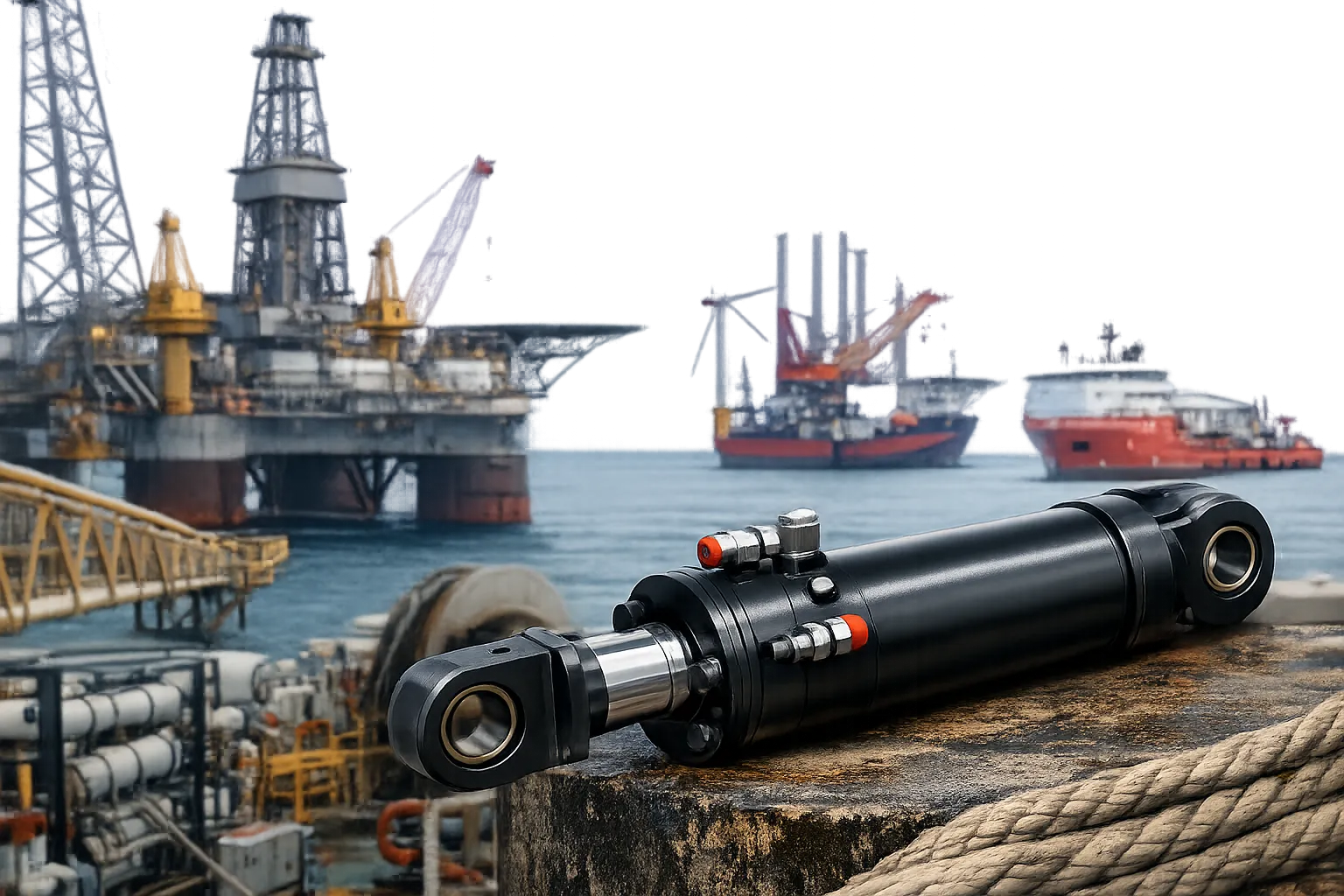
Our tensioner cylinders are designed from the ground up for pipelay vessel tensioning systems. These are not repurposed industrial cylinders with a marine paint job. Every detail — from the 316L and 2205 duplex stainless steel fittings, to the ceramic-coated piston rods, to the high-capacity welded piston cylinder construction — reflects decades of experience building hydraulic cylinders for offshore applications where rod wear, salt fog corrosion, and relentless cyclic loading define the operating reality.
We manufacture these cylinders entirely in-house, controlling every step from raw alloy steel procurement through final pressure testing. Whether you are building a new S-lay or J-lay vessel in a Korean shipyard, upgrading tensioner capacity on an existing pipelay barge, or sourcing replacement hydraulic rams for your fleet, we deliver a fully customized, classification-ready product at a competitive hydraulic cylinder price.
Technical Specifications
Every tensioner hydraulic cylinder we produce is fully customized to your vessel’s tensioning system layout, pipe diameter range, and operational profile. The tables below outline the range of parameters we support. Provide us with your system specifications or original cylinder drawings, and our engineering team will finalize the exact configuration.
Basic Specification Range
| Parameter | Customizable Range |
|---|---|
| Cylinder Bore Diameter | 150 mm – 450 mm |
| Piston Rod Diameter | 100 mm – 320 mm |
| Stroke Length | 500 mm – 3,000 mm |
| Operating Pressure | 25 MPa – 40 MPa |
| Test Pressure | 1.5x rated working pressure |
| Pull / Push Force Capacity | Up to 600 tonnes per cylinder (system-dependent) |
| Action Type | Double acting hydraulic cylinder |
| Structure Type | Piston cylinder, welded construction |
Mounting Options
| Mounting Style | Notes |
|---|---|
| Trunnion Mount (mid or rear) | Most common for tensioner track frames |
| Flange Mount | Used in fixed-frame tensioner configurations |
| Clevis / Eye Mount | Allows angular movement in articulated systems |
| Custom per OEM Drawing | We match your existing tensioner interface geometry exactly |
Materials and Surface Treatment
| Component | Material / Treatment |
|---|---|
| Cylinder Tube | High-strength alloy steel (27SiMn / 34CrMo4 / custom grade), deep-hole bored and honed |
| Piston Rod | 42CrMo / F22, ceramic rod coating (HVOF applied), ground and super-finished |
| Piston | Forged alloy steel, bronze-filled PTFE wear rings |
| End Fittings / Ports | 316L stainless steel or 2205 duplex stainless steel |
| Seals | High-performance PU + PTFE compound, rated for saltwater and high-cycle fatigue |
| External Surface | Shot blast Sa 2.5 + zinc-rich epoxy primer + marine polyurethane topcoat |
Environmental Adaptability
| Parameter | Specification |
|---|---|
| Operating Temperature | -25 C to +70 C |
| Environmental Rating | Offshore salt fog / splash zone grade |
| Protection Class | IP65 minimum (IP67 available) |
| Cyclic Load Rating | Designed for continuous high-frequency tensioning cycles with minimal rest intervals |
How the Tensioner Cylinder Works
On a pipelay vessel, the tensioning system grips the pipeline using caterpillar-style track pads arranged in opposing pairs. Each track pad assembly is pressed against the pipe by a row of tensioner hydraulic cylinders, and the combined clamping force from all cylinders generates the friction needed to hold the pipeline at a controlled tension as it passes over the stinger and down to the seabed.
Each tensioner cylinder is a double acting piston design. Pressurized hydraulic oil enters the cap-end port to extend the rod and press the track pad against the pipe surface. Simultaneously, oil on the rod side is returned to the hydraulic power unit through the head-end port. By controlling the pressure on both sides of the hydraulic cylinder piston, the system maintains a precise and adjustable clamping force on the pipeline — regardless of pipe diameter, coating thickness, or sea state.
During active pipelaying, these cylinders cycle continuously as the track pads advance and retract in coordinated sequences. The stroke of each cylinder corresponds to the distance each track pad travels before releasing and repositioning. This means the cylinders must deliver consistent force output, fast response, and zero internal leakage over millions of cycles — a workload that destroys ordinary cylinders within months. The welded piston cylinder construction, ceramic rod surface, and fatigue-optimized seal arrangement in our design directly address these demands.
Because the tensioner system must maintain constant back-tension on the pipeline even during vessel heave and pitch, the hydraulic control system adjusts cylinder pressure in real time. Our cylinders are built with minimal internal friction and tight dimensional tolerances to ensure instant response to these pressure changes, preventing pipeline slack or overstress during dynamic sea conditions.
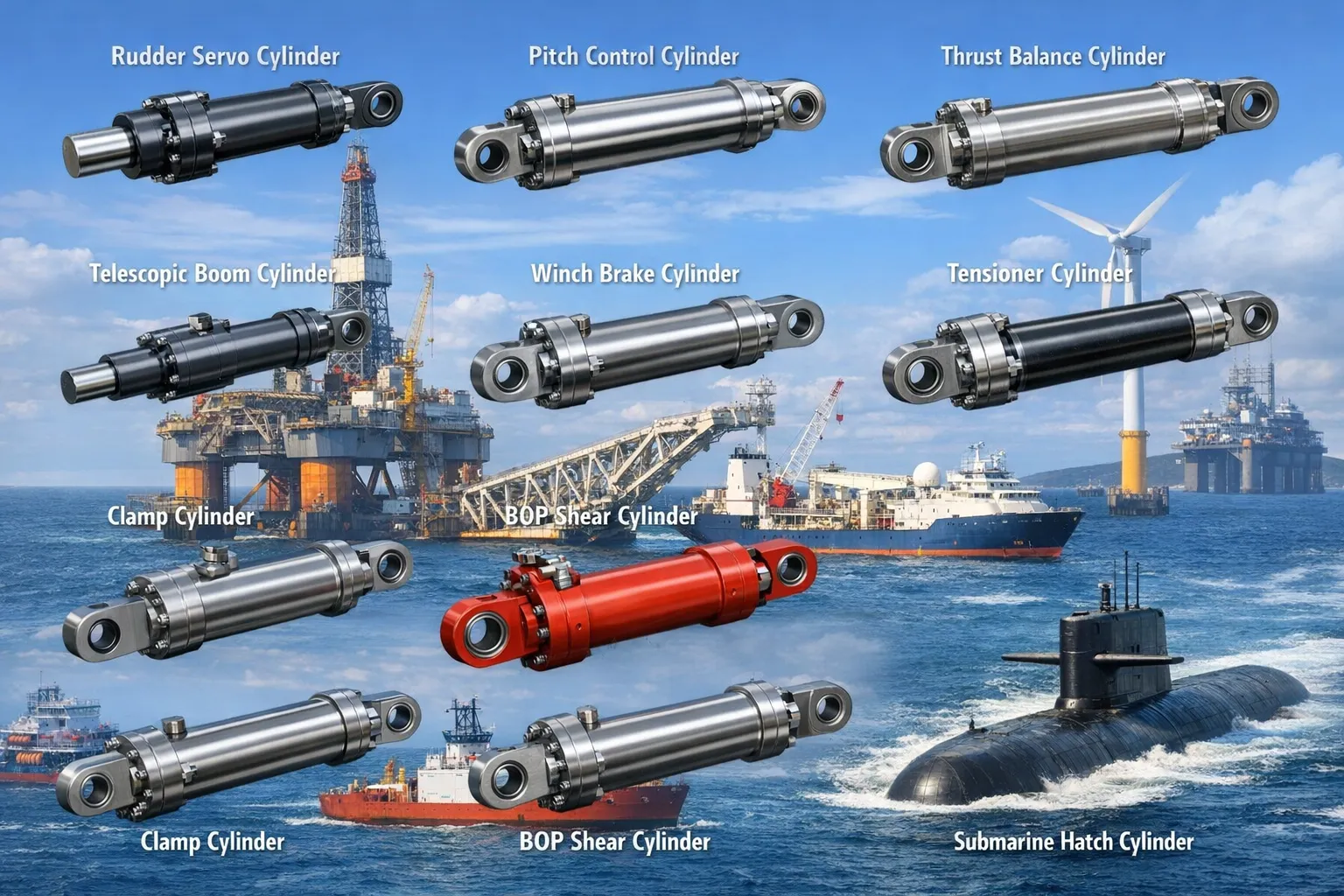
Compatible Replacement for Major Pipelay Equipment Brands
Note: All brand names listed below are the property of their respective owners. We reference them solely to assist with cross-referencing and selection of compatible replacement cylinders. Our products are independently manufactured and are not authorized or endorsed by any of these companies.
Our tensioner cylinders are engineered as direct-fit or adaptation-ready replacements for pipeline tensioning systems originally supplied by the following manufacturers:
- IHC IQIP (formerly Huisman / IHC Merwede) tensioner systems
- Heerema Marine Contractors vessel equipment
- Saipem pipelay vessel tensioner modules
- Allseas pipelay and heavy-lift vessel systems
- Technip FMC (now Technip Energies) S-lay and J-lay tensioners
- NOV (National Oilwell Varco) pipe handling and tensioning equipment
- Boscalis / DEME offshore pipeline installation vessels
- Daewoo Shipbuilding and Marine Engineering (DSME) pipelay systems
If your vessel uses tensioning equipment from a supplier not listed here, provide us with the original cylinder arrangement drawing, port layout, and mounting interface dimensions. We routinely reverse-engineer and produce replacement hydraulic cylinders that match or exceed the original equipment specifications. Shipyards and vessel operators across South Korea, Japan, and the broader Asia-Pacific region rely on us to reduce procurement lead times and lifecycle cost without compromising on quality.
Core Technical Advantages
Ceramic Rod Coating for Extreme Wear Resistance
Rod wear is the single most common failure mode in tensioner cylinders. The continuous cycling, high side loads from track pad pressure, and exposure to salt spray and abrasive particles create an environment that destroys conventional hard chrome plating within a few thousand hours. Our piston rods receive a High Velocity Oxy-Fuel (HVOF) ceramic coating — a tungsten carbide or chromium carbide layer applied at supersonic speed — that provides a surface hardness above 1200 HV, far exceeding chrome plating. This ceramic rod surface resists micro-pitting, corrosion, and abrasive wear, extending rod service life by 3 to 5 times compared to chrome-plated alternatives.
High Pull Force Capacity with Compact Geometry
Pipelay vessel tensioner frames have limited space, and every kilogram matters on a working offshore vessel. Our cylinder design maximizes force output per unit of installed volume by optimizing bore-to-rod ratios, minimizing dead-length, and using high-strength alloy steel cylinder tubes that allow higher operating pressures without increasing wall thickness. The result is a hydraulic cylinder that delivers the pull force your tensioner system demands while fitting within tight frame envelopes.
Low-Friction Seal System for Rapid Response
In a tensioning system, the cylinder must respond instantly to pressure commands from the hydraulic control unit — any delay translates to pipeline tension fluctuations and potential damage. We use a multi-element seal arrangement combining low-friction PTFE step seals, polyurethane buffer seals, and precision-machined guide rings that reduce breakaway pressure to a minimum. This means faster piston response, smoother force transitions, and more stable pipeline tension control during active laying operations.
Fatigue-Optimized Welded Construction
Tensioner cylinders endure millions of pressure cycles over their service life. Every weld joint, thread root, and transition radius is a potential fatigue crack initiation site. Our welded cylinder construction uses controlled preheat, post-weld heat treatment (PWHT), and full-penetration welds inspected by ultrasonic testing (UT) and magnetic particle inspection (MPI). Critical stress zones are designed with generous transition radii and finite element analysis (FEA) to push fatigue life well beyond the demands of continuous pipelay operations.
316L / 2205 Duplex Stainless Steel for Corrosion-Critical Components
Offshore environments — especially the splash zone on a pipelay vessel — aggressively attack carbon steel fittings, port blocks, and fasteners. We use 316L austenitic stainless steel or 2205 duplex stainless steel for all external fittings, port adapters, and other corrosion-critical hydraulic cylinder components. This eliminates the galvanic corrosion and crevice corrosion issues that plague carbon steel components in marine service.
Integrated Position and Pressure Sensing Provisions
Modern tensioner control systems require real-time feedback from each cylinder. Our cylinders come with machined provisions for linear position transducers (LVDT or magnetostrictive type) and pressure transducer ports at both cap and head ends. These are integrated into the cylinder design from the start, not added as afterthoughts, ensuring clean installation and reliable signal output.
Zero-Leak Internal Sealing Standard
Internal leakage across the piston in a tensioner cylinder directly reduces clamping force and wastes hydraulic energy. We hold every cylinder to a zero visible internal leakage standard at rated working pressure — verified during factory testing. This is achieved through precision piston-to-bore clearances, high-quality piston seal compounds, and rigorous bore honing to Ra 0.2 or better.
Full Marine Corrosion Protection System
Beyond the ceramic rod and stainless steel fittings, every external surface of the cylinder body receives a multi-layer protection system: shot blasting to Sa 2.5, zinc-rich epoxy primer, intermediate epoxy coat, and marine-grade polyurethane topcoat. This system is designed to withstand continuous exposure to offshore salt fog, UV radiation, and the mechanical abuse of a working vessel deck.
Manufacturing Process and Quality Control
Vertically Integrated Production
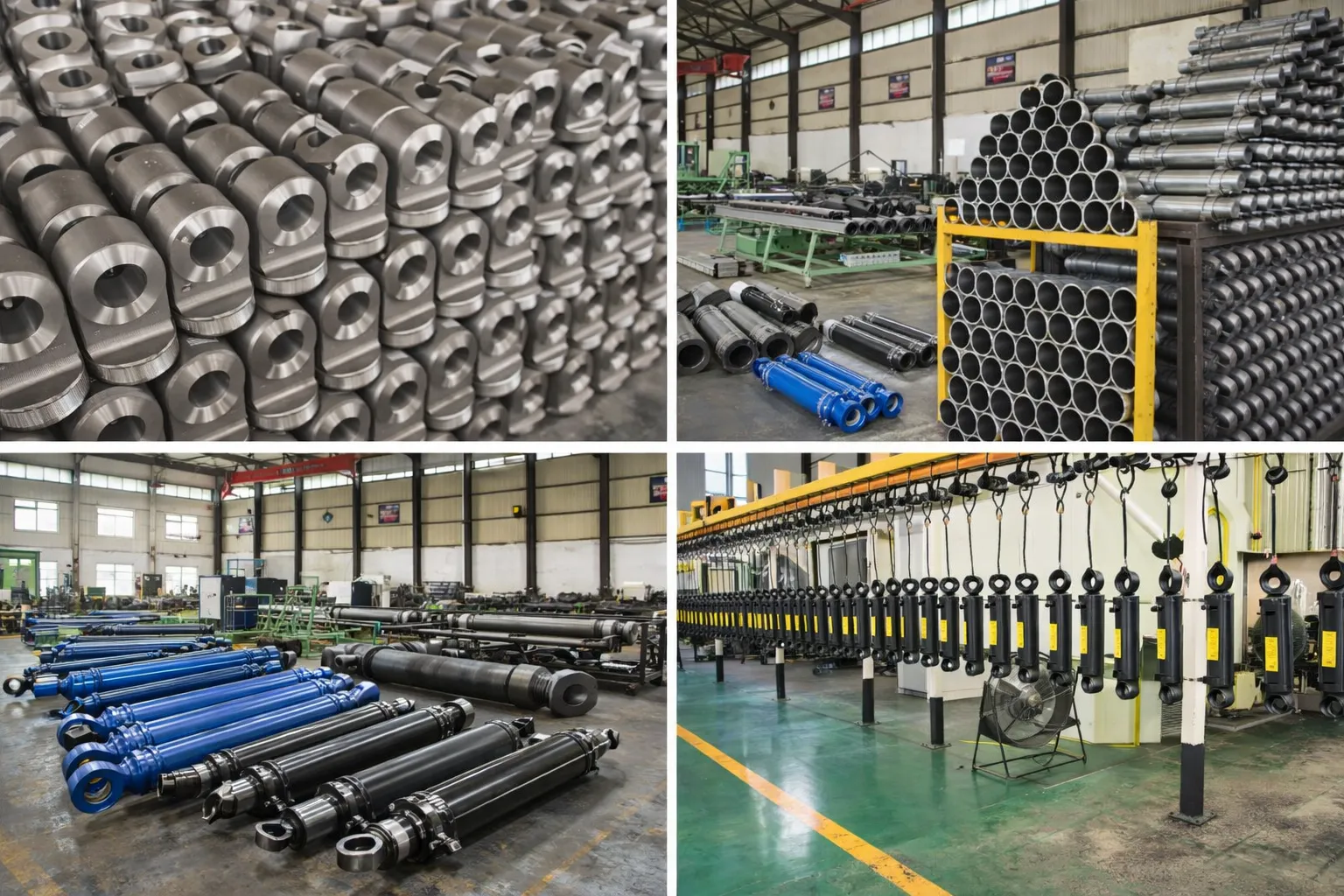
From incoming steel inspection to final paint and packing, every production stage takes place within our own facility. Cylinder tubes are deep-hole bored and honed on dedicated machines. Piston rods are turned, ground, and sent to our HVOF coating line. Pistons and glands are CNC-machined to micron-level tolerances. Welding, assembly, seal installation, and testing — all under one roof, all under one quality management system. This level of control means we catch issues at the source, not after they reach your vessel.
100% Factory Testing
Every tensioner cylinder undergoes a complete testing protocol before shipment: hydrostatic proof test at 1.5x working pressure, external and internal leakage test at rated pressure, full stroke function test, and dimensional verification of all critical interfaces. For offshore-class orders, we also perform extended endurance cycling and can arrange third-party witnessed testing to the requirements of DNV, BV, ABS, LR, KR (Korean Register), or other classification societies.
Certifications and Full Traceability
Our factory holds ISO 9001 quality management certification and operates a material traceability system that links every component back to its heat number and mill certificate. Weld procedures are qualified per EN ISO 15614 / ASME Section IX, and welders hold current qualifications. Each cylinder ships with a comprehensive documentation package: material certificates (EN 10204 3.1), weld procedure and welder qualification records, dimensional inspection reports, non-destructive examination (NDE) records, test certificates, and assembly drawings. For Korean shipyard projects, we routinely prepare documentation aligned with KR and KOMERI requirements.
Continuous Improvement and Field Feedback Loop
We maintain an active feedback loop with our end users. When a cylinder returns for overhaul, we document the condition of every component — rod surface, seal wear, bore condition, weld joints — and feed that data back into our design and manufacturing process. This closed-loop approach means our cylinders improve with every generation. It is also why we can offer practical advice on hydraulic cylinder repair intervals and maintenance best practices specific to tensioner duty cycles.
Typical Industry Applications
Offshore Pipelay Vessels (Primary Application)
This is the core application for our tensioner hydraulic cylinders. S-lay vessels, J-lay towers, reel-lay vessels, and flex-lay systems all use tensioner cylinders to grip and control the pipeline during installation. Our cylinders handle pipe diameters from small-bore flowlines (4 inch) up to large-diameter trunk lines (60 inch) — with track pad clamping force adjustable in real time to suit pipe weight, coating type, and water depth.
Subsea Cable and Umbilical Lay
Cable lay vessels and umbilical installation ships use similar tensioning principles. Our cylinders can be configured for the lower forces and faster cycling speeds typical of cable and umbilical tensioners, with rod coatings and seal systems adjusted for the different load profiles.
Heavy Offshore Lifting and Winch Systems
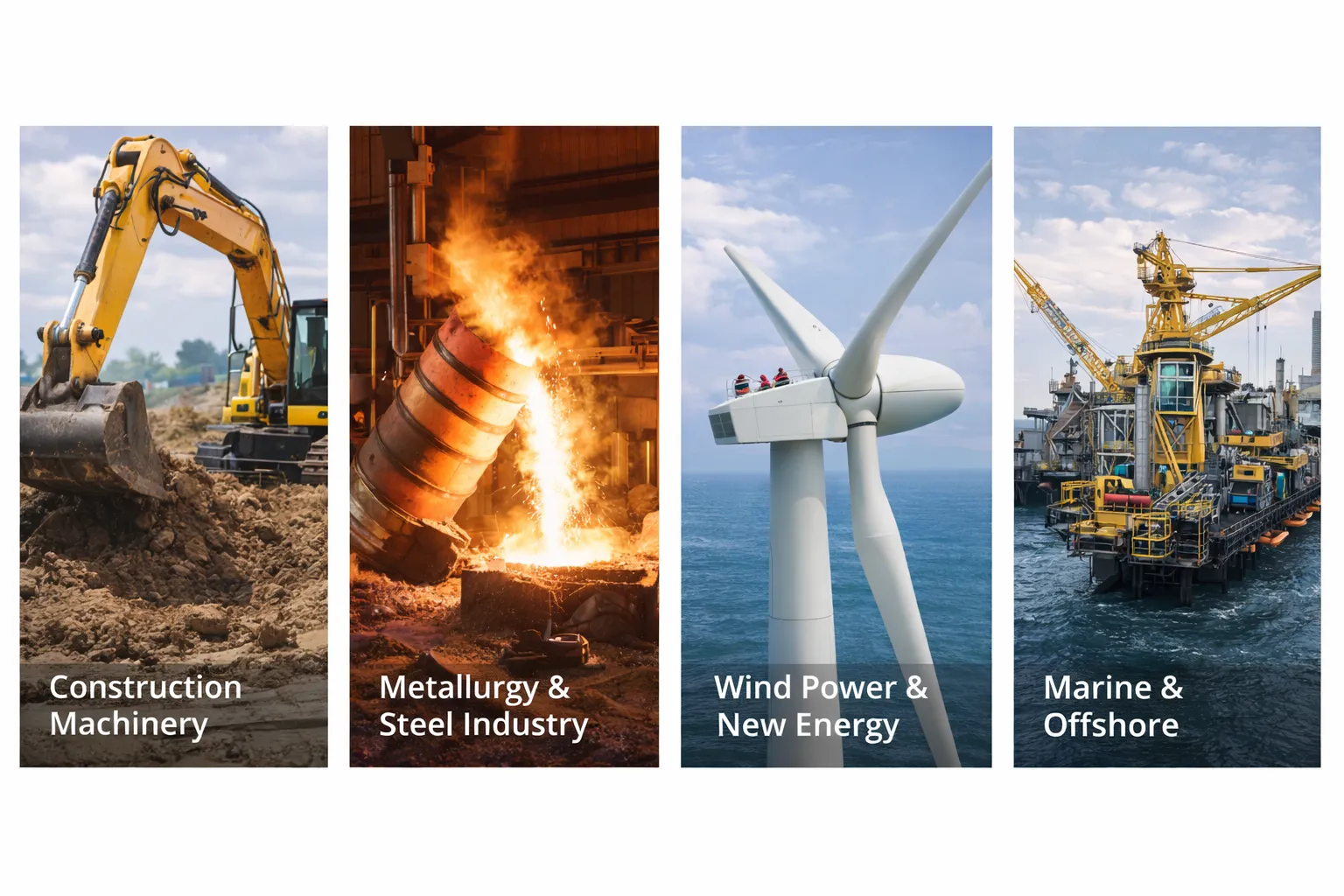
The same high-force, high-cycle capability that makes our cylinders ideal for tensioners also suits offshore winch compensators, heave compensation systems, and heavy-lift crane luffing cylinders. Explore our full range of marine and offshore hydraulic cylinders for these applications.
Construction and Civil Engineering
Large-bore, high-force hydraulic cylinders of this class are also used in bridge launching, tunnel jacking, and heavy structural lifting in the construction machinery industry. The welded piston construction and ceramic rod option are particularly valued in these demanding terrestrial applications.
Metallurgy and Heavy Manufacturing
High-pressure, high-cycle hydraulic rams serve critical functions in steel mill rolling equipment, continuous casting machines, and heavy forge presses. Our manufacturing capability for the metallurgical and iron industry draws on the same engineering discipline and quality standards as our offshore products.
Mining and Resource Extraction
Underground longwall mining systems, tunnel boring machines, and large excavator boom cylinders share the high-force, harsh-environment requirements of offshore tensioners. Our cylinders serve the mining industry across Asia-Pacific with the same commitment to durability and performance.
Renewable Energy and Offshore Wind
Offshore wind turbine installation vessels, jacket lifting systems, and monopile handling equipment all require high-capacity cylinders rated for marine service. As the offshore wind sector expands rapidly across Korea, Japan, and Taiwan, demand for reliable, classification-ready hydraulic cylinders in this segment continues to grow.
Standard Industrial Cylinders vs. Our Tensioner-Grade Marine Cylinders
A generic industrial hydraulic cylinder will not survive the demands of a pipelay vessel tensioner system. Here is a detailed comparison showing why purpose-built tensioner cylinders are essential.
| Feature | Standard Industrial Cylinder | Our Tensioner-Grade Marine Cylinder |
|---|---|---|
| Rod Surface | Hard chrome plating (standard thickness) | HVOF ceramic coating, 1200+ HV hardness |
| Cylinder Tube | Standard seamless steel tube | High-strength alloy, deep-hole bored, honed Ra 0.2 |
| Sealing System | General-purpose NBR or basic PU | Low-friction PTFE step seal + PU buffer, marine-rated |
| Corrosion-Critical Fittings | Carbon steel, zinc plated | 316L or 2205 duplex stainless steel |
| Fatigue Design | Not specifically addressed | FEA-optimized, PWHT, full-penetration welds, UT/MPI inspected |
| External Protection | Single coat industrial paint | 3-layer marine coating system (Sa 2.5 + epoxy + PU) |
| Sensor Integration | Add-on brackets, aftermarket | Factory-machined LVDT and pressure transducer provisions |
| Testing Standard | Basic pressure test | Full proof + leak + stroke + endurance + classification witness |
| Typical Service Life (tensioner duty) | 6 – 12 months before rod failure | 5 – 8+ years with scheduled seal replacement |
| Classification Documentation | Not available | Full package for DNV, BV, ABS, LR, KR, CCS |
Real-World Project Case Studies
Case 1: S-Lay Vessel Tensioner Overhaul for a Korean EPC Contractor
Country: South Korea
Customer: A major offshore EPC contractor based in Geoje, operating three pipelay and construction vessels
Application: Full replacement of 24 tensioner cylinders (bore 280 mm, stroke 1,800 mm, 35 MPa working pressure) on an S-lay vessel’s main tensioner. Original cylinders were European-sourced with conventional hard chrome rods that suffered severe pitting after 18 months of deepwater pipelay in the Middle East.
How They Found Us: The customer’s procurement team contacted us through our website in February 2024 after searching for “tensioner hydraulic cylinder manufacturer ceramic rod.” They had been evaluating three suppliers and selected us based on our ceramic rod coating capability and willingness to meet KR documentation requirements.
Results: We delivered all 24 cylinders in two batches (June and August 2024), timed to coincide with the vessel’s scheduled drydocking at Samsung Heavy Industries. After 16 months of continuous service including two deepwater pipelay campaigns in Southeast Asia, the customer reported zero rod surface degradation, zero seal failures, and a measurable reduction in hydraulic system oil temperature — a direct result of the low-friction seal system.
Customer Feedback: “The chrome-plated rods on our original cylinders lasted barely 18 months before we had to pull them for re-chroming. Your ceramic-coated rods still look new after 16 months of hard service. The cost savings on avoided downtime and re-chroming alone justified the switch. We are now planning to convert our second vessel.” — Mr. Kim, Fleet Maintenance Director
Case 2: J-Lay Tower Tensioner Cylinders for a Japanese Deepwater Vessel
Country: Japan
Customer: An offshore construction company headquartered in Yokohama, specializing in deepwater pipeline and subsea structure installation
Application: 16 high-pressure tensioner cylinders for a J-lay tower tensioner system (bore 350 mm, stroke 2,200 mm, 40 MPa), replacing NOV-supplied originals that had reached end of design life
How They Found Us: Referred by an equipment trading partner in Singapore in May 2023. The customer sent the original cylinder GA drawings and requested a technical proposal with ClassNK and DNV documentation options.
Results: We completed the full order in 16 weeks, including FEA analysis of weld joints, HVOF ceramic rod coating, and DNV-witnessed factory acceptance testing. The cylinders were installed during a drydocking period in Kure, Japan. The vessel subsequently completed a 7-month deepwater pipelay campaign in Australian waters with zero cylinder-related downtime.
Customer Feedback: “Your engineering team understood the J-lay tensioner loading profile and adjusted the cushioning design accordingly. The DNV surveyor accepted all documentation on the first review, which saved us at least two weeks in the drydocking schedule. Quality is comparable to the European OEM at significantly lower cost.” — Deputy General Manager, Marine Equipment Division
Case 3: Reel-Lay Vessel Emergency Cylinder Replacement for a Southeast Asian Operator
Country: Malaysia
Customer: A regional subsea services company operating a reel-lay vessel for flexible pipeline and umbilical installation in the South China Sea
Application: Emergency replacement of 4 tensioner cylinders (bore 200 mm, stroke 1,200 mm) that had suffered rod scoring and seal blowout during an active pipelay campaign. The vessel was on standby in Port Klang waiting for replacement cylinders.
How They Found Us: The customer’s technical superintendent called us directly after receiving our contact details from a colleague at a Korean shipyard. The initial call came on a Wednesday afternoon in November 2024. We received the cylinder drawings by Thursday morning.
Results: We expedited production and delivered four cylinders with ceramic rod coating in 3 weeks and 5 days. The cylinders were air-freighted to Kuala Lumpur, trucked to Port Klang, and installed on the vessel. The pipelay campaign resumed within 4 days of delivery, well within the contractual weather window.
Customer Feedback: “Our vessel was costing us over USD 80,000 per day on standby. Your team delivered in less than four weeks — the European OEM quoted 14 weeks. The cylinders performed perfectly through the remaining two months of the campaign. We have since placed a standing order for spare cylinders to keep onboard.” — Operations Manager
Case 4: Cable Lay Vessel Tensioner Upgrade in Taiwan
Country: Taiwan
Customer: An offshore wind farm cable installation contractor, operating a purpose-built cable lay vessel out of Kaohsiung
Application: 12 tensioner cylinders for a track-type cable tensioning system, designed for submarine power cable installation for offshore wind projects in the Taiwan Strait
How They Found Us: Found our product pages through a Google search for “hydraulic cylinder for pipelay tensioner” in January 2025.
Results: We produced and delivered all 12 cylinders in 10 weeks, with BV class documentation. The cable lay vessel successfully completed three submarine cable installation campaigns in the Taiwan Strait through 2025, with all tensioner cylinders operating without incident.
Customer Feedback: “We are new to the cable lay business and needed a supplier who could guide us through the tensioner cylinder specification process. Your engineering team was patient, thorough, and delivered exactly what we needed. The BV documentation was accepted without revision. We will continue working together as our fleet grows.” — Chief Technical Officer
Case 5: Tensioner Cylinder Spare Pool for a Global Pipelay Fleet
Country: Singapore (fleet management hub)
Customer: A multinational offshore pipeline installation company managing a fleet of 6 pipelay and construction vessels deployed worldwide
Application: Establishment of a strategic spare cylinder pool — 32 tensioner cylinders across 4 different sizes — to reduce vessel downtime caused by waiting for OEM replacement cylinders from Europe
How They Found Us: Their Singapore-based global procurement director attended an offshore technology conference in Busan in September 2023 where they saw our product display. After a factory audit in October 2023, they initiated a framework supply agreement.
Results: We delivered the complete spare pool over a 6-month period (Q1-Q2 2024). Three vessels have since used spare cylinders from this pool during unscheduled maintenance stops. Average turnaround time from defect identification to cylinder installation dropped from 10 weeks (European OEM supply) to under 1 week (Singapore warehouse). The customer estimates cumulative savings of over USD 2 million in avoided vessel standby costs during the first year.
Customer Feedback: “Having a ready stock of quality replacement cylinders in Singapore has transformed our fleet maintenance strategy. Your cylinders are interchangeable with our OEM originals, the documentation meets all class requirements, and the pricing makes it commercially viable to hold strategic spares. This is a genuine competitive advantage for our fleet.” — VP Global Procurement
Frequently Asked Questions
What is the typical lead time for custom tensioner cylinders?
Why use ceramic rod coating instead of hard chrome?
Can you supply cylinders with DNV, BV, ABS, KR, or other classification society documentation?
Do you offer hydraulic cylinder repair and rod re-coating services?
What information do you need from me to provide a quotation?
How do you ship to South Korea and nearby countries?
What warranty do your tensioner cylinders carry?
Can your cylinders handle continuous high-cycle tensioner duty without overheating?
Do you supply individual hydraulic cylinder components and spare parts?
Ready to Source Your Tensioner Hydraulic Cylinders?
Whether you are building new tensioner systems in a Korean shipyard, overhauling an existing pipelay vessel, or establishing a strategic spare pool in Asia-Pacific, our engineering team is prepared to discuss your project. Share your specifications and receive a detailed technical proposal — typically within 48 hours.
Editor: Cxm