Tracking Hydraulic Cylinder for Photovoltaic Tracking Bracket
Engineered to endure severe sunshine and wind loads, our tracking cylinders ensure precise single-axis tracking and zero internal leakage for maximum new energy efficiency.
Product Overview: The Core of Photovoltaic Tracking
The global transition to renewable energy heavily relies on the efficiency of solar farms, especially those utilizing advanced photovoltaic tracking brackets. By constantly adjusting the angle of solar panels to follow the sun’s trajectory, single-axis tracking systems can significantly increase power generation compared to fixed-tilt setups. At the very mechanical heart of these systems is the tracking cylinder. This precise fluid power actuator handles the critical task of performing micro-adjustments under immense structural loads, making it indispensable to the industrial value of any solar power project.
However, the environmental conditions for a tracking hydraulic cylinder are exceptionally harsh. Operating continuously outdoors, these actuators face intense UV radiation, extreme temperature fluctuations, and severe dynamic wind loads. Furthermore, airborne dust and mud present a constant threat to the internal seals. Standard cylinders often suffer from internal leakage under such conditions, causing the solar arrays to drift from their optimal angle and lose valuable energy yield. As an experienced hydraulic cylinder manufacturer, we have engineered a dedicated solution designed explicitly for the new energy sector.
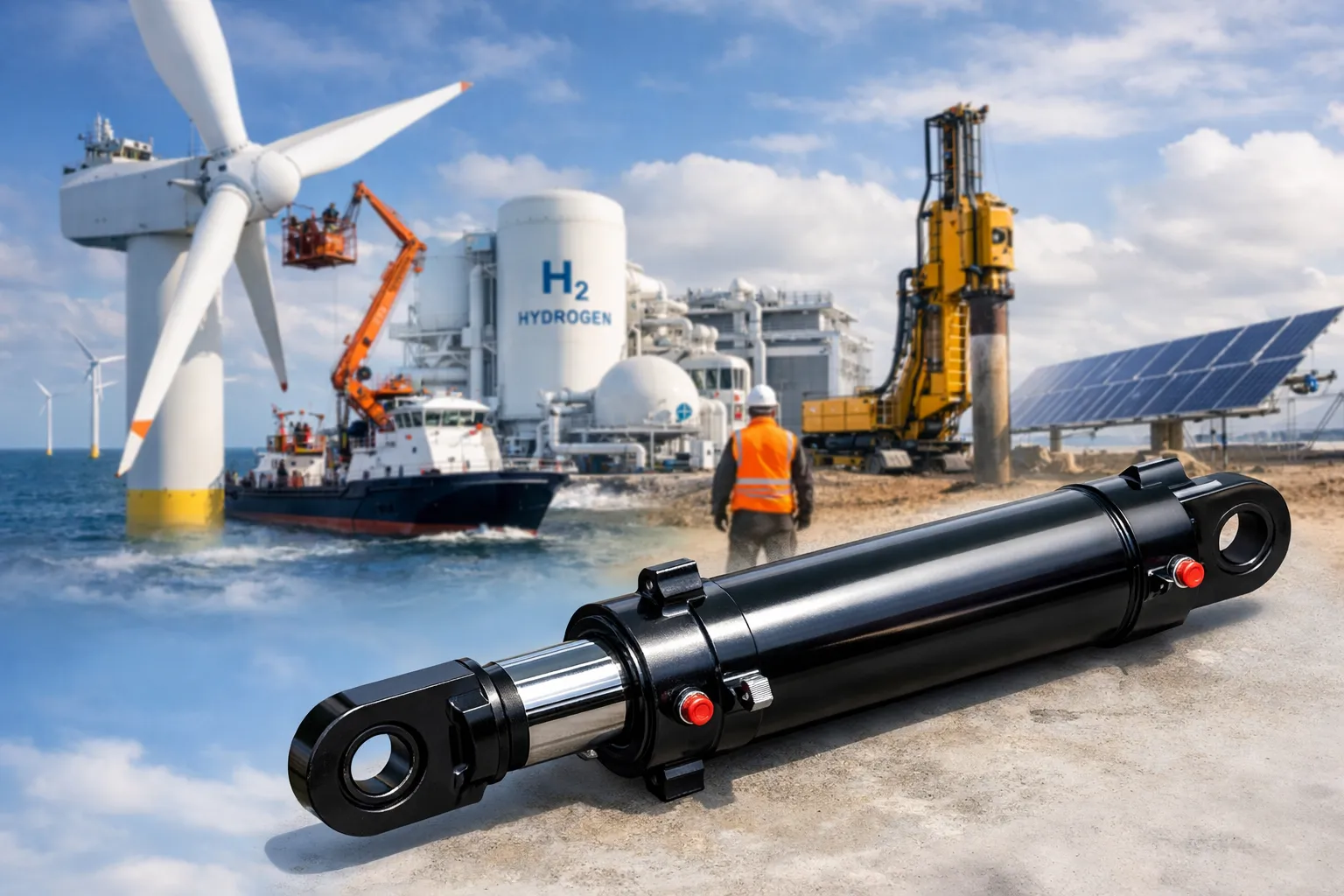
Our premium double acting hydraulic cylinder is crafted to overcome the most critical failure modes in the field. Built with high-rigidity Q345D steel and utilizing an advanced dust-proof and mud-proof sealing system, our tracking cylinders guarantee absolute structural integrity and zero internal leakage. By completely preventing angle drift during extreme weather, our actuators maximize solar irradiance capture, securing long-term profitability and reducing the total levelized cost of energy (LCOE) over a 25-year operational lifecycle.
Comprehensive Technical Parameters
To ensure perfect mechanical integration into your photovoltaic arrays, we provide highly customizable hydraulic parts. The following table outlines the foundational specifications and configuration ranges for our solar tracking cylinders.
| Category / Parameter | Specification Details | Engineering Significance |
|---|---|---|
| Target Industry | New Energy / Solar Power | Optimized for utility-scale outdoor power generation grids. |
| Equipment Category | Photovoltaic Tracking Bracket | Integrates directly with the central torque tube mechanism. |
| Subsystem / Action | Single-axis Tracking / Bracket angle adjustment | Delivers exact kinematic alignment for maximum sunlight absorption. |
| Product Name | Tracking Cylinder | The dedicated linear actuator for precise tracking applications. |
| Action Method | Double Acting | Allows powered bi-directional push and pull forces for complete control. |
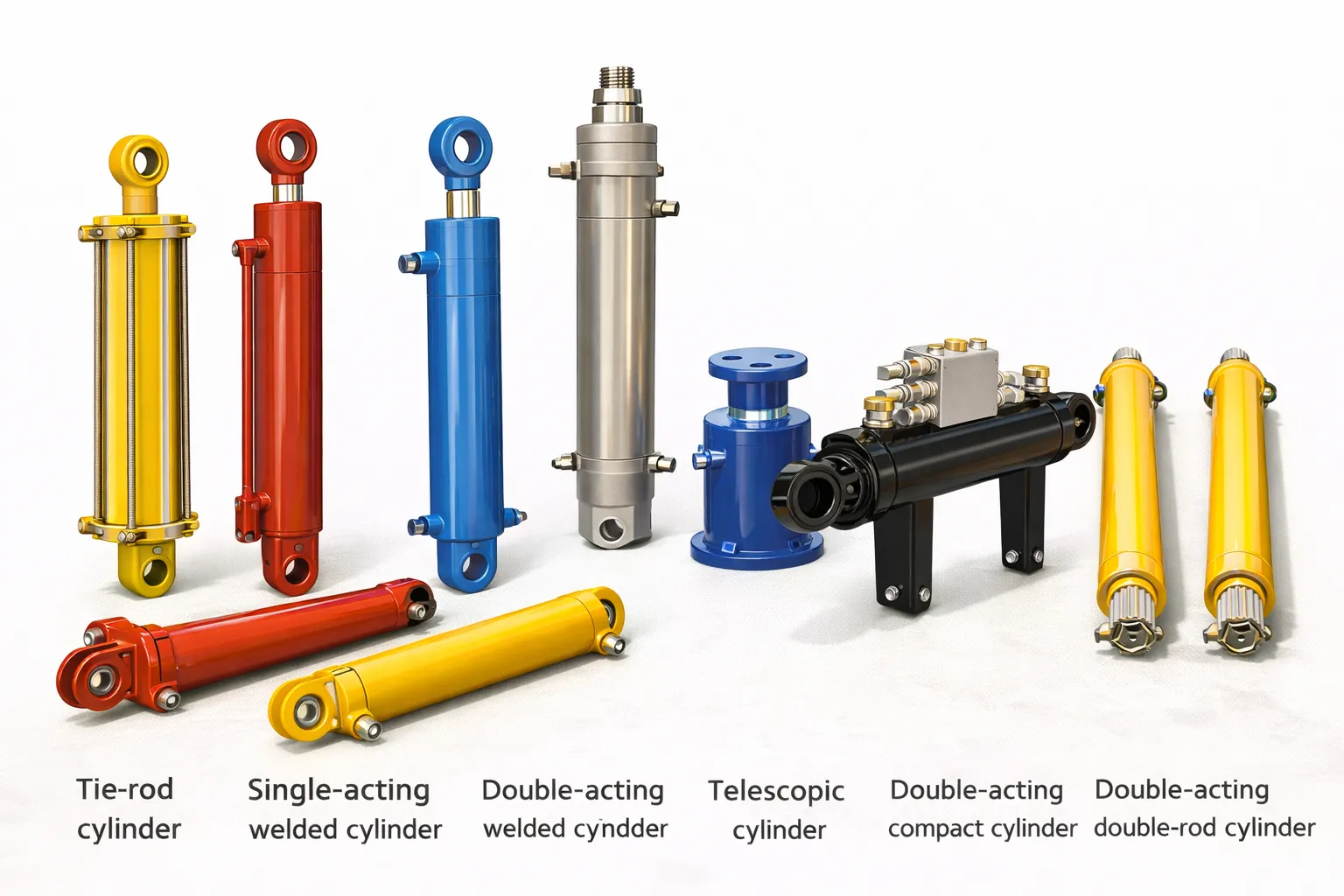
| Structure Type | Piston Cylinder / Welded Construction | Provides maximum rigidity and prevents structural fatigue. |
| Material System | Q345D High-Strength Low-Alloy Steel | Exceptional yield strength and sub-zero impact toughness. |
| Surface Treatment | Nickel Plated | Superior anti-corrosion barrier against coastal salt spray and acid rain. |
| Environmental Grade | Sunshine + Wind Load | Designed specifically to withstand severe outdoor elements. |
| Targeted Failure Mode | Internal Leakage | Zero-leakage sealing maintains precise bracket alignment. |
| Recommended Configuration | Dust-proof and Mud-proof Sealing | Aggressively clears away abrasive particles to protect inner glands. |
Working Principle: Fluid Dynamics & Precision Kinematics
Understanding the operational mechanics of our tracking cylinder highlights its indispensable role in the new energy sector. The single-axis tracking system operates via a central logic controller that processes astronomical algorithms to determine the sun’s exact position. This controller then signals a hydraulic power unit (HPU) to direct pressurized fluid to the actuator.
As fluid enters either the cap end or the rod end of our double acting hydraulic cylinder, it exerts immense pressure across the entire face of the hydraulic cylinder piston. This pressure is converted into mechanical linear force, slowly extending or retracting the rod. Because the cylinder features micro-honed internal bores and ultra-low friction guide rings, this micro-stepping movement is incredibly smooth, preventing the destructive “stick-slip” vibrations that damage the torque tube linkages.
Crucially, the system must hold its position statically against severe wind loads once the optimal angle is reached. When the directional control valves close, the hydraulic fluid is trapped. Due to our rigorous zero-leakage tandem seal matrix, the fluid column acts as an unbreakable mechanical strut. This hydraulic lock prevents any internal fluid bypass, completely stabilizing the massive photovoltaic array even during violent wind storms.

Seamless Integration & OEM Brand Replacement
When maintaining extensive solar farms, sourcing timely replacement parts is a major logistical challenge. Extended lead times for original proprietary equipment result in severe energy losses. Furthermore, dealing with frequent fixing hydraulic cylinders issues destroys a plant’s operating budget. We solve this problem by providing exact drop-in replacements that flawlessly match the pin-to-pin dimensions, stroke lengths, and mounting styles of globally recognized tracking systems.
Important Note: Mentions of the following industry brands are exclusively for fitment compatibility and technical cross-referencing to aid engineering procurement. We do not claim trademark ownership, endorsement, or formal affiliation with these entities.
Our heavy-duty tracking cylinders are perfectly dimensioned to replace actuators originally supplied for tracker systems like NEXTracker, Array Technologies, Soltec, STI Norland, and others. If your site relies on standard industrial components from Parker Hannifin, Bosch Rexroth, or Eaton that are failing under weather exposure, upgrading to our specialized tracking hydraulic cylinder offers unparalleled resilience at a highly competitive hydraulic cylinder price. You gain superior structural integrity and nickel-plated defense without modifying any existing bracket hardware.
Core Engineering & Technical Advantages
Manufacturing a hydraulic rams product capable of autonomously surviving a 25-year lifecycle outdoors requires relentless innovation. Here are the core technical advantages of our tracking cylinders:
- 1. Dust-Proof & Mud-Proof Sealing Technology: Airborne silica dust and caked-on mud destroy standard rod wipers instantly. We employ a customized, aggressive dual-lip polyurethane scraper. The rugged outer lip physically shears away hardened mud and morning frost during retraction, ensuring the primary high-pressure seals remain completely isolated from abrasive contamination.
- 2. Absolute Zero Internal Leakage: Internal leakage forces the tracking bracket to drift from its optimal angle, slashing power yield. We use a high-performance tandem sealing matrix combined with highly energized PTFE rings. This guarantees a perfect volumetric seal within the micro-honed bore, locking the panel array rigidly on target.
- 3. High-Rigidity Q345D Welded Structure: During typhoons, standard Q235 steel cylinders often flex and buckle under immense compressive wind loads. We exclusively utilize heavy-wall Q345D low-alloy steel. This material offers dramatically higher yield strength and retains exceptional impact toughness even during sub-zero winter temperatures, ensuring total structural safety.
- 4. Advanced Nickel-Plated Surface Treatment: Standard hard chrome plating contains inherent micro-cracks that allow salty coastal air and acidic rain to corrode the base steel. Our proprietary electroless nickel plating provides a dense, amorphous, and entirely non-porous layer that repels oxidation and dramatically extends rod life against harsh UV and salt spray exposure.
- 5. Wide-Range Thermal Stability: Solar equipment suffers massive diurnal thermal shock. Our specialized elastomeric seals and premium hydraulic fluids are formulated for severe gradients (-40°C to +85°C). They will not turn brittle and shatter during freezing nights, nor will they extrude and blow out during peak summer desert heat.
- 6. Ultra-Low Friction Kinematics: Tracking requires very slow, precise micro-movements. High internal friction causes jerking motions that damage the mechanical drive systems. By utilizing advanced wear rings and specialized bore finishing processes, our cylinders actuate with butter-smooth consistency, minimizing the electrical load on the hydraulic pump.
Autonomous Manufacturing & Strict Quality Control
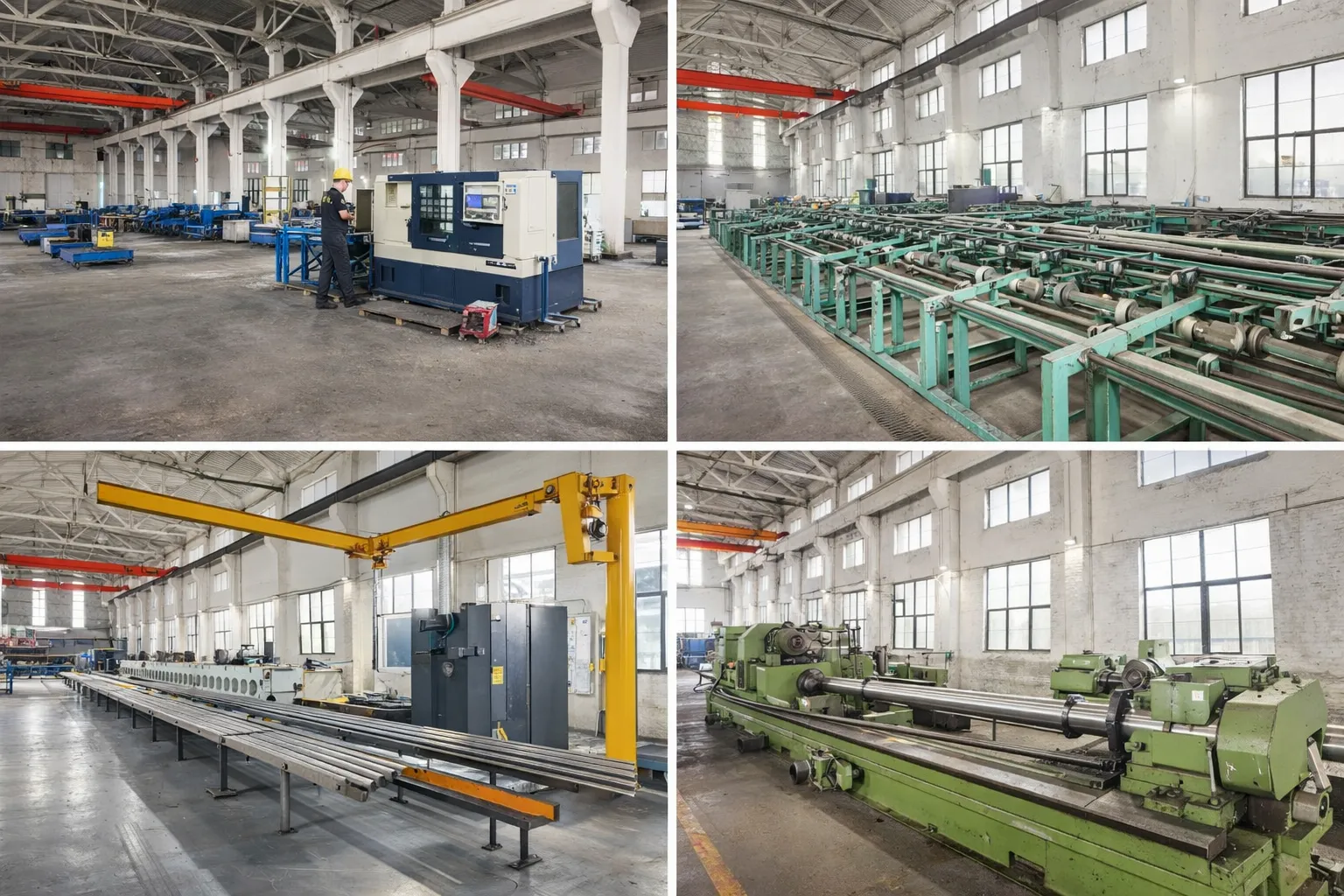
Providing actuation systems for major utility projects requires total control over the supply chain. As a fully integrated hydraulic cylinder manufacturer, we handle every stage of production internally. The process begins with rigorous metallurgical verification of incoming Q345D steel to ensure correct chemical composition. Using high-precision multi-axis CNC lathes and mills, we manufacture all critical hydraulic cylinder components to micrometer tolerances.
Welding structural mounts on a cylinder destined for dynamic wind loads requires exact precision. We deploy robotic submerged arc welding (SAW) to achieve deep, void-free joint penetration. Following assembly, quality control is uncompromising. Every single tracking cylinder must undergo a 100% factory hydrostatic pressure test at 1.5 times its working rating to certify absolute zero fluid bypass. A permanent laser-etched serial number ensures complete, ISO-compliant material traceability for decades.
Cross-Industry Excellence: Diverse Applications
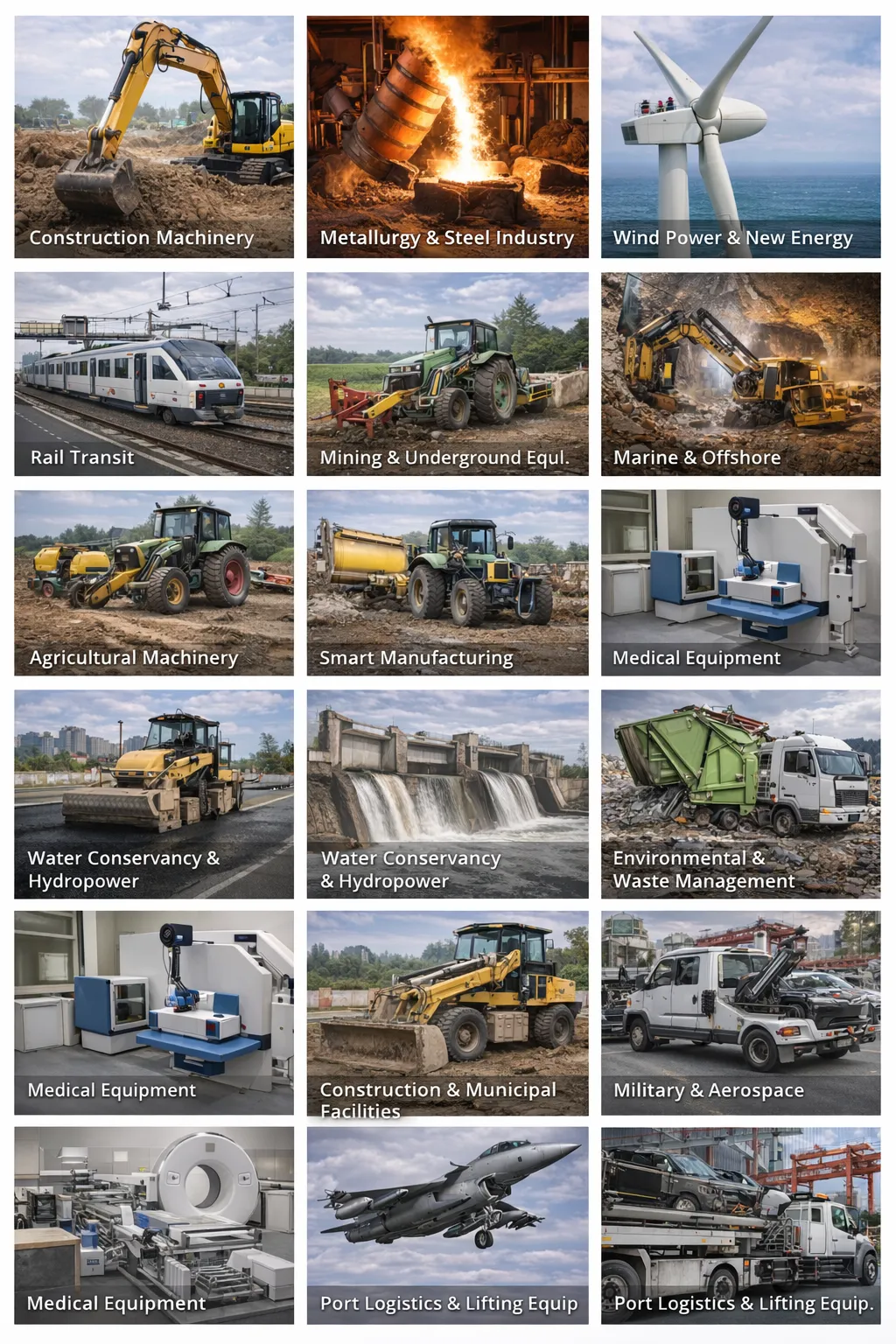
The extreme durability, thermal stability, and robust contamination defense that define our solar tracking cylinders make our engineering highly coveted across various demanding industrial landscapes. The capacity to withstand massive dynamic loads and abrasive environments ensures our components excel in multiple sectors:
- Construction Machinery Industry: Our heavy-duty dust and mud sealing technology is vital for a main lift cylinder operating on excavators and loaders in muddy, abrasive worksites.
- Metallurgical and Iron Industry: Actuators deployed near blast furnaces utilize our extreme thermal stability designs to survive intense radiant heat and molten slag.
- Mining Industry: Deep shaft operations and surface crushers depend on our rigid Q345D construction to resist massive shock loads and highly corrosive mine water.
- Material Handling & Logistics: Precision internal guide rings allow for the exact control required in heavy automated guided vehicles (AGVs) and port container handlers.
- Plastics & Rubber Machinery: Our high-pressure double-acting systems deliver the unyielding locking tonnage required for modern injection molding presses.
Comparative Analysis: Standard Cylinder vs. Tracking Cylinder
Attempting to lower initial capital expenditure by using commercial off-the-shelf actuators typically leads to disastrous long-term O&M costs in the solar sector. The table below clearly illustrates why a purpose-built high-performance cylinder is essential.
| Feature / Metric | Standard Ordinary Cylinder | Our High-Performance Tracking Cylinder |
|---|---|---|
| Structural Material | Standard Q235 Carbon Steel (Prone to buckling) | Q345D Low-Alloy Steel (High yield toughness) |
| Surface Plating Defense | Basic Hard Chrome (Develops rust via micro-cracks) | Dense Nickel Plating (Impervious to salt spray) |
| Contamination Sealing | Single-lip NBR Wiper (Quickly fails against silica dust) | Multi-lip Dust-proof and Mud-proof Scraper Ring |
| Internal Leakage Tolerance | Acceptable drift tolerances (Causes angle misalignment) | Strict Zero-Leakage (Locks arrays rigidly in place) |
| Maintenance Lifecycle | Requires continuous seal replacements every 2-3 years | Engineered specifically for 15+ years of minimal O&M |
Proven Field Performance: Global Case Studies
Theoretical durability must be validated in the field. Our tracking actuators are deployed in hundreds of massive solar infrastructure projects across South Korea, Japan, and the greater Asia-Pacific region. Here is how our engineering overcomes severe environmental challenges.
Case 1: Eradicating Tracker Drift in Coastal South Korea
Client Location: Jeollanam-do, South Korea | Application: Utility-scale Solar Farm
The Challenge: A massive coastal solar installation suffered severe power generation losses in early 2024. Intense salt spray caused the original actuators’ chrome rods to rust, shredding the internal seals. Consequently, the tracking brackets suffered severe internal leakage and drifted off-angle during heavy winds. The EPC contractor urgently searched for a reliable hydraulic cylinder repair solution or a full-scale component replacement.
The Solution & Result: We rapidly supplied highly customized tracking hydraulic cylinder units featuring dense nickel-plated rods and a zero-leakage tandem seal matrix. Post-installation, the rigid hydraulic lock secured the solar arrays flawlessly. The plant immediately recovered 14% of its daily energy yield.
“The holding force on these new actuators is incredible. We successfully retrofitted the site in October 2024, and the arrays haven’t lost a single degree of alignment, even during autumn typhoons. The nickel plating is clearly superior to standard chrome here.” — Mr. Choi Min-Jun, Site O&M Director
Case 2: Protecting Agrivoltaics from Abrasive Farming Mud
Client Location: Taichung, Taiwan | Application: Dual-Use Agricultural Solar Tracking
The Challenge: Elevating solar tracking panels above active farmland exposed the mechanical infrastructure to extreme dust and wet mud kicked up by tractors. Standard wiper seals allowed the mud into the actuator glands, instantly destroying the internal hydraulic parts.
The Solution & Result: We engineered drop-in tracking cylinders utilizing our aggressive dust-proof and mud-proof scraper ring technology. The specialized polyurethane lip successfully sheared the dried mud off the retracting rods daily, extending the cylinder lifespan by over 300% and completely eliminating unplanned maintenance downtime.
“We assumed constant actuator failure was simply the cost of combining solar with active farming. These mud-proof wipers proved us wrong. They keep the rods perfectly clean every single retraction.” — Lin Wei-Chen, Agrivoltaics Project Manager (November 2025)
Case 3: High Wind Load Survival and Winter Resilience
Client Location: Hokkaido, Japan | Application: Mountainous Renewable Energy Grid
The Challenge: A high-altitude installation faced heavy winter snow accumulation alongside severe wind loads. Standard carbon steel cylinders suffered rod buckling, and standard elastomer seals shattered when temperatures dropped to -25°C.
The Solution & Result: We implemented our heavy-duty Q345D steel construction to handle the immense snow weight without buckling. Furthermore, we integrated aerospace-grade low-temperature seals. The tracking system operated flawlessly through two brutal winter seasons without any loss of fluid pressure.
“The thermal stability of their engineering is legitimate. We didn’t suffer a single seal blowout during the deepest freezes of early 2026. The Q345D structure handles the wind load effortlessly.” — Kenji Sato, Lead Site Engineer
Frequently Asked Questions
We believe in transparent engineering communication. Below are answers to the most common queries from project directors and procurement engineers evaluating our tracking solutions.
1. Can you customize stroke lengths for proprietary single-axis bracket designs?
2. What is the typical lead time for a bulk utility-scale order destined for South Korea?
3. How does your pricing compare to sourcing original replacement actuators?
4. Can you supply specific spare components for on-site maintenance teams?
5. Why is a double acting configuration necessary? Can’t we use a single acting hydraulic cylinder?
Editor: Cxm