Turnover Locking Cylinder for Tillage Machinery
Engineered specifically for the reversible plow locking mechanism. Delivering absolute hydrostatic holding power through integrated valving to eliminate implement drift, ensuring unyielding structural rigidity in the most severe open-air agricultural environments.
Strategic Product Overview and Industrial Value
Managing large-scale commercial agricultural operations requires equipment that behaves with absolute predictability. During the primary land preparation phase, the reversible plow is indispensable for modern farming efficiency. This heavy implement is designed to invert the topsoil continuously back and forth across a field, preventing the creation of uneven dead furrows that complicate subsequent planting. To achieve this, the massive, multi-ton plowshare frame must rotate exactly 180 degrees at the headland of every single pass. Once this rotational sequence completes, the heavy steel frame must be rigidly secured to maintain an aggressive, precise draft angle against the highly compacted earth. This intense structural holding responsibility falls entirely on the Turnover Locking Cylinder.
Standard commercial fluid actuators routinely and predictably fail in this highly specific open-air application. The primary cause of failure is not external physical damage from the environment, but microscopic internal fluid leakage. When a generic hydraulic cylinder engages the soil, it is subjected to massive draft resistance and violent lateral vibrations generated by subterranean obstacles. The fluid trapped inside the barrel constantly attempts to escape the high-pressure zone. If the internal seals degrade even slightly, or if the tractor’s remote directional control valve possesses inherent internal manufacturing clearances, the hydraulic oil bypasses the sealing threshold. This internal leakage causes the locking mechanism to immediately lose its hydrostatic hold. Consequently, the heavy plow frame begins to drift out of alignment mid-furrow. This drifting results in erratic tillage depth, increased mechanical drag on the tractor, wasted diesel fuel, and severe, asymmetric torsion on the tractor’s three-point linkage system.
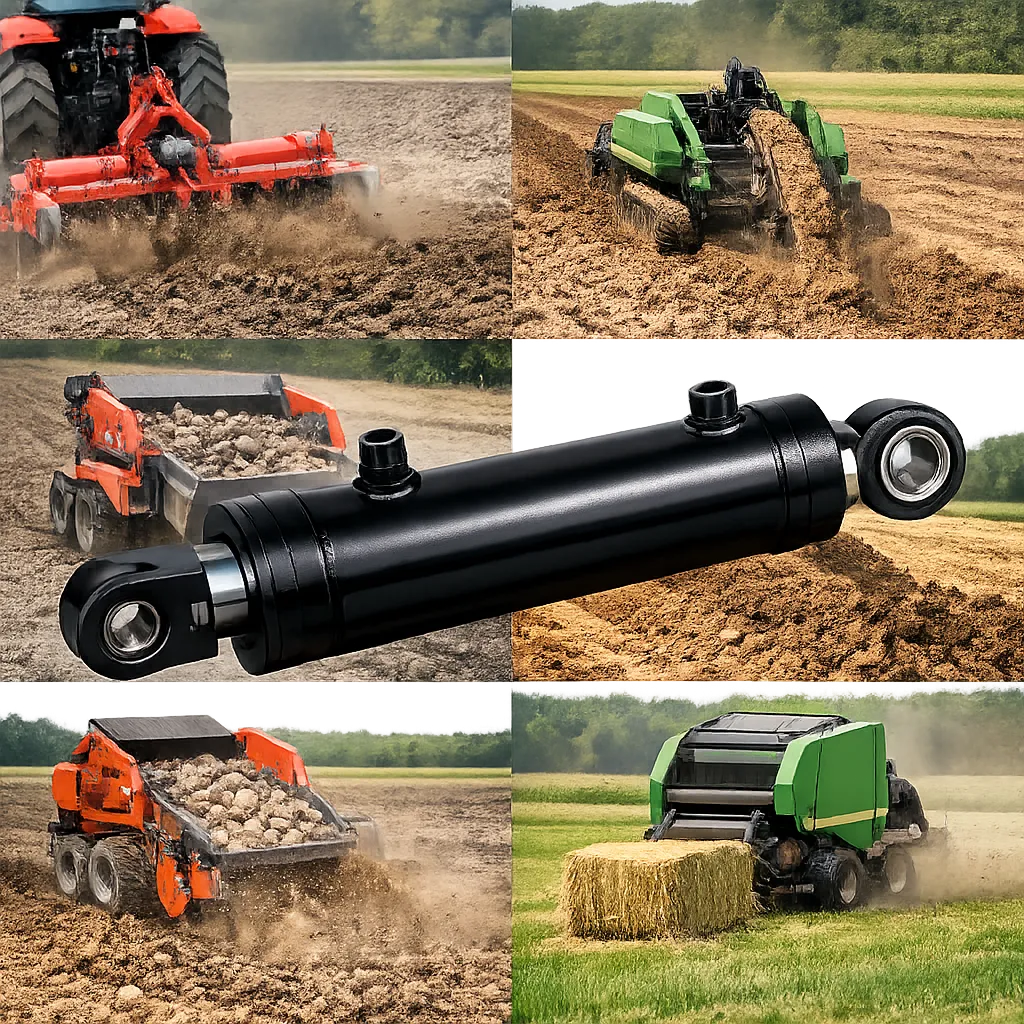
As a highly specialized hydraulic cylinder manufacturer with decades of advanced fluid power experience, we have engineered a permanent mechanical solution to this industry-wide agricultural vulnerability. Our custom Turnover Locking Hydraulic Cylinder integrates an advanced pilot-operated check valve directly into the barrel architecture. This creates an impenetrable hydrostatic barrier that physically stops internal leakage at the source, guaranteeing absolute position retention under extreme shock loads. Upgrading your heavy implements with our premium hydraulic parts directly eliminates the operational paralysis associated with implement drift. It completely removes the continuous financial drain and lost productivity of constantly fixing hydraulic cylinders during the intensely narrow planting windows of the spring season.
Comprehensive Technical Specifications
Flawless mechanical integration into an existing tractor implement necessitates exact dimensional tolerancing and applied material science. The comprehensive matrix below details the precise engineering parameters and optimized structural configurations of our severe-duty tillage locking actuators. We build these specific components to strict heavy-industrial standards to ensure field survival. To explore our broader manufacturing capabilities across various heavy mobile equipment, we invite procurement professionals to review our complete catalog defining our hydraulic cylinder manufacturing scope.
| System Parameter | Engineering Specification & Scope | Design & Operational Rationale |
|---|---|---|
| Target Industry | Agriculture / Heavy Commercial Farming | Engineered explicitly for high-vibration off-highway field environments. |
| Equipment Category | Tillage Machinery | Built to endure extreme dynamic structural loading from compacted soil. |
| Subsystem Integration | Reversible Plow Locking Mechanism | Secures the massive turning geometry and holds the implement rigid. |
| Cylinder Designation | Turnover Locking Cylinder | The highly specific actuator responsible for mechanical immobility. |
| Action Mode | Double Acting | Requires active pressurized fluid for both positive engagement and forced release. |
| Structure Type | Piston Cylinder | Utilizes a precision CNC honed bore for mathematically perfect seal compression. |
| Manufacturing Structure | Heavy-Duty Welded Type | Completely eliminates the joint weeping associated with standard tie-rod designs. |
| Core Material System | Q345D Low-Alloy Structural Steel | Provides exceptional yield strength and critical low-temperature impact toughness. |
| Surface Treatment | Thick Micro-cracked Chrome Plating | Forms an impenetrable metallurgical barrier against pitting and chemical corrosion. |
| Environmental Grade | Open-air Continuous Exposure | Fully sealed against abrasive airborne dust, deep muddy water, and intense UV rays. |
| Working Condition Feature | Locking the turnover position | Must hold massive static loads completely rigid without a single millimeter of drift. |
| Typical Failure Mode | Internal leakage causing lock failure | Fluid bypassing worn seals or tractor valves leads to immediate loss of mechanical hold. |
| Recommended Configuration | Locking cylinder with hydraulic check valve + high-reliability sealing | The definitive engineering architecture to entirely prevent fluid bypass and secure the load. |
Operational Fluid Dynamics: Achieving the Hydrostatic Lock
To comprehend why this specific component excels in the field where others fail, one must understand the precise translation of fluid power occurring inside the steel barrel. This actuator functions strictly as a double acting hydraulic cylinder. Unlike gravity-return lifting systems, it utilizes highly pressurized fluid from the tractor’s auxiliary pump to actively drive both the mechanical extension and the forceful retraction strokes. However, simply pushing and pulling a steel locking pin is entirely insufficient for a heavy locking mechanism. Standard directional control valves located inside the tractor cabin inherently possess minute internal metal-to-metal clearances between their spools and cast housings. Under the immense back-pressure generated by a heavy plow frame pulling through rocky dirt, hydraulic fluid will slowly seep backwards through these valve clearances, allowing the cylinder rod to retract slightly. This slow, continuous retraction is the absolute mechanical root cause of implement drift.
To permanently neutralize this systemic hydraulic flaw, our Turnover Locking Cylinder integrates a sophisticated hydraulic pilot-operated check valve (frequently referred to as a PO check valve) directly into its fluid circuitry. When the operator shifts the lever to lock the plow into its working position, pressurized fluid flows seamlessly through the check valve and floods into the cap end (the base) of the cylinder barrel. This fluid acts uniformly against the surface area of the internal hydraulic cylinder piston, generating massive hydrostatic force to drive the rod outward and tightly engage the mechanical locking wedge on the implement’s rotation frame.
The critical engineering advantage occurs the precise millisecond the operator returns the cabin control lever to the neutral position. The integrated pilot check valve instantly snaps tightly shut against a hardened steel seat. It physically traps the high-pressure fluid directly inside the cap end of the cylinder barrel. Because hydraulic oil is an incompressible medium, the cylinder rod is now absolutely, rigidly locked in place. Even if the plow violently strikes a subterranean boulder—generating a massive kinetic pressure spike inside the fluid chamber—the valve completely prevents the fluid from escaping back up the long flexible hoses. The implement simply cannot drift. To release the mechanical lock and initiate a new turning sequence, the operator applies fluid pressure to the rod-end port. This pressure begins to retract the rod, but simultaneously routes a hydraulic pilot signal through internal machining to the check valve, forcibly pushing the poppet open and allowing the trapped fluid to safely vent back to the tractor’s reservoir.
Direct OEM Replacement and Heavy Fleet Upgrades
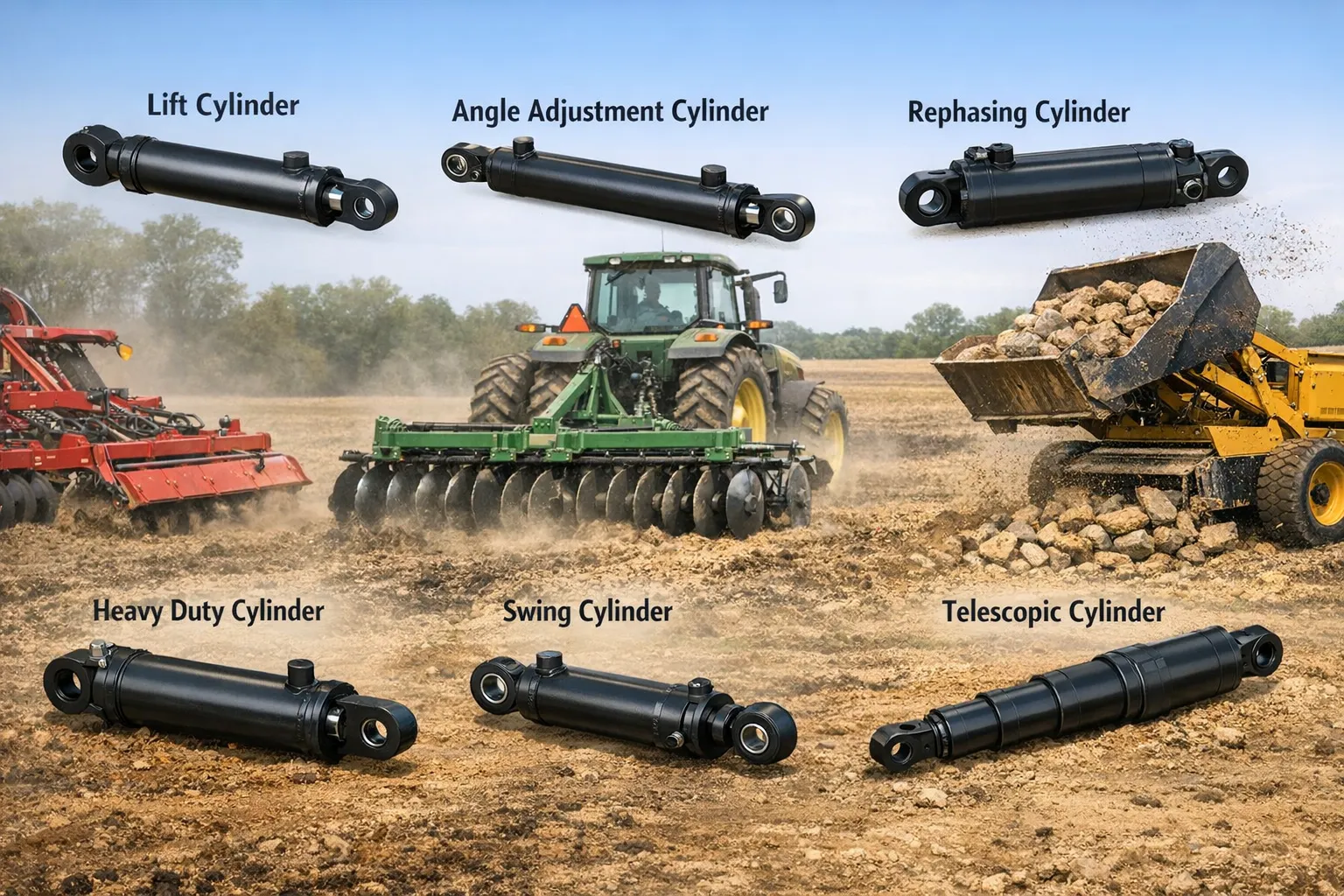
Large-scale commercial agricultural operations cannot afford to have expensive tractors sitting idle while waiting weeks for imported original equipment components to clear customs. We precision-engineer our aftermarket Turnover Locking Hydraulic Cylinder models to act as rapid, direct mechanical upgrades for the world’s leading tillage brands. Our manufacturing processes ensure that the pin-hole diameters, retracted closed lengths, extended stroke dimensions, and port thread sizing exactly match your existing machinery’s geometry, allowing for installation using standard hand tools.
We consistently provide highly durable replacements for complex locking mechanisms on equipment originally manufactured by Lemken, Kverneland, Kuhn, Amazone, Gregoire Besson, and implements pulled by heavy tractors from LS Mtron, TYM, and Daedong. (Please be advised: The inclusion of these original equipment manufacturer brand names is strictly for the purpose of assisting fleet equipment managers in cross-referencing dimensional compatibility and structural application intent. We are an independent hydraulic cylinder manufacturer and do not claim any trademark affiliation, sponsorship, or endorsement by these corporate entities.)
By retrofitting your reversible plows with our premium hydraulic rams, you effectively bypass inflated dealership parts pricing and permanently resolve the chronic internal leakage issues inherent in standard factory designs, drastically reducing your lifetime hydraulic cylinder price overhead.
Core Metallurgical and Technical Advantages
Transforming a basic fluid actuator into a highly specialized component capable of guaranteeing absolute mechanical immobility in severe farming environments requires advanced metallurgy and precise tribological engineering. The following highly specific technical advantages define exactly why our units outlast and outperform generic aftermarket alternatives:
1. Absolute Zero-Drift Pilot Valve Integration
We refuse to rely on aging tractor spool valves to hold the implement load. By integrating a precision-ground, hardened steel pilot-operated check valve directly into the hydraulic cylinder components port block, we establish a localized hydrostatic lock. This guarantees zero fluid bypass, completely eliminating implement drift regardless of how long the plow is held in the locked position during transit or deep plowing.
2. Extreme High-Reliability Sealing Matrix
A holding valve is completely useless if the hydraulic fluid bypasses the internal piston. Standard nitrile seals quickly suffer from extrusion and nibbling under high static holding pressures. We equip our internal hydraulic cylinder piston with an advanced composite sealing matrix, utilizing aggressive polyurethane dynamic seals backed by high-strength PTFE-bronze guide bands to prevent metal-to-metal scoring against the honed barrel.
3. Q345D Structural Metallurgy
Agricultural equipment frequently begins heavy soil preparation during the freezing early days of spring. Standard carbon steels become highly brittle at low temperatures and can suffer catastrophic weld failure under dynamic shock loads. We manufacture all load-bearing structural components from Q345D low-alloy steel, providing exceptional yield strength and superior low-temperature impact toughness to prevent brittle fracturing.
4. Monolithic Welded Architecture
Generic tie-rod cylinders inherently flex, stretch, and twist under the violent vibrations of field tillage, eventually leading to joint weeping and structural failure. Our heavy-duty units utilize a fully automated, deep-penetration submerged arc welding process to fuse the end caps to the barrel. This creates an unyielding, monolithic pressure vessel completely immune to high-cycle fatigue cracking.
5. Open-Air Environmental Defenses
The exposed rod of a locking mechanism is constantly subjected to abrasive silica dust, muddy water, and highly corrosive chemical fertilizers. We apply a strictly controlled, thick layer (25+ micrometers) of micro-cracked hard chrome plating to the induction-hardened rod. This surface armor rejects physical pitting, while a heavy-duty polyurethane scraper ring physically shears mud away before it can enter the sealing gland.
6. Precision CNC Surface Honing
The functional lifespan of the internal sealing profile is directly dictated by the friction generated against the internal barrel wall. Our manufacturing facility utilizes advanced automated honing machines to achieve a mirror-like internal surface finish of Ra 0.2 to 0.4 micrometers. This exact tolerance significantly reduces thermal friction, preventing premature seal degradation and ensuring lifelong locking reliability without needing continuous hydraulic cylinder repair.
Autonomous Manufacturing and Rigorous Quality Control
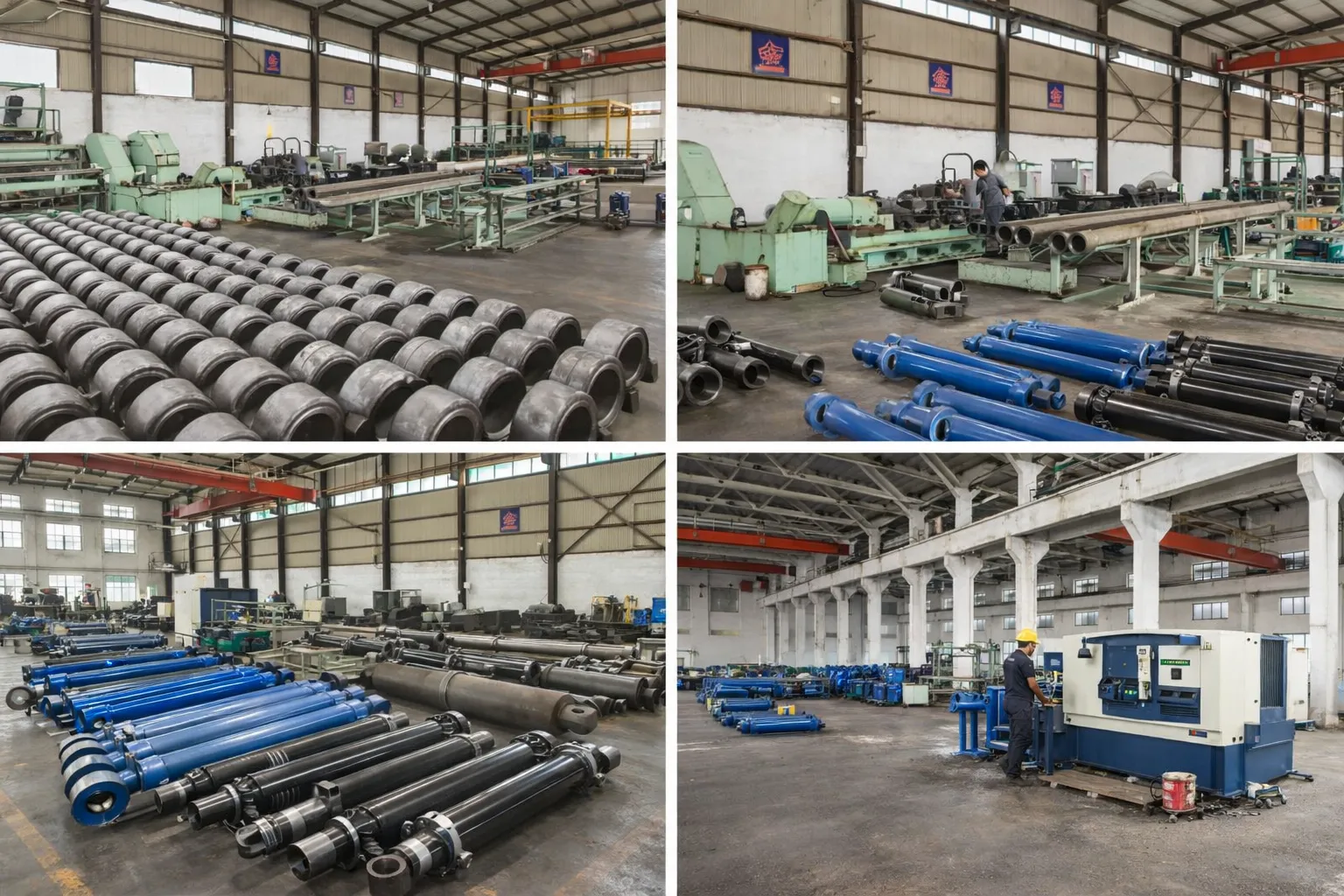
True mechanical reliability cannot be purchased from a catalog of generic parts; it must be systematically manufactured into the component from the raw material level upwards. Operating a heavily invested, vertically integrated manufacturing facility grants us absolute sovereign control over the entire production lifecycle. We do not just assemble hydraulic parts; we sculpt them from high-grade raw steel. When the Q345D steel billets arrive at our facility, they undergo immediate material spectrometry and ultrasonic scanning (NDT) to verify chemical composition and detect any sub-surface metallurgical imperfections that could compromise the barrel under pressure.
The physical architecture of the cylinder is created utilizing high-precision multi-axis CNC turning and milling centers. This robotic automation allows us to consistently achieve incredibly tight diametrical tolerances on the piston grooves and gland housings, guaranteeing mathematically perfect seal compression. The welding phase is equally critical; we utilize automated robotic welding arms to apply continuous, deep-penetration seams, completely eliminating the inconsistencies of manual welding. Post-weld, all load-bearing structural joints undergo further ultrasonic testing to confirm the total absence of internal porosity.
Before any Turnover Locking Cylinder is allowed to leave our loading docks, it faces an uncompromising 100% factory pressure testing regimen. The units are mounted to highly calibrated test benches and subjected to hydraulic pressures reaching 1.5 times their maximum rated working capacity. The most critical phase of this test is the static holding protocol: we measure for absolute zero pressure drop over an extended period to mathematically verify the perfection of the internal seals and the integrated pilot-operated check valve. Finally, a unique alphanumeric serial number is laser-etched directly into the steel barrel, providing lifetime material traceability for global fleet managers.
Cross-Industry Adaptability of Hydrostatic Holding Technology
While the mounting geometry of this specific locking variation is highly tailored for agricultural tillage machinery, the foundational fluid power engineering—specifically the integration of flawless pilot-operated check valves and robust Q345D steel—is universally demanded across severe-duty industrial landscapes. The capacity to securely hold massive static loads without drifting is a critical safety requirement worldwide.
- Heavy Earthmoving: The exact same zero-leakage holding technology is essential for stabilizing outrigger arms and locking safety mechanisms within the construction machinery industry, preventing dangerous crane or excavator tipping.
- Extreme Thermal Environments: The high-temperature resilience of our specialized PTFE sealing profiles is highly applicable to equipment operating near molten materials or actuating heavy furnace doors in the metallurgical and iron industry.
- Subterranean Extraction: The unyielding impact resistance provided by our heavy-duty welded structures makes our fluid power systems the optimal choice for rock-crushing and material handling machinery utilized deep within the mining industry.
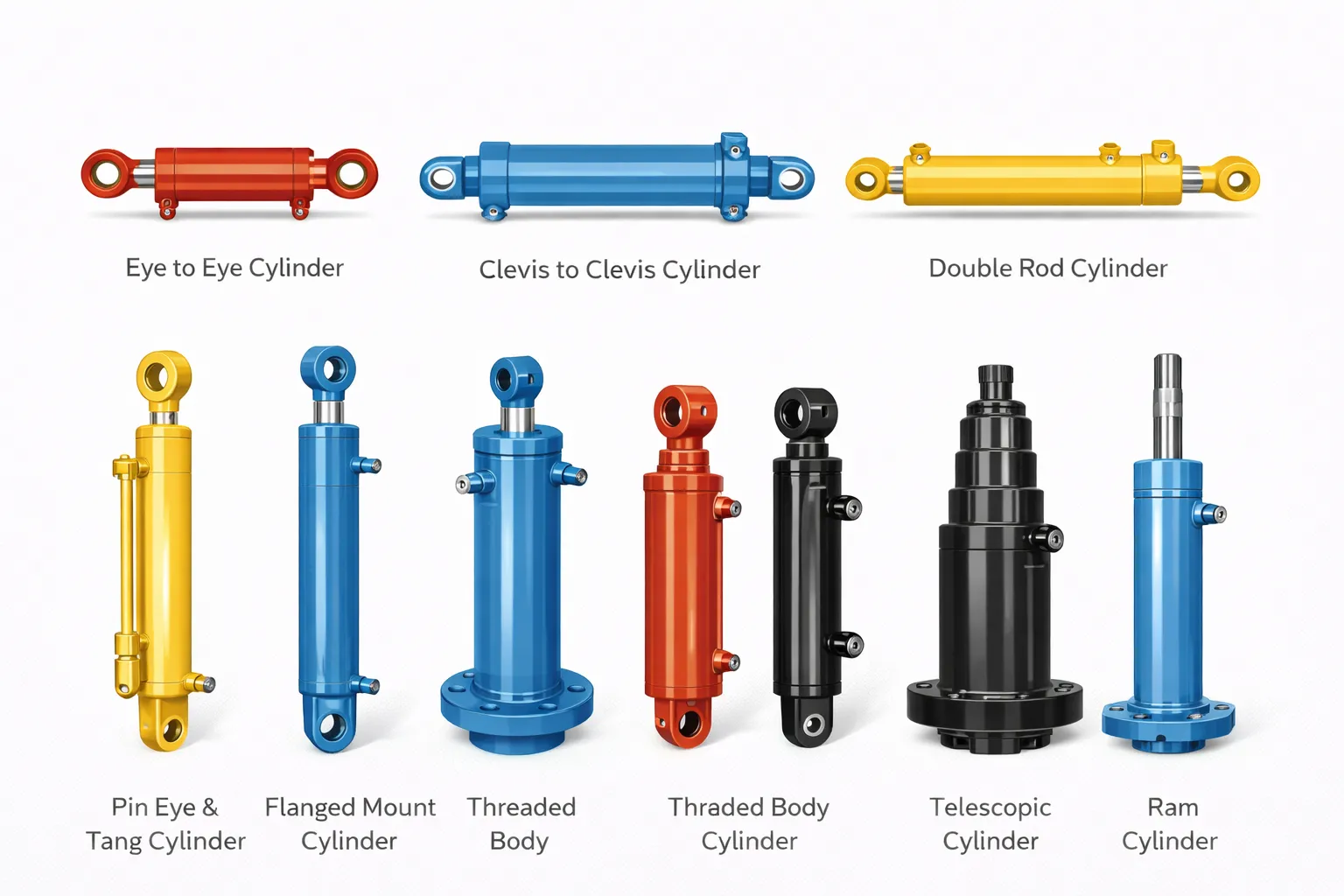
Comparative Analysis: Standard Commercial vs. High-Performance
Procurement officers often focus solely on the initial hydraulic cylinder price. However, evaluating true industrial value requires analyzing the operational lifespan and the avoidance of massively expensive mid-season downtime. The matrix below distinctly illustrates the profound engineering disparities between standard aftermarket replacements and our specialized holding components.
| Critical Engineering Feature | Standard Agricultural Cylinder | Our Turnover Locking Cylinder |
|---|---|---|
| Holding Stability (Drift Resistance) | Relies heavily on tractor valves; highly prone to fluid seepage and gradual implement drifting during plowing operation. | Integrated Pilot-Operated Check Valve; creates an absolute, impenetrable hydrostatic lock. Zero drift guaranteed. |
| Internal Leakage Defense | Basic nitrile seals; suffer rapid extrusion and failure under high static pressure spikes from hitting rocks. | Advanced composite polyurethane matrix with PTFE wear rings; guaranteed seal integrity under extreme pressure. |
| Structural Material & Integrity | Common carbon steel; susceptible to brittle weld fractures during early-spring freezing temperatures. | Q345D High-Strength Low-Alloy steel; provides immense yield strength and flawless low-temperature impact toughness. |
| Surface Protection | Thin commercial flash chrome; degrades rapidly when exposed to abrasive dust and acidic fertilizers. | 25+ μm thick micro-cracked hard chrome; forms a highly durable armor against pitting and chemical corrosion. |
| Total Cost of Ownership | Deceptively high; requires continuous mid-season rebuilding, massive oil loss, and causes severe operational delays. | Exceptionally low; engineered for years of maintenance-free, continuous holding performance in severe conditions. |
Proven Global Field Performance
The theoretical excellence of our metallurgy and sealing systems is definitively validated in the mud, rock, and grueling realities of commercial farming. The following case studies detail how our fluid power solutions have systematically resolved chronic mechanical failures for major agricultural partners across Asia.
Case Study 1: Eradicating Implement Drift for a South Korean Agricultural Cooperative
Location & Client: Gyeonggi-do, South Korea — A massive regional agricultural cooperative managing a fleet of high-horsepower tractors equipped with heavy European reversible plows.
The Challenge: During the aggressive spring plowing season of 2024, the cooperative experienced severe issues with moldboards drifting out of alignment in heavy, dense clay. The standard OEM locking cylinders were suffering from internal fluid bypass due to rapid seal degradation under the heavy draft load, causing the plows to swing freely and entirely destroying the precise depth control required for optimal planting.
Contact & Solution: The head fleet technician located our engineering capabilities through an organic search specifically targeting advanced solutions for hydraulic cylinder repair and drift prevention. We immediately supplied a fleet-wide retrofit batch of our Turnover Locking Hydraulic Cylinder, explicitly outfitted with our integrated pilot-operated holding valves and heavy-duty composite seals.
The Result: Following installation, the implement drift rate dropped to absolute zero. The plows remained rigidly locked regardless of vibration or subterranean rock strikes.
Case Study 2: Conquering Cold Weather Fracture in Hokkaido, Japan
Location & Client: Hokkaido, Japan — An independent, large-scale commercial wheat and potato farming enterprise operating in severe sub-zero conditions and abrasive volcanic ash soils.
The Challenge: Operations frequently commenced while the soil was still partially frozen. The violent shock of the heavy plow ripping through frosty earth transferred immense stress to the locking mechanism. Standard carbon steel lift cylinder models were suffering from catastrophic, brittle weld fractures at the base cap mounting points.
Contact & Solution: The owner contacted us directly via our website portal. Our engineering team prescribed our heavy-duty welded models constructed entirely from Q345D low-alloy structural steel, capitalizing on its exceptional low-temperature impact toughness to absorb the shock.
The Result: Structural failures were completely eradicated. The machinery survived two of the harshest early-spring frost periods on record without a single fractured weld or leaking port.
Case Study 3: Supplying Reliable Components to a Taiwan Refurbishment Center
Location & Client: Taichung, Taiwan — A specialized agricultural implement refurbishment and modification center serving the broader Southeast Asian agricultural market.
The Challenge: The center was struggling to source dependable holding mechanisms for the custom reversible plows they were rebuilding. Generic aftermarket components lacked integrated pilot valves and featured thin chrome, leading to unacceptable warranty claims from end-users experiencing implement drift and rapid rod rusting in the humid climate.
Contact & Solution: Searching the global trade directory for a highly capable hydraulic cylinder manufacturer to supply reliable hydraulic parts, their procurement officer connected with us. We established a bulk-supply protocol, providing dimensionally perfect, high-performance units featuring our 25-micron hard chrome rods and integrated hydrostatic holding valves.
The Result: The refurbishment center elevated the technical quality of their product line, virtually eliminating field warranty claims related to hydraulic drifting and rod corrosion.
Frequently Asked Questions
We prioritize engineering transparency. To assist agricultural fleet operators, OEM designers, and procurement managers in qualifying our heavy-duty fluid power solutions, we have detailed comprehensive answers to the most common technical inquiries regarding our holding mechanisms.
1. Why does my heavy reversible plow slowly drift out of its locked position while plowing?
Implement drift is caused exclusively by fluid bypass. High-pressure hydraulic oil is either leaking past worn internal hydraulic cylinder piston seals within the barrel, or it is seeping backwards through the minute internal clearances of the tractor’s directional control valve. Our specialized units solve this completely by incorporating an integrated pilot-operated check valve that physically traps the fluid directly at the cylinder port, creating an unyielding hydrostatic lock.
2. Can these locking units operate as a single acting system?
No. The physical kinematics of rotating and securing a massive moldboard assembly require active hydraulic force for both the engagement and the forced release of the locking wedge. Consequently, these actuators are strictly engineered as a double acting hydraulic cylinder, utilizing pressurized fluid from the tractor to actively drive the rod in both directions to engage and disengage the locking mechanism.
3. Why do you insist on utilizing Q345D steel instead of standard structural carbon tubing?
The structural integrity of the cylinder must endure violent shock loads when the plow strikes underground rocks. Q345D is a specialized high-strength low-alloy steel that possesses a significantly higher yield strength than standard carbon steel, preventing the barrel from swelling. More importantly, it maintains exceptional impact toughness at freezing temperatures, effectively neutralizing the risk of brittle weld fracturing during early-spring operations.
4. How does your internal design defend against the abrasive dust and mud of an open-air environment?
Protecting the internal hydraulic cylinder components requires a robust external defense. We achieve this by plating the rod with a thick, 25-micron layer of micro-cracked hard chrome, which resists pitting from flying stones. Additionally, the gland is fitted with an aggressive, dual-lip polyurethane mud scraper ring that physically shears dried clay, ice, and silica dust off the rod before it can retract into the barrel and destroy the primary fluid seals.
5. Is your specific hydraulic cylinder price highly competitive for bulk commercial fleet upgrades?
Absolutely. Because you are conducting business directly with the originating manufacturing facility, you are entirely bypassing the heavy markups imposed by distributors and dealership parts counters. You are investing in direct-from-factory, industrial-grade Q345D metallurgy, precision pilot valve integration, and premium composite sealing technology, significantly lowering your long-term total cost of ownership by eliminating replacement cycles.
6. What are the standard lead times for manufacturing and exporting a bulk order to South Korea or Japan?
By maintaining a heavily stocked, vertically integrated inventory of raw steel billets and machined valve components, our standard manufacturing, robotic welding, and pressure testing cycles typically require 25 to 35 days for bulk agricultural orders. Subsequent ocean freight logistics from our ports to major destinations in South Korea, Japan, or Taiwan generally add 5 to 10 days. We are highly proficient at synchronizing our production schedules to accommodate your seasonal planting deadlines.
7. Are custom stroke lengths, pin sizes, and specific mounting geometries available?
Yes. While we stock standard configurations that perfectly match global OEM dimensions, custom engineering is a foundational aspect of our operations. Our technical department can rapidly adjust the bore diameter, specific stroke length, closed pin-to-pin dimensions, and end connections (such as heavy-duty spherical bearings or clevis mounts) to precisely match the unique kinematics of your specific implement frame.
Secure Your Implement Frame and Eliminate Equipment Drift
The mechanical reliability and uniform yield of your agricultural operations should never be compromised by leaking, drifting equipment. By upgrading your heavy tillage machinery with our heavily armored, precision-engineered Turnover Locking Cylinder, you are definitively ensuring that your implements will hold firm through the most aggressive soils and the harshest weather conditions without losing a fraction of a degree in angle.
Editor: Cxm