Product Overview & Core Industrial Value
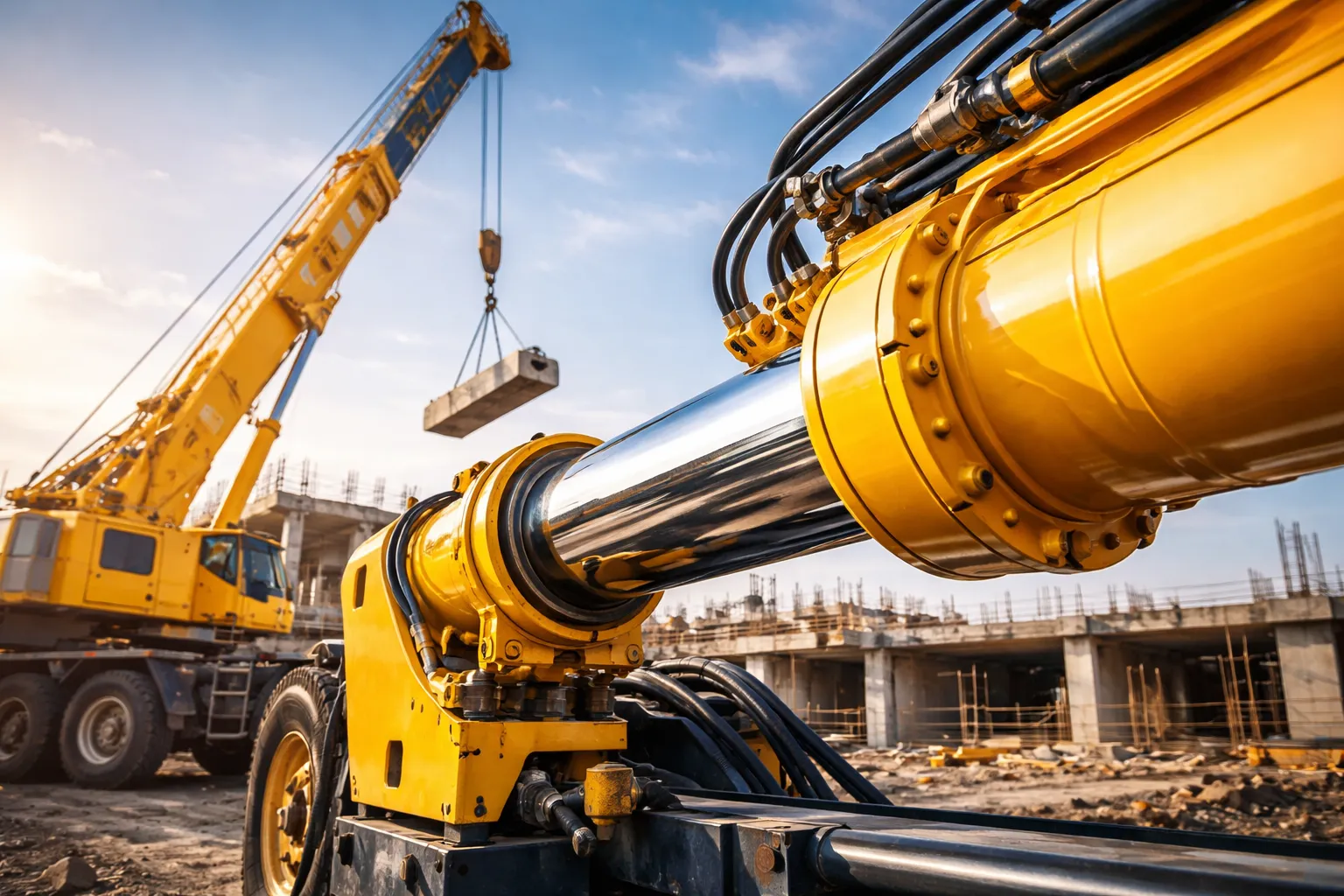
In the highly demanding sector of heavy infrastructure and large-scale commercial lifting, the operational capacity and safety margins of a crawler crane are dictated entirely by its ability to manage its center of gravity. As these massive machines elevate multi-ton payloads at extended forward radiuses, they must continuously shift their rear counterweight assemblies to counterbalance the extreme overturning moment. This dynamic ballast shifting action relies fundamentally on the structural integrity and fluid dynamics of the counterweight sliding cylinder. When manipulating tens of thousands of kilograms of iron horizontally across the crane’s rear chassis, standard fluid power components are inherently inadequate. They succumb rapidly to the severe eccentric load profiles generated during these operations, leading to catastrophic equipment failure and unacceptable safety hazards on the job site.
Operating extensively across the most demanding construction environments in East Asia, our engineering division has meticulously analyzed the precise mechanical failure modes of counterweight systems. The overwhelming vulnerability is rod eccentric wear, which occurs when the exceptionally long sliding stroke creates a lateral cantilever effect, forcing the internal components to grind asymmetrically against the barrel wall. As a deeply experienced hydraulic cylinder manufacturer, we engineered a definitive solution to this specific industry-wide vulnerability. We developed our premium counterweight sliding hydraulic cylinder by integrating an advanced wide guide architecture that completely absorbs lateral deflection, guaranteeing absolute linear precision and ensuring the high-pressure seals remain perfectly intact regardless of the side-load applied.
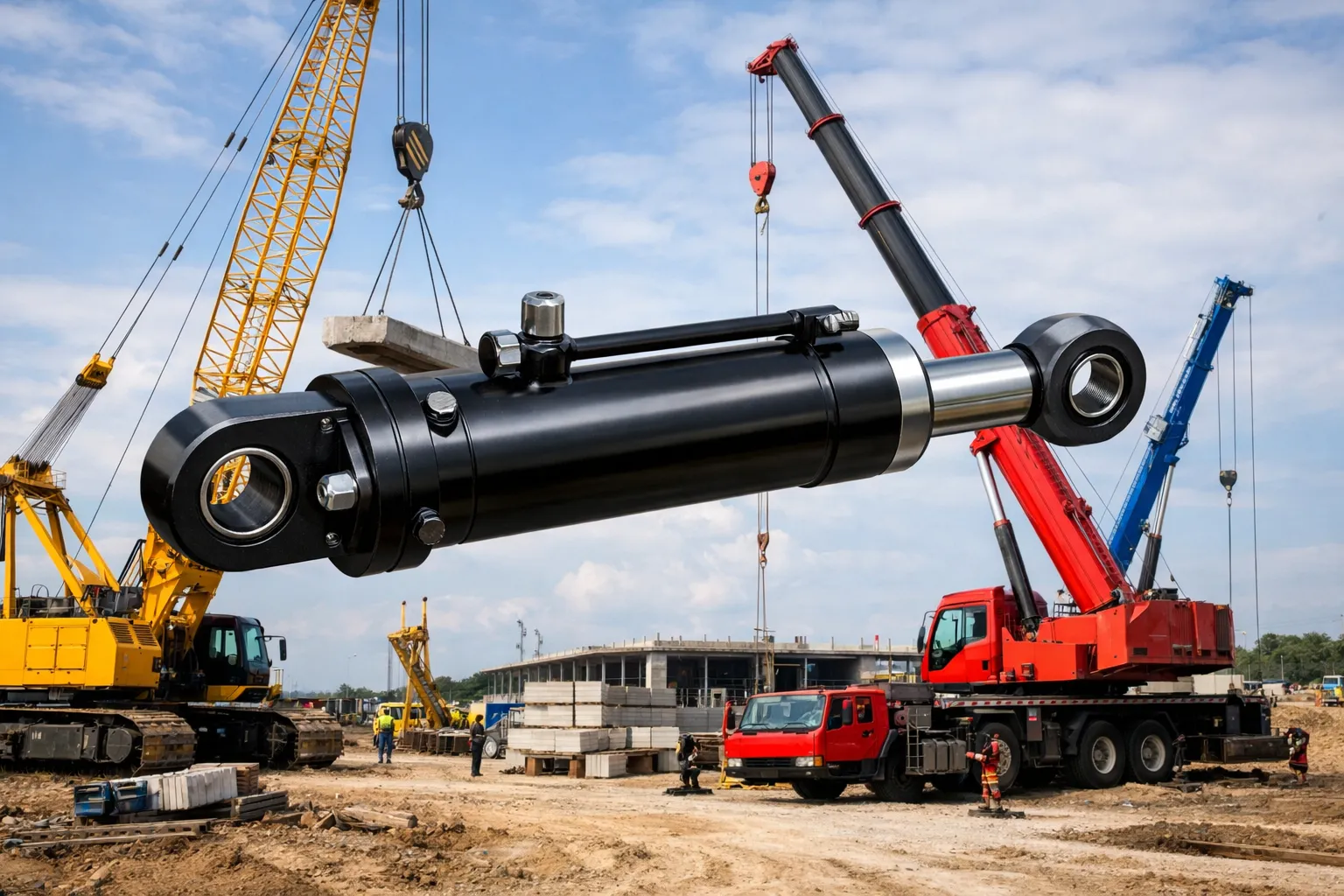
Our exclusive product positioning is focused strictly on maximizing heavy-duty B2B operational uptime. By utilizing specialized, high-yield alloy steel and implementing a monolithic welded manufacturing structure, our specialized hydraulic cylinder ensures that your multi-million dollar crawler cranes remain functional, safe, and highly profitable. We effectively eliminate the terrifying risks of counterbalance jamming, sudden seal extrusion, and the paralyzing downtime associated with constant hydraulic cylinder repair. For procurement directors and fleet maintenance managers, this translates to an optimized total cost of ownership and the supreme confidence required to execute the most complex, high-stakes lifting maneuvers across South Korea and the wider Asian market.
Technical Parameters & Customization Scope
Flawless mechanical integration into complex heavy machinery requires absolute transparency in technical specifications. The comprehensive data matrix below delineates the foundational architecture, advanced material selections, and specific performance metrics of our counterweight sliding series. Every variable has been mathematically calculated to withstand the massive inertial forces of heavy crane ballast systems.
| Parameter Category | Detailed Specification / Engineering Data |
|---|---|
| Target Industry | Construction Machinery / Heavy Infrastructure Lifting |
| Equipment Category | Crawler Crane (Medium to High Tonnage Capacity) |
| Subsystem / Mechanical Action | Counterweight Moving / Dynamic Radius Adjustment |
| Product Designation | Counterweight Sliding Cylinder |
| Action Method | Double acting hydraulic cylinder (Powered push and pull) |
| Internal Structure Type | Piston Type internal architecture with enhanced load bearing |
| Manufacturing Structure | Heavy-Duty Welded Assembly (Eliminates tie-rod tension failures) |
| Core Material System | High-Yield Alloy Steel Matrix |
| Surface Treatment / Plating | Advanced Nickel Plating (Exceptional marine-grade corrosion resistance) |
| Working Environment Rating | Severe Eccentric Load / High Dust / Saline Exposure |
| Operational Work Condition | Long Sliding Stroke under massive continuous horizontal friction |
| Typical Failure Mode Prevented | Rod Eccentric Wear (Uneven Wear), Structural Buckling, Seal Blowout |
| Recommended Configuration | Wide Guide System (Maximizes internal bearing support) |
Advanced Fluid Dynamics & Working Principle
To fully comprehend the operational superiority of our customized actuation technology, one must analyze the precise fluid dynamics driving the system. The counterweight sliding hydraulic cylinder functions fundamentally as a high-pressure double acting hydraulic cylinder. Unlike simpler configurations that rely on gravity or external mechanical springs to return to a neutral position, this system requires absolute, active control over massive tonnage in two separate linear directions. When the crane’s onboard computer dictates that the ballast must be moved outward to safely increase the load moment capacity, the main hydraulic pump routes high-pressure fluid directly into the cap end (blind end) of the heavy-wall barrel.
This pressurized fluid forcefully acts against the total surface area of the primary hydraulic cylinder piston, generating immense extending thrust. The alloy steel rod physically pushes the heavy cast-iron or concrete trays along the greased horizontal tracks of the crane’s upper carriage. However, during this immensely long sliding stroke, friction from the tracks and minor misalignments in the crane’s chassis geometry induce severe eccentric loading. The gravitational and kinetic forces are actively attempting to bend the rod downwards and sideways. If the rod bends even slightly off its linear axis, it rubs aggressively against the internal metal gland, causing rapid rod eccentric wear.
Our advanced hydraulic rams neutralize this persistent threat through highly sophisticated internal geometry. By integrating an ultra-wide guide wearing band made from self-lubricating specialized composites, we dramatically increase the bearing surface area inside the cylinder head. When off-center loads attempt to push the rod sideways, this wide guide disperses the lateral pressure perfectly evenly across the heavy-duty barrel, preventing any metal-to-metal contact between the rod and the gland. Furthermore, when the operation requires the ballast to be pulled back closer to the center of rotation, pressurized fluid is instantly redirected into the rod side of the cylinder. The dual-acting valving ensures the retraction is smooth, firmly locked, and completely controlled, heavily stabilizing the entire crawler crane architecture.
Flawless OEM Equipment Integration & Modernization
Within the highly demanding heavy construction leasing sector, halting operations to await excessively delayed factory components from an original equipment manufacturer translates directly into severe financial penalties. We offer a far superior, rapidly deployable alternative. As an independent fluid power manufacturer, we provide heavily reinforced hydraulic parts that function as direct, exact drop-in replacements for a wide spectrum of globally renowned heavy machinery brands. Our engineering schematics accurately match the exact mounting configurations originally utilized by major manufacturers such as Liebherr, Manitowoc, Demag, Kobelco, Hitachi-Sumitomo, Sany, XCMG, and Zoomlion.
By ensuring exact pin-to-pin closed dimensions, identical trunnion mount spacing, precise long sliding stroke parameters, and fully compatible port threadings, we guarantee a completely seamless mechanical integration. Your site mechanics can easily install our enhanced counterweight sliding cylinder without resorting to any structural welding, custom adapter fabrication, or hazardous chassis modification. By choosing our drop-in solutions from our comprehensive hydraulic cylinder catalog, you bypass agonizing OEM lead times while securing a structurally superior product at a highly economical and transparent hydraulic cylinder price.
Disclaimer Notice: The identification and mention of specific third-party machinery brands and crawler crane models within our technical documentation is solely for the explicit purpose of communicating dimensional compatibility and assisting B2B procurement engineers in accurate component selection. We act globally as a completely independent manufacturing entity. The inclusion of these corporate names does not imply any trademark infringement, official affiliation, or endorsement by the respective original trademark holders.
Five Core Technical & Engineering Advantages
Procuring reliable fluid power systems goes far beyond simply reviewing a basic dimensional drawing. The true operational lifespan of a counterweight sliding cylinder is dictated entirely by its internal metallurgy and calculated tribology. Below are the five definitive engineering advantages that separate our heavy-duty cylinders from generic commercial alternatives, guaranteeing continuous operation under the harshest infrastructure conditions.
1. Extra-Wide Guide Architecture to Prevent Uneven Wear
The single most destructive factor in horizontal load pushing is off-center lateral stress. Standard commercial cylinders utilize narrow wear bands that quickly deform under extreme weight, causing the heavy rod to scrape violently against the gland housing. We specifically engineer our units with an exceptionally wide internal guide bearing system. This massively expanded surface area disperses all lateral forces evenly, keeping the rod perfectly centered during extremely long sliding strokes. This specific geometric modification entirely eliminates rod eccentric wear, preserving the internal seals and the outer plating indefinitely.
2. Premium Alloy Steel Structural Matrix
Dragging 150 tons of iron horizontally across a crane chassis requires immense linear strength. Standard carbon steel rods possess a significantly lower yield point, making them highly susceptible to microscopic bending and flexural fatigue. We exclusively utilize heavily forged, premium alloy steel for both the piston rod and the thickened main barrel. This specialized metallurgy delivers an exponentially higher tensile yield strength, ensuring the counterweight sliding hydraulic cylinder remains perfectly rigid, linear, and secure even during maximum extension under severe load vibrations.
3. Advanced Heavy Nickel Plating Process
Construction equipment frequently operates in highly corrosive environments, particularly around bustling maritime ports where salt spray aggressively attacks exposed metal. Conventional hard chrome plating inherently develops microscopic cracks during the standard electroplating process, allowing humidity to penetrate and rust the steel beneath. Our cylinders undergo an advanced chemical nickel plating process. This deposits a dense, entirely crack-free, highly ductile protective layer that completely isolates the alloy steel from the atmosphere, providing exceptional marine-grade longevity.
4. Monolithic Deep-Penetration Welded Construction
Vibration and sudden kinetic shock loads are constant on heavy machinery sites. Standard tie-rod style cylinders physically stretch under these intense pressure spikes, leading to immediate seal extrusion and fluid loss. We exclusively utilize a heavy-duty, monolithic welded construction. Automated submerged arc welding (SAW) fuses the heavy end caps and mounting trunnions directly into the thick-walled alloy barrel. This creates an unyielding pressure vessel capable of absorbing intense hydraulic shocks without any structural separation or weld fatigue cracking.
5. Ultra-Low Friction Composite Sealing Technology
Moving heavy ballast slowly and precisely requires impeccably smooth hydraulic actuation. Basic rubber elastomers generate high drag friction, causing an erratic stick-slip judder that shakes the entire crane structure. We integrate sophisticated composite seals manufactured from imported PTFE (Teflon) and high-density polyurethane. These specialized tribological materials maintain an ultra-low friction coefficient, drastically reducing internal hydraulic heat generation while allowing the operator to execute fluid, millimeter-accurate positioning of the heavy counterweights.
Uncompromising Manufacturing Craftsmanship & Quality Control
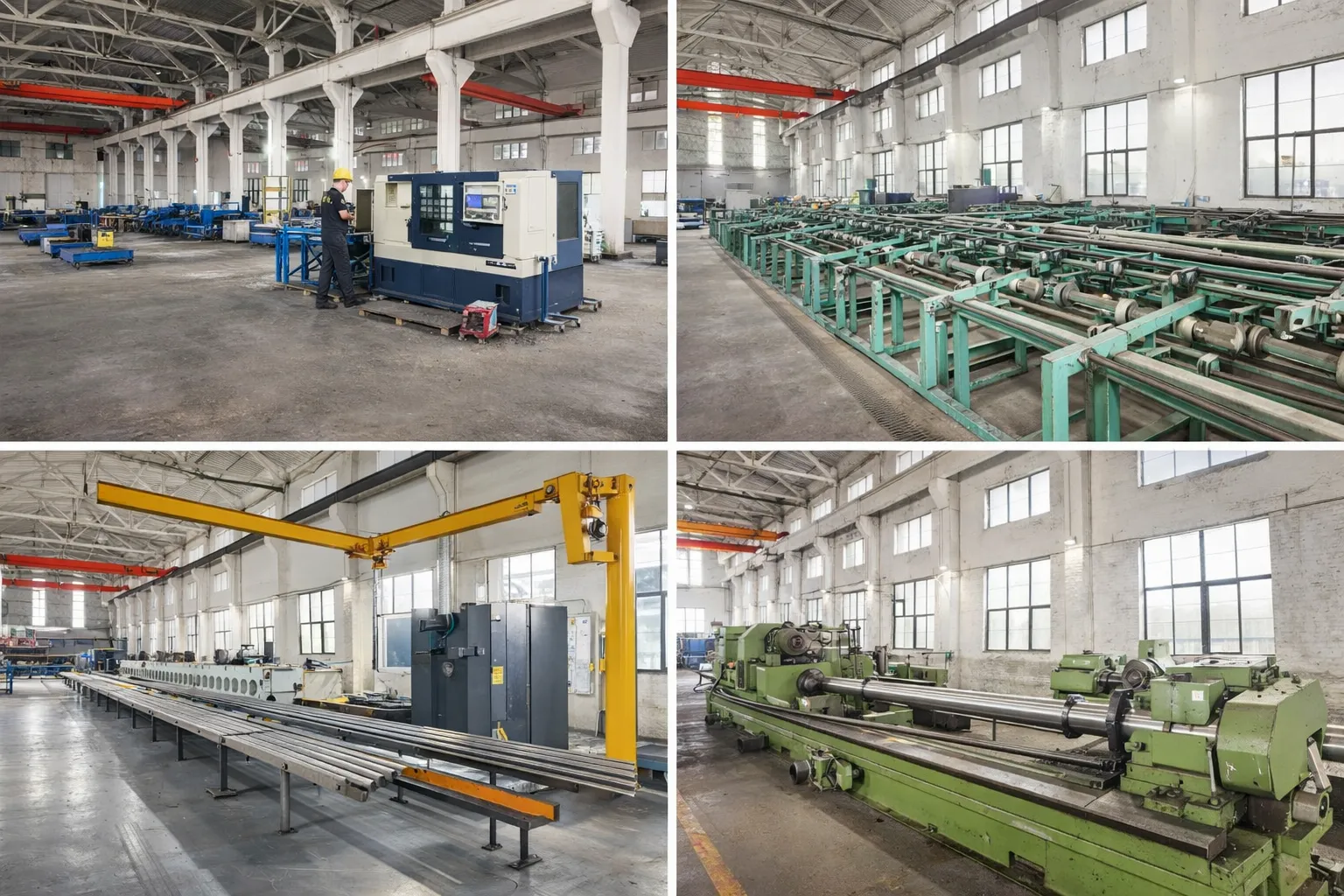
The structural integrity required to move heavy crane ballast safely cannot be merely inspected into a product after it is built; it must be scientifically manufactured into it from the very beginning. By operating a fully autonomous, vertically integrated production facility, we maintain absolute authority over every single phase of creation without relying on unverified third-party sub-assemblies. The process begins with rigorous ultrasonic testing (UT) of all incoming raw alloy steel billets, guaranteeing the complete absence of internal metallurgical voids, porosity, or dangerous stress inclusions. The internal bore of every cylinder barrel is processed via precision skiving and roller burnishing (SRB) CNC equipment, achieving an exceptionally smooth, mirror-like Ra 0.2µm surface finish. This meticulous internal processing is absolutely vital for maximizing the lifespan of the high-pressure piston seals during long, repetitive sliding strokes.
Our quality assurance protocols are absolute. We fundamentally reject statistical batch sampling, a flawed industry methodology where defective units can easily slip past inspection. Before receiving global shipping clearance, every single counterweight sliding cylinder must pass a punishing 100% individual hydrostatic factory testing regimen. Mounted to advanced computerized test benches, each unit is pressurized to 1.5 times its maximum rated working capacity. Our technicians meticulously monitor the system for zero external leakage, zero internal fluid bypass across the piston, and flawless directional control. Finally, a unique serial number is deeply laser-etched into the barrel, providing comprehensive manufacturing traceability—an invaluable asset for long-term fleet maintenance records or when eventually sourcing precise replacement hydraulic cylinder components years in the future.
Versatile Heavy Industrial Applications
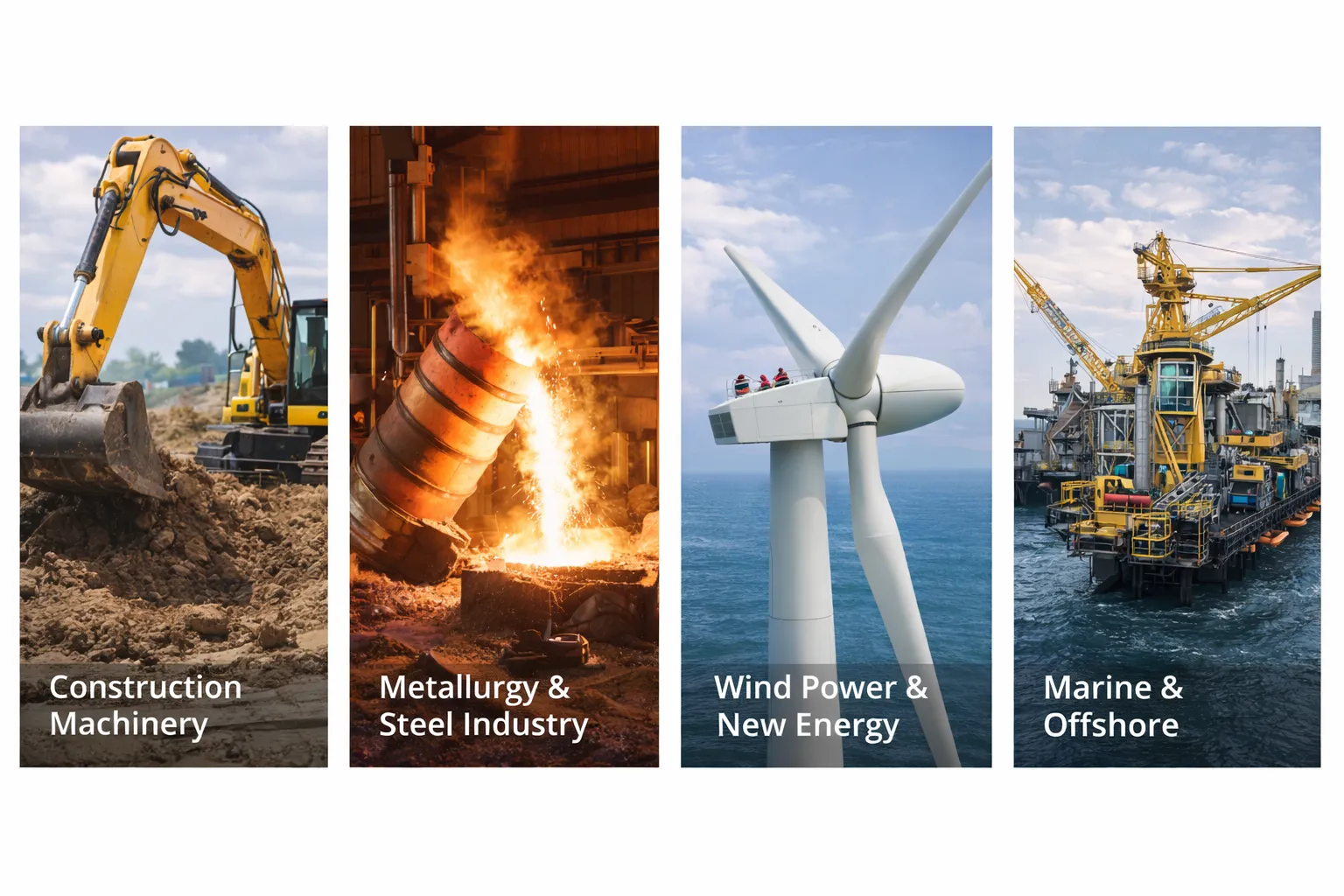
While this specific heavily-reinforced architecture is explicitly optimized to conquer the extreme lateral forces found in crawler crane ballast systems, its foundational durability and wide-guide technology make it highly sought after across numerous severe-duty industrial sectors. We encourage B2B procurement specialists to thoroughly review our extensive capabilities within the construction machinery industry and beyond.
Our specialized robust actuation components are actively deployed in:
- Heavy Earthmoving & Foundation Piling: Powering the high-stress boom, stick, and bucket articulation joints on large-tonnage mining excavators, heavy wheel loaders, and demanding foundation rotary piling rigs operating in severe eccentric load conditions.
- Metallurgy & High-Temperature Forging: Executing critical, heavy-load movements for steel mill ladles, continuous casting lines, and massive forging presses operating continuously in severe, seal-degrading radiant heat.
- Logistics & Automated Material Handling: Providing reliable boom extension and steering for heavy container reach stackers, automated straddle carriers, and large-scale ship-to-shore port gantry cranes exposed to severe salt spray.
- Plastics & Industrial Machinery: Delivering the immense, sustained locking tonnage required by heavy industrial injection molding machines without suffering from pressure drop during the long curing cycle.
- New Energy & Infrastructure Equipment: Driving highly precise blade pitch control mechanisms for offshore wind turbines and massive solar array tracking structures in remote, harsh environments.
- Custom & Specialized Engineering Scenarios: Supplying customized, high-pressure lift cylinder solutions for tunnel boring machines (TBM), deep-shaft underground mining equipment, and complex marine engineering platforms.
Direct Comparative Analysis: Standard vs. High-Performance
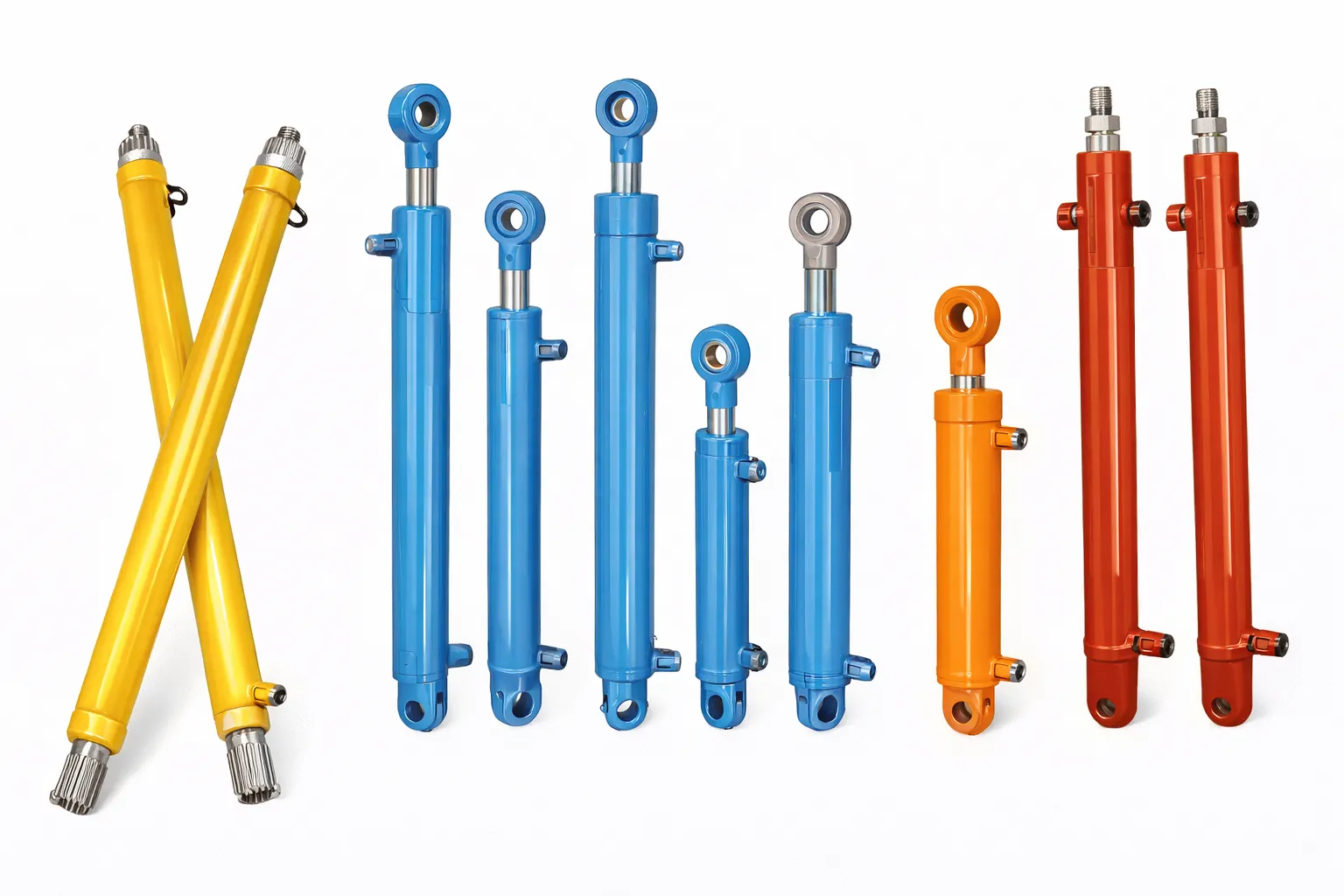
Selecting heavy-duty equipment components based solely on the lowest initial hydraulic cylinder price is a common procurement error that inevitably leads to drastically inflated total cost of ownership through continuous maintenance and unscheduled operational delays. The detailed technical matrix below clearly illustrates the vast engineering disparities between generic, mass-produced commercial actuators and our specialized, reinforced counterweight sliding cylinder designed for extended lifecycle reliability under severe loads.
| Engineering Metric | Standard Commercial Hydraulic Cylinder | Our High-Performance Counterweight Cylinder |
|---|---|---|
| Internal Guide Architecture | Narrow wear bands (Highly prone to rod eccentric wear and lateral scraping under off-center loads) | Wide Guide Design (Disperses lateral force evenly, fully preventing uneven rod wear) |
| Core Steel Metallurgy | Basic 45# Carbon Steel (Lower yield point, susceptible to micro-bending during long strokes) | Forged Premium Alloy Steel (Exceptional tensile strength guarantees absolute linear rigidity) |
| Surface Protection Plating | Standard hard chrome (Naturally micro-cracked, allows severe rust penetration in humid air) | Advanced Nickel Plating (Dense, crack-free, provides superior marine-grade corrosion resistance) |
| Primary Sealing System | Basic NBR rubber seals (High friction, short lifespan, causes heavy stick-slip juddering) | PTFE & Polyurethane Composites (Ultra-low friction, handles heavy mass shifting smoothly) |
| Manufacturing Validation | Randomized batch testing (High probability of receiving mechanically defective, leaking units) | 100% individual hydrostatic and ultrasonic testing before receiving global export clearance |
Verified East Asian Field Applications
Theoretical metallurgical concepts are only truly validated by long-term survival in the dirt and grit of active commercial jobsites. We actively partner with heavy industry leasing companies and engineering firms across East Asia to resolve their most severe fluid power failures. Below are five verified B2B case studies demonstrating the tangible, operational impact of upgrading to our specialized actuation technology.
Case 1: Eradicating Rod Eccentric Wear in Busan Port Expansion
Location: Busan, South Korea | Client: Busan Maritime Heavy Lift Consortium
Application: Managing dynamic ballast on 300-ton crawler cranes constructing massive concrete breakwater structures.
Challenge Context: The client’s chief engineer contacted us via a B2B platform in late 2024. Their standard OEM cylinders were suffering complete seal blowouts every few months due to intense rod eccentric wear. The uneven dockside tracks caused the heavy ballast to sway, creating a severe eccentric load during the long sliding strokes.
Solution Delivered: We deployed our custom counterweight sliding cylinder featuring the engineered wide guide architecture. By effectively dispersing the lateral friction, we entirely eliminated the uneven scraping, completely resolving the fluid leakage crisis over the following two years.
“The wide guide design is a mechanical lifesaver. Since installing these upgraded units, we haven’t seen a single trace of rod scoring. It has massively reduced our on-site maintenance labor and secured our lifting schedules.” — Park Ji-hoon, Fleet Maintenance Director
Case 2: Securing Stability for Seoul Skyscraper Foundations
Location: Seoul, South Korea | Client: Seoul Urban Foundation Drillers
Application: Heavy rotary piling rigs requiring continuous counterweight shifting on uneven urban soil.
Challenge Context: Found our engineering team through a search for reliable hydraulic components. Their existing cylinders were literally bending under the extreme vibration and lateral stress of deep foundation drilling, causing the entire rig to become dangerously unbalanced.
Solution Delivered: We engineered drop-in replacements utilizing our heavily forged, premium alloy steel matrix. The exponential increase in tensile yield strength meant the rod remained absolutely rigid and linear, effortlessly surviving the severe off-center lateral forces.
“You cannot cut corners on heavy foundation lifts. The alloy steel construction of these cylinders gives us complete confidence. They do not bend, they do not leak, and they handle the massive vibration perfectly.” — Lee Seung-woo, Lead Rigging Engineer
Case 3: Defeating Salt-Spray Corrosion at Incheon Port
Location: Incheon, South Korea | Client: Incheon Coastal Infrastructure Engineering
Application: Crawler cranes utilized for heavy logistics and material handling continuously near the ocean.
Challenge Context: Contacted us via our website. Standard hard-chrome hydraulic cylinder piston rods were pitting and rusting heavily within four months due to the highly aggressive, saline-rich coastal air, leading to rapid seal shredding and hydraulic fluid spills.
Solution Delivered: We supplied customized units protected by our advanced chemical nickel plating. The dense, crack-free nickel completely blocked the salt penetration. The cylinders remain absolutely rust-free after 18 months of continuous maritime exposure.
“Coastal salt air aggressively attacks standard machinery. The chemical nickel plating on these cylinders has proven incredibly resilient. Excellent marine-grade durability that finally solved our severe rust issues.” — Kim Min-su, Site Operations Manager
Case 4: Smoothing Operations for Taiwan Offshore Wind
Location: Kaohsiung, Taiwan | Client: Pacific Wind Energy Erectors
Application: High-frequency ballast adjustments on specialized heavy lifting cranes assembling offshore turbine components.
Challenge Context: The procurement team reached out via an organic search for a reliable counterweight sliding hydraulic cylinder. Their previous cylinders caused intense stick-slip juddering when sliding the heavy mass, making precision load balancing dangerously unpredictable when hoisting blades.
Solution Delivered: We fitted the heavy-duty assemblies with our ultra-low friction PTFE composite sealing technology. This entirely neutralized the friction judder, providing operators with perfectly smooth, continuous ballast control and drastically reducing hydraulic heat generation.
“The fluidity of operation is exceptional. Our rig operators can shift massive weights with incredible precision now, without the terrifying jerking motions we used to experience. A massive upgrade in operational safety.” — Chen Wei, Safety Supervisor
Case 5: Guaranteeing Rigidity at Tokyo Infrastructure Project
Location: Tokyo, Japan | Client: Tokyo Metro Heavy Lifting Consortium
Application: Heavy component lifts using 400-ton capacity crawler cranes during elevated railway assembly.
Challenge Context: Discovered us via an organic web search in early 2025 while hunting for a highly competitive hydraulic cylinder price. The massive costs and 6-month lead times demanded by the original machinery manufacturer were threatening to derail their strict project budget.
Solution Delivered: We manufactured exact dimensional drop-in double acting hydraulic cylinder replacements and delivered them to Tokyo within 35 days. The seamless installation saved immense capital and allowed the project to resume ahead of schedule without sacrificing load capacity.
“We needed industrial-grade reliability rapidly, without paying extortionate OEM premiums. The dimensional fit was absolutely perfect, and the heavy-duty build quality is obvious immediately. An incredibly cost-effective upgrade.” — Kenji Sato, Project Lead
B2B Technical FAQ (Frequently Asked Questions)
To fully support heavy machinery fleet directors, maintenance engineers, and global procurement professionals in evaluating our advanced fluid power solutions, we have meticulously detailed answers to the most critical technical and logistical inquiries regarding our counterweight sliding cylinder assemblies.
1. How exactly does the ‘wide guide’ architecture prevent rod eccentric wear?
2. Why do you utilize nickel plating instead of standard hard chrome?
3. Can these units serve as exact drop-in replacements for aging Sany or Liebherr crawler cranes?
4. Do you supply separate seal kits or internal components for in-house maintenance teams?
5. What defines the overall hydraulic cylinder price for a custom heavy-duty unit?
6. Is it more logical to execute a hydraulic cylinder repair or purchase a brand new unit?
7. What is the typical lead time for custom production and commercial shipping to South Korea?
8. How do you guarantee the deep penetration structural integrity of the welded joints?
Stabilize Your Heavy Lifting Operations Today
Do not allow inferior, mass-produced fluid power components to dictate the safety and profitability of your high-tonnage lifting operations. Upgrade to our structurally reinforced, precision-engineered actuation solutions. Whether you urgently require a single counterweight sliding cylinder replacement to restore a crane’s functionality, or you are planning a comprehensive modernization for an entire commercial fleet, our dedicated technical engineering team is ready to analyze your specific blueprints and deliver uncompromising industrial performance.
Partner directly with an industry-leading manufacturing facility that prioritizes rigid metallurgical engineering and strict, zero-tolerance quality control.
Editor: Cxm