Filter Press Hydraulic Cylinder
New Application — Solid-Liquid Separation
45 MPa.
The Highest Pressure
in the Range.
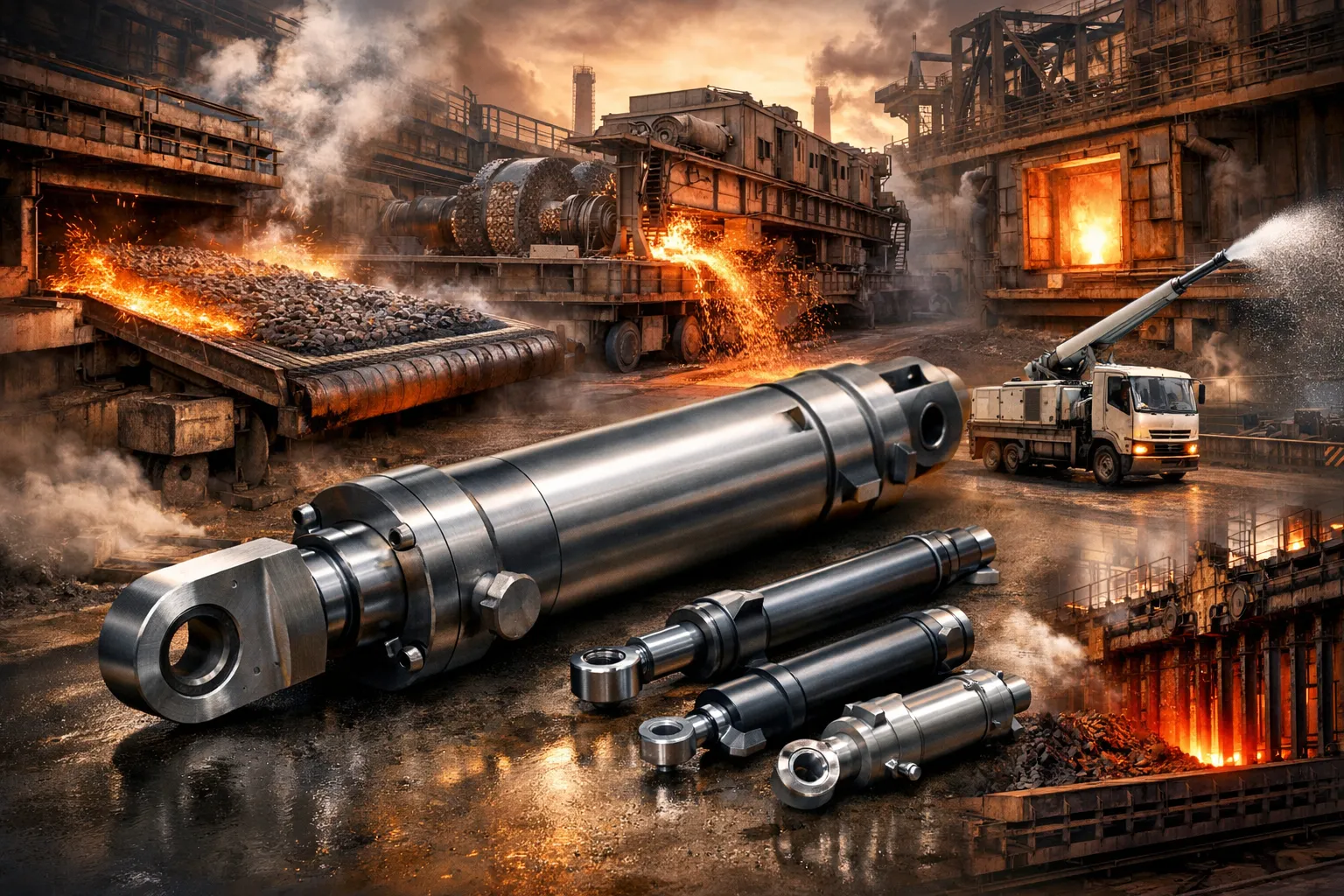
The forging press master cylinder works at 31.5 MPa. The filter press cylinder works at 45 MPa — 43% higher. And it doesn't forge anything. It squeezes a stack of filter plates together with nearly 12,000 KN of force, holds that force for hours while slurry is pumped through the filter media, then pulls the plates apart so the dried filter cake can be discharged. Different industry. Different duty. Same precision engineering.
What Is a Filter Press — And Why It Needs 45 MPa
A filter press separates solids from liquids. It consists of a stack of 20–200 recessed plates, each lined with filter cloth. The hydraulic cylinder compresses these plates together into a sealed stack. Slurry (a mixture of liquid and fine solids — mine tailings, wastewater sludge, chemical precipitates, food processing waste) is then pumped into the chambers formed between the plates under high pressure. The liquid passes through the filter cloth and drains away; the solids accumulate in the recesses as a compressed "filter cake."
The cylinder must compress the plate stack tightly enough to seal every plate-to-plate junction against the slurry pump pressure (which can reach 16–25 bar). Any leak between plates means slurry bypasses the filter media — contaminating the filtrate and wasting processing capacity. Higher cylinder pressure provides a greater safety margin against leakage, which is why filter press cylinders operate at 45 MPa — far above the 25–31.5 MPa used by forging press cylinders. Korea Ever-Power manufactures filter press cylinders as part of the industrial engineering hydraulic cylinder programme.
Technical Specifications
| Parameter | Value |
|---|---|
| Product | Filter Press Hydraulic Cylinder |
| Function | Push plates closed / pull plates open |
| Bore Diameter | 160 mm – 580 mm |
| Rod Diameter | 110 mm – 410 mm |
| Stroke | ≤ 2,600 mm |
| Maximum Thrust | 11,889 KN (bore 580 mm / pressure 45 MPa) |
| Working Pressure | Up to 45 MPa (highest in range) |
| Certification | ISO 9001 · 100% hydrostatic tested at 67.5 MPa (1.5×) |
Push-Pull — One Cylinder, Two Opposite Jobs

The filter press cylinder performs two opposite actions in every filtration cycle — and both demand full force.
Push (closing): The cylinder extends, driving the movable head plate along the frame's side rails toward the fixed head plate. The filter plates between them compress together, sealing every plate-to-plate junction. The cylinder holds this compression at full pressure throughout the entire filtration cycle — which can last 30 minutes to 4 hours depending on the slurry volume and the cake dryness requirement.
Pull (opening): After filtration, the cylinder retracts — pulling the movable head plate back to separate the plate stack. The plates then shift apart one by one (manually, mechanically, or automatically) to discharge the filter cake. The pull force must overcome the residual compression, any plate-to-plate adhesion from dried slurry, and the friction of the head plate on the guide rails.
This push-pull dual action means the cylinder is double-acting — unlike the plunger-type side shift cylinders (#11, #12) which are single-acting. The seals must perform equally well in both pressure directions, and the rod must be sized for the pull force (which acts on the rod-side annular area, not the full bore area).
Six Industries — One Cylinder Design
The filter press cylinder serves a far broader range of industries than any forging press cylinder. The cylinder hardware is fundamentally the same — the difference is in the corrosion protection and seal material selected for each industry's specific slurry chemistry.
Tailings dewatering, concentrate filtration, acid mine drainage treatment. Slurry is abrasive (fine rock particles) and may be acidic (pH 2–4). Cylinder rod requires additional chrome thickness or ceramic coating. Seals must resist acidic contamination.
Sludge dewatering before landfill or incineration. Slurry contains organic matter and may have elevated chloride levels. Standard chrome plating and NBR seals are typically adequate. High cycle volume — some plants filter 10–20 batches per day.
Catalyst recovery, pigment filtration, API (active pharmaceutical ingredient) isolation. Slurry may contain aggressive solvents, strong acids, or caustic solutions. Cylinder may require stainless steel barrel and rod, or specialised seal compounds (FFKM/Kalrez).
Wine, beer, juice, and edible oil clarification. Cylinder must meet food-contact hygiene standards — stainless steel surfaces, food-grade hydraulic fluid, no external corrosion risk near the product. FDA/EC compliant seal materials.
Clay slip dewatering, kaolin processing, glaze waste recovery. Slurry is abrasive (fine mineral particles) but typically pH-neutral. Standard cylinder with heavy-duty wipers to exclude clay particles from the rod seal.
Metal hydroxide sludge dewatering, chromium recovery, zinc plating waste filtration. Slurry contains heavy metals and strong acids/alkalis. Cylinder barrel and rod must resist splash exposure to plating chemicals — often requires additional surface treatment or protective shrouding.
Engineering Challenge — Hours Under Pressure, Not Seconds
A forging press master cylinder holds pressure for seconds — the dwell at the bottom of the press stroke. The filter press cylinder holds pressure for hours. This difference in hold duration changes every aspect of the hydraulic circuit and seal design.
Running the hydraulic pump for 2–4 hours of continuous filtration is wasteful and generates unnecessary heat. The filter press circuit uses a pilot-operated check valve to lock the cylinder at compression pressure, then shuts the pump off. The cylinder holds pressure through the check valve alone — with zero leakage tolerance. Any internal seal leak during the hold period causes gradual pressure loss, which loosens the plate stack and allows slurry leakage between plates.
At 45 MPa sustained for hours, elastomer seals undergo creep — gradual extrusion into the seal gap under continuous pressure. Standard NBR seals used on forging press cylinders (which hold pressure for seconds) may creep excessively at 45 MPa sustained duty. Korea Ever-Power specifies high-modulus polyurethane or PTFE-bronze composite seals for filter press cylinders — materials that resist creep under sustained high pressure without losing their sealing effectiveness.
Some filtration processes use heated slurry (60–90 °C) to improve flow through the filter media. The cylinder, mounted on the filter press frame, absorbs heat from the hot plates through the frame structure. Over each filtration cycle, the cylinder heats up during filtration and cools down during cake discharge — thermal cycling that stresses the seals and can cause condensation inside the barrel if the cooling is rapid.
Korea Ever-Power designs every filter press cylinder for sustained-pressure duty — with creep-resistant seals, zero-leak check valve provisions, and thermal-cycling tolerance. Contact the hydraulic cylinder engineering team for filter press cylinder specifications.
Manufacturing for 45 MPa Sustained Service
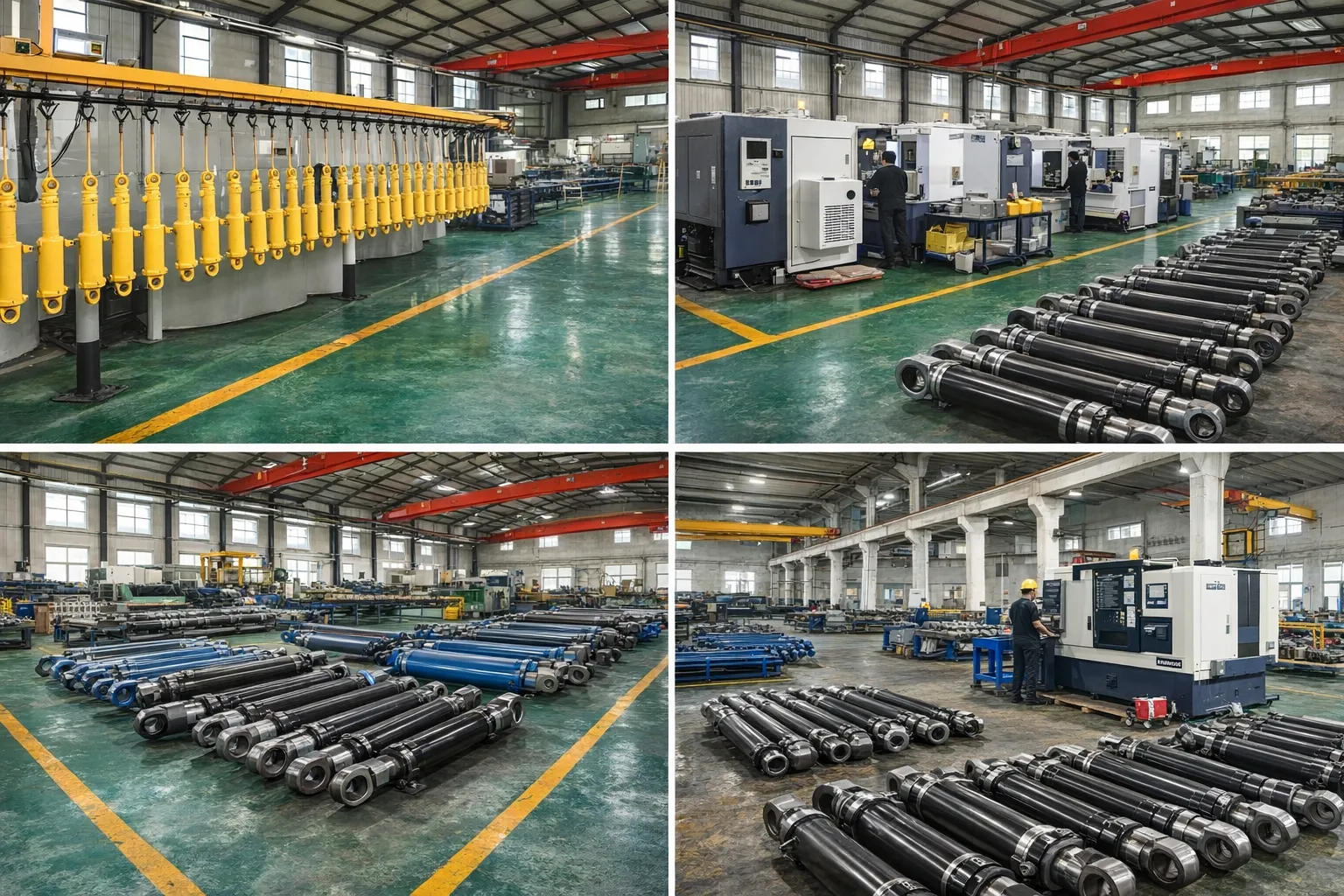
The 45 MPa working pressure demands heavier barrel wall thickness than any forging press cylinder of the same bore diameter. At 580 mm bore and 45 MPa, the barrel wall must withstand sustained hoop stress without creep or fatigue — the same 45 MPa acts on the barrel 24 hours a day, 7 days a week on continuous-operation filter press installations. Korea Ever-Power calculates the barrel wall thickness to ASME or EN standards for sustained-pressure vessels, not the simpler static-pressure calculation used for intermittent-duty press cylinders.
The bore is honed to Ra 0.2–0.4 µm — the same finish standard as all Korea Ever-Power press cylinders. The rod is chrome plated with additional thickness (50–80 µm) for corrosion resistance in the wet filter press environment. For chemical and mining applications, nickel-chrome or ceramic rod coatings are available as alternatives to standard hard chrome.
Every filter press cylinder is hydrostatic tested at 1.5× working pressure — 67.5 MPa — with a sustained hold test to verify zero pressure drop over a defined period. This hold test simulates the actual operating condition: hours at full pressure with the pump off. If the cylinder leaks even slightly during the hold test, it fails — the seals are replaced and the test is repeated before shipment.
OEM & ODM
FAQ
Related Categories
Dodatne informacije
| Editor |
|---|
Povezani proizvodi
-
Tipping Cylinder for Vulcanizing Machine
-
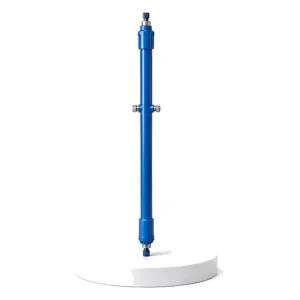
Injection Molding Machine Reciprocating Cylinder (Mold Shifting Cylinder)
-
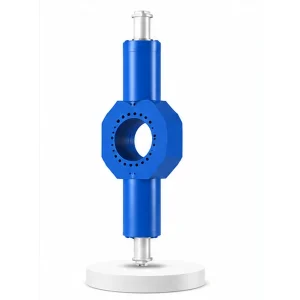
Hydraulic Press Rear Side Shift Cylinder
-
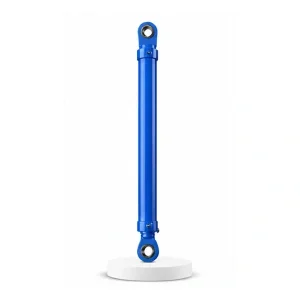
Electric Furnace Mast Cylinder
-
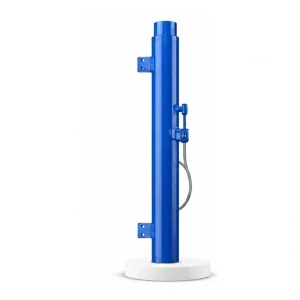
Electric Furnace Lifting Cylinder
-
Hydraulic Press Mobile Workbench Cylinder
-
Hydraulic Press Lateral Shift Anvil Cylinder
-
Electric Furnace Cover Lifting Cylinder