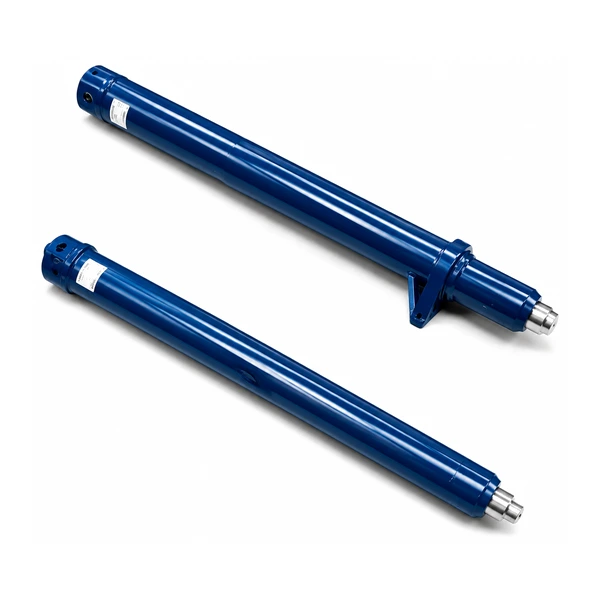
Trailing Suction Dredger Mud Door Cylinder
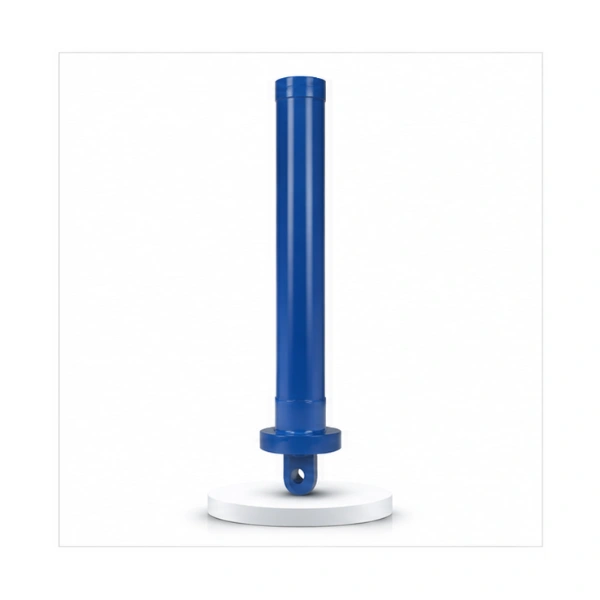
Trailing Suction Dredger Mud Door Cylinder
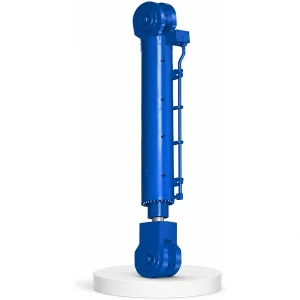
The hopper is full. Time to dump. The mud door cylinder pulls open the bottom discharge doors — 2,355 KN of pull force dropping thousands of tonnes of dredged material onto the seabed in a controlled, metered discharge. Then it closes the doors and the dredger goes back to work.
Technical Specifications
| Parameter | Specification |
|---|---|
| Product Name | Trailing Suction Dredger Mud Door Cylinder |
| Features | Pulling force for opening/closing the mud door; optional displacement sensor |
| Bore Diameter | 400 mm |
| Rod Diameter | 200 mm |
| Stroke | 1,400 mm |
| Pulling Force | Maximum 2,355 KN |
| Working Pressure | Up to 32 MPa |
| Sensor | Optional external displacement sensor |
| Temperature Range | -40 °C to +100 °C |
| Application | Trailing Suction Dredger |
What Is the Mud Door on a TSHD?
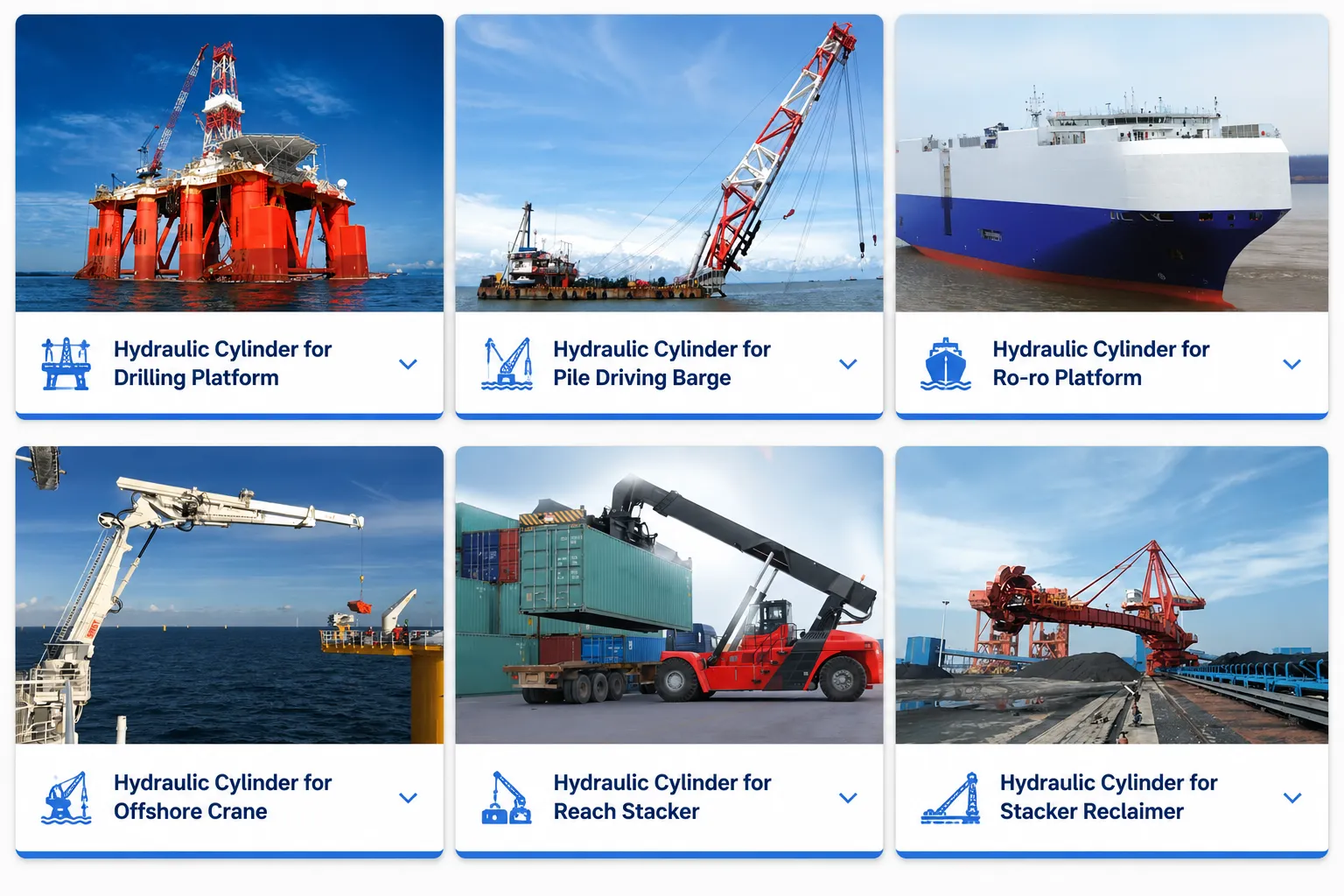
The mud door is a hinged steel plate (or pair of plates) at the bottom of a trailing suction hopper dredger's hopper. When closed, the mud door seals the hopper floor, allowing the vessel to carry dredged material during transit. When opened, the mud door swings downward and the cargo falls through the opening onto the seabed — a process called bottom dumping or bottom discharge.
The mud door cylinder provides the pull force to open the door against the weight of the cargo pressing down on it, and the push force to close and re-seal it after discharge. On large TSHDs (8,000–30,000 m³ hopper capacity), the cargo weight pressing on the mud door can exceed 15,000 tonnes — distributed across 4–8 mud door cylinders. Each cylinder must contribute its share of the opening force while maintaining synchronised door movement across the full set. Browse the offshore hydraulic cylinder range for related TSHD products.
Bottom Discharge vs Overflow Discharge
TSHDs have two discharge methods. Each uses a different hydraulic cylinder, and the choice depends on the disposal site and environmental requirements:
The mud door opens and cargo drops through the hull bottom. Fastest discharge method — 5,000 m³ can be dumped in 3–10 minutes. Used when disposal is directly below the vessel (offshore disposal sites, deep-water dumping). The mud door cylinder (#7) provides the opening and closing force.
Excess water overflows through a vertical tube in the hopper, carrying fine sediment with it. Used during loading to increase the solids density in the hopper. The overflow cylinder (#8) raises and lowers the tube to control the overflow height and flow rate.
Displacement Sensor Integration
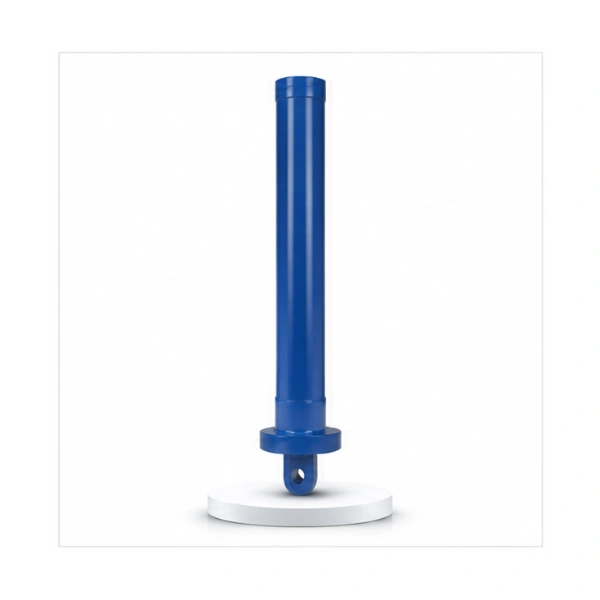
The mud door cylinder can be equipped with an external displacement sensor that reports door position to the vessel's automation system in real time. This enables:
- Precise door opening control — partial opening for controlled, metered discharge instead of full dump. Critical for beach nourishment projects where material must be placed in thin, even layers.
- Synchronised multi-door operation — on TSHDs with multiple mud doors (typically 2–4 pairs), the sensors ensure all doors open at the same rate, preventing asymmetric loading that could destabilise the vessel.
- Cycle logging and predictive maintenance — the automation system records every open/close cycle, door travel speed, and cylinder pressure. Deviations from baseline indicate seal wear, hinge friction, or hydraulic flow problems before they cause failures.
Why Choose Korea Ever-Power for TSHD Hydraulic Cylinders
All mud door cylinders for a vessel are manufactured from the same material batch, honed on the same setup, and pressure-tested to the same standard — ensuring identical force output and speed across the full set.
Ceramic spraying, laser cladding, or hard chrome on the rod surface. FKM seals for saltwater resistance. The mud door cylinder operates in the wettest zone on the vessel — continuous seawater contact during every discharge cycle.
8–12 weeks standard, 5–6 weeks emergency. A failed mud door cylinder prevents discharge — the vessel must return to port with its full cargo. Every hour of delay costs USD 5,000–15,000 in vessel hire alone.
Frequently Asked Questions
What Our Customers Say
"We replaced 6 mud door cylinders on our 6,500 m³ TSHD. The new cylinders with ceramic rod coating handle the continuous saltwater immersion during bottom discharge much better than our previous hard-chrome units. After 8 months, zero rod pitting."
Capt. L. Henriksen — Dredge Master, Denmark
"The integrated displacement sensor option was the deciding factor. Our automation system now controls mud door opening rate automatically based on material density — we get more consistent seabed placement on our beach nourishment projects."
Eng. R. Duarte — Systems Engineer, Portugal
"Good quality cylinders at a competitive price. We operate 2 TSHDs in West African waters. The high-temperature seals handle 45°C ambient without issue. Minor delay on delivery (10 weeks vs quoted 8) but the cylinders themselves are well-made."
A. Mensah — Fleet Superintendent, Ghana
"Emergency order — our starboard mud door cylinder failed mid-project. Korea Ever-Power shipped a matched replacement in 5 weeks. It bolted straight into the existing mounting without modification. The project deadline was saved."
J. van den Berg — Project Manager, Netherlands
"Third TSHD we have fitted with Korea Ever-Power mud door cylinders. Consistent quality and documentation. The BV material certificates and test reports are always complete and on time."
Y. Li — Chief Engineer, Hong Kong-registered fleet
Related Hydraulic Cylinder Categories
Dodatne informacije
| Editor |
|---|
Povezani proizvodi
-
Stacker Reclaimer Skeleton Pitch Cylinder
-
Reach Stacker Telescopic Cylinder
-
Empty Container Stacker Side Shift Cylinder
-
Offshore Crane Folding Arm Tilt Cylinder
-
Jack-up Offshore Platform Lifting Cylinder
-
Trailing Suction Dredger Hanger Cylinder
-
Cutter Suction Dredger Piling Cylinder
-
Split Barge Split Cylinder