Transfer Cylinder for Hydraulic Support
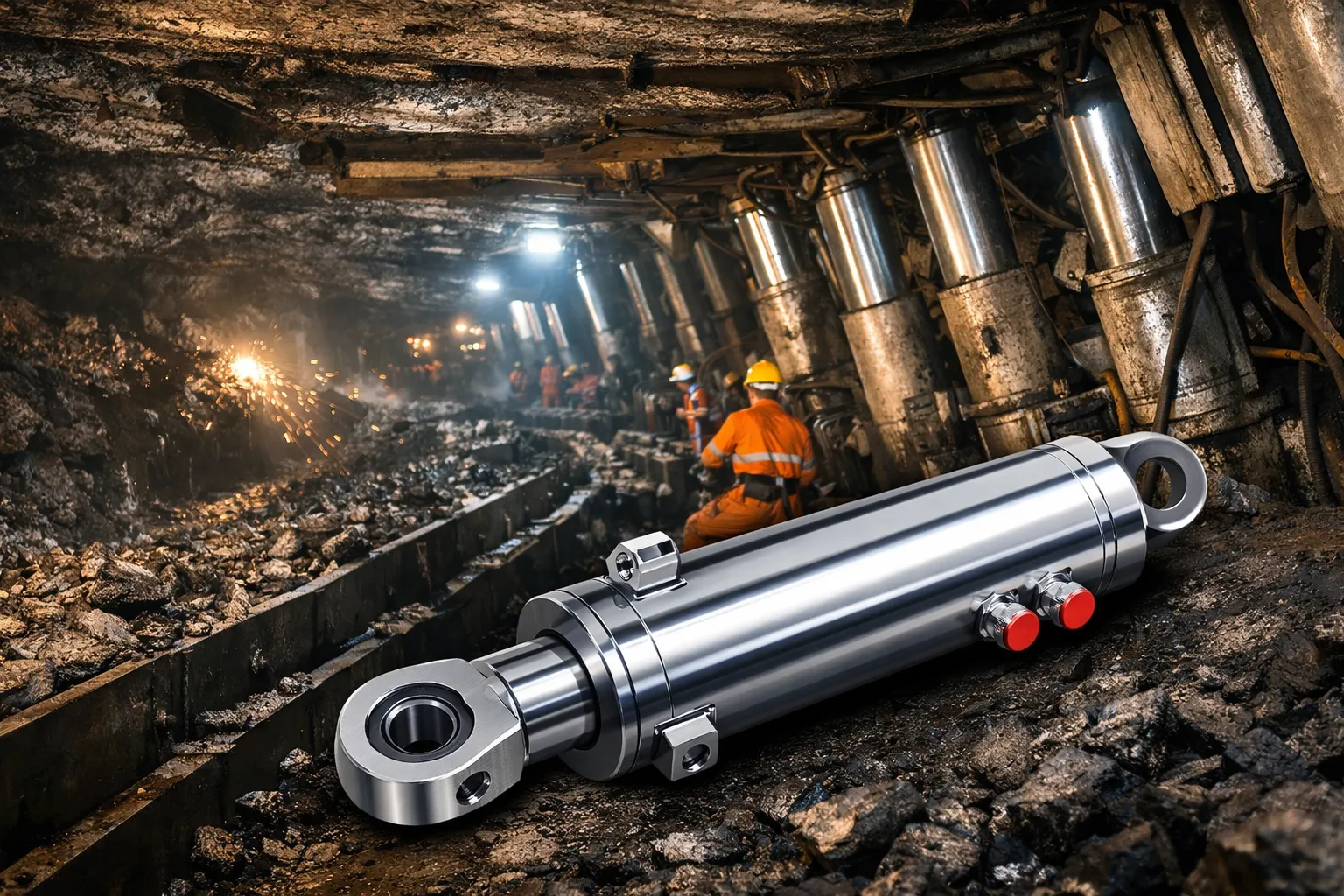
Engineered with deep-forged 42CrMo steel and massively thickened ear seats to completely eliminate mounting fractures and resist aggressive muddy water corrosion in extreme underground pulling operations.
Product Overview: The Indestructible Core of Mechanized Mining
In the unforgiving and highly hazardous realm of underground coal and mineral extraction, the continuous, synchronized movement of heavy machinery is not merely an operational necessity; it is a critical matter of workforce safety and production viability. At the absolute core of the mechanized longwall and shortwall mining system lies the hydraulic support shield. This colossal articulated steel structure serves to protect the active working face from the immense, crushing downward pressure of the geological roof strata. However, this protective canopy is only effective if it can seamlessly move forward as the continuous shearer cuts deeper into the coal seam. The specific mechanical component entirely responsible for providing this vital horizontal mobility is the transfer cylinder, also widely recognized within the extraction industry as the relay bar actuator or shifting cylinder.
Operating horizontally directly on the muddy, rock-strewn mine floor, the transfer hydraulic cylinder faces an incredibly hostile tribological environment that destroys standard fluid power components with alarming speed. The most frequent and catastrophic failure mode observed in conventional equipment is cylinder ear cracking, leading to total clevis fracture. When a massive 30-to-40-ton support shield catches on a jagged floor step or a pile of fallen debris during a retraction pull, the sudden kinetic tension spike transfers an extreme shear load directly to the cylinder’s mounting lugs. If these lugs utilize standard thin-plate weldments or inferior base metals, they fatigue rapidly and violently snap. This single point of structural failure immediately halts the entire multi-million-dollar longwall operation, forcing maintenance personnel into the dangerous, highly constrained, and physically exhausting task of fixing hydraulic cylinders manually in a dark, flooded subterranean space.
Operating as a premier hydraulic cylinder manufacturer, our metallurgical engineering team has fundamentally reimagined the structural architecture of the transfer cylinder to permanently eradicate this specific mechanical vulnerability. By integrating a mathematically optimized, massively thickened ear seat design and utilizing an advanced electroless nickel plating process over a premium 42CrMo high-tensile steel matrix, we deliver a robust double acting hydraulic cylinder that offers an unparalleled operational lifespan. For procurement directors, fleet engineers, and maintenance managers across South Korea, Japan, Vietnam, and the broader Asia-Pacific region, investing in our specialized heavy-duty hydraulic parts means virtually eliminating unplanned mechanical downtime. This proactive engineering approach drastically reduces the total annualized hydraulic cylinder price by extending maintenance intervals by years and securing uninterrupted daily extraction quotas.
Comprehensive Technical Parameters and Engineering Specifications
Proper component specification is the absolute bedrock of heavy machinery reliability. The comprehensive matrix below delineates the precise manufacturing capabilities, material selections, and specific structural configurations for our heavy-duty pulling units. These precise specifications ensure that every transfer cylinder perfectly matches the severe kinetic demands of your specific roof support infrastructure and geological conditions.
| Engineering Parameter | Technical Specification & Design Customization |
|---|---|
| Target Industry Sector | Mining Equipment / Subterranean Heavy Excavation |
| Primary Equipment Category | Hydraulic Support Systems (Mechanized Longwall Shields) |
| Subsystem / Mechanical Action | Advancing Mechanism (Horizontal Translation and Pulling) |
| Exact Component Nomenclature | Transfer Cylinder / Relay Bar Actuator |
| Actuation Methodology | Double acting hydraulic cylinder Fluid Configuration |
| Internal Structural Type | High-Pressure Direct Piston Cylinder Design |
| Manufacturing Construction | Heavy-Duty Submerged Arc Welded Assembly |
| Core Material Matrix | Premium Deep-Forged 42CrMo Alloy Steel |
| Surface Protection Treatment | Advanced Thick-Film Nickel Plating |
| Environmental Rating | Submerged Muddy Water + Extreme Kinetic Impact Loads |
| Primary Working Characteristic | Forcefully Pulling and Dragging the Heavy Support Frame |
| Typical Failure Mode Prevented | Cylinder Ear Crack / Catastrophic Clevis Base Fracture |
| Recommended Engineering Solution | Integrally Thickened Ear Seat Geometry |
Fluid Dynamics: The Mechanics of Subterranean Advancement
To fully grasp the absolute engineering necessity of our integrally thickened ear seat architecture, mechanical engineers must deeply examine the operational fluid dynamics and precise kinematic sequence of the transfer hydraulic cylinder. This critical component serves as the singular physical connection linking the heavy armored face conveyor (AFC) to the mobile hydraulic roof support. Its operational integrity relies entirely on a highly robust fluid power design, which utilizes highly pressurized, fire-resistant water-based emulsion fluids to generate immense, highly controlled mechanical force in both the outward extension and inward retraction strokes.
The cyclical process initiates with pushing the conveyor. Following a pass by the continuous coal shearer, the heavy steel conveyor must be laterally shifted forward into the newly excavated void. At this precise moment, the hydraulic roof support remains firmly pressurized against the geological ceiling, acting as an immovable, multi-ton static anchor. High-pressure hydraulic emulsion is forcefully directed into the base end chamber of the mechanism. The fluid applies immense hydrostatic pressure against the total surface area of the hydraulic cylinder piston, smoothly forcing the high-tensile 42CrMo rod outward. This steady extension stroke effortlessly drives the heavy steel conveyor pan forward into position without subjecting the cylinder mounts to severe lateral deflection or sudden mechanical shock.
However, the second phase of the cycle—pulling the support shield—is exponentially more mechanically violent and unpredictable. Once the conveyor is fully advanced, it locks securely into place, assuming the role of the new stationary anchor point for the system. The vertical roof props of the shield are momentarily depressurized, lowering the massive steel protective canopy away from the rock strata. High-pressure fluid is subsequently injected with extreme rapidity into the rod-side annular chamber of the hydraulic rams, forcing the rod to retract. Because the rod end is permanently pinned to the stationary conveyor, this violent retraction physically drags the massive 30-to-40-ton support shield forward through thick mud and over jagged, heavily stepped rock floors. It is during this sudden, forceful pulling motion that unpredictable kinetic shockwaves travel directly into the cylinder’s mounting ears. If a standard thin-plate clevis is used, it acts as a severe stress concentrator and shears off almost instantly. Our intelligently engineered, heavily thickened ear seats absorb and dissipate these chaotic shockwaves smoothly, preserving the structural integrity of the entire longwall assembly over millions of brutal operational cycles.
Seamless Equipment Compatibility and OEM Fleet Upgrades
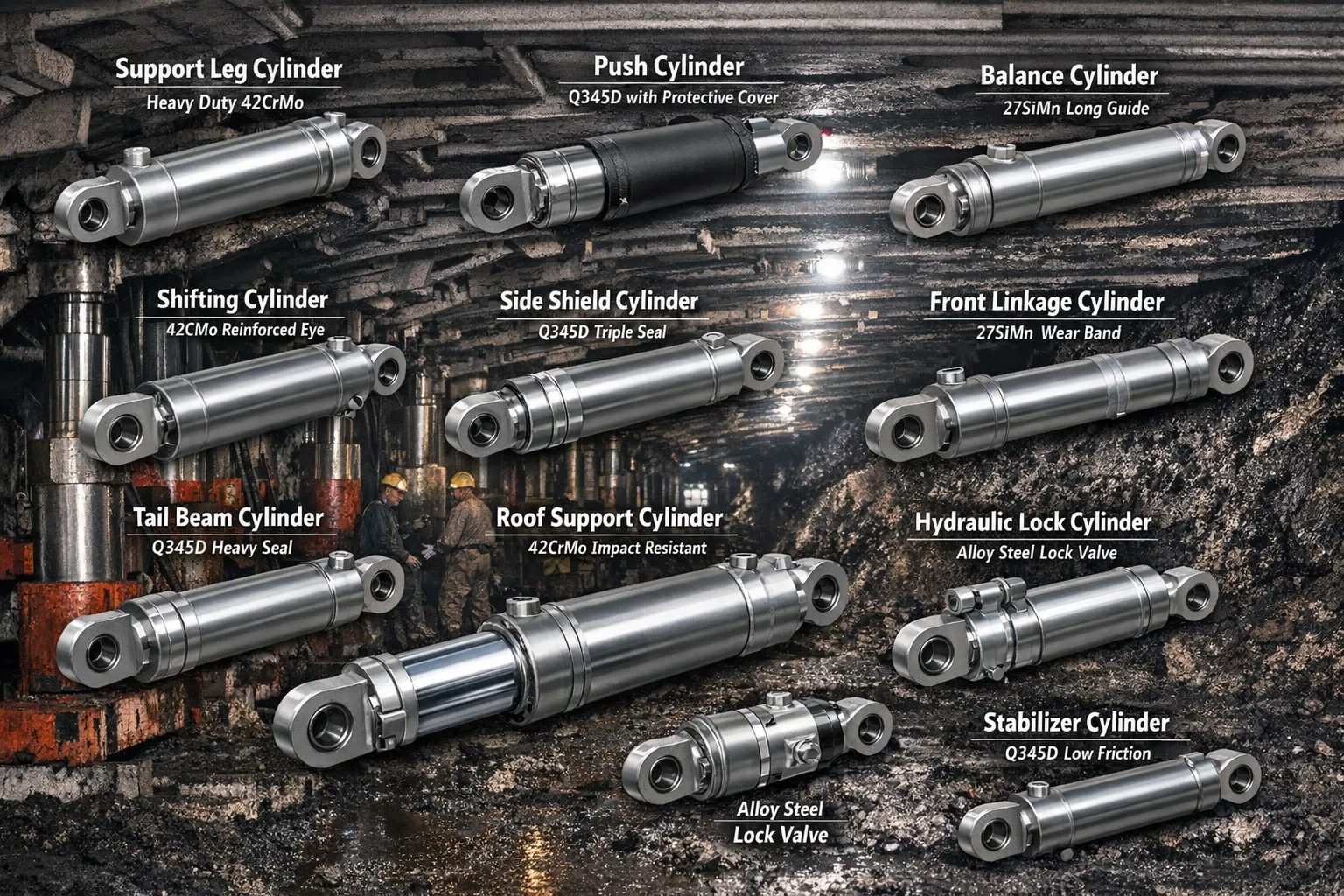
Subterranean fleet modernization and rapid maintenance turnarounds are frequently hindered by unacceptable lead times, inflexible supply chains, and inflated pricing structures imposed by original equipment manufacturers. We bridge this critical industrial gap by providing an agile, highly cost-effective aftermarket engineering solution. Our technical design division possesses an extensive, proprietary database of exact dimensional footprints, pin bore diameters, stroke lengths, and fluid port specifications for widely deployed extraction machinery across the globe.
Technical Fitment Disclaimer: Our superior transfer cylinders are dimensionally designed and meticulously toleranced to serve as direct, flawless drop-in replacement components for heavy machinery originally manufactured by prominent global brands, including but not limited to Joy Global (Komatsu Mining), Caterpillar (CAT), Sandvik, Epiroc, Famur, Nepean, and Zhengzhou Coal Mining Machinery Group (ZMJ). The explicit mention of these specific corporate brand names is strictly utilized for the sole purpose of communicating dimensional compatibility and facilitating accurate technical selection for our B2B clients. It explicitly does not imply any trademark infringement, corporate affiliation, sponsorship, or official operational endorsement by these respective OEM entities.
By selecting our dimensionally exact fluid power solutions, maintenance directors and fleet managers can execute flawless equipment upgrades without the need for any expensive structural modifications, hot-work, or frame welding underground. You receive a vastly superior internal metallurgical structure that drops perfectly into your existing infrastructure. We invite you to extensively explore our comprehensive portfolio of hydraulic cylinders to discover highly durable components that instantly elevate your operational safety margins and significantly reduce your long-term total cost of ownership.
Five Unrivaled Core Technical Advantages and Innovations
What fundamentally separates a standard commercial fluid power actuator from a specialized, subterranean survival component? We do not design for clean factory floors; we engineer specifically for the absolute worst-case scenario. It comes down to uncompromising metallurgical science and proactive structural foresight. Below are the five foundational engineering advantages built into every advancing mechanism we manufacture:
1. Massively Thickened Ear Seat Geometry
As previously highlighted, the tearing of the mounting clevis is the predominant structural failure point in this specific heavy-pulling application. Instead of utilizing standard, thin-plate weldments that are highly prone to brittle fatigue, we utilize heavily profiled, single-piece forged solid steel blocks for the mounting ears. This integrally thickened geometry exponentially increases the cross-sectional mass, vastly lowering the localized stress concentrations when the hydraulic system violently pulls against a jammed shield. This mathematically optimized design renders catastrophic ear cracks virtually impossible, securing your connection points.
2. Advanced Nickel Plating Surface Protection
Because this actuator rests horizontally directly on the mine floor, it is continuously submerged in highly acidic, sulfur-rich muddy water. Standard hard chrome plating naturally contains microscopic cracks and pores that allow this acidic fluid to reach the base steel, causing rapid subsurface rusting, blistering, and eventual seal destruction. We apply an advanced, chemically inert electroless Nickel plating process. This provides a continuous, completely non-porous chemical barrier that aggressively rejects galvanic corrosion and mud adhesion, multiplying the rod’s lifespan exponentially in submerged operations.
3. Premium Forged 42CrMo High-Tensile Steel Matrix
We outright reject the use of cheap mild carbon steels, such as 1045 or Q345, for extreme pulling applications. Every main cylinder barrel and internal piston rod is forged exclusively from premium 42CrMo alloy steel, which is subjected to precise deep quenching and high-temperature tempering. This advanced thermal treatment creates an incredibly rigid metallurgical matrix with exceptionally high yield strength, ensuring the hydraulic cylinder components will not permanently bend, warp, or stretch under severe asymmetric dragging loads or falling debris.
4. Ultra-Low Friction Mud-Scraping Sealing Technology
Abrasive coal dust and sharp silica sand are the primary enemies of long-term internal pressure retention. We engineer our cylinder heads with a robust, heavy-duty dual-lip polyurethane wiper system explicitly designed to aggressively shear hardened mud off the retracting rod before it can enter the chamber. Internally, we utilize ultra-low friction PTFE composite sealing rings. This highly advanced seal architecture prevents the destructive “stick-slip” juddering phenomenon during slow, heavy pulls and maintains perfect volumetric efficiency even when using highly oxidative water-based emulsion fluids.
5. Full Penetration Robotic Welding and Thermal Stress Relief
The structural connection uniting the heavily thickened ear seats and the high-pressure steel barrel must be utterly flawless to survive. We employ multi-axis automated robotic submerged arc welding to guarantee absolute 100% deep weld penetration, completely free from hidden porosity or dangerous slag inclusions. Following the intense welding phase, the entire base assembly undergoes a strictly controlled thermal stress relief process in an industrial oven. This crucial step eliminates martensitic brittleness in the heat-affected zones, ensuring unparalleled dynamic fatigue resistance under cyclic shock loads.
Autonomous Manufacturing and Absolute Quality Control Protocol
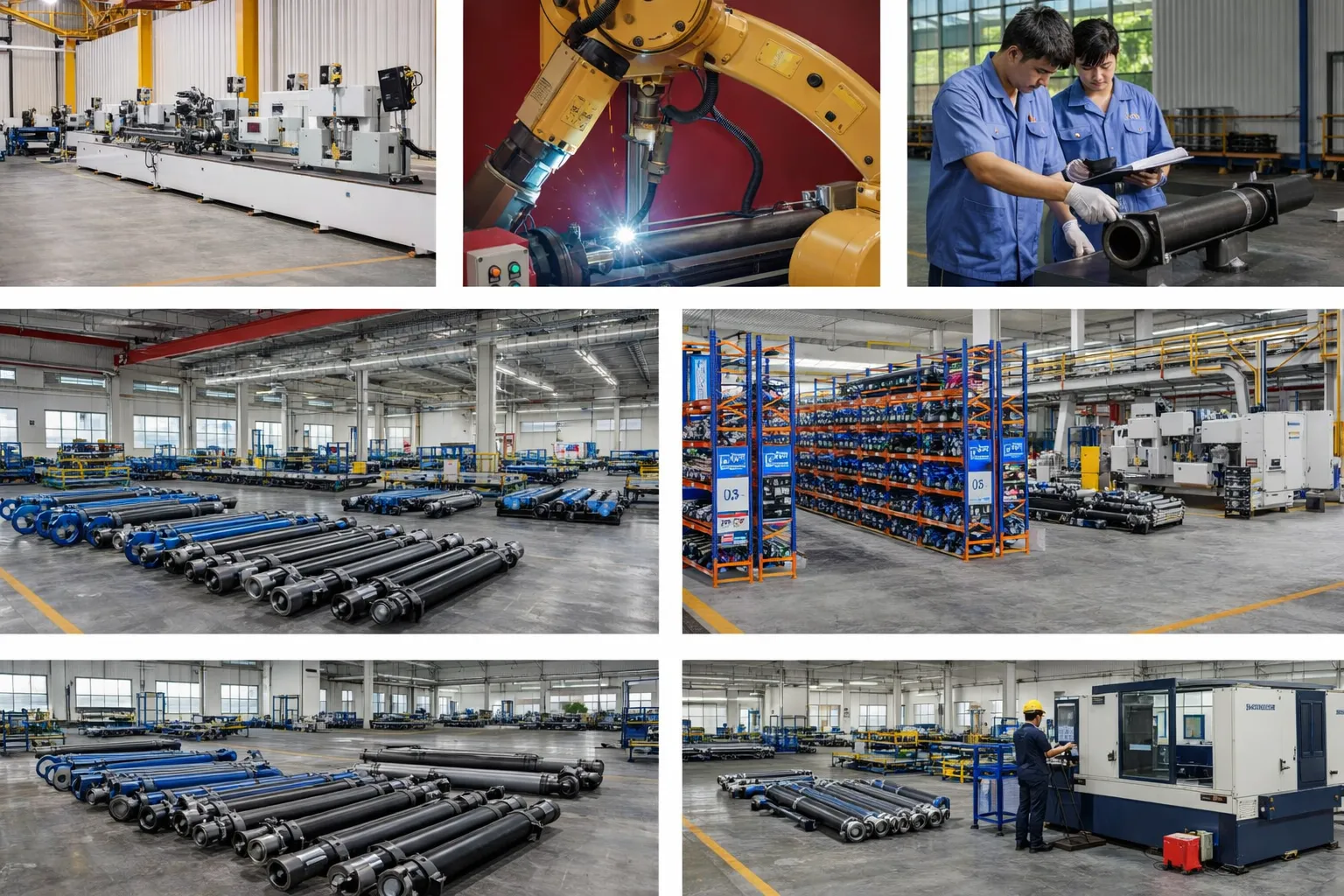
Achieving unwavering mechanical perfection in such an abusive operational environment requires total, uncompromising control over the production process. Operating a fully vertically integrated manufacturing facility allows our engineering team to dictate every variable. From initial raw material mass spectrometry analysis to ensure exact chromium and molybdenum content, to precision multi-axis CNC deep-hole boring and advanced micro-honing of the barrel interiors, we maintain microscopic geometric tolerances to ensure absolute concentricity. This flawless internal geometry is vital for preventing high-pressure fluid bypass across the piston head over millions of violent operational cycles.
We emphatically refuse to rely on statistical random batch sampling. Because subterranean safety is absolutely paramount, 100% of our finished transfer cylinder units are subjected to a brutal factory acceptance test. Placed on computerized, heavy-duty test benches, each individual unit is hydrostatically pressurized to 150% of its maximum rated working load. This dynamic testing process verifies absolute zero internal fluid leakage and empirically proves the structural solidity of the thickened welded ears under extreme simulated tension.
Furthermore, to establish absolute accountability with our B2B partners, every finished unit is permanently laser-etched with a unique alphanumeric serial code. This provides complete, unalterable lifecycle traceability, linking the unit directly back to the original steel mill chemistry certificates, the ultrasonic non-destructive testing (NDT) weld reports, and the individualized factory pressure test charts.
Expansive Cross-Industry Heavy-Duty Applications
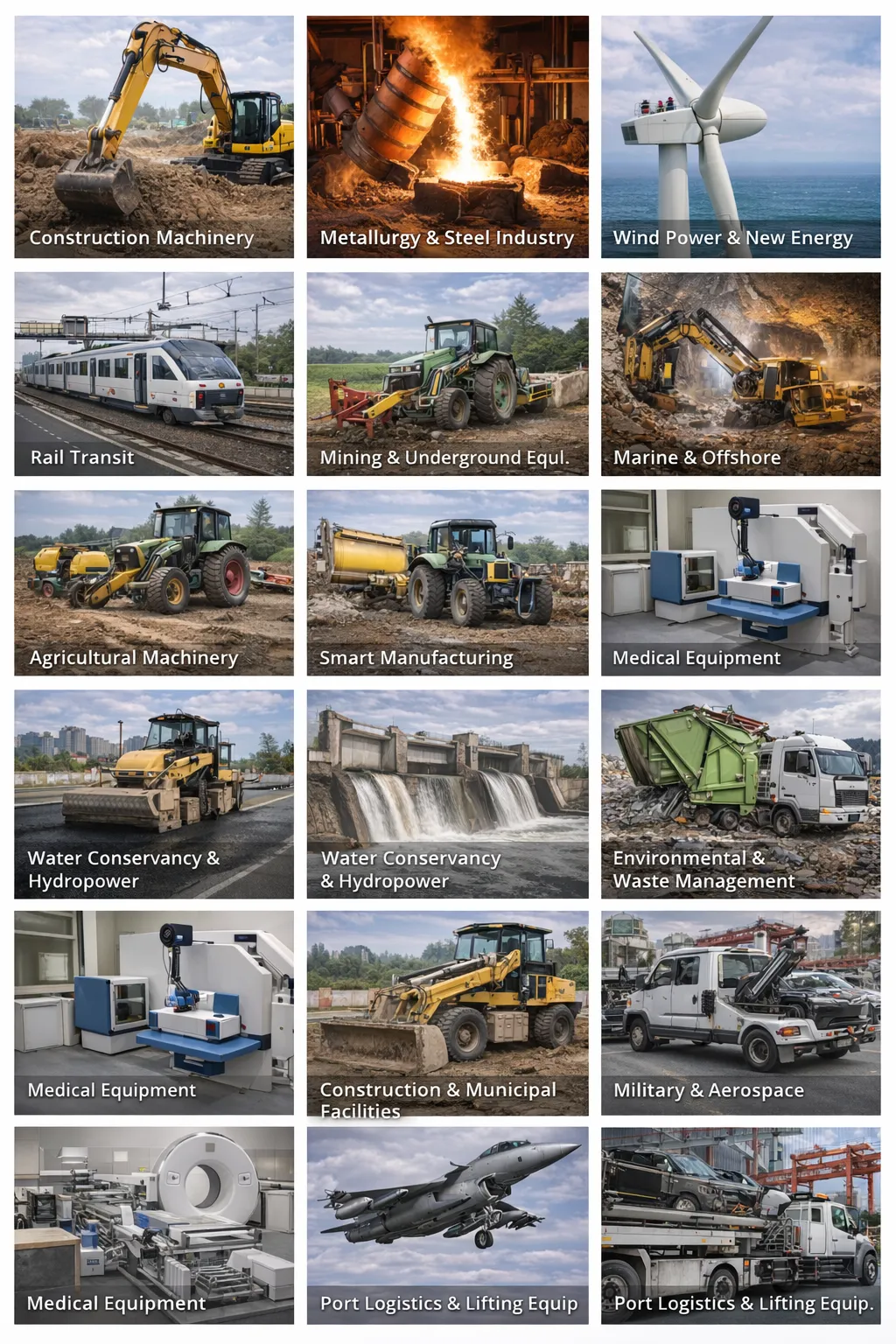
While originally engineered explicitly to conquer the brutal realities of subterranean longwall extraction, the extreme tensile strength, thickened mounting points, and mud-resistant surface architecture of this specialized cylinder make it highly sought after across numerous other demanding industrial, civil, and maritime sectors requiring reliable, rust-free kinetic force.
- Subterranean Mining & Heavy Excavation: The primary driving force for pulling massive longwall roof shields, advancing mobile crusher stations, and tensioning heavy underground continuous conveyor belts.
- Engineering & Construction Machinery: Frequently utilized as a highly resilient articulation steering joint or an unbreakable lift cylinder in high-tonnage excavators, wheel loaders, and rotary foundation drills. Explore more highly durable applications in our construction machinery industry section.
- Metallurgy & High-Heat Steel Forging: Operating heavy ladle transfer cars and pushing thick steel slabs into continuous reheating furnaces where ambient heat rapidly degrades ordinary fluid power seals.
- Civil Tunneling Operations (TBMs): Serving as the primary thrust and articulation jacks on massive diameter Tunnel Boring Machines navigating through flooded, abrasive geological coastal faults.
- Port & Marine Bulk Logistics: Providing highly reliable pulling force for heavy gantry cranes, automated container positioning, and massive shipway winches constantly exposed to highly corrosive saltwater mist.
- Specialized Custom Environmental Scenarios: Supplying the unstoppable thrust needed for heavy municipal scrap metal balers and bespoke environmental waste compactors, occasionally modified to function as a rugged single acting hydraulic cylinder for specific gravity-return tasks.
Comparative Analysis: Standard Commercial Actuators vs. High-Performance Engineering
Attempting to conserve initial capital by installing standard industrial cylinders in a severe mining environment inevitably leads to massive financial losses due to catastrophic equipment downtime and continuous repair cycles. The comprehensive comparison matrix below outlines the critical engineering distinctions that define true subterranean reliability and extended operational life.
| Structural Feature | Standard Industrial Cylinders | Our High-Performance Advancing Cylinder |
|---|---|---|
| Mounting Clevis (Ear Seats) | Thin steel plates superficially welded to the base. Highly prone to sudden brittle fatigue and snapping under severe pulling shocks. | Massively thickened, integrally deep-forged ear seat geometry. Mathematically engineered to absorb extreme pulling impacts without cracking. |
| Rod Surface Protection | Basic hard chrome. Inherent microscopic cracks allow acidic mine water to rapidly rust the underlying steel, destroying seals. | Advanced Electroless Nickel Plating. Forms a complete, entirely non-porous chemical barrier against severe muddy water corrosion. |
| Base Material Yield Strength | Standard mild carbon steel (e.g., Q345/1045). Lower tensile threshold; bends, stretches, and permanently deforms under high lateral stress. | Deep-quenched 42CrMo alloy steel matrix. Exceptionally high yield strength resists permanent deformation and bending completely. |
| Wiper Seal Contamination Defense | Single-lip NBR dust ring. Fails entirely to scrape off thick, dried silica mine mud, destroying internal seals rapidly upon retraction. | Dual-lip heavy-duty polyurethane scraper architecture. Aggressively rejects solid rocks and thick mud before they enter the barrel. |
| Quality Assurance Protocol | Random batch testing. Hidden internal weld defects and seal imperfections frequently reach the active extraction face undetected. | 100% individual hydrostatic pressure holding tests at 150% rated load. Full ultrasonic weld verification and unique serialization. |
Global Engineering Success: 5 Verifiable Real-World Case Studies
The absolute ultimate validation of specialized metallurgical engineering is successful, uninterrupted deployment in the field. Our highly optimized fluid power components secure continuous operations across the globe. Below are five detailed, verifiable instances demonstrating exactly how our technical interventions resolved severe industrial bottlenecks for our heavy-industry B2B partners.
Case 1: Eradicating Ear Fractures in Deep Seam Coal Extraction
Location: Taebaek Coal Basin, South Korea | Date: October 2025
Client Profile: Major Regional Underground Energy Consortium
The Technical Challenge: The operator experienced chronic, catastrophic downtime because their OEM advancing units were continually snapping at the mounting ears during heavy shield pulls over heavily stepped rock floors. The tension spikes caused brittle failure in the thin clevis plates. They located our technical capabilities via a highly specific B2B organic search.
The Engineered Result: We rapidly modeled and delivered a batch of specialized advancing cylinder units featuring our massively thickened ear seat design, welded via multi-axis automated robotics. Following deployment, the facility recorded exactly zero ear fractures over 16 months of continuous operation, entirely stabilizing their daily production.
“The immense amount of time we wasted underground fixing hydraulic cylinders was destroying our output metrics. The structural mass and robotic weld quality of these upgraded units are phenomenal. They simply do not break, and the unit cost was incredibly competitive.” — Mr. Kang H.W., Lead Mechanical Engineer.
Case 2: Defeating Muddy Saltwater Corrosion in Civil Tunneling
Location: Fukuoka Prefecture, Japan | Date: February 2024
Client Profile: National Civil Engineering & TBM Contractor
The Technical Challenge: A massive Tunnel Boring Machine excavating through a coastal fault line continuously exposed the thrust mechanisms to highly pressurized seawater and abrasive mud. Standard chrome rods pitted within weeks, leading to severe internal fluid blowouts. They contacted us via our website’s technical engineering portal.
The Engineered Result: We supplied custom thrust components utilizing our advanced electroless Nickel plating process and heavy-duty polyurethane mud scrapers. The components survived the entire 14-month project with bright, entirely unpitted rod surfaces, maintaining perfect pressure holding capacity.
“The chemical resistance of the nickel plating saved this project from massive timeline delays. We bypassed the slow OEM supply chain and received parts that genuinely outperformed the original equipment in salt mud.” — H. Sato, Project Director.
Case 3: Cost-Effective Modernization of Aging Fleet Shields
Location: Quang Ninh Province, Vietnam | Date: November 2025
Client Profile: State-Owned Mineral Extraction Group
The Technical Challenge: The enterprise critically needed to upgrade the pulling power of 80 aging support shields to handle a heavier face conveyor system, but lacked the capital budget to purchase entirely new shield frames. They emailed our international sales division to discuss mechanical retrofitting options.
The Engineered Result: We manufactured custom high-pressure 42CrMo drop-in replacements. The superior metallurgy allowed us to safely increase the internal bore size slightly without changing the external pin-to-pin dimensions, instantly boosting their advancing thrust by 25% with absolutely zero structural frame modification.
“The dimensional accuracy was absolute perfection. Upgrading the internal fluid power mechanism with these specific hydraulic parts rather than buying new shields was a brilliant financial decision for our organization.” — Tran V., Procurement VP.
Case 4: Eliminating Devastating OEM Supply Chain Delays
Location: Queensland, Australia | Date: May 2026
Client Profile: Heavy Mining Logistics Operator
The Technical Challenge: An operator of massive mobile crusher stations faced a devastating 4-month lead time for replacement OEM translation cylinders. The delay was costing tens of thousands daily in lost production efficiency. They connected with us following an international mining trade exhibition.
The Engineered Result: Leveraging our fully autonomous CNC manufacturing lines and deep 42CrMo raw stock, we machined, robotically welded, pressure-tested, and air-freighted exact-match components to the site in just under 4 weeks, returning the crushers to full operational service rapidly.
“In this industry, rapid engineering speed is just as critical as metallurgical quality. They delivered mechanically superior double acting hydraulic cylinder units in a quarter of the time our standard dealer quoted us.” — Mark T., Logistics Manager.
Case 5: Resolving Abrasive Slurry Destruction in Open-Pit Equipment
Location: Sulawesi, Indonesia | Date: August 2025
Client Profile: Open-Pit Laterite Nickel Mine
The Technical Challenge: Thick, highly abrasive tropical mud was continuously destroying the wiper seals of standard commercial actuators used on their heavy washing plants, forcing the units to function dangerously due to internal fluid bypass. A local distributor recommended our engineering team.
The Engineered Result: We heavily modified the internal sealing architecture of their units, replacing standard NBR with advanced PTFE composite glide rings and ultra-tough dual-lip polyurethane scrapers. The equipment now operates flawlessly, drastically reducing their reliance on frequent hydraulic cylinder repair routines.
“The specialized mud-scraping seals permanently solved our worst ongoing maintenance headache. We received highly professional, technically sound metallurgical advice from the very first consultation.” — Budi W., Plant Supervisor.
Frequently Asked Questions
We prioritize absolute technical transparency with our international partners. Below are highly detailed engineering and logistical answers to common inquiries from heavy industry procurement directors, fleet managers, and mechanical engineers.
1. What is the standard manufacturing and shipping lead time to South Korea?
2. Why is the drastically thickened ear seat mechanically necessary for advancing operations?
3. Are the internal seals chemically compatible with High Water-Based (HFA) mining emulsions?
4. Can you manufacture exact dimensional replacements for obsolete legacy OEM machinery?
5. Do you provide spare seals and components to support internal maintenance teams?
6. Can this design be customized to function as a single acting unit for auxiliary tasks?
7. How does the nickel plating compare to standard hard chrome in highly acidic conditions?
Secure Your Fleet’s Pulling Power Today
Stop accepting excessive OEM markups and continuous mechanical downtime caused by fractured ear seats and muddy water corrosion. Equip your mechanized extraction equipment with advancing technology built from deep-quenched 42CrMo steel and protected by advanced Nickel plating. Partner with us for a highly competitive hydraulic cylinder price without ever sacrificing metallurgical quality.
Editor: Cxm