Steering Gear Cylinder for Marine Steering Systems
Engineered with heavy-duty forged 2205 duplex stainless steel and advanced ceramic rod surface technology to deliver absolute rudder angle control and permanently eliminate pitting corrosion in the most aggressive offshore environments.
Product Overview: The Core of Maritime Maneuverability and Safety
The navigational safety, operational efficiency, and structural integrity of any ocean-going vessel rely entirely upon the responsiveness of its marine steering system. Operating in a relentless environment characterized by violent hydrodynamic shock loads, continuous vibration, and highly corrosive saltwater spray, the directional control mechanisms must perform flawlessly around the clock. At the very heart of this critical infrastructure is the Steering Gear Cylinder. This heavy-duty mechanical actuator serves as the primary muscular force of the vessel, translating pressurized fluid energy into the massive mechanical torque required to articulate the ship’s rudder against the formidable resistance of the sea.
As a globally trusted and technologically advanced hydraulic cylinder manufacturer, we recognize that standard commercial industrial actuators simply cannot survive the harsh realities of the offshore environment. The most prevalent and catastrophic cause of steering gear failure is severe surface degradation on the piston rod, typically presenting as corrosion pitting. This microscopic deterioration acts like a rasp, rapidly shredding internal sealing mechanisms, which immediately leads to catastrophic hydraulic fluid leaks, pressure loss, and a total loss of vessel directional control. Our premium marine product line is uniquely positioned and purposely engineered to eradicate this specific threat.
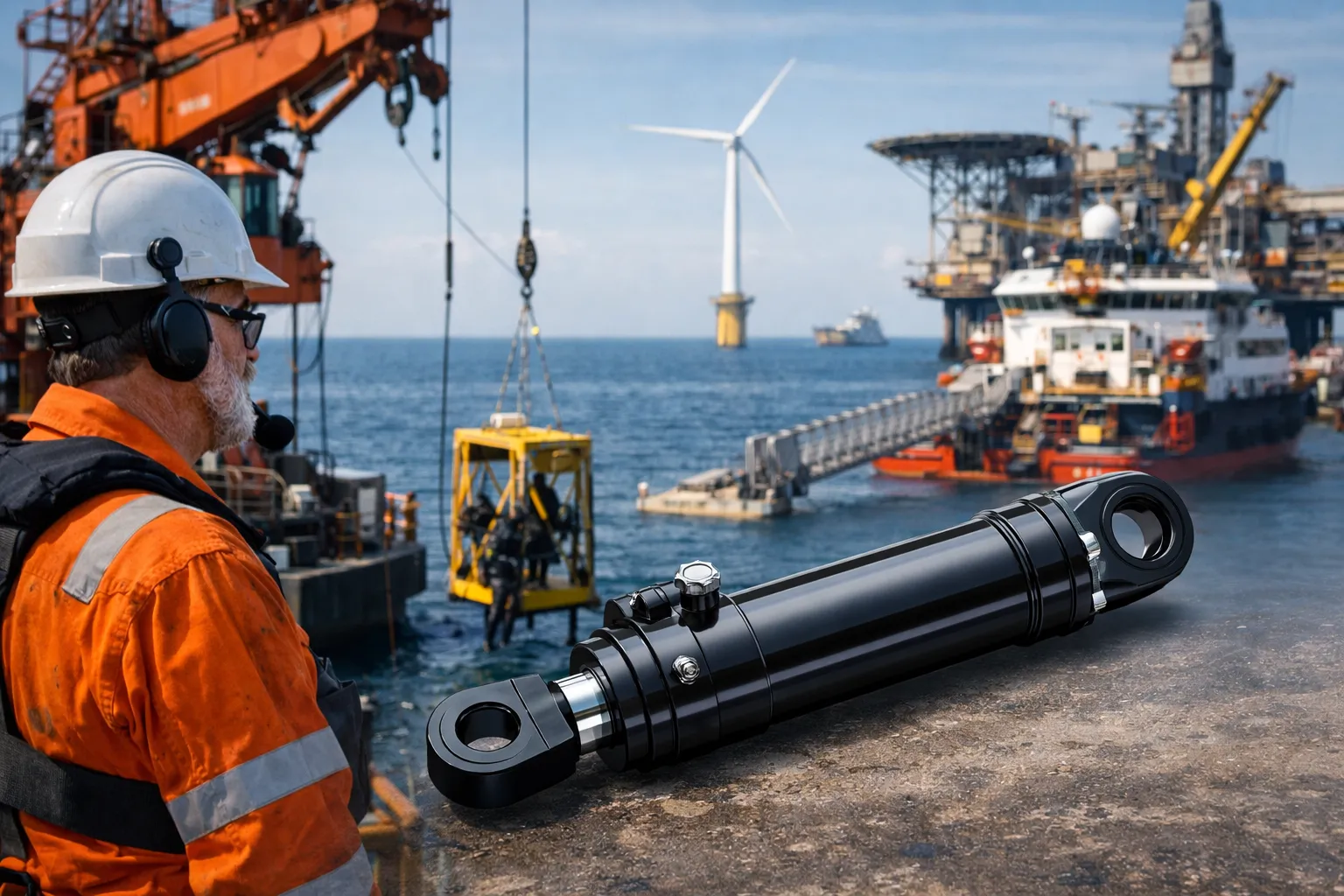
By integrating advanced metallurgical solutions—specifically heavy-duty monolithic forged architecture and high-velocity plasma-sprayed ceramic coatings—we provide maritime operators with a fluid power solution that guarantees absolute reliability. Whether you are engineering a new-build Very Large Crude Carrier (VLCC) in the bustling shipyards of South Korea, outfitting a dynamic positioning offshore support vessel, or managing a fleet-wide retrofit program across East Asia, our specialized hydraulic parts deliver the exact operational readiness your fleet demands. We focus strictly on maximizing your navigational uptime, significantly reducing your long-term maintenance expenditures, and keeping your commercial vessels safely on charter without the looming threat of steering failure.
Comprehensive Technical Parameters and Customization Scope
Marine engineering and naval architecture require strict adherence to precise operational specifications. We offer a highly customizable range of manufacturing parameters to perfectly match the specific hull displacement, rudder surface area, and torque calculation requirements of your specific steering compartment. The following technical table comprehensively outlines the foundational engineering specifications and material choices of our primary steering gear actuators.
| Specification Category | Engineering Detail & Customizable Range |
|---|---|
| Target Industry | Marine & Offshore Engineering |
| Equipment Category | Marine Steering Systems |
| Subsystem / Action | Steering Gear Drive / Rudder Articulation |
| Product Designation | Steering Gear Cylinder |
| Action Mechanism | Double acting hydraulic cylinder (Positive bidirectional force) |
| Structure Configuration | Servo Piston Cylinder (Compatible with internal LVDT feedback units) |
| Manufacturing Structure | Forged Cylinder Body (Eliminates heat-affected weld-seam fatigue vulnerability) |
| Core Material System | 2205 Duplex Stainless Steel (Superior yield strength and PREN rating) |
| Rod Surface Treatment | Ceramic Rod Coating (High-velocity thermal sprayed, zero porosity, highly inert) |
| Environmental Grade | Extreme Seawater Corrosion Resistance + High Reliability Duty Cycle |
| Operating Condition | Precise Rudder Angle Control (Supports advanced DP2/DP3 station keeping) |
| Primary Failure Mitigation | Engineered specifically to eradicate Corrosion Pitting and Seal Extrusion |
| Bore & Stroke Range | Bore: 80mm to 800mm+ | Stroke: Precision honed up to 6000mm |
| Installation Mountings | Heavy-duty spherical trunnions, composite bearing clevis eyes, or custom flanges |
The Operational Dynamics: How the Fluid Power Mechanism Works
To fully comprehend the engineering superiority of our product, one must deeply examine the precise operational mechanics of fluid power actuation within a vessel’s steering gear flat. Unlike a rudimentary single acting hydraulic cylinder utilized in simple gravity-return or single-direction lifting applications, ship steering is a dynamic process that requires absolute positive force in both directions simultaneously. Therefore, the system relies upon a heavy-duty double acting hydraulic cylinder arrangement. When the vessel’s helm or automated autopilot issues a directional navigation command, the central hydraulic power unit (HPU) directs high-pressure synthetic fluid through a series of highly responsive proportional directional control valves.
This pressurized fluid enters either the extension or retraction chamber of the cylinder. Acting upon the exact surface area of the internal hydraulic cylinder piston, the fluid generates an immense linear pushing or pulling force. This force vigorously drives the ceramic-coated rod, which is mechanically linked to the tiller arm or rapson slide, thereby rotating the massive steel rudder stock. In a typical heavy-duty steering configuration, these massive hydraulic rams operate in synchronized opposing pairs or quad layouts to provide a perfectly balanced, bidirectional torque profile that can easily overcome turbulent ocean currents.
The true sophistication of our product lies in its classification as a highly refined servo piston cylinder. Embedded within the mechanical assembly are incredibly sensitive linear variable differential transformers (LVDTs) or rotary feedback units. These internal sensors continuously relay the exact mechanical stroke position back to the navigation computer in milliseconds. Combined with our ultra-low friction dynamic seals, the cylinder operates completely without any “stick-slip” mechanical latency. This closed-loop hydraulic circuit guarantees flawless rudder angle control, allowing the massive vessel to make microscopic course corrections. This precise control not only maintains a perfectly straight heading but significantly reduces hydrodynamic drag on the hull, directly translating to substantially lower fuel consumption over long voyages.
Seamless Equipment Integration and Brand Replacement Solutions
Commercial fleet operators and global shipyards frequently face the daunting operational challenge of replacing obsolete, damaged, or severely degraded steering actuators during incredibly tight drydock schedules. Sourcing original equipment parts often incurs massive hydraulic cylinder price markups and unacceptable international lead times that can keep a vessel financially off-hire for months. We specialize in engineering high-fidelity, dimensionally exact drop-in replacements for major legacy maritime fluid power systems. Our engineers meticulously map the critical installation footprint, pin-to-pin lengths, trunnion outer diameters, and fluid port alignments to ensure that your dockyard mechanics can execute a zero-modification swap directly on the steering flat.
Important Technical Notice: To assist naval architects, purchasing managers, and marine engineers in component sizing, cross-referencing, and urgent selection, we note that our customized products are expertly engineered to perfectly replace steering equipment originally manufactured by respected legacy industry brands such as Rolls-Royce, Kongsberg Maritime, MacGregor, Hatlapa, Bosch Rexroth, Danfoss, and Jastram. We act entirely as an independent manufacturing firm and mention these specific trademarks strictly for the convenience of dimensional compatibility matching; absolutely no affiliation, sponsorship, or endorsement is implied or claimed.
Whether you require an entirely new multi-cylinder assembly or are urgently exploring options for fixing hydraulic cylinders that have suffered severe rod scoring during a storm, our comprehensive hydraulic cylinder repair and remanufacturing division offers highly flexible solutions. We can extensively upgrade your existing legacy hydraulic cylinder components by integrating our modern ceramic rod technology into your existing, structurally sound cylinder barrels, thereby breathing decades of reliable new life into aging mechanical equipment.
Core Engineering Advantages: Engineered to Defeat the Ocean
Designing a fluid power actuator for the unforgiving, violent conditions of the open ocean demands a total refusal to compromise on metallurgical and mechanical principles. Here are the distinct technical advantages that conclusively separate our Steering Gear Cylinder from standard industrial alternatives:
- 1. Definitive Eradication of Pitting Corrosion
The primary nemesis of marine hydraulics is aggressive chloride attack. Traditional hard chrome plating develops microscopic cracks during the standard electroplating process, allowing saltwater to penetrate down to the base metal. This causes sub-surface rust that violently blisters the chrome and shreds rod seals upon retraction. We utilize a highly advanced plasma-sprayed ceramic rod coating. This incredibly dense layer possesses virtually zero porosity, offering absolute chemical inertness to seawater and permanently eliminating pitting corrosion from the equation. - 2. 2205 Duplex Composite Steel Architecture
The material foundation of our cylinders utilizes high-grade 2205 duplex stainless steel. By brilliantly combining austenitic and ferritic microstructures, this material yields nearly twice the mechanical yield strength of standard 316L stainless, coupled with an exceptionally high Pitting Resistance Equivalent Number (PREN), completely preventing chloride stress corrosion cracking in humid, salt-laden atmospheres. - 3. Monolithic Forged Cylinder Body Integrity
Standard cylinders are often constructed from drawn tubes with welded end-caps. Under the violent, high-frequency shock loads of ocean waves striking the rudder blade, these heat-affected weld zones become prime locations for severe fatigue failure. Our cylinders feature a solid forged cylinder body. The deep forging process aligns the internal grain flow of the steel, providing massive monolithic rigidity and eliminating weld-fatigue points entirely. - 4. Ultra-Low Friction Dynamic Sealing Matrix
To achieve flawless servo-grade rudder angle control, the cylinder must easily overcome “stiction” (static friction) at the initiation of movement. We employ proprietary PTFE bronze-filled step seals and advanced hydrodynamic guide bands. These specialized components maintain an incredibly low friction coefficient, ensuring the hydraulic cylinder piston glides smoothly without judder, even during micro-velocity course corrections commanded by the autopilot. - 5. Superior Thermal Stability and Heat Dissipation
Continuous steering in heavy seas generates immense fluid shear heat. Our internal geometric porting is optimized via computational fluid dynamics (CFD) to minimize turbulence. Furthermore, our specialized elastomer seal energizers maintain their elasticity and high sealing force across a vast temperature spectrum, protecting the system from thermal degradation. - 6. Extended Fatigue Life Optimization via FEA
Utilizing advanced Finite Element Analysis (FEA), our design team maps the stress distribution across the mounting trunnions and clevis eyes. By increasing material thickness precisely at stress concentration points and deep-rolling all transition radii, we exponentially increase the cyclic fatigue life, ensuring the cylinder significantly outlasts standard 5-year vessel survey periods.
Uncompromising Manufacturing Processes and Quality Assurance
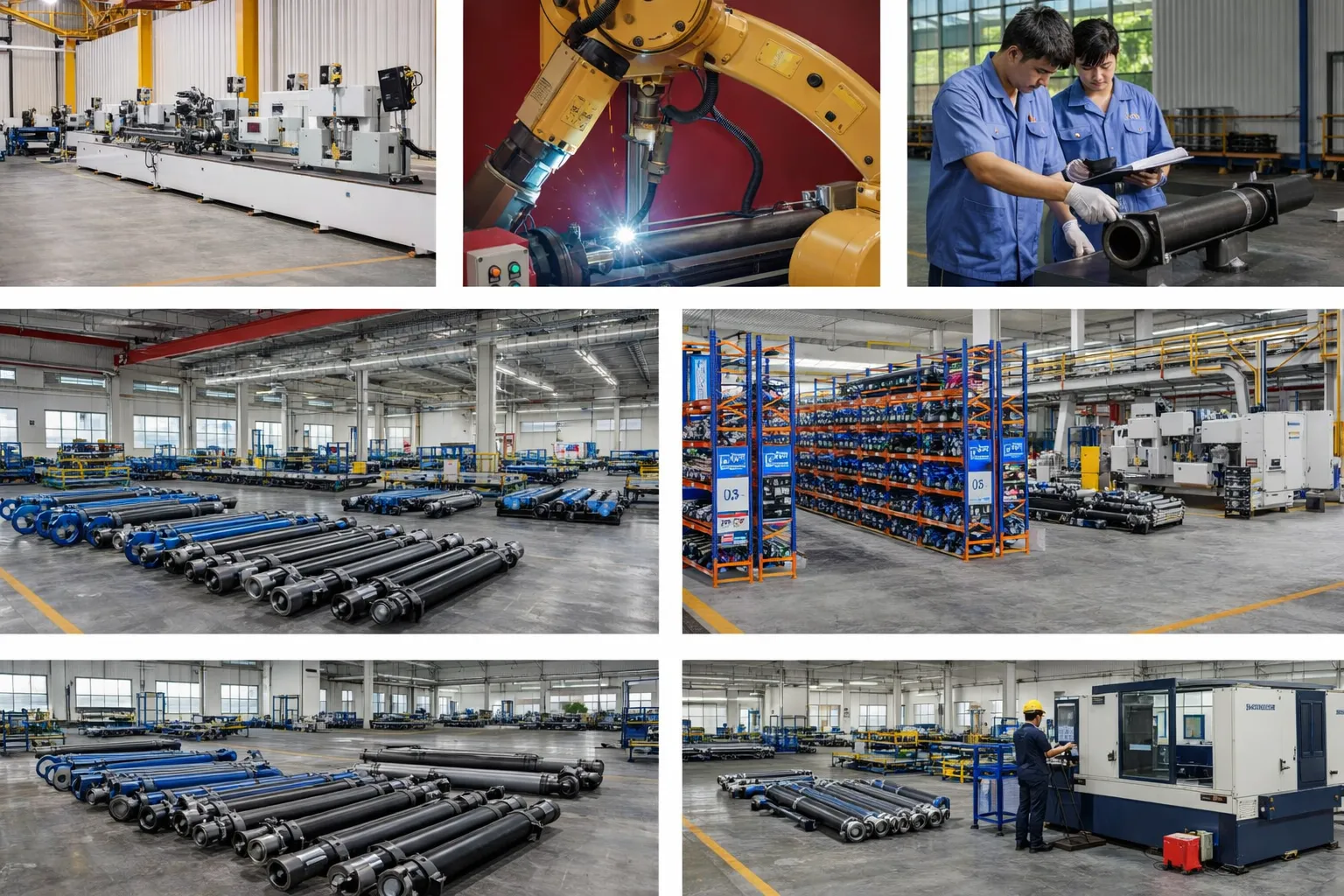
True operational reliability cannot be merely inspected at the very end of a production line; it must be meticulously manufactured into the product from the molecular level upwards. As an elite, fully integrated hydraulic cylinder manufacturer, we operate a completely autonomous production ecosystem. We flatly refuse to rely on fragmented, outsourced supply chains for critical components. Every crucial step, from the initial raw material processing to the final coat of multi-part marine-grade epoxy, is executed and rigorously monitored strictly within our own facility.
The manufacturing journey begins with strict spectroscopic analysis and ultrasonic testing (UT) of the raw 2205 steel billets to completely guarantee the absence of internal micro-voids prior to shaping the forged cylinder body. High-precision, multi-axis CNC deep-hole boring and specialized honing machines sculpt the internal barrels to exacting micron-level tolerances, achieving a mirror-like surface finish (Ra roughness) optimized perfectly for extending the life of the dynamic seals. Concurrently, the piston rods undergo the high-velocity thermal spray process in a vacuum-controlled environment, permanently bonding the ceramic particles to the solid steel substrate.
Quality assurance is a relentless, non-negotiable gateway process. Final assembly occurs in positive-pressure, climate-controlled cleanrooms to prevent any microscopic particulate contamination. Every single double acting hydraulic cylinder is subjected to a punishing 100% Factory Acceptance Test (FAT). This includes static pressure hold testing at 150% of the nominal working pressure, dynamic stroking under simulated mechanical loads, and stringent internal bypass leakage assessments. We maintain absolute material and metallurgical traceability. Because our products are heavily utilized in highly regulated shipbuilding regions like South Korea, we routinely manufacture to the rigorous standards of major marine classification societies, seamlessly facilitating surveyor inspections for DNV, ABS, Lloyd’s Register (LR), and the Korean Register (KR).
Cross-Industry Heavy Engineering Applications
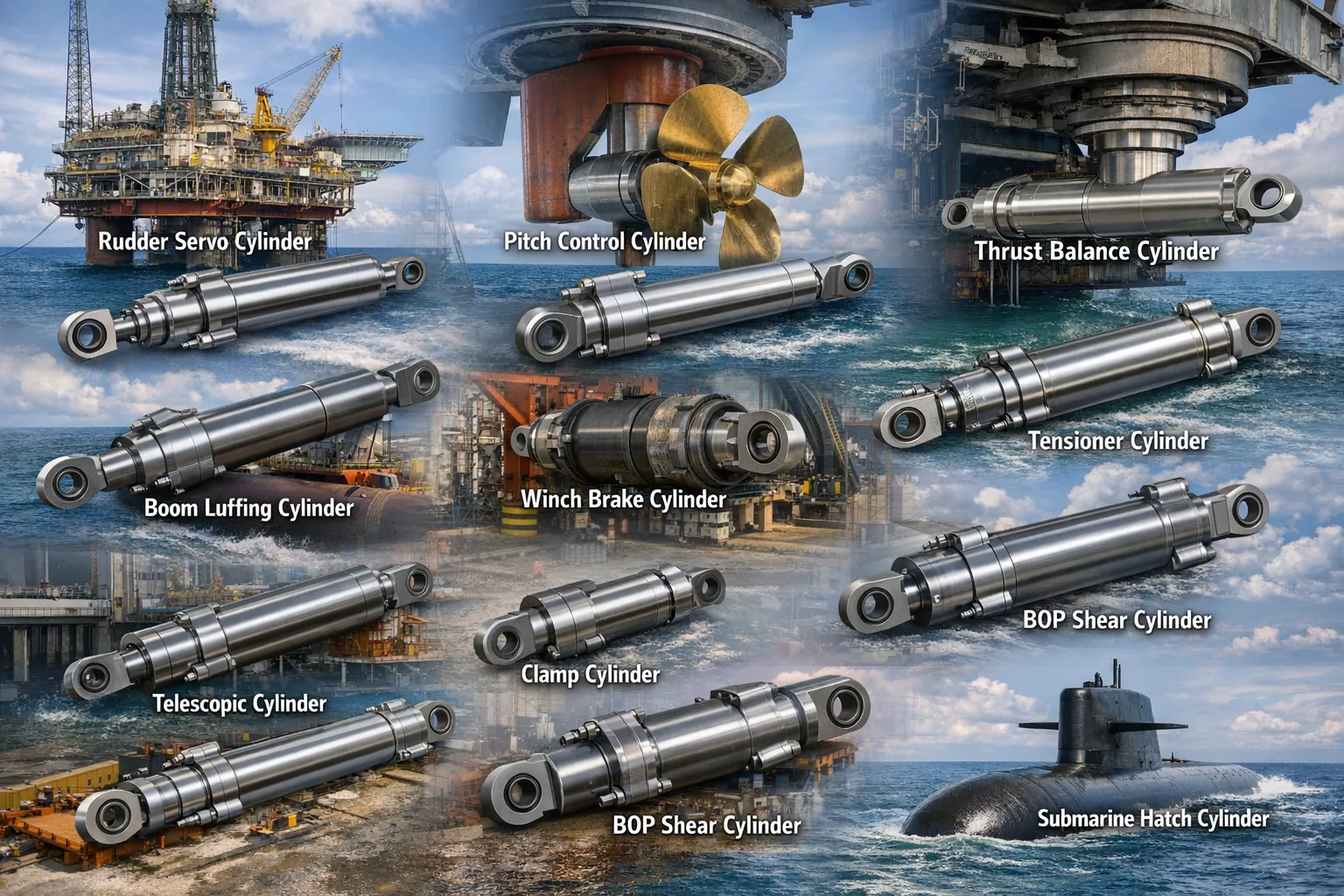
While the highly sophisticated architectural features detailed here are optimized specifically for the punishing demands of marine steering systems, the foundational technologies—extreme structural rigidity, absolute corrosion resistance, and flawless servo control—are highly sought after across multiple global heavy industries. The intensive engineering required to survive an ocean typhoon easily translates to the harsh, unforgiving realities of land-based industrial applications.
- Marine & Offshore Deck Equipment: Beyond steering, we meticulously engineer highly robust solutions for heavy-duty deck cranes (functioning as the primary lift cylinder), massive anchor handling towing winches, stabilizing fins, and offshore platform jack-up mechanisms.
- Metallurgical and Iron Industry: Steel mills present environments fraught with extreme ambient heat, highly abrasive metallic dust, and heavy mechanical shock. Our ceramic-coated rods and thermal-stable seals excel profoundly in continuous casting machines, rolling mill tensioners, and electric arc furnace tilt mechanisms.
- Mining Industry: Operating deep underground or in vast open pits, equipment faces relentless dirt, violent rock impacts, and extreme cyclical forces. Our heavy-duty hydraulic rams provide unmatched reliability for massive mining haul truck suspensions, rock crusher adjustments, and tunnel boring machine (TBM) articulation.
- Construction Machinery Industry: Heavy excavators, massive crawler cranes, and piling rigs require precise load control and absolutely unbreakable durability to keep massive infrastructure projects on schedule without costly fluid leaks.
- Civil Infrastructure & Hydro-power: We provide massive, custom-engineered actuators for dam spillway radial gates and critical flood control barriers where any mechanical failure equates to a catastrophic natural disaster.
Comparative Analysis: Standard Commercial vs. Premium Engineering
When evaluating heavy capital expenditure, assessing the initial quoted hydraulic cylinder price against the actual total lifecycle cost is paramount for fleet managers. Standard commercial off-the-shelf cylinders frequently result in catastrophic downtime, expensive emergency drydocking, and exorbitant off-hire financial penalties. The matrix below highlights the stark operational contrast between conventional marine adaptations and our purpose-built premium engineering.
| Feature Matrix | Standard Commercial Marine Cylinder | Our Premium Steering Gear Cylinder |
|---|---|---|
| Structural Body | Welded carbon steel tubes. Highly vulnerable to fatigue cracking at weld heat-affected zones. | Forged Cylinder Body. Monolithic strength ensures zero weld fatigue under violent wave shock loads. |
| Rod Surface Tech | Hard Chrome Plating. Susceptible to micro-cracking which allows salt moisture to penetrate to the base metal. | Advanced Ceramic Rod. High-density, non-porous layer absolutely impervious to seawater penetration. |
| Corrosion Pitting Risk | High Risk. Typically begins to pit and rust within 24 to 36 months of continuous offshore service. | Virtually Eliminated. Designed specifically to repel chloride attack for the entire vessel lifecycle. |
| Control Precision | Standard clearance limits; highly prone to stick-slip, forcing the autopilot to constantly over-correct. | Ultra-low friction servo piston cylinder design enables flawless, micro-degree rudder angle control. |
| Maintenance Cycle | Every 2 to 3 years (Requires frequent seal replacement and rod re-chroming). | 7 to 10+ years. Effortlessly aligns with major 5-year special survey drydock schedules. |
Proven in the Field: Global Maritime Success Stories
Theoretical engineering must be continuously validated by relentless field performance. Our bespoke hydraulic solutions have been deployed by tier-one maritime operators globally, boasting a particularly dominant track record in the technically demanding East Asian shipbuilding hubs. Below are heavily documented instances where our interventions resolved critical operational crises.
Case Study 1: Very Large Crude Carrier (VLCC) Retrofit in Busan, South Korea
The Engineering Challenge: Scheduled for its crucial 5-year special survey drydock in Busan, a 300,000 DWT vessel had been experiencing chronic and severe steering fluid leaks. The original OEM hydraulic rams suffered from aggressive corrosion pitting on the piston rods due to continuous exposure to salt-laden air in the aft steering flat. This pitting acted like sandpaper against the primary rod seals, causing localized fluid bypass that threatened the vessel’s environmental compliance under strict MARPOL regulations.
The Solution Delivered: The shipyard engineers contacted us via our technical portal. We rapidly engineered and manufactured a set of four bespoke steering gear cylinders utilizing our 2205 composite steel and dense ceramic rod coating. The units were designed to exactly match the existing pin-to-pin dimensions, allowing the shipyard mechanics to perform a rapid drop-in installation without any deck welding or structural modifications.
The Result: As of their recent underwater survey, the ceramic rods maintain a flawless mirror finish with absolutely zero signs of pitting. The captain reported a noticeable stabilization in autopilot tracking during Pacific crossings.
“The engineering quality out of this facility rivals and frankly exceeds the top-tier European brands we previously relied on. The ceramic coating completely eradicated the leakage issues, saving us tens of thousands in potential port state control fines. A truly exceptional manufacturing partner.” — Chief Marine Engineer, Fleet Operations, Busan.
Case Study 2: Dynamic Positioning (DP2) Wind Turbine Installation Vessel in Yokohama, Japan
The Engineering Challenge: To safely manipulate massive turbine blades, the vessel’s DP2 system requires hyper-accurate station-keeping capabilities. The existing steering cylinders suffered from high friction and stiction, causing a jerky motion that destabilized the ship’s heading and forced the bow thrusters to constantly overwork to compensate, burning excess fuel.
The Solution Delivered: We supplied specialized servo piston cylinders equipped with integral LVDT feedback sensors and our proprietary ultra-low friction PTFE dynamic sealing matrix, completely prioritizing smooth proportional response.
The Result: The transition of rudder movement became completely fluid. The vessel achieved sub-degree accuracy on its rudder positioning, instantly optimizing the fuel consumption of the entire thruster system and ensuring safe heavy-lift operations.
Case Study 3: Rapid Repair Logistics for a Feeder Container Ship in Singapore
The Engineering Challenge: A vessel suffered a catastrophic rod eye fracture on its primary marine steering system after a severe storm. Fixing hydraulic cylinders locally was impossible due to the structural failure of the barrel. The European OEM quoted an unacceptable 14-week lead time, which would result in massive off-hire demurrage financial losses.
The Solution Delivered: Activating our emergency production lane, we utilized our extensive inventory of forged steel billets. The replacement unit was machined, coated, assembled, FAT tested, and air-freighted directly to the shipyard within an astonishing 19 days.
“Their ability to deliver a class-certified, heavy-duty marine actuator in under three weeks saved us hundreds of thousands in lost charter rates. They understood the urgency and executed perfectly. Truly a premium engineering partner.” — Technical Fleet Director, Singapore.

Frequently Asked Questions
Procuring critical marine safety components involves rigorous technical due diligence. Below, we address the most common inquiries received from naval architects, purchasing managers, and chief engineers regarding the specifications and logistics of our products.
1. How long is the typical manufacturing lead time for a custom marine steering cylinder?
2. Why not use a single acting hydraulic cylinder for steering applications?
3. Do you provide Class Society certifications (e.g., DNV, ABS, KR) with the cylinders?
4. Exactly how does the Ceramic Coating prevent corrosion pitting better than Chrome?
5. Do you supply spare hydraulic cylinder components and repair kits?
6. How do you determine the correct hydraulic cylinder price for a custom unit?
7. Can you support us with comprehensive hydraulic cylinder repair?
Secure Your Fleet’s Navigational Reliability Today
Do not permit sub-standard, mass-produced actuators to jeopardize the safety of your crew or the profitability of your commercial shipping operations. Partner with a dedicated engineering facility capable of delivering uncompromising quality, rapid drydock turnarounds, and profound technical expertise.
Whether you require an emergency retrofit in South Korea or are specifying highly engineered fluid power systems for a global new-build project, our engineers are standing by. Provide us with your technical requirements, and we will deliver a solution engineered to defeat the ocean.
Editor: Cxm