Product Overview
On a pipelay vessel, the roller cradle system guides every meter of pipeline from the firing line over the stinger and into the water. Each roller station must be raised, lowered, and held at precise heights to maintain the correct pipe curvature — and it has to do this while the vessel pitches, rolls, and heaves in open sea. The roller lift cylinder is the actuator that makes that height adjustment happen, and its performance directly controls pipe alignment, weld quality, and overall lay rate.
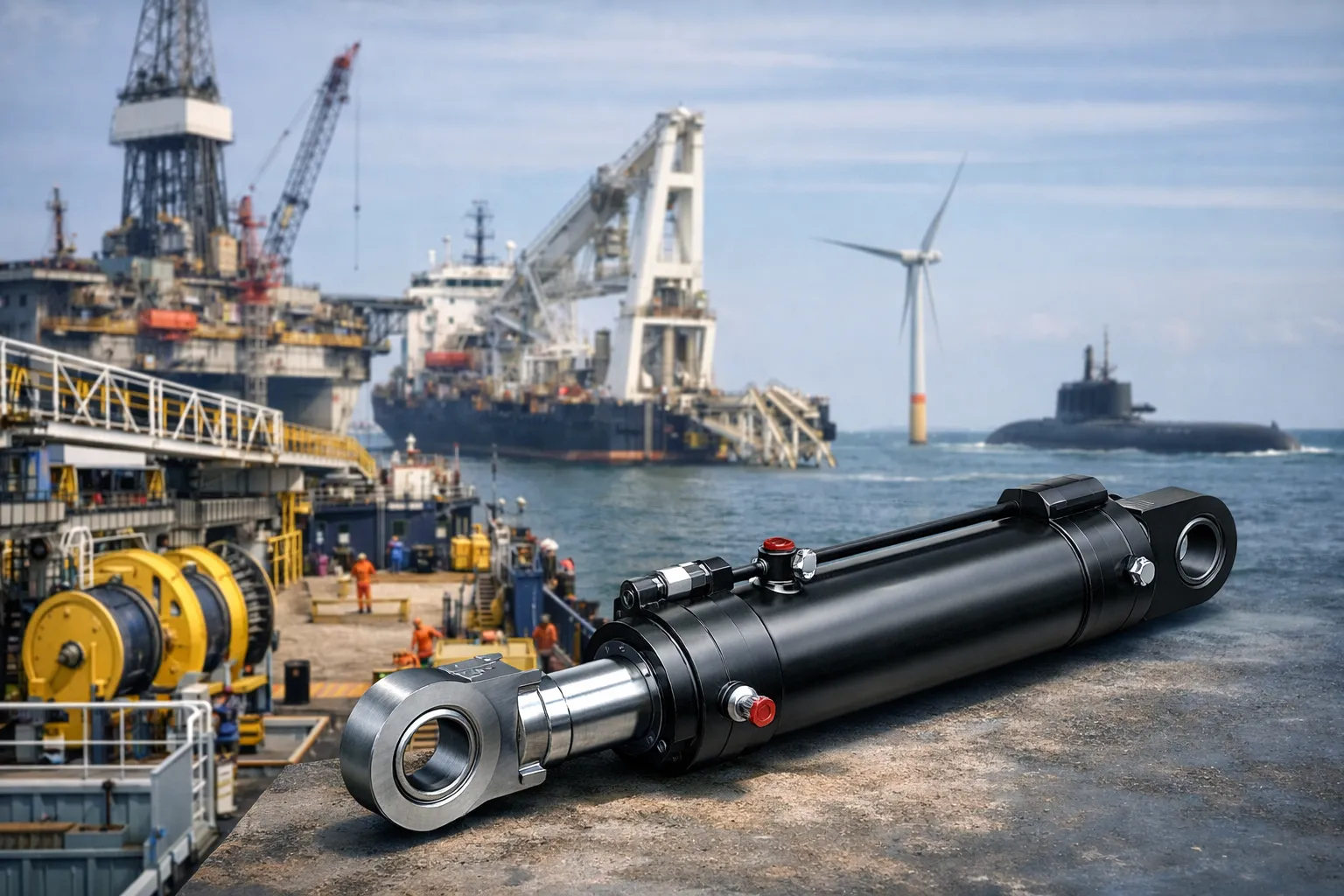
Our roller lift hydraulic cylinder is a double-acting welded piston cylinder engineered specifically for this application. The barrel is manufactured from Q345D low-alloy structural steel. The piston rod carries a ceramic spray coating — not just hard chrome — providing dramatically improved wear and corrosion resistance in the salt spray, seawater splash, and abrasive conditions found on a working pipelay deck. External surfaces receive nickel plating for additional protection against the constant marine environment exposure these cylinders face throughout multi-year deployments.
As a specialized hydraulic cylinder manufacturer, we designed this unit around the actual operating conditions on Korean and Asia-Pacific pipelay vessels — not as a catalog product adapted from land-based equipment. Every dimension, seal selection, and surface treatment decision was driven by real field data from roller cradle systems in active service.
Technical Specifications
Pipelay vessel roller systems vary considerably depending on the lay method, pipe diameter capacity, and vessel class. The specification ranges below represent the customization window we support for this roller lift hydraulic cylinder. Non-standard requirements are welcome — custom engineering is routine for us.
Basic Specification Range
| Parameter | Customizable Range |
|---|---|
| Bore Diameter | 100 mm – 400 mm |
| Rod Diameter | 70 mm – 280 mm |
| Stroke Length | 200 mm – 2,500 mm |
| Working Pressure | 16 MPa – 35 MPa |
| Proof Test Pressure | 1.5x rated working pressure |
| Action Type | Double-acting |
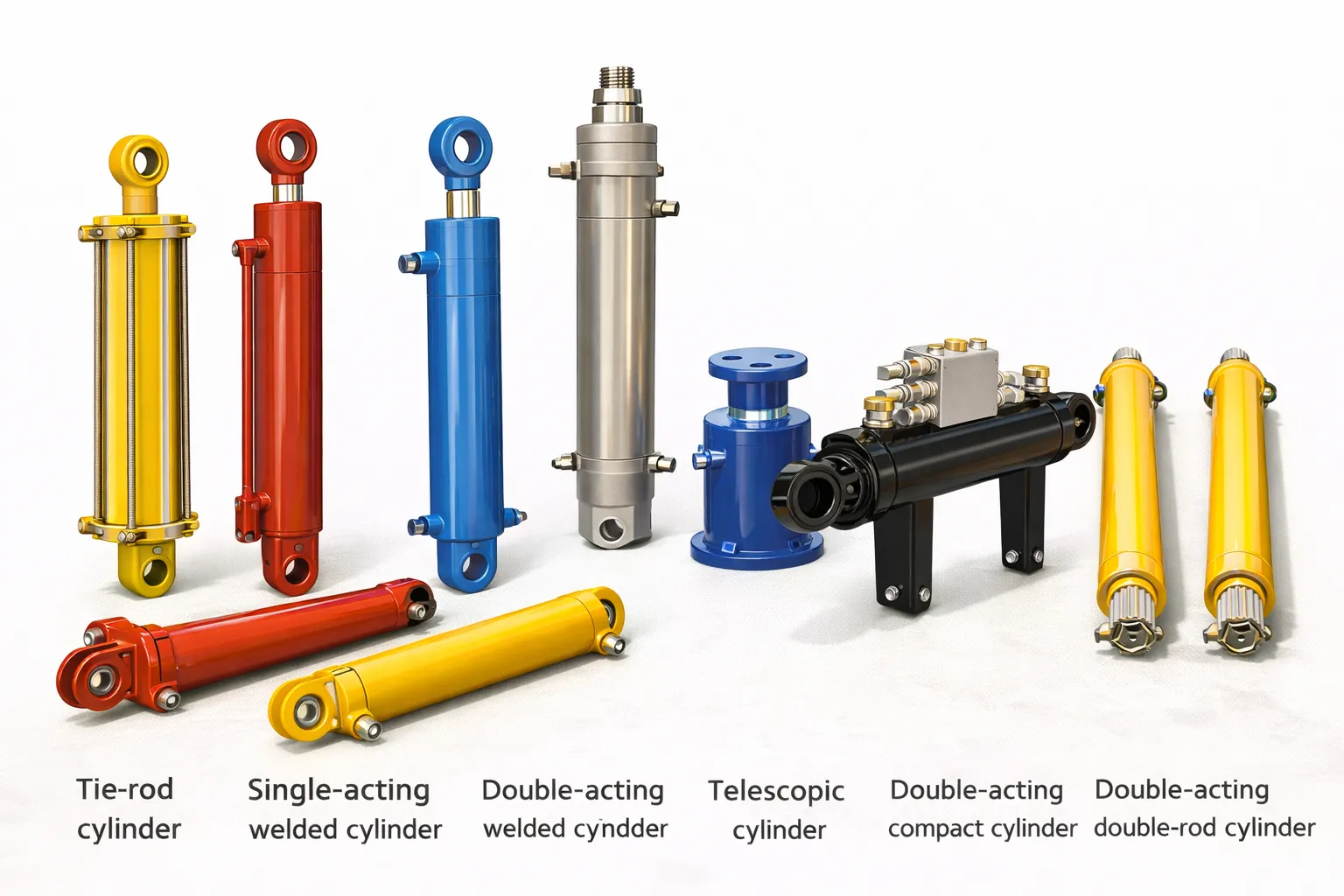
| Cylinder Structure | Piston type, welded construction |
| Rod Speed | 0.005 m/s – 0.3 m/s |
| Position Feedback | Optional integrated linear transducer (magnetostrictive or resistive) |
Mounting Options
| Mounting Style | Application Note |
|---|---|
| Flange Mount (Front / Rear) | Standard for vertical roller cradle integration |
| Trunnion Mount | Accommodates angular movement as vessel pitches |
| Clevis / Spherical Bearing | Multi-axis articulation for stinger-section rollers |
| Foot Mount | Deck-level base installation with limited vertical clearance |
| Custom Bracket | Matched to OEM or retrofit frame geometry |
Materials and Surface Treatment
| Component | Material / Treatment |
|---|---|
| Cylinder Barrel | Q345D low-alloy steel, precision honed bore (Ra ≤ 0.4 μm) |
| Piston Rod | 42CrMo or CK45, ceramic spray coating (HVOF applied, 0.15–0.30 mm) |
| Piston | Forged steel or ductile iron, precision ground |
| End Caps | Q345D, welded and stress-relieved |
| Seals | Multi-stage marine-grade package (Parker, Hallite, or equivalent) |
| External Surface | Nickel plating over full external surface area |
| Optional Coatings | Offshore-grade epoxy paint system, zinc-rich primer |
Environmental Adaptability
| Condition | Rating / Range |
|---|---|
| Operating Temperature | -25 °C to +80 °C |
| Salt Spray Resistance | ≥ 1,500 hours (ASTM B117) |
| Environment Rating | Wave impact, continuous seawater splash zone |
| Vibration / Shock | Compliant with DNV-GL and ABS offshore structural vibration requirements |
| IP Rating | IP66 standard; IP67 available on request |
How the Roller Lift Hydraulic Cylinder Works
On a pipelay vessel, pipeline sections travel along a series of roller stations arranged in a firing line or tensioner track. Each roller station is mounted on a cradle that must be raised or lowered to match the required pipe departure angle and curvature profile. The roller lift cylinder is the actuator beneath each cradle — it sets and holds the roller height while the pipe rolls over it.
In operation, the hydraulic control system sends pressurized fluid to the extend port of the double-acting hydraulic cylinder, pushing the piston rod upward and raising the roller cradle to the target elevation. When the system needs to lower the cradle — for example, to adjust the overbend radius during a change in water depth — fluid is routed to the retract port while the extend side drains back to the reservoir. The cradle descends in a controlled manner, with flow control valves metering the descent rate to prevent sudden drops that could damage the pipe coating or misalign the weld station.
During active pipelaying, these cylinders spend long periods holding a static position under sustained load while the vessel moves through a sea state. Wave-induced vessel motion transfers dynamic forces into the roller supports — impact loads that cycle continuously as the hull pitches and rolls. The hydraulic cylinder piston seals must resist both the static holding pressure and the superimposed dynamic oscillations without developing internal leakage. This is the primary failure mode in roller lift service: seal degradation from cyclic micro-movements under load, leading to progressive leakage and loss of roller height control.
Our cylinder addresses this with a multi-stage seal arrangement designed specifically for the combination of static holding and low-amplitude dynamic loading that characterizes pipelay roller duty. The ceramic-coated rod surface provides a harder, smoother bearing surface than conventional chrome plating, which reduces seal abrasion and extends the interval between seal replacement cycles.
Compatible Brand Replacement
Note: The brands listed below are referenced solely to assist with selection and dimensional matching for replacement purposes. They are registered trademarks of their respective owners. We have no affiliation with or endorsement from any of them.
Our roller lift hydraulic cylinder is designed as a direct or dimensionally adapted replacement for lift cylinders used in roller cradle systems on pipelay vessels built or equipped by:
- Allseas — Solitaire, Pioneering Spirit, and other S-lay and heavy-lift pipelay vessels
- Saipem — Castorone, S7000 series, and deep-water J-lay systems
- Heerema Marine Contractors — Aegir and DCV Balder pipelay equipment
- McDermott International — Amazon, North Ocean 105, and subsea construction vessels
- Huisman — pipelay tower and roller track systems supplied to multiple vessel operators
- IHC IQIP (formerly GustoMSC) — roller cradle designs for S-lay and reel-lay systems
- Bosch Rexroth / Parker Hannifin — OEM hydraulic cylinders supplied as part of third-party roller track assemblies
- Samsung Heavy Industries / Daewoo (DSME) — deck equipment on Korean-built pipelay and construction vessels
We match bore size, rod diameter, stroke, port layout, and mounting geometry to your existing installation. Send us the nameplate data or a dimensional drawing of the current hydraulic oil cylinder and our engineering team will confirm compatibility — typically within 24 hours.
Core Technical Advantages
Ceramic Rod Coating (HVOF Process)
This is the defining feature of this cylinder series. Instead of conventional hard chrome plating, the piston rod receives a ceramic-metal composite coating applied through High Velocity Oxygen Fuel (HVOF) thermal spray. The resulting layer is 0.15 to 0.30 mm thick, with a surface hardness exceeding 1,200 HV — roughly three times harder than chrome. The ceramic coating resists micro-pitting, abrasion from salt crystals, and galvanic corrosion far better than chrome in seawater splash zones. For operators managing hydraulic cylinder repair schedules, this translates to rod service intervals that are two to three times longer than chrome-plated equivalents.
Multi-Stage Low-Friction Seal System
Each gland position houses a primary pressure seal, a secondary buffer seal, and a wiper/scraper assembly. The seal profiles and materials are selected to handle the specific combination of sustained static holding pressure and continuous low-amplitude dynamic oscillation that defines roller lift duty. Dynamic friction is reduced by approximately 25% compared to standard single-seal designs, improving position control responsiveness and reducing heat generation during active height adjustment cycles.
High-Rigidity Barrel Construction
The cylinder barrel is deep-hole bored from a single billet of Q345D steel and honed to a surface finish of Ra 0.4 micrometers or finer. Wall thickness is calculated to withstand not only the internal hydraulic pressure but also the external bending loads transmitted through the roller cradle mounting points as the vessel moves through a sea state. Finite element analysis is used during the design phase to verify stress distribution at weld joints and port boss locations under combined pressure and external load cases.
Nickel-Plated Corrosion Protection
All external surfaces — barrel, end caps, port bosses, and mounting brackets — receive electroless nickel plating. This metallic barrier outperforms paint-based systems in the harsh splash zone environment found on pipelay vessel decks. Salt spray test results (ASTM B117) consistently exceed 1,500 hours without base metal corrosion. For vessels operating in Korean coastal waters, the East China Sea, and Pacific transit routes, this level of corrosion protection is not optional — it is a baseline requirement for acceptable service life.
Wave-Impact Load Resistance
Pipelay vessels operate in sea states that can generate significant dynamic loads on deck-mounted equipment. Our cylinder design accounts for wave-impact loading through reinforced end cap welds, oversized bearing bands, and piston rod guides that absorb side loads without transferring them to the seal gland. This structural approach prevents the premature seal extrusion and gland distortion that are common failure pathways in cylinders originally designed for land-based service and later adapted for marine use.
Fatigue Life Optimized for Cyclic Micro-Movement
Unlike construction or mining cylinders that operate through full stroke cycles, roller lift cylinders on a pipelay vessel spend most of their service life making small corrective movements around a set point — often less than 10% of total stroke — while absorbing continuous wave-induced vibration. Our weld joints receive post-weld heat treatment and ultrasonic inspection. Rod threads are rolled rather than cut, and the rod-piston connection is designed to remain tight under millions of low-amplitude oscillation cycles. This configuration is validated for a minimum of 800,000 equivalent full-load cycles.
Integrated Position Sensing Ready
Modern pipelay control systems require precise roller height feedback for automated pipe curvature management. Each cylinder can be supplied with a machined bore or external mounting provision for magnetostrictive or resistive linear position transducers. Signal output options include 4-20 mA, 0-10 V, or CANbus, depending on the vessel control system interface requirements. This eliminates the need for external measurement rigs and reduces installation complexity during commissioning.
Field-Serviceable Gland Design
Seal replacement on a pipelay vessel often happens between lay campaigns — sometimes alongside the quay, sometimes at anchor. Our gland design allows seal and bearing changes without fully removing the cylinder from the roller cradle frame. The rod end connection uses a standard locking method that field technicians can service with common tooling. We supply illustrated service manuals and pre-packaged seal kits with every order, and spare kits ship within 48 hours from our warehouse for fleet customers managing hydraulic parts inventory.
Manufacturing Process and Quality Control
Vertically Integrated Production
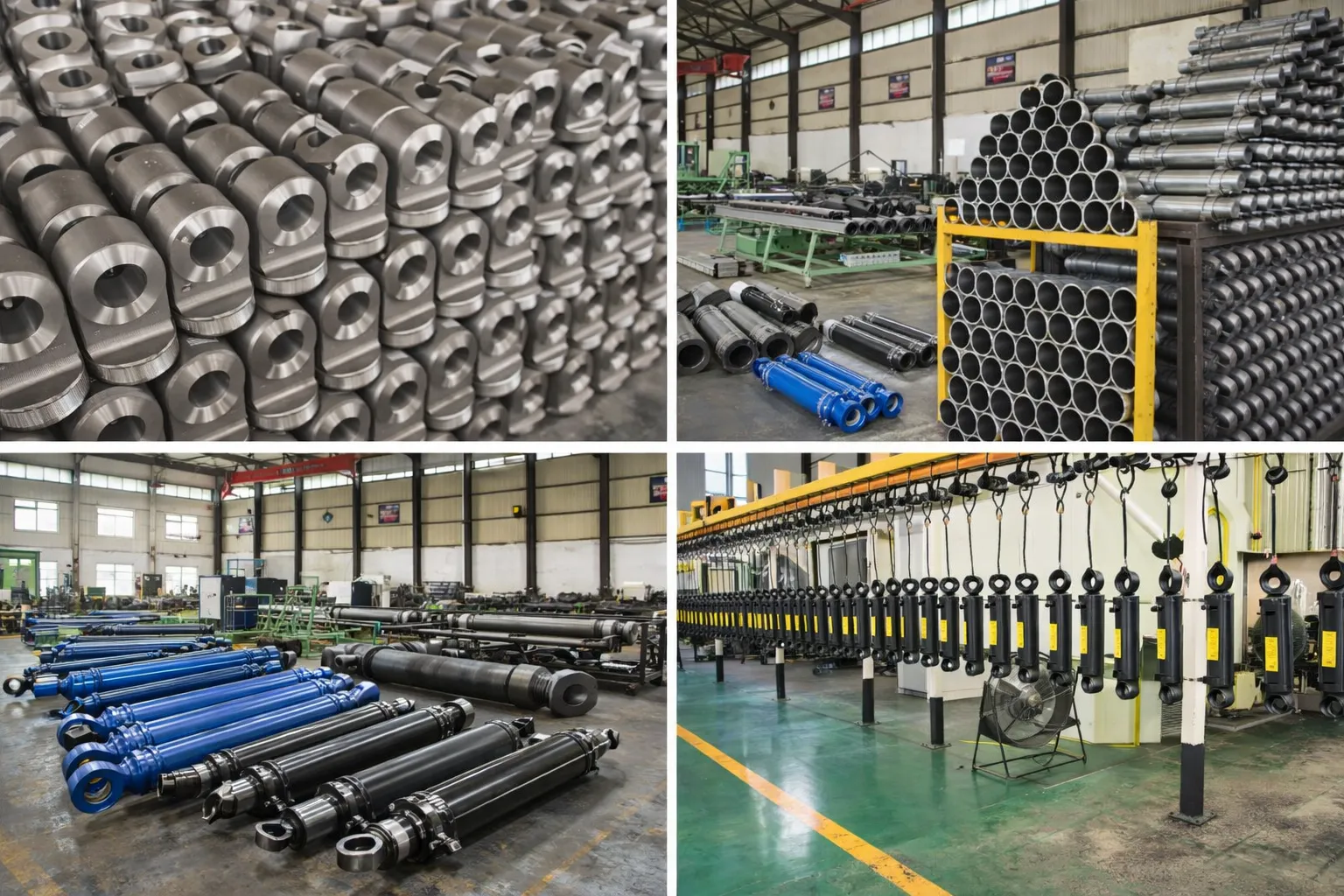
Every critical manufacturing step is performed in our own facility: CNC deep-hole boring, precision internal honing, automated MIG/MAG and submerged arc welding, HVOF ceramic spray coating, electroless nickel plating, and final assembly in a controlled cleanroom environment. This vertical integration means that when a hydraulic cylinder ships from our dock, it carries a single manufacturing pedigree. There are no unknown subcontractors, no outsourced machining, and no plating from a third-party shop with different quality standards.
100% Factory Testing
Every completed cylinder is subjected to a standardized test protocol before being released for shipment:
- Hydrostatic pressure test at 1.5x maximum working pressure, held for a minimum of 10 minutes
- Full-stroke function test at rated pressure in both directions
- Internal leakage measurement under static holding conditions at maximum pressure
- External leakage check at all port connections, rod seal, and every weld joint
- Dimensional audit against the approved production drawing (bore, rod, stroke, ports, mounts)
- Ceramic coating thickness measurement and surface roughness verification on the piston rod
Each cylinder ships with an individual test certificate. Test data is archived digitally and linked to the serial number for a minimum retention period of 10 years.
Certification and Traceability
Our facility holds ISO 9001:2015 certification. Material certificates are available to EN 10204 Type 3.1 for all pressure-retaining components. For offshore projects, we work regularly with DNV, ABS, BV, Lloyd’s Register, KR (Korean Register), and NK (Nippon Kaiji Kyokai) to secure project-specific survey certificates or type approval documentation. Every raw material heat number, every welding procedure, every coating thickness reading, and every test result is linked to the cylinder serial number through our ERP traceability system.
Incoming Material Verification
Steel billets and bar stock are checked for chemical composition via optical emission spectrometry, tensile and Charpy impact properties, and internal soundness by ultrasonic examination before entering the production queue. Seal materials are batch-tested for Shore hardness and compression set. The ceramic spray powder is verified for particle size distribution and chemical composition. Roughly 4% of incoming material is rejected annually — a figure that reflects genuine scrutiny at the receiving dock.
Weld Quality Program
All pressure-boundary and structural welds are performed by coded welders following pre-qualified Welding Procedure Specifications (WPS). Critical welds — barrel-to-end-cap, port boss, and mount bracket joints — receive 100% ultrasonic testing and magnetic particle inspection. Post-weld heat treatment is applied to relieve residual stress, and finished weld joints are documented with photographic records tied to the cylinder serial number.
Typical Industry Applications
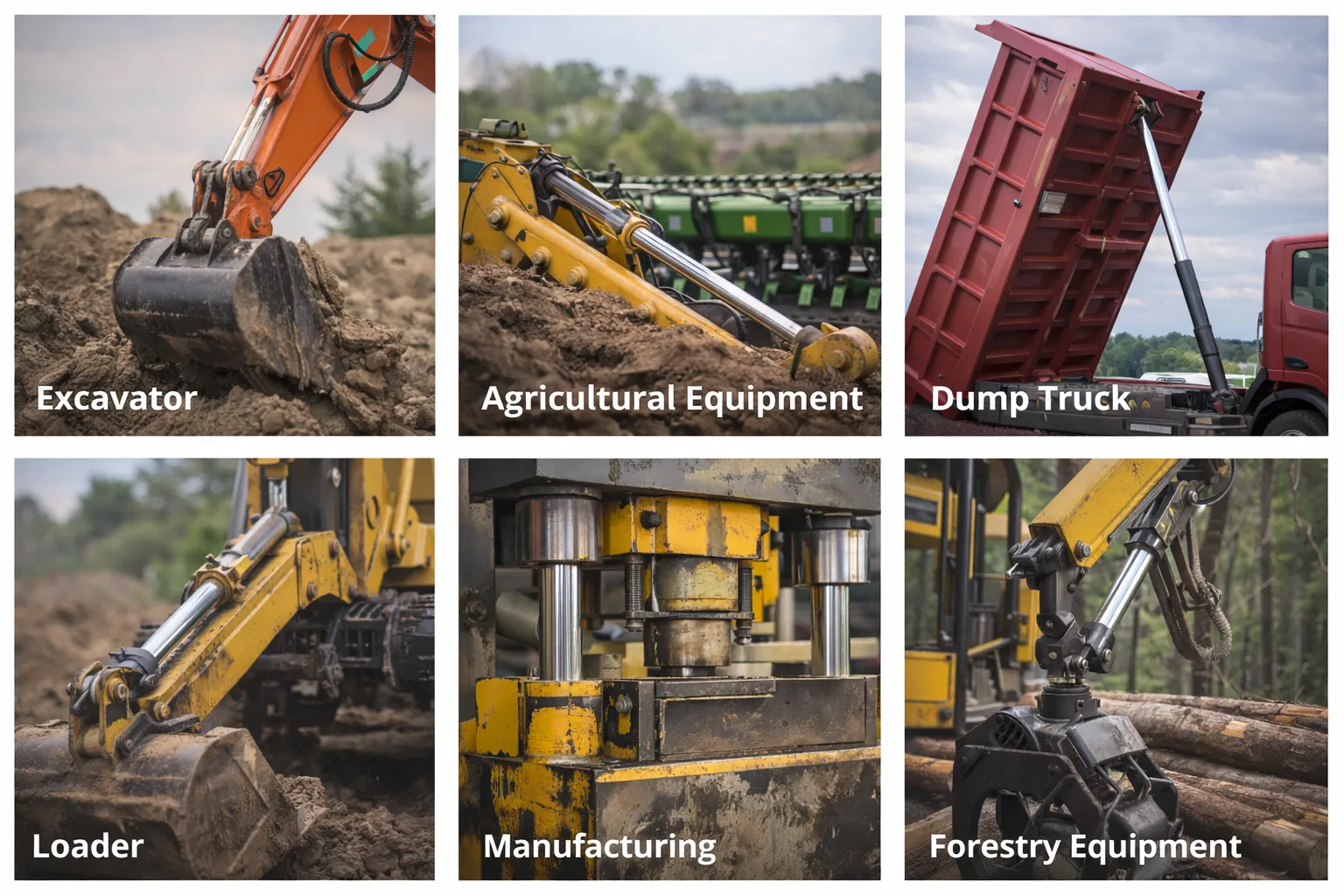
Although this page focuses on the pipelay vessel roller lift application, the same engineering foundation supports a broad spectrum of demanding service environments. Here is where our customers deploy these cylinders:
Offshore Pipelay and Subsea Construction
Roller cradle lift and alignment on S-lay, J-lay, and reel-lay vessels. Stinger adjustment cylinders. Pipe tensioner clamping. Abandonment and recovery (A&R) system actuators. The combination of ceramic rod coating, nickel-plated exteriors, and classification society approval makes these cylinders a natural choice for any deck-mounted hydraulic ram on an offshore construction vessel.
Marine Deck Equipment
Crane luffing and slewing cylinders, hatch cover actuators, ramp and gangway lift systems, and FPSO turret equipment. Wherever seawater exposure meets sustained or cyclic loading, the design philosophy behind this cylinder applies directly.
Metallurgy and Heavy Manufacturing
Roll gap adjustment in hot and cold rolling mills, caster segment positioning, ladle tilting, and heavy press actuation. The fatigue-optimized weld joints and thermal stability perform well in the extreme temperature cycling found in metallurgical and iron industry applications.
Mining and Tunneling
Conveyor tensioning, TBM thrust cylinders, crusher gap adjustment, and longwall shield supports. The robust barrel construction and multi-stage sealing system handle dust-laden, high-vibration mining environments with predictable service life.
Construction Machinery
Boom, arm, and bucket cylinders for excavators; outrigger and stabilizer actuators for mobile cranes; blade and ripper lift cylinders for dozers and graders. The welded piston platform scales across the bore and stroke sizes common in construction machinery.
Material Handling and Port Logistics
Container spreader bar cylinders, heavy-duty lift table actuators, ship-to-shore crane systems, and automated stacking crane positioning. Precision stroke control and long fatigue life make these cylinders a strong fit for high-cycle port logistics equipment.
Renewable Energy and Environmental Systems
Wind turbine pitch actuators, tidal energy device deployment systems, and waste processing press cylinders. The wide temperature tolerance and corrosion-resistant surface treatment suit outdoor, unmanned installations operating year-round.
Custom and Specialty Projects
Dam gate actuators, lock gate drives, research test rigs, and defense applications. When the project goes beyond catalog dimensions or standard materials, our engineering group delivers a fully documented custom solution.
Performance Comparison: General-Purpose vs. Our Marine Roller Lift Cylinder
What separates a purpose-built roller lift hydraulic cylinder from a standard industrial unit adapted for vessel service? The differences are measurable — and they show up in maintenance intervals, operational reliability, and total cost of ownership across a pipelay campaign.
| Feature | General-Purpose Industrial Cylinder | Our Marine Roller Lift Cylinder |
|---|---|---|
| Barrel Material | ST52 or equivalent carbon steel | Q345D low-alloy steel with verified Charpy impact toughness |
| Rod Surface | Hard chrome plating (standard 20–30 μm) | HVOF ceramic spray coating (150–300 μm, 1,200+ HV) |
| External Corrosion Protection | Paint coating | Electroless nickel plating (1,500+ hr salt spray rated) |
| Seal System | Single piston seal + single rod seal | Multi-stage seal package per gland position |
| Internal Leakage at Rated Pressure | 3–10 cm³/min typical | < 0.5 cm³/min guaranteed |
| Bore Finish (Ra) | 0.8–1.6 μm | ≤ 0.4 μm precision honed |
| Weld Inspection | Visual only | 100% UT + MPI on all structural welds |
| Fatigue Rating | ~100,000–200,000 full-load cycles | 800,000+ equivalent cycles (PWHT, rolled threads) |
| Classification Approval | Not available / aftermarket adaptation only | DNV, ABS, BV, LR, KR, NK — project or type approval |
| In-Situ Seal Replacement | Full cylinder removal required | Gland-out service without dismounting from roller frame |
| Position Sensor Integration | External add-on (if available) | Factory-integrated transducer bore or mount provision |
Real-World Case Studies
Case 1 — Geoje Island, South Korea: Pipelay Vessel New-Build Program
Client: A major Korean shipyard building two S-lay pipelay vessels for a Southeast Asian operator
Application: OEM supply of roller lift cylinders for the full firing-line roller cradle system — 64 cylinders per vessel
How they contacted us: The yard’s deck machinery engineering department found our website while searching for a hydraulic cylinder manufacturer capable of producing ceramic-coated marine cylinders with DNV approval. They submitted a specification package through our online inquiry form in February 2024.
Outcome: We delivered 128 cylinders across four production batches, synchronized with the yard’s hull block assembly schedule. Every unit passed DNV project-specific survey on the first attempt. The yard’s project manager confirmed that our delivery schedule was met within a three-day window on all four batches — a reliability they said was unusual for this type of custom component. Per-cylinder cost was approximately 28% lower than the European OEM brand originally specified.
Client feedback: “We evaluated three potential suppliers. The ceramic rod coating and the in-house HVOF capability were the deciding factors. After 128 cylinders delivered without a single survey remark, we added them to our approved vendor list for all future pipelay projects.”
Case 2 — Busan, South Korea: Fleet Retrofit During Dry Dock
Client: A Korean offshore construction contractor operating two aging pipelay / derrick lay barges
Application: Replacement of 48 roller lift cylinders that had reached end-of-life after 9 years of continuous deployment in the South China Sea
How they contacted us: Their fleet maintenance superintendent attended a marine equipment exhibition in Busan in October 2023, visited our booth, and requested a site visit to our manufacturing facility. After the factory audit, they issued a formal RFQ in December 2023.
Outcome: We reverse-engineered the existing cylinders from nameplate data and physical samples removed during a scheduled dry-dock inspection. All 48 replacement roller lift cylinders were delivered within 11 weeks. The new ceramic-coated rods showed no measurable wear after the first 8 months of service, compared to the chrome-plated originals that had required rod reconditioning every 3 years.
Client feedback: “Our biggest concern was dimensional fit — these barges are 20 years old and the original cylinder drawings were lost. The engineering team measured our samples, confirmed every critical dimension, and delivered units that bolted in without modification. The ceramic coating is a real step up from chrome for this kind of duty.”
Case 3 — Kobe, Japan: Reel-Lay Vessel Upgrade
Client: A Japanese subsea pipeline contractor upgrading the roller system on a reel-lay vessel to handle larger pipe diameters
Application: Supply of 24 extended-stroke roller lift cylinders with integrated magnetostrictive linear transducers for automated height control
How they contacted us: The vessel superintendent found our product page through a Google search for “hydraulic cylinder price pipelay roller” in June 2024. He submitted a detailed specification spreadsheet via email after an initial phone consultation.
Outcome: We designed a custom cylinder with 1,800 mm stroke, 250 mm bore, and an internal bore machined for a Balluff BTL7 magnetostrictive transducer. All 24 units were delivered in 13 weeks with ABS type approval. During sea trials, the automated roller height control system achieved position accuracy within plus or minus 1.5 mm across the full stroke — within the required plus or minus 3 mm specification with comfortable margin.
Client feedback: “The integrated sensor provision saved us a lot of installation time. On the previous system, we used external linear encoders mounted on brackets that kept getting damaged by spray and dropped objects. Having the transducer inside the cylinder was the right approach for this vessel.”
Case 4 — Ulsan, South Korea: Emergency Spares for Active Lay Campaign
Client: A multinational pipelay contractor with a vessel operating in the Korean Strait
Application: Urgent replacement of two failed roller lift cylinders during an active pipeline installation campaign
How they contacted us: The vessel’s chief engineer called our Korean sales office directly on a Sunday morning in August 2024, after finding our contact number on a quotation his company’s procurement team had on file from a previous inquiry.
Outcome: We confirmed dimensional compatibility from the failed cylinder’s nameplate data within 3 hours. Two matching units were dispatched from our finished goods inventory the following morning (Monday) and delivered to the vessel’s agent at Ulsan port by Wednesday. The vessel resumed laying operations Thursday morning — total downtime was 4.5 days instead of the 8-10 weeks the original European supplier quoted for new replacement units.
Client feedback: “When you are burning vessel day rate during an unplanned shutdown, every hour counts. Getting compatible cylinders delivered to the quayside in 48 hours saved this project a significant amount of money. We have since placed a standing order for 6 additional spares to keep onboard.”
Case 5 — Singapore: Offshore Construction Vessel Conversion
Client: A Singapore-based offshore contractor converting a cargo barge into a shallow-water pipelay spread
Application: Design and supply of 32 roller lift hydraulic cylinders for a new roller track system to be installed on the converted vessel
How they contacted us: The project engineer found our website through an industry colleague’s referral and submitted a preliminary specification in April 2025, requesting a full technical proposal including classification society coordination.
Outcome: Working closely with the client’s naval architect, we developed a cylinder design optimized for the vessel’s specific roller spacing, load profile, and control system interface. BV (Bureau Veritas) project survey was completed at our facility with zero non-conformances. All 32 units shipped on schedule, and the conversion yard reported that every cylinder passed installation and commissioning testing without adjustment. The client estimated overall procurement savings of approximately 30% compared to their initial budget based on European OEM pricing.
Client feedback: “For a vessel conversion project, coordination between the cylinder supplier and the roller track fabricator is critical. The engineering team participated in three joint design reviews and responded to every revision request within 48 hours. That kind of responsiveness made the project timeline achievable.”
Frequently Asked Questions
What is the typical lead time for custom roller lift cylinders?
Standard customization — bore, stroke, port, and mount changes within our established range — ships in 8 to 12 weeks from order confirmation. Projects requiring classification society witness testing (DNV, ABS, KR, BV, etc.) should allow an additional 1-2 weeks for surveyor scheduling. Selected standard sizes are available from finished goods inventory and can ship within 3-5 business days for urgent requirements.
Why ceramic rod coating instead of standard hard chrome?
In the splash zone environment on a pipelay vessel, hard chrome plating is vulnerable to micro-cracking, which allows saltwater to reach the base metal and initiate corrosion beneath the coating. Ceramic spray coating applied by HVOF is denser, harder (1,200+ HV versus 800-900 HV for chrome), and forms a more continuous barrier. In practice, this means the rod surface lasts two to three times longer before requiring reconditioning, which directly reduces your hydraulic cylinder repair costs and maintenance downtime between lay campaigns.
Can you supply cylinders with KR (Korean Register) certification?
Yes. We produce cylinders with KR approval on a routine basis for Korean-flagged and Korean-built vessels. We coordinate directly with KR surveyors for material witnessing, manufacturing inspection, and pressure testing at our facility. We also support DNV, ABS, BV, LR, CCS, and NK certification for projects flagged under other registries.
How do I confirm compatibility with my existing roller system?
Send us the existing cylinder part number, nameplate photograph, or a dimensional drawing. Our engineering team will verify bore, rod, stroke, port layout, and mounting geometry — typically within 24 hours. If your current cylinders were supplied by one of the major pipelay equipment manufacturers (Huisman, IHC, etc.), we likely already hold a reference design in our database, which accelerates the compatibility check.
What position sensor types can be integrated?
We can accommodate magnetostrictive (Balluff BTL, MTS Temposonics, or equivalent) and resistive linear transducers. Mounting can be internal (machined bore within the piston rod or barrel) or external (welded boss on the barrel exterior). Output signal options include 4-20 mA analog, 0-10 V analog, SSI digital, and CANbus, depending on your vessel control system interface. We recommend discussing sensor integration early in the design phase to select the best mounting configuration for your control architecture.
Do you offer remanufacturing services for existing roller lift cylinders?
Yes. Our service capabilities include barrel re-honing, rod reconditioning (re-coating with ceramic or chrome), seal and bearing replacement, weld repair on mounting brackets and port bosses, and full re-testing to the original specification. For fleet operators, we offer scheduled overhaul programs with target turnaround times of 2-3 weeks per unit. We service both our own cylinders and those manufactured by other suppliers.
What is the minimum order quantity?
No fixed minimum. We produce single prototypes for development projects, small batches of 4-8 for vessel retrofit work, and production runs of 100+ for new-build shipyard programs. Unit pricing is naturally more favorable at higher volumes, but we do not impose order quantity thresholds. Many of our ongoing fleet customers began their relationship with a single replacement order to validate quality before committing to larger procurement.
Can cylinders be delivered directly to a vessel or shipyard?
Yes. We regularly coordinate delivery to shipyards and port facilities across South Korea, Japan, Singapore, and the wider Asia-Pacific region. For urgent spares, we work with marine freight specialists who can deliver directly to the vessel agent at the designated port. Provide us with the vessel name, arrival port, and ETA, and we handle the logistics from our warehouse to the quayside.
How does your pricing compare to European OEM suppliers?
Our customers consistently report savings of 20-35% compared to equivalent cylinders from established European manufacturers, with comparable or shorter lead times. The cost advantage comes from our vertically integrated manufacturing model and East Asia location, which eliminates subcontracting markups and reduces freight costs for regional deliveries. We welcome direct comparison — send us a specification or drawing, and we will provide a detailed quotation for side-by-side evaluation.
What warranty terms do you offer?
All hydraulic cylinders we manufacture carry a standard 24-month warranty from date of delivery, covering defects in materials and workmanship. For new-build shipyard projects where commissioning may occur months after cylinder delivery, we can negotiate warranty commencement tied to vessel delivery date. Warranty claims are addressed within 48 hours with a resolution plan — whether that requires shipping a replacement seal kit, dispatching a new cylinder, or sending a service technician to site.
Start Your Next Project
Ready to discuss your roller lift cylinder requirements?
Whether you need replacement cylinders for an existing pipelay vessel, OEM supply for a new-build program, or a custom-engineered solution for a vessel conversion — our engineering team is here to help. Send us your specifications and receive a detailed technical proposal with competitive pricing.
Editor: Cxm