Product Overview and Heavy Industrial Value
Within the relentless, high-stakes ecosystem of a modern integrated steel mill, the continuous casting machine represents the most critical transition phase, turning molten liquid metal into a solid, semi-finished product. As the glowing steel descends from the oscillating copper mold, it enters the massive containment and cooling zone known as the segment guide system. In this crucial section, the descending strand consists of a solidified outer shell enveloping a molten liquid core. This heavy liquid core generates immense internal ferrostatic pressure, continuously pushing outward against the fragile shell. To safely guide this incandescent strand and prevent catastrophic bulging, steel producers rely entirely on the absolute precision of the segment adjusting cylinder. This specialized hydraulic cylinder is responsible for mechanically setting, holding, and dynamically micro-adjusting the exact physical gap between the upper and lower segment roller frames.
If the roll gap deviates by even a fraction of a millimeter under load, the resulting steel slab will suffer from severe centerline segregation, internal porosity, or a devastating strand breakout that forces an emergency shutdown of the entire casting line. Deploying a standard, catalog-grade fluid power actuator or a basic lift cylinder into this hostile containment zone is a guaranteed recipe for sudden equipment failure. The continuous casting deck is characterized by extreme, long-term high temperature radiation, highly corrosive secondary cooling water sprays, and an endless bombardment of abrasive oxidized scale. Conventional elastomer seals undergo rapid thermal degradation in this environment, leading directly to internal fluid bypass, loss of clamping pressure, and subsequent slab bulging. As a globally recognized and technically advanced hydraulic cylinder manufacturer, we have strategically engineered our bespoke segment adjusting hydraulic cylinder to confront and conclusively defeat these precise metallurgical failure modes.
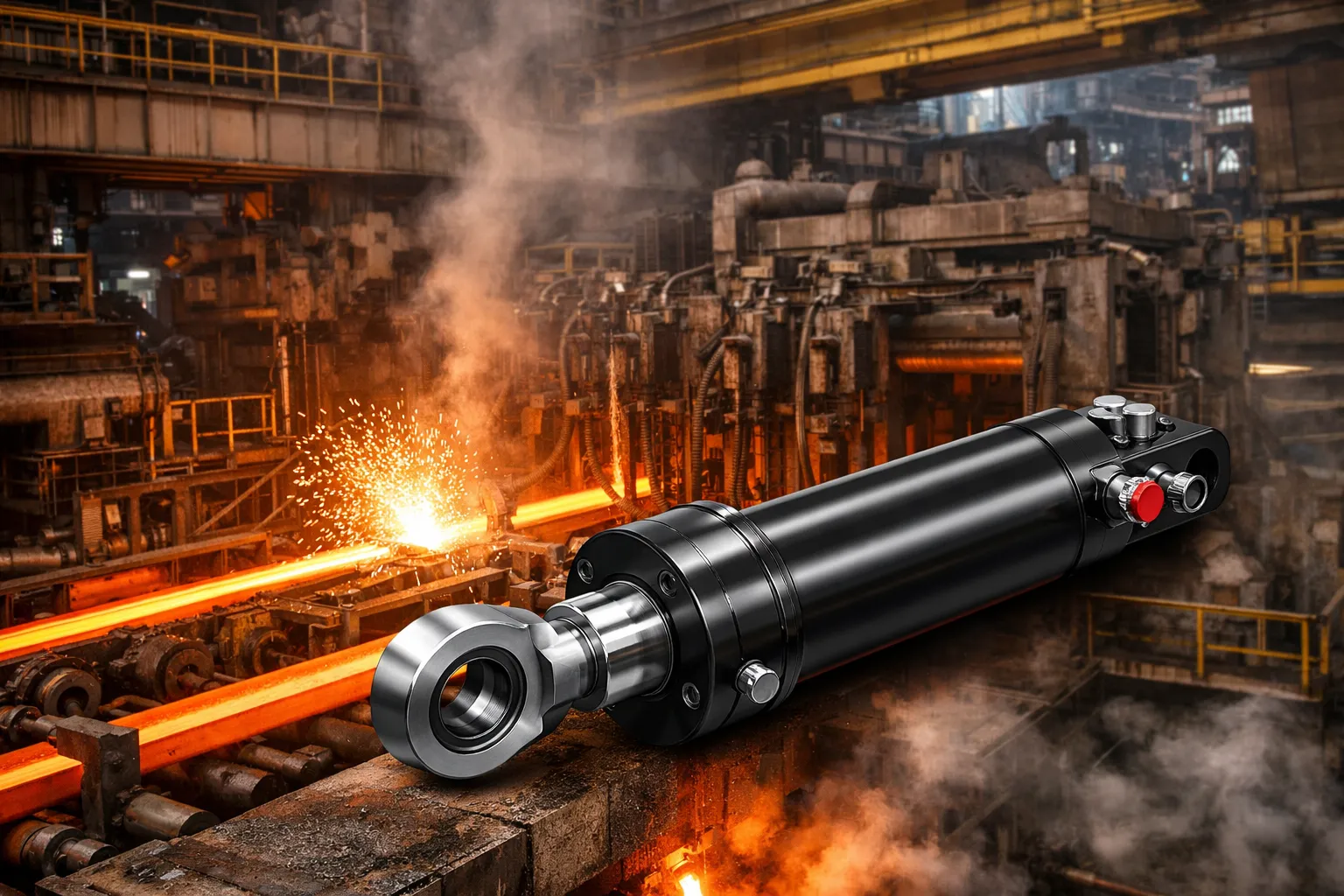
Our unique industrial positioning centers on bridging the massive gap between uncompromising technical performance and sustainable plant maintenance economics. When calculating the total lifetime hydraulic cylinder price, astute plant managers and procurement directors recognize that investing in a purpose-built, thermally stabilized servo unit drastically cuts down the exorbitant costs associated with unplanned strand stops. It completely eliminates the highly hazardous, labor-intensive process of constantly fixing hydraulic cylinders on a live, steaming caster deck. Our equipment fundamentally secures your production yields and significantly enhances your metallurgical competitiveness, particularly in demanding, high-output markets across South Korea, Japan, Taiwan, and the broader East Asian heavy manufacturing sector.
Technical Parameters and Customization Matrix
We possess a deep understanding that continuous casting layouts vary significantly depending on the machine’s metallurgical radius and the specific target steel grades being poured. The engineering parameters detailed in the matrix below establish the foundational specifications of our segment control solutions. Each specific technical attribute is exhaustively customizable by our engineering drafting team to perfectly align with your facility’s existing mechanical footprint, fluid power capacities, and automated Level 2 process control networks.
| Technical Specification | Engineering Data and Implementation Details |
|---|---|
| Target Industry Sector | Metallurgy and Heavy Steel Manufacturing |
| Equipment Category | Continuous casting machine (Slab, Bloom, and Billet Casters) |
| Subsystem Integration | Segment System (Bending, Bow, and Horizontal Straightening Segments) |
| Primary Cylinder Designation | Segment adjusting cylinder / Segment adjusting hydraulic cylinder |
| Action Method | Double acting hydraulic cylinder configured for rigid bi-directional holding |
| Internal Structure Type | High-response Servo Cylinder with embedded positional transducer |
| Manufacturing Structure | Heavy-duty Welded construction (Post-weld thermal stress relieved) |
| Core Material System | High-yield Forged Alloy Steel designed for maximum fatigue resistance |
| Rod Surface Treatment | Multi-layer micro-cracked Chrome Plated finish (Thermal ceramic optional) |
| Environment Level Rating | Long-term high temperature, heavy secondary water spray, corrosive scale vapor |
| Working Condition Focus | Continuous segment alignment control under massive ferrostatic shock loads |
| Typical Defeated Failure Mode | Accelerated seal aging, internal fluid bypass, and thermal housing distortion |
| Recommended Configuration | Premium Viton high-temperature seals coupled with internal fluid cooling jackets |
Operational Dynamics and Specific Working Principle
To truly leverage and appreciate the deep fluid power engineering embedded within these units, one must fundamentally understand how they operate in real-time beneath the molten casting mold. The segment adjusting cylinder does not merely act as a static, passive clamp; it functions as a highly intelligent, load-bearing mechanical muscle. As the continuous strand of steel progresses through the heavy roller apron, its outer shell cools and shrinks, but the liquid core exerts tremendous outward pressure. To maintain absolute internal metallurgical soundness, the segment rollers must apply a calculated, gradually tapering squeezing force—this precise mechanical action is known in the industry as dynamic soft reduction.
Our advanced design architecture utilizes a highly sophisticated electro-hydraulic servo loop. High-pressure hydraulic fluid is forcefully directed into either the bore side or the rod side of the double acting hydraulic cylinder via an extremely fast-acting proportional directional control valve. This fluid mechanics approach allows the cylinder to rigidly clamp the massive segment frame against precision mechanical spacers, or continuously float and micro-adjust the gap based on real-time solidification models calculated by the plant’s Level 2 automation system. Unlike a rudimentary single acting hydraulic cylinder that must rely on gravity or simple mechanical springs to perform a return stroke, our double-acting configuration ensures instantaneous reaction times in both directions. The internal hydraulic cylinder piston is machined to exact geometric tolerances and equipped with low-friction bronze-filled guide bands, allowing it to glide smoothly to execute these vital micro-adjustments.
The absolute secret to achieving perfect segment alignment control lies in the embedded Linear Variable Differential Transformer (LVDT). This high-precision sensor is safely housed inside the deeply gun-drilled piston rod, completely protected from the brutal external environment. It continuously monitors the cylinder’s exact mechanical stroke position down to fractions of a millimeter, feeding this vital data back to the servo controller thousands of times per second. If the massive steel strand attempts to push the rollers apart due to temperature fluctuations, the LVDT detects the movement and instantaneously commands the hydraulic parts to increase chamber pressure and hold the line, ensuring the structural integrity of every single cast slab without any disruptive stick-slip friction.
Seamless Integration and Global Brand Replacement
A significant hurdle for metallurgical maintenance teams across East Asia is managing the lifecycle of legacy machinery. Many heavy casting lines operating today were initially outfitted with equipment from major European or Japanese engineering conglomerates. When these proprietary actuators inevitably succumb to the harsh environment and require replacement, operators are frequently confronted with agonizing lead times, forced obsolescence, and vastly inflated procurement costs. Our specialized fluid power engineering division is dedicated to eliminating this supply chain bottleneck by providing exact dimensional drop-in replacements.
We routinely design and manufacture exact dimensional replacements that integrate flawlessly into your existing segment frames. Our extensive engineering database allows us to accurately replicate the stroke lengths, mounting trunnions, clevis pin diameters, and fluid port threads of cylinders originally supplied by industry-recognized entities such as SMS Group, Primetals Technologies, Danieli, Concast, Parker, and Rexroth. Please note that the mention of these specific corporate trademarks is exclusively for communicating dimensional compatibility and form-factor matching to maintenance engineers; it does not imply any official affiliation, endorsement, or intellectual property infringement. By providing exactly matched hydraulic cylinder components, we empower your crews to drastically reduce the downtime associated with fixing hydraulic cylinders during critical, time-sensitive plant turnarounds.
Five Core Technical Advantages for the Caster Deck
Installing standard commercial actuators on a continuous caster segment guarantees premature failure. We have engineered our segment adjusting hydraulic cylinder series to decisively overcome the specific environmental hazards of metallurgy through five foundational technological breakthroughs:
1. Eradication of Thermal Seal Aging via Viton Technology
The absolute primary cause of catastrophic pressure loss in this zone is the rapid hardening and cracking of standard polyurethane seals due to long-term high temperature radiation. We exclusively utilize premium Viton (Fluoroelastomer) high-temperature seals configured in robust tandem arrangements. These advanced polymers retain their critical elasticity and superior wiping capability even when subjected to continuous ambient temperatures exceeding 200°C, virtually eliminating the primary cause of internal leakage and ensuring consistent holding force.
2. High-Rigidity Welded Alloy Steel Construction
Segment frames transfer immense shock loads when the cold dummy bar passes through or when sudden temperature changes alter the steel’s deformation resistance. Standard tie-rod cylinders will inevitably stretch and leak under these extreme pressure spikes. Our cylinder bodies are forged from high-tensile alloy steels utilizing a heavy-wall welded construction. Every critical weld undergoes post-weld thermal stress relief, ensuring the segment adjusting cylinder acts as an immovable structural pillar capable of absorbing massive ferrostatic loads without flexing.
3. Invincible Surface Metallurgy and Plating
The extending piston rod is relentlessly assaulted by boiling water, aggressive mold flux, and abrasive metallic scale. A standard rod will quickly pit and rust, subsequently destroying the primary wiper seals upon retraction. We implement a highly advanced, multi-layer micro-cracked chrome-plated finish. For the most devastating environments located immediately below the mold, we optionally offer laser-clad stainless steel or thermal-sprayed ceramic coatings, rendering the rod surface practically impervious to chemical attack and severe mechanical scoring.
4. Ultra-Precision Segment Alignment Control
Achieving perfect dynamic soft reduction requires the cylinder to act as a highly responsive servo instrument. We precisely machine the internal cylinder bore to mirror-like finishes, paired directly with ultra-low friction bronze-filled PTFE guide bands on the hydraulic cylinder piston. This advanced tribology completely eliminates the stick-slip effect, allowing the cylinder to respond to PLC micro-commands instantly and smoothly, ensuring exact segment gap control without any vibration or delay.
5. Integrated Internal Thermal Management
Radiant heat acts as the ultimate enemy of fluid power. To preserve the viscosity of the hydraulic oil and protect the critical internal transducer electronics from cooking, our heavy-duty models can feature integrally machined cooling jackets. By continuously circulating treated plant cooling water directly through the cylinder head, we actively draw thermal energy away from the critical sealing zones, drastically extending the operational lifespan and mitigating the need for premature hydraulic cylinder repair.
Autonomous Manufacturing Excellence and Quality Verification
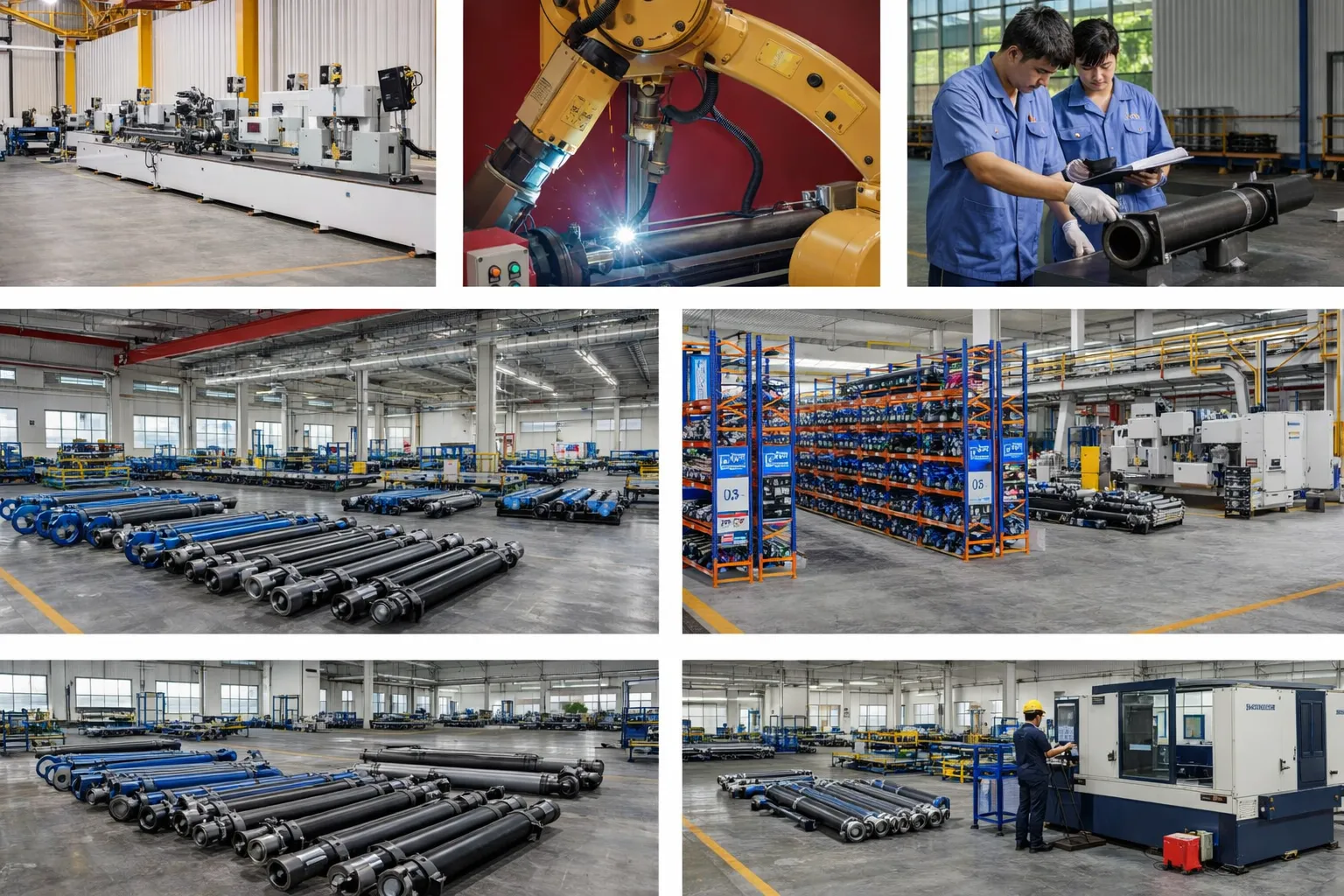
To guarantee the absolute operational reliability demanded by severe metallurgical environments, an equipment supplier must exercise total control over the manufacturing supply chain. We do not operate as a mere assembly house reliant on outsourced components; we are a fully vertically integrated manufacturer. Our production workflow begins with rigorous incoming material inspections, utilizing ultrasonic flaw detection on all raw alloy steel forgings to verify the absolute absence of internal microscopic voids or cracks. Our heavy-duty multi-axis computer numerical control machining centers execute deep-hole boring and skiving operations, finishing the internal cylinder barrels to exacting geometric tolerances. This strict dimensional control guarantees that the internal bore is perfectly concentric, allowing the moving hydraulic parts to glide with minimal friction.
Quality assurance is an ongoing, systematic process embedded into every phase of our production. Before any actuator is authorized for dispatch, it is subjected to a 100 percent dynamic factory testing protocol. We secure the fully assembled units onto specialized high-pressure test stands that physically simulate the immense ferrostatic resistance and flow rates found in the continuous casting segment zone. We pressurize the internal chambers to 150 percent of the nominal working rating, verifying absolute zero internal fluid bypass. Concurrently, we calibrate the integrated linear displacement transducers to confirm flawless signal linearity over the entire stroke. A comprehensive documentation package, including pressure charts, material heat treatment logs, and a unique serialized traceability report, accompanies every dispatch, fully justifying our highly competitive pricing structure with irrefutable proof of structural excellence.
Expanding Broadly Across Heavy Industrial Applications
The uncompromising engineering principles required to conquer the extreme thermal shock and mechanical demands of steelmaking translate directly into exceptional reliability across numerous other heavy industrial sectors. Our capability to manufacture highly durable hydraulic rams and actuators extends far beyond the continuous caster.
- Metallurgical and Iron Industry: Beyond the caster, we provide massive high-temperature actuators for electric arc furnace tilting, ladle turret lifting, and high-speed automatic gauge control cylinders for precision hot and cold strip rolling mills.
- Mining Industry: We manufacture incredibly resilient cylinders designed to absorb catastrophic shock loads and resist the highly abrasive silica dust naturally present in massive open-pit mining excavators, crushers, and heavy haul trucks.
- Construction Machinery Industry: Delivering high-reliability boom and stick cylinders for heavy excavators, providing immense breakout force, precise articulation, and fail-safe operation on the toughest, most demanding job sites.
- Plastics and Rubber Machinery: Large-scale injection molding machines rely on our servo-proportional cylinders for rapid clamp closing and highly accurate mold protection during the high-pressure plastic injection cycle.
- Material Handling and Logistics: Heavy-duty logistics operations utilize our robust designs as superior, high-cycle alternatives to standard lift cylinders in automated port cranes, straddle carriers, and high-capacity warehousing equipment.
- Specialized Testing and Custom Automation: We design bespoke fluid power solutions for complex aerospace material testing rigs that subject structural components to millions of high-frequency cyclic fatigue loads.
Comparative Analysis: Standard Commercial vs. High-Performance Caster Cylinders
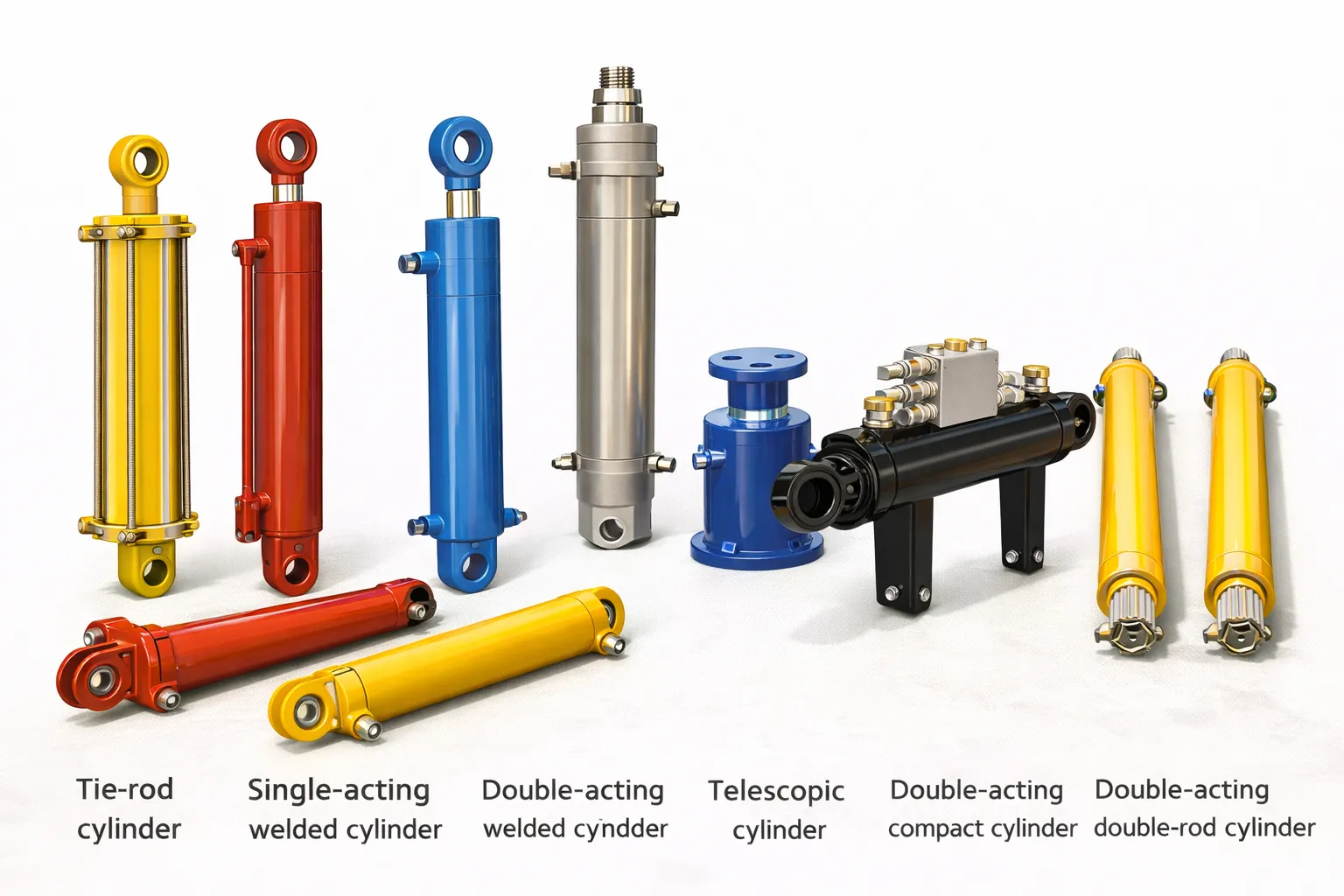
Installing a generic catalog cylinder on a caster segment is a massive operational risk that inevitably leads to failure. The comparative table below sharply illustrates why specialized engineering is mandatory to protect your continuous casting line from catastrophic breakdowns and continuous, expensive maintenance interventions.
| Critical Performance Metric | Standard Industrial Hydraulic Cylinder | Our Segment Adjusting Cylinder |
|---|---|---|
| Thermal Endurance Limit | Standard NBR/PU seals harden and crack rapidly above 80°C, leading to fluid loss. | Viton high-temperature seals ensure long-term stability in ambient heat near 200°C. |
| Positional Accuracy | Relies on external limit switches; incapable of performing dynamic micro-adjustments. | Embedded LVDT provides absolute, continuous segment alignment control without delay. |
| Structural Integrity | Tie-rods stretch under massive shock loads, causing alignment extrusion and leakage. | Heavy-wall welded alloy steel absorbs massive ferrostatic pressure safely and rigidly. |
| Surface Protection | Thin commercial chrome flakes off when exposed to acidic mold flux and steam. | Micro-cracked thick chrome-plated or ceramic finishes aggressively repel chemical attacks. |
| Operational Lifecycle | Frequent failures necessitating constant off-line repair and laborious rebuilding. | Designed for full-campaign reliability, drastically lowering overall downtime. |
Proven Field Excellence: B2B Case Studies in Asian Steel Markets
Our dedicated engineering focus has cemented our reputation among leading global steelmakers. We possess a particularly robust track record resolving persistent segment failure points for technologically advanced metallurgical facilities across South Korea, Japan, Taiwan, and the rapidly growing Southeast Asian steel sector.
Case 1: Conquering Thermal Seal Degradation and Slab Bulging
Location and Client: Major Integrated Steelworks, Pohang, South Korea.
Application: Heavy Slab Continuous Caster, Bending Segments.
Connection Method: The plant’s reliability engineering team contacted us via an organic Google search for specific hydraulic component upgrades in early 2024.
The Challenge: The facility was suffering from chronic seal aging. The extreme radiant heat from the solidifying slab was destroying the internal seals of their European OEM cylinders every three months, causing severe internal leakage, loss of clamping pressure, and unacceptable slab bulging.
The Result: We deployed a full set of custom segment adjusting cylinder units exclusively utilizing our multi-stage Viton sealing system. The replacement cycle was immediately extended to over 16 months, saving immense labor costs previously spent on constant maintenance interventions.
“The thermal resilience of these new units is extraordinary. They hold pressure flawlessly despite the brutal heat off the slab, entirely solving our most frustrating metallurgical quality nightmare.” — Senior Maintenance Manager, Dec 2024.
Case 2: Extending Lifecycle for Specialty Alloy Steels
Location and Client: Specialty High-Strength Steel Producer, Kobe, Japan.
Application: Advanced Billet Caster Modernization.
Connection Method: Reached out after reviewing our specialized technical literature at a major metallurgical trade show.
The Challenge: Upgrading their steel grades required moving from static roll gaps to dynamic soft reduction. Their existing actuators lacked the precise internal feedback needed for the new Level 2 automation system, and aggressive mold flux was scoring the piston rods.
The Result: We designed sophisticated servo cylinders with highly accurate internal LVDTs and thermal-sprayed ceramic rod coatings. This provided absolute, continuous segment alignment control, directly leading to a massive reduction in centerline segregation.
“Their integration of transducer technology into a heavy-duty mill cylinder was flawless. The ceramic coating practically eliminated rod wear, drastically improving our internal metallurgical quality.” — Quality Control Director.
Case 3: Perfect Drop-In Replacement for European Equipment
Location and Client: Heavy Industry Steel Group, Kaohsiung, Taiwan.
Application: Multiple Thin Slab Caster Segments.
Connection Method: Referred to us by an industrial fluid power automation integrator.
The Challenge: The mill’s original European cylinders were failing, and the OEM was demanding a premium price with an unacceptable 24-week lead time, severely threatening a major planned plant shutdown.
The Result: We flawlessly reverse-engineered the exact trunnion mounting dimensions and hydraulic manifold interfaces. We delivered superior double acting hydraulic cylinder units with advanced chrome-plated rods in just 6 weeks, slotting perfectly into their existing segment frames without modification.
“We simply bolted them in, connected the servo valves, and they performed beautifully. Having a reliable, high-performance alternative to the original manufacturer has fundamentally optimized our maintenance budget.” — Plant Engineering Lead.
Case 4: Agile Response to Critical Plant Failure
Location and Client: Emerging Integrated Steel Mill, Ha Tinh, Vietnam.
Application: Bow Segment Adjustment Control.
Connection Method: Emergency contact via our corporate website’s technical portal.
The Challenge: A massive mechanical shock fractured the tie-rods of a commercial cylinder installed by a third-party contractor, dropping a segment and forcing a highly costly multi-day strand stop.
The Result: Recognizing the urgency, we expedited the production of our heavy-duty welded alloy steel design. We dynamically tested and air-freighted the emergency replacement hydraulic parts to the facility within 28 days, rapidly restoring their production capability.
“Their manufacturing speed and technical competence in a crisis were outstanding. They understood exactly what we needed and delivered a structurally superior product that won’t fracture under load.” — Operations Director.
Case 5: Capital Expenditure Optimization for Major Expansion
Location and Client: Large Steel Smelting Group, Rayong, Thailand.
Application: Greenfield 4-Strand Billet Caster Project.
Connection Method: Direct negotiation with our international sales engineering team in mid-2025.
The Challenge: Outfitting a massive new caster required dozens of high-precision segment adjusting cylinders. The capital expenditure quotes from traditional western suppliers were threatening the financial viability of the entire expansion project.
The Result: We provided a comprehensive bulk manufacturing contract. By manufacturing everything in-house, we provided an unbeatable hydraulic cylinder price while guaranteeing world-class metallurgy and 100% dynamic test documentation. The plant commissioned successfully on schedule.
“Partnering with them allowed us to scale our operations without compromising on the critical fluid power components. Exceptional quality-to-cost ratio and highly professional project management.” — Chief Procurement Officer, Jan 2026.
Frequently Asked Questions (FAQ) for Engineering Professionals
Clear, highly technical communication is essential when dealing with heavy machinery procurement. To assist plant maintenance engineers and purchasing managers in making informed decisions, our fluid power experts have addressed the most common technical inquiries regarding our high-performance segment adjustment systems.
What specific engineering differentiates this from a standard industrial actuator?
A standard commercial double acting hydraulic cylinder is fundamentally designed for low-speed power transfer in relatively clean, ambient environments. Conversely, a segment adjusting hydraulic cylinder is a precision servo-instrument operating in extreme metallurgical heat. It utilizes specialized Viton seals to prevent catastrophic seal aging, heavy welded alloy construction to resist massive ferrostatic pressure without flexing, and zero-backlash internal LVDT sensors to execute complex, millimeter-perfect segment alignment control without hesitation or failure.
How exactly do your units prevent premature seal aging caused by radiant heat?
We approach thermal degradation through two distinct, scientifically proven engineering pathways. First, we strictly utilize high-grade Viton (fluoroelastomer) seal packages that retain their physical elasticity and extrusion resistance at substantially higher temperatures than standard polyurethanes. Second, our advanced heavy-duty designs incorporate internal fluid cooling jackets machined directly into the cylinder head, constantly drawing destructive heat away from the primary dynamic seals to ensure long-term pressure holding stability.
Can your technical team exactly match the physical dimensions of my existing OEM cylinders?
Yes, absolutely. Our highly capable engineering drafting team routinely maps the precise bore, stroke, rod diameter, pin-to-pin trunnion mounting distances, and fluid port configurations of legacy machinery. This allows us to manufacture exact dimensional drop-in replacements, greatly simplifying your procurement process and eliminating the need for expensive structural frame welding or complex hydraulic piping modifications on the caster deck.
What is the estimated manufacturing and delivery lead time to facilities in South Korea?
Because we maintain full internal control over the entire production process, our standard manufacturing and testing cycle is highly optimized, typically requiring only 4 to 6 weeks for standard continuous casting models. For completely bespoke units requiring complex thermal-sprayed ceramic coatings, lead times average 6 to 8 weeks. Logistics and heavy sea freight routing to major East Asian seaports like Busan, Incheon, or Gwangyang are highly streamlined and reliable.
Do you provide factory services for complete hydraulic cylinder repair and refurbishment?
Yes. Beyond manufacturing brand-new metallurgical equipment, we operate a dedicated service division handling comprehensive hydraulic cylinder repair. We can accept your heavily worn units, comprehensively strip them down, replace degraded components, re-hone the cylinder barrels, strip and re-chrome the piston rods, and execute full dynamic pressure testing. This expert process of fixing hydraulic cylinders fully restores them to zero-hour factory performance standards at a fraction of the cost of new equipment.
What hydraulic fluid cleanliness standards are strictly required to operate these servo systems?
Because dynamic soft reduction and segment adjustment rely on ultra-precise, high-response electro-hydraulic proportional valves, stringent fluid cleanliness is absolutely mandatory for long-term survival. To prevent microscopic particulate from jamming the delicate servo valving or prematurely destroying the internal seals, we strictly advise maintaining hydraulic fluid cleanliness levels at or better than ISO 4406 16/14/11 (equivalent to NAS 1638 Class 5).
Secure Your Continuous Casting Operations Today
Do not allow failing elastomeric seals or inaccurate fluid power components to compromise your slab quality or dictate unplanned maintenance shutdowns on the caster deck. Partner with a dedicated metallurgical engineering expert to deploy robust, thermally stable actuator solutions. Connect with our technical team today to initiate a customized engineering review, discuss exact dimensional replacements, or secure a highly competitive manufacturing quote for your heavy machinery.
Editor: Cxm