
Turnover Cylinder for Rolling Mill Table
Engineered specifically from Q345D structural alloy with deeply strengthened weld seams to permanently eradicate ear bracket loosening during extreme-impact steel plate flipping operations.
Product Overview & Heavy Industrial Value
In the sprawling, high-tonnage environment of a modern metallurgical facility, the massive primary reduction stands generally command the most attention. However, the true continuous throughput and logistical efficiency of a steel plant are entirely dictated by its material handling infrastructure—specifically, the auxiliary roller tables. As heavy steel plates, thick hot slabs, or massive structural beams travel down the run-out tables, they must be rapidly manipulated. Plant operators frequently need to flip these multi-ton steel profiles to inspect both sides for surface defects, descale them, or divert them to parallel cooling beds. The mechanical muscle responsible for executing this abrupt, violent physical movement is the turnover cylinder, also known as the flap cylinder.
Applying standard commercial fluid power components to a heavy plate flipping mechanism is a guaranteed path to catastrophic equipment failure. The physical act of turning over a heavy steel slab generates incredibly violent, non-linear kinetic shockwaves. As the mechanical flipping arm catches the steel and tosses it over its center of gravity, a massive shock transfers directly down the piston rod and aggressively yanks against the bottom mounting brackets. In ordinary actuators, this repetitive, high-frequency stress causes the surface fillet welds on the mounting trunnions to crack. This initiates the most critical and expensive failure mode in the sector: ear bracket loosening. Once the mounts shear off, the actuator detaches, the heavy steel plate crashes down, and the entire rolling line experiences severe, costly unscheduled downtime. In addition to structural stress, the operating environment is completely saturated with abrasive dust, destroying inferior seals.

Recognizing this fundamental structural flaw, we have completely re-engineered the material handling actuator. As a globally trusted, highly specialized hydraulic cylinder manufacturer, we build our hydraulic cylinder to absorb and dismiss these extreme mechanical impacts. By entirely abandoning standard carbon steel tubing in favor of premium Q345D high-strength structural alloy, and implementing deeply penetrating, multi-pass strengthened weld seams at all load-bearing junctions, we provide an actuator body that simply refuses to fracture. Integrating these highly reinforced hydraulic parts into your auxiliary conveyor tables ensures your flipping mechanisms perform flawlessly shift after shift, actively protecting your production quotas and factory floor safety.
Comprehensive Technical Parameters
Withstanding the brutal kinetic energy of a steel plant requires absolute transparency in structural engineering and exact material science. The data table below outlines the core foundational parameters of our heavy-duty auxiliary table actuators. While these specifications represent our highly proven metallurgical baseline, our engineering department meticulously customizes stroke lengths, bore dimensions, and specific clevis mounting geometry to perfectly align with your facility’s mechanical layout.
Operational Mechanics: Mastering Violent Kinetic Shifts
To truly grasp the engineering necessity of a heavily reinforced actuator on an auxiliary roller table, maintenance directors must evaluate the exact mechanical sequence of a plate turnover mechanism. A solid steel slab, often measuring several meters in length and weighing upwards of 15 metric tons, travels horizontally along the motorized conveyor rollers. When the control automation commands an inspection flip, the mechanical lifting arms resting just below the roller line must aggressively swing upward.
The main fluid power unit directs a massive surge of highly pressurized hydraulic fluid into the base port of the actuator. This fluid instantly pushes against the internal hydraulic cylinder piston, driving the thick, chrome-plated rod outward with explosive force. Because the rod is pinned to a pivoting lever arm, this linear thrust is converted directly into a massive rotational torque, lifting the steel slab off the rollers. This initial breakaway phase requires extreme, uncompromising internal pressure to overcome the static dead weight of the heavy metal.
However, the most destructive forces occur immediately after the steel slab passes its vertical center of gravity. Once the slab tips past 90 degrees, gravity takes full control. Instead of resisting the cylinder, the falling slab now aggressively pulls on the mechanical arm, attempting to rip the rod straight out of the barrel. To prevent the slab from crashing down and fracturing the roller table frame, the system absolutely relies on a high-flow double acting hydraulic cylinder. By actively maintaining fluid pressure on the rod end of the piston, the actuator operates as an immense, active hydraulic brake. It carefully throttles the escaping fluid, catching the falling weight and lowering it gently onto the receiving rollers. A basic single-acting system relies solely on gravity to retract and is physically incapable of providing this bidirectional braking force, making it highly dangerous for turnover operations.
This sudden shift from extreme pushing compression to extreme pulling tension generates a violent mechanical shockwave. This kinetic energy travels directly into the bottom ear seat and the rod-end clevis brackets. If these mounts are attached with standard, shallow commercial fillet welds, the repetitive shock will rapidly initiate microscopic fatigue cracks in the heat-affected zone of the weld. Within a few short months, these cracks propagate, leading to total ear bracket loosening and catastrophic joint failure. We completely neutralize this imminent threat by specifying Q345D structural alloy for the mounting blocks and utilizing deeply penetrated, multi-pass submerged arc welding. This effectively creates a monolithic, unbreakable bond between the mount and the barrel, allowing it to dismiss millions of severe shock cycles.
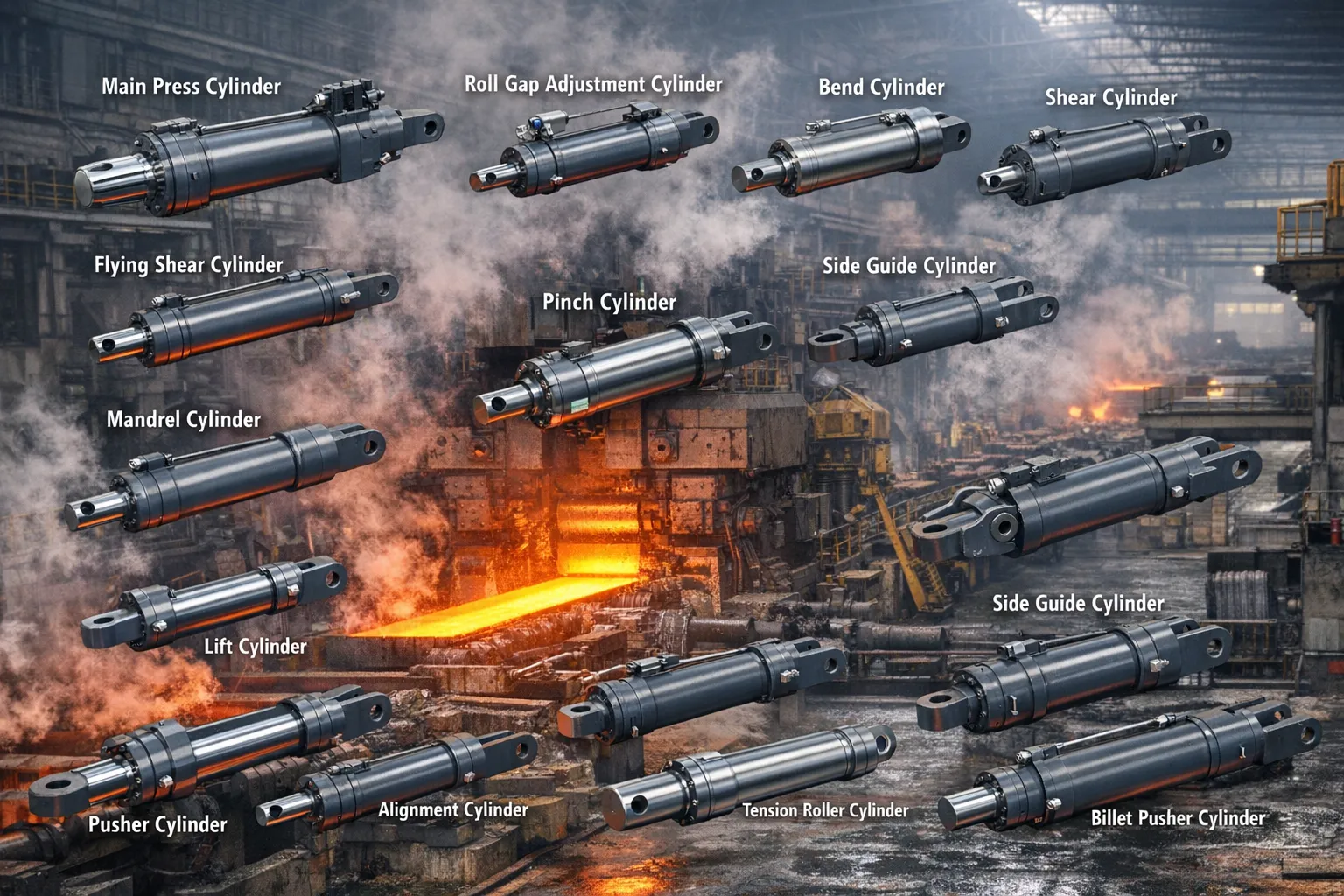
Strategic OEM Equipment Upgrades & Seamless Drop-In Replacements
Steel mills are heavily capital-intensive operations that frequently rely on legacy material handling equipment installed decades ago. When a critical flap cylinder inevitably snaps its mounting ear due to structural fatigue, sourcing an exact replacement from the original Western machine builder creates a severe logistical nightmare. Plant maintenance directors are routinely quoted unacceptable lead times of six to eight months, accompanied by exorbitant, heavily inflated brand-name pricing. Your production line cannot afford to wait half a year for a single actuator.
Our precision engineering division solves this global B2B crisis by manufacturing intensely durable, custom-built hydraulic rams that serve as perfect, dimensionally exact drop-in replacements for all major international fluid power brands. Plant engineers can confidently swap out failing equipment originally supplied by industry heavyweights such as Bosch Rexroth, Parker Hannifin, Eaton Vickers, SMS Siemag, Danieli, and Primetals. (Note: The explicit mention of these corporate brand names is provided strictly for engineering cross-referencing and dimensional compatibility identification for your procurement teams. We operate as a wholly independent manufacturing entity and claim no trademark affiliations, sponsorships, or endorsements with these respective corporations.)
By transitioning to our heavily reinforced Q345D components, your facility completely bypasses crippled global supply chains and achieves a significantly more favorable overall hydraulic cylinder price footprint. More importantly, you are not merely replacing a broken part; you are permanently upgrading your auxiliary roller line’s resistance to shock loading, actively curing the root cause of the original OEM failure.
Five Core Technical Advantages for Severe Milling Environments
Surviving the intense kinetic violence, massive payload shifts, and choking abrasive dust of a steel sorting line requires highly deliberate, uncompromising structural design choices. We have deeply analyzed the specific failure modes of metallurgical auxiliary tables to embed five distinct technical advantages into our turnover actuation solutions.
1. Deeply Strengthened Welding Seams
To entirely eradicate the prevalent issue of ear bracket loosening, we abandon standard surface fillet welding. We machine deep V-grooves into the heavy Q345D mounting blocks and utilize multi-pass, full-penetration robotic submerged arc welding. Every critical weld is subjected to rigorous ultrasonic testing to ensure zero internal micro-voids, guaranteeing the mount will never shear off the barrel under peak kinetic impact.
2. Q345D Structural Alloy Toughness
Standard commercial cylinders frequently use rigid but brittle high-carbon steels that can easily fracture under sudden mechanical shock. We construct our barrel bodies and mounting brackets strictly from Q345D low-alloy, high-strength structural steel. This specific metallurgical grade provides exceptional yield strength while maintaining the crucial ductility required to absorb violent shock waves safely without fatiguing.
3. Severe Abrasive Dust Defense
Auxiliary tables are perpetually enveloped in thick, airborne iron oxide dust and mill scale. If this abrasive particulate breaches the gland, it acts like lapping paste, destroying the internal pressure seals instantly. We deploy an extraordinarily thick layer of Hard Chrome Plating across the rod, paired with highly aggressive dual-lip metallic scrapers that physically shave hardened iron dust off the rod before it retracts.
4. Advanced Dynamic Hydraulic Cushioning
When a heavy mechanical lifting arm is pulled down rapidly, allowing it to slam into the steel frame destroys the surrounding machinery. We engineer customized progressive hydraulic throttling spears into the end caps of the cylinder. As the rod approaches full retraction, these spears restrict the exiting fluid, smoothly and automatically decelerating the massive steel flap to a gentle stop, eliminating water hammer.
5. Ultra-Low Friction Sealing Profile
Standard rubber seals generate high breakaway friction, causing severe stick-slip jittering when lifting heavy, unbalanced loads. This makes the steel plate bounce dangerously on the table. We utilize advanced PTFE (Teflon) blended stepped seals backed by elastomeric energizers. This servo-level sealing technology provides buttery smooth, continuous lifting force, ensuring the steel plate is flipped with perfect fluidity.
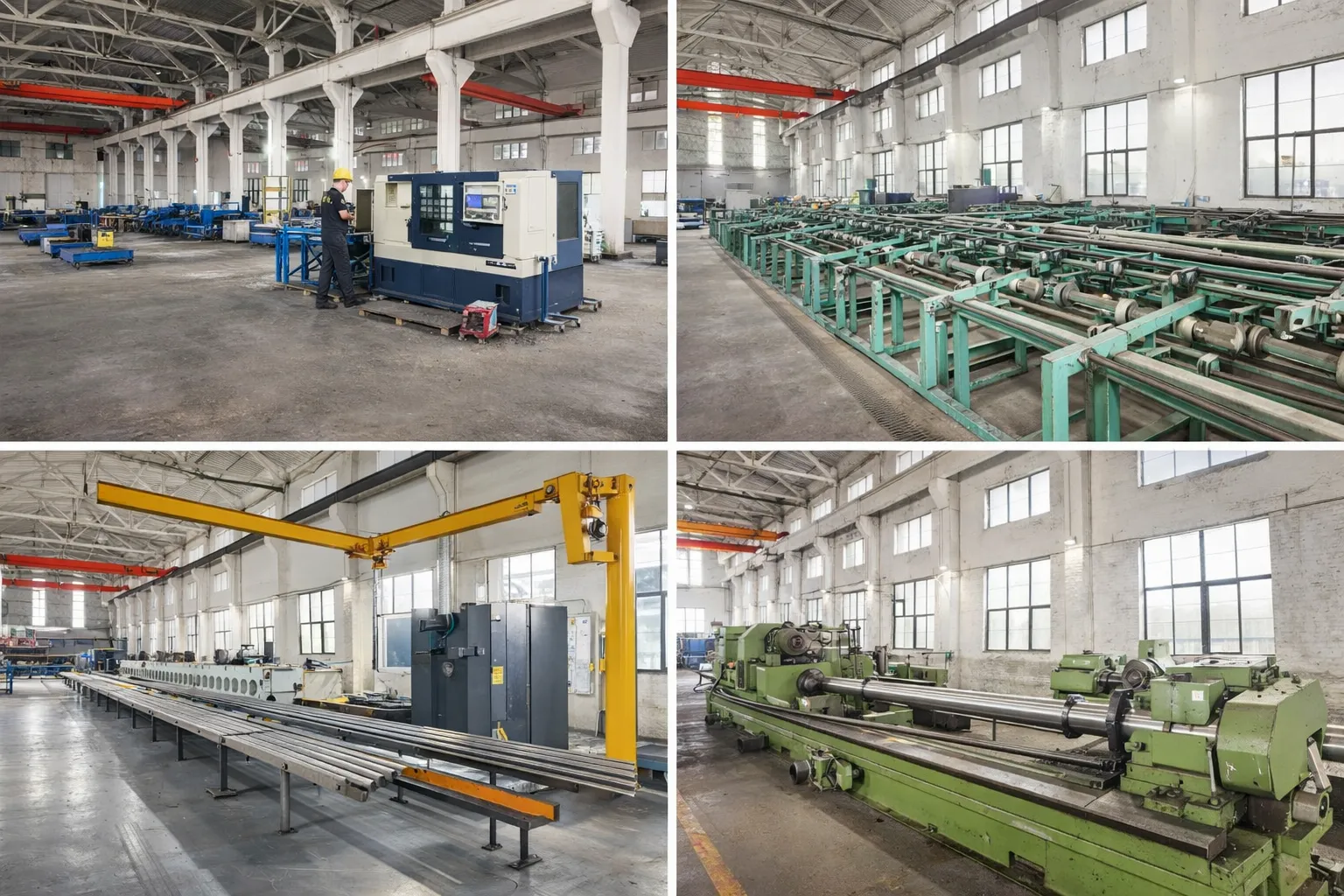
Autonomous Manufacturing & Relentless Quality Control
Heavy industry reliability cannot be achieved or guaranteed through outsourced component assembly. As a highly integrated engineering firm, we maintain strict, 100% vertical integration over our entire production process. We begin by verifying the metallurgical chemistry and ultrasonic density of our Q345D steel to ensure maximum impact toughness. Following precision deep-hole boring on massive multi-axis CNC machinery, the internal barrel surfaces are heavily skived and roller-burnished. This creates a flawless, mirror-like internal finish that drastically minimizes internal fluid friction and massively extends dynamic seal life under immense kinetic loads.
Because high-performance PTFE seals are incredibly sensitive to microscopic contamination during installation, final assembly of all critical hydraulic cylinder components occurs strictly within positive-pressure, climate-controlled cleanroom environments. This crucial step prevents the abrasive airborne dust common to heavy manufacturing zones from embedding into the seals before the unit even ships. Furthermore, every single actuator undergoes a grueling barrage of automated testing. We lock the units into our computerized test benches and subject them to static overpressure holds, holding maximum load for extended durations to guarantee absolute zero internal fluid bypass or structural yielding.
This uncompromising, highly scientific approach to manufacturing quality is precisely why leading industrial plant managers across Asia also rely heavily on our expert capabilities for hydraulic cylinder repair and fixing hydraulic cylinders that have had their mounting ears sheared off or seals destroyed by lesser suppliers. By utilizing our proprietary laser-etched traceability system, your maintenance teams gain permanent access to the exact material certificates, weld inspection logs, and dimensional seal data associated with your specific serial number.
Expansive Heavy Industry Applications
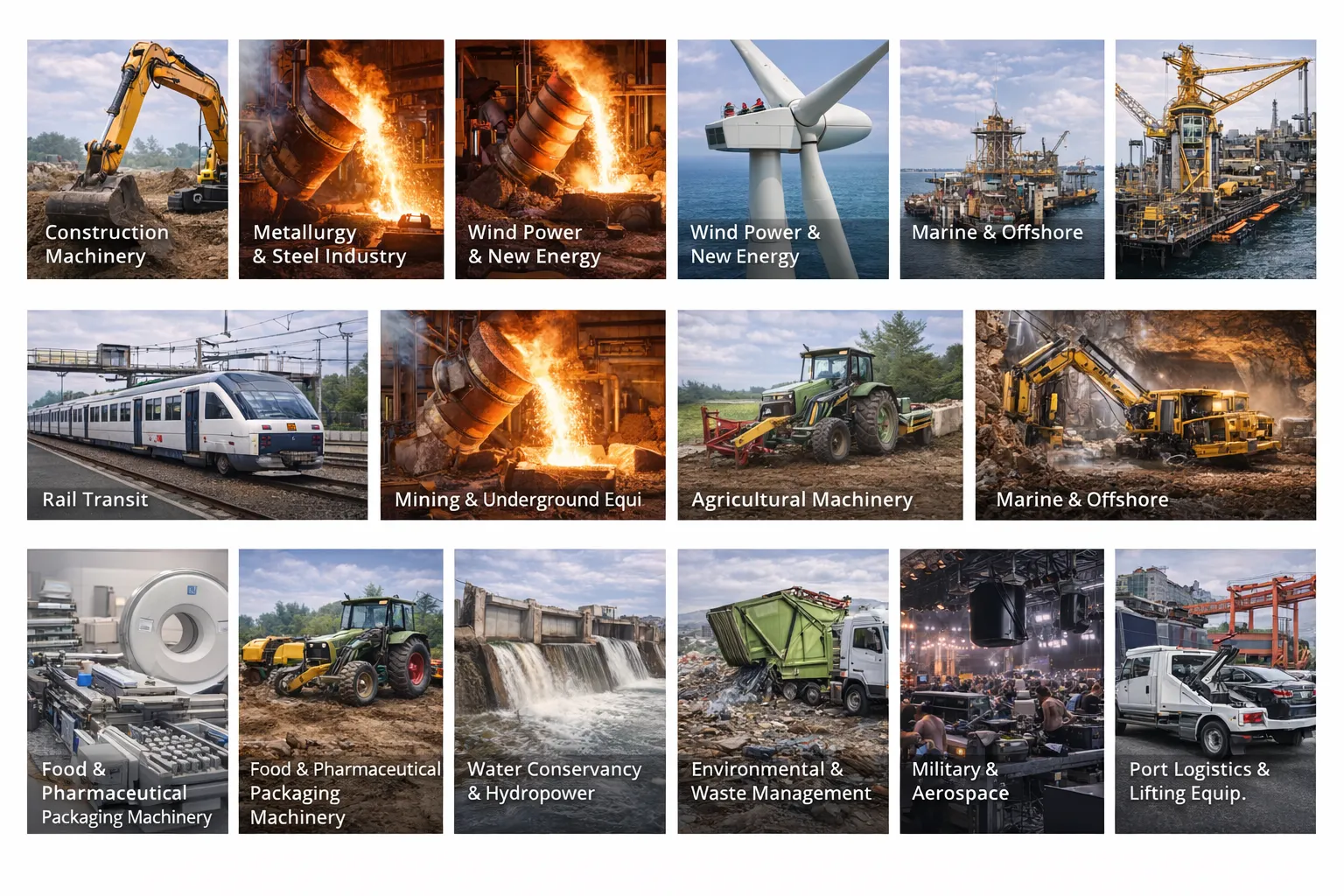
The extreme shock absorption, structural integrity, and dust defense mechanisms required for flipping heavy steel slabs translate powerfully across other severe-duty industrial domains. We engineer fluid power solutions designed specifically to survive where standard commercial components shatter under pressure. We encourage you to explore our complete engineering portfolio via our main hydraulic cylinder equipment hub.
- Metallurgical Processing: Our primary focus area. Discover our complete range of heavy-duty solutions, from AGC servo roll gap cylinders to extreme high-temperature billet pushers, in our dedicated section for the metallurgical and iron industry.
- Underground Mining & Mineral Extraction: Heavy rock crushers and subterranean loaders operate in choking dust and endure massive physical shock. See how our extreme metallic scraper technology protects fluid power in the mining industry.
- Heavy Earthmoving Machinery: Large excavators and front-end loaders demand massive breakout force from rugged welded actuators. Review our highly resilient boom and bucket solutions tailored for the construction machinery industry.
- Port Logistics & Material Handling: Massive ship-to-shore gantry cranes rely heavily on our precise, fail-safe lift cylinder designs to securely hoist and synchronize heavy multi-ton shipping containers over crowded international docks without mechanical deflection.
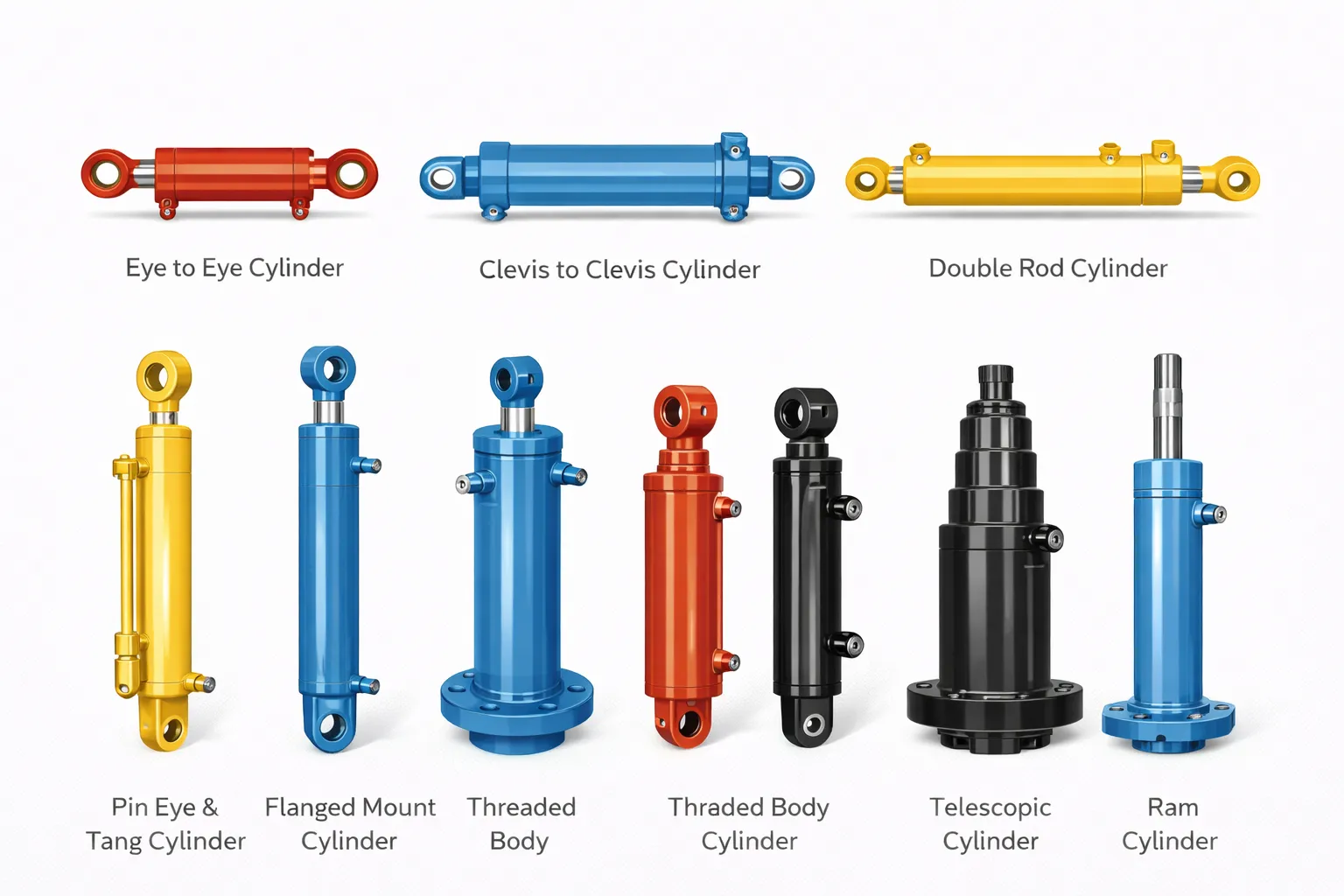
Comparative Analysis: Standard Commercial Actuator vs. Heavy Turnover Cylinder
Installing an incorrectly specified fluid actuator on a heavy sorting table guarantees premature catastrophic failure, usually ending with the cylinder detaching completely from the steel frame. The following engineering comparison sharply delineates why plant managers strictly mandate our heavy-duty metallurgy over standard commercial alternatives.
Verified Field Success: 5 Regional B2B Case Studies
Heavy industry reliability is strictly proven on the factory floor, not in sales brochures. Our structural engineering footprint is deeply embedded in the aggressive steel manufacturing hubs of South Korea and greater East Asia. Below are five extensively documented instances where our robust fluid power solutions permanently resolved severe mechanical bottlenecks.
Case 1: Eradicating Trunnion Shearing in a Major Plate Mill
Location: Pohang, South Korea | Client: Top-Tier Heavy Plate Steelworks
The Challenge: Their primary inspection roller table was flipping massive 15-ton steel plates. The intense kinetic shock of the moving plate hitting the turnover arms was tearing the bottom ear seats completely off their standard commercial cylinders every three months, shutting down the entire sorting line.
Contact & Implementation: The plant’s reliability engineers found us via a technical search for shock-resistant actuators. We engineered custom Q345D welded actuators utilizing full-penetration robotic submerged arc welding on massive, oversized mounting trunnions.
The Result: Commissioned during a scheduled shutdown in late 2024. The upgraded actuators have taken brutal impacts for 18 months straight without a single hairline crack appearing in the welds during ultrasonic maintenance checks.
“The deeply reinforced ear seats completely solved our chronic breakdown issue. They take a beating all day and don’t budge a millimeter. The return on investment was immediate.” — Chief Maintenance Supervisor.
Case 2: Defeating Iron Scale in a Billet Transfer Line
Location: Osaka, Japan | Client: Precision Specialty Steel Mill
The Challenge: The auxiliary tables were choked with incredibly thick, airborne iron oxide scale. This abrasive dust settled heavily on the extended rods, acting exactly like sandpaper and destroying the primary pressure seals within weeks of installation.
Contact & Implementation: They reached out for a dedicated contamination defense solution. We provided modified turnover cylinders featuring exceptionally thick hard chrome plating and highly aggressive dual-lip metallic scrapers to forcefully eject the scale upon retraction.
The Result: Installed in February 2025. Visual inspections confirm the piston rods remain incredibly bright and entirely free of vertical scoring, drastically extending the life of the internal seal matrix.
“The metallic scrapers are phenomenal. You can literally see them shaving the hardened slag off the rod. It completely protected our investment in an incredibly dirty environment.” — Reliability Engineering Lead.
Case 3: Urgent Retrofit for European Obsolete Machinery
Location: Kaohsiung, Taiwan | Client: Structural Steel Beam Facility
The Challenge: A massive European OEM sorting cylinder shattered its end-cap trunnion under heavy load, halting the entire rejection line. The original manufacturer quoted an impossible 26-week lead time for a replacement unit.
Contact & Implementation: Connected through our rapid-response portal. Utilizing their original 2D blueprints, we rapidly reverse-engineered a dimensionally identical, yet structurally superior Q345D welded actuator to completely bypass the OEM delay.
The Result: Delivered and installed via air freight in just 5 weeks (April 2025). The unit dropped seamlessly into the existing mounting frame, bypassing months of disastrous downtime at a highly favorable hydraulic cylinder price.
“Their manufacturing agility saved our production quarter. The customized welded upgrade is significantly tougher than the original equipment we relied on.” — Plant Director.
Case 4: Curing Stick-Slip in Precision Surface Inspection
Location: Rayong, Thailand | Client: Precision Stainless Plate Mill
The Challenge: Their inspection tables required very slow, highly controlled lifting of the turnover arms to gently flip delicate stainless plates without scratching them. Their standard cylinders suffered from severe stick-slip friction, causing the plates to jitter and bounce violently.
Contact & Implementation: Met during an industrial expo. We refitted their inspection line with actuators utilizing exclusively PTFE blended low-friction dynamic sealing matrices and micro-honed internal barrels.
The Result: Installed in August 2025. The high-performance seals provide buttery smooth lifting motion, entirely eliminating the mechanical jitter and protecting the surface finish of the high-value stainless plates.
“The transition to PTFE seals was a massive upgrade in mechanical fluidity. The cylinders lift perfectly smoothly, completely eliminating the surface defect rejects we were experiencing.” — Quality Control Manager.
Case 5: Taming Water Hammer Destructive Forces
Location: Ha Tinh, Vietnam | Client: High-Volume Structural Steel Producer
The Challenge: To keep up with high line speeds, the operators were dropping the heavy steel turnover arms as fast as possible. This caused the heavy board to slam into the bottom mechanical frame with tremendous force, literally shaking the concrete floor and constantly snapping machine bolts.
Contact & Implementation: They requested a comprehensive fluid dynamics review via our website. We designed high-flow units integrated with custom internal hydraulic throttling spears in the end caps to auto-decelerate the load.
The Result: Deployed in November 2025. The massive steel arms now drop rapidly but cushion perfectly in the last three inches of travel, gently kissing the bottom frame without any violent water hammer shock.
“The internal cushioning technology is brilliant. It allows us to cycle the tables at maximum speed without destroying our steel framework. It has totally stabilized the line.” — Automation Director.
B2B Technical FAQ: Expert Insights for Procurement
Specifying heavy fluid power for extreme kinetic environments requires strict technical validation. Below are the most critical inquiries our engineering team addresses from international procurement directors and plant reliability engineers.
1. How exactly do you prevent the trunnion mounts from shearing off under impact?
2. What is the standard manufacturing lead time for a custom Q345D turnover actuator?
3. Can you match the exact mounting dimensions of our existing European cylinders?
4. How does your pricing structure compare to legacy European or American brands?
5. How do you prevent water hammer effects when the heavy tables drop at high speeds?
6. Do you supply replacement internal seal kits directly to our maintenance team?
Secure Unstoppable Sorting for Your Auxiliary Line Today
Do not allow catastrophic trunnion shearing, dust-destroyed seals, or unacceptable OEM lead times to dictate the productivity of your heavy plate production. Partner with an expert manufacturer that intimately understands the severe kinetic violence, abrasive iron scale, and immense lifting requirements of modern continuous metallurgy.
Whether you urgently require an exact dimensional drop-in replacement to bypass international supply chain delays, a complete heavy-duty structural upgrade utilizing deeply welded Q345D alloy to eliminate chronic ear seat breakdowns, or a reliable long-term partner for high-performance fluid power technology across South Korea and East Asia, we are positioned to deliver. Provide our engineering desk with your plate weights, speed requirements, and exact mounting dimensions, and we will architect a flawless, highly durable solution.
Editor: Cxm


























