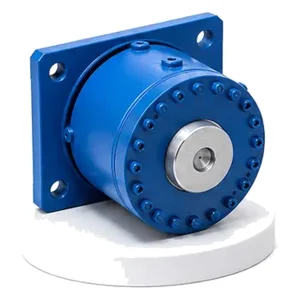
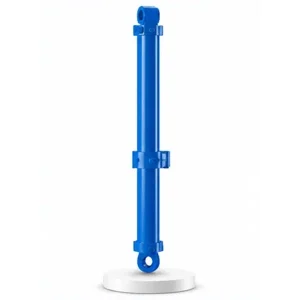
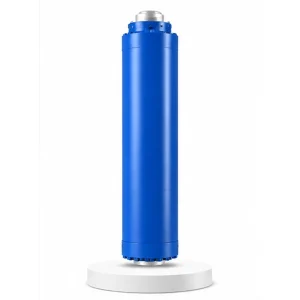
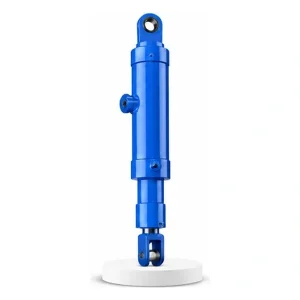
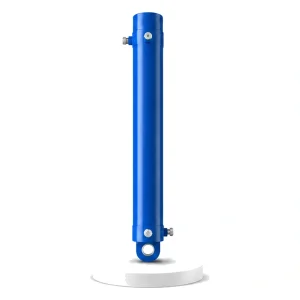
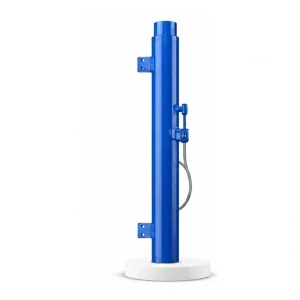
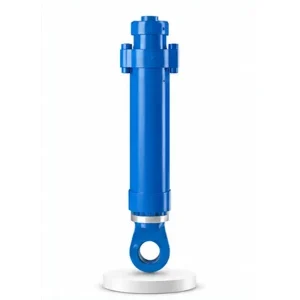
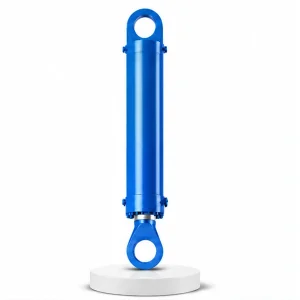
Hydraulic Press Rear Side Shift Cylinder
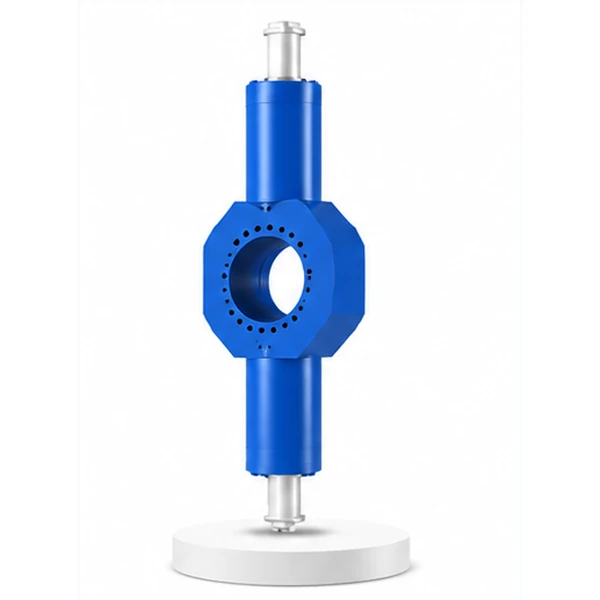
The Rear Half of
a Precision Pair
The front side shift cylinder pushes the front end of the billet. Without a matching push at the back, the billet pivots instead of sliding. The rear side shift cylinder provides that matching push — smaller in diameter, lower in force, but perfectly synchronised — so the billet translates cleanly, without any rotation in the clamp jaws.
Smaller by Design — Not Weaker, Lighter-Loaded
The rear side shift cylinder's plunger is 70–180 mm — smaller than the front cylinder's 80–240 mm. Its maximum thrust is 636 KN — roughly half of the front cylinder's 1,130 KN. This asymmetry looks like a mismatch, but it reflects the load distribution on the manipulator clamp head.
The billet extends forward beyond the front jaw — cantilevered toward the press dies. During a horizontal side shift, the front cylinder must push against the full cantilevered weight of the billet's overhanging front end. The rear cylinder pushes against the lighter rear end — the portion of the billet behind the clamp, which is shorter and closer to the manipulator arm's support structure. Less overhang means less load, and less load means a smaller cylinder does the job without being oversized. Korea Ever-Power sizes each cylinder to its actual load — never over-engineering one end just to match the other. Both are part of the industrial engineering hydraulic cylinder programme.
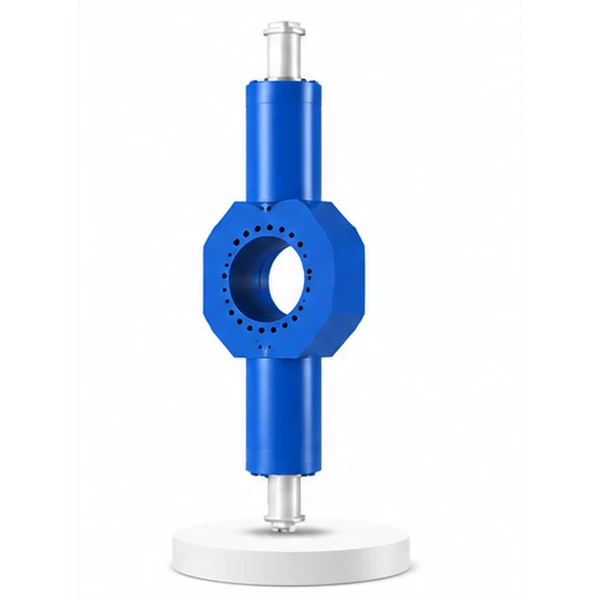
Technical Specifications
| Parameter | Value |
|---|---|
| Product | Hydraulic Press Rear Side Shift Cylinder |
| Function | Cooperate with front cylinder to shift billet horizontally |
| Type | Plunger (single-acting) |
| Plunger Diameter | 70 mm – 180 mm |
| Stroke | ≤ 300 mm |
| Maximum Thrust | 636 KN (plunger 180 mm / pressure 25 MPa) |
| Working Pressure | Up to 25 MPa |
| Certification | ISO 9001 · 100% hydrostatic tested · matched to front cylinder |
Rear Mounting — Installation Constraints the Front Cylinder Does Not Face
The front side shift cylinder is mounted on the operator-facing side of the clamp head — an accessible location with ample clearance for hose connections, maintenance access, and cylinder removal. The rear cylinder has none of these advantages.
Limited access. The rear of the manipulator clamp is close to the manipulator arm, the rotation mechanism, and the traverse drive. Space for the cylinder body, hose routing, and maintenance tooling is constrained. The rear cylinder must be as compact as possible — which is another reason the plunger type is preferred over a piston type at this position.
Hose routing through the rotation joint. The hydraulic hose feeding the rear cylinder must pass through or around the manipulator's clamp rotation mechanism. This routing subjects the hose to repeated flexing during billet rotation — a fatigue failure risk. Korea Ever-Power specifies high-flex hose assemblies with verified bend-cycle life for the rear cylinder installation, and recommends routing guides that prevent the hose from being pinched during rotation.
Maintenance access planning. Because the rear cylinder is harder to reach, seal replacement takes longer than on the front cylinder. Korea Ever-Power designs the rear cylinder with a removable plunger gland that can be extracted rearward (toward the manipulator arm) without disconnecting the cylinder body from its mounting — reducing the disassembly needed for a seal change in the confined rear position.
The Complete Manipulator Cylinder System — Five Functions, One Set
The rear side shift cylinder is the last piece in the manipulator's five-cylinder positioning system. Together, these five cylinder types give the manipulator full control over the billet's position, orientation, and grip — everything needed to present the workpiece to the press dies at the exact angle, height, and lateral position required for each forging pass.
| Cylinder | Action | Max Force | Sequence |
|---|---|---|---|
| Centering (#10) | Centre clamp | 441 KN | Before gripping |
| Clamping (#8) | Grip billet | 9,621 KN | Grip & hold |
| Tilt (#5) | Rotate billet | 3,141 KN | Set angle |
| Front Side Shift (#11) | Shift front end | 1,130 KN | Fine horizontal |
| Rear Side Shift (#12) | Shift rear end | 636 KN | Synchronised with #11 |
Korea Ever-Power manufactures the complete five-cylinder set for each manipulator — all cylinders from the same production batch, tested together, with cross-referenced serial numbers. Ordering the complete set guarantees dimensional compatibility, synchronisation, and shared seal specifications across all five cylinder types.
Engineering Insight — Speed Matching Between Unequal Cylinders
The front and rear side shift cylinders have different plunger diameters — so at the same pressure, they produce different forces. But for synchronised shifting, they need to extend at the same speed. The hydraulic circuit solves this through a flow divider.
Extension speed = Flow ÷ Plunger area
For the same speed, the larger front plunger (more area) needs more flow than the smaller rear plunger (less area).
The flow divider splits the pump output into these unequal proportions — sending 64% to the front cylinder and 36% to the rear — so both extend at the same 100 mm/s. Korea Ever-Power specifies the flow divider ratio as part of the matched pair delivery. Contact the hydraulic cylinder engineering team for synchronized cylinder pair specifications.
Manufacturing — Rear-Specific Design Details
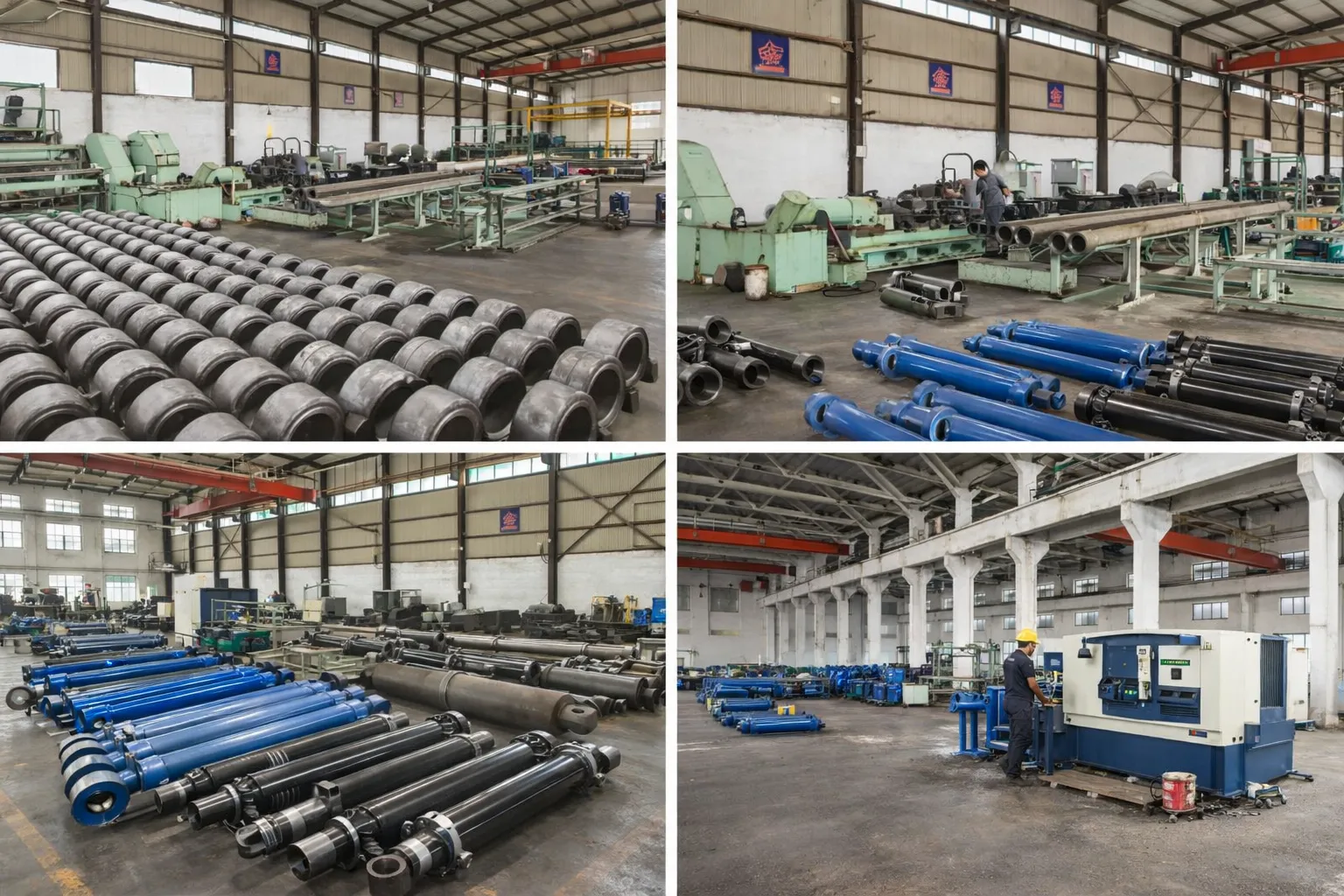
The rear side shift cylinder is manufactured alongside the front cylinder as a matched pair. The plunger diameters are held to mutual tolerance against the specified flow divider ratio — ensuring that at the divider's output split, both cylinders extend at the same speed. The plunger finish (chrome plated, ground to Ra ≤0.4 µm), seal specification (high-temperature FKM for forge environment), and mounting hardware are identical in design standard between front and rear.
The rear cylinder includes a rear-extractable plunger gland design — allowing the gland to be pulled out toward the manipulator arm without removing the cylinder body from the clamp frame. This maintenance-focused design detail reflects the rear cylinder's confined mounting position and reduces seal-change downtime from hours to under one hour.
Every rear side shift cylinder is hydrostatic tested individually, then speed-tested alongside its matched front cylinder — verifying synchronised extension across the full 300 mm stroke. The paired test certificate accompanies both cylinders.
OEM & ODM
FAQ
Related Categories
Yderligere information
| Editor |
|---|