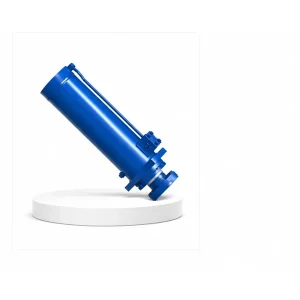
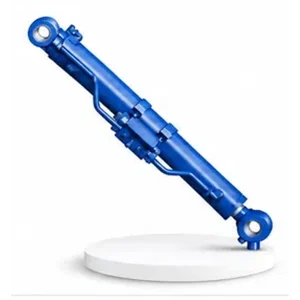
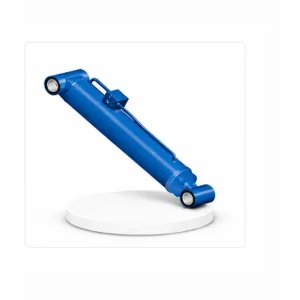
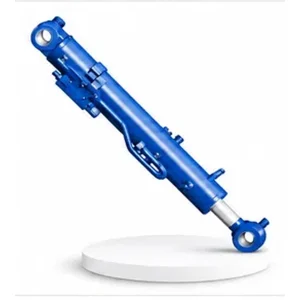
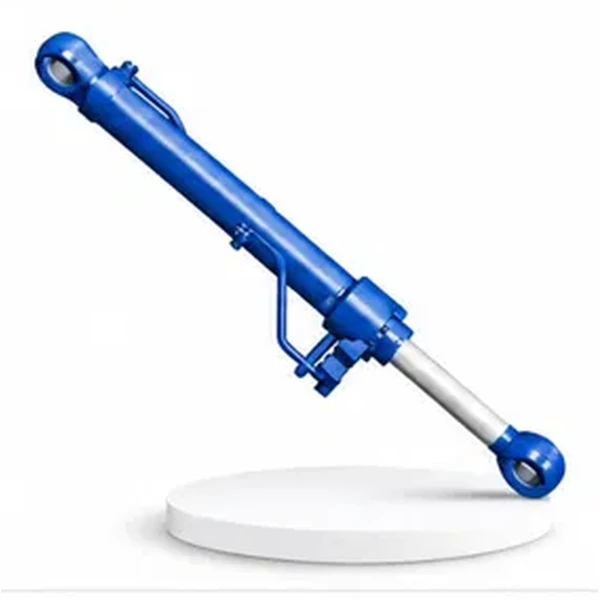
Large Excavator Bucket Cylinder
The Scale Jump — From Mini Excavator to Mining Machine
The small excavator bucket cylinder (#1) has a maximum bore of 105 mm and produces 255 KN of curl force — enough to dig residential foundations and utility trenches. The large excavator bucket cylinder starts where the small one ends and scales up to a different world: mining faces, quarry blasts, highway cuts, and dam foundations where the excavator loads 30–50 tonne dump trucks with 4–7 cubic metres per bucket.
| Parameter | Small (#1) | Large (#6) | Scale Factor |
|---|---|---|---|
| Max Bore | 105 mm | 360 mm | 3.4× |
| Max Stroke | 1,000 mm | 2,500 mm | 2.5× |
| Thrust | 255 KN | 3,561 KN | 14× |
| Pressure | 29.4 MPa | 35 MPa | 1.2× |
The thrust increase (14×) far outpaces the bore increase (3.4×) because force scales with the square of the bore diameter — and the pressure also increases from 29.4 to 35 MPa. Korea Ever-Power manufactures the large excavator bucket cylinder as the first of four large excavator hydraulic cylinders.
Technical Specifications
| Parameter | Specification |
|---|---|
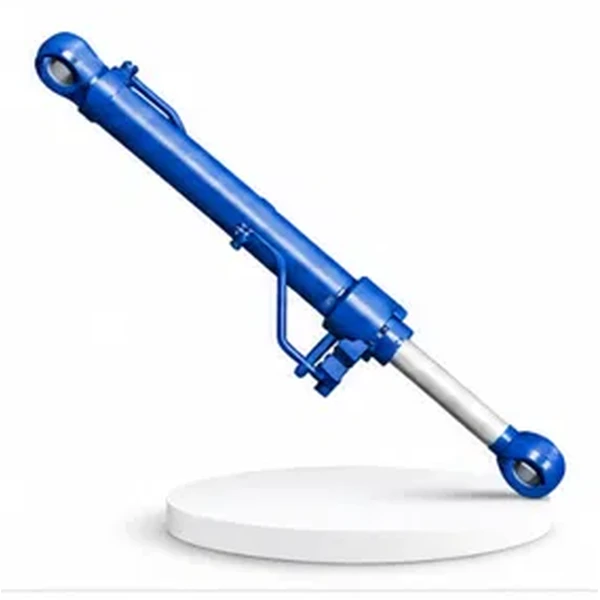
| Product | Large Excavator Bucket Cylinder |
| Function | Control the action of the bucket (curl / dump) |
| Bore Diameter | 200 mm – 360 mm |
| Rod Diameter | 140 mm – 260 mm |
| Stroke | ≤ 2,500 mm |
| Max Thrust | 3,560.8 KN (bore 420 mm / 35 MPa at largest configuration) |
| Application | Large Excavator (20–100+ tonne class) |
| Certification | ISO 9001 · 100% hydrostatic tested |
Mining and Quarrying — Where Rock Replaces Soil and Force Replaces Finesse
The small excavator digs soil, clay, and gravel — materials that yield to moderate force. The large excavator digs blasted rock, frozen ground, cemented aggregate, and heavy clay with embedded boulders — materials that resist with peak forces 5–10× higher than soil. The 35 MPa system pressure and 360 mm bore provide the brute force to penetrate these materials.
After quarry blasting, the rock pile consists of jagged fragments interlocking like a 3D puzzle. The bucket must break these interlocks — the curl force must overcome not just the fragment weight but the shear strength of the interlocking surfaces. Peak pressure spikes during bucket penetration into a blast pile can reach 90–100% of system pressure for 0.5–2 seconds per curl stroke.
In Arctic and subarctic mining regions, the top 0.5–3.0 metres of ground freezes solid in winter — with compressive strength approaching that of concrete. The bucket cylinder must curl through this frozen layer before reaching the unfrozen ore below. The cylinder seals must maintain 35 MPa performance at -40 °C ambient temperature — requiring FKM or special low-temperature NBR compounds. Contact Korea Ever-Power for cold-climate large excavator specifications.
Manufacturing Process
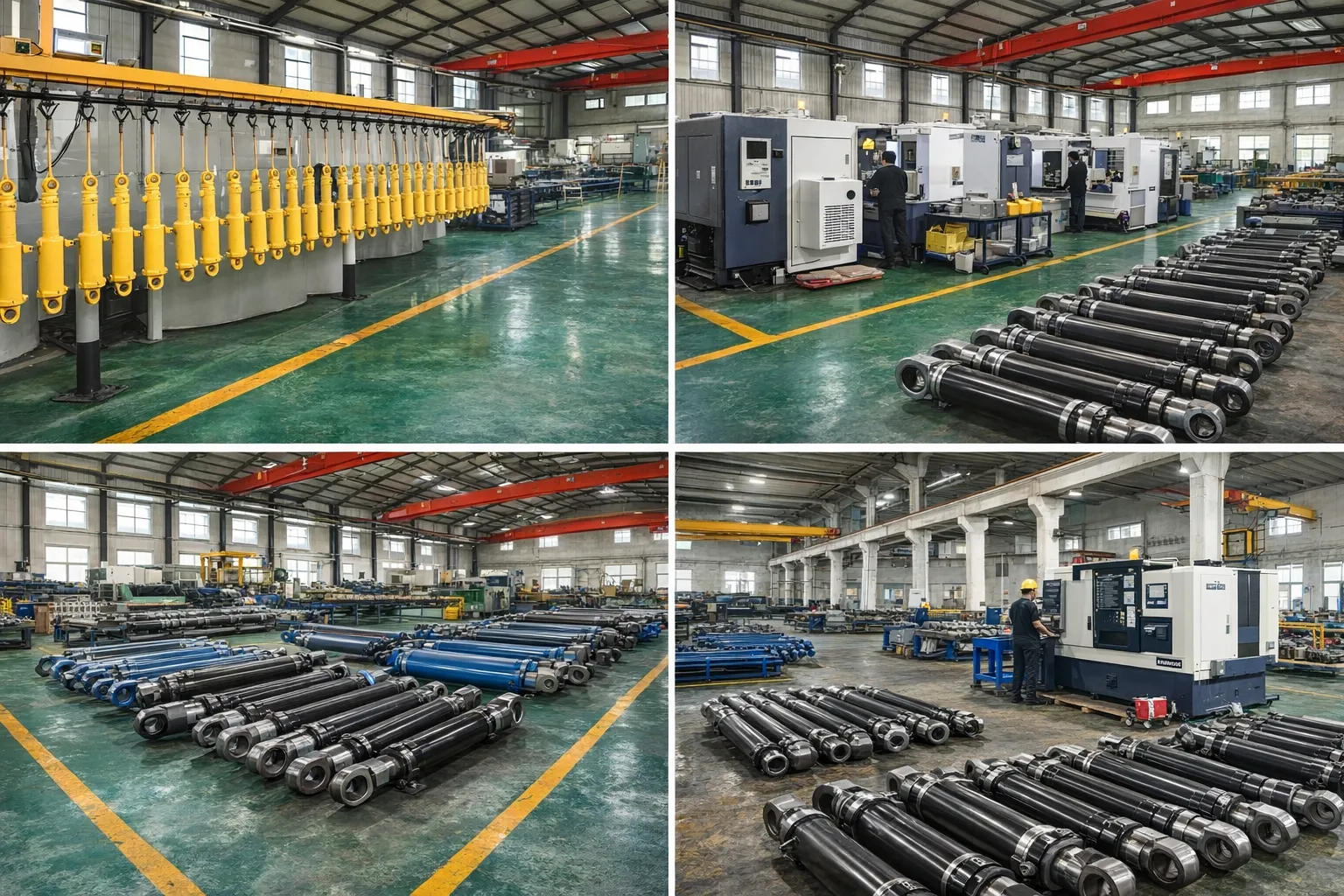
The bore (200–360 mm) is deep-hole bored and honed to Ra 0.2–0.4 µm. At these diameters, seamless tube may not be available — Korea Ever-Power uses precision deep-hole drilling from solid bar or welded tube with full-penetration welds, followed by stress-relief heat treatment and ultrasonic inspection. Chrome plating is 80 µm (mining/quarry standard). Rod straightness ≤0.1 mm/metre across the 2,500 mm stroke.
The rod eye is forged from a single billet — not welded — because the bucket cylinder's impact loading at the rod end (direct rock strikes through the bucket linkage) demands a joint free of weld-heat-affected zones. Seals are polyurethane + NBR or FKM (for cold-climate versions), rated for 35 MPa. Heavy-duty quad-lip wipers for rock-dust contamination.
Every large excavator bucket cylinder is hydrostatic tested at 1.5× rated pressure (52.5 MPa) and full-stroke tested under simulated digging loads.
OEM & ODM
FAQ
Related Categories
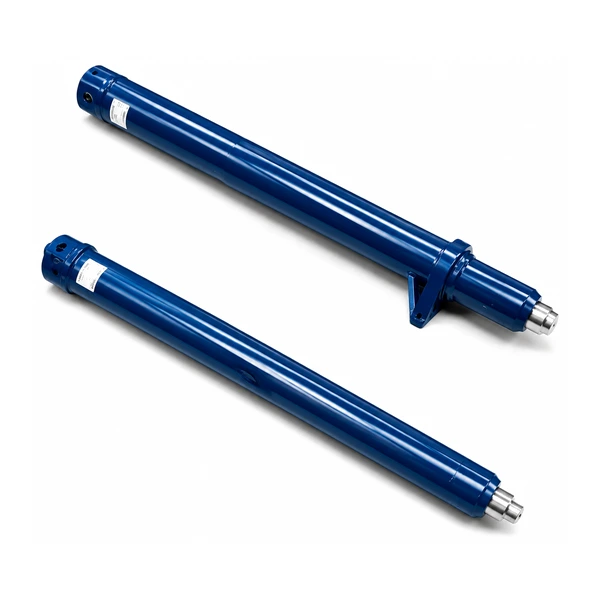
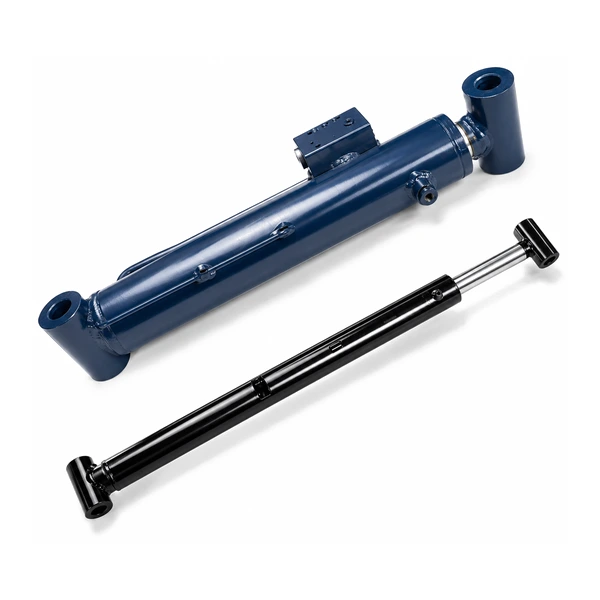
Zusätzliche Informationen
| Editor |
|---|