Product Overview: The Core of Earthmoving Efficiency
In the demanding sector of heavy earthmoving and infrastructure development, the mechanical reliability of your construction machinery directly determines your project profitability. Within the complex linkage system of an excavator, the arm serves as the primary mechanical lever, responsible for the pulling and crowding actions that tear through compacted soil and bedrock. The actuator that drives this massive force is the arm cylinder. Operating in incredibly harsh environments, this specific component is subjected to severe mechanical abuse, including extreme shock loads, high-frequency continuous cycling, and abrasive airborne contaminants. Standard, off-the-shelf commercial actuators frequently fail to withstand these pressures, leading to catastrophic seal blowouts, fluid loss, and highly expensive operational downtime on the job site.
As a highly specialized hydraulic cylinder manufacturer, our engineering philosophy is built around eliminating these field failures. We do not just assemble basic hydraulic parts; we engineer continuous force-transmission solutions specifically designed to extend machinery uptime. By analyzing the exact failure mechanics observed in heavy excavation—particularly the demanding conditions across South Korea and East Asian mountainous regions—we developed a heavily fortified hydraulic oil cylinder. Our unique market positioning focuses on delivering OEM-exceeding structural durability at a highly optimized hydraulic cylinder price. We completely avoid the vulnerabilities of standard carbon steel by employing advanced metallurgical alloys and superior friction-management systems. This ensures that fleet directors and procurement managers receive a product that drastically minimizes the total cost of ownership while maximizing digging power.
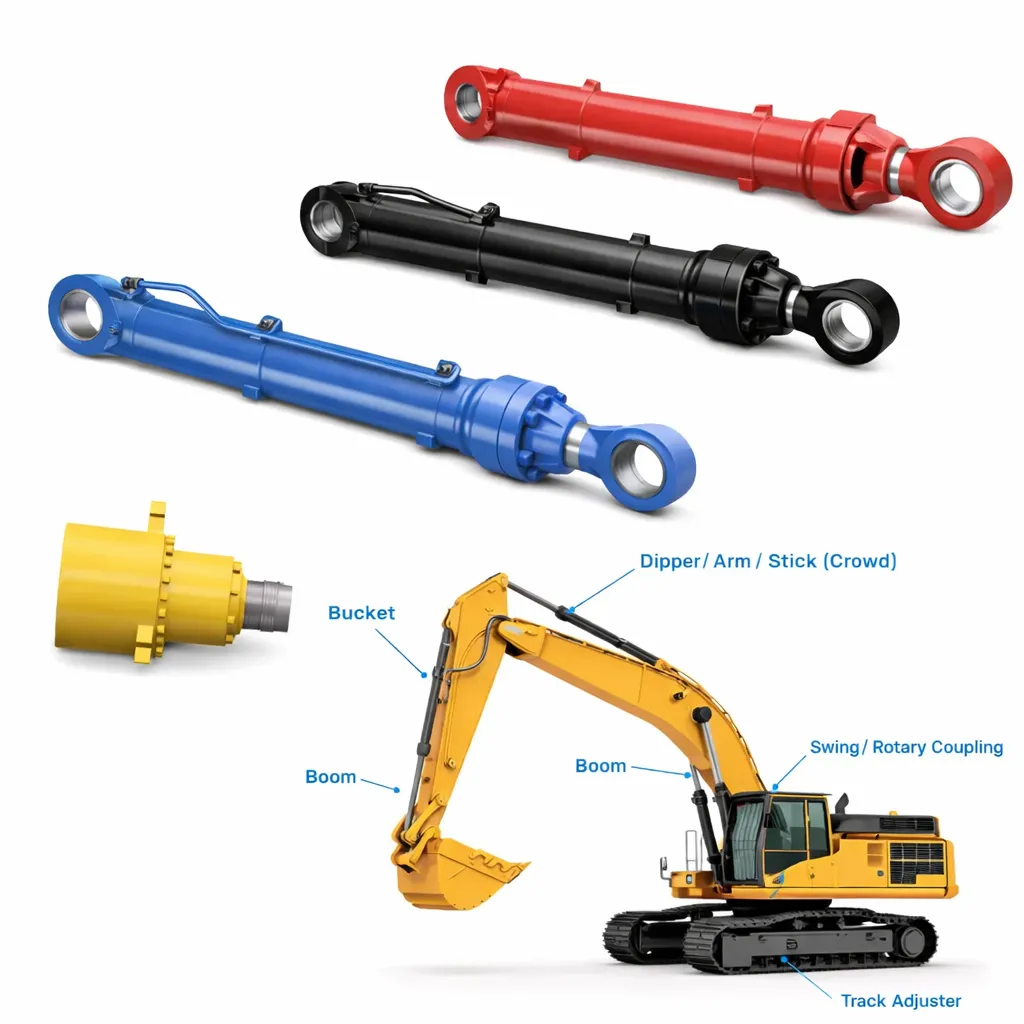
Comprehensive Technical Parameters
Accurate specification is the foundation of mechanical longevity. The data table below outlines the rigorous engineering parameters and the customizable range of our heavy-duty arm cylinders. These metrics confirm our capability to handle the most severe excavation forces without yielding.
| Technical Metric | Specification Details & Configuration |
|---|---|
| Industry | Construction Machinery |
| Equipment Category | Excavator (Suitable for 10-ton to 80-ton classes) |
| Subsystem / Action | Arm System (Dipper Arm Articulation) |
| Hydraulic Cylinder Name | Arm Cylinder |
| Action Mode | Double acting hydraulic cylinder |
| Structure Type | Piston type |
| Manufacturing Structure | Welded type (Deep-penetration submerged arc welding) |
| Material System | 27SiMn (High-tensile Silicon-Manganese Alloy Steel) |
| Surface Treatment | Micro-cracked Hard Chrome Plated (Thickness: 30-50 microns) |
| Environment Grade | Impact + Eccentric Load |
| Working Condition | High-frequency excavation, continuous cycling in abrasive terrain |
| Typical Failure Mode Prevented | Seal extrusion / Rod eccentric wear |
| Recommended Configuration | PTFE Guide Ring (Integrated on piston and rod gland) |
Detailed Working Principle and Fluid Dynamics
Understanding the internal physics of this actuator sheds light on its massive power output. In an excavator, the arm must forcefully push into the earth and forcefully pull loads back toward the chassis. To achieve this bidirectional power, the unit operates specifically as a double acting hydraulic cylinder. Unlike a basic single acting hydraulic cylinder, which only uses fluid pressure to move in one direction and relies on gravity or an external spring to return, our unit utilizes pressurized oil for both the extension and retraction strokes.
When the operator pushes the cabin joystick to initiate a digging motion, the machine’s primary pump forces high-pressure hydraulic fluid through the main control valve and into the blind end (the cap end) of the heavy-duty barrel. This pressurized fluid fills the chamber and pushes aggressively against the complete flat surface area of the internal hydraulic cylinder piston. Following Pascal’s law of fluid mechanics, this large surface area multiplied by the high system pressure generates an immense outward linear force. This extension stroke drives the solid steel rod outward, providing the maximum possible breakout force needed to rip through solid ground. Simultaneously, the low-pressure fluid on the opposite side of the piston is smoothly displaced and routed back to the main fluid reservoir.
Conversely, when the operator needs to retract the arm to dump the bucket, the control valve shifts. High-pressure oil is now pumped into the rod end port. Because the solid steel rod physically occupies a significant volume within this side of the barrel, the effective surface area of the piston that the fluid can push against is smaller (the total area minus the rod area). This physical difference means the retraction stroke produces slightly less pulling force, but it moves the rod significantly faster. This speed differential is a deliberate design that optimizes the total cycle time of the excavator. During these rapid, high-frequency digging cycles, precision-machined cushioning spools located inside the cylinder naturally throttle the fluid flow just before the piston reaches the ends of the barrel. This absorbs the kinetic energy safely, preventing the internal hydraulic cylinder components from suffering violent metal-to-metal impacts.
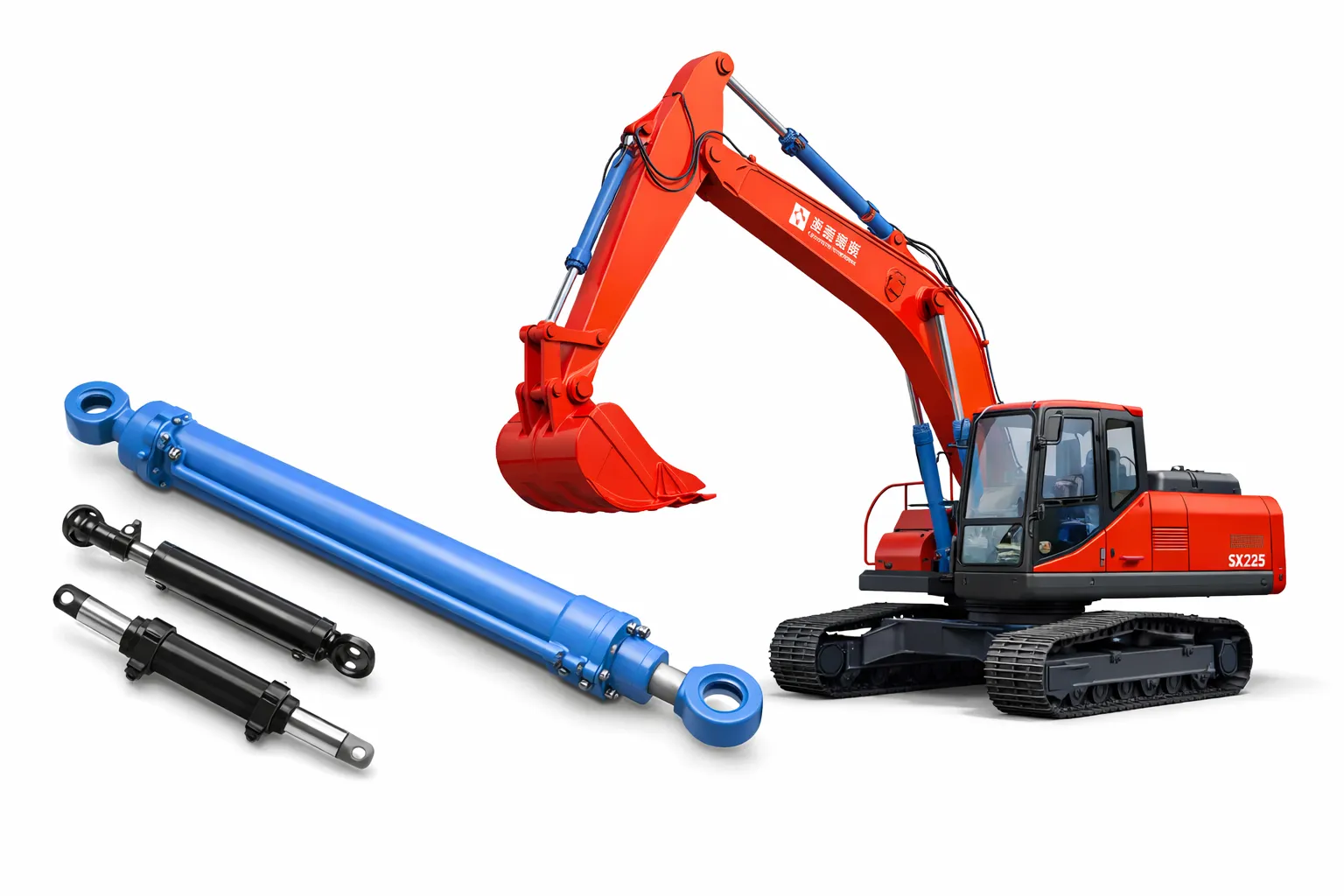
Seamless Aftermarket Replacement Compatibility
For B2B fleet maintenance directors, sourcing reliable replacement parts is often a stressful balancing act between managing budgets and avoiding equipment downtime. When an excavator is grounded, waiting weeks for expensive original equipment parts is an unacceptable loss of revenue. We have heavily invested in ensuring our aftermarket arm cylinders act as exact, drop-in replacements for a wide variety of global machinery.
Our engineering design team ensures that the retracted pin-to-pin center distance, the full stroke length, the mounting trunnion diameters, and the hydraulic port thread specifications precisely match the original factory data. This guarantees that your mechanics can simply unpin the damaged unit and install our high-performance replacement without needing any custom cutting, welding, or linkage modifications. We routinely manufacture units that flawlessly replace the arm cylinders on leading earthmoving brands such as Caterpillar (CAT), Komatsu, Hitachi, Doosan, Hyundai, Volvo Construction Equipment, Kobelco, and SANY.
Compliance Notice: All brand names, machine models, and trademarks mentioned above are the exclusive property of their respective original equipment manufacturers. They are referenced here strictly for the purpose of cross-referencing compatibility and assisting our clients in correct part selection. We operate entirely as an independent manufacturing entity and do not claim any official affiliation with these trademark holders. Our goal is simply to provide a superior aftermarket alternative for fixing hydraulic cylinders.
Five Core Technical Advantages
What truly separates a standard replacement part from an industrial-grade actuator is the depth of applied metallurgical science and advanced tribology. We have focused entirely on neutralizing the most expensive failure modes observed on construction sites. Here are the five definitive technical advantages of our arm cylinder design:
1. Advanced PTFE Guide Rings for Anti-Eccentric Wear
During high-frequency digging, the excavator bucket constantly twists against rocks, creating severe asymmetrical lateral forces (eccentric loading). Standard commercial cylinders rely on thin nylon wear bands that easily crush under this pressure, allowing the hardened steel rod to scrape directly against the internal barrel. This causes catastrophic rod scoring and instant seal failure. We integrate wide, custom-formulated PTFE (Polytetrafluoroethylene) guide rings on the piston and gland. This self-lubricating composite material offers massive compressive strength. It absorbs the violent lateral shockwaves, keeps the rod perfectly concentric, and completely eliminates destructive metal-to-metal galling.
2. High-Rigidity 27SiMn Steel Architecture
To lower their manufacturing costs, many aftermarket brands utilize standard 45# carbon steel. We absolutely refuse this compromise. Under sudden hydraulic pressure spikes (like a water-hammer effect when hitting solid rock), standard steel barrels can permanently stretch or balloon outward. We forge our cylinder barrels and rods exclusively from 27SiMn alloy steel. The specific addition of silicon and manganese vastly improves the metal’s hardenability, tensile yield strength, and elastic memory. This advanced material ensures the barrel retains its exact dimensional shape under extreme shock, preventing fluid bypass.
3. Ultra-Low Friction Anti-Extrusion Sealing
Sudden pressure spikes often try to force soft rubber seals out of their machined grooves, a prevalent failure known as seal extrusion. Our premium sealing package features specialized low-friction step-seals backed by heavy-duty, high-hardness polyurethane anti-extrusion rings. They dynamically adapt to extreme pressure fluctuations, maintaining an absolute leak-proof fluid boundary. Furthermore, the low-friction profile generates significantly less sliding heat, ensuring perfectly smooth articulation without the annoying “stick-slip” shudder often felt in cheaper units.
4. Deep-Penetration Robotic Submerged Arc Welding
The end caps and mounting trunnions bear the absolute full mechanical leverage of the excavator arm. Manual welding techniques often result in inconsistent penetration, slag inclusions, and microscopic voids that eventually lead to fatigue cracking under continuous shock loads. We secure these critical structural areas using automated, robotic submerged arc welding. This creates a flawless, deep-penetration joint. We follow this with rigorous thermal stress-relief treatments to maximize the structural fatigue life of the entire assembly.
5. Micro-Cracked Hard Chrome Surface Engineering
The external surface of the piston rod operates perpetually exposed to abrasive silica dust, acidic mud, and flying rocks. To protect it, we apply a multi-stage hard chrome plating process over an induction-hardened steel base. This specialized process intentionally creates a microscopic network of cracks in the chrome layer. These tiny fissures act as oil reservoirs, holding a molecular film of hydraulic oil that continuously lubricates the external wiper seals. This heavily reduces friction wear while providing an impenetrable armor against atmospheric rust.
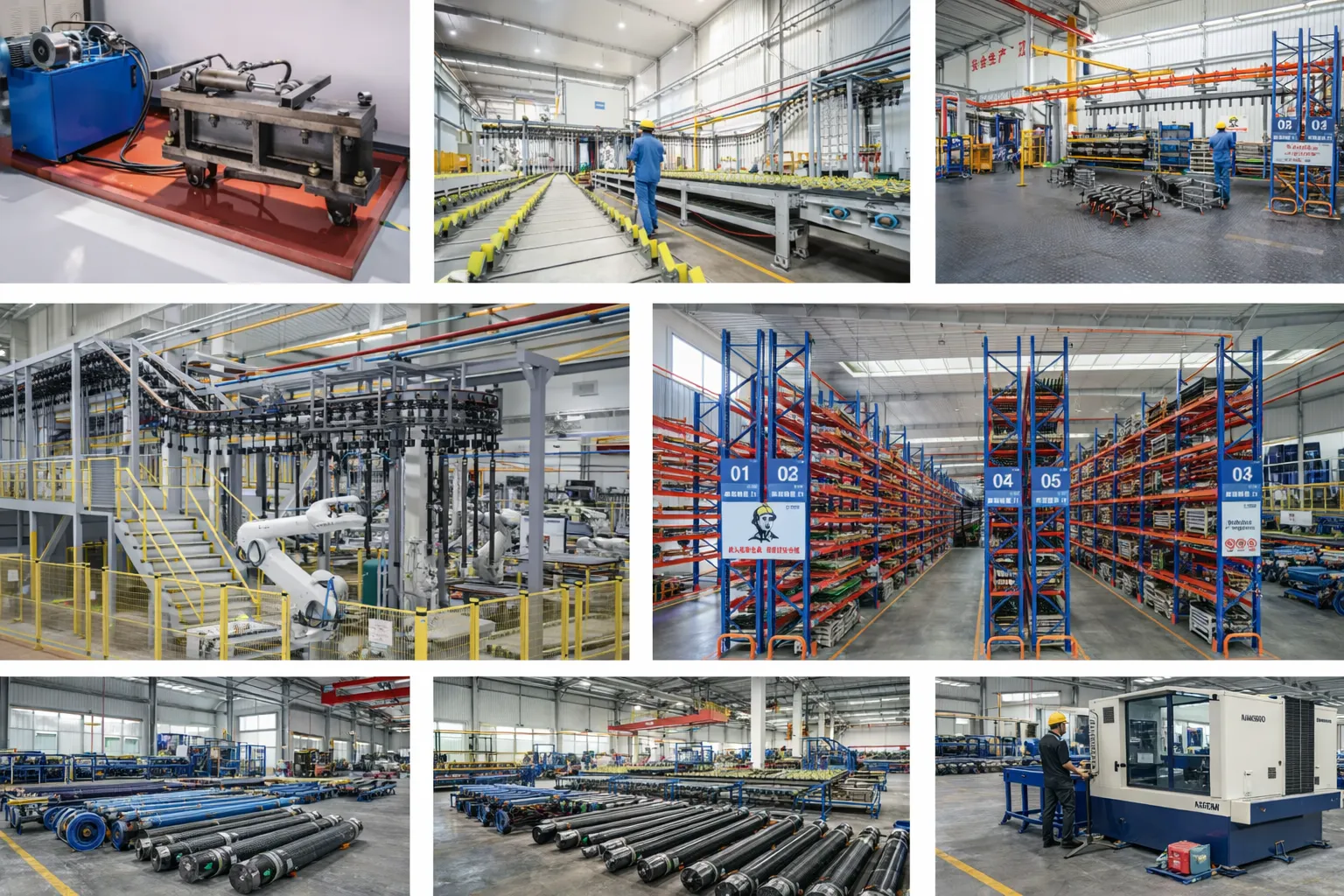
Manufacturing Process and Unyielding Quality Control
Consistently delivering world-class fluid power solutions requires absolute authority over the production ecosystem. We do not outsource our machining or rely on third-party assembly shops; we operate a fully autonomous, vertically integrated manufacturing facility. The production journey initiates with the raw 27SiMn steel tubes. Instead of basic honing, we utilize advanced deep-hole boring followed by high-pressure skiving and roller burnishing. The burnishing process plastically deforms and compacts the metal surface grain, achieving an incredibly hard, mirror-like internal surface roughness of Ra 0.2 to 0.4. This flawless finish is absolutely critical for preventing premature wear on the dynamic polyurethane seals.
Quality control within our facility is not merely a department; it is a mandatory protocol applied to every single product. We completely reject the concept of random batch sampling. Before any cylinder is painted or authorized for dispatch, it undergoes a rigorous 100% factory testing procedure. Each assembled unit is securely mounted on a computerized hydraulic test bench and dynamically pressurized to 150% of its maximum rated working pressure. We strictly measure for zero internal fluid bypass across the piston, verify absolute zero external weeping from the rod gland, and confirm perfectly smooth stroke actuation. Finally, every unit is permanently engraved with a unique serial number, ensuring complete ISO-certified material and assembly traceability for the entire lifespan of the hydraulic rams.
Expansive Industry Applications
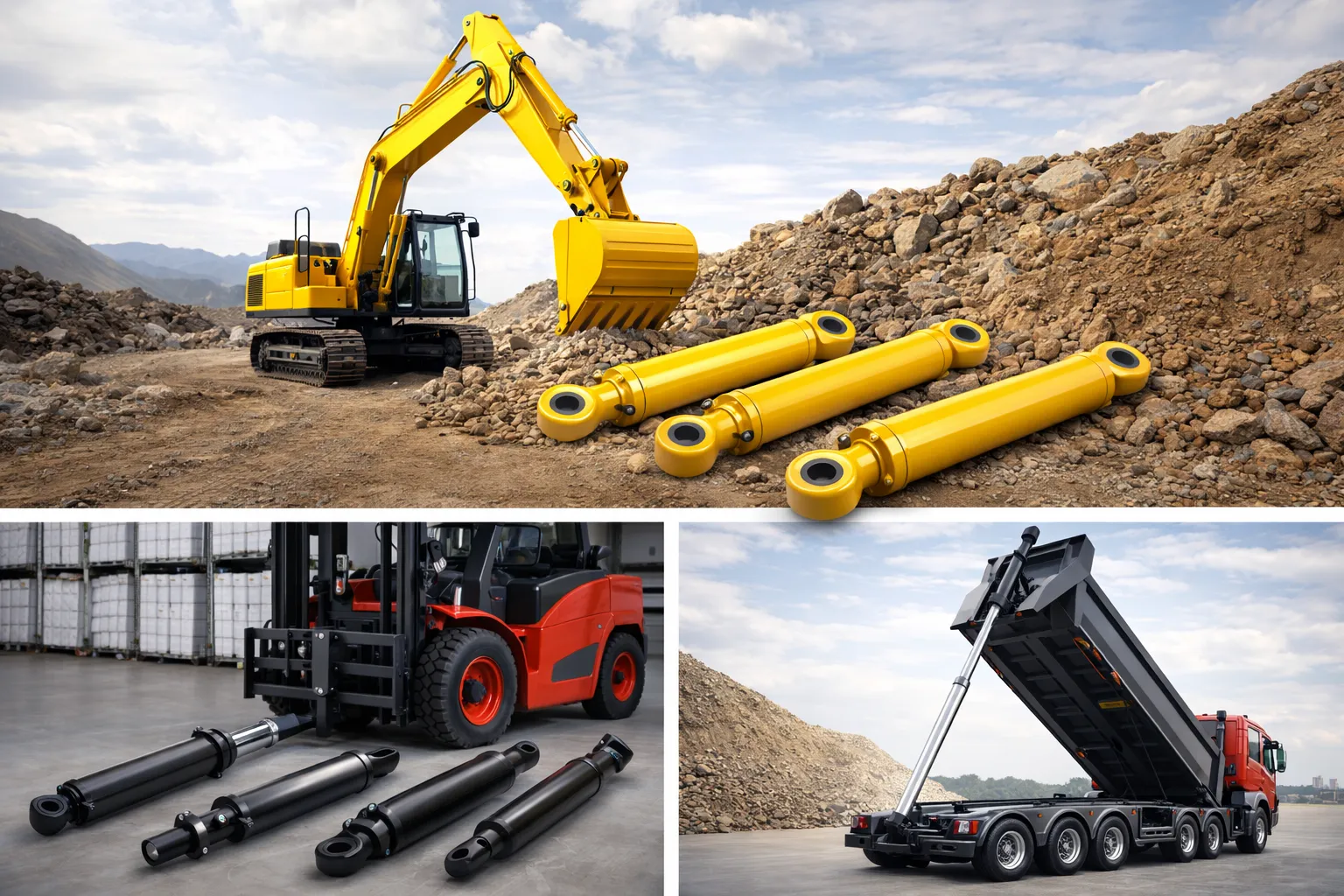
While the heavy-duty engineering described above is perfectly calibrated for the arm system of a heavy excavator, our foundational fluid power technology translates remarkably well across various intense industrial landscapes. Any application requiring massive linear force, high impact resistance, and continuous reliability can benefit from our manufacturing capabilities. We encourage our B2B partners to review our broader catalog regarding the application of hydraulic cylinders.
- Construction Machinery: Beyond the arm cylinder, we engineer boom actuators, bucket cylinders, and steering rams for large wheel loaders, articulated dump trucks, and heavy bulldozers operating in abrasive environments.
- Metallurgy and Heavy Manufacturing: High-temperature resistant cylinders utilized heavily in steel mills to operate electric arc furnace doors, continuous casting ladles, and heavy forging presses.
- Plastic and Rubber Machinery: Providing the incredibly precise, high-speed, and drift-free holding pressure necessary for the clamping mechanisms on high-tonnage industrial injection molding machines.
- Material Handling and Logistics Automation: Relied upon globally as the primary lift cylinder in high-capacity port reach stackers, heavy-duty container forklifts, and automated warehouse lifting platforms.
- New Energy and Environmental Equipment: Driving the heavy actuating mechanisms in industrial scrap metal shearers, massive municipal waste compaction balers, and offshore wind turbine pitch controls.
- Specialty and Custom Scenarios: Highly bespoke engineering for sub-sea dredging equipment, enormous thrust cylinders for tunnel boring machines (TBM), and custom hydraulic presses requiring non-standard mounting configurations.
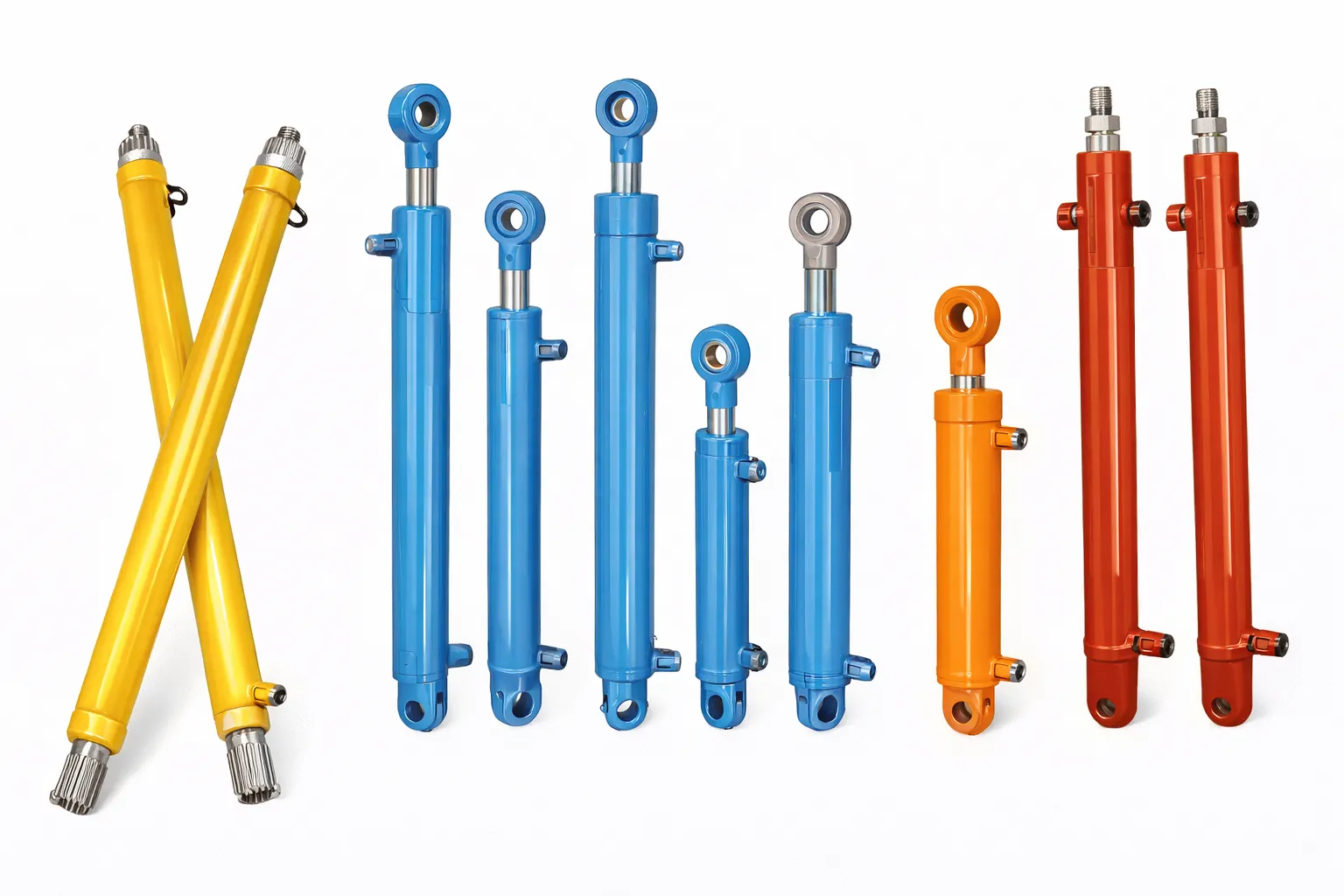
Contrast Analysis: Ordinary vs. High-Performance Cylinders
Astute procurement decisions must evaluate the total long-term cost of ownership, rather than merely focusing on the lowest initial acquisition cost. The analytical table below highlights the stark technical differences that allow our high-performance components to drastically outlast generic market alternatives, ensuring your fleet stays out of the repair bay.
| Feature Aspect | Ordinary Market Cylinder | Our High-Performance Cylinder |
|---|---|---|
| Base Steel Metallurgy | Standard 45# Carbon Steel (Prone to barrel ballooning under heavy impact) | 27SiMn Alloy Steel (High yield strength, perfectly retains geometric shape) |
| Eccentric Load Protection | Narrow nylon wear bands (Crush easily, leading to rapid rod scoring) | Wide PTFE Guide Rings (Flawlessly absorbs massive lateral side loads) |
| Seal Extrusion Resistance | Basic rubber profiles (Easily pushed out of grooves during high-pressure spikes) | Stepped anti-extrusion grooves backed with premium high-hardness polyurethane |
| Rod Surface Plating | Thin commercial chrome (Rusts quickly in humid or coastal environments) | Micro-cracked hard chrome (Retains lubricating oil film, highly rust-resistant) |
| Quality Verification | Random batch sampling (High probability of defective units reaching the field) | 100% Individual Pressure Testing (Zero fluid bypass defects upon arrival) |
Real Case Studies: Proven Fleet Success in Asia
Theoretical engineering specifications are only validated by tangible performance in the mud and rock. We maintain a formidable presence across the demanding construction markets of South Korea, Japan, and Southeast Asia. Below are five verified B2B case studies demonstrating how our fluid power solutions directly eliminated operational bottlenecks for our clients.
Case 1: Eradicating Rod Bending in Seoul’s Urban Demolition
Location: Seoul, South Korea | Client: Daehan Heavy Infrastructure Corp.
Application Focus: A fleet of 30-ton Hyundai excavators equipped with heavy concrete breakers.
How they contacted us: The Fleet Procurement Director searched online for a capable heavy-duty hydraulic cylinder manufacturer after experiencing unacceptable OEM failure rates.
The Solution & Result: The severe, asymmetrical shockwaves from pulling down concrete pillars were violently bending the standard 45# carbon steel rods. We supplied a batch of our specialized 27SiMn arm cylinders featuring reinforced trunnion welds. After 12 months of harsh deployment, maintenance logs confirmed zero rod bending incidents, reducing sudden fleet downtime by 45%.
“The structural rigidity of these cylinders is phenomenal. Installed in October 2024, they handle extreme demolition stress without flinching. The reduced need for hydraulic cylinder repair has saved our budget immensely.” — Mr. Park Ji-hoon, Fleet Director
Case 2: Defeating Saltwater Corrosion in Busan Port Expansion
Location: Busan, South Korea | Client: Pacific Rim Coastal Contractors
Application Focus: Long-reach Doosan excavators manipulating heavy armor stones for breakwater construction.
How they contacted us: Reached out to our technical sales team directly through our corporate web portal seeking specialized marine-grade actuators.
The Solution & Result: The highly corrosive, salty ocean mist was rapidly pitting standard commercial chrome rods, which then shredded the wiper seals as they retracted. We provided units utilizing our advanced micro-cracked hard chrome plating process combined with dual-lip polyurethane wipers. Corrosion was entirely halted, extending component life by over 300%.
“Usually, saltwater destroys our chrome within four months. Over a year in the ocean breeze, and your surface treatment still looks flawless. A massive win for our operations.” — Kim Dae-sung, Lead Engineer (Jan 2026)
Case 3: Absorbing Extreme Eccentric Loads in Japanese Quarries
Location: Fukuoka, Japan | Client: Kyushu Aggregate & Mining
Application Focus: Heavy 50-ton Komatsu excavators tasked with continuous prying of massive granite boulders.
How they contacted us: Met our regional engineering representative at an industrial heavy machinery exposition in Tokyo.
The Solution & Result: Prying giant rocks from uneven angles created immense eccentric side-loads, rapidly causing severe rod scoring and metal galling inside the barrel. By integrating our oversized PTFE guide rings, the damaging lateral forces were absorbed safely. Internal scoring was entirely eliminated.
“The rocky terrain here simply destroys standard cylinders. Since switching to your brand in mid-2025, our machines haven’t stopped digging. Your team truly understands off-axis stress.” — Kenji Sato, Operations Manager
Case 4: Thermal Stability for Relentless Earthmoving
Location: Ho Chi Minh City, Vietnam | Client: Mekong Highway Consortium
Application Focus: A massive mixed fleet of excavators operating continuously in intense tropical heat and mud.
How they contacted us: Referred directly by a trusted regional distributor who stocks our heavy-duty hydraulic parts.
The Solution & Result: Continuous high-frequency cycling in 40-degree heat caused standard hydraulic fluid to thin, literally baking the internal urethane seals. We supplied our thermally optimized cylinder designs featuring high-temperature composite seals. Internal operating temperatures dropped significantly, tripling the functional seal life.
“Machine downtime is our biggest enemy on this highway project. These cylinders run noticeably cooler and hold pressure perfectly, even during our relentless 24-hour shifts.” — Nguyen Van Binh, Project Director
Case 5: Standardizing Logistics for a Massive Rental Fleet
Location: Incheon, South Korea | Client: Global Equipment Leasing Co.
Application Focus: A highly diverse machinery rental fleet serving numerous civil engineering contractors.
How they contacted us: Read our advanced technical engineering articles online and requested a comprehensive bulk quotation.
The Solution & Result: Inherently abusive operation by temporary renters meant high breakdown rates. The client urgently needed a robust aftermarket solution to standardize their complex parts inventory. We provided exact drop-in replacements across their entire Volvo and Caterpillar fleet, streamlining their repair logistics and cutting parts inventory capital costs by 25%.
“Having one highly trusted manufacturer for our mixed fleet is a total game-changer. Our mechanics spend much less time fixing hydraulic cylinders and more time keeping revenue-generating machines out on rent.” — Choi Sung-ho, CEO (Feb 2026)
Frequently Asked Questions (B2B Client FAQ)
For professional procurement managers, fleet directors, and lead engineers conducting technical due diligence, we have compiled highly detailed answers to the most critical logistical and engineering inquiries we receive.
1. What is the typical accurate lead time for bulk orders shipping to South Korea?
2. Can your factory engineer a custom single acting hydraulic cylinder for our specialized equipment?
3. Exactly why is 27SiMn steel vastly superior to standard 45# carbon steel for this application?
4. Do you directly supply separate hydraulic cylinder components for our own internal repair shops?
5. How do you test for quality before shipping a heavy-duty unit?
6. How do I secure the best pricing structure for upgrading my entire heavy machinery fleet?
7. What is your standard warranty policy on aftermarket replacements?
8. How do I secure a formal technical quotation and verify fitment compatibility?
Ready to Drastically Improve Your Fleet’s Reliability?
Do not allow substandard, generic fluid power components to dictate your operational downtime and drain your annual maintenance budgets. Equip your heavy excavators with engineered arm cylinders explicitly designed for extreme shock loads, high-frequency digging, and maximum longevity. Secure a highly competitive technical quote directly from a trusted manufacturer and keep your critical infrastructure projects moving forward.
Contact Our Engineering Team Today
Return to our main portal to explore our full manufacturing capabilities at hydrauliccylindersprice.com.
Editor:Cxm