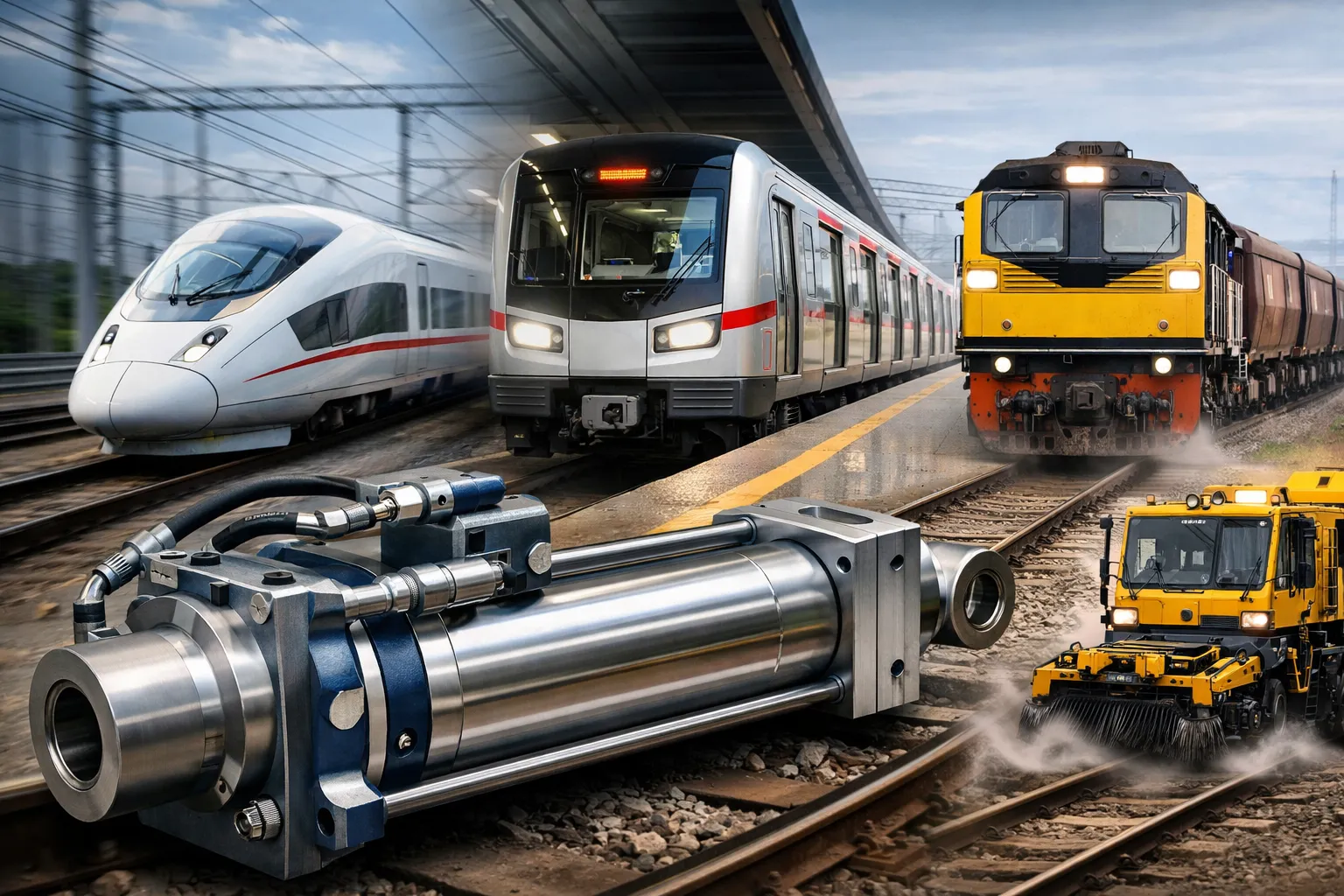
System Overview & Core Industrial Value
The continuous expansion of high-density urban mass transit networks across South Korea, Japan, Taiwan, and the broader global infrastructure relies fundamentally on uncompromising safety mechanisms. Within the sophisticated mechanical architecture of modern light rail, commuter metros, and automated subway carriages, the pneumatic braking system functions as the ultimate fail-safe. Controlling the massive volume of compressed air required to instantly activate the train’s foundation brake calipers demands highly precise fluid and gas power management. The sprawling network of brake air pipes must open and close with exact, microsecond timing. This critical air duct control function is executed by a highly specialized hybrid actuator known as the Air Valve Gas-Liquid Cylinder.
However, the undercarriage and inter-carriage cavities where these critical brake air pipes reside present a brutally hostile operational biome. The primary threat to mechanical reliability is not mere physical impact, but extreme atmospheric degradation. As highly compressed air rapidly expands and travels through the transit braking network, thermodynamics dictate a severe drop in temperature. This thermal shift immediately condenses the ambient humidity suspended within the air, perpetually bathing the internal mechanisms of the actuator in water. When transit procurement departments deploy standard commercial actuators fabricated from basic carbon steel or unprotected aluminum in this environment, they succumb to rapid, aggressive galvanic corrosion. Rust particulates flake off the cylinder walls, acting as a highly abrasive paste that instantly shreds the internal sealing elements. This inevitable sequence leads to catastrophic pressure loss within the air duct control subsystem, resulting in automated emergency stops, grounded carriages, and chaotic network delays.
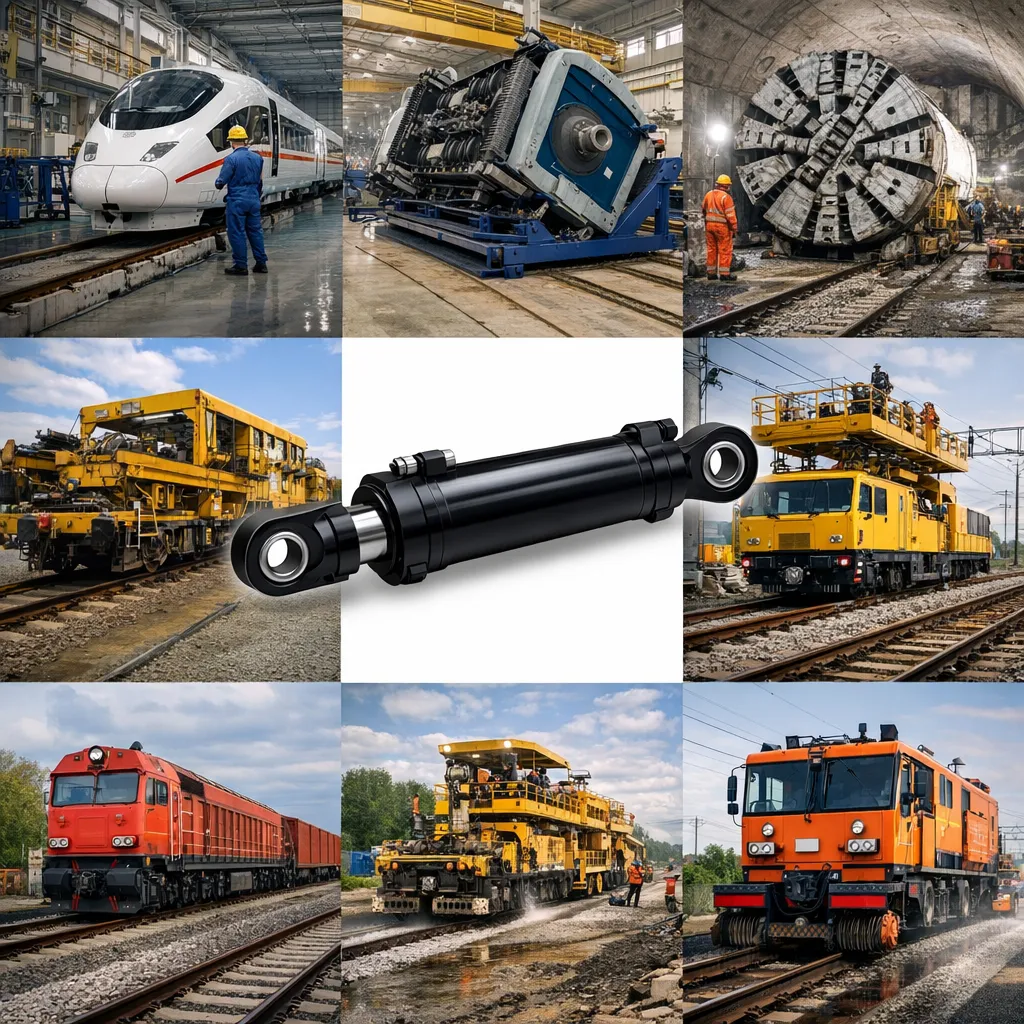
Operating as an elite hydraulic cylinder manufacturer with decades of dedicated transit engineering expertise, we recognized that standard fluid power solutions were inherently flawed for this specific high-moisture application. To permanently eradicate the threat of moisture-induced braking failure, our engineering bureau developed a highly specialized small piston cylinder constructed entirely from premium, marine-grade 316L stainless steel. By combining a monolithic welded structural architecture with an ultra-polished internal and external surface treatment, we have created an Air Valve Gas-Liquid Hydraulic Cylinder that is fundamentally immune to atmospheric corrosion and entirely resistant to the structural loosening caused by constant steel-on-steel rail vibration. Upgrading to our specialized components guarantees transit authorities a massive extension in their scheduled maintenance lifecycles, providing a phenomenal return on their hydraulic cylinder price investment while ensuring the absolute, uncompromising safety of millions of daily passengers.
Comprehensive Technical Parameters
Designing a fail-safe fluid power actuator for a life-critical urban transit braking network requires exacting adherence to international railway standards and uncompromising metallurgical tolerances. The detailed technical matrix below outlines the baseline engineering parameters and customizable configurations for our transit-grade hydraulic parts. Every element is deliberately engineered to neutralize corrosion and severe vibration within restricted undercarriage spaces.
| Engineering Specification | Customizable Range & Configuration Details |
|---|---|
| Target Industry | Rail Transit (Mass Rapid Transit, Suburban Rail, APM Systems) |
| Equipment Category | Urban Rail Vehicles, Subway Carriages, Light Rail Rolling Stock |
| Subsystem & Action | Brake Air Pipe / High-Volume Pneumatic Air Duct Flow Control |
| Product Designation | Air Valve Gas-Liquid Cylinder |
| Action Mode | Double acting hydraulic cylinder – Utilizing pressurized gas-fluid dynamics for controlled bidirectional stroke movement. |
| Structure Type | Small piston cylinder – Highly compact linear profile engineered to integrate seamlessly into tight bogie piping galleries. |
| Manufacturing Structure | Welded Construction – Entirely eliminates threaded tie-rods, completely preventing structural loosening from track resonance. |
| Material System | Stainless Steel (Premium 316L Grade) – Absolute, permanent immunity to aqueous corrosion and chemical degradation. |
| Surface Treatment | High-Precision Polished Finish (Ra ≤ 0.2µm) – Minimizes seal friction and prevents moisture particulate adhesion. |
| Environmental Grade | Severe Continuous Moisture (Condensation) + High-Frequency Bogie Vibration |
| Typical Failure Mode Solved | Corrosion (Internal oxidation leading to rapid seal tearing, valve seizing, and system depressurization). |
| Recommended Configuration | 100% 316L Material Integration – The definitive metallurgical defense for pneumatic transit brake subsystems. |
Operational Fluid Dynamics & Hybrid Working Principle
To fully appreciate the crucial engineering necessity of the gas-liquid hybrid architecture, one must understand the unique physical challenges of operating a multi-ton train’s pneumatic braking system. When the automated train control center requests emergency or regenerative brake actuation, immense volumes of compressed air must rush through the ductwork in fractions of a second. If standard pneumatic cylinders were utilized to open the massive butterfly or ball valves governing these ducts, the highly elastic and spongy nature of compressed air would cause the valves to slam open violently. This instantaneous mechanical shock would rapidly fatigue the valve hinges, destroy the valve seating, and generate highly dangerous pressure spikes within the downstream braking network.
Our proprietary Air Valve Gas-Liquid Cylinder elegantly and definitively solves this problem by seamlessly merging two distinct fluid power principles. The system utilizes a parallel or concentric internal chamber design. Compressed air sourced directly from the train’s main pneumatic reservoir provides the rapid motive force required for immediate system response times. However, this explosive pneumatic energy does not push the rod directly. Instead, it acts upon a closed-loop internal hydraulic cylinder piston that is fully submerged in a specialized, incompressible hydraulic fluid. By forcing this thick hydraulic oil through a precisely calibrated micro-metering orifice during the stroke, the actuator provides extreme, velocity-dependent mechanical damping. The compressed air provides the lightning-fast speed, while the hydraulic fluid governs the absolute physical control.
Because this actuator is engineered as a highly sophisticated double acting hydraulic cylinder arrangement, this precise hydro-pneumatic control is exerted symmetrically in both directions. Whether the brake air duct is opening rapidly to charge the air lines or closing firmly to secure the system pressure, the polished 316L stainless steel rod moves with perfect, unwavering smoothness. This hybrid dynamic completely eradicates mechanical slamming. Unlike a rudimentary single-acting setup that might rely on an unreliable, fatigue-prone mechanical return spring to close the valve, our bidirectional pressurized control ensures that the transit vehicle’s critical braking infrastructure responds with absolute mathematical precision every single time, safely governing the deceleration of the carriage.
Strategic OEM Fleet Replacement & Supply Chain Independence
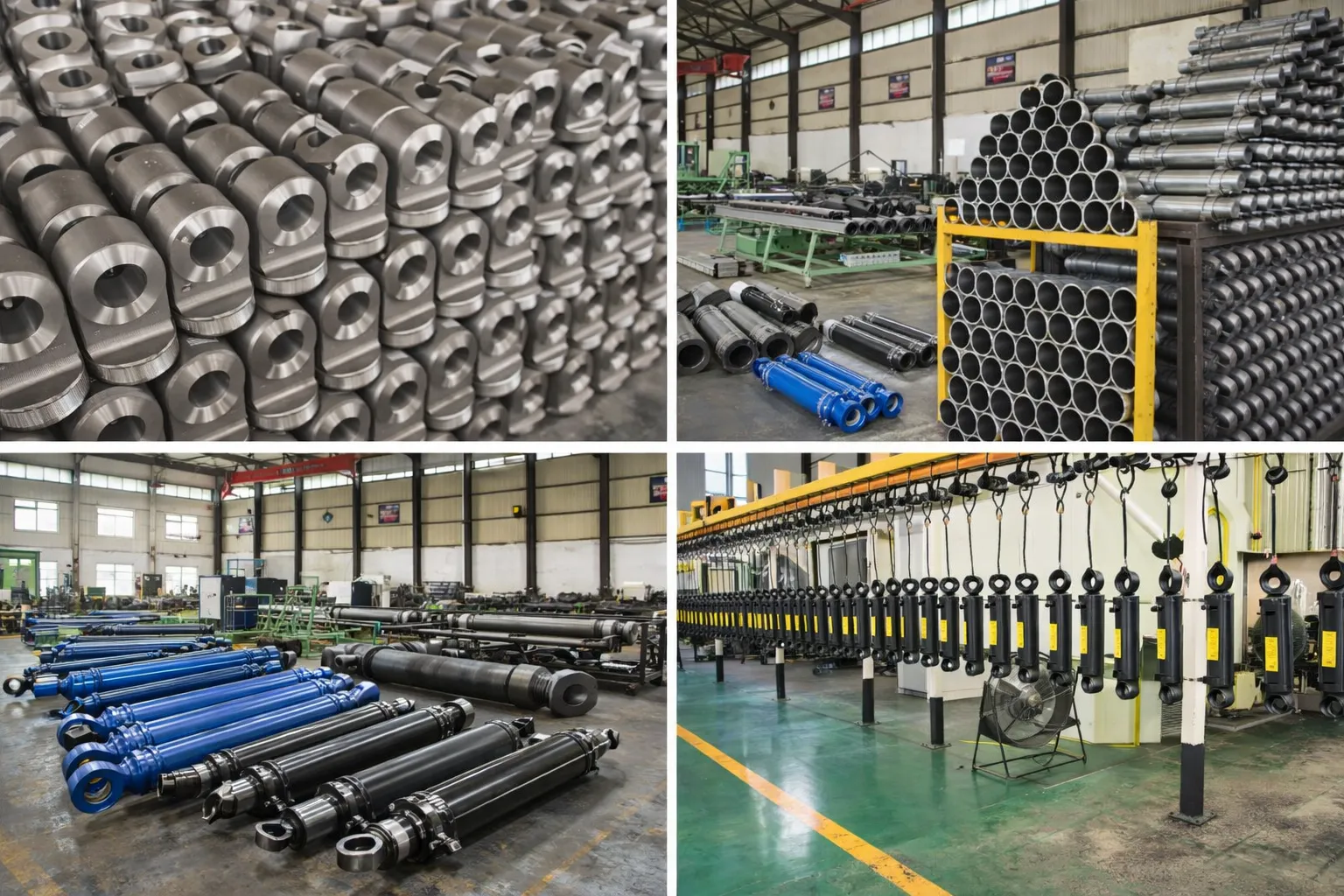
Maintaining a modern, highly utilized fleet of urban rail vehicles requires navigating complex, slow, and frequently frustrating international supply chains. Sourcing highly specialized hydraulic cylinder components exclusively from primary European or North American rolling stock integrators often subjects regional procurement departments to exorbitant budgetary markups, forced equipment obsolescence programs, and agonizing lead times that threaten to keep valuable passenger carriages grounded out of service. Our specialized fluid power engineering division systematically eliminates these massive bottlenecks by producing exact, flawlessly reverse-engineered drop-in replacement actuators.
Procurement Engineering Disclaimer: The customized 316L Air Valve Gas-Liquid Hydraulic Cylinder actuators produced within our facility are dimensionally and functionally engineered to serve as perfect mechanical replacements for air duct control units originally supplied by recognized global pneumatic and hydraulic integrators, including Knorr-Bremse, Festo, SMC, Parker Hannifin, Norgren, and Wabtec. These brand names are referenced exclusively for the purpose of technical cross-referencing, stroke dimension matching, and logistical procurement convenience for your depot engineers. We operate as a wholly independent, expert hydraulic cylinder manufacturer and hold no official trademark affiliation, authorized dealership status, or corporate sponsorship from these respective OEM entities.
By collaborating directly with our specialized manufacturing facility, transit maintenance depots are guaranteed absolute dimensional matching. Our rigorous reverse-engineering protocols ensure that the retracted pin-to-pin mounting dimensions, bore sizes, stroke capacities, thread pitches, and exact hydro-pneumatic damping curves perfectly match the footprint of your existing equipment. Upgrading your brake air pipe assemblies requires absolutely zero structural retrofitting, welding, or cutting to the carriage chassis. Fleet technicians simply uninstall the leaking, corroded OEM unit and seamlessly bolt in our advanced stainless steel actuator. This rapid integration permanently resolves chronic oxidation failures while drastically lowering the overall hydraulic cylinder price expenditure of your annual fleet maintenance budget.
7 Definitive Technical Engineering Advantages
Standard industrial actuators are designed for benign, dry factory floors—not the freezing, vibrating, and condensation-drenched environment beneath a speeding commuter train. Our Air Valve Gas-Liquid Cylinder is fundamentally over-engineered to dominate these specific environmental challenges. Below are the definitive structural and metallurgical advantages forged into every unit that leaves our production floor:
1. Absolute Corrosion Immunity via 316L Stainless Steel
Standard actuators rust aggressively from the inside out in the perpetually damp environment of compressed brake air pipes. We manufacture the entire exterior housing, end caps, and internal piston rod from premium 316L stainless steel. The critical addition of molybdenum in the 316L alloy matrix provides extraordinary resistance to chloride pitting and galvanic crevice corrosion, ensuring the unit remains structurally sound and visually pristine even after decades of continuous moisture exposure.
2. High-Precision Mechanical Surface Polishing
Beyond selecting superior metallurgy, we subject the exterior stainless housing and the internal rod to a rigorous, multi-stage mechanical polishing process, achieving a surface roughness (Ra) of less than 0.2 micrometers. This mirror-like, glass-smooth finish drastically reduces dynamic seal friction and physically prevents microscopic condensation droplets from adhering to the metal, neutralizing localized biological or moisture-based micro-pitting.
3. Monolithic Welded Small Piston Architecture
A subway train traversing rail joints generates severe high-frequency harmonic vibrations. Conventional cylinders assembled with external threaded tie-rods rapidly stretch, chatter, and shake loose under these punishing acoustics. By employing automated robotic TIG welding to permanently fuse the 316L stainless end caps directly to the barrel, we create a highly compact, monolithic structure that physically cannot loosen, eliminating the severe risk of sudden pneumatic depressurization.
4. Advanced Moisture-Resistant PTFE Sealing Matrix
Operating a hybrid gas-liquid system requires exceptional tribological sealing technology. We utilize proprietary composite step seals blending pure PTFE (Teflon) and hydrolysis-resistant polyurethane. These materials are chemically inert to continuous water exposure, entirely preventing the swelling, hardening, and degradation that rapidly destroys standard NBR rubber seals in damp pneumatic environments.
5. Calibrated Hydro-Pneumatic Damping Valves
To guarantee fluidly smooth air duct control, the internal hydraulic damping circuit features highly sophisticated, integrated metering micro-valves. These precision orifices allow our fluid engineers to perfectly tune the velocity curve of the stroke. This ensures that regardless of fluctuations in the initial compressed air pressure, the heavy mechanical duct valve gently and securely seals without generating a damaging impact wave.
6. Optimized Thermal and Dynamic Fatigue Life
Frequent transit braking generates substantial internal frictional heat. The superior thermal conductivity of our stainless steel barrel, paired with high-temperature synthetic hydraulic fluid, actively radiates this heat away from the delicate seal matrix. Combined with rigorous Finite Element Analysis (FEA) to mathematically reinforce the mounting trunnions, this ensures a dynamic fatigue life far exceeding original OEM specifications.
7. Accessible Depot Maintainability Architecture
While our units are forged from indestructible 316L steel, we acknowledge the pragmatic reality of long-term rolling stock maintenance. Unlike competitors who friction-weld their entire assemblies shut to force expensive, full-unit replacements, our front rod gland utilizes a highly secured, yet easily accessible threaded interface. This conscious engineering choice empowers your local depot technicians to access the internals and perform rapid fixing hydraulic cylinders operations using our exact-match PTFE seal kits, dramatically improving the total lifecycle ROI for the transit operator.
Manufacturing Excellence & Total Quality Traceability
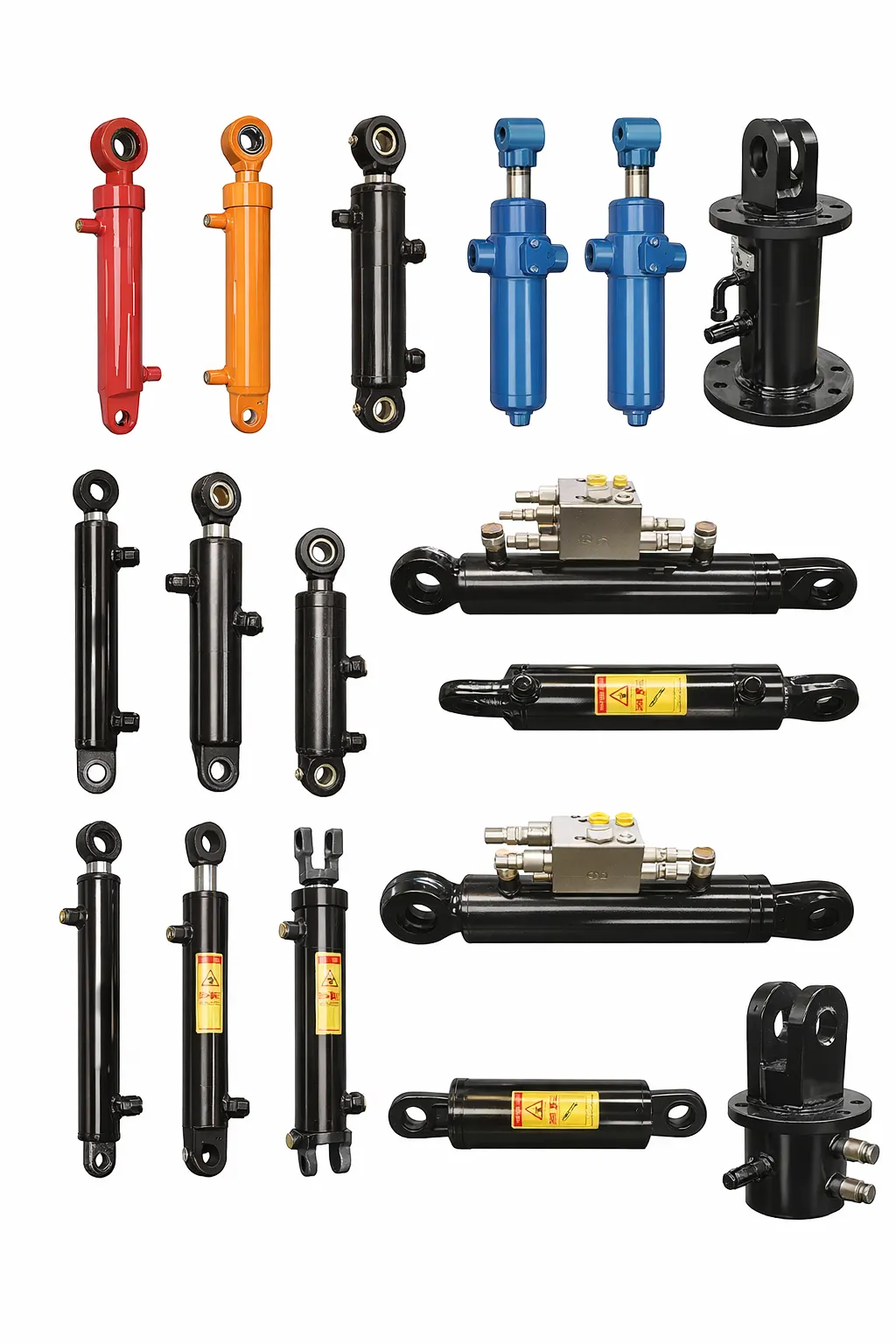
Producing safety-critical hydraulic rams and actuators for passenger rail systems demands a rigorous, zero-defect manufacturing philosophy. As a fully vertically integrated manufacturing facility, we execute absolute control over the entire production process. Our quality assurance protocol initiates the exact moment raw materials arrive at our docks. Every batch of 316L stainless steel undergoes positive material identification (PMI) using advanced X-ray fluorescence (XRF) spectrometry. This verifies the precise metallurgical composition, guaranteeing that the critical molybdenum content perfectly meets our stringent anti-corrosion requirements before any steel is cut.
The highly intricate internal machining of the cylinder barrels and fluid damping channels is performed on state-of-the-art multi-axis CNC turning centers, effortlessly achieving stringent dimensional H8 bore tolerances. To ensure the delicate internal hydro-pneumatic seals are not compromised by microscopic airborne particulate or machining dust, the final assembly of the Air Valve Gas-Liquid Hydraulic Cylinder is executed exclusively within a highly regulated, climate-controlled, positive-pressure cleanroom environment.
Most importantly, we categorically reject the standard industry practice of randomized batch testing. 100% of our production volume undergoes exhaustive Factory Acceptance Testing (FAT). Every single actuator is mounted to a customized dynamometer and subjected to thousands of rapid actuation cycles under simulated transit pneumatic loads. We verify perfect stroke velocity, damping consistency, and absolute zero fluid bypass. Upon passing this grueling test, a permanent alphanumeric serial number is laser-etched directly onto the polished stainless steel housing. This provides transit procurement officers with complete, unbreakable backward traceability, linking the physical component directly to its specific material heat records and final FAT performance data.
Cross-Industry High-Performance Applications
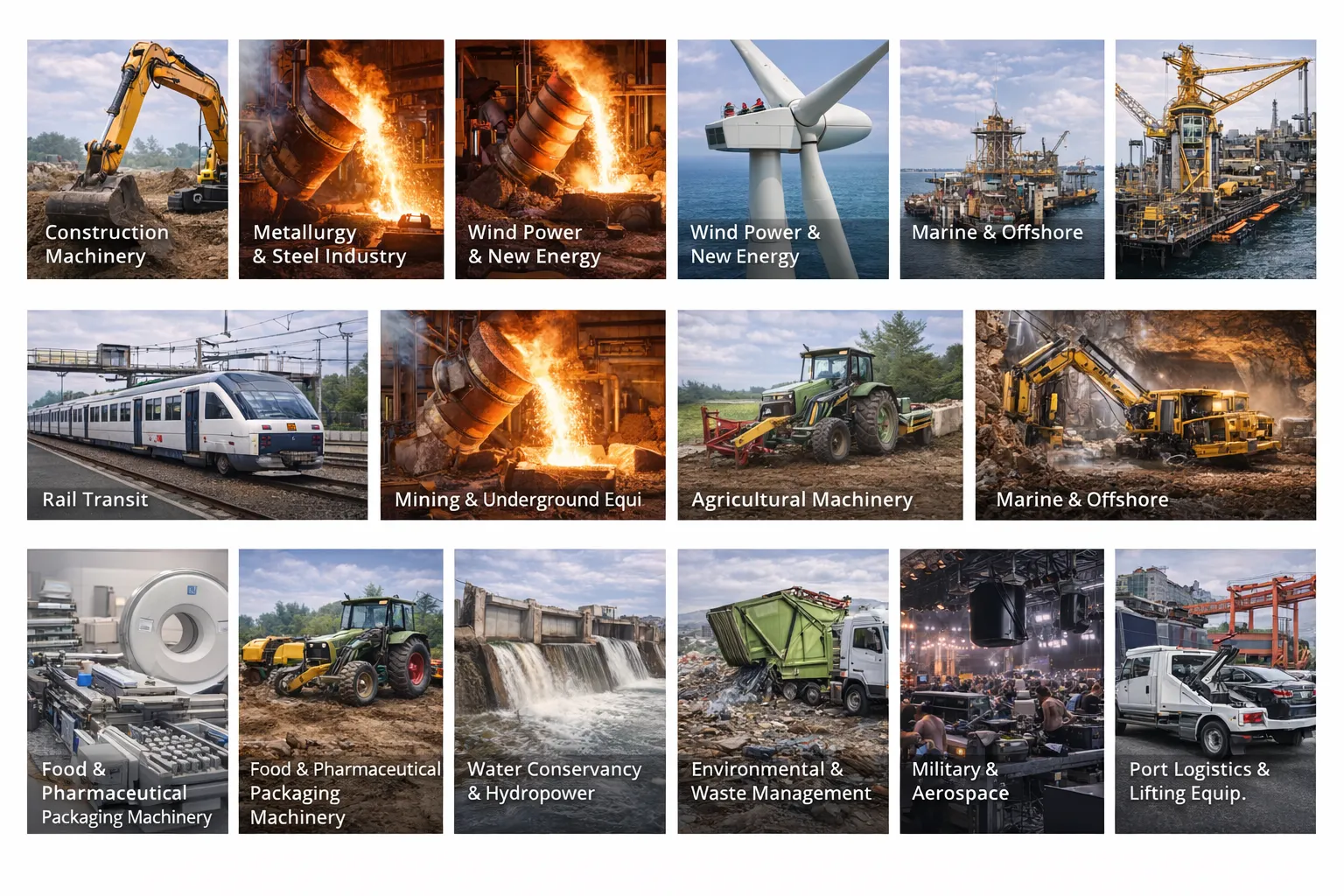
While the sophisticated hydro-pneumatic damping characteristics and 316L stainless steel architecture are natively optimized to resolve severe corrosion and vibration in urban rail vehicles, these fundamental engineering principles make our specialized cylinders exceptionally valuable across multiple rigorous industrial sectors.
- Urban Rail & High-Speed Transit: The primary application; actively controlling massive brake air pipes, pneumatic door systems, and ventilation ductwork smoothly without mechanical shock.
- Marine and Offshore Installations: The unparalleled corrosion resistance of our polished 316L models makes them highly sought after in the marine and offshore sector, where they act as robust deck hatch controllers and lift cylinder mechanisms exposed to constant, aggressive saltwater spray.
- Wind Power Infrastructure: We supply specialized pitch control actuators to the wind power and new energy industry, providing ultra-reliable mechanical braking in highly remote, humid, and vibrating offshore nacelle environments.
- Metallurgical and Heavy Iron: Serving the metallurgical and iron industry by providing robust fluid power solutions capable of managing heavy cooling water valves amidst extreme radiant heat and atmospheric chemical contaminants.
Comparative Analysis: Generic Pneumatics vs. 316L Gas-Liquid Cylinders
When transit engineers evaluate long-term lifecycle maintenance budgets, understanding the stark technical disparities between generic fluid power components and purpose-built railway mechanisms is vital. The comparative table below outlines why upgrading to our specialized 316L architecture is a definitive requirement for safety-critical pneumatic systems.
| Operational Metric | Generic Industrial Pneumatic Actuator | Our 316L Air Valve Gas-Liquid Cylinder |
|---|---|---|
| Corrosion Resistance (Condensation) | Standard carbon steel rusts rapidly under the constant condensation of compressed air lines, quickly shredding internal seals. | Premium 316L stainless steel provides absolute, permanent immunity to aqueous and atmospheric oxidation. |
| Actuation Dynamics | Pure pneumatic cylinders slam violently; pure hydraulic cylinders lack the rapid response time required for emergency braking. | The gas-liquid hybrid provides the extreme speed of pneumatics paired with the perfectly smooth damping of hydraulics. |
| Vibration Immunity | Threaded tie-rod assemblies constantly stretch and rattle loose under the intense harmonic vibration of a moving train. | Monolithic welded structure ensures total structural rigidity regardless of track resonance. |
| Action Configuration | Often incorrectly configured as a single-acting actuator relying on a mechanical return spring that inevitably fatigues. | Fully pressurized double acting hydraulic cylinder architecture guaranteeing forceful motion in both directions. |
| Depot Autonomy | Often crimped or friction-welded completely shut, forcing total, expensive unit replacement when basic wiper seals finally wear out. | Accessible threaded gland design allows local mechanics to perform in-house hydraulic cylinder repair swiftly. |
Global Engineering Success: Real Case Studies in East Asia
Rigorous metallurgical science is ultimately validated by relentless real-world operation on the track. Our fluid power solutions actively safeguard millions of passengers daily. Below are documented deployments where major transit authorities partnered with our engineering bureau to eliminate critical pneumatic braking failures.
Case Study 1: Resolving Brake Air Pipe Corrosion in South Korea
Date & Location: September 2024 | Seoul Metropolitan Subway, South Korea.
Client Profile: Major Municipal Rapid Transit Operator.
The Operational Challenge: A heavily trafficked urban commuter line was experiencing alarming rates of air valve failure. The constant expansion of compressed air was causing severe condensation, rapidly rusting the OEM carbon steel actuators controlling the brake air pipes. This oxidation shredded the internal PTFE seals, leading to massive pressure leaks that triggered automated emergency stops during morning rush hours, severely damaging the transit authority’s public reputation.
The Solution Delivered: The lead fleet engineer sourced an alternative solution via our technical portal. We rapidly reverse-engineered the failing units and supplied a customized batch of Air Valve Gas-Liquid Cylinder units forged entirely from polished 316L stainless steel, integrating our proprietary hydrolysis-resistant seals.
The Tangible Result: Installed across 120 carriages, the new stainless steel actuators achieved completely rust-free operation over 24 months of intensive cycling. Fleet reliability metrics stabilized entirely, saving the operator millions of Won in unscheduled downtime and severe passenger delay penalties.
“The transition to 316L stainless completely eradicated our condensation issues. The damping is perfectly smooth, and the units look brand new after a year of service.” — Mr. Kim, Lead Maintenance Engineer, Seoul Depot.
Case Study 2: Eradicating Mechanical Shock in Tokyo Light Rail
Date & Location: February 2025 | Tokyo Transit Network, Japan.
Client Profile: Urban Light Rail Operator.
The Operational Challenge: The operator was utilizing rudimentary pneumatic units that relied on heavy coil springs to close the air ducts. Over time, the springs fatigued, causing the valves to slam violently open and shut. This intense mechanical shock was fracturing the brass air pipe fittings on the manifold, leading to highly dangerous system depressurizations.
The Solution & Result: We replaced the entire array with our advanced Air Valve Gas-Liquid Hydraulic Cylinder models. The integrated hydraulic damping provided extremely rapid yet perfectly cushioned stroke control in both directions. The violent slamming was entirely eliminated, instantly safeguarding the structural integrity of the entire brake manifold and dramatically improving passenger ride comfort.
Case Study 3: Overcoming Restrictive Budgets in Taiwan
Date & Location: Late 2025 | Kaohsiung MRT, Taiwan.
Client Profile: Mass Rapid Transit Maintenance Division.
The Operational Challenge: Facing an imminent 10-year fleet overhaul, the depot was paralyzed by European OEM lead times stretching past 20 weeks, coupled with highly inflated pricing for sealed, “throw-away” pneumatic actuators that were artificially draining their maintenance budget.
The Solution & Result: We provided fully accessible, welded 316L stainless steel actuators within a rapid 6-week turnaround. Not only did we bypass the legacy supply chain, but our accessible threaded gland design allowed the depot to initiate in-house fixing hydraulic cylinders protocols. This dramatically reduced their overall hydraulic cylinder price overhead and returned complete maintenance autonomy to the local engineers.
Expert B2B Engineering FAQ
Procuring specialized safety-critical actuators for rolling stock demands stringent technical validation. Below is a comprehensive assembly of the most frequent technical inquiries our engineering bureau receives from transit maintenance supervisors and fleet procurement directors across the Asia-Pacific region.
1. Exactly why is 316L stainless steel superior to standard steel in this braking application?
2. How does a gas-liquid cylinder prevent the violent slamming of air valves?
3. Why is a double acting hydraulic cylinder safer than a single acting spring return?
4. Can our depot mechanics perform routine maintenance on these units?
5. How does the mechanical surface polishing enhance the actuator’s performance?
6. What is the typical production timeline for an order bound for South Korea or Japan?
Secure the Reliability of Your Transit Braking Network Today
Do not allow persistent moisture corrosion, violent mechanical shock, and sluggish actuator performance to threaten passenger safety or disrupt your highly calibrated transit timetable. Partner with a veteran fluid power engineering team that deeply understands the harsh realities of urban rail automation. Whether you require a specialized functional prototype to solve a current failure crisis or are initiating a comprehensive fleet-wide modernization program, our engineering experts are prepared to deliver a definitive, zero-leakage 316L Air Valve Gas-Liquid Cylinder perfectly matched to your specifications.
Editor: Cxm