Anti-Collision Arm Cylinder For Offshore Platforms
Meticulously engineered from high-yield 42CrMo alloy steel and fortified with an impenetrable ceramic layer to absorb massive kinetic energy, neutralize ocean wave impact, and permanently eradicate structural fatigue cracks in critical marine berthing systems.
Product Overview: The Ultimate Defensive Shield Against Kinetic Energy
The structural integrity and long-term operational safety of any deepwater oil and gas infrastructure, floating production storage and offloading (FPSO) units, and offshore wind substations rely entirely on their ability to withstand immense external physical forces. While subsea jackets are heavily engineered to manage static oceanic pressures and deep tidal currents, the platform splash zone and active berthing areas face a far more dynamic, violent, and unpredictable threat: sheer kinetic energy. When a heavy offshore supply vessel (OSV) weighing tens of thousands of tons docks alongside a platform in turbulent, unpredictable seas, or when sudden rogue waves strike the fender infrastructure, the resulting physical impact can be catastrophic. This is the highly critical domain of the marine anti-collision system, where the Anti-collision arm cylinder serves as the primary energy-absorbing musculature. By systematically transforming massive mechanical kinetic shock into controlled fluid pressure and thermal dissipation, these sophisticated actuators effectively safeguard the multi-billion-dollar infrastructure from hull puncture, structural yielding, and catastrophic buckling.
As a highly specialized and globally recognized hydraulic cylinder manufacturer, we understand from decades of applied metallurgical research that standard commercial fluid power components are fundamentally incapable of surviving the extreme brutality of the marine environment. The most prominent, dangerous, and recurring failure mode in these specific shock-absorbing applications is the rapid development of a microscopic fatigue crack. These deadly structural fractures originate from the relentless, high-frequency cyclical loading caused by continuous ocean wave impact against the extended fender arms. Furthermore, constant, daily exposure to highly corrosive saltwater mist and splashing rapidly degrades standard industrial chrome plating, leading to severe rod pitting that violently shreds internal dynamic seals within months of drydock installation. Once the internal seals are compromised, the hydraulic cylinder completely loses its dampening and resisting capability, rendering the entire anti-collision grid absolutely useless and exposing the platform legs to devastating impacts.
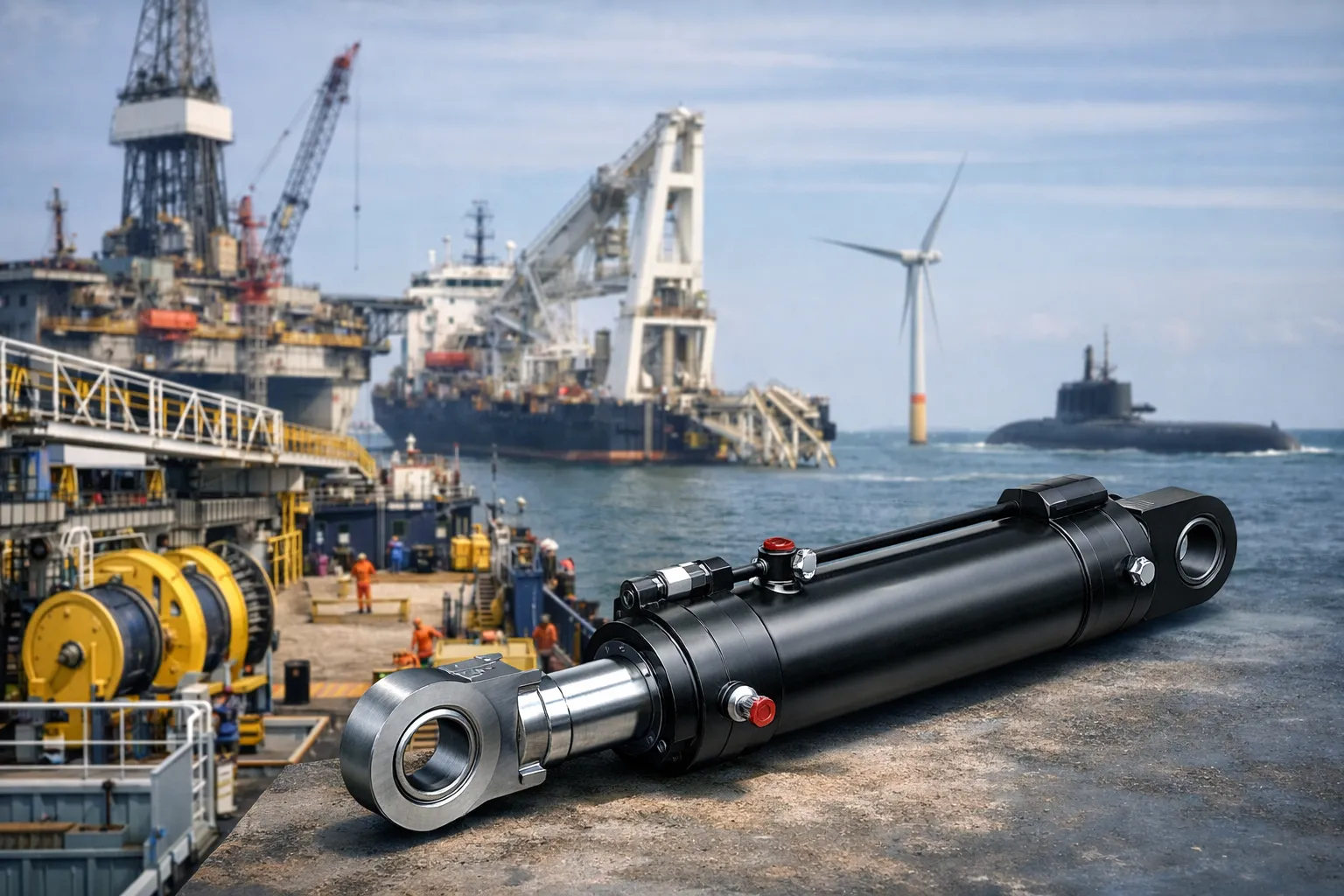
Our purpose-built, heavy-duty Anti-collision arm hydraulic cylinder is meticulously engineered from the molecular level upwards to permanently eradicate these specific maritime operational threats. By aggressively upgrading the baseline metallurgy to ultra-high-strength 42CrMo alloy steel, utilizing advanced deep-penetration welded architecture, and deploying an impenetrable plasma-sprayed ceramic layer over the rod, we deliver a fluid power solution that actively repels severe chloride corrosion while flawlessly absorbing heavy impact. Coupled with an all stainless steel external configuration to entirely prevent localized galvanic corrosion, our specialized hydraulic parts ensure that your offshore platform’s critical berthing operations remain safe, fluid, and structurally secure, whether situated in the harsh conditions of the North Sea or the typhoon-prone maritime corridors of South Korea and East Asia.
Comprehensive Engineering Parameters and Material Specifications
Advanced marine engineering and offshore naval architecture demand absolute, uncompromising adherence to precise kinetic load calculations, severe mechanical safety margins, and rigorous international classification society standards. We provide a highly adaptable, precision manufacturing program to ensure your custom shock-absorbing actuators perfectly match the specific energy displacement calculations of your offshore platform’s dynamic fender system. The detailed technical matrix below comprehensively outlines the foundational engineering parameters, elite structural material choices, and environmental resistance grades of our hydraulic rams.
| Engineering Specification | Technical Detail & Customization Range |
|---|---|
| Target Industry Sector | Marine & Offshore Engineering |
| Equipment Category | Offshore Platforms / Jack-up Rigs / FPSO Vessels |
| Subsystem / Application Area | Anti-collision System / Dynamic Fender Grid |
| Primary Product Designation | Anti-collision arm cylinder / Dampening Actuator |
| Action Mechanism | Double acting hydraulic cylinder (For controlled dampening and rapid arm resetting) |
| Internal Structure Type | Heavy-Duty Piston Cylinder |
| Manufacturing Construction | Welded Architecture utilizing automated submerged arc welding (SAW) |
| Core Structural Material | 42CrMo High-Tensile Alloy Steel (Engineered to absolutely resist buckling) |
| Rod Surface Treatment | Ceramic Layer (Thermal sprayed, zero porosity, impenetrable barrier) |
| Environmental Resistance Grade | Extreme Ocean Wave Impact & Continuous Splash Zone Salinity |
| Dynamic Operating Condition | Massive Energy Absorbing Anti-collision Dampening |
| Primary Failure Mitigation | Engineered exclusively to eradicate Fatigue Crack propagation and rod pitting |
| Recommended Configuration | All Stainless Steel (316L) exterior hardware, manifolds, and piping fittings |
| Deck Installation Mountings | Oversized composite spherical bearing trunnions or heavy reinforced clevis brackets |
The Operational Dynamics: The Complex Physics of Energy Absorption
To thoroughly comprehend the highly advanced engineering embedded within this product, one must deeply analyze the complex mechanical physics required to safely dampen multi-ton marine impacts. While a single acting hydraulic cylingder might theoretically suffice for simple, gravity-drop terrestrial applications, it is fundamentally incapable of managing this highly dynamic marine environment. It cannot provide active, controlled fluid resistance in multiple directions, nor can it quickly reset its position against ocean currents. Managing the colossal kinetic energy of an offshore supply vessel requires a heavily reinforced double acting hydraulic cylinder seamlessly integrated within a sophisticated, closed-loop pressure relief fluid circuit. Prior to a vessel docking, the fluid power system extends the heavy steel anti-collision arms outward from the platform legs, locking them into a ready, defensive posture.
When the vessel inevitably impacts the fender panel—whether gently during a skilled approach or violently due to a rogue wave—the mechanical force violently pushes against the extended, ceramic-coated cylinder rod. This massive compressive force drives the internal hydraulic cylinder piston backward within the barrel. However, the hydraulic fluid trapped behind the piston cannot simply escape. It is forcefully and deliberately squeezed through highly calibrated, heavy-duty pressure relief valves (PRVs) and custom-machined metering orifices bolted directly to the steel barrel manifold. By physically forcing the incompressible fluid through these extremely tight restrictions at high velocity, the system successfully converts the destructive kinetic energy of the ship’s impact into safe, dissipating thermal energy (heat) within the hydraulic fluid. Unlike a standard lift cylinder designed to move a load at a steady pace, this system acts as a high-pressure hydrodynamic brake.
This highly controlled, smooth deceleration process prevents the immense sheer force from transferring into the fragile structural steel legs of the offshore platform. Once the vessel thrusts away or the heavy ocean swell recedes, the system cannot simply go slack. The active hydraulic power unit (HPU) instantly pumps fluid back into the extension chamber, driving the rod forward to rapidly reset the fender arm to its fully extended, ready position. This continuous, brutal cycle of violent compression and rapid extension occurs thousands of times a month during harsh winter sea states. The absolute mechanical precision required to maintain exactly calculated relief pressures while continuously providing energy absorbing anti-collision protection separates elite offshore dampening actuators from basic commercial lifting equipment.
Seamless Equipment Integration and Direct Brand Replacement
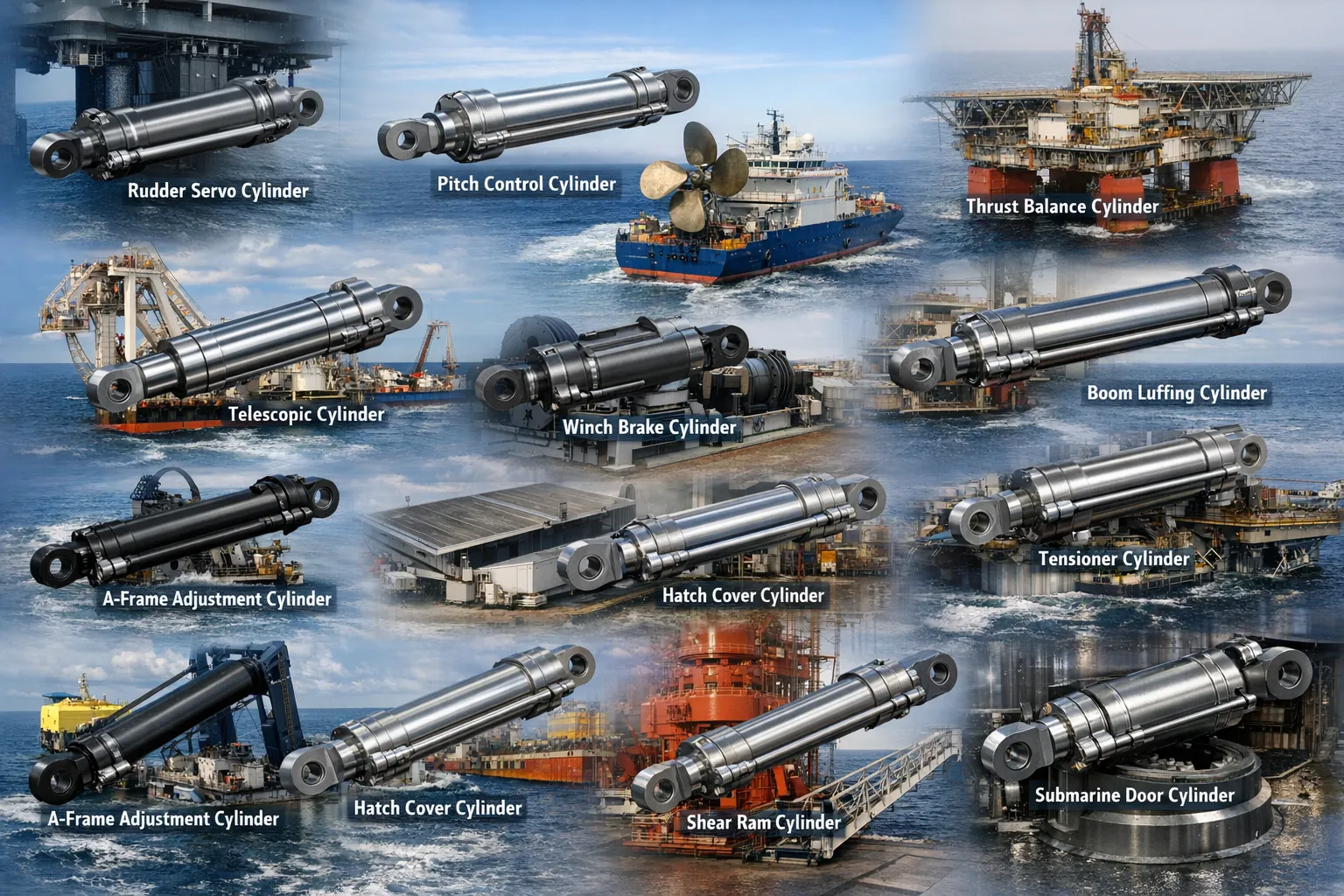
Offshore platform maintenance directors and procurement engineers frequently face severe logistical bottlenecks when attempting to quickly replace damaged anti-collision actuators from legacy original equipment manufacturers (OEMs). Confronting extreme hydraulic cylinder price markups and devastating 16-to-20 week international lead times can leave a multi-billion-dollar platform highly vulnerable to docking accidents during winter storms. We specialize heavily in engineering exact, dimensionally faithful, high-fidelity drop-in replacements for all major offshore fender and shock-absorbing grid systems. Our engineering team precisely maps your existing installation footprint, heavy pin-to-pin dimensions, and fluid port alignments to guarantee a rapid, zero-modification installation directly onto the platform jacket, preventing any need for dangerous hot-work welding.
Technical Sizing & Procurement Notice: To effectively assist offshore naval architects, chief platform engineers, and marine purchasing departments in dimensional sizing, urgent cross-referencing, and rapid platform standardization, we clearly state that our highly durable custom Anti-collision arm hydraulic cylinder is expertly engineered to physically and functionally replace shock-absorbing equipment originally supplied by prominent legacy marine fender brands such as MacGregor, Trelleborg, ShibataFenderTeam, Fentek, and Bosch Rexroth. We operate entirely as an independent, ultra-precision manufacturing facility. The mention of these specific registered trademarks is executed strictly for the operational convenience of physical compatibility matching; absolutely no corporate affiliation, formal sponsorship, or trademark endorsement is intended or implied.
Furthermore, if your platform has endured a severe typhoon and the core heavy alloy steel cylinder barrels are non-destructively tested (NDT) via ultrasonic inspection and verified as structurally sound without a fatigue crack, a complete unit replacement might be economically inefficient. Our dedicated, globally responsive hydraulic cylinder repair division offers comprehensive, ABS and DNV certified remanufacturing programs. We excel in safely fixing hydraulic cylinders by completely stripping the damaged dampener down to the bare metal, precision re-honing the inner tube to exact factory tolerances, manufacturing a brand new 42CrMo rod with a fresh ceramic layer, and heavily upgrading the internal shock-absorbing sealing matrix. By meticulously integrating our premium hydraulic cylinder components into your existing casing, we deliver a beautifully refurbished actuator that functions significantly better than its original factory condition, at a fraction of new capital expenditure.
Core Engineering Advantages: Built Exclusively for the Splash Zone
Designing a fluid power actuator intended to permanently survive the highly corrosive, physically violent, and relentless cyclical loading of an offshore anti-collision grid requires a total refusal to compromise on metallurgical science and fluid tribology. Here are the core engineering advantages that establish our custom actuators as the definitively superior choice for global offshore operators:
- 1. 42CrMo High-Tensile Alloy Steel Architecture
When a massive vessel strikes a platform unevenly, immense lateral sheer forces and severe bending moments are transferred directly onto the extended cylinder rod. Standard ST52 carbon steel tubing will easily stretch, permanently bend, or buckle catastrophically under these shock loads. We physically machine our welded barrels and rods exclusively from 42CrMo (Chromium-Molybdenum) alloy steel. This specific metallurgy significantly increases the material’s yield strength and ultimate tensile strength, providing immense structural rigidity and guaranteeing perfect axial alignment even during extreme off-center vessel impacts. - 2. Absolute Elimination of Fatigue Cracks
The continuous, high-frequency pounding of ocean wave impact creates millions of micro-stress cycles on the cylinder’s mounting trunnions and clevis eyes every year. Standard commercial welds develop microscopic stress risers that eventually lead to a catastrophic mechanical separation of the cylinder from the platform. We utilize advanced Finite Element Analysis (FEA) to heavily reinforce high-stress transition zones. Coupled with automated, deep-penetration submerged arc welding (SAW) and rigorous post-weld thermal stress relief, we fundamentally eliminate the genesis and propagation of a fatigue crack in the steel structure entirely. - 3. Impenetrable Ceramic Layer Absolute Barrier
Standard industrial hard chrome plating inherently possesses microscopic cracks. In the platform’s splash zone, highly corrosive saltwater mist penetrates these fissures effortlessly, causing severe sub-surface rust that blisters the chrome and shreds the dynamic seals instantly upon retraction. We strictly utilize an advanced plasma-sprayed ceramic layer over the 42CrMo rod. This creates an incredibly dense, non-porous physical barrier. It chemically isolates the vulnerable steel substrate, entirely preventing rust pitting, offering extreme surface hardness (exceeding 850 HV), and ensuring the sealing surface remains completely pristine for decades. - 4. All Stainless Steel External Hardware Integration
The external fittings, hydraulic piping, and manifold locking hardware of the cylinder are extremely vulnerable to standing saltwater. For our highly recommended marine configurations, we manufacture all external rod glands, locking retaining nuts, external relief valve manifolds, and exposed fluid transfer piping entirely from solid 316L stainless steel. This completely prevents localized galvanic pitting and severe crevice corrosion, ensuring that the critical shock-absorbing valves can be easily adjusted or serviced even after years of relentless sea spray exposure without resorting to cutting torches. - 5. Advanced Thermal Stability and High-Velocity Sealing Matrix
Dampening massive kinetic energy generates immense, instantaneous friction heat within the hydraulic fluid as it passes through the relief valves. Standard rubber seals will melt, harden, or extrude under these intense pressure and temperature spikes. We integrate an advanced, high-velocity sealing matrix utilizing energized PTFE step seals and robust fluoroelastomers capable of withstanding extreme thermal shock. Furthermore, massive composite wear bands are installed on the piston to completely absorb heavy lateral side-loads, ensuring zero internal metal-to-metal scoring during violent off-center impacts.
Autonomous Manufacturing and Absolute Quality Control
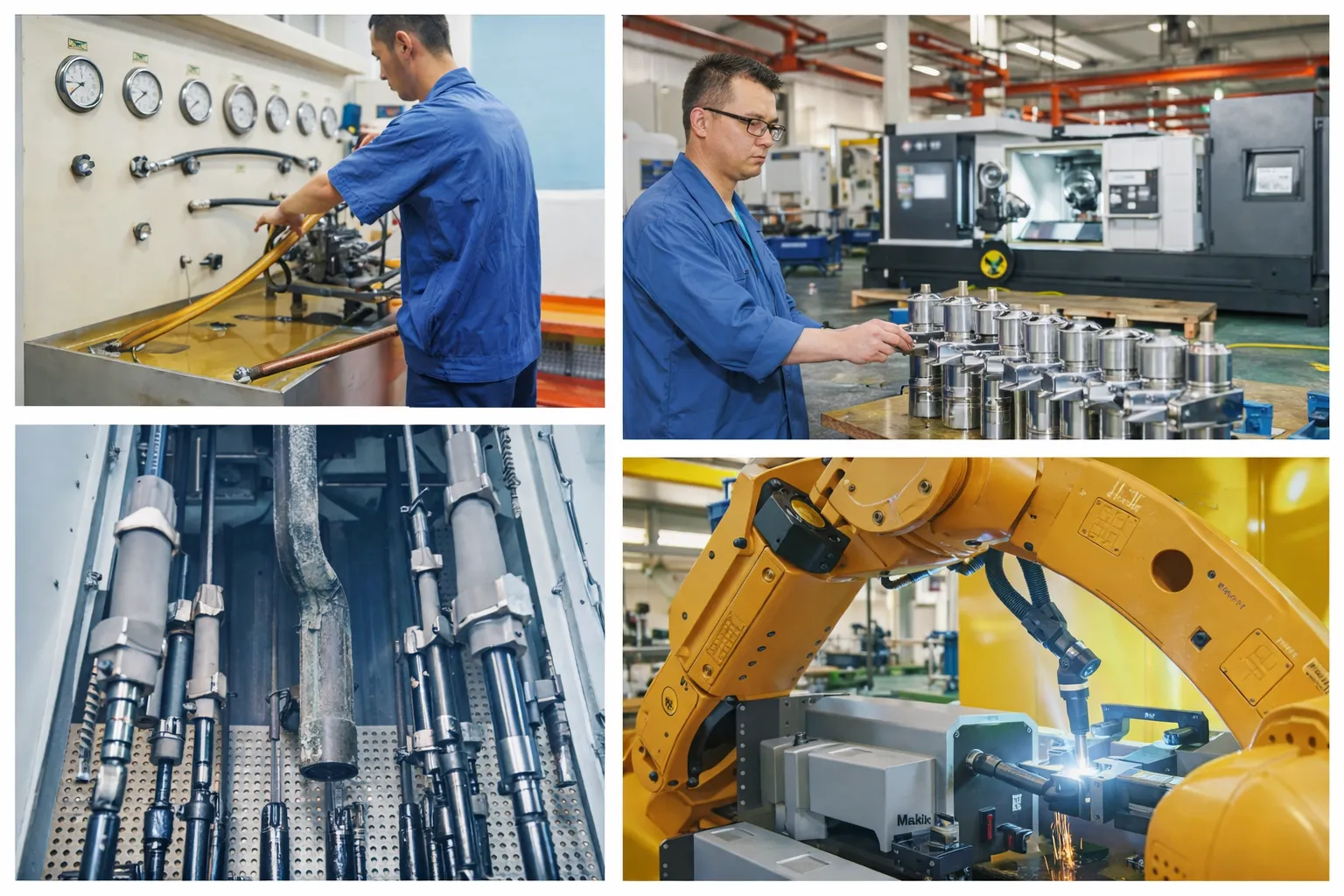
In the offshore energy sector, operational reliability cannot be randomly spot-checked; it must be systematically manufactured into the very core of the product and rigorously verified by independent classification authorities. As an elite, fully integrated hydraulic cylinder manufacturer, we maintain absolute, autonomous control over our entire production ecosystem. We flatly refuse to rely on fragmented, unverified external suppliers for critical pressure-retaining components. Every single phase of fabrication, from the initial raw 42CrMo steel spectroscopy to the final application of multi-part marine epoxy coating, is executed entirely within our advanced, ISO-certified manufacturing facility.
Production officially commences with stringent ultrasonic testing (UT) and magnetic particle inspection (MPI) of the massive alloy steel billets to completely verify the absence of internal micro-voids, slag inclusions, or metallurgical flaws. Heavy-duty CNC lathes and highly specialized deep-hole boring machines sculpt the internal heavy-wall barrels to exacting micron-level tolerances. We achieve a highly specific cross-hatch surface finish inside the steel tube that perfectly lubricates the high-velocity PTFE seals without allowing fluid bypass. Concurrently, the heavy 42CrMo piston rods undergo the highly complex plasma-sprayed ceramic layer process in tightly controlled, automated environments to ensure perfectly uniform coating thickness and unbreakable molecular adhesion to the steel.
Quality assurance within our facility is an uncompromising, relentless gateway process. Final delicate seal assembly takes place strictly in positive-pressure cleanrooms to absolutely prevent any microscopic airborne particulate contamination from entering the fluid pathways. Every single Anti-collision arm cylinder undergoes a punishing 100% Factory Acceptance Test (FAT) before dispatch. This aggressive testing protocol involves massive dynamic load stroking under extreme pressure resistance to rigorously verify the absolute dampening performance of the integrated relief valves. Because we consistently supply top-tier offshore platforms globally, we maintain absolute material traceability. We routinely manufacture heavily to the exacting standards of major marine classification societies, seamlessly facilitating on-site independent surveyor inspections and delivering full certification from DNV, ABS, the Korean Register (KR), and Lloyd’s Register (LR).
Cross-Industry Heavy Engineering Applications for Severe Environments
While the advanced metallurgical features, thick ceramic layer, and high-velocity energy-absorbing anti-collision technologies detailed here are optimized perfectly for the brutal dynamic impacts of offshore platforms, these foundational, highly robust technologies are actively demanded across multiple severe-duty global industries. Heavy machinery designed specifically to absorb the kinetic impact of a massive ship on the open ocean excels effortlessly in the harshest, most unforgiving land-based industrial applications.
- Marine & Offshore General Deck Machinery: Beyond the splash zone anti-collision grids, our heavily coated, heavily welded units act perfectly as the primary, fail-safe actuator for massive heavy-lift offshore cranes, heavy A-frames, and motion-compensated offshore gangways where dynamic wave loads are constantly present and corrosion resistance is mandatory.
- Metallurgical and iron industry: Global steel mills and foundries are characterized by extreme radiant ambient heat, heavy mechanical shock from dropping multi-ton steel slabs, and highly corrosive, acidic cooling fluids. Our thick 42CrMo steel bodies, ceramic-protected rods, and specialized high-temperature seals provide exceptional longevity for heavy shock-absorbing billet pushers, ladle transfer cars, and rolling mill equipment where unexpected downtime costs hundreds of thousands of dollars.
- Mining industry: Operating in deep underground shafts or vast open pits, mining machinery faces highly acidic groundwater and extremely abrasive silica rock dust that destroys standard chrome instantly. Our custom-engineered, heavily sealed fluid power units provide absolutely unmatched reliability for massive primary rock crusher shock dampeners, tunnel boring machines (TBM), and ultra-class haul truck hydro-pneumatic suspensions.
- Construction machinery industry: Massive coastal civil engineering and bridge-building projects require incredibly heavy machinery that won’t rust and seize overnight when parked near the sea. We supply incredibly durable, salt-resistant actuation solutions for heavy marine excavators, towering piling rig shock dampeners, bridge launching gantries, and deep-water dredging equipment handling heavy rock impacts.
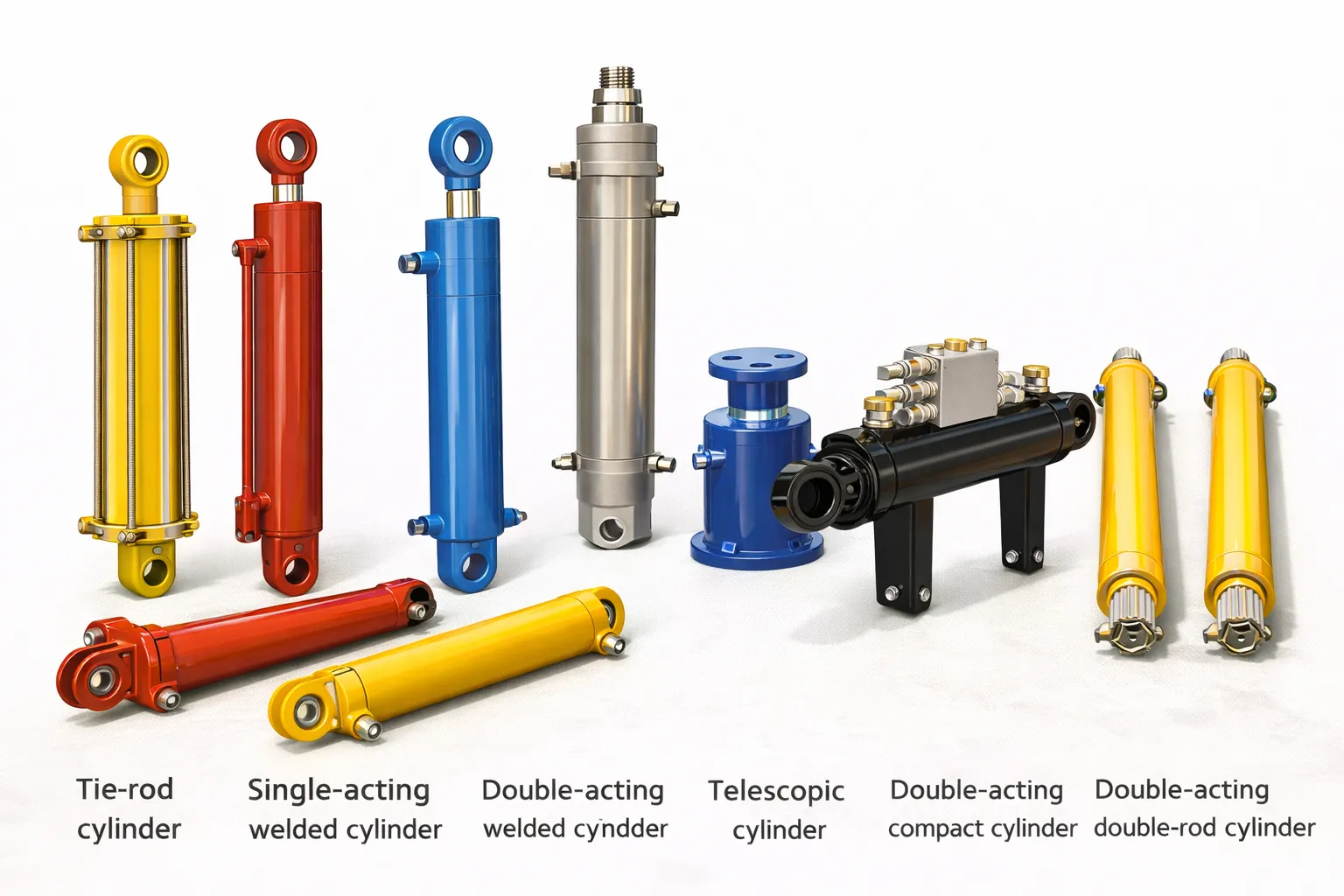
Comparative Analysis: Standard Commercial vs. Elite Offshore Engineered
When evaluating millions of dollars in platform maintenance budgets, strictly comparing the initial quoted hydraulic cylinder price against the actual, comprehensive total lifecycle cost is absolutely critical for offshore technical directors and platform owners. Attempting to artificially lower initial capital expenditure by installing cheap, standard industrial cylinders on a critical anti-collision grid always results in catastrophic long-term costs due to rapid equipment failure, massive structural jacket damage from un-dampened vessel impacts, and severe personnel safety risks. The detailed matrix below explicitly highlights the undeniable, stark contrast between conventional adaptations and our purpose-built offshore energy-absorbing engineering.
| Core Engineering Feature | Standard Commercial Hydraulic Cylinder | Our Anti-collision Arm Cylinder |
|---|---|---|
| Structural Base Material | Basic Q235 or ST52 carbon steel tubing. Highly prone to catastrophic buckling, stretching, and permanent deformation under the massive shock loads of vessel impacts. | 42CrMo High-Tensile Alloy Steel. Superior tensile and yield strength naturally absorbs massive kinetic energy, maintaining perfect structural rigidity without yielding. |
| Corrosion Resistance (Rod) | Thin commercial hard chrome plating. Quickly micro-cracks and pits deeply when exposed to the continuous splash zone saltwater mist and driving rain. | Advanced Ceramic Layer. Provides an absolute, non-porous chemical and physical barrier against chloride penetration, entirely preventing destructive rust pitting. |
| Fatigue Crack Resistance | Standard commercial MIG welds. Develop massive fatigue cracks rapidly due to the relentless, high-frequency pounding of continuous ocean wave impact. | Deep-penetration SAW welds with strict post-weld heat treatment. Structurally eliminates stress concentrators, completely preventing the propagation of a fatigue crack. |
| External Hardware & Fittings | Painted carbon steel manifolds and fittings. Paint chips easily, causing rapid galvanic rusting that destroys the pressure relief valves and seizes the threads. | All Stainless Steel (316L) manifolds, piping, and locking hardware. Resists crevice corrosion entirely, ensuring the dampening valves remain flawlessly active. |
| Maintenance Lifecycle | Typically requires complete replacement every 12 to 24 months due to severe rod pitting, fatigue cracking, and subsequent catastrophic fluid seal blowout. | Engineered to comfortably exceed major 5-year classification society special survey intervals, drastically reducing the total lifecycle cost of ownership. |
Proven Field Performance: Documented Global Offshore Success Stories
Theoretical specifications, FEA modeling, and engineering blueprints must be violently validated by relentless, punishing field performance in the open ocean. Our bespoke fluid power solutions are deeply trusted by top-tier offshore energy contractors globally, boasting a particularly dominant and heavily documented track record protecting marine infrastructure across the technically rigorous waters of South Korea, Japan, and the wider Asia-Pacific region. Below are highly detailed instances where our elite engineering resolved critical operational and safety crises.
Case Study 1: Fixed Offshore Platform Fender Upgrade in Busan, South Korea
The Engineering Challenge: A major offshore production platform operating in the turbulent waters off Busan was experiencing chronic, severe damage to its primary OSV docking zone. The original European OEM cylinders in the anti-collision grid were suffering from a catastrophic fatigue crack at the mounting clevises due to continuous winter wave pounding. Furthermore, the standard chrome rods had severely pitted from saltwater exposure, destroying the seals and completely neutralizing the dampening effect. Without active dampening, the kinetic energy from supply vessel berthing was transferring directly into the platform’s jacket legs, creating a severe structural integrity crisis that threatened safety compliance.
The Solution Delivered: Because a complete structural replacement of the fender grid was impossible without ceasing oil production, we rapidly engineered custom Anti-collision arm cylinders to exactly match the existing pin-to-pin dimensions. We utilized our heavy 42CrMo alloy steel and deep-penetration welding to eradicate the fatigue cracking issue. The rods were finished with our impenetrable ceramic layer, and the entire external assembly was fitted with an all stainless steel hardware package.
The Result: The units were installed seamlessly between OSV deliveries. Over four years post-installation, recent underwater surveyor reports confirm the ceramic rods maintain a flawless finish, and non-destructive testing (NDT) shows zero fatigue cracks on the cylinder bodies, successfully absorbing all vessel impact energy and saving the platform jacket from costly structural reinforcement welding.
“The metallurgical focus and robust engineering from this facility completely eliminated our structural compliance nightmares. The ceramic coating and 42CrMo steel have effectively defeated the brutal wave pounding we endure. They are an absolutely exceptional manufacturing partner for critical offshore protection.” — Lead Structural Engineer, Busan Offshore Operations.
Case Study 2: Semi-Submersible Rig Wave Dampening System in Yokohama, Japan
The Engineering Challenge: A massive semi-submersible drilling rig operating in the extreme weather corridors offshore Yokohama required an urgent overhaul of its internal pontoon wave dampening system. The existing standard industrial hydraulic systems were failing rapidly because the intense friction heat generated by absorbing continuous typhoon wave energy was melting the internal rubber seals, causing rapid fluid blowouts and total loss of dampening resistance.
The Solution Delivered: We engineered highly specific double acting hydraulic cylinder units equipped with specialized, high-velocity thermal-stable sealing matrices utilizing advanced fluoroelastomers and PTFE. The cylinders were designed with enlarged, custom-machined internal porting and external heavy-duty 316L stainless steel relief manifolds specifically calibrated to manage extreme fluid velocity and rapidly dissipate massive friction heat generated by continuous ocean wave impact absorption.
The Result: The custom cylinders now operate flawlessly through entire typhoon seasons, maintaining perfect thermal equilibrium and fluid pressure, ensuring the pontoon wave dampening system effectively stabilizes the rig during extreme sea states.
Case Study 3: FPSO Fender Remanufacturing Logistics in Ulsan, South Korea
The Engineering Challenge: A massive Floating Production Storage and Offloading (FPSO) vessel entered a drydock in Ulsan with severely degraded hull fendering equipment. Local port attempts at rapidly fixing hydraulic cylinders failed because the original rods were heavily pitted from salt, and the high-pressure relief valves were completely rusted solid due to the use of standard carbon steel fittings. Sourcing entirely new OEM units from Europe would delay the massive vessel’s departure by 18 weeks, incurring millions in lost oil production revenue.
The Solution Delivered: Reached via an urgent emergency inquiry, our dedicated hydraulic cylinder repair and remanufacturing division activated a rapid, 24/7 response protocol. Because the heavy alloy steel barrels were ultrasonically verified as intact, we completely remanufactured the units. We heavily machined brand new rods from 42CrMo billet, applied our dense ceramic layer, and installed full 316L stainless steel external manifolds and marine-grade hydraulic cylinder components, shipping the fully refurbished, tested units back to the Ulsan drydock in under 21 days.
“Their rapid engineering response and internal ability to supply fully certified, heavy-duty marine remanufacturing saved us weeks of devastating downtime. Upgrading the hardware to an all stainless steel configuration ensures this problem will not happen again. This level of premium industrial agility is unmatched in the offshore sector.” — Technical Fleet Director, FPSO Operations, Ulsan.

Frequently Asked Questions
Specifying critical offshore life-safety components involves rigorous, unforgiving technical due diligence. Below, we comprehensively address the most common, highly technical inquiries received from naval architects, drydock purchasing managers, and chief marine engineers regarding the operational specifications, metallurgy, and rapid logistics of our fluid power products.
1. Why is 42CrMo alloy steel strictly utilized instead of standard carbon steel for the cylinder body?
2. Exactly how does Ceramic Coating prevent rod degradation better than standard Chrome plating?
3. Why must naval architects strictly specify a double acting hydraulic cylinder for energy absorption?
4. Are your manufacturing facilities capable of producing Class Society certified units for offshore platforms?
5. How exactly do you calculate the hydraulic cylinder price for a custom fender grid retrofit?
6. Do you supply replacement hydraulic cylinder components globally for routine platform maintenance?
7. Can you handle comprehensive hydraulic cylinder repair for severely rusted, seized shock dampeners?
Ensure the Absolute Structural Integrity of Your Offshore Assets Today
Catastrophic structural damage to an offshore platform from vessel impact is an entirely preventable engineering risk. Do not permit sub-standard, mass-produced industrial fluid power actuators to jeopardize the safety of your personnel, your environmental compliance, or the highly profitable efficiency of your offshore production. Partner directly with an elite engineering facility that thoroughly understands the severe mechanical demands of the splash zone environment.
Whether you urgently require an emergency, dimensionally perfect anti-collision retrofit in a major South Korean drydock or are systematically specifying highly engineered fluid power systems for a massive new-build offshore platform project, our technical engineering team is standing by ready to assist. Provide us with your kinetic energy displacement calculations, fluid pressures, and dimensional constraints, and we will deliver a completely secure fluid power solution meticulously engineered to dominate the ocean.
Editor: Cxm