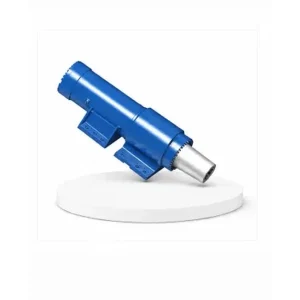
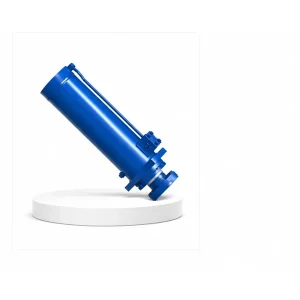
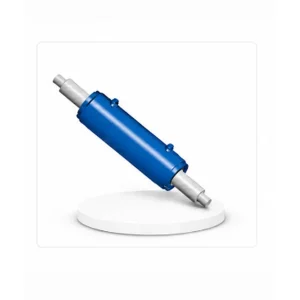
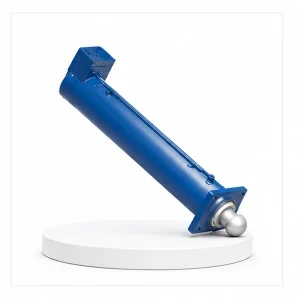
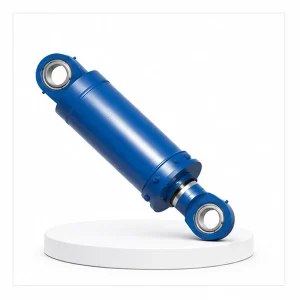
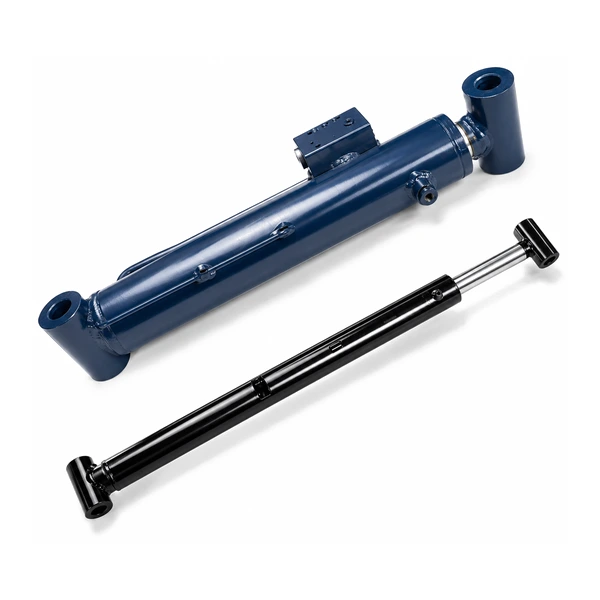
Aerial Work Platform Telescopic Cylinder
Crane vs Platform Telescopic — Same Mechanics, Different Stakes
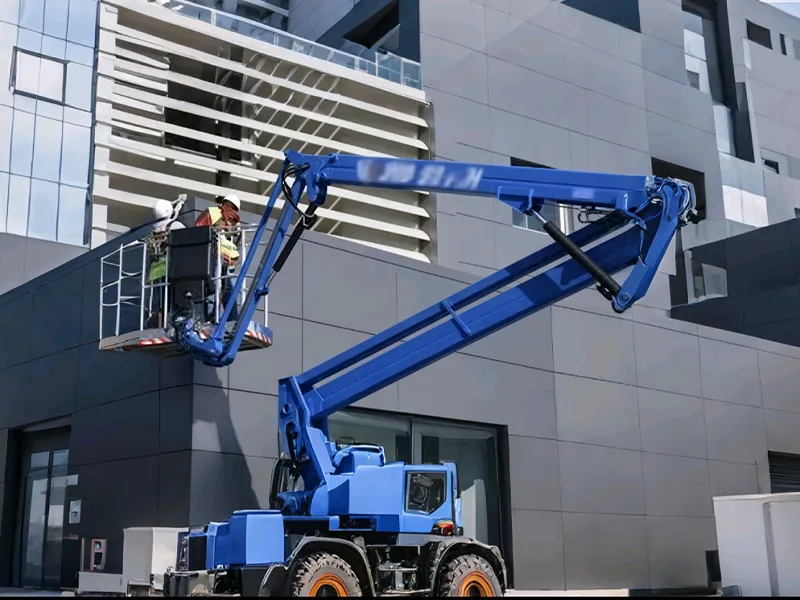
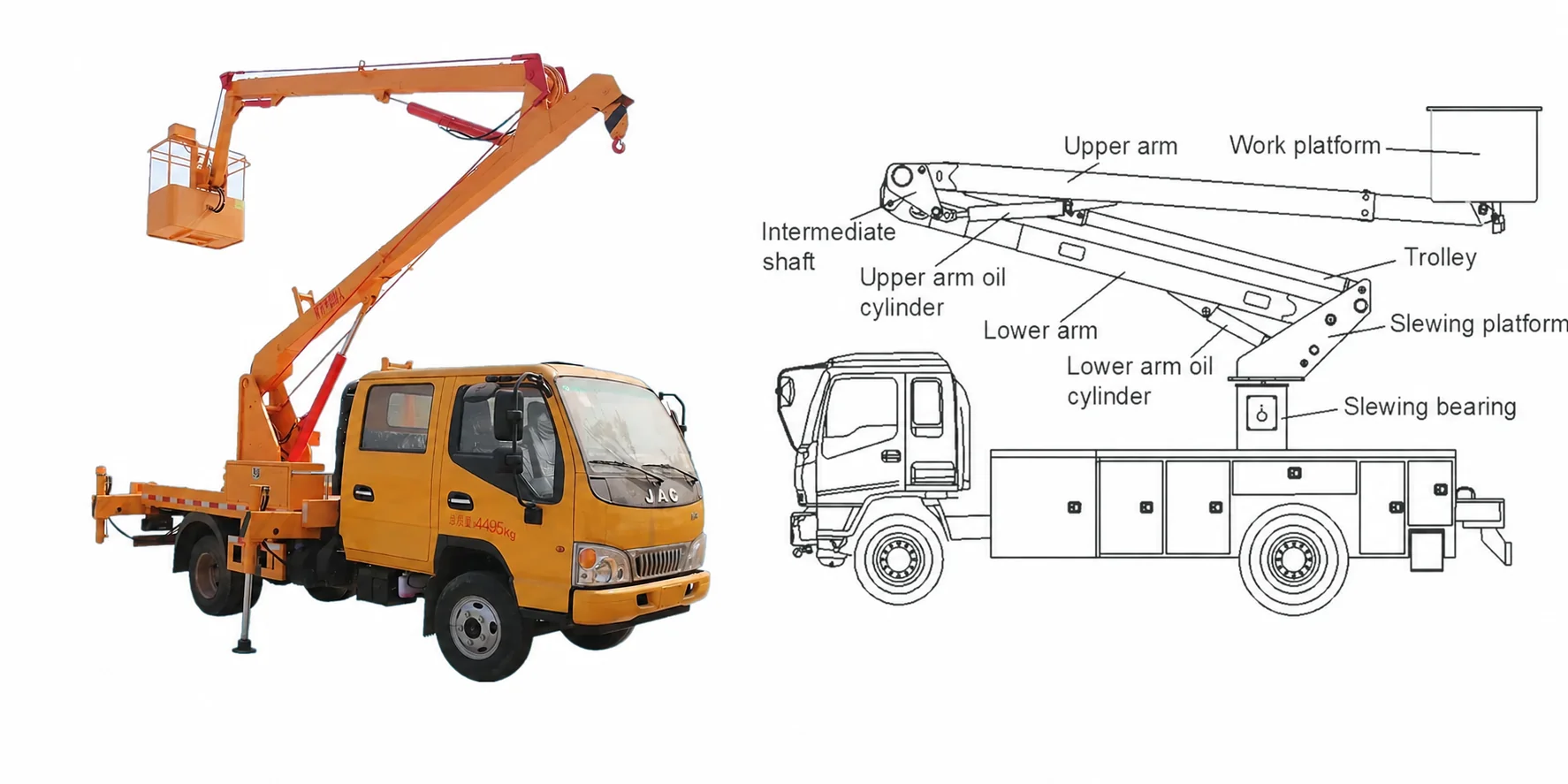
The mobile crane telescopic cylinder (#18) extends boom sections carrying steel loads — a jerky extension makes the load swing, but nobody falls. The aerial platform telescopic cylinder extends boom sections carrying human beings standing on a basket at the tip. A 10 mm jolt at the cylinder translates to a 30–80 mm lurch at the basket (amplified by the boom's lever ratio). Workers lurch, lose balance, and risk falling from 30–40 metres.
This fundamental difference mandates internal cushions at both stroke ends of every stage, maximum extension speed limits per EN 280 and ANSI A92 (typically ≤0.4 m/s at the basket tip), and hold-back counterbalance valves on the retraction port to prevent the boom from snapping back under its own weight during retraction.
Korea Ever-Power manufactures the telescopic cylinder as the fourth of seven aerial work platform hydraulic cylinders — with cushions, speed limits, and hold-back valves integrated into the multi-stage design.
Technical Specifications
| Parameter | Specification |
|---|---|
| Product | Aerial Work Platform Telescopic Cylinder |
| Function | Linear telescopic boom extension with personnel aboard |
| Bore | 45 mm – 200 mm |
| Rod | 32 mm – 180 mm |
| Stroke | ≤ 15,000 mm (2–4 stages) |
| Max Pressure | 30 MPa |
| Application | Telescopic / articulating boom lift (20–60 m working height) |
| Certification | ISO 9001 · EN 280 / ANSI A92 compatible |
Stage Transitions — The Moment Workers Notice a Bad Cylinder
A 4-stage telescopic cylinder has three internal stage transitions — moments when one stage reaches full extension and the next begins. On a poorly designed cylinder, each transition produces a noticeable thud and a brief pause as the hydraulic flow switches from the completed stage to the next. Workers at the basket feel a jolt, then a dead stop, then a restart. Three jolts during a single extension from retracted to fully extended.
Korea Ever-Power machines internal cushion sleeves at both ends of each stage — the ending stage decelerates gradually while the next stage begins extending. The overlap zone is 30–80 mm, during which both stages share the flow. The transition is imperceptible at the basket: the worker sees continuous, smooth extension without any dead stop or jolt.
When retracting, gravity pulls the outer boom sections inward — the cylinder must control this gravity-assisted retraction to prevent the sections from slamming shut. A counterbalance valve on each stage's retract port meters the flow, ensuring smooth, speed-limited retraction regardless of boom angle or load. Contact Korea Ever-Power for multi-stage specifications.
Manufacturing Process
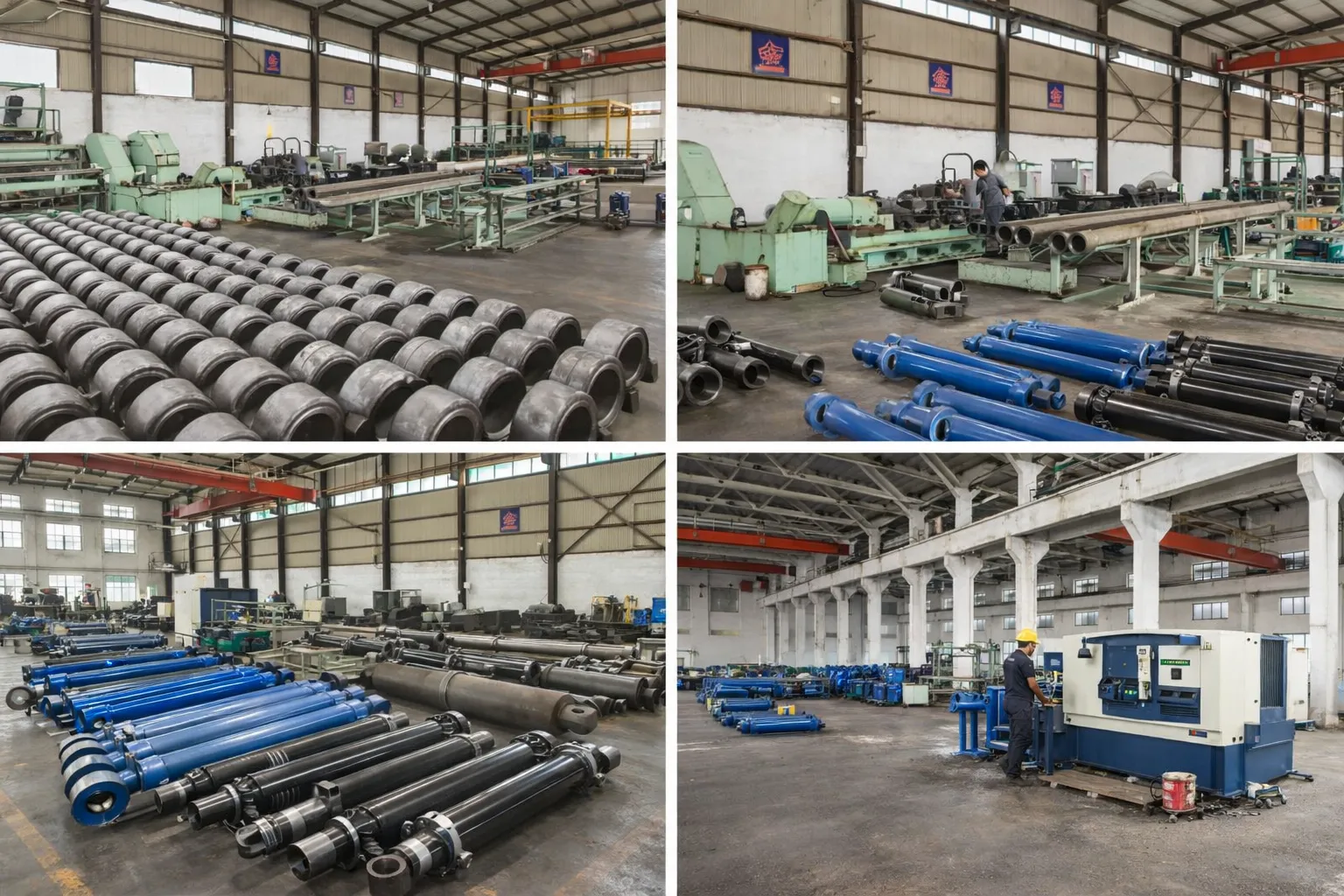
Multi-stage construction: 2–4 nested stages achieving 15,000 mm total stroke from a retracted length of approximately 4,000–5,000 mm. Each stage bore is honed to Ra 0.2–0.4 µm; each outer diameter chrome-plated (sliding surface between stages), concentricity ≤0.1 mm TIR. Cushion sleeves machined at both ends of each stage. Inter-stage seals rated -30 °C to +80 °C.
Every stage is hydrostatic tested individually at 45 MPa. The complete multi-stage assembly is full-stroke tested for smooth extension, cushioned stage transitions, controlled retraction, and leak-free inter-stage sealing at all extension positions. Stage-transition jolt is measured at the rod tip — must fall below the EN 280 / ANSI A92 limit for personnel-carrying equipment.
OEM & ODM
FAQ
Related Categories
Zusätzliche Informationen
| Editor |
|---|