Hydraulic Tilt Cylinder for Loader — OEM Multi-Function Cylinder for Wheel Loaders
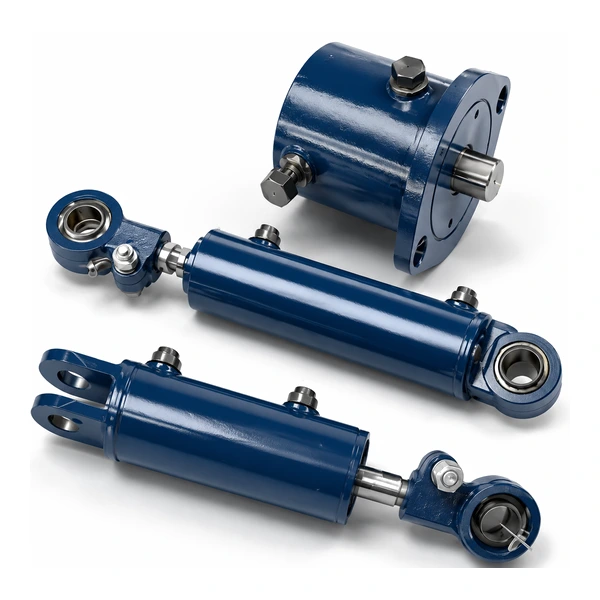
Hydraulic Tilt Cylinder for Loader
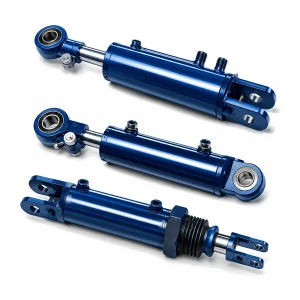
The word "tilt" appears in both forklift and loader cylinder specifications, but the engineering requirements are worlds apart. A forklift tilt cylinder nudges a mast through a gentle 18° total arc on smooth concrete. A loader tilt cylinder rams a 2-tonne bucket through a 65° rotation arc — from full rollback to full dump — while the bucket edge digs into gravel, hardpan, or blasted rock. The cylinder must handle the combined forces of hydraulic drive pressure, payload weight, and impact shock from bucket penetration, all transmitted through a complex multi-bar linkage operating at angles that change continuously through the dump cycle.
Korea Ever-Power builds this cylinder for loader OEMs and equipment rebuilders who need a tilt cylinder that matches the loader's linkage geometry exactly — because in the loader world, every linkage design (Z-bar, parallel-lift, tool carrier) creates a unique set of cylinder loads, angles, and stroke requirements that no standard catalogue covers.
ISO 9001
MOQ 1 pc
Forklift Tilt vs Loader Tilt — Why They Are Not the Same Cylinder
Equipment buyers occasionally attempt to cross-reference a loader bucket tilt cylinder with a forklift hydraulic cylinder catalogue, expecting the specifications to overlap. They do not. The operating demands differ so fundamentally that a forklift tilt cylinder installed on a loader would fail within hours — and a loader tilt cylinder on a forklift would be massively oversized, overweight, and incompatible with the forklift's hydraulic flow and pressure settings.
| Operating Parameter | Forklift Tilt Cylinder | Loader Tilt Cylinder |
|---|---|---|
| Total Angular Range | 18° (6° fwd + 12° back) | 45–65° (dump + rollback) |
| Typical Stroke | 32–193 mm | 300–800 mm |
| Working Pressure | 18 MPa | 20–35 MPa |
| Impact Loading | None (smooth loads) | Severe (digging, prying) |
| Mounting Angle Change | ±3° during stroke | ±15–25° during stroke |
| Environment | Indoor, clean | Outdoor, dust/mud/rock |
| Side Loading on Rod | Minimal (spherical bearing absorbs) | Significant (linkage geometry varies) |
Loader Linkage Types — Where Each Cylinder Function Fits
Every loader uses a multi-bar linkage mechanism to connect the boom, bucket, and chassis. The linkage type determines how many cylinders the loader needs, what each cylinder does, and what forces each cylinder experiences. The tilt cylinder's specification — bore, stroke, pressure, and mounting — is derived from the linkage geometry, not from the loader's tonnage rating alone.
Z-Bar Linkage (Most Common)
Used on 80%+ of wheel loaders worldwide. The tilt cylinder connects from the boom to a bell crank (the "Z" shape) that multiplies the cylinder force through a mechanical advantage ratio. The cylinder stroke is shorter than the actual bucket rotation — the linkage provides 2:1 to 3:1 multiplication. Z-bar cylinders operate at the highest pressures in the loader hydraulic system because the force multiplication through the linkage requires the cylinder to work against a significant mechanical disadvantage during the digging phase.
Cylinders needed: 2× boom lift + 1× bucket tilt + 1× steering
Parallel-Lift Linkage
Used on loaders designed for pallet fork work where the attachment must remain level throughout the lift height. The tilt cylinder controls bucket angle while a separate levelling linkage automatically compensates for the boom angle change. The tilt cylinder on a parallel-lift loader sees more complex load patterns than on a Z-bar — it must hold the bucket angle against both gravity and the levelling linkage reaction forces simultaneously.
Cylinders needed: 2× boom lift + 1× bucket tilt + 1× level link + 1× steering
Skid Steer Radial Lift / Vertical Lift
Skid steer loaders use a unique arrangement where the boom lift and bucket tilt cylinders are mounted differently from wheel loaders — the lift cylinders are typically behind the cab and the tilt cylinder is mounted on the boom arm itself. The tilt cylinder on a skid steer operates at steeper angles (up to 25° from the cylinder axis) and must tolerate higher side-loading because the compact geometry limits the mounting options for angular compensation.
Cylinders needed: 2× boom lift + 1× bucket tilt + 2× drive (hydrostatic)
Product Specification
| Product Type | Custom hydraulic cylinder for loaders — tilt, lift, steering, extension functions |
| Acting Type | Double-acting (primary) / Single-acting available |
| Structure | Piston cylinder, 25-component architecture |
| Reference Weight | 15 kg (varies by bore, stroke, configuration) |
| Body Material | 20# carbon steel / 45# medium carbon steel |
| Seal Options | Parker, NOK, Hallite, Busak Shamban |
| Certification | ISO 9001:2015, ISO 14001, ISO 45003 |
| Quality | 100% pressure and leakage tested · Video inspection provided |
| Service Model | OEM (build-to-print) + ODM (design-to-spec) |
| MOQ / Annual Capacity | 1 piece / 1,200,000 pcs per year |
| Applicable Functions | Bucket tilt, boom lift, arm extension, steering |
| Shipping | Crate or pallet · Port: Shanghai / Ningbo |
Built for Impact — Construction-Grade Durability Features
Loader tilt cylinders endure a type of loading that no other cylinder in the Korea Ever-Power range experiences: shock impact. When a loader bucket penetrates a stockpile of gravel or encounters a buried rock during digging, the sudden deceleration creates a pressure spike inside the tilt cylinder that can reach 2–3× the normal working pressure for a fraction of a second. Over a loader's 10,000+ hour working life, these impact events number in the hundreds of thousands. The cylinder must absorb them without seal extrusion, rod bending, or housing fatigue cracking.
Pressure spikes during impact events force the seal material into the gap between the piston and the bore wall. Back-rings (items 7, 16) made from PTFE or glass-filled nylon block this extrusion path, preventing seal damage under transient pressures that exceed the static seal rating. Loader-grade back-rings use harder compounds than forklift back-rings to resist the higher peak pressures.
Loader tilt cylinders use thicker-wall seamless tubing than equivalent-bore forklift cylinders. The extra wall thickness provides a higher fatigue safety factor against the repetitive pressure pulsations from impact loading. The tube is specified to DIN 2391 / EN 10305-1 with certified burst pressure testing — the burst pressure must exceed 4× the working pressure to provide adequate margin for impact transients.
The dust wiper on a loader cylinder is the first defence against the abrasive environment. Construction-grade triple-lip wipers with a metal reinforcement ring scrape mud, fine aggregate, and rock dust from the rod surface before it enters the seal zone. Standard forklift double-lip wipers cannot handle the volume and abrasiveness of construction-site contamination — they allow particles past the first lip that then damage the rod seal on every stroke cycle.
Loader rods receive deeper induction hardening (2–3 mm case depth vs 1–1.5 mm on forklift rods) and thicker chrome plating (40 μm vs 20 μm) to resist the abrasive wear from fine aggregate particles that inevitably pass the dust wiper. The 40 μm chrome layer provides twice the wear life before the rod surface requires re-chroming — matching the longer service intervals typical of construction equipment versus warehouse forklift fleet maintenance.
Loader Equipment Types Served
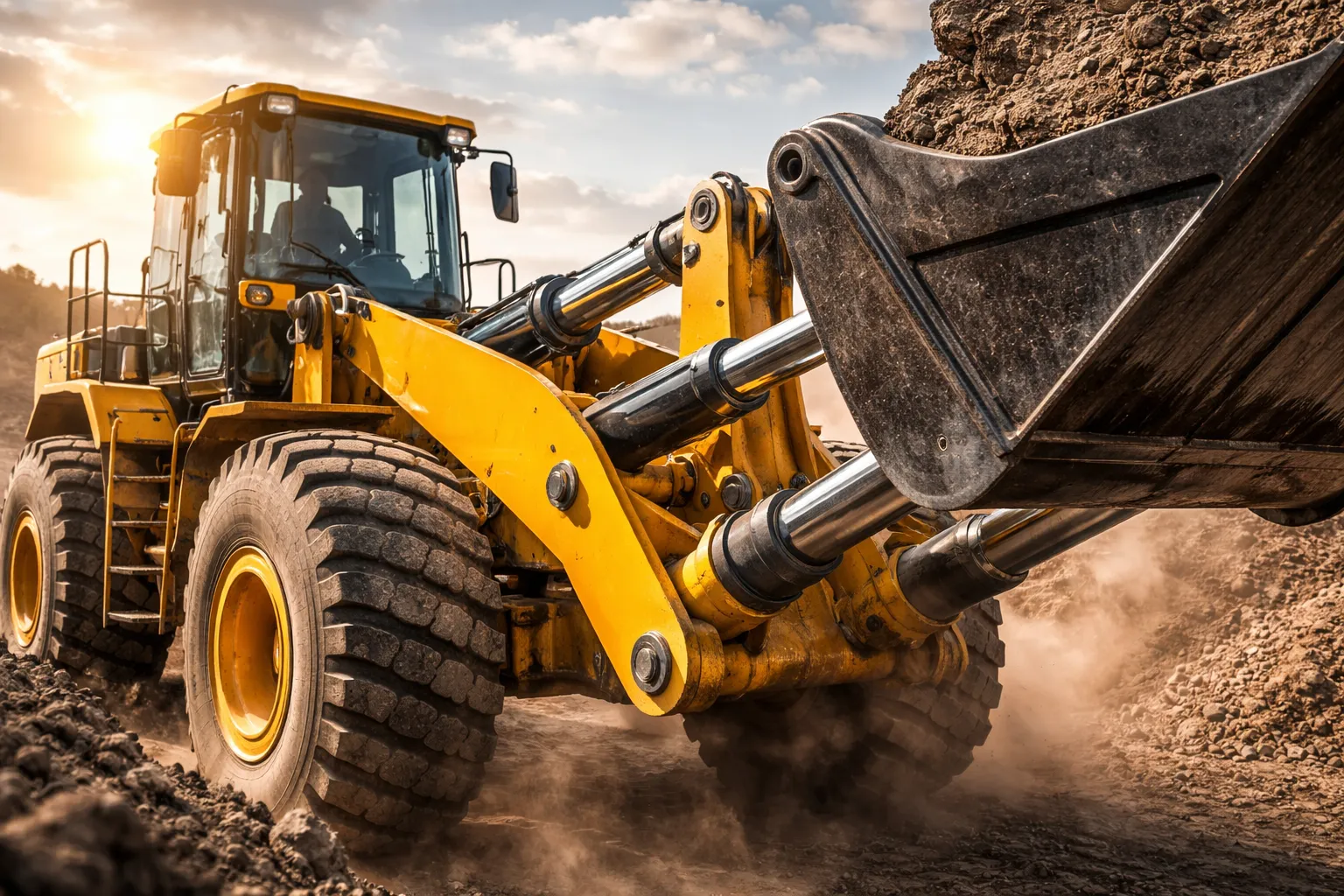
Wheel Loaders (1–12 t)
Compact, mid-range, and large wheel loaders used in quarrying, construction, agriculture, waste handling, and port operations. Bucket tilt cylinders on wheel loaders are the single highest-volume loader cylinder application worldwide. The Z-bar and parallel-lift linkage types each require different cylinder geometries — contact Korea Ever-Power with the loader make and model, or submit the linkage drawing, for an exact cylinder specification.
Skid Steer and Compact Track Loaders
Skid steers use the tilt cylinder for bucket control, but also swap attachments (pallet forks, augers, trenchers, sweepers) frequently — sometimes multiple times per shift. The tilt cylinder must handle the different load profiles of each attachment type without being optimised for only one. Compact geometry means the cylinder operates at steeper angles than on a wheel loader, increasing rod side-loading and requiring more robust guide bush and Du bush specifications.
Backhoe Loaders and Teleloaders
The loader-end bucket tilt cylinder on a backhoe loader operates in the same manner as a wheel loader tilt cylinder. Telehandlers (telescopic handlers) use extension cylinders in addition to tilt and lift cylinders — the same 25-component piston cylinder architecture, customised for the telescopic boom's high-pressure, long-stroke requirements. Korea Ever-Power produces all cylinder functions for these machines on the same OEM platform.
25-Component Piston Cylinder Assembly
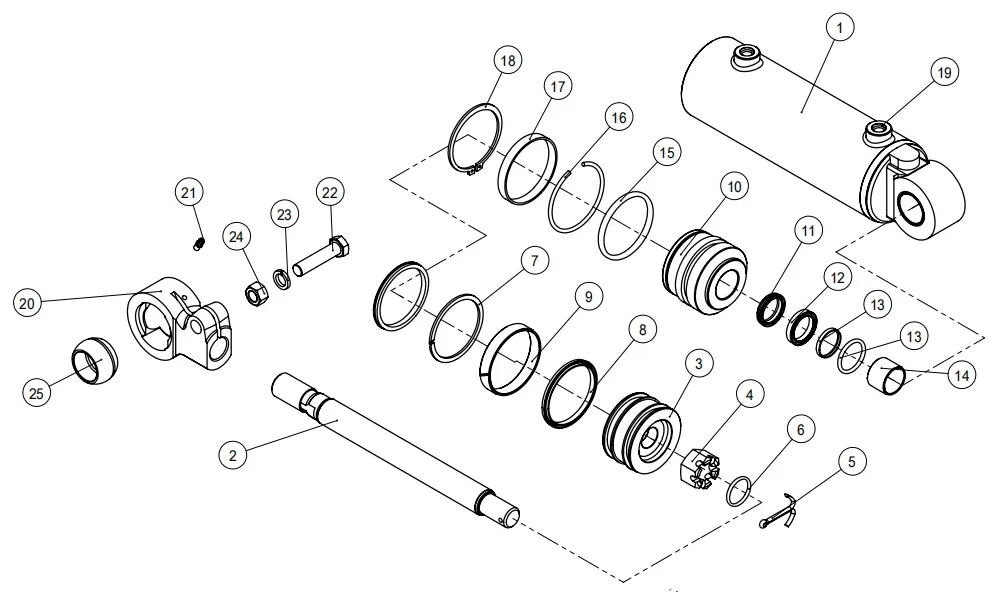
| # | Component | # | Component | # | Component |
|---|---|---|---|---|---|
| 1 | Cylinder Housing Assy | 10 | Guide Bush | 18 | Circlips for Shaft |
| 2 | Piston Rod | 11 | Dust Wiper | 19 | Plug |
| 3 | Piston | 12 | U-Ring | 20 | Clevis |
| 4 | Hex Nut | 13 | Rod Seal | 21 | Grease Nipple |
| 5 | Cotter Pins | 14 | Du Bush | 22 | Bolt |
| 6 | O-Ring | 15 | O-Ring | 23 | Spring Washers |
| 7 | Back-Ring | 16 | Round Wire | 24 | Nut |
| 8 | Hole Seal | 17 | Key Ring | 25 | Spherical Bearing |
| 9 | Wear-Ring |
Loader Tilt Cylinder — Technical Questions
Standard Forklift Cylinders — For Indoor Material Handling
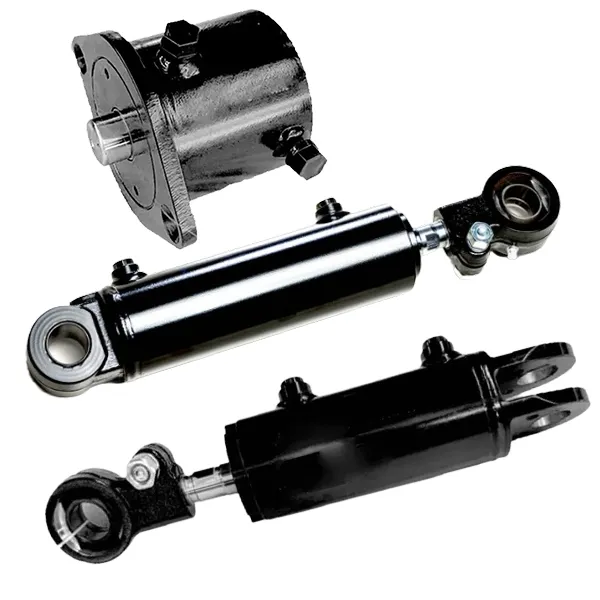
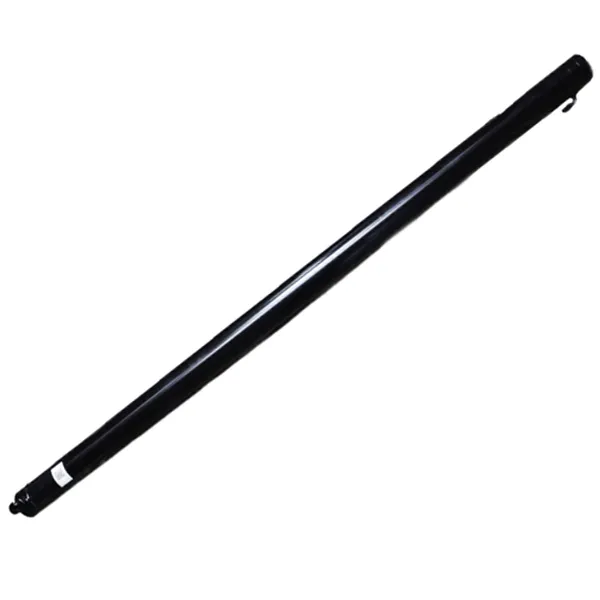
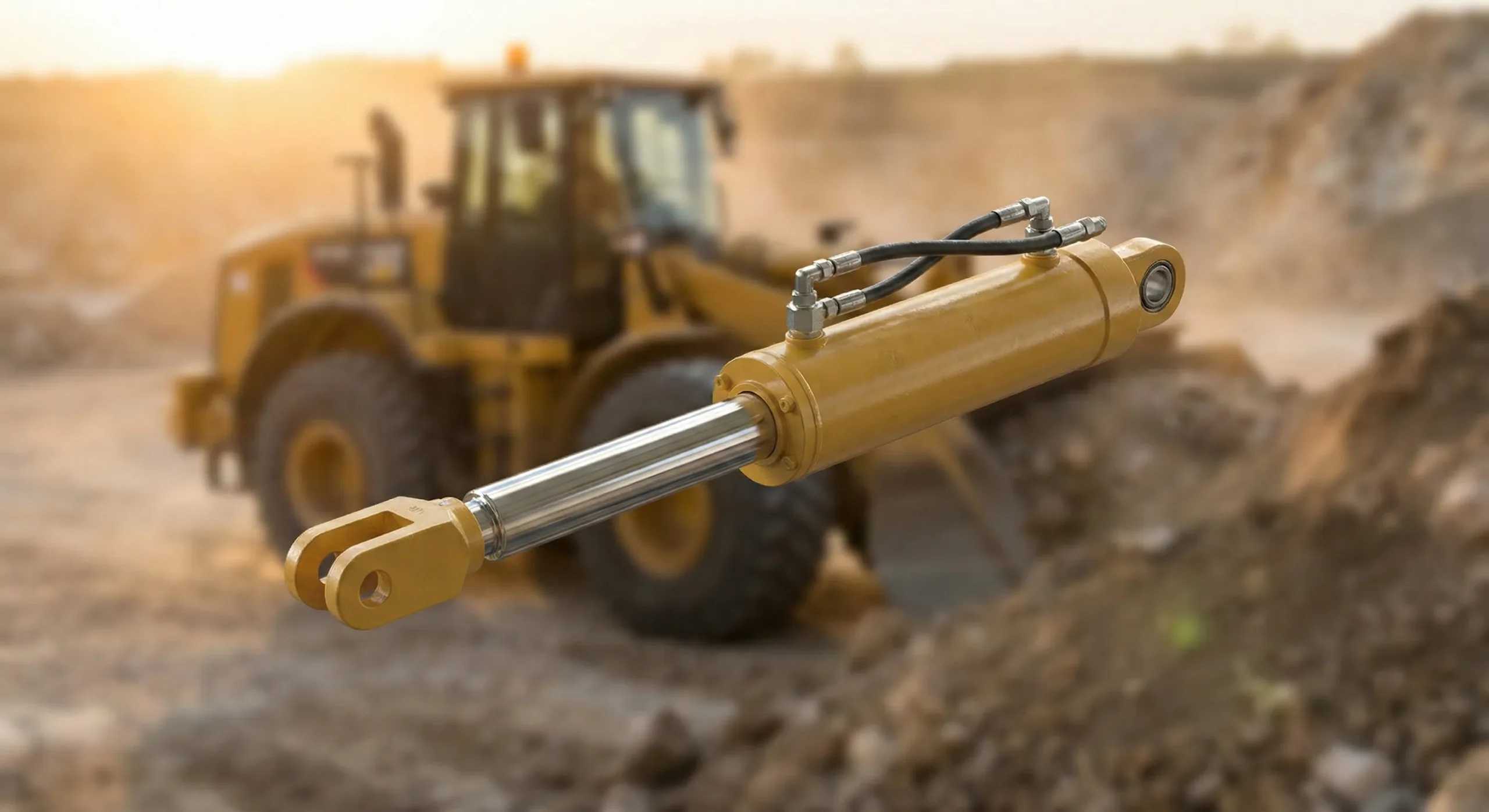
Source Product Images — Reference Gallery
Original source images for pseudo-original processing. Click to open full-size in new tab.



Zusätzliche Informationen
| Editor | Cxm |
|---|
Ähnliche Produkte
-
Forklift Lifting Cylinder | EP-HCYY11112000 Model
-
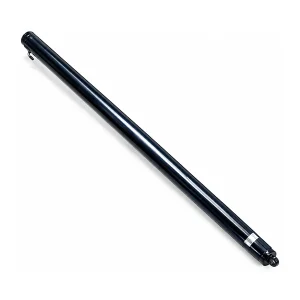
Forklift Truck Lift Oil Cylinder — Single-Acting Hydraulic Lift Cylinder
-
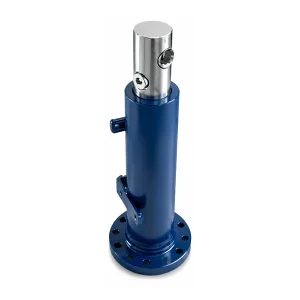
OEM Single Acting Forklift Hydraulic Cylinder
-
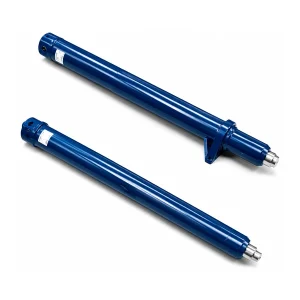
Industrial Vehicle Short Stroke Forklift Lift Cylinder
-
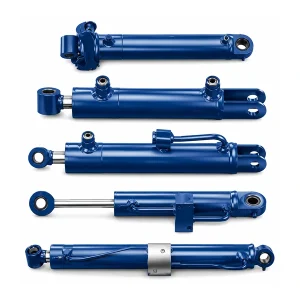
OEM Double Acting Forklift Hydraulic Cylinder
-
Custom Hydraulic Cylinder for Forklift Steering
-
Forklift Lifting Hydraulic Cylinder — Single-Acting Mast Lift Cylinder
-
Forklift Lifting Hydraulic Cylinder