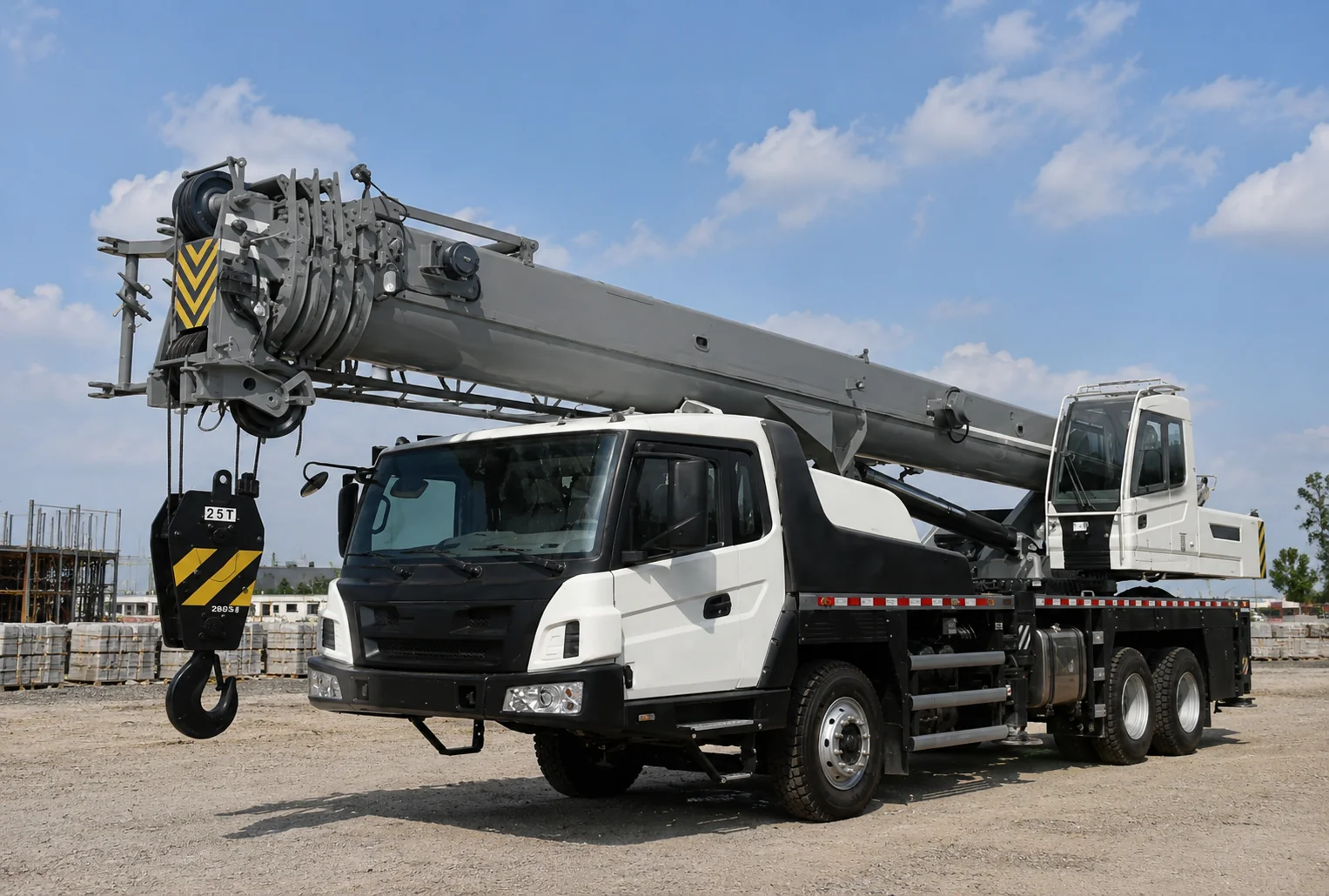
Mining Dump Truck · 1st of 5
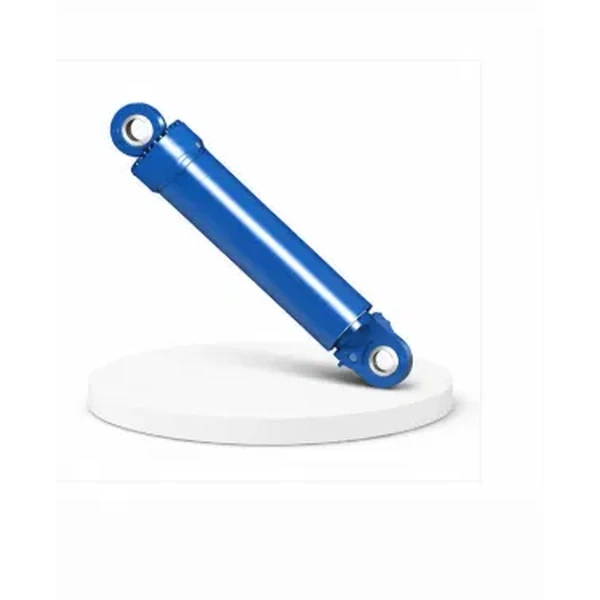
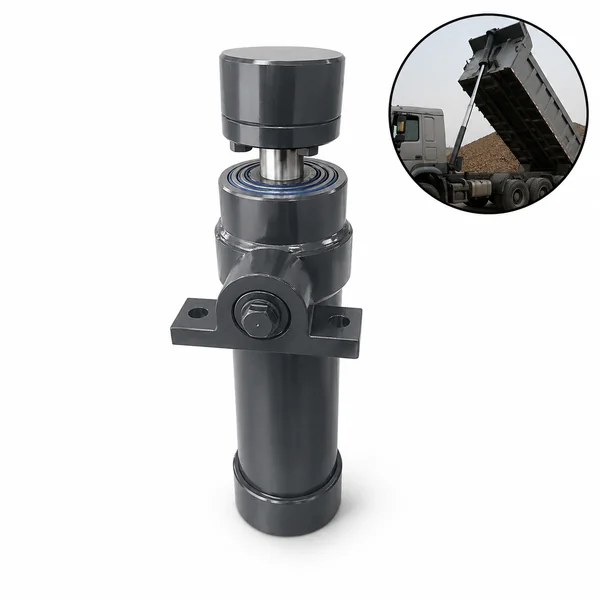
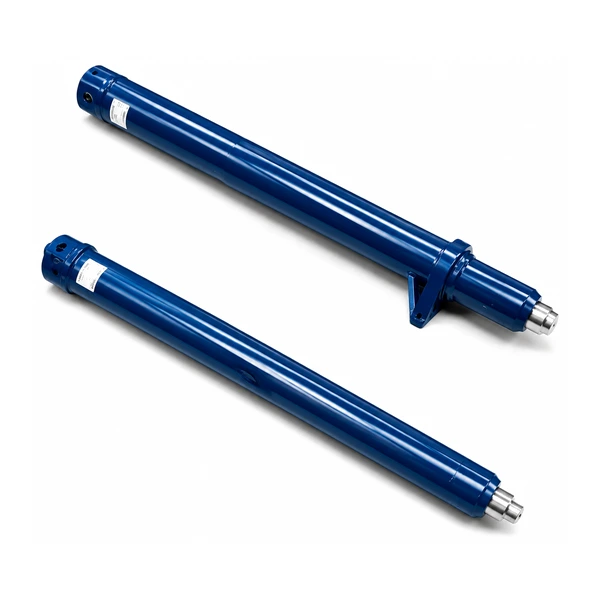
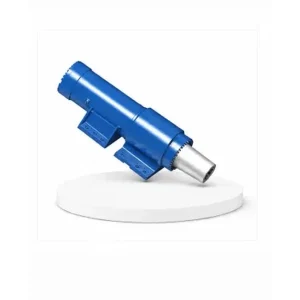
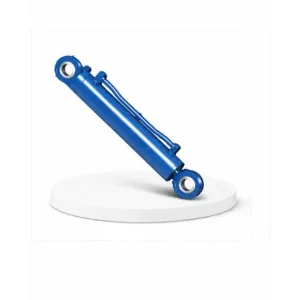
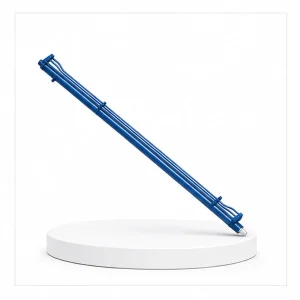
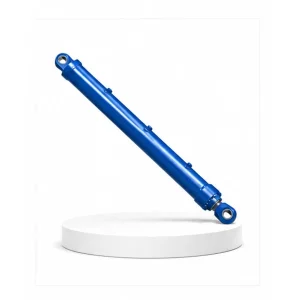
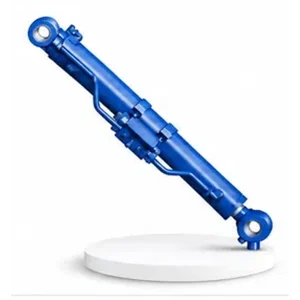
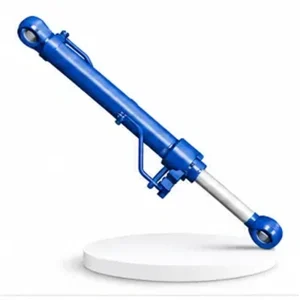
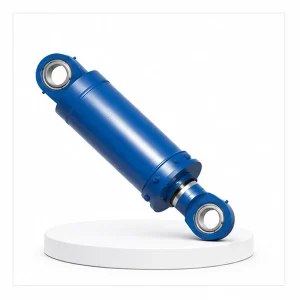
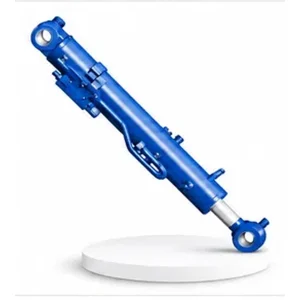
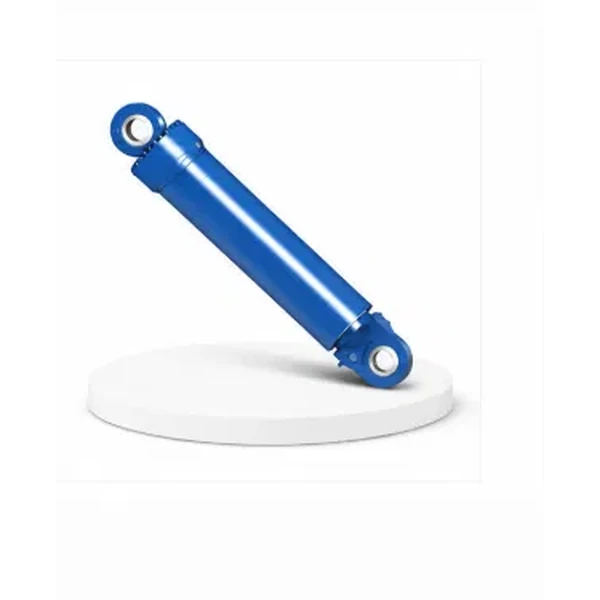
Mining Dump Truck Lifting Cylinder
A new machine category — and the heaviest payloads on wheels. Mining haul trucks carry 30–400 tonnes of rock per load, dump it by hoisting the body to 50°, then return empty for the next load. Two or three lifting cylinders raise this combined 600-tonne mass — body plus payload — 15–25 times per shift, shift after shift, for 60,000 hours.
120–380mmBore
2–3 StageTelescopic
30–400 tPayload Range
The Harshest Working Environment for Any Mobile Hydraulic Cylinder
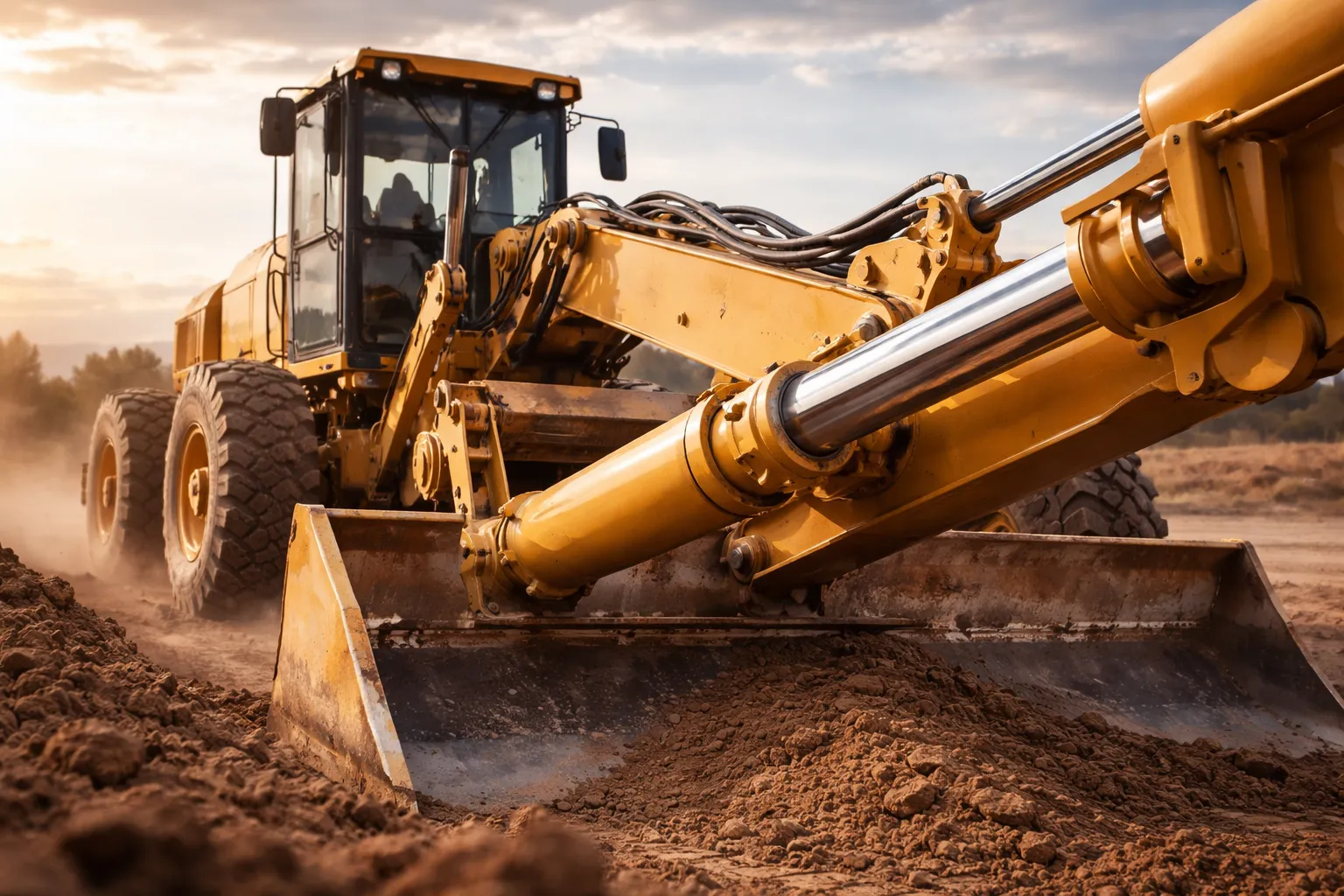
Open-pit mines subject equipment to extremes that no other mobile application matches. Dust: crushed rock produces micron-scale silica particles that infiltrate every exposed surface — more abrasive than construction-site soil, more penetrating than agricultural chaff. Temperature: Arctic iron-ore mines reach -45 °C in winter; Australian and Middle Eastern copper mines reach +55 °C in summer. Vibration: the truck travels 5–15 km per load on ungraded haul roads — continuous vibration that loosens fittings and fatigues metal.
Korea Ever-Power engineers the mining dump truck lifting cylinder for this environment as the first of five mining dump truck hydraulic cylinders — followed by the steering (#28), front suspension (#29), rear suspension (#30), and piston accumulator (#31).
Technical Specifications
| Parameter |
Specification |
| Product |
Mining Dump Truck Lifting Cylinder |
| Function |
Lift / lower the dump body for cargo dumping |
| Bore Diameter |
120 mm – 380 mm |
| Rod Diameter |
90 mm – 350 mm |
| Construction |
Two-stage or three-stage telescopic |
| Application |
Mining Dump Truck (rigid frame, 30–400 t payload) |
| Certification |
ISO 9001 · 100% hydrostatic tested |
Two-Stage vs Three-Stage — Matching the Cylinder to the Truck Class
The number of telescopic stages determines the retracted length, the total stroke, and the force profile of the lifting cylinder. Mining truck OEMs select the stage count based on the truck's payload class and body geometry:
Two-stage — 30–150 tonne payload trucks
Two nested stages provide a shorter total stroke but higher first-stage force — sufficient for the body weight and payload of trucks in the 30–150 tonne class. The two-stage design is simpler (fewer seals, fewer overlap joints) and has a longer service life in the abrasive mining environment because there are fewer sealing interfaces exposed to dust contamination. Most mine-site haulage in quarries, sand operations, and small to mid-size metalliferous mines uses two-stage lifting cylinders.
Three-stage — 150–400 tonne payload trucks
Three stages provide longer total stroke from a shorter retracted length — essential for the ultra-class trucks (CAT 797, Komatsu 980E, Liebherr T284 class) where the body is 6–8 metres above ground and the tipping angle must reach 45–55° for clean discharge of sticky ore. The third stage adds an extra sealing interface and an additional overlap joint — both requiring enhanced contamination protection in the mining environment. Contact the Korea Ever-Power engineering team for mining truck cylinder specifications.
100,000+ Dump Cycles — Designed for a 60,000-Hour Truck Life
A mining haul truck operates 20–22 hours per day, 350+ days per year, for 8–12 years. At 15–25 dump cycles per shift (two 12-hour shifts per day), the lifting cylinder performs 10,000–18,000 full extension/retraction cycles per year — totalling 80,000–150,000 cycles over the truck's 60,000-hour design life. Every cycle applies the full body-plus-payload force to the cylinder, followed by a gravity-assisted lowering.
This cycle count at full load is far higher than any crane cylinder and approaches the cycle count of a factory press cylinder — but in a mobile, outdoor, contaminated environment rather than a clean factory. The lifting cylinder must combine the fatigue life of an industrial cylinder with the contamination resistance of a field cylinder — a combination that drives Korea Ever-Power's material selection (high-fatigue-strength barrel steel), chrome plating thickness (80 µm minimum), and seal design (heavy-duty quad-lip wiper with integrated scraper).
Bore honing is Ra 0.2–0.4 µm. Stage overlap surfaces are hard-chrome plated both internally and externally. Seals are polyurethane rated for -40 °C to +100 °C (the widest temperature range in the mobile machinery cylinder catalogue). Every lifting cylinder is hydrostatic tested at 1.5× rated pressure per stage and full-cycle tested for smooth sequential extension and controlled gravity-lowering.
OEM & ODM
What You Provide
Truck model and payload class, body weight (empty), target dump angle, number of cylinders per truck (typically 2–3), stage count (2 or 3), bore/rod or force requirement, dump cycle time, temperature range, dust contamination level, design life in hours, and the body hinge/cylinder mounting geometry drawing.
What the Factory Delivers
Engineering drawing with stage diameters, stage strokes, stage overlap, seal specification per stage (quad-lip wiper + pressure seal + guide ring), 80 µm chrome plating, wide-temperature seal, and mounting dimensions. Hydrostatic per stage + full-cycle functional test. Seal kits. Browse the telescopic cylinders and the Korea Ever-Power catalogue.
FAQ
How does the mining lifting cylinder differ from a standard dump truck telescopic cylinder?
Scale and environment. A standard dump truck carries 10–30 tonnes on paved roads; a mining haul truck carries 30–400 tonnes on unpaved haul roads. The mining cylinder has a much larger bore (up to 380 mm vs 200 mm for on-road), heavier chrome (80 µm vs 50 µm), wider temperature range (-40 to +100 °C vs -30 to +80 °C), and quad-lip wipers designed for silica-dust contamination. The design life is 60,000 hours vs 15,000 hours for on-road.
How many lifting cylinders does a mining truck use?
Most mining trucks use 2 or 3 lifting cylinders positioned between the body and the chassis frame. The cylinders work in parallel — all extending simultaneously to raise the body. On ultra-class trucks (300–400 tonne payload), 3 cylinders are typical; on smaller trucks (30–150 tonnes), 2 cylinders are standard. Korea Ever-Power supplies matched sets.
What is the typical seal replacement interval in mining service?
In a well-maintained truck with functioning dust suppression, the lifting cylinder seal life is typically 5,000–10,000 hours (1–2 years). In extreme dust or poor maintenance conditions, intervals may shorten to 3,000–5,000 hours. Korea Ever-Power supplies seal kits sized for each stage to minimise downtime during preventive maintenance. Browse forklift cylinders and industrial engineering cylinders for other heavy-duty lifting applications.