Strategic Equipment Overview & Offshore Operational Value
The rapid and unprecedented industrial expansion of the global offshore wind energy sector, particularly across the highly volatile maritime regions of South Korea, Japan, Taiwan, and the East China Sea, has created extraordinarily complex logistical demands. The physical construction, continuous servicing, and long-term maintenance of deep-water wind turbine arrays rely entirely on a highly specialized fleet of Service Operation Vessels (SOVs) and Wind Turbine Installation Vessels (WTIVs). The functional, mechanical backbone of these advanced maritime vessels is their heavy-duty deck machinery. Whether lifting multi-ton turbine nacelles, deploying delicate subsea remotely operated vehicles (ROVs), or securing the massive vessel itself via deep-water anchoring networks, the deck winch is the ultimate operational lifeline. However, an industrial winch is strictly only as safe and effective as its mechanical ability to instantaneously stop and securely hold a suspended payload in mid-air. The singular primary mechanical component responsible for executing this critical safety lock is the Winch Brake Cylinder. Without this vital fluid power component functioning flawlessly, entire offshore operations can be paralyzed.
Deploying high-pressure fluid power machinery on an open ocean deck introduces a profoundly hostile engineering reality that terrestrial machinery simply never encounters. A standard commercial hydraulic cylinder designed for standard land-based construction will rapidly and catastrophically deteriorate when exposed to the maritime atmosphere. The offshore environment is constantly saturated with heavy salt spray, which aggressively attacks, oxidizes, and rusts exposed metal surfaces within weeks. More critically, the ocean is never static. When a Wind Power Maintenance Ship rides over a large, unpredictable ocean swell, the sudden vertical heave of the vessel translates into a massive, instantaneous kinetic shock load. This shock load is transmitted directly through the taut steel winch cable and straight into the mechanical brake assembly. In standard commercial hydraulic parts, this relentless combination of violent impact load and highly corrosive salt leads directly to catastrophic operational failure. Salt water crystallizes on the extending polished rod; as the rod retracts into the barrel, these microscopic, rock-hard salt crystals act exactly like abrasive sandpaper, tearing the internal pressure seals to shreds. This rapid seal wear causes sudden hydraulic fluid bypass, resulting in a dangerous, immediate loss of braking pressure and the terrifying potential for a dropped subsea payload.
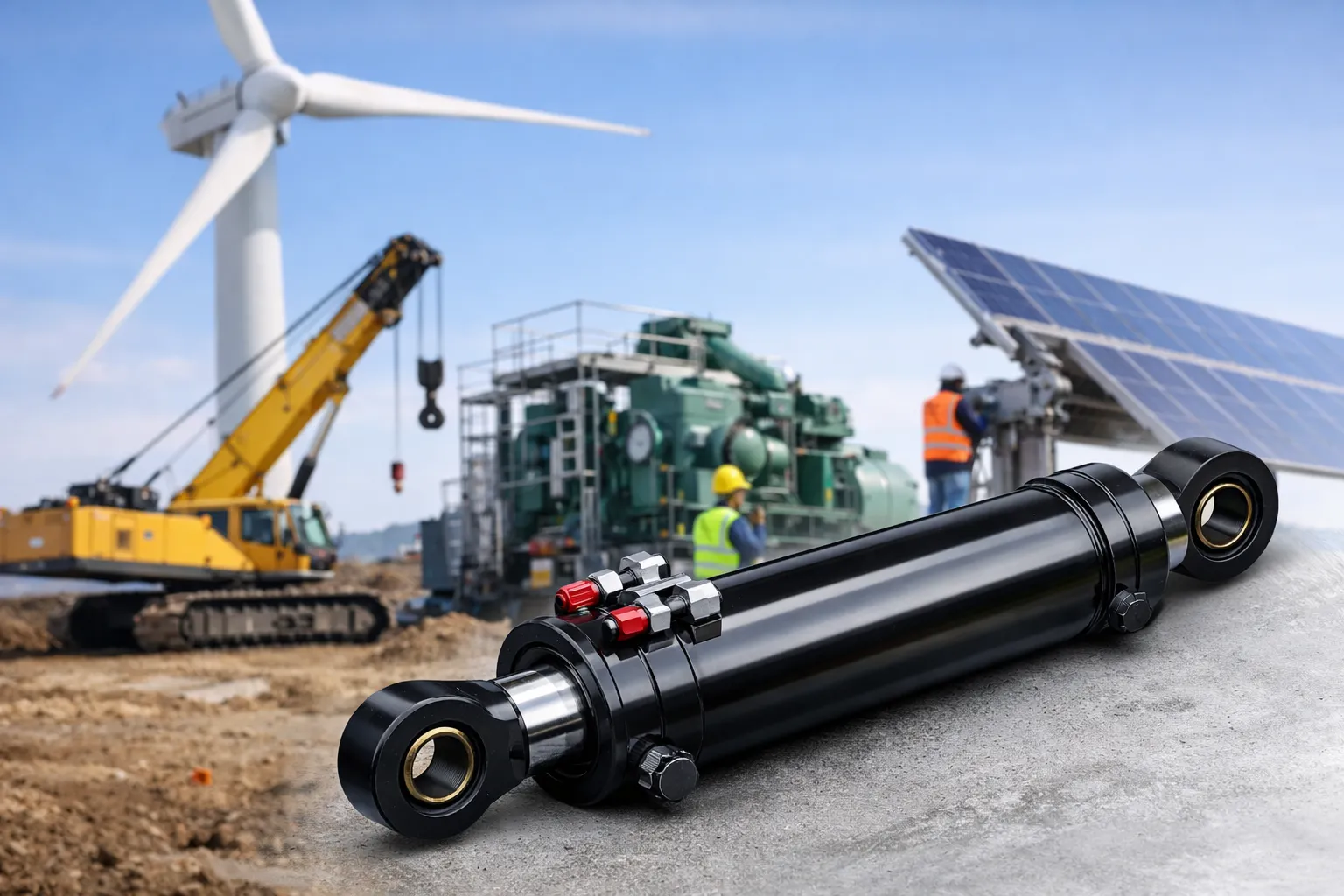
To aggressively resolve these critical maritime vulnerabilities and protect your fleet, our marine engineering division has meticulously designed the definitive offshore Winch Brake Hydraulic Cylinder. As an internationally recognized hydraulic cylinder manufacturer with decades of heavy-duty fabrication experience, we completely abandoned standard industrial specifications. By forging our cylinder architecture from high-impact Q345D low-alloy structural steel and encapsulating the entire unit in an advanced, multi-layer marine coating system, we provide an actuator that actively defies galvanic corrosion and absorbs massive wave-induced shock loads without yielding. We deliver the uncompromising mechanical integrity required to firmly secure your offshore lifting operations, drastically extending your fleet’s maintenance intervals, and providing an exceptional return on your overarching hydraulic cylinder price investment.
Comprehensive Technical Specifications & Engineering Parameters
Procuring mission-critical braking actuators for maritime classification requires strict engineering transparency, absolute precision, and unwavering adherence to offshore load-handling standards. The detailed technical matrix below outlines the optimal baseline parameters of our heavy-duty marine winch actuators. Because deck winch architectures vary significantly depending on the specific payload capacity and purpose of the vessel, our manufacturing division frequently customizes bore sizes, stroke lengths, trunnion geometries, and specific fluid port mounting configurations to seamlessly integrate with your fleet’s existing deck machinery layout.
| Engineering Parameter | Specification Details & Configurable Range |
|---|---|
| Target Industry Sector | Marine Coating System New Energy / Offshore Maritime Operations |
| Equipment Category | Wind Power Maintenance Ship Winch System |
| Subsystem / Action Function | Winch System / Heavy-duty dynamic brake control and locking |
| Designated Component Name | Winch Brake Cylinder / Winch Brake Hydraulic Cylinder |
| Actuation Mode | Double acting hydraulic cylinder for active, powered engagement and forced release |
| Internal Structural Type | Heavy-duty hydraulic cylinder piston utilizing shock-absorbing composite guide bands |
| Manufacturing Method | Fully Welded monolithic construction (100% Ultrasonic NDT Certified) |
| Core Material System | Q345D Low-Alloy Structural Steel specifically for superior cold-weather impact toughness |
| Surface Finishing | Extra-thick hard Chrome plated rod (Micro-cracked, highly lubricious, HV850+) |
| Primary Working Condition | High-frequency brake control during highly delicate subsea payload deployments |
| Environmental Challenge | Extreme oceanic Impact load and continuous, relentless high-salinity salt spray exposure |
| Typical Failure Mode Countered | Explicitly engineered to permanently eradicate premature Seal wear and internal fluid bypass |
| Recommended Configuration | Advanced Marine Coating System (Multi-layer zinc-rich epoxy/polyurethane C5-M grade) |
Operational Fluid Dynamics & Kinematic Braking Control Mechanics
Halting the massive downward momentum of a multi-ton subsea power cable or a massive wind turbine component unspooling from a heavy winch drum requires an immense, highly regulated application of mechanical clamping force. In an unpredictable offshore environment where sudden vessel heave can snap a taut steel lifting cable in an instant, relying solely on passive spring-applied brakes without active hydraulic oversight is entirely insufficient for precise payload positioning. Therefore, our uncompromising engineering protocol mandates that this critical safety mechanism functions strictly as a double acting hydraulic cylinder. In this advanced, closed-loop fluid configuration, high-pressure hydraulic oil is dynamically metered into two distinct alternating ports. This grants the vessel’s deck master complete, bidirectional mechanical authority over both the fierce engagement and the controlled, micro-adjusted smooth release of the winch band or disc brake calipers.
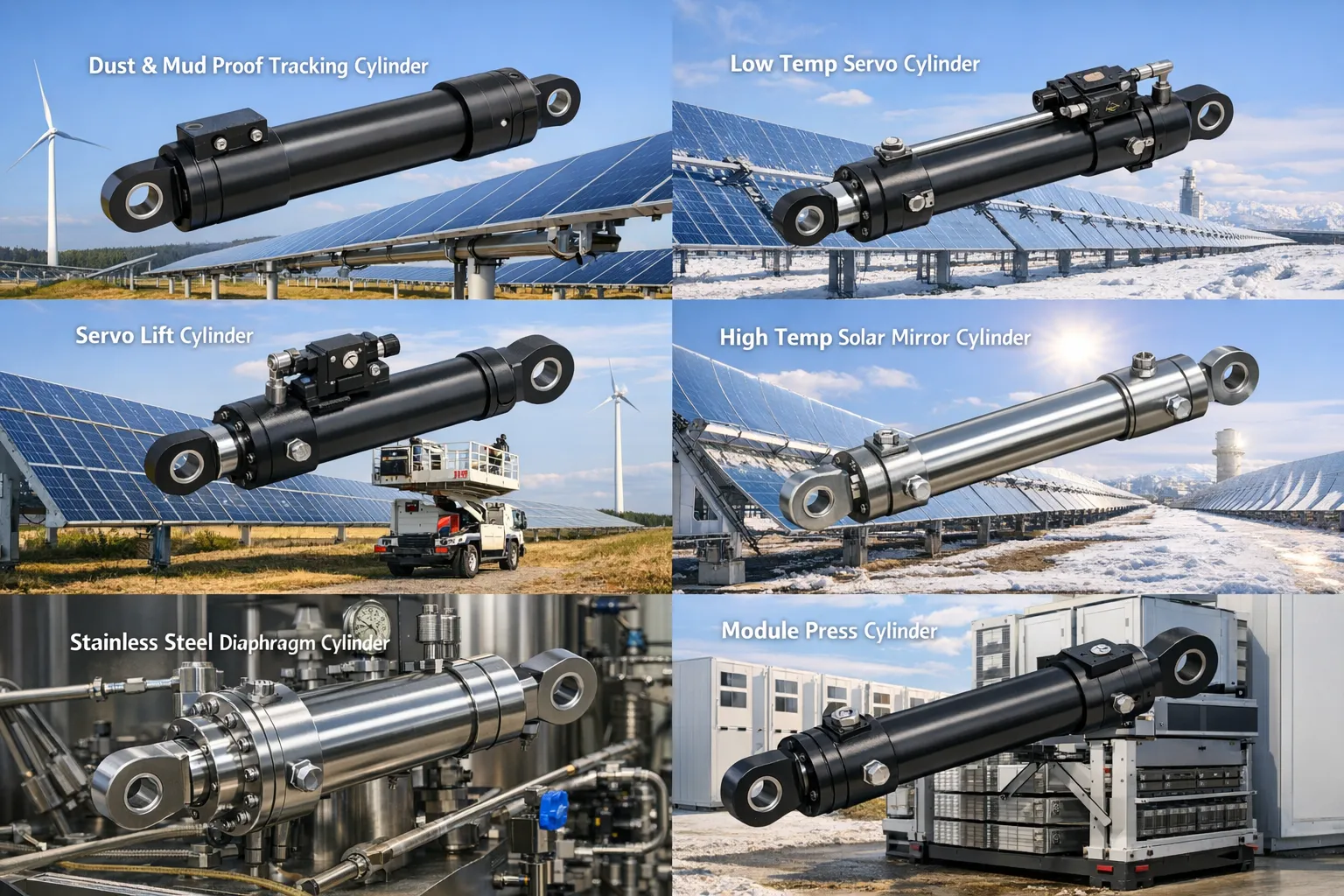
When the winch operator commands an immediate halt to the cable payout, the central marine hydraulic power unit directs intensely pressurized oil into the blind end (cap end) of the heavy-wall welded barrel. This hydrostatic pressure acts uniformly across the full surface area of the internal hydraulic cylinder piston, instantly converting fluid energy into massive linear thrust. This violently extends the chrome plated rod, driving the brake pads or the heavy band tensioner firmly and immovably against the steel drum. The resulting mechanical friction securely locks the payload in mid-air. Because our component is built to absorb impact load, it remains entirely unyielding to the dynamic kinetic shock generated by the vessel suddenly riding over large ocean swells. The hydraulic rams hold the line tension flawlessly.
Conversely, to smoothly resume lifting or lowering operations, pressurized fluid is dynamically redirected into the rod end chamber. This actively and forcefully retracts the piston rod, pulling the brake pads completely clear of the rotating drum. This powered retraction is absolutely vital to the lifespan of the deck machinery; it ensures that the brake does not drag, glaze the friction pads, or dangerously overheat during high-speed winch payout operations—a common and highly dangerous issue caused by rust-weakened mechanical return springs on inferior equipment. By providing powered engagement and powered release, we grant the operator pinpoint precision over the vessel’s heavy lifting operations. A basic lift cylinder operating as a single acting hydraulic cylinder simply cannot provide this level of responsive, forced retraction critical for complex maritime logistics.
Seamless Vessel Integration & OEM Brand Cross-Compatibility Retrofits
Fleet maintenance directors, procurement officers, and chief marine engineers face immense logistical hurdles when attempting to source exact replacement hydraulic cylinder components for aging deck machinery. Procuring replacement parts from original European or North American marine equipment manufacturers frequently incurs exorbitant maritime markups and unacceptable international lead times stretching over several months. Keeping a highly lucrative wind power maintenance ship indefinitely docked at port simply because of a single failed brake actuator is a financially devastating scenario. Our manufacturing strategy aggressively resolves this supply chain bottleneck through precision dimensional reverse-engineering and localized Asian manufacturing excellence.
Technical Fitment and Sizing Reference: Our highly specialized marine hydraulic parts are meticulously CNC-machined to match the exact dimensional footprints, trunnion geometries, clevis pin diameters, retracted lengths, and fluid port threads of standard factory-installed units. We engineer superior drop-in replacements for commercial deck machinery originally manufactured by global marine brands such as MacGregor, Rolls-Royce Marine (Kongsberg), TTS Group, Liebherr, and Fukushima. Please be explicitly advised that the mention of these specific corporate brand names is strictly for the technical purpose of sizing comparison, compatibility referencing, and assisting your marine engineers in rapid component selection. It does not imply any official corporate affiliation, authorized dealership, sponsorship, or trademark infringement. By supplying geometrically identical yet metallurgically superior upgrades, we ensure that the process of fixing hydraulic cylinders on your vessel’s winches requires zero deck modifications, structural cutting, or hot work welding, keeping your entire fleet in absolute, uninterrupted compliance with stringent maritime classification societies.
Core Engineering Innovations & Technical Defenses
Enduring the relentless, unforgiving hostility of the open ocean requires moving decisively beyond standard terrestrial fluid power catalogs. We have fundamentally restructured the internal fluid dynamics tribology and external architecture of our Winch Brake Cylinder to actively neutralize marine-specific threats. Here are the definitive engineering advantages that vigorously protect your vessel’s operational readiness:
1. Advanced Marine Engineering Coating System
Standard industrial paint rapidly flakes off, bubbles, and degrades when exposed to continuous saltwater spray and intense marine UV radiation, leading to severe exterior rusting. Our cylinders are enveloped in a rigorous, multi-layer marine coating system compliant with C5-M offshore standards. Following a strict ISO standard sandblasting protocol, the high-build zinc-rich epoxy primer and highly specialized polyurethane topcoats form an impenetrable barrier against galvanic corrosion, aggressively protecting the structural steel from the harsh oceanic atmosphere.
2. Q345D High-Rigidity Kinetic Impact Defense
When a vessel drops rapidly into the trough of a massive wave, the suspended payload creates an immense dynamic shock that travels directly into the winch brake. Standard carbon steel can permanently bend, yield, or fracture under this kinetic transfer. We strictly utilize Q345D low-alloy structural steel for the main barrel and heavy mounting points. This specialized metallurgy provides massive tensile yield strength and exceptional toughness even in freezing winter sea conditions, completely resisting deformation under extreme impact load.
3. Absolute Eradication of Seal Wear
The leading root cause of maritime brake failure is salt crystallization on the extending rod physically shredding the internal pressure seals upon retraction. We implement an ultra-low friction sealing matrix featuring heavy-duty self-lubricating PTFE guide bands. Furthermore, an aggressive dual-lip external wiper forcefully scrapes crystallized salt, ice, and organic marine debris off the rod before it enters the gland, entirely eliminating abrasive seal wear and catastrophic internal fluid bypass.
4. High-Integrity Monolithic Welded Construction
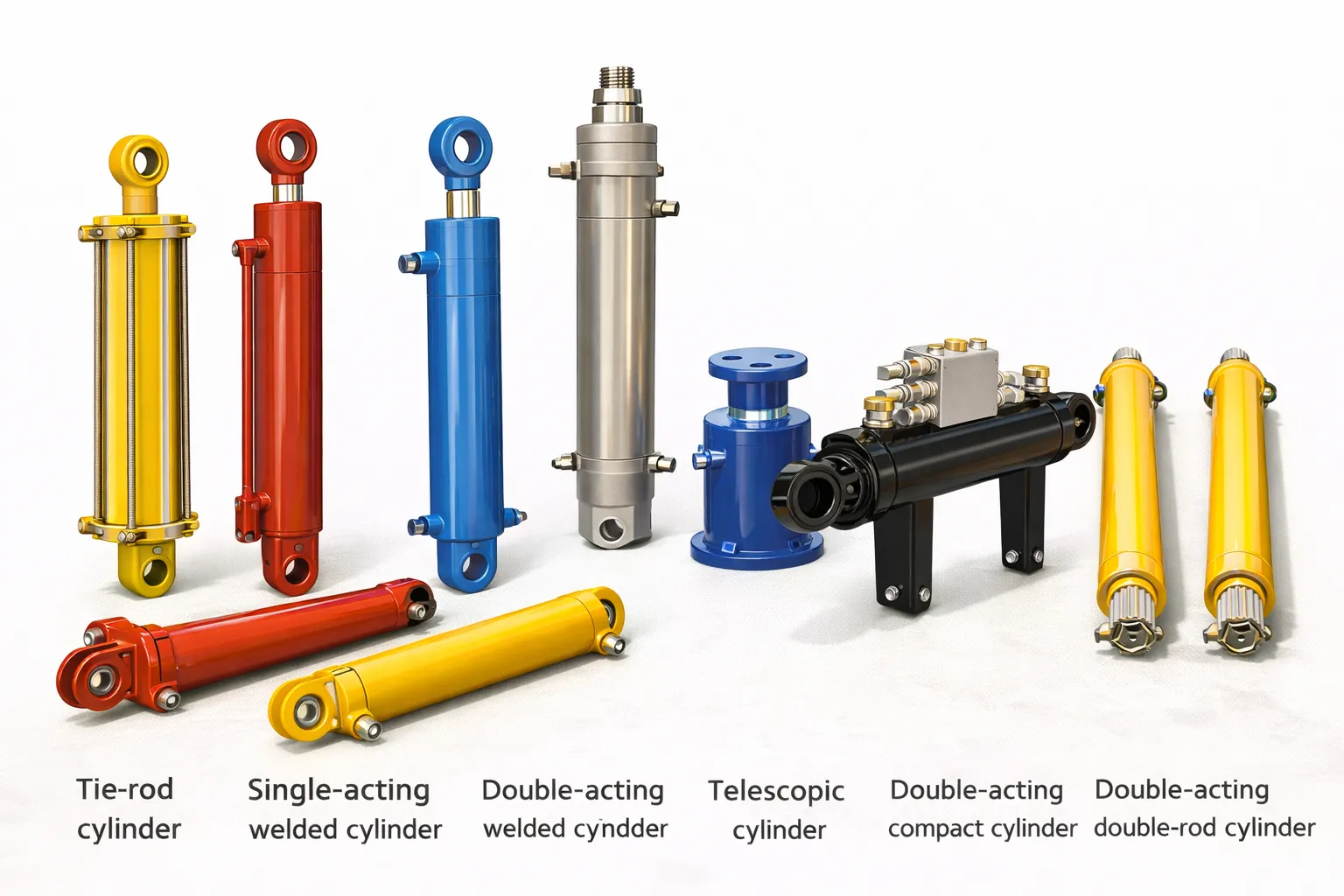
Relentless, deep-frequency deck vibrations from massive marine diesel engines can cause standard bolted tie-rod cylinders to physically shake apart, stretch, and uncontrollably leak hydraulic oil over time. Our actuators completely avoid this by featuring a fully integrated, heavy-duty welded construction. Using robotic submerged arc welding, the end caps and trunnion mounts are permanently fused to the main barrel, creating a monolithic structure completely immune to vibration-induced mechanical loosening.
5. Superior Chrome Plated Rod Protection Armor
The continually exposed section of the actuating rod is highly vulnerable to severe pitting from continuous sea spray and ambient moisture. We combat this chemical attack by utilizing an extra-thick, micro-cracked hard chrome plating process, subsequently polished to a flawless mirror finish. This yields a remarkable surface hardness exceeding HV850. The resulting exterior is incredibly lubricious, highly resistant to aggressive chloride attack, and actively rejects the adherence of corrosive marine elements.
6. Extreme Fatigue Life Optimization for Continuous Duty
Winch brakes operate on a continuous, high-frequency, severe-stress cycle during complex subsea deployments, accumulating thousands of rapid micro-actuations to maintain proper cable tension dynamically. Every critical weld zone on our heavy-duty clevis and trunnion mounts undergoes an advanced, controlled thermal stress-relief annealing process. This ensures massive structural fatigue life, guaranteeing the physical mounting points never crack or tear away from the deck machinery under extreme operational stress over years of service.
Uncompromising Manufacturing Autonomy & Complete Quality Traceability
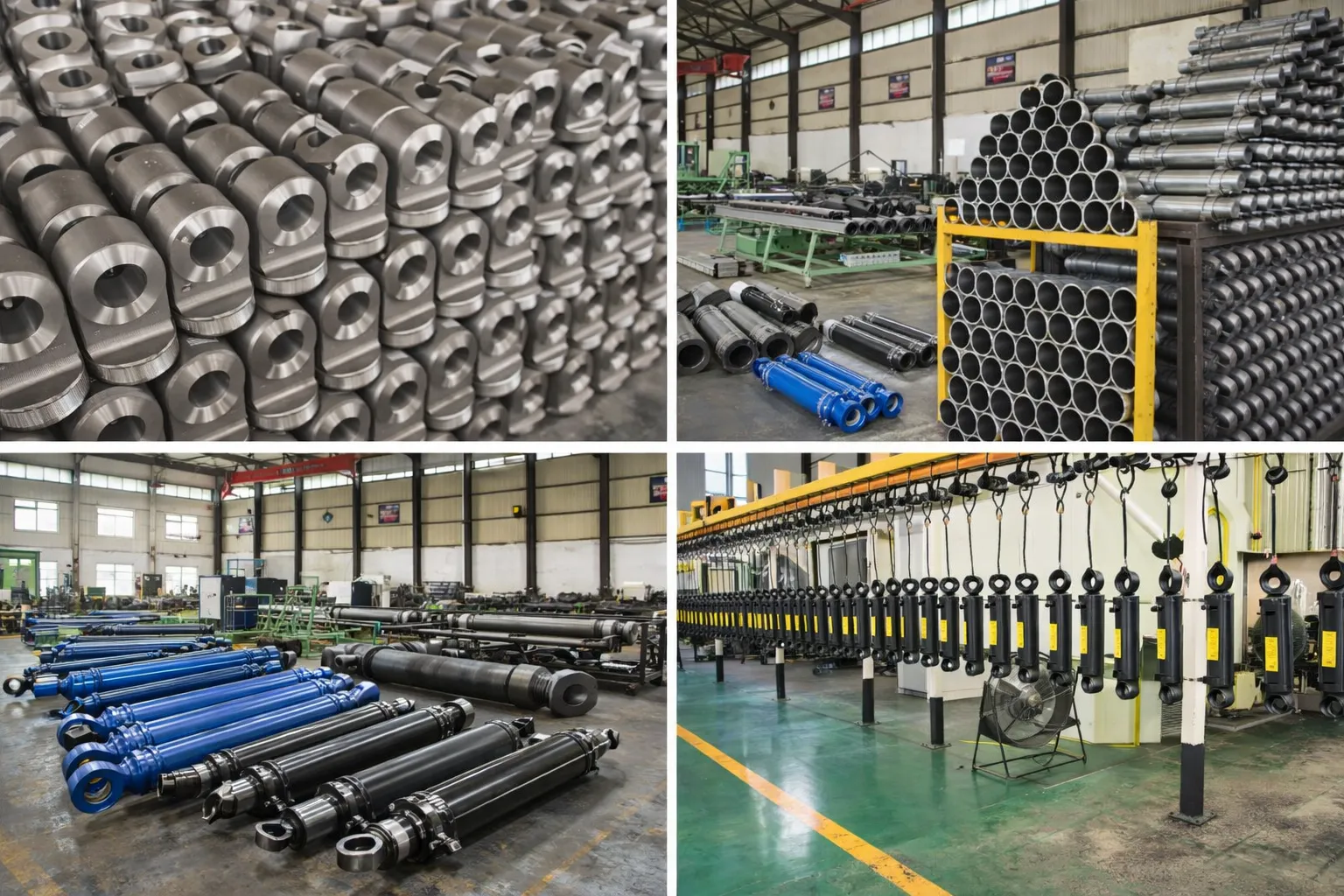
Providing life-critical safety components for the offshore maritime industry leaves absolutely zero margin for manufacturing defects, material inconsistencies, or outsourced assembly errors. As a fully vertically integrated manufacturer, we maintain sovereign, in-house control over our entire supply chain. From the moment the raw Q345D steel billets arrive at our facility, they are subjected to strict metallurgical spectrographic analysis to verify precise chemical compositions and structural density. All precision turning, deep-hole skiving, heavy roller burnishing, and threading operations are executed strictly in-house on our state-of-the-art multi-axis CNC machining centers. This absolute manufacturing autonomy allows us to hold extreme geometric tolerances measured in single micrometers, ensuring perfect concentricity between the barrel, the piston, and the heavy rod—a critical factor in eliminating lateral side-loads and maximizing the lifespan of the internal pressure seals.
Following the automated robotic welding process, 100% of the structural joints undergo rigorous ultrasonic non-destructive testing (NDT) to guarantee the total absence of internal micro-fissures, slag inclusions, or weld porosity that could lead to a catastrophic shear failure at sea. Once fully assembled and properly treated with the heavy-duty marine coating system, every single Winch Brake Hydraulic Cylinder is securely connected to an automated hydrostatic test rig. We pressurize the cylinders to an immense 1.5 times their maximum rated operational pressure, meticulously monitoring for even microscopic internal bypass or external fluid weeping using highly sensitive digital flow meters. Upon passing this exhaustive testing protocol, each cylinder is permanently laser-etched with a serialized QR code. This provides vessel owners and marine chief engineers with total lifecycle traceability linking back directly to the original assembly technician and the raw material mill certificates.
Cross-Industry High-Performance Deployments Beyond the Ocean
While this specific Q345D welded architecture with its advanced marine coating was heavily engineered from the ground up to conquer the extreme challenges of offshore winch braking, its fundamental core resistance to massive impact shocks, high vibrations, and highly corrosive environments makes it a highly coveted fluid power asset across a multitude of heavy-duty industrial sectors:
- Marine Construction & Port Infrastructure: Ship-to-shore gantry cranes, heavy port straddle carriers, harbor dredging equipment, and specialized lifting booms require identical resistance to dynamic lifting loads and relentless saltwater spray. Discover how our rugged technologies adapt perfectly to the Construction Machinery Industry.
- Subterranean Extraction & Deep Mining: Deep underground mine hoists and heavy conveyor braking systems expose critical machinery to highly acidic groundwaters and entirely unpredictable payload shocks. Our perfectly sealed systems are vital for equipment survival in the heavy-duty Mining Industry.
- Metallurgical & Heavy Industrial Forging: Continuous casting lines, heavy furnace doors, and massive steel rolling mills operate in highly destructive environments saturated with corrosive chemical coolants and immense mechanical vibrations. Explore our customized actuator solutions tailored specifically for the Metallurgical and Iron Industry.
Comparative Engineering Analysis: Standard Commercial Cylinders vs. Our High-Performance Marine Solution
Evaluating the true total cost of ownership (TCO) for maritime equipment requires a visionary approach, looking far beyond the initial, deceptively low purchase invoice of a standard part. Installing standard commercial cylinders on a highly demanding offshore vessel inevitably leads to rapid, repetitive seal wear, forced emergency dry-docking, ruined payloads, and massive maintenance labor costs. The comprehensive comparative matrix below strictly isolates the distinct mechanical differences that make our marine actuators a vastly superior, cost-saving operational investment.
| Engineering Characteristic | Standard Commercial Cylinder | Our Specialized Winch Brake Cylinder |
|---|---|---|
| Exterior Corrosion Defense | Basic industrial spray paint. Rapidly flakes off, bubbles, and rusts deeply when exposed to continuous saltwater spray and UV. | Advanced marine coating system (Zinc-rich Epoxy/Polyurethane). Completely and permanently isolates steel from oceanic salt. |
| Structural Metallurgy | Standard Carbon Steel (#45). Highly susceptible to yielding, permanent bending, or fracturing under sudden wave impact loads. | Q345D Low-Alloy Structural Steel. Provides massive rigidity and extreme kinetic shock resistance, even in sub-zero environments. |
| Seal Wear Resistance | Basic NBR lips. Easily shredded by crystallized salt accumulating on the extending rod, leading to rapid, dangerous fluid blowouts. | Aggressive dual-lip external scrapers + ultra-low friction PTFE guides proactively and completely eradicate salt-induced seal wear. |
| Vibration Resistance | Often utilizes bolted tie-rods which physically stretch and progressively vibrate loose from heavy marine diesel engine resonance. | Fully integrated robotic welded structure providing absolute, monolithic rigidity against relentless, deep-frequency deck vibrations. |
| Operational Reliability | Low. Frequent, unpredictable braking failures cause unacceptable safety risks and incredibly costly vessel downtime in port. | Exceptionally High. Highly durable construction ensures continuous, secure, safe, and highly profitable offshore lifting operations. |
Global Engineering Success: Real-World Maritime Deployments and Testimonials
The ultimate, undeniable validation of our heavy-duty marine engineering philosophy is witnessed daily out on the open ocean. Our advanced fluid power technologies are actively securing critical winch systems in the highly demanding, rapidly expanding offshore renewable energy markets of East Asia. By actively mitigating extreme salt corrosion and guaranteeing relentless braking actuation, we fiercely protect our clients’ operational safety records and their fleet profitability. Review these highly detailed regional case studies to understand the profound real-world impact of upgrading your equipment.
Case 1: Securing Subsea Cable Lifting Operations in Mokpo, South Korea
- Client Profile: Tier-1 Offshore Wind Farm Construction and Heavy Maintenance Fleet Operator.
- Equipment Handled: Heavy-duty subsea cable laying winches installed on advanced Dynamic Positioning (DP2) vessels.
- Initial Engagement: The fleet’s chief technical officer discovered us via an organic web search in early 2024, urgently seeking a permanent, reliable alternative for recurring hydraulic cylinder repair issues that were severely delaying massive offshore wind projects in the Yellow Sea.
The Engineering Challenge: Operating in the notoriously rough seas and winter gales off the southwestern Korean coast, the vessel’s original European OEM brake cylinders were failing repeatedly and unpredictably. The intense saltwater spray caused deep, rapid pitting on the chrome rods. When the vessel pitched violently in a swell, the massive dynamic impact load on the winch drum forced the pitted rod to forcefully stroke back, instantly shredding the main pressure seals. This caused a terrifying loss of hydraulic braking power while a multi-ton, highly expensive cable array was suspended dangerously overboard.
Strategic Solution & Outcome: Our engineering team designed and executed a complete fleet upgrade utilizing our specialized, heavy-duty Winch Brake Cylinder. By applying an extra-thick layer of micro-cracked hard chrome and integrating highly aggressive dual-lip rod scrapers, we completely neutralized the salt-induced seal wear. Installed in mid-2024, the equipment has operated continuously through brutal winter sea states with zero recorded rod pitting or internal fluid bypass. The fleet successfully eliminated their incredibly costly quarterly cylinder replacement cycle entirely.
“The corrosion resistance and structural integrity of these custom marine actuators are simply remarkable. We were bleeding money keeping vessels docked in Mokpo just to rebuild blown winch brakes month after month. Since switching to these heavily coated, robust units, our winches hold massive payloads rock-solid even in 4-meter swells. It is an absolutely essential upgrade for any serious offshore operator who values safety.” — Capt. Park Seong-ho, Fleet Operations Director (Reviewed: February 2026)
Case 2: Upgrading Aging Deck Machinery for Heavy Lift Vessels in Kitakyushu, Japan
- Client Profile: Highly Specialized Maritime Heavy Lifting and Deep-water Turbine Logistics Corporation.
- Equipment Handled: Massive anchor handling and towing winches (AHTS) mounted on Wind Turbine Installation Vessels.
- Initial Engagement: Reached out directly to our engineering division via our B2B portal to urgently procure replacement hydraulic cylinder components for obsolete deck machinery whose original European manufacturer had ceased production over a decade ago.
The Engineering Challenge: The client was undertaking a massive financial project, retrofitting an older, highly capable heavy-lift vessel specifically for the booming Japanese offshore wind sector. However, the original anchor handling winch brakes were failing structural tests. The heavy, continuous deck vibrations from the marine diesel engines had caused the old tie-rod style brake cylinders to physically stretch and leak hydraulic oil profusely. The resulting inability to safely lock the massive winch drum made anchoring near highly delicate subsea turbine foundations incredibly dangerous and uninsurable.
Strategic Solution & Outcome: Our advanced engineering team requested and utilized the mechanical drawings of the original components to execute a flawless dimensional reverse-engineering process. We subsequently upgraded the entire internal and external architecture to our monolithic, fully welded Q345D design, maintaining the exact mounting footprint. We delivered these precision drop-in replacements within six weeks. The new cylinders now easily absorb the immense shock loads of deep-water anchor deployment without any structural flexing, providing the deck crew with absolute confidence during highly critical positioning maneuvers.
“Finding a manufacturer with the deep engineering expertise to safely reverse-engineer and actually improve upon obsolete marine hydraulics completely saved our vessel retrofit project. The fully welded design completely eliminated the dangerous vibration leaks we constantly suffered with the old tie-rods. The physical installation on the deck was perfectly seamless with our existing hydraulic manifolds and mounting points.” — Chief Engineer Tanaka Kenji (Reviewed: November 2025)
Case 3: Restoring Reliability for Logistics Fleets in Taichung, Taiwan
- Client Profile: Fast-growing Offshore Wind Farm Servicing and Crew Transfer Logistics Contractor.
- Equipment Handled: Hydraulic deck cranes and secondary personnel lifting winches.
- Initial Engagement: Searched the internet for a highly reliable international engineering partner capable of supporting their maintenance crews with rapid, high-quality solutions for exactly fixing hydraulic cylinders across their rapidly expanding logistics fleet.
The Engineering Challenge: The intense tropical weather systems, extreme humidity, and exceptionally high salinity of the regional sea routes in the Taiwan Strait were relentlessly destroying the standard commercial cylinders utilized on their smaller deck winches. The basic exterior paint was peeling off in large sheets, exposing raw carbon steel to rapid, deep structural rusting. The resulting heavy seal contamination caused sluggish, unpredictable brake release, creating highly dangerous snags and sudden jerks when safely transferring sensitive equipment and personnel to the offshore turbine platforms.
Strategic Solution & Outcome: We promptly supplied a bulk inventory of our heavily protected Winch Brake Hydraulic Cylinder assemblies tailored to their exact crane specifications. Featuring our multi-layer marine epoxy coating system and premium PTFE seals, these actuators completely resisted the corrosive tropical oceanic atmosphere. The fleet’s overall operational uptime increased dramatically, and the initial capital investment was rapidly justified by entirely eliminating the massive, recurring labor costs of emergency at-sea cylinder rebuilds.
“The environmental protection and coating on these units is simply world-class. Despite being constantly battered by highly saline sea spray and intense tropical sun, they show absolutely zero signs of exterior rust, bubbling, or rod pitting after a year of hard use. The braking response is incredibly crisp, safe, and highly reliable. They are now our exclusive supplier for all maritime fluid power components moving forward.” — Mr. Lin Wei-ting, Fleet Technical Superintendent (Reviewed: March 2026)
Frequently Asked Questions (FAQ)
We deeply understand that successfully specifying high-pressure safety components for strict maritime classification requires rigorous technical diligence and comprehensive vetting. To clearly assist corporate procurement officers and chief marine engineers in their complex evaluation process, we have documented highly detailed engineering responses to the most critical and frequently asked inquiries regarding our heavy-duty offshore technologies.
Secure Your Offshore Lifting Operations Today
Do not compromise the absolute safety and financial profitability of your highly valuable wind power maintenance vessel with standard industrial components that will rapidly and predictably fail under oceanic impact loads and corrosive salt spray. Whether your fleet requires a specialized marine coating upgrade to finally eliminate persistent seal wear, or a fully customized actuator for a massive new winch build, our dedicated engineering division is ready to meticulously analyze your vessel’s requirements. Let us deliver heavy-duty fluid power solutions that guarantee relentless, highly secure performance at sea.
Our marine technical team guarantees comprehensive CAD dimensioning, fluid dynamics analysis, and highly competitive pricing options within 24 hours of your inquiry.
Editor: Cxm