Attitude Adjustment Cylinder For ROV System
Engineered for uncompromising high-pressure deep water reliability. Featuring advanced titanium integration and plasma-sprayed ceramic layers to permanently eradicate rod wear and deliver absolute micro-metric carrier vehicle positioning.
Product Overview: The Pinnacle of Deep-Sea Actuation
Operating sophisticated machinery thousands of meters below the ocean surface presents a unique and incredibly severe set of mechanical and fluid dynamic challenges. In the specialized field of marine and offshore engineering, Remotely Operated Vehicles (ROVs) serve as the primary workhorses for subsea exploration, heavy-duty seabed trenching, and offshore infrastructure maintenance. The structural and operational integrity of these submersibles relies entirely on their ability to maneuver, stabilize, and lock into position against unpredictable, high-velocity ocean cross-currents. This highly demanding physical domain is the precise operating environment of the Attitude Adjustment Cylinder. Functioning as the muscular core of the ROV’s structural framework, this specialized actuator governs carrier vehicle positioning, dynamic payload balancing, and delicate spatial orientation.
A conventional industrial fluid power component will rapidly and catastrophically degrade in benthic zones. The aggressive combination of intense ambient hydrostatic pressure, highly corrosive saline environments, and suspended microscopic silica sand inevitably leads to rapid system failures. As a dedicated hydraulic cylinder manufacturer with over two decades of applied subsea tribology and fluid power expertise, we have engineered an entirely new class of marine actuator. Our uniquely positioned Attitude Adjustment Hydraulic Cylinder discards standard carbon steel manufacturing parameters in favor of a Titanium + pressure-resistant sealing marine ROV system architecture. By integrating aerospace-grade titanium alloy structures with heavy-duty alloy steel rods treated with impenetrable ceramic layers, our design explicitly neutralizes the most notorious industry failure mode: abrasive rod wear.
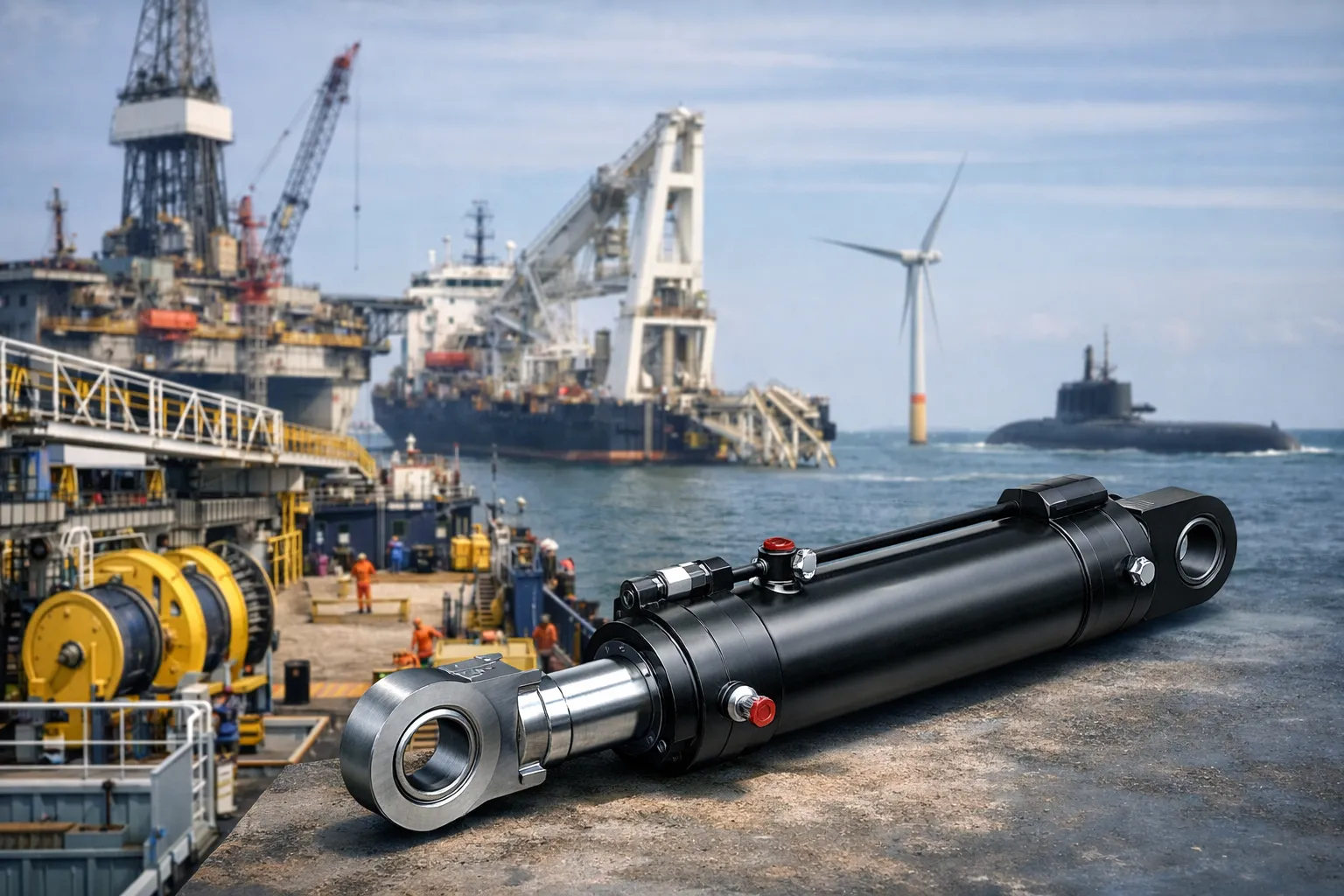
The profound industrial value of our equipment lies in its operational endurance and lifecycle cost reduction. Offshore operators deploying multi-million-dollar ROV systems in the East Sea, the Pacific Ocean, and the South China Sea cannot afford the astronomical vessel standby costs associated with blown subsea seals or seized actuators. By specifying our precision-honed hydraulic cylinder technology, engineering teams guarantee ultra-smooth attitude micro-adjustment, dramatically extending the deployment lifecycle of the carrier vehicle while significantly reducing overall maintenance overheads across the robust South Korean and East Asian offshore shipbuilding markets.
Technical Parameters & Customization Capabilities
Subsea robotics demand exact volumetric, dimensional, and payload compliance. A rigid, off-the-shelf approach is detrimental to advanced ROV engineering. Our fluid power department customizes every single parameter to fit the precise mechanical load and spatial envelope of your specific ROV chassis. The following table delineates the foundational specifications and extensive customization limits for our heavy-duty deepwater positioning actuators.
| Engineering Category | Specification Data | Subsea Application Significance |
|---|---|---|
| Industry & Equipment | Marine Engineering / ROV System | Deployed on subsea trenchers, AUVs, and work-class inspection ROVs. |
| Subsystem & Action | Carrier Vehicle Positioning | Executes dynamic pitch, roll stabilization, and continuous posture adjustment. |
| Nomenclature | Attitude Adjustment Cylinder | Optimized explicitly for high-frequency, short-stroke positioning. |
| Action Mode | Double acting hydraulic cylinder | Facilitates powered extension and retraction, locking the ROV rigidly in space. |
| Structure Type | Welded Piston Cylinder | Monolithic TIG welded design entirely eliminates tie-rod flex under pressure. |
| Material System | Titanium Alloy + Alloy Steel | Delivers an exceptional strength-to-weight ratio for ROV buoyancy calculations. |
| Surface Treatment | Plasma-Sprayed Ceramic Layer | Creates an ultra-hard surface that actively prevents abrasive silica scratching. |
| Environmental Rating | High Pressure Deep Water | Rated and factory-tested for continuous operation at depths exceeding 4000 meters. |
| Working Condition | Attitude Micro-Adjustment | Utilizes ultra-low friction bands to eliminate stick-slip mechanical stiction. |
| Failure Mode Solved | Rod Wear & Saltwater Intrusion | Ceramic hardness combined with subsea scraper rings neutralizes rod scoring. |
| Installation Options | Spherical Bearings, Trunnion, Flange | Fully customizable to match the exact pin-to-pin dimensions of legacy equipment. |
Operational Working Principle: Fluid Dynamics at 400 Bar
Comprehending the operational mechanics of the Attitude Adjustment Hydraulic Cylinder requires a deep, engineering-level understanding of fluid power behavior in extreme subsea conditions. At a depth of 4,000 meters, the surrounding ocean exerts a crushing ambient pressure of roughly 400 bar (approx. 5,800 PSI) upon the external surfaces of the equipment. A standard terrestrial actuator would instantly implode, or suffer immediate seal inversion as the ocean forces saltwater past the wiper rings into the clean hydraulic lines. To prevent this, our system is configured as a Titanium + pressure-resistant sealing marine ROV system, heavily integrated with an external pressure compensation manifold. This dynamic volume compensator ensures that the internal hydraulic fluid pressure remains constantly equal to or slightly higher than the surrounding external hydrostatic pressure. This brilliantly neutralizes the crushing force, allowing the hydraulic cylinder piston to translate smoothly without fighting the massive weight of the ocean above it.
Because an ROV requires absolute spatial control in multiple dimensions, this unit operates exclusively as a double acting hydraulic cylinder. Pressurized fluid is directed from the ROV’s subsea hydraulic power unit (HPU) into either the cap-end port or the rod-end port via proportional servo valves. The critical tribological factor during deep-water operation is the complete elimination of mechanical stutter. When operators execute attitude micro-adjustment, the valves release incredibly minute volumes of fluid. Our custom-engineered PTFE glide rings and highly polished barrel interiors ensure the dynamic friction coefficient remains staggeringly low. This translates to perfectly linear, judder-free adjustments. The actuator instantly locks into its designated position once the valves close, providing a rigidly stable platform for robotic manipulator arms or high-definition multi-beam sonar arrays.
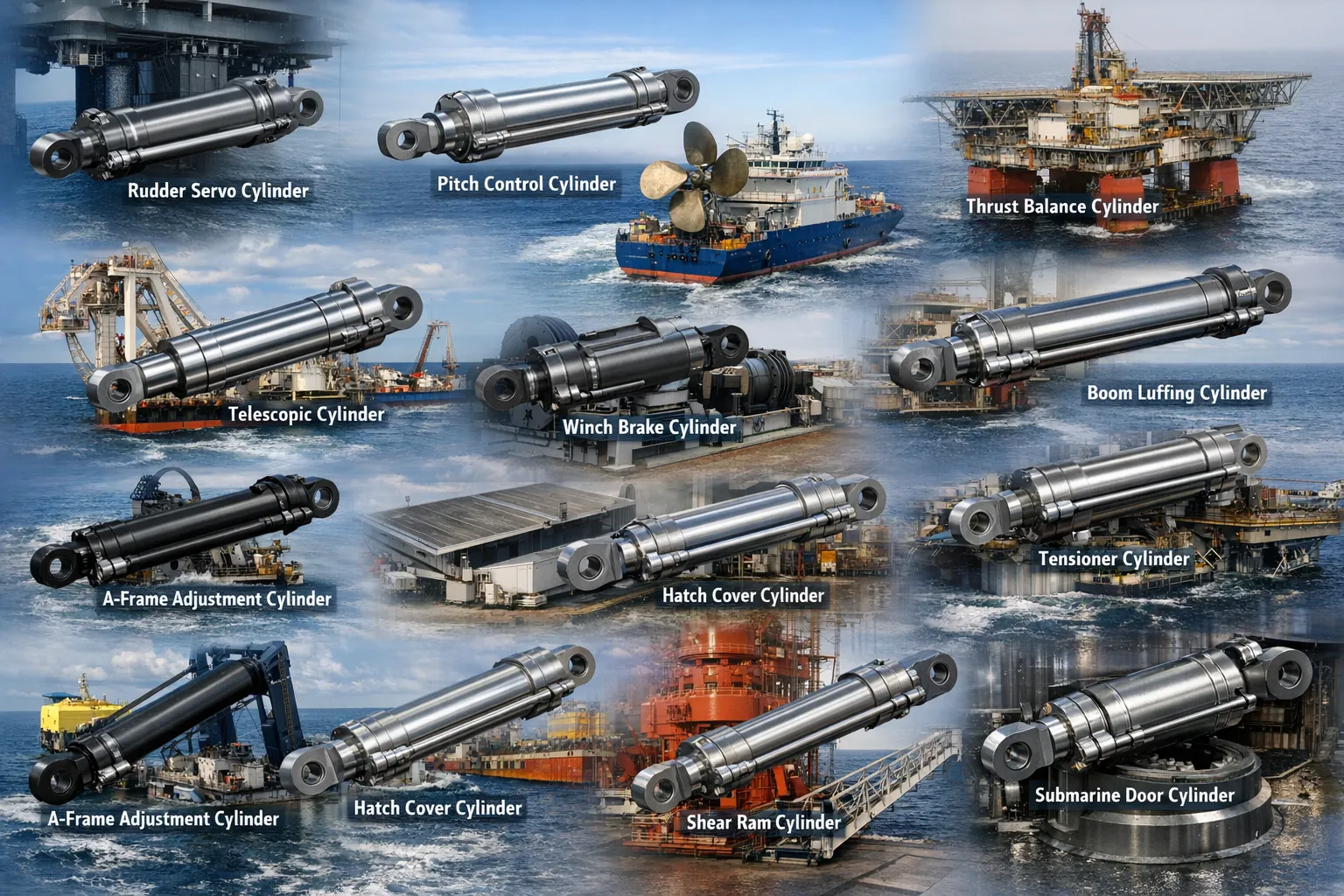
Seamless OEM Brand Replacement and System Integration
In the offshore maintenance, repair, and overhaul (MRO) sector, vessel downtime is measured in tens of thousands of dollars per single day. When existing marine actuators reach the end of their fatigue life or suffer from catastrophic rod wear, operators frequently face unacceptable delivery lead times from original equipment manufacturers. We bridge this critical global supply chain gap. By leveraging our agile manufacturing infrastructure, we rapidly produce custom hydraulic cylinder components that serve as exact, dimensional drop-in replacements for major global fluid power brands.
We routinely supply upgraded replacement hydraulic rams that flawlessly match the pin-to-pin installation dimensions, stroke lengths, trunnion widths, and fluid port geometries of units originally built by prominent companies such as Bosch Rexroth, Parker Hannifin, Eaton Vickers, Moog, and Enerpac. (Please Note: The citation of these commercial brand names is strictly utilized to assist B2B marine engineers and procurement officers in identifying dimensional compatibility and form-fit integration parameters during the selection process. It does not signify any official corporate partnership, endorsement, or trademark infringement.)
Rather than continuously dedicating engineering hours to fixing hydraulic cylinders that suffer from inherent design flaws in standard chrome plating, fleet managers can fundamentally upgrade their subsea equipment. By installing our titanium and ceramic-enhanced hydraulic parts, you resolve the root cause of the failure. This strategy secures a vastly extended operational lifecycle and delivers a highly favorable return on investment when evaluating the overall hydraulic cylinder price versus long-term vessel operational efficiency.
Defining Core Technical Advantages
Why do top-tier maritime contractors operating in the demanding waters of East Asia mandate our actuators for their heavy subsea equipment? The distinction lies in our uncompromising approach to material science and structural tribology. Below are the definitive engineering advantages of our ROV positioning systems:
- 1. Advanced Plasma-Sprayed Ceramic Layer: Hard chrome plating inherently possesses microscopic cracking due to the electroplating process. Under deep-sea hydrostatic pressure, saltwater forces its way into these cracks, leading to sub-surface rust and rapid chrome flaking. We utilize a High-Velocity Oxygen Fuel (HVOF) ceramic coating process on our alloy steel rods. This creates a completely non-porous, immensely hard surface (exceeding 65 HRC) that slices through abrasive silica sand, permanently eradicating rod wear.
- 2. Titanium Alloy Integration: To combat galvanic corrosion in seawater without adding massive weight to the ROV, critical exposed components such as the cylinder head glands, mounting clevises, and trunnion brackets are meticulously machined from marine-grade Grade 5 Titanium. This optimizes the vehicle’s buoyancy budget while providing absolute immunity to chloride pitting.
- 3. Pressure-Resistant Subsea Sealing Matrix: The heart of the actuator’s integrity is our proprietary seal configuration. Utilizing redundant cascaded lip seals manufactured from specialized FKM and NBR elastomers, backed by heavy-duty PEEK anti-extrusion rings, the system prevents ambient high pressure deep water from bypassing the wiper and contaminating the internal closed-loop fluid lines.
- 4. High-Rigidity Welded Piston Cylinder Architecture: Standard tie-rod cylinders are highly prone to longitudinal stretching under intense pressure spikes, causing end-cap fluid leaks. Our heavy-duty welded barrel construction creates a monolithic structural tube that powerfully resists the massive lateral bending moments generated when an ROV maneuvers in high-current underwater environments.
- 5. Deep-Sea Thermal Gradient Stability: Ocean temperatures shift drastically from the sunlit surface to the near-freezing abyssal plains. The specific metallurgy and seal compounds selected ensure that volumetric thermal contraction does not compromise seal compression, maintaining zero-leak performance across extreme, rapid temperature differentials.
- 6. Extreme Fatigue Life Optimization: Through comprehensive Finite Element Analysis (FEA) testing, our engineering team identifies and eliminates structural stress concentrations around the welded joints. This guarantees that the Attitude Adjustment Cylinder can safely absorb millions of high-pressure cyclic shock loads over its operational lifespan without metal fatigue.
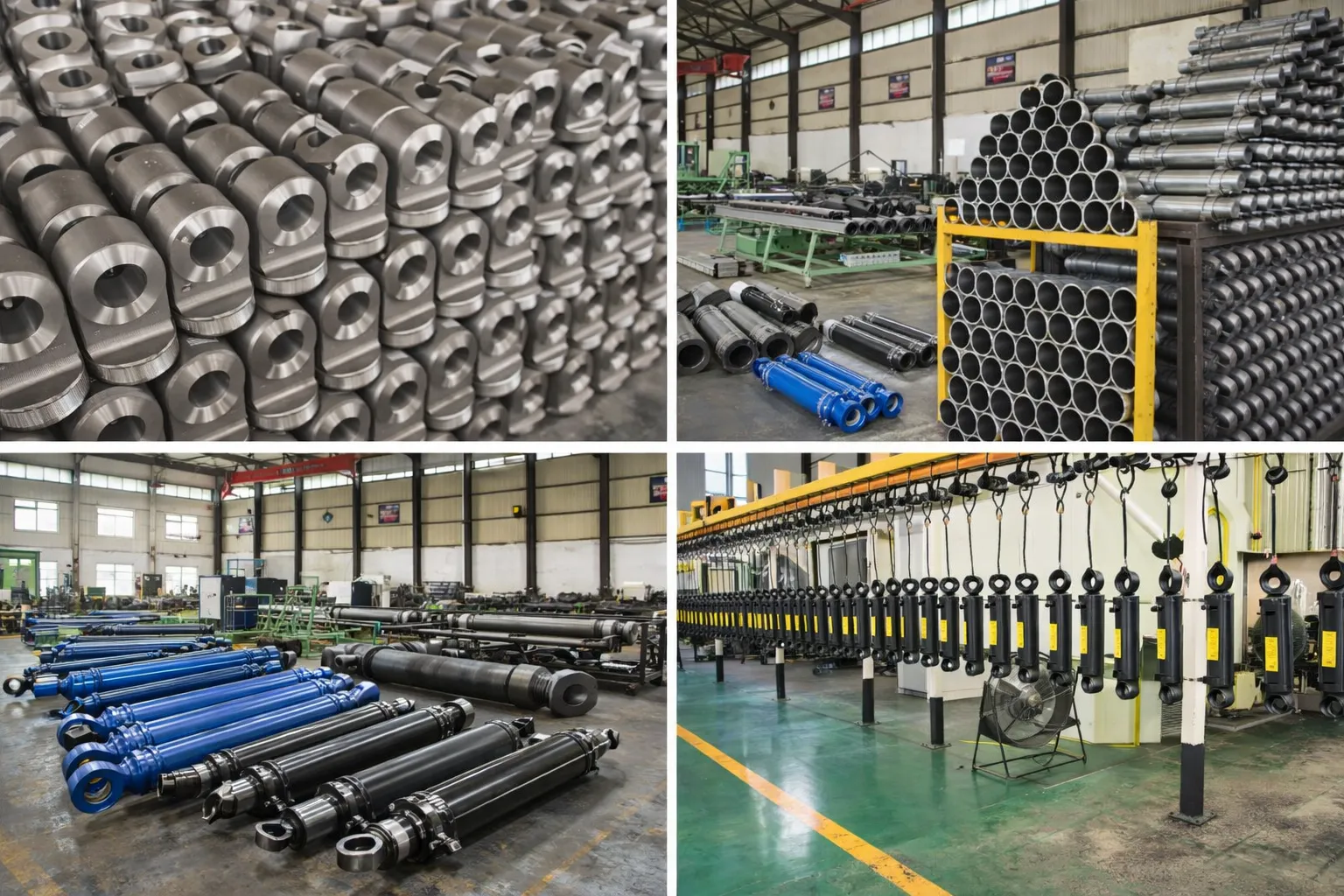
Autonomous Manufacturing & Elite Quality Control
Absolute subsea reliability cannot be merely inspected into a final product; it must be intentionally manufactured into the molecular structure of the components from day one. As a premier, fully integrated hydraulic cylinder production facility, our manufacturing ecosystem operates under strict ISO-certified quality management protocols. Every single phase, from the initial metallurgical procurement of raw titanium billets to the final multi-coat marine epoxy painting, is meticulously controlled within our advanced workshops.
The precision machining of high-strength alloy steel requires heavy-duty multi-axis CNC turning centers to maintain diametral clearances tighter than 0.02 millimeters. The structural integrity of a double acting hydraulic cylinder relies heavily on its internal welds. We employ automated submerged arc and TIG welding processes performed in controlled inert gas environments. Every critical weld seam is subsequently analyzed using advanced Ultrasonic Testing (UT) and Magnetic Particle Inspection (MPI) to guarantee zero porosity, slag inclusions, or micro-fractures.
Prior to global dispatch, 100% of our production output undergoes grueling Factory Acceptance Testing (FAT). The cylinders are mounted onto computerized test rigs and subjected to static proof pressure tests at 150% of their maximum rated working pressure. We digitally monitor for microscopic pressure drops that would indicate internal fluid bypass across the hydraulic cylinder piston seals. Only units that demonstrate flawless zero-leakage performance and frictionless actuation are stamped with a unique traceability serial number and cleared for global deployment.
Cross-Industry Applications: Beyond the Ocean Floor
While the titanium and ceramic-enhanced actuator detailed here is explicitly optimized as an Attitude Adjustment Hydraulic Cylinder for marine robotics, the foundational engineering DNA we have developed translates seamlessly to other extreme industrial sectors. The exact technology designed to defeat ocean pressure and abrasive seabed silica provides massive reliability upgrades for heavy-duty terrestrial machinery. Our robust solutions empower numerous vital industries:
- Subterranean Excavation & Mining: Underground tunneling and heavy ore extraction demand actuators that will not succumb to violent rock strikes or highly abrasive quartz dust. The high-rigidity welded structures provide immense fracture toughness. Discover our rugged sub-surface designs for the mining industry.
- Metallurgical and Steel Production: The exceptional thermal stability and dense ceramic coatings that resist seawater also perfectly deflect abrasive metallic dust and extreme radiant heat found in continuous casting lines and blast furnace manipulators. Explore our heavy-duty solutions for the metallurgical and iron industry.
- Heavy Infrastructure & Building: Large-scale excavators, bridge-building gantries, and mobile cranes require absolute load-holding stability. Our specialized locking valves and smooth linear actuation serve as the ultimate, unyielding lift cylinder for the construction machinery industry.
- Renewable Energy Systems: Offshore wind turbines utilize massive pitch-control cylinders to precisely angle their blades. The anti-corrosion titanium architectures developed for ROVs provide decades of maintenance-free operation in salty, corrosive atmospheric splash zones.
- Logistics and Material Handling Automation: Automated seaport cranes and heavy straddle carriers rely on ultra-low friction cylinders for precise shipping container alignment and high-cycle continuous 24/7 operation.
Comparative Analysis: Standard vs. High-Performance Actuation
To assist B2B procurement teams, naval architects, and lead mechanical engineers in their technical evaluation, the following table provides a direct comparative analysis between conventional commercial marine cylinders and our purpose-built ROV attitude adjustment systems.
| Performance Metric | Standard Commercial Marine Cylinder | Our Attitude Adjustment Cylinder |
|---|---|---|
| Rod Surface Defense | Hard Chrome Plating (Highly vulnerable to micro-cracking and salt rust) | HVOF Ceramic Coating (Completely immune to scoring and saltwater) |
| Structural Material | Carbon Steel with Epoxy Paint (Eventual blistering and galvanic corrosion) | Titanium Alloy Glands + High-Strength Alloy Steel Barrel |
| Dynamic Sealing Matrix | Standard Polyurethane (Deforms and extrudes under deepwater pressure) | Pressure-Compensated Subsea Lip Seals with PEEK Backups |
| Actuation & Control | High breakout stiction causing jerky, unpredictable macro-movements | Ultra-low friction PTFE glide bands for exact micro-positioning |
| Maintenance Frequency | Requires retrieval and seal rebuilds every 6-12 months | Engineered for 3 to 5 years of continuous, zero-maintenance deployment |
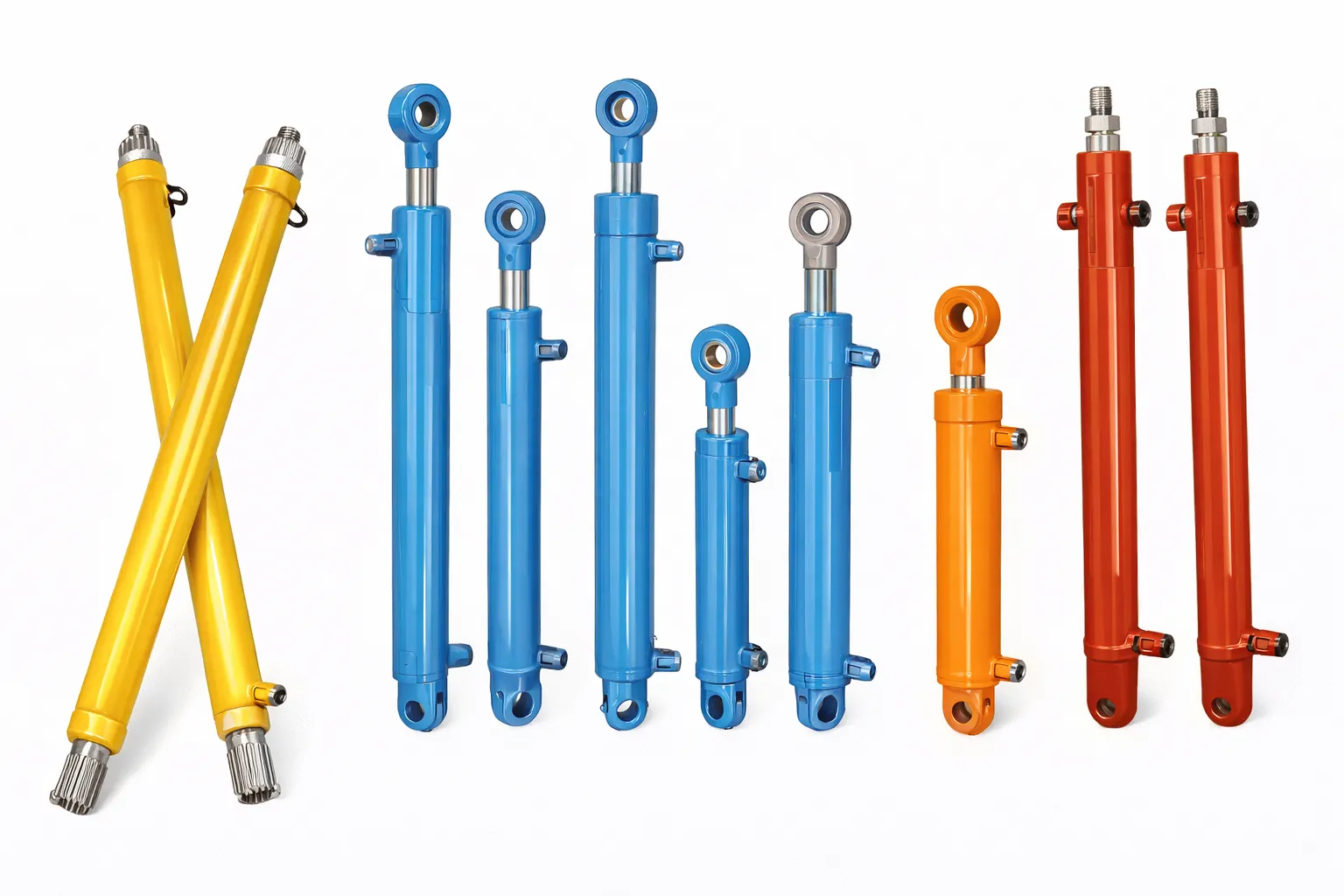
Proven Field Reliability: East Asian Case Studies
Theoretical engineering mathematics means nothing without proven field verification. Our custom-engineered fluid power solutions consistently drive operational success across the globe, with a particularly dominant and proven footprint in the advanced maritime, offshore energy, and shipbuilding hubs of South Korea, Japan, and Singapore. The following real-world cases illustrate how our actuators resolve critical deep-sea bottlenecks.
Case Study 1: Subsea Telecommunications Trenching ROV Upgrade
Location: Ulsan, South Korea | Deployment: March 2024
The Operational Challenge: A prominent South Korean offshore contractor operating in the East Sea was experiencing devastating and costly equipment failure. Their heavy-duty trenching ROVs utilized standard OEM hydraulic rams for carrier vehicle positioning. The highly abrasive volcanic silica sand suspended at 2,000 meters depth was violently scoring the chrome-plated rods within weeks. This led to severe hydraulic fluid leaks, total loss of manipulator pressure, and forced the support vessel to halt critical cable-laying operations every 400 hours for retrieval and repairs.
The Engineered Solution: The lead mechanical engineer found our technical specifications via a web search for reliable hydraulic cylinder repair solutions. After rapidly reviewing their CAD schematics, we engineered a batch of custom Attitude Adjustment Cylinders featuring our plasma-sprayed ceramic layer and subsea tandem wiper seals, entirely redesigning their rod defense mechanism.
The Outcome: Installed prior to a major cross-strait telecommunications project, the upgraded ROV system has now surpassed 4,500 hours of continuous subsea operation without a single pressure drop.
“The ceramic coating technology entirely eradicated our rod wear crisis. The precision of the attitude micro-adjustment is exceptional, allowing us to maintain the perfect trenching angle against the bedrock. This product saved us hundreds of thousands of dollars in dry-docking delays.” – Chief Marine Engineer, Park S.H.
Case Study 2: Autonomous Deep-Sea Mineral Mapping Crawler
Location: Tokyo Bay, Japan | Deployment: October 2024
The Operational Challenge: An elite Japanese oceanographic research institute was developing an autonomous benthic crawler for surveying rare earth minerals in the Pacific. They faced two major hurdles: strict vehicle buoyancy limits meant standard steel actuators were far too heavy, and extreme operating depths of 4,500 meters caused severe stick-slip friction in their existing cylinders, ruining delicate biological sampling alignments.
The Engineered Solution: Following an introduction via our technical portal, their design team requested a consultation. We manufactured a highly customized batch of actuators utilizing Grade 5 Titanium for the barrel and mounting glands, cutting the component weight by a staggering 38%. We also integrated ultra-low friction PTFE dynamic guide bands tailored for deep-sea near-freezing temperatures.
The Outcome: The crawler successfully completed its inaugural Pacific mapping mission, navigating treacherous seabed topography with absolute mechanical fluidity and zero hydraulic failure.
“The weight reduction achieved by the titanium integration allowed us to install additional high-definition sonar payloads. The smooth linear actuation provides the micro-metric accuracy we need for seabed sampling. Masterful fluid power engineering.” – Lead Autonomous Systems Designer, K. Tanaka
Case Study 3: Offshore Rig Maintenance and Inspection ROV
Location: Singapore Strait | Deployment: January 2025
The Operational Challenge: A global subsea engineering firm tasked with inspecting offshore oil rig jacket foundations was utilizing lightweight hydraulic cylinder components. In high-current tidal zones, the lateral forces physically bent the OEM actuator rods, causing internal seals to violently extrude and fail, leading to unacceptable vessel standby costs.
The Engineered Solution: Needing a massive structural upgrade rather than just continuously fixing hydraulic cylinders month after month, they contacted our engineering desk. We rapidly supplied a heavily reinforced, welded piston cylinder structure featuring high-yield alloy steel rods and robust trunnion mounts designed specifically to absorb massive bending moments without deflecting.
The Outcome: The reinforced actuators allowed the ROV to securely latch onto the rig jackets in sea states that previously forced all operations to halt, effectively increasing their operational weather window by 25%.
“We needed brute strength combined with exact volumetric control. These units deliver on both fronts flawlessly. We no longer worry about structural buckling during monsoon swells. This is the best hydraulic investment we have made for our fleet.” – Fleet Operations Director, Lim D.W.

Engineering FAQ: B2B Technical Support Insights
Specifying highly customized marine fluid power components requires precise technical clarity. Below, our engineering support team addresses the most frequent inquiries from B2B procurement managers, lead roboticists, and naval architects regarding our subsea systems.
Secure the Unyielding Reliability of Your Subsea Fleet
Do not allow standard industrial actuators to compromise the mission success of your deep-water operations. Upgrade your ROV carrier vehicles with our titanium and ceramic-enhanced Attitude Adjustment Hydraulic Cylinder, and experience uncompromising precision, complete rod wear elimination, and unprecedented longevity in the most punishing marine environments on Earth.
Our fluid power engineering team is standing by to analyze your ROV schematics, confirm drop-in dimensional interchangeability with existing OEM parts, and provide a tailored technical quotation.
Editor: Cxm