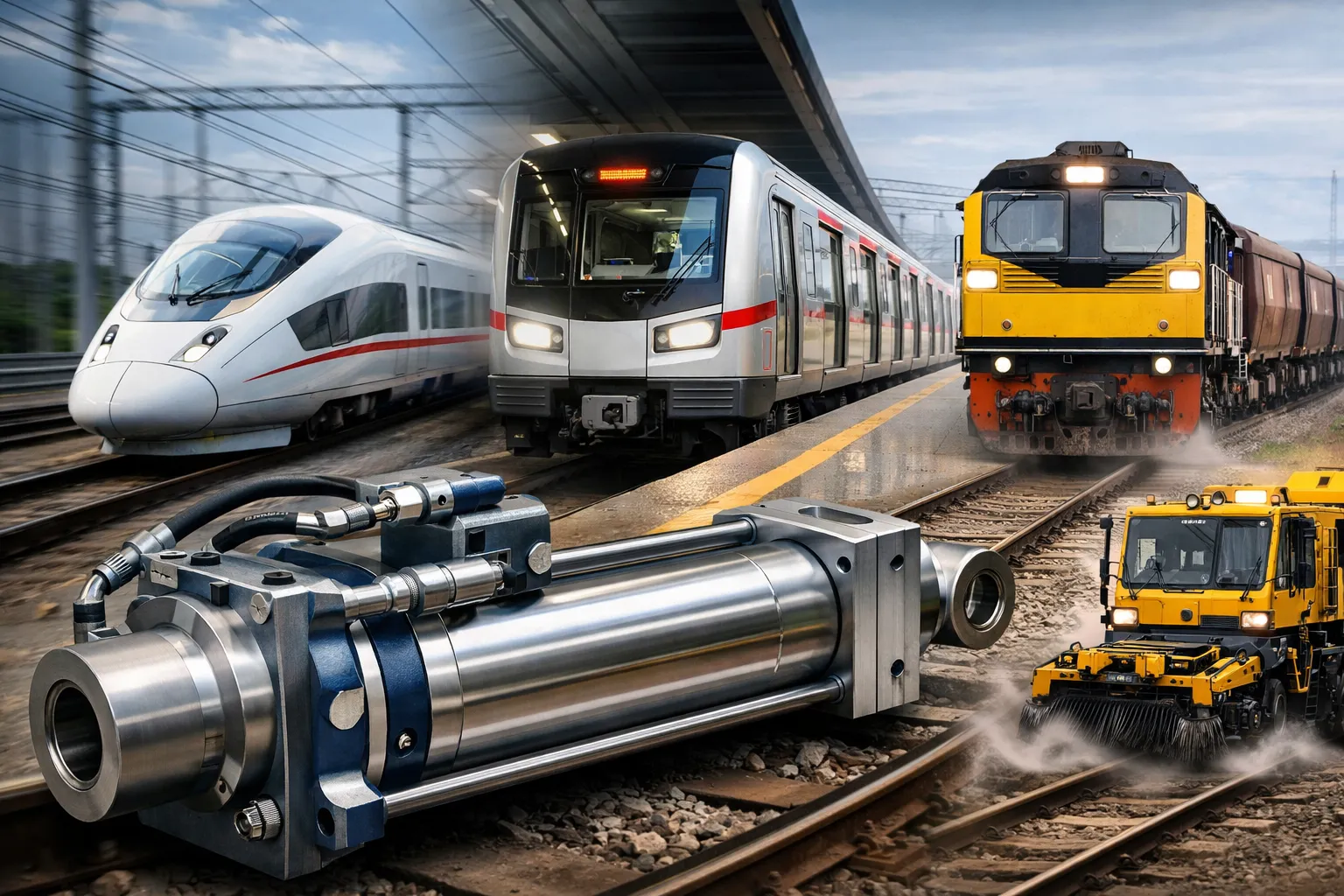
Product Overview & Core Industrial Value
Within the highly complex mechanical architecture of modern public transportation, specifically across the sprawling urban metro networks of South Korea, Japan, and Taiwan, passenger safety represents the ultimate operational imperative. Among all active mechanical systems on a commuter train, the automated carriage door assemblies face the most grueling duty cycles. A standard subway train executing a daily route across densely populated hubs will command its doors to open and close hundreds of times per shift. Maintaining the structural boundary between the secure passenger cabin and the external high-speed tunnel infrastructure relies entirely on a highly specialized actuation mechanism known as the car door lock cylinder.
While primary electric traction motors or pneumatic drives might handle the broad sliding motion of the door leaves, physically securing the door in a rigidly locked position requires the uncompromising physics of fluid power. The car door lock hydraulic cylinder serves this exact function. Once the doors slide shut, this mechanism engages a solid mechanical latch. Because the fluid inside the hydraulic oil cylinder is entirely incompressible, the unit acts as an unyielding structural brace. It must relentlessly maintain absolute door lock holding pressure against massive lateral forces, including the weight of crowded commuters leaning against the glass during rush hour and the extreme aerodynamic pressure waves generated when high-speed trains cross paths in a subterranean tunnel.
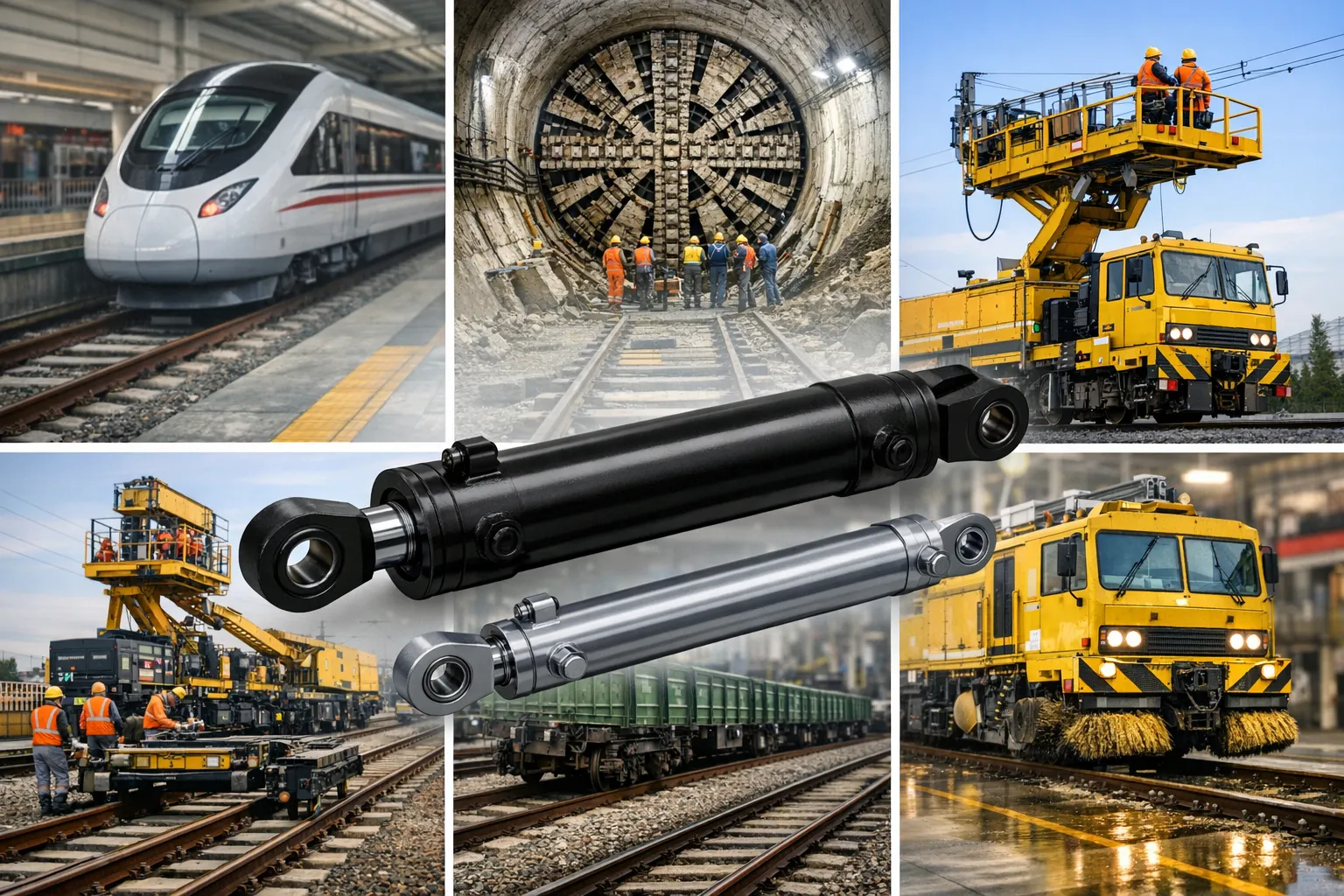
As an experienced hydraulic cylinder manufacturer, we understand that standard commercial actuators fail rapidly in this punishing environment. The continuous, frequent action causes tremendous frictional heat, which quickly degrades standard rubber seals, inevitably leading to internal fluid bypass. This specific failure mode—leakage—causes holding pressure to drop, triggering automated safety sensors that halt the train and cause cascading transit delays. Our engineers have completely eradicated this vulnerability. By utilizing high-yield 27SiMn alloy steel and proprietary wear-resistant sealing matrices, our car door lock cylinder guarantees millions of cycles with absolute zero leakage, providing transit authorities with a definitive solution that minimizes unscheduled downtime and optimizes their long-term hydraulic cylinder price investment.
Comprehensive Technical Parameters
Designing a fail-safe fluid power component for rolling stock demands strict adherence to rigorous metallurgical and dimensional tolerances. The technical data table below outlines the core engineering baseline for our transit-grade car door lock hydraulic cylinder, detailing the specific materials and structural configurations necessary to survive punishing metro environments.
| Engineering Specification | Customizable Range & Configuration Details |
|---|---|
| Target Industry | Rail Transit (Urban Public Transportation Networks) |
| Equipment Category | Metro Trains, Subway Carriages, Light Rail Vehicles (LRV) |
| Subsystem & Action | Door System / Mechanical Latch Actuation & Securing |
| Product Designation | Car Door Lock Cylinder |
| Action Mode | Double acting hydraulic cylinder – Fluid powers both the extension (locking) and retraction (unlocking) strokes. |
| Structure Type | Piston Cylinder – Highly compact linear design to fit within restricted overhead bulkhead cavities. |
| Manufacturing Structure | Welded Construction – Eliminates tie-rods, completely preventing structural loosening from track vibrations. |
| Material System | 27SiMn Alloy Steel – Superior yield strength prevents internal radial expansion under pressure spikes. |
| Surface Treatment | Micro-Cracked Chrome Plated – Provides exceptional resistance to atmospheric moisture and reduces seal friction. |
| Environmental Grade | Frequent Action – Rated for continuous, high-speed cycling throughout daily transit operations. |
| Primary Working Condition | Door Lock Holding – Sustains immense static pressure without yielding or fluid bypass. |
| Typical Failure Mode Solved | Leakage (Internal fluid bypass causing holding pressure drops). |
| Recommended Configuration | Wear-Resistant Seal System – Specialized low-friction polymer bands for dry-running longevity. |
Operational Fluid Dynamics & Working Principle
To fully grasp the mechanical reliability of our engineered car door lock hydraulic cylinder, it is necessary to examine the precise fluid dynamics occurring during a standard station stop. As the metro train approaches the platform and decelerates, the onboard transit control computer sends an electronic signal to a specialized proportional directional valve. This valve instantly routes highly pressurized fluid into the rod-end port of the cylinder.
The fluid pressure acts upon the internal face of the hydraulic cylinder piston, forcing it to retract with exact, calibrated velocity. This instantaneous retraction pulls the mechanical locking cam out of the door track, allowing the primary drive motors to seamlessly slide the heavy passenger doors open. By utilizing a double acting hydraulic cylinder design, the retraction is forcefully powered by fluid rather than relying on a weak mechanical spring, which is a severe safety vulnerability frequently found in basic single acting hydraulic cylinder setups that are prone to metallurgical fatigue.
The most critical phase occurs when the doors close and the train prepares for departure. The directional valve shifts, pumping fluid into the cap-end port, driving the hydraulic cylinder piston rod outward to engage the physical lock. Once fully extended, the valve shuts completely, trapping the fluid inside the chamber. Because the fluid inside the hydraulic oil cylinder cannot be compressed, the piston rod becomes a rigid, immovable steel brace. This state is known as door lock holding. Our implementation of 27SiMn steel prevents the barrel from expanding under pressure, and our wear-resistant seals prevent any fluid from bypassing the piston. This guarantees that regardless of the physical force exerted against the doors during transit, the lock holds with absolute, zero-tolerance rigidity.
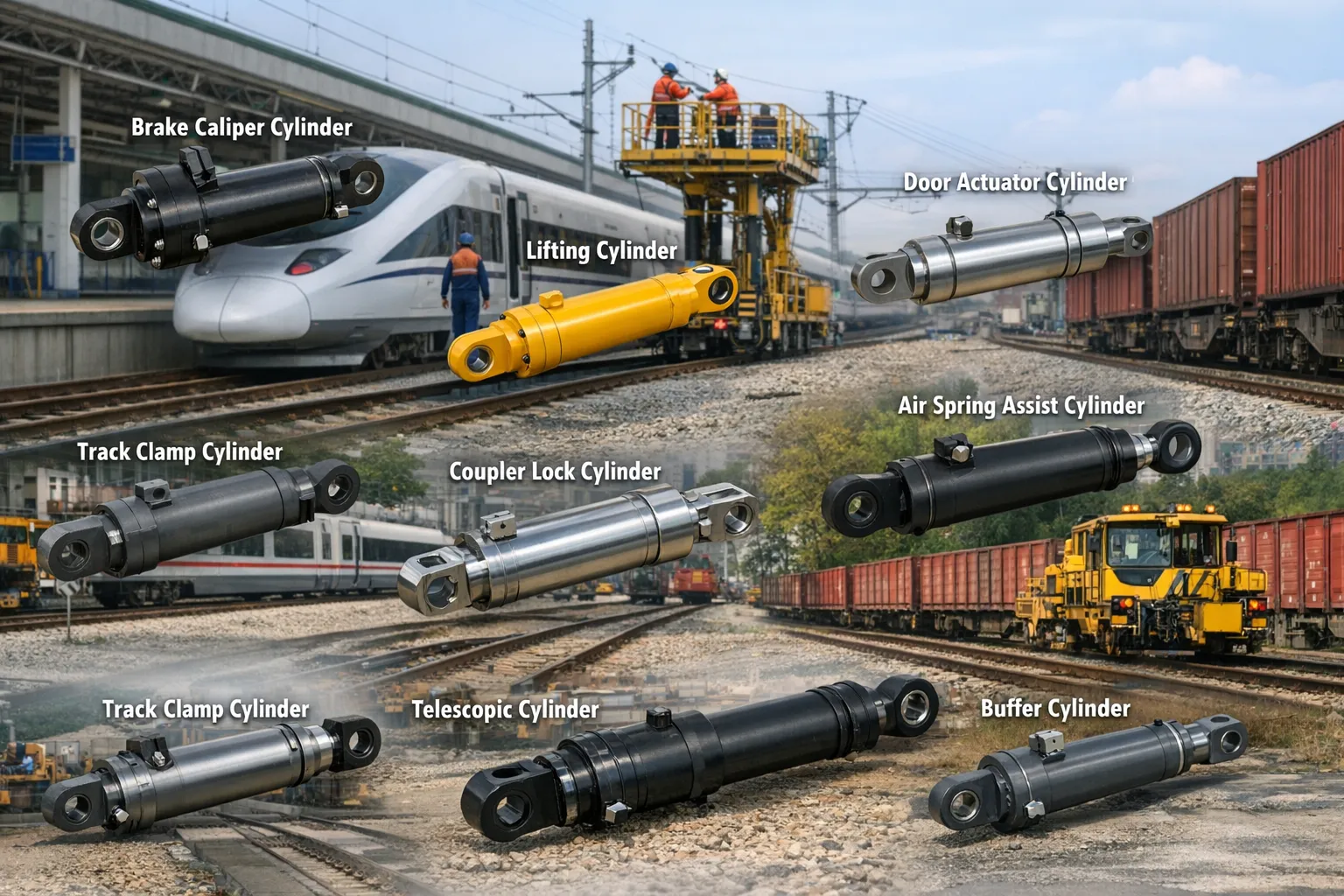
Strategic OEM Fleet Replacement & Modernization
For mass transit procurement directors, managing the maintenance supply chain for an aging fleet presents significant logistical hurdles. Continuing to source replacement components strictly from Original Equipment Manufacturers (OEMs) frequently exposes the transit authority to exorbitant markups, prolonged international shipping delays, and forced obsolescence programs that threaten to ground operational carriages. Our engineering division resolves these bottlenecks by executing precise reverse-engineering to manufacture flawless, drop-in replacement hydraulic parts.
Procurement Engineering Disclaimer: Our customized car door lock cylinder variants are engineered to serve as exact dimensional and functional replacements for door actuation systems originally supplied by recognized global integrators, including Norgren, Festo, SMC, Knorr-Bremse, Nabtesco, and Wabtec. We explicitly state these brand names strictly for the purpose of technical cross-referencing, stroke dimension matching, and procurement convenience for depot engineers. We operate as an entirely independent hydraulic cylinder manufacturer and hold no trademark affiliation, sponsorship, or endorsement from these respective OEM entities.
By transitioning to our localized manufacturing efficiency, your engineering teams are guaranteed exact matching of retracted center-to-center lengths, bore diameters, mounting trunnions, and fluid port thread pitches. This ensures that modernizing your carriage door bulkheads requires absolutely zero structural modifications. Depot technicians simply unbolt the failing OEM unit and install our upgraded car door lock hydraulic cylinder, instantly resolving chronic leakage issues while securing a highly competitive hydraulic cylinder price for the entire fleet overhaul.
Core Technical Engineering Advantages
Elevating a component from a standard commercial actuator to a life-safety transit mechanism requires an uncompromising approach to fluid power tribology and material science. Below are the definitive structural advantages forged into every unit we produce:
Absolute Mitigation of Fluid Leakage
Standard nitrile rubber seals overheat and tear under the high-frequency friction of daily transit operations. We utilize a proprietary wear-resistant sealing matrix incorporating advanced PTFE (Teflon) and polyurethane composites. This creates a self-lubricating interface with an exceptionally low friction coefficient, guaranteeing millions of cycles without the fluid bypass that causes pressure failure.
High-Yield 27SiMn Alloy Rigidity
When high pressure hits standard carbon steel, the barrel slightly balloons, pulling the wall away from the seal and causing leaks. We machine our barrels from 27SiMn alloy. The superior yield strength completely resists radial expansion, ensuring the internal geometry remains perfectly cylindrical under immense passenger loads.
Monolithic Welded Architecture
The continuous harmonic vibration of a moving train quickly rattles standard tie-rod cylinders apart. We employ deep-penetration automated robotic welding to fuse the base caps directly to the barrel. This creates a compact, monolithic structure that fits into tight door headers and is entirely immune to vibrational loosening.
Micro-Cracked Hard Chrome Plating
The reciprocating rod is exposed to atmospheric moisture and abrasive tunnel dust. We apply a precision layer of micro-cracked hard chrome plating. This rock-hard surface prevents abrasive scoring, while the microscopic fissures retain essential lubricating fluid for the wiper seal, completely preventing surface rust.
Optimized Thermal Stability
Frequent action implies immense friction, generating heat that severely thins fluid. The thermal conductivity of our 27SiMn steel, combined with a precision-calculated fluid volume ratio, actively dissipates kinetic heat, ensuring stable fluid viscosity and actuation speed during dense commuter rushes.
Accessible Depot Maintainability
While engineered for maximum endurance, we design for sustainable fleet maintenance. The front gland utilizes a highly secured threaded interface. Rather than scrapping the entire unit, depot technicians can access the internal hydraulic cylinder components to perform routine fixing hydraulic cylinders, drastically improving lifecycle ROI.
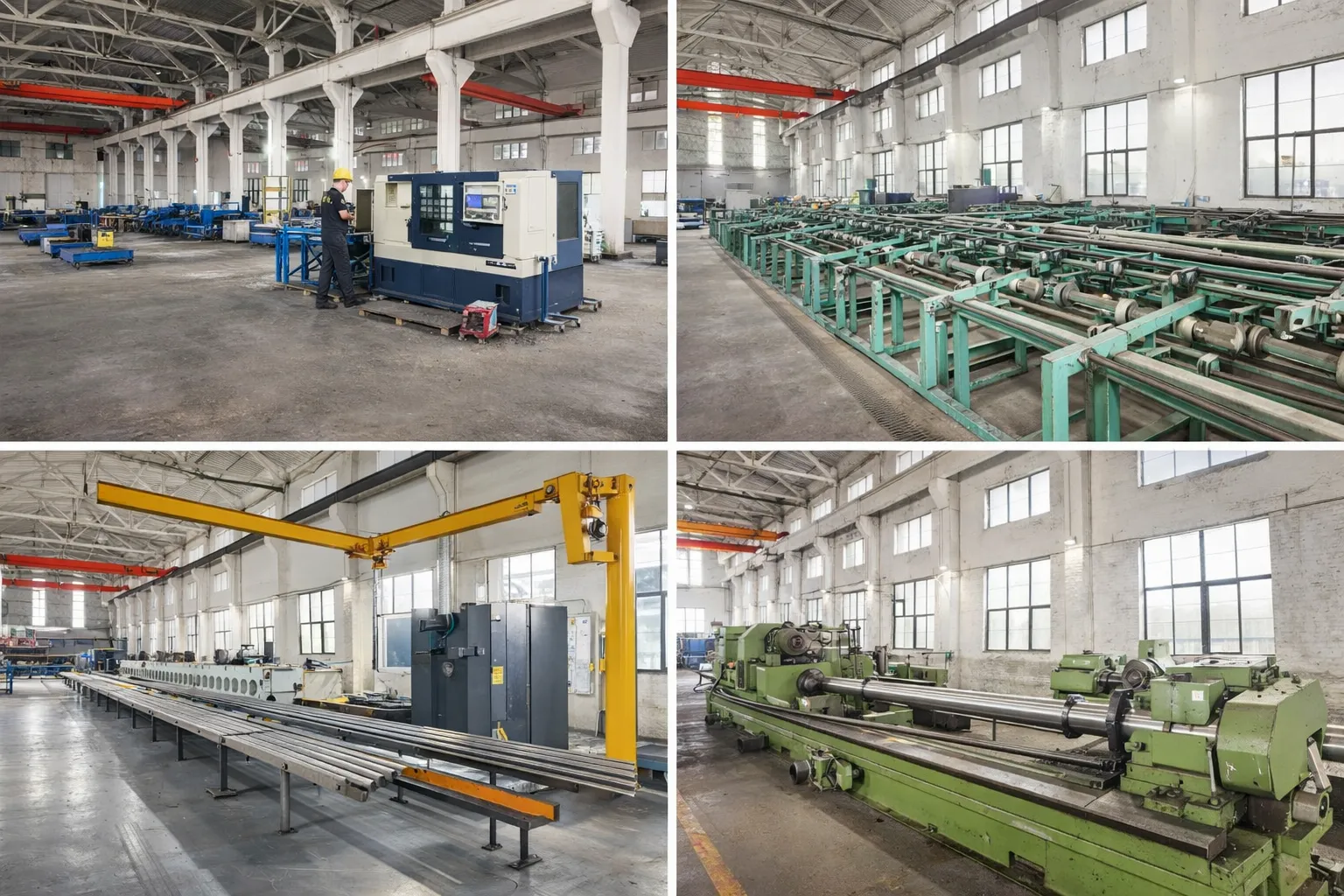
Manufacturing Excellence & Total Quality Traceability
Producing a component that directly influences public safety requires an absolute obsession with manufacturing control. As a fully vertically integrated hydraulic cylinder manufacturer, we execute every phase of production entirely in-house. This closed-loop system begins with stringent metallurgical verification. All incoming 27SiMn steel billets are subjected to ultrasonic flaw detection to confirm the structural matrix is devoid of internal voids or micro-fractures before a single tool makes a cut.
The machining of the barrel and the internal components is performed on advanced multi-axis CNC turning centers, achieving dimensional H8 bore tolerances measured in strict micrometers. To ensure the delicate wear-resistant seals are not compromised by microscopic debris, final assembly is conducted within a climate-controlled, positive-pressure cleanroom.
We do not rely on randomized batch testing. 100% of our production volume undergoes rigorous Factory Acceptance Testing (FAT). Every car door lock cylinder is subjected to a hydrostatic high-pressure hold test, locking the cylinder at 150% of its maximum operational pressure to verify absolute zero volumetric leakage. Finally, a unique permanent serial number is laser-engraved onto the housing. This provides transit clients with complete backward traceability, linking the physical component to its specific metallurgical heat reports and final dynamometer test data.
Cross-Industry Functional Applications
While the sophisticated wear-resistant sealing matrix and welded 27SiMn structure are natively optimized for the frequent action of metro door systems, the fundamental engineering principles—namely its absolute immunity to leakage and extreme high-frequency endurance—make these compact hydraulic rams highly valuable across multiple rigorous industrial sectors.
- High-Speed Rail & Urban Metro: Functioning as the primary mechanical locking fail-safe on automated passenger carriage doors.
- Heavy Earthmoving Machinery: The vibration-resistant welded construction is ideal for the construction machinery industry, acting as highly durable pilot controls or acting in parallel with a massive lift cylinder to secure heavy cab doors and quick-couplers.
- Metallurgy & Iron Manufacturing: We provide specialized high-temperature variants to the metallurgical and iron industry, managing automated blast gates on continuous casting lines where radiant heat destroys ordinary commercial actuators.
- Automated Material Handling: Serving as ultra-fast sorting mechanisms on logistics conveyor lines requiring millions of flawless mechanical shifts per year.
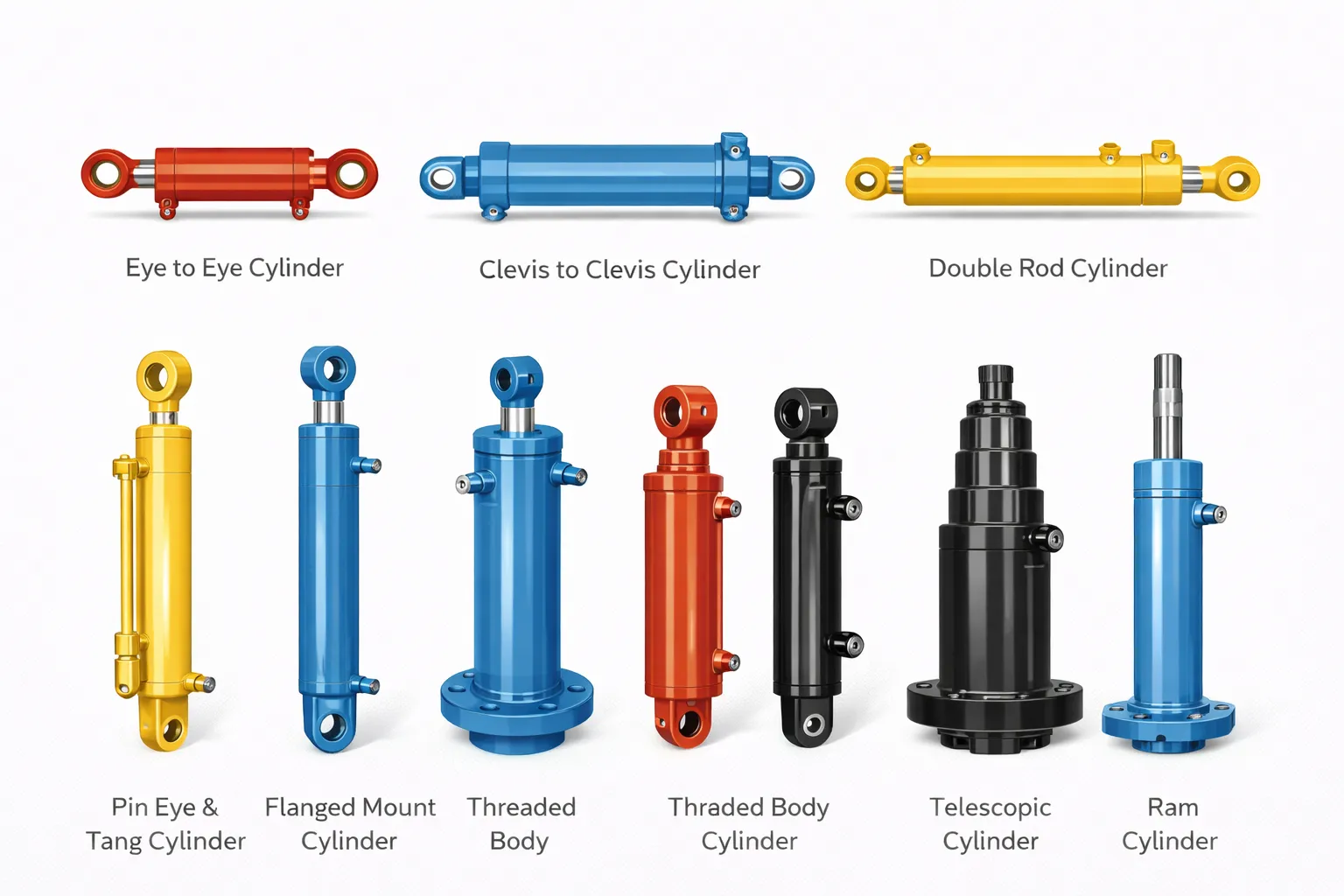
Comparative Analysis: Standard Actuators vs. Engineered Locking Actuators
For procurement officers evaluating long-term fleet maintenance budgets, distinguishing between generic off-the-shelf fluid power components and purpose-built rail mechanisms is essential. The comparative matrix below outlines the profound technical disparities that dictate operational uptime.
| Operational Metric | Generic Commercial Cylinder | Our Car Door Lock Hydraulic Cylinder |
|---|---|---|
| Sealing Integrity | Basic NBR rubber tears under high-frequency friction, causing pressure bypass and leakage. | PTFE/Polyurethane composite wear-resistant seals guarantee absolute zero-leakage holding. |
| Material Composition | Standard 1045 carbon steel; prone to radial expansion under hydraulic pressure spikes. | High-strength 27SiMn alloy steel provides exceptional rigidity, keeping the bore perfectly cylindrical. |
| Structural Assembly | Tie-rod designs stretch and violently rattle loose under continuous rail harmonics. | Monolithic automated-welded construction guarantees absolute structural stability. |
| Action Configuration | Often a rudimentary single acting hydraulic cylinder relying on a weak mechanical spring. | Fully powered double acting hydraulic cylinder ensuring forceful, instantaneous bidirectional response. |
| Maintenance Economics | High long-term costs due to continuous unscheduled downtime and messy fluid cleanup. | Exceptional ROI; multi-million cycle endurance maximizes carriage uptime for years. |
Global Engineering Success: Real Case Studies in East Asia
Theoretical specifications are only validated through relentless real-world operation. Our fluid power solutions actively protect millions of commuters daily. Below are documented deployments where transit authorities partnered with our engineering team to resolve critical door actuation failures in demanding subway environments.
Case Study 1: Eradicating High-Frequency Leakage in Seoul
Date & Location: August 2024 | Seoul, South Korea.
Client Profile: Major Municipal Rapid Transit Operator.
The Operational Challenge: A heavily trafficked urban commuter line was experiencing cascading service delays. The frequent action during the intense morning rush was destroying the standard NBR seals inside their OEM actuators, resulting in severe fluid leakage. This pressure loss caused the doors to flutter and fail to maintain door lock holding, triggering safety sensors that grounded the carriages mid-route.
The Solution Delivered: The lead fleet engineer contacted our design bureau via our technical portal looking for reliable hydraulic parts. We rapidly reverse-engineered the failing units and supplied a customized batch of car door lock hydraulic cylinder units forged from 27SiMn steel and equipped with our specialized wear-resistant PTFE sealing architecture.
The Tangible Result: Installed across 80 affected carriages, the new actuators achieved an astonishing 4 million cycles without a single micro-leak. Fleet reliability metrics returned to 99.9%, saving the operator massive downtime penalties.
“The quality of the internal bore machining and the total lack of fluid bypass fundamentally solved our door malfunction crisis. Outstanding engineering reliability.” — Mr. Park, Lead Maintenance Engineer, Seoul Depot.
Case Study 2: Supply Chain Resolution for Taipei Mass Transit
Date & Location: January 2025 | Taipei, Taiwan.
Client Profile: Metropolitan Transit Authority Overhaul Contractor.
The Operational Challenge: Facing a massive scheduled 10-year fleet overhaul, the depot was paralyzed by European OEM lead times stretching past 24 weeks, coupled with highly inflated pricing for basic structural replacement parts.
The Solution & Result: We received exact schematic data from the contractor and initiated rapid manufacturing. Within 6 weeks, we produced hundreds of 100% compatible car door lock cylinder units featuring superior welded construction. By bypassing the legacy supply chain, the transit authority completed their overhaul 2 months ahead of schedule, reducing their total hydraulic cylinder price overhead by nearly 35%.
Case Study 3: Overcoming Coastal Corrosion in Busan LRT
Date & Location: Late 2025 | Busan, South Korea.
Client Profile: Regional Coastal Light Rail Network.
The Operational Challenge: Extreme coastal humidity and high atmospheric salinity were causing the exposed aluminum and basic steel components of their legacy actuators to severely corrode. This rust acted as an abrasive, shredding the internal wiper seals and causing catastrophic lock failures.
The Solution & Result: Our engineering team facilitated a full system upgrade. The incredibly thick micro-cracked hard chrome plating on our hydraulic cylinder piston rods entirely resisted the coastal humidity. The operator reported a 90% drop in door-related maintenance calls within the first year of deployment, dramatically reducing the frequency of hydraulic cylinder repair.
Case Study 4: Depot Repair Autonomy in Daegu
Date & Location: Early 2026 | Daegu, South Korea.
Client Profile: Municipal Subway Maintenance Division.
The Operational Challenge: The depot was frustrated with “throw-away” sealed actuators from their previous supplier that could not be serviced, artificially inflating their maintenance budget.
The Solution & Result: We provided robust double acting hydraulic cylinder models featuring a highly accessible threaded gland design. Combined with our direct supply of OEM-grade seal rebuild kits, the depot staff were empowered to handle fixing hydraulic cylinders directly on their workbenches, drastically cutting lifecycle waste and turnaround times.
Expert B2B Engineering FAQ
Procuring highly specialized safety components involves strict technical validation. Below is a comprehensive compilation of the most frequent technical inquiries our engineering team receives from rail operators, procurement directors, and maintenance supervisors across East Asia.
1. Why is 27SiMn steel preferred over standard carbon steel for these applications?
2. Exactly how do wear-resistant seals prevent high-frequency leakage?
3. What guarantees the reliability of the door lock holding capability?
4. Why is a double acting mechanism necessary over a single acting return spring?
5. Can we purchase individual seal kits for depot hydraulic cylinder repair?
6. What is the typical production timeline for a customized batch bound for South Korea?
Secure Your Transit Fleet Operations Today
Do not allow persistent seal leakage and sluggish actuator performance to threaten passenger safety or disrupt your highly calibrated network timetable. Partner with a veteran fluid power engineering team that deeply understands the harsh realities of high-frequency transit automation. Whether you require a specialized functional prototype to solve a current failure crisis or are initiating a comprehensive fleet-wide door system modernization program, our engineering experts are prepared to deliver a definitive, zero-leakage car door lock cylinder solution.
Editor: Cxm