Dummy Bar Cylinder for Continuous Casting
Heavy-duty fluid power engineered specifically to survive the intense 100–300°C ambient temperatures of the upward drawing system. Eliminate thermal fatigue and ensure flawless extraction sequences on the casting deck.
Product Overview: The Backbone of the Casting Startup Sequence
The continuous casting of steel represents a highly volatile intersection of extreme heat, massive mechanical forces, and the absolute necessity for precision control. Before liquid metal can be poured from the tundish into the water-cooled copper mold to form a continuous strand, the bottom of the mold must be temporarily plugged. If it is not perfectly sealed, the initial surge of liquid steel will pour straight through the machine onto the factory floor, creating a catastrophic hazard. This temporary seal is provided by a heavy, segmented mechanical assembly known as the dummy bar. Managing the insertion, holding, and subsequent extraction of this massive steel chain is the sole responsibility of the upward drawing system, which is driven entirely by the heavy-duty dummy bar cylinder.
Operating directly adjacent to the newly formed, red-hot steel strand, these mechanical actuators are subjected to an incredibly hostile working environment. Once the casting sequence begins and the dummy bar starts its descent, the ambient temperature surrounding the machinery rapidly escalates, sustaining anywhere between 100°C and 300°C. When a generic industrial actuator is placed in this zone, it experiences immediate and severe thermal fatigue. Standard elastomeric components simply bake, harden, and crack, leading to a sudden loss of holding pressure. As a dedicated industrial hydraulic cylinder manufacturer with deep roots in heavy metallurgy, we recognized this severe vulnerability on the casting floor and chose to engineer a radically different, thermally stable solution.
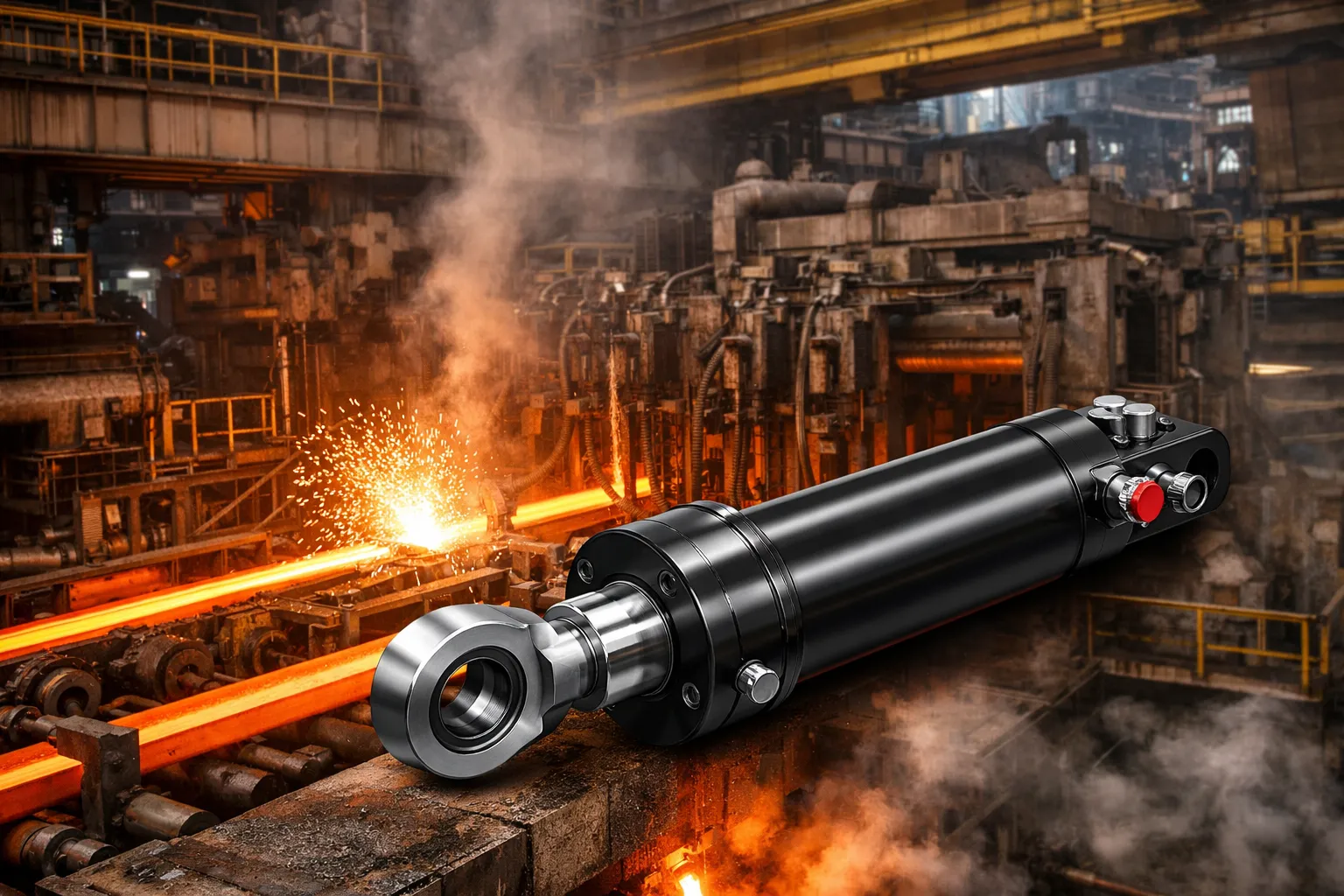
Our specialized dummy bar hydraulic cylinder is built entirely around surviving this thermal onslaught. We abandoned standard commercial materials in favor of high-strength structural alloys and aerospace-grade sealing matrices capable of shrugging off severe radiant heat. By ensuring that the fluid power remains absolute and uninterrupted during the critical extraction phase, we actively protect the fragile, unsolidified steel shell from tearing. Plant managers who integrate our custom equipment find that the initial hydraulic cylinder price is quickly offset by the complete elimination of unscheduled downtime and the prevention of highly destructive liquid steel breakouts, securing the operational integrity of the entire steelmaking facility.
Comprehensive Technical Parameters & Specifications
Because continuous casting machines are massive, bespoke structures tailored to the specific output requirements of the steel mill, fluid power components cannot be supplied as generic off-the-shelf items. We maintain a highly adaptable engineering matrix to ensure our actuators drop perfectly into your existing upward drawing system framework. The technical table below details the robust foundational specifications, structural materials, and extreme environmental tolerances that strictly define our metallurgical equipment.
| Engineering Parameter | Specification Details & Customization Range |
|---|---|
| Primary Target Industry | Metallurgical Manufacturing, Iron and Steel Processing |
| Target Equipment Category | Continuous Casting Machine (Slab, Bloom, Billet Casters) |
| Specific Subsystem Application | Upward Drawing System / Dummy Bar Hoist Mechanism |
| Component Designation | Dummy bar cylinder |
| Mechanical Action Mode | Double acting hydraulic cylinder for precise bi-directional powered control |
| Internal Structural Type | Heavy-Duty Piston Cylinder |
| Manufacturing Method | Automated Deep-Penetration Welded Assembly |
| Primary Material System | Q345D Low-Alloy Structural Steel (Superior high-heat impact toughness) |
| Piston Rod Surface Treatment | Micro-cracked Hard Chrome Plating (Thickness > 0.05mm, HV850+) |
| Environmental Operation Grade | Extreme Radiant Heat (100–300°C ambient), High Metallic Dust Exposure |
| Working Condition Characteristics | Intermittent heavy lifting, solid holding, and precise dummy bar drawing |
| Targeted Critical Failure Mode | Complete prevention of Thermal Fatigue and seal melting |
| Recommended Engineering Configuration | Proprietary High-Temperature Oil Seal Assembly (Fluorocarbon/PTFE matrix) |
Fluid Dynamics & Mechanical Working Principle
To truly appreciate the operational superiority of our custom actuators, it is vital to dissect the exact mechanical choreography they perform during the casting process. The dummy bar is essentially a flexible spine made of heavy steel segments. Before a cast begins, this massive chain is resting in a storage rack or ramp. The upward drawing system must mobilize this chain, drive it up through the guide rollers, and push the dummy bar head securely into the bottom of the mold. Pushing a multi-ton flexible steel chain requires immense, actively guided power.
Because the system must push upward against gravity and mechanical friction, and later pull forcefully downward against the drag of the solidifying steel, utilizing a basic single acting hydraulic cylinder—which relies entirely on gravity or weak internal springs for retraction—is mechanically impossible. This sophisticated process dictates the absolute necessity of a heavy-duty double acting hydraulic cylinder. During the insertion phase, the central hydraulic power unit directs pressurized fluid into the cap end of the cylinder barrel. The fluid acts against the broad surface area of the hydraulic cylinder piston, generating the massive thrust required to extend the rod and maneuver the dummy bar into its locking position at the mold exit.
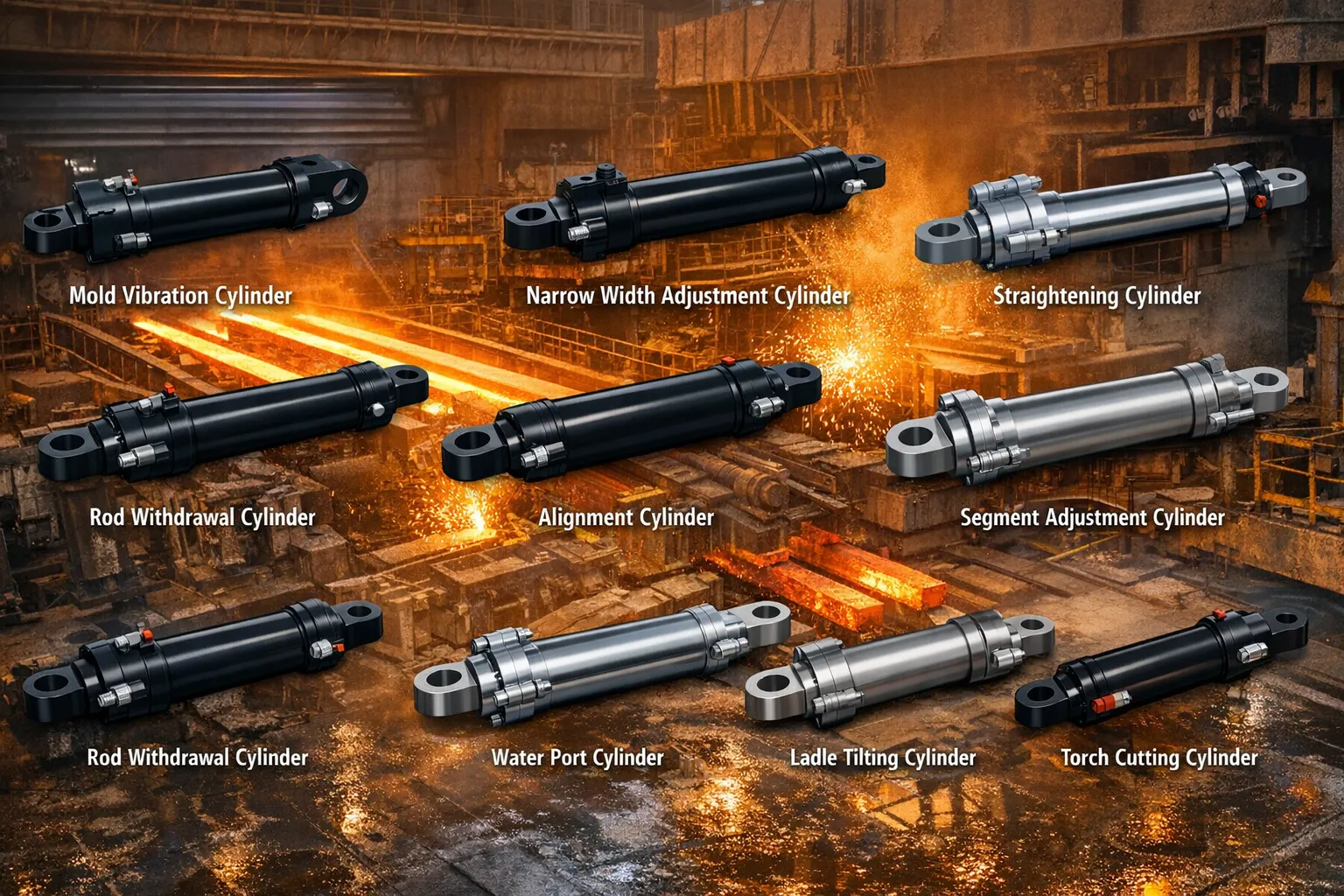
The most critical phase occurs immediately after the tundish opens. Liquid steel fills the mold and begins to freeze against the dummy bar head. The upward drawing system must now carefully reverse its action. High-pressure fluid is metered strictly into the rod end chamber. The piston begins to retract, pulling the dummy bar and the newly forming hot strand down through the machine. This drawing action must be flawlessly smooth. If the internal seals succumb to thermal fatigue from the 300°C ambient heat, fluid will bypass the piston internally. This causes the extraction speed to stutter or violently drop, tearing the thin steel shell and causing a breakout. Our precise internal CNC honing and high-temperature seals guarantee absolute fluid locking, ensuring a perfectly synchronized drawing action.
Seamless Drop-In Replacements for Legacy Machinery Brands
In the fast-paced world of heavy steel manufacturing, plant managers simply cannot afford to halt production for six months while waiting on backordered replacement parts from overseas legacy manufacturers. Furthermore, paying an exorbitant premium simply for a brand name severely damages the maintenance budget. We actively solve this global supply chain bottleneck by engineering physically identical, fully assembled hydraulic rams that serve as perfect dimensional drop-in replacements for your existing equipment.
(Note: The following mention of specific corporate machinery brands is provided strictly for engineering reference, compatibility verification, and rapid component identification by maintenance personnel. We respect all intellectual property, hold no trademark affiliation, and manufacture fully independent, aggressively upgraded hydraulic parts.)
Our engineering department routinely executes precise reverse-engineering to replace cylinders originally fitted by Danieli, SMS Group, Primetals, Bosch Rexroth, Eaton Vickers, and Parker Hannifin. We replicate the external mounting trunnions, clevis pin diameters, overall stroke lengths, and fluid port locations with absolute micrometer precision. However, while the exterior perfectly matches your technical drawings, the internal architecture is radically transformed. Your maintenance crew receives a component that bolts directly into the upward drawing system without any bracket modifications, but performs with vastly superior thermal resistance and longevity.
Five Elite Technical Advantages for the Casting Floor
The stark difference between a generic industrial actuator and a true metallurgical-grade dummy bar cylinder lies entirely in the uncompromising application of materials science. To guarantee survival in a zone defined by 300°C heat spikes and heavy falling steel scale, we deeply incorporate five fundamental technical advantages into every unit we supply.
1. High-Temperature Oil Seal Matrix
Standard Nitrile (NBR) and polyurethane seals vulcanize, harden, and crack rapidly when exposed to the 100-300°C temperatures of the drawing system. We exclusively deploy a proprietary composite matrix utilizing Fluoroelastomer (Viton/FKM) and bronze-filled PTFE. This advanced chemistry prevents thermal fatigue entirely, ensuring the seals remain highly elastic and maintain a perfect fluid barrier despite prolonged exposure to extreme radiant heat.
2. Q345D Welded Structural Integrity
The sudden mechanical shocks involved in manipulating a heavy dummy bar chain can easily deform standard carbon steel bodies over time. By manufacturing our cylinder barrels, massive trunnions, and heavy-duty end caps exclusively from Q345D low-alloy structural steel, we drastically increase the impact toughness and cyclic fatigue resistance. The automated submerged arc welding ensures flawless structural joints that will never fracture under load.
3. Extreme Anti-Scoring Chrome Plating
As the hot strand emerges from the mold, oxidized steel scale continuously flakes off, acting like airborne sandpaper. If this abrasive dust enters the cylinder, it will instantly destroy the rod seals. We apply an ultra-thick, micro-cracked hard chrome plating to the piston rod. This acts as an armored shield, retaining microscopic amounts of lubrication while the massive surface hardness physically deflects abrasive particle scoring.
4. Dynamic Thermal Clearance Engineering
Metal expands dramatically when exposed to 300°C ambient heat. If internal tolerances are engineered strictly for normal room temperature, the piston will violently bind and seize during the casting sequence. Our mechanical engineers calculate complex thermal expansion coefficients, machining dynamic internal clearances that guarantee flawlessly smooth operation specifically when the cylinder reaches peak operational heat.
5. Aggressive Heavy-Duty Wiper Systems
To supplement the heavy chrome plating, we meticulously design a highly aggressive, dual-lip metallic encased scraper ring at the rod gland. As the cylinder retracts after a dummy bar insertion sequence, this rigid scraper physically shears off bonded slag, oxidized splatter, and abrasive casting dust, preventing these deadly contaminants from migrating into the internal bearing bands and destroying the primary hydraulic cylinder components.
Autonomous Manufacturing & Uncompromising Quality Control
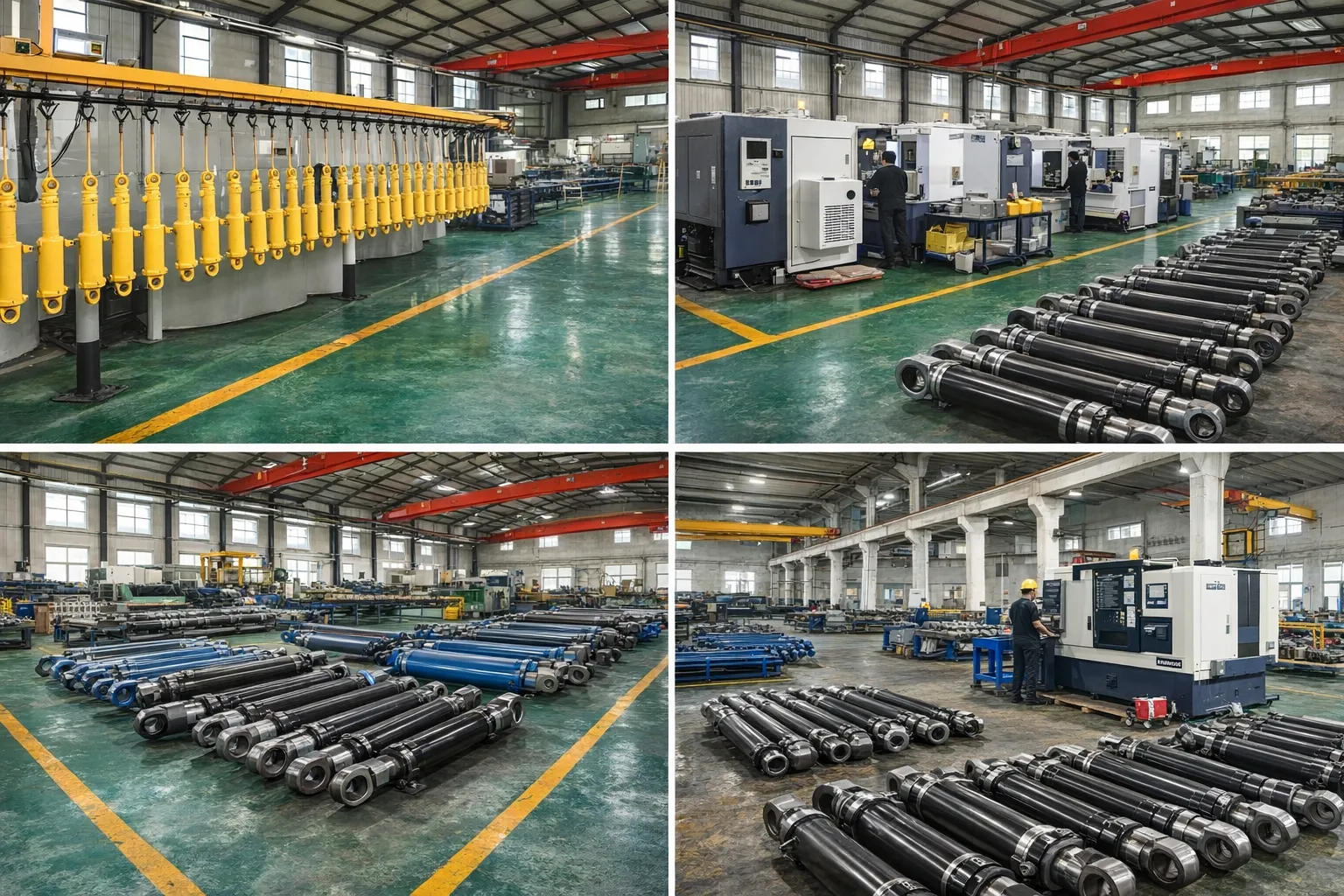
Providing the level of absolute reliability demanded by modern steel plant managers cannot be achieved through a fragmented supply chain. We operate a completely autonomous, full-process manufacturing facility. From the moment the raw Q345D steel billets arrive at our docks, they undergo rigorous ultrasonic non-destructive testing (NDT) to ensure there are zero internal metallurgical defects or voids that could compromise the cylinder’s structural integrity under extreme load.
The deep-hole boring, precise internal skiving, and roller burnishing are all executed on our heavy multi-axis CNC machinery. Following the automated welding phase, 100% of our production output is subjected to a severe factory hydrostatic pressure test. We elevate the fluid temperature and heavily pressurize the dummy bar hydraulic cylinder well beyond its continuous rated capacity, holding the pressure statically while highly sensitive digital sensors confirm absolutely zero internal fluid bypass. Only after passing this brutal assessment is the unit laser-etched with a unique serial identification code, ensuring total manufacturing traceability for the multi-decade lifespan of the component.
Expansive Heavy Industry Applications
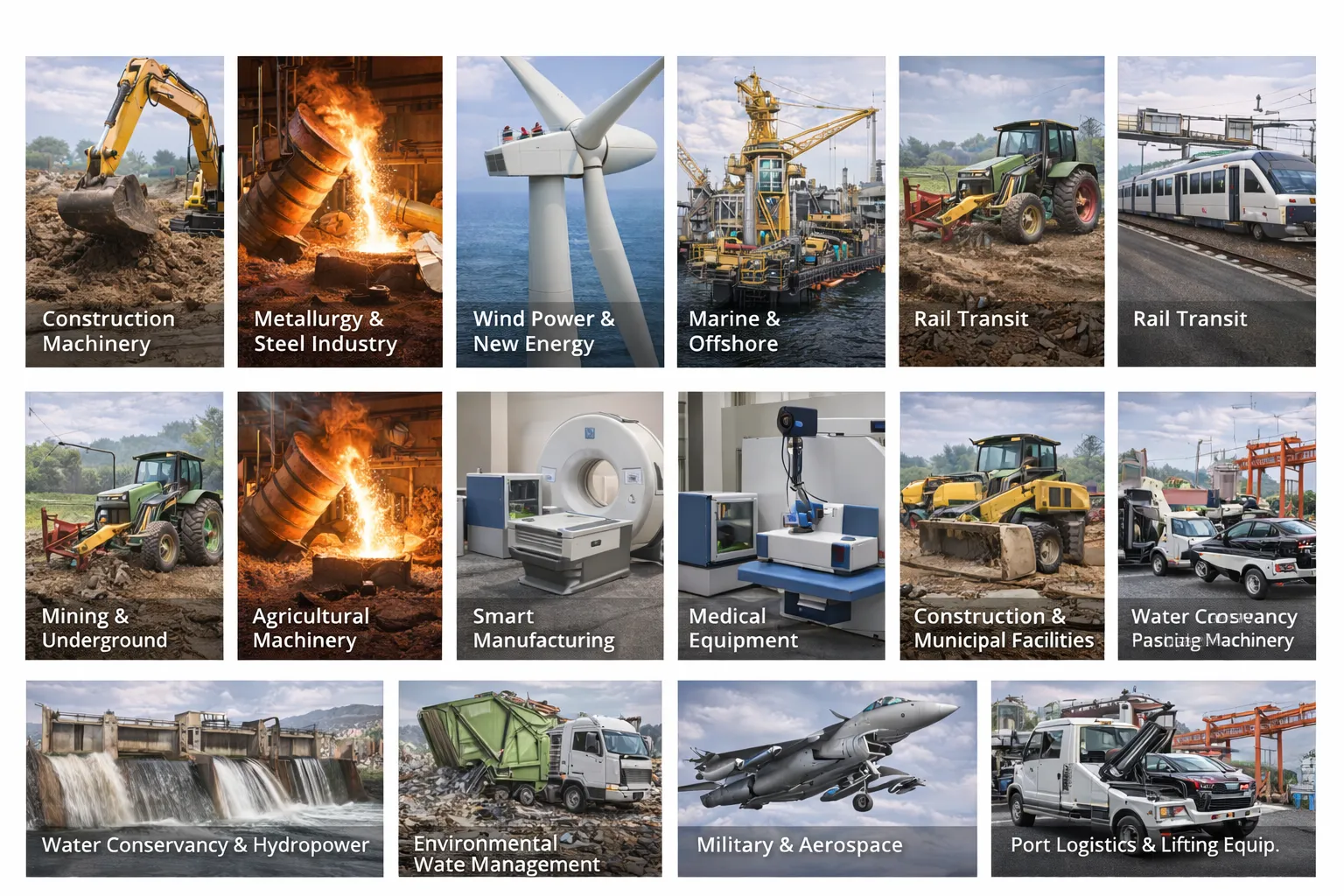
The formidable engineering principles utilized to resist extreme heat and highly abrasive dust in the upward drawing system make this architectural design incredibly versatile. These robust fluid power units are routinely deployed across various heavy industries that demand uncompromising reliability in hostile operational environments.
- Metallurgical and Heavy Iron Industry: Expanding beyond dummy bar systems, our high-temperature actuators reliably power heavy ladle turrets, electric arc furnace tilting platforms, and hot rolling mill automatic gauge control (AGC) systems.
- Mining Industry: The exact high-impact Q345D welded construction effortlessly handles the brutal impact forces of massive primary jaw crushers, tunnel boring machinery, and heavy stacker-reclaimers operating in extreme rock dust.
- Construction Machinery Industry: Heavy earthmoving excavators and large piling rigs benefit immensely from our aggressive chrome plating and scraper seal designs, which resist environmental mud, heavy rain, and corrosive soils.
- Material Handling Logistics: Colossal deep-water port cranes and automated heavy-lift transfer decks depend heavily on specialized double-acting technology resembling our robust lift cylinder designs to maintain absolute safety while moving heavy freight.
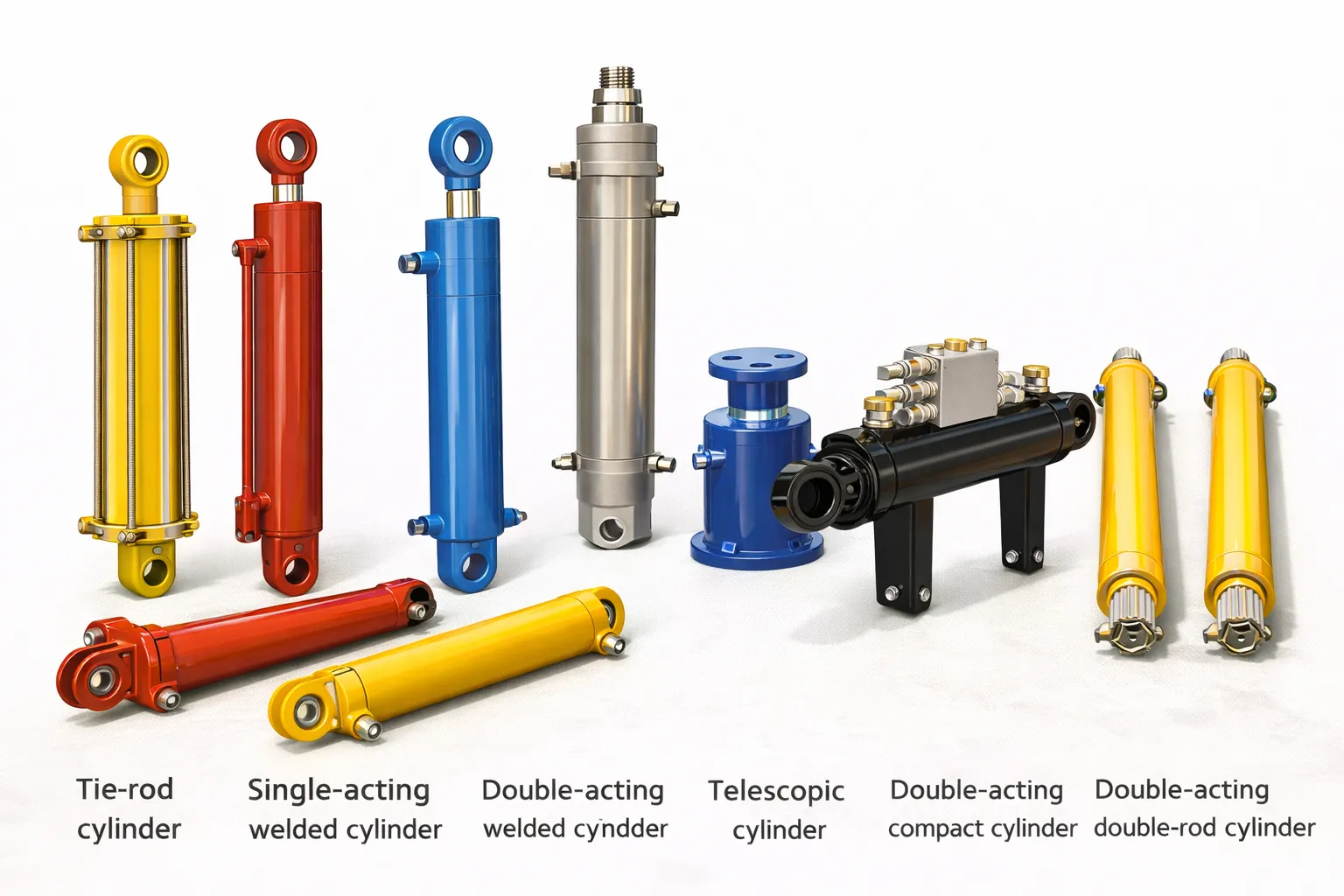
Comparative Analysis: Standard Commercial vs. Metallurgical Grade
Procuring a cheap, off-the-shelf actuator for a continuous caster is a dangerous misallocation of capital. The detailed comparative table below demonstrates exactly why our specialized metallurgical engineering significantly outperforms generic industrial alternatives, permanently transforming your equipment’s reliability baseline.
| Engineering Focus Metric | Generic Commercial Cylinder | Our Specialized Dummy Bar Cylinder |
|---|---|---|
| Thermal Tolerance Limit | Max 80°C (Standard NBR starts melting) | Excels continuously in 100–300°C radiant heat |
| Barrel Structural Alloy | Basic #45 Carbon Steel (Prone to fatigue warping) | Q345D Low-Alloy Steel (Eradicates thermal fatigue) |
| Dynamic Friction Control | High stick-slip tendency during drawing | Micro-honed, perfectly smooth sub-millimeter extraction |
| Contamination Defense | Basic polyurethane dust lip (Melts near caster) | Heavy dual-lip metallic scraper blocks steel scale |
| Maintenance Lifespan | Seal melting requires frequent 3-month teardowns | Prolonged, multi-year uninterrupted continuous casting |
Real-World Engineering Success: East Asian Case Studies
Our specialized fluid power technology is currently anchoring the massive operational outputs of leading steelmaking facilities across South Korea and the broader East Asian market. Examine these highly documented field implementations demonstrating our ability to permanently resolve critical metallurgical bottlenecks, executing complex operations and expertly fixing hydraulic cylinders.
1. Defeating Thermal Fatigue in Pohang, South Korea
Client Profile: A massive Tier-1 integrated iron and steel works facility operating multiple highly active continuous slab casters.
The Challenge: The intense 250-300°C radiant heat of the casting line was causing severe thermal fatigue in the structural barrels of their original OEM cylinders, leading to dangerous fluid sprays and highly unstable dummy bar action during critical startup phases.
Engagement: The plant’s reliability engineering director located our specialized metallurgical high-temperature components through targeted B2B industry portals in September 2024.
The Outcome: We custom-fabricated an entirely new suite of dummy bar cylinder units utilizing our highly resilient Q345D low-alloy steel architecture and deep-penetration welding protocols.
“The Q345D upgrade completely eradicated our thermal cracking problems. Since installation in late 2024, the equipment has absorbed the heavy shock loads flawlessly, resulting in zero structural failures.” — Mr. Choi K., Lead Mechanical Engineer.
2. Eradicating High-Heat Seal Failure in Gwangyang, South Korea
Client Profile: A heavy automotive plate mill operating a demanding dual-strand bloom continuous caster.
The Challenge: Standard polyurethane seals were literally melting inside the upward pulling system actuators, causing immense internal pressure drops. The heavy dummy bar would violently slip downward, destroying production schedules.
Engagement: A regional heavy-industry maintenance consultant directly recommended our proprietary sealing matrix to their procurement team.
The Outcome: Engineered units fitted explicitly with our advanced FKM/Viton high temperature oil seal matrix, establishing absolute fluid holding capability near 250°C zones.
“The thermal stability is exceptional. We monitored the holding pressure meticulously throughout early 2025, and there hasn’t been a single millimeter of slip in the storage rack.” — Kang S., Maintenance Director.
3. Conquering Abrasive Rod Scoring in Busan, South Korea
Client Profile: A rapidly expanding electric arc furnace facility casting specialized long steel products.
The Challenge: Heavy atmospheric casting powder and metallic dust bonded tightly to the hot cylinder rods. Retracting the rods dragged this aggressive scale directly past the seals, causing massive external hydraulic leaks requiring constant, highly expensive hydraulic cylinder repair.
Engagement: Engaged our technical sales engineers at a major Asian metallurgical machinery exhibition in Seoul.
The Outcome: Integrated our heavy-duty dual metallic scraper rings paired with thickened micro-cracked hard chrome plating to physically block the abrasive intrusion.
“We used to replace rods every four months. The new scrapers effortlessly shear off the bonded slag. After ten months of continuous operation, the chrome looks brand new.” — Operations Head Park.
4. Complex Factory Rebuilds in Kitakyushu, Japan
Client Profile: A premium specialty alloy steel manufacturer demanding uncompromising equipment precision.
The Challenge: Their massive legacy European OEM cylinders had catastrophically failed, and total replacement costs were astronomical with an unacceptably long lead time. They desperately needed an expert firm capable of complex reverse-engineering to overhaul their system.
Engagement: Found our dedicated factory rebuild capabilities directly through our technical web portal.
The Outcome: We air-freighted the destroyed units to our facility, comprehensively re-machined the barrels, fabricated entirely new Q345D components, installed extreme-heat seals, and shipped them back fully tested within 4 weeks.
“The rebuild quality surpasses the original manufacturer’s specifications. Their speed during our emergency crisis in mid-2025 saved us massive downtime revenue.” — Kenji Y., Plant Manager.
5. Drastic Procurement Optimization in Kaohsiung, Taiwan
Client Profile: A highly competitive regional steel billet producer focusing strongly on strict operational cost control.
The Challenge: The ongoing high hydraulic cylinder price commanded by European OEMs was severely impacting their annual maintenance budget, yet they could not sacrifice safety or reliability with cheap domestic alternatives.
Engagement: Specifically searched online for high-tier aftermarket hydraulic parts matching their exact machine footprint.
The Outcome: We delivered exact physical drop-in replacements that featured vastly superior high-temperature engineering, completely sidestepping the excessive brand premiums of the legacy manufacturers.
“The dimensional compatibility was perfect. We reduced our procurement costs by 35% while visibly extending our maintenance lifespan. A brilliantly executed engineering solution.” — Lin T., Procurement Director.
Critical Technical FAQ for B2B Procurement
When transitioning to elite, specialized metallurgical components, deep technical clarity is mandatory. Review our most frequently encountered engineering and commercial inquiries to assist your operational planning and risk mitigation.
1. What is the standard manufacturing lead time for highly specialized caster models?
2. How is the accurate hydraulic cylinder price determined for exact custom drop-ins?
3. Do you provide long-term aftermarket support and replacement hydraulic cylinder components?
4. Why does this application strictly demand a double acting hydraulic cylinder?
5. Can your facility manage total overhauls and comprehensive hydraulic cylinder repair?
6. Are your high-temperature seals chemically compatible with fire-resistant hydraulic fluids?
7. Why not just use a standard lift cylinder for the upward drawing system?
Ready to Permanently Secure Your Casting Operations?
Do not allow catastrophic thermal fatigue and melting elastomeric seals to continuously jeopardize your massive steelmaking output. Stop relying on inadequate commercial products and fiercely upgrade your continuous casting deck with true, uncompromised metallurgical reliability.
Whether you are designing a completely new plant requiring advanced hydraulic cylinder technology or you desperately need rapid drop-in replacements to replace expensive failing legacy systems, we are structurally prepared to serve you.