Yaw Brake Cylinder for Wind Turbines
Reliable yaw locking solutions built for extreme wind power environments.
Product Overview & Industrial Value
In the highly demanding sector of renewable energy generation, the structural integrity and operational efficiency of wind turbines rely heavily on precise nacelle orientation. The yaw system is the mechanical network that rotates the massive nacelle to face the wind directly, maximizing aerodynamic energy capture. Once the optimal angle is achieved, the entire structure must be securely locked in place to withstand immense shear forces, asymmetrical rotor loads, and turbulent gusts. This is precisely where the yaw brake cylinder delivers its core industrial value. Without a highly dependable, unyielding clamping force, the nacelle would experience unintended drift. This drifting leads to severe torsional stress on the tower infrastructure, accelerated wear on the yaw gearboxes, and a sharp drop in overall power generation efficiency.
As a highly experienced hydraulic cylinder manufacturer, field data consistently shows that standard fluid power actuators are entirely inadequate for the rigors of wind power applications. Wind farms, particularly offshore coastal installations in South Korea and Japan, present a uniquely hostile operating environment. Equipment is subjected to relentless high-frequency micro-vibrations, aggressive saline moisture, and massive thermal fluctuations between day and night. The most common and detrimental failure mode in these specific settings is internal leakage. Over time, constant vibration degrades standard seals, allowing hydraulic fluid to slowly bypass the hydraulic cylinder piston, which causes a gradual, dangerous loss of braking pressure.
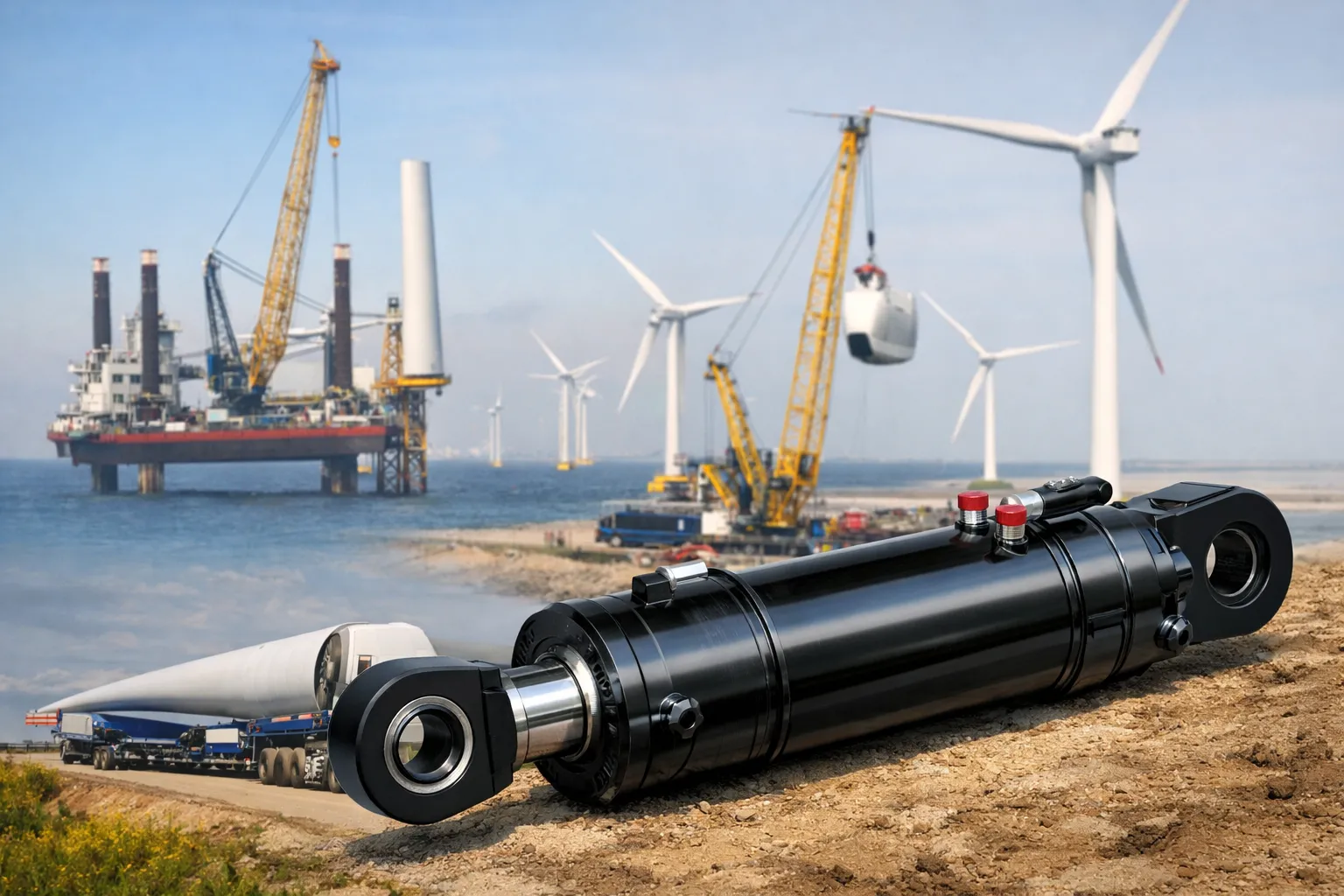
Our meticulously engineered yaw brake hydraulic cylinder eliminates this vulnerability entirely. By integrating zero-leakage pilot-operated hydraulic locks directly into the hydraulic cylinder architecture and utilizing heavy-duty anti-corrosion materials, we provide a yaw locking solution that maintains absolute holding force indefinitely, without requiring continuous operation of the main hydraulic pump. This specialized fluid power approach ensures that energy producers can drastically extend their maintenance intervals, maximizing equipment uptime, lowering the long-term hydraulic cylinder price through durability, and securing their heavy capital investments in challenging climates.
Technical Specifications & Customization Capabilities
To integrate flawlessly with various megawatt-class turbine platforms, precision engineering parameters must be strictly defined. The table below outlines the core technical specifications, material choices, and environmental ratings for our specialized yaw system components.
| Engineering Parameter | Specification Details & Range |
|---|---|
| Target Industry | Wind Power Generation |
| Equipment Category | Wind Turbine (Onshore, Offshore, Mountain Ridge) |
| Subsystem / Action | Yaw System / Precise Yaw Locking |
| Component Designation | Yaw Brake Cylinder |
| Actuation Mechanism | Double acting hydraulic cylinder |
| Structural Type | Piston Cylinder |
| Manufacturing Structure | Heavy-Duty Welded Construction (High Rigidity) |
| Core Material System | 42CrMo High-Tensile Alloy Steel |
| Surface Treatment | Dense Nickel Plated (Exceptional marine corrosion barrier) |
| Environmental Rating | Extreme Salt Spray + Continuous High-Frequency Vibration |
| Typical Failure Mode Prevented | Internal Leakage, Pressure Bleed-down, Rod Pitting |
| Recommended Configuration Highlights | Hydraulic lock + corrosion-resistant materials |
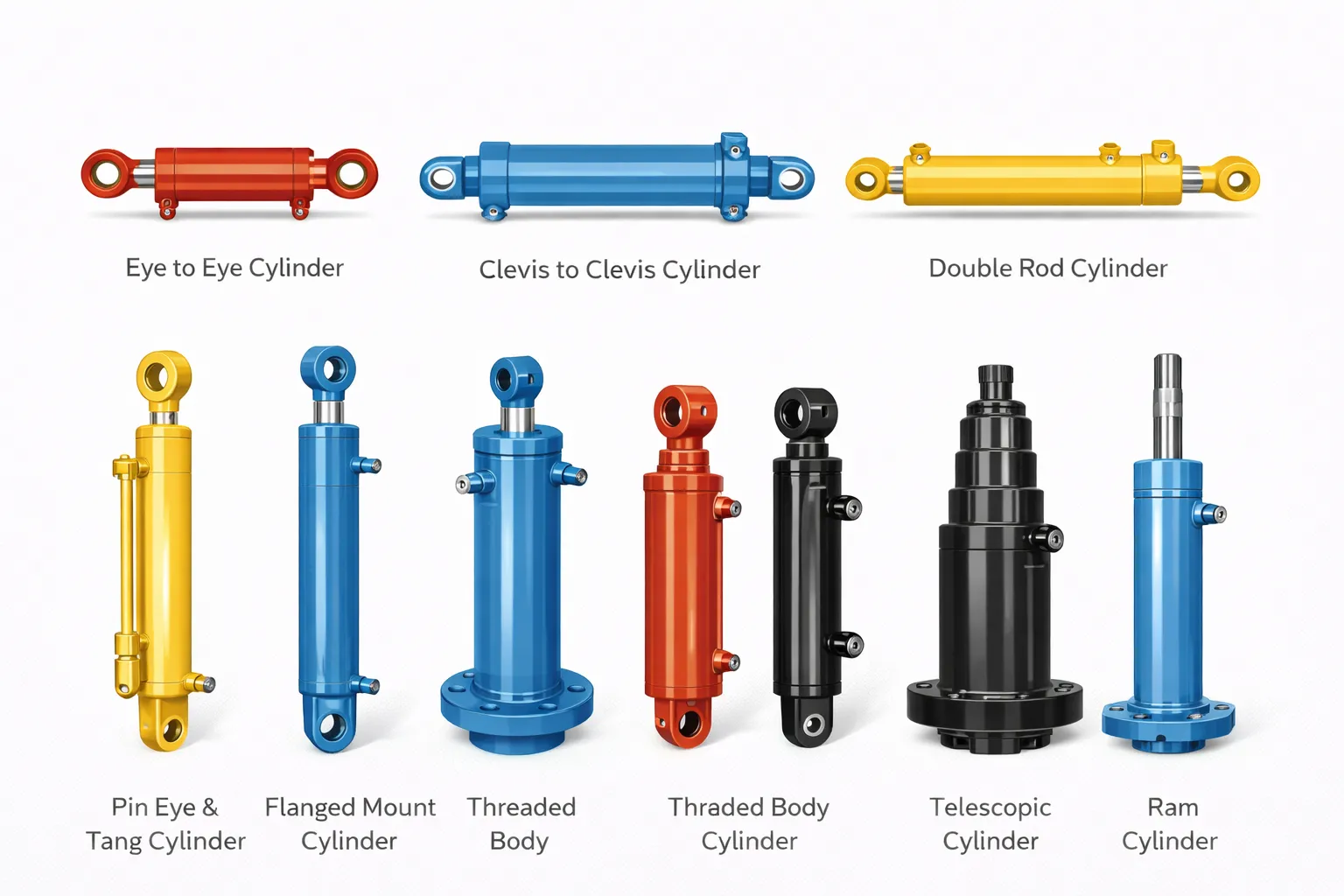
| Mounting Options | Flange mount, threaded body, customized to nacelle frame |
Operational Mechanics: How the Yaw Brake Cylinder Functions
Understanding the internal physics and working principle of this specialized component highlights why standard industrial cylinders cannot survive in a wind nacelle. The operational cycle of a yaw brake hydraulic cylinder is characterized by long periods of intense static holding, punctuated by brief moments of rapid release and re-engagement.
When the turbine’s control sensors determine that the nacelle must rotate to align with shifting winds, directional control valves actuate. Hydraulic fluid is pumped into the rod-end chamber of the double acting hydraulic cylinder, retracting the piston and pulling the heavy brake pads away from the yaw disc. This clearance allows the yaw drive motors to smoothly rotate the nacelle without frictional resistance or gear grinding.
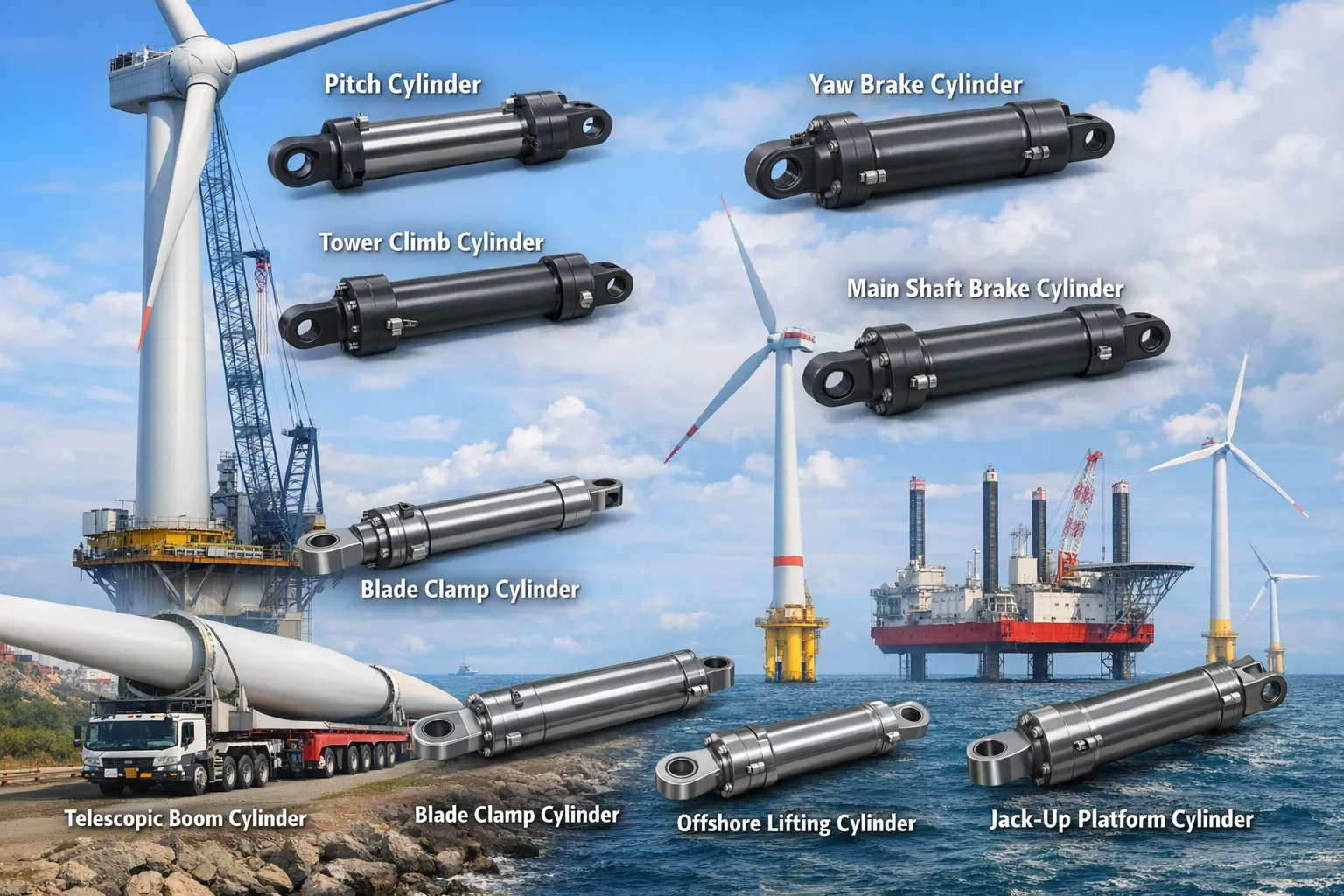
The active phase occurs once alignment is completed. High-pressure hydraulic fluid is swiftly directed into the cap-end chamber. The fluid forcefully drives the hydraulic rams forward, pressing the brake pads against the yaw ring with tremendous force. At this exact moment, the integrated hydraulic lock snaps shut. This valve mechanically traps the highly pressurized fluid inside the cylinder barrel. Even if the main hydraulic pump shuts down or power is lost, the locked fluid cannot escape back through the lines. This creates an unyielding, rigid mechanical connection that secures the nacelle against violent wind shear, ensuring absolute stability while conserving electrical power.
Flawless Equipment Compatibility & Retrofitting
Procurement managers and field engineers often face extended lead times and exorbitant costs when sourcing replacement parts directly from original equipment manufacturers (OEMs). To facilitate rapid maintenance and streamline fixing hydraulic cylinders across diverse fleets, our engineering team has meticulously mapped the dimensional tolerances, fluid port threads, and stroke lengths of major global platforms.
Our highly engineered hydraulic components are designed to serve as exact drop-in replacements for braking systems utilized in wind turbines manufactured by brands such as Vestas, Siemens Gamesa, GE Renewable Energy, Goldwind, and Enercon.
Disclaimer: The specific mention of these machinery brands is strictly intended to assist technical personnel with dimensional matching, load specification, and selection convenience. We operate as an independent, premium hydraulic cylinder manufacturer supplying advanced aftermarket solutions. We do not claim any affiliation, sponsorship, or trademark infringement with these respective corporate entities.
Five Unrivaled Core Technical Advantages
The distinction between a generic actuator and a specialized yaw brake cylinder lies in the depth of metallurgical and fluid dynamic engineering applied to its construction. Our product boasts five distinct advantages designed to eradicate premature field failures.
1. Zero Internal Leakage via Integrated Hydraulic Locking
As identified, internal leakage is a massive issue for yaw systems. By machining a precision pilot-operated check valve directly into the cylinder port block, we eliminate the need for external plumbing connections that can leak under vibration. This hydraulic lock guarantees that the clamping pressure remains completely static over long durations, ensuring the brake pads never relax their grip on the yaw disc during high-wind events.
2. High-Rigidity 42CrMo Welded Construction
Yaw braking induces massive asymmetrical and torsional shock loads. Standard tie-rod cylinders or those made from basic carbon steel easily distort, stretch, or suffer weld fatigue under these stresses. We forge our cylinder barrels and piston rods from 42CrMo, a premium chromium-molybdenum alloy steel known for its exceptional yield strength and fracture toughness. Paired with a deep-penetration welded structure, the unit acts as a rigid, indestructible monolith against wind turbulence.
3. Ultra-Low Friction Polymer Sealing Technology
Turbine nacelles are constantly subject to micro-vibrations. Standard polyurethane seals experience a “stick-slip” phenomenon under high static loads, which rapidly tears the sealing lip and causes fluid bypass. Our engineers utilize advanced PTFE (Polytetrafluoroethylene) composite step-seals energized by high-resilience elastomers. This creates an ultra-low friction environment that accommodates micro-movements without degrading the sealing barrier, drastically extending the service life of the hydraulic parts.
4. Advanced Nickel Plated Anti-Corrosion Defense
In coastal and offshore installations, standard hard chrome plating inevitably develops micro-cracks during thermal cycling. Highly corrosive salt spray penetrates these cracks, aggressively rusting the base steel and destroying the rod seals. We counteract this by utilizing a specialized, heavy-duty electroless nickel plating process. This deposits an amorphous, non-porous metallic barrier over the 42CrMo steel, providing incredible resistance to chloride ion attack based on extensive ASTM B117 testing, ensuring the piston rod remains mirror-smooth for decades.
5. Optimized Thermal Stability and Fatigue Life
The friction generated by the brake pads transfers immense heat to the hydraulic fluid, while winter nights can freeze the nacelle. Our yaw brake hydraulic cylinder units are designed with specific thermal expansion tolerances and utilize wide-temperature-range synthetic hydraulic fluids. Post-weld stress relief annealing ensures the metallurgical structure is highly resistant to the millions of micro-vibration fatigue cycles it will endure throughout its operational lifespan.
Autonomous Manufacturing & Stringent Quality Control
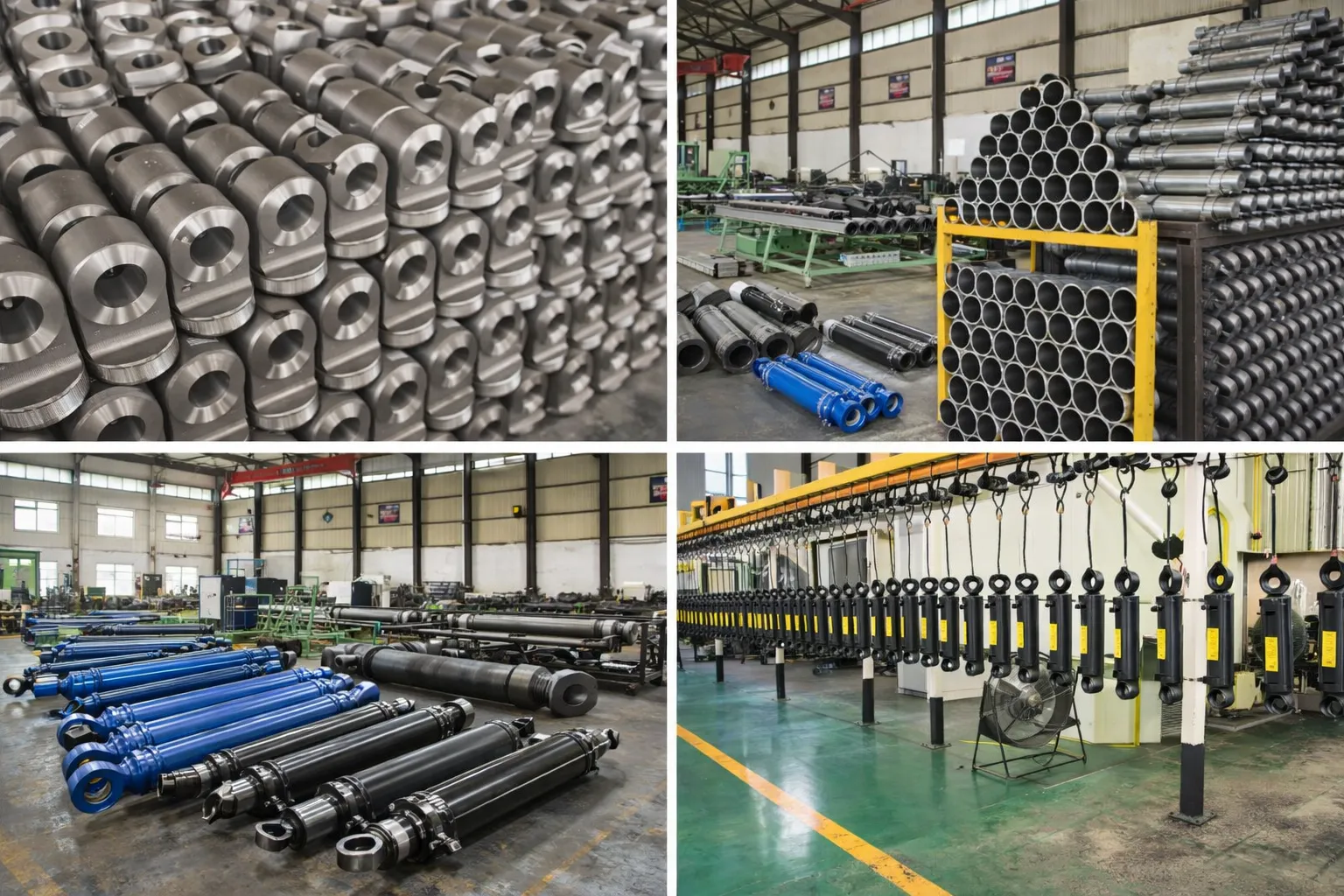
Achieving zero internal leakage requires absolute perfection on the factory floor. As an integrated fluid power manufacturer, we do not rely on outsourced sub-assemblies. The entire creation of our yaw brake cylinder—from the initial ultrasonic non-destructive testing (NDT) of raw 42CrMo billets to the final cleanroom assembly—is controlled internally under strict ISO quality management protocols.
Our multi-axis CNC turning and milling centers machine the inner diameter of the cylinder barrels to a highly refined surface finish, ensuring perfect concentricity so the ultra-low friction seals can glide without wear. Robotic welding systems are deployed to guarantee consistent, deep penetration without introducing hazardous heat-affected zone (HAZ) embrittlement.
Most importantly, 100% of our finished units undergo an exhaustive factory pressure test. Each cylinder is connected to a computerized test rig, cycled repeatedly, and subjected to holding pressures at 150% of their maximum rated working capacity. We monitor the hydraulic lock for minute pressure decay over extended periods. Only cylinders that exhibit zero pressure drop are certified, laser-engraved with a unique traceability serial number, and approved for global dispatch.
Versatile Heavy-Duty Industry Applications
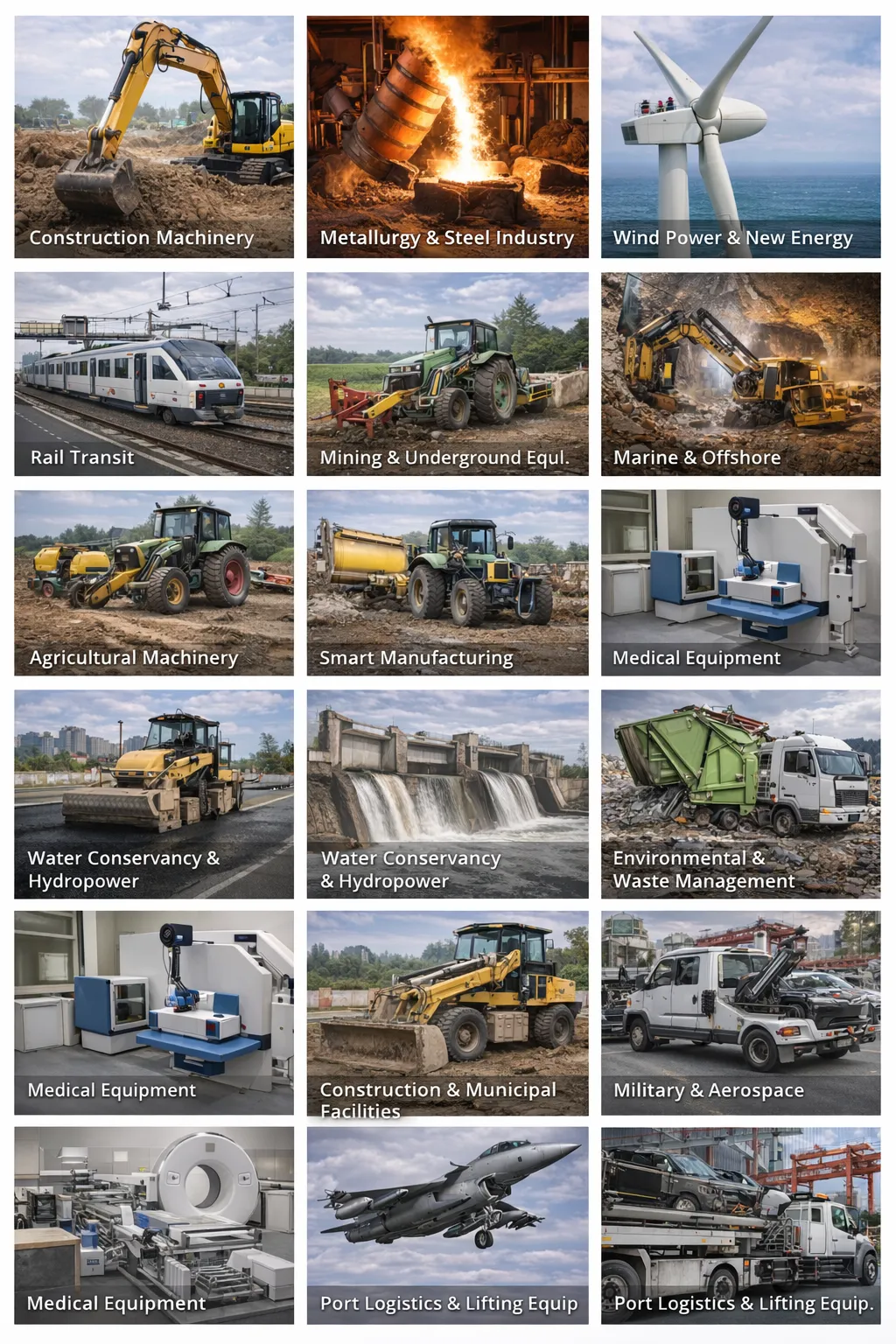
While the materials and locking mechanisms discussed are optimized for wind energy yaw systems, this exact blueprint of extreme rigidity, anti-corrosion, and pressure retention solves mechanical failures in numerous other industrial sectors. Our engineering team routinely adapts these technologies for:
- Construction Machinery Industry: Heavy-duty excavators, bridge-building cranes, and lifting equipment demand robust lift cylinder reliability to handle massive earthmoving shock loads safely.
- Metallurgical and Iron Industry: Continuous casting machines and steel rolling mills operate in extreme radiant heat environments. We utilize similar high-temperature seal adaptations and robust structures to survive these smelting conditions.
- Mining Industry: Tunnel boring machines and massive ore crushers operate amidst highly abrasive dust and violent impacts, necessitating the high-rigidity welded designs we perfect in our wind turbine products.
- Plastics & Rubber Machinery: Large-tonnage injection molding machines require absolute clamping pressure without internal bypass to prevent flash defects in molded parts, relying heavily on integrated hydraulic locks.
- Material Handling & Logistics: Heavy payload AGVs, straddle carriers, and port equipment exposed to coastal salt spray greatly benefit from our advanced single acting hydraulic cylinder and nickel-plating surface treatments.
Comparative Analysis: Standard Commercial vs. High-Performance
Procuring fluid power components based solely on the lowest initial hydraulic cylinder price is a critical error in wind farm management. The table below illustrates the stark engineering divergence between standard industrial units and our purpose-built yaw cylinders, demonstrating why our solutions drastically lower the total cost of ownership.
| Technical Attribute | Standard Ordinary Hydraulic Cylinder | Our High-Performance Yaw Cylinder |
|---|---|---|
| Base Structural Material | Standard Carbon Steel (e.g., 45#, 1045) | 42CrMo High-Strength Alloy Steel |
| Environmental Coating | Hard Chrome Plating (Susceptible to micro-cracking and rust) | Advanced Nickel Plating (Impenetrable salt spray defense) |
| Pressure Retention | Gradual pressure bleed; requires continuous pump operation | Zero internal leakage via Integrated Hydraulic Lock |
| Seal Configuration | Standard NBR / Polyurethane (Rapid stick-slip wear) | Ultra-Low Friction PTFE Composite Step-Seals |
| Vibration Tolerance | Tie-rod / Threaded designs prone to mechanical loosening | Fully Welded structure absorbs micro-vibration fatigue |
Field Proven Success: Real Case Studies in East Asia
Our fluid power solutions are actively securing critical infrastructure across the globe. By focusing on the specific engineering challenges of South Korea and surrounding nations, we have established a solid reputation. Below are five detailed implementations.
1. Offshore Wind Farm Stabilization – Jeju Island, South Korea
Client: Major South Korean Coastal Energy Consortium
Application: Retrofitting yaw brake systems on an aging 4MW offshore turbine fleet.
Contact Method: The lead engineering team initiated contact through our website, seeking a hydraulic cylinder manufacturer capable of matching exact OEM footprint dimensions while vastly improving marine durability.
Results Delivered: The highly aggressive salt spray of the Yellow Sea had severely pitted the original chrome cylinders, causing seal extrusion and internal leakage. We supplied custom 42CrMo yaw brake cylinder units featuring our dense nickel plating. Delivered in October 2024, the fleet has operated continuously through two severe typhoon seasons without a single instance of pressure loss.
“The structural upgrade was immediately apparent. The nickel-plated surface repels salt spray completely, and the hydraulic locks hold the nacelle absolutely rigid during storm gusts. It has drastically reduced our offshore maintenance voyages.” – Park M., Lead Maintenance Engineer
2. High-Altitude Mountain Ridge Project – Hokkaido, Japan
Client: Hokkaido Renewable Energy Development Corp
Application: Eliminating cold-weather hydraulic bypass in onshore turbines.
Contact Method: Technical referral from a heavy machinery consultant familiar with our advanced hydraulic parts.
Results Delivered: Extreme sub-zero winter temperatures were causing standard elastomeric seals to harden and shrink, resulting in sluggish yaw response and internal leakage that forced emergency shutdowns. We implemented wide-temperature-range PTFE seals within our robust welded cylinder designs. Actuation remains smooth and leak-free down to -35°C.
“Winter used to mean endless hydraulic errors and downtime. Their thermal-optimized cylinders solved a problem we had struggled with for three years. Outstanding engineering support.” – Kenji S., Site Operations Director
3. Typhoon Corridor Wind Park – Miaoli County, Taiwan
Client: Independent Power Producer (IPP)
Application: Replacing failing tie-rod cylinders that could not handle extreme vibration.
Contact Method: Procurement team requested a quote for high-rigidity replacements via our contact portal.
Results Delivered: The client’s original tie-rod cylinders were mechanically loosening due to the violent, high-frequency vibrations caused by turbulent mountain winds, resulting in massive fluid leaks. We delivered fully welded, heavy-wall yaw brake hydraulic cylinder assemblies. The monolithic structure absorbed the vibrations effortlessly, eliminating the mechanical failure point entirely.
“We needed brute structural strength to survive the wind shear here. Their welded 42CrMo design is incredibly robust. We achieved complete return on investment in just six months by avoiding costly crane rentals for repairs.” – Lin W., Technical Supervisor
4. New Turbine Fleet Construction – Binh Thuan, Vietnam
Client: International Wind Farm EPC Contractor
Application: Supplying units for newly constructed multi-megawatt turbines.
Contact Method: Engaged our sales engineers to compare our hydraulic cylinder price and lead times against traditional European OEMs.
Results Delivered: The contractor was facing severe project delays and budget overruns due to European supply chain issues. We provided customized double acting hydraulic cylinder units that perfectly matched the OEM specifications, delivered four weeks ahead of schedule, and at a highly competitive volume price point, keeping their construction timeline intact.
“The quality of the machining and the integration of the hydraulic locks rival any premium brand we have used in the past. They are a highly responsive manufacturing partner.” – Nguyen T., Head of Procurement
5. Specialized Maintenance Contractor – Ulsan, South Korea
Client: Third-Party Turbine Servicing & Overhaul Company
Application: Reverse-engineering obsolete cylinders for a 15-year-old legacy wind farm.
Contact Method: Shipped a failed OEM cylinder to our factory for analysis and requested guidance on fixing hydraulic cylinders that could no longer be sourced.
Results Delivered: Our engineering team rapidly mapped the internal fluid ports, mounting flanges, and stroke dimensions. Instead of merely executing a standard hydraulic cylinder repair on the heavily scored unit, we manufactured an entirely new, upgraded replacement utilizing modern ultra-low friction seals and nickel plating. The contractor successfully restored the legacy turbines to optimal operational standards.
“Finding a manufacturer willing to reverse-engineer and actually improve upon obsolete technology was a massive advantage for our service contracts. Their precision ensures perfect drop-in installations every time.” – Choi H., Managing Director
Frequently Asked Questions (FAQ)
We routinely consult with lead engineers and procurement specialists to ensure optimal component selection. Below are the most frequent inquiries regarding our yaw brake cylinder technology.
How exactly does the integrated hydraulic lock prevent nacelle drifting?
Can your cylinders serve as direct OEM replacements for brands like Vestas or GE?
Why is nickel plating superior to standard hard chrome for offshore wind farms?
Do you supply spare seal kits and support for fixing hydraulic cylinders in the field?
How do I obtain an accurate quote and what is the typical lead time?
Are your double acting cylinders 100% factory tested?
What specific steel grade do you use for the cylinder barrel?
Can your team assist with extensive hydraulic cylinder repair projects?
Secure Your Wind Farm Assets Today
Do not allow substandard fluid power components to jeopardize the efficiency and structural safety of your renewable energy infrastructure. Partner with an expert manufacturer capable of delivering engineered resilience. Whether you require bulk OEM replacements, specialized anti-corrosion upgrades, or technical consultations for upcoming projects, our engineering team is ready to deliver.
Fast technical quoting | Global B2B shipping | ISO Certified Manufacturing
Editor: Cxm