Coupler Locking Cylinder for High-Speed Trains
Advanced safety-critical fluid power actuation featuring integrated hydraulic control locks. Engineered to deliver absolute mechanical retention and zero lock failure for the most demanding rail transit networks in East Asia.
Product Overview & Safety-Critical Industrial Value
In the rapidly expanding and heavily utilized rail transit networks of South Korea and neighboring East Asian infrastructure hubs, ensuring absolute passenger safety is the fundamental baseline of all engineering operations. As regional transit authorities push commuter rail and bullet train fleets to higher operational velocities, the mechanical demands placed on bogie and carriage connection components become exponentially more severe. The Coupler Locking Cylinder serves as the definitive mechanical core of this critical safety junction. This highly specialized fluid power actuator carries the massive responsibility of driving and securing the heavy mechanical locking pin within the train’s automated coupler head. It guarantees that once passenger carriages are joined, they remain rigidly connected despite experiencing immense aerodynamic drag, continuous high-frequency track vibrations, and severe longitudinal draft forces at speeds often exceeding 300 kilometers per hour.
Unlike standard commercial fluid power actuators designed for predictable, stationary indoor machinery, a railway-grade Coupler Locking Hydraulic Cylinder operates in an intensely hostile and dynamic outdoor environment. Continuous harmonic vibrations from the railbed, abrasive metallic brake dust, freezing winter moisture, and extreme radiant thermal energy constantly assault the undercarriage equipment. Generic pneumatic setups or low-grade fluid actuators inevitably succumb to the most dangerous failure mode in this specific rail application: catastrophic fluid leakage and the subsequent sudden drop in locking pressure. This loss of holding force can cause the coupler lock to vibrate loose, leading to an unintended and highly dangerous carriage separation event on the main line.
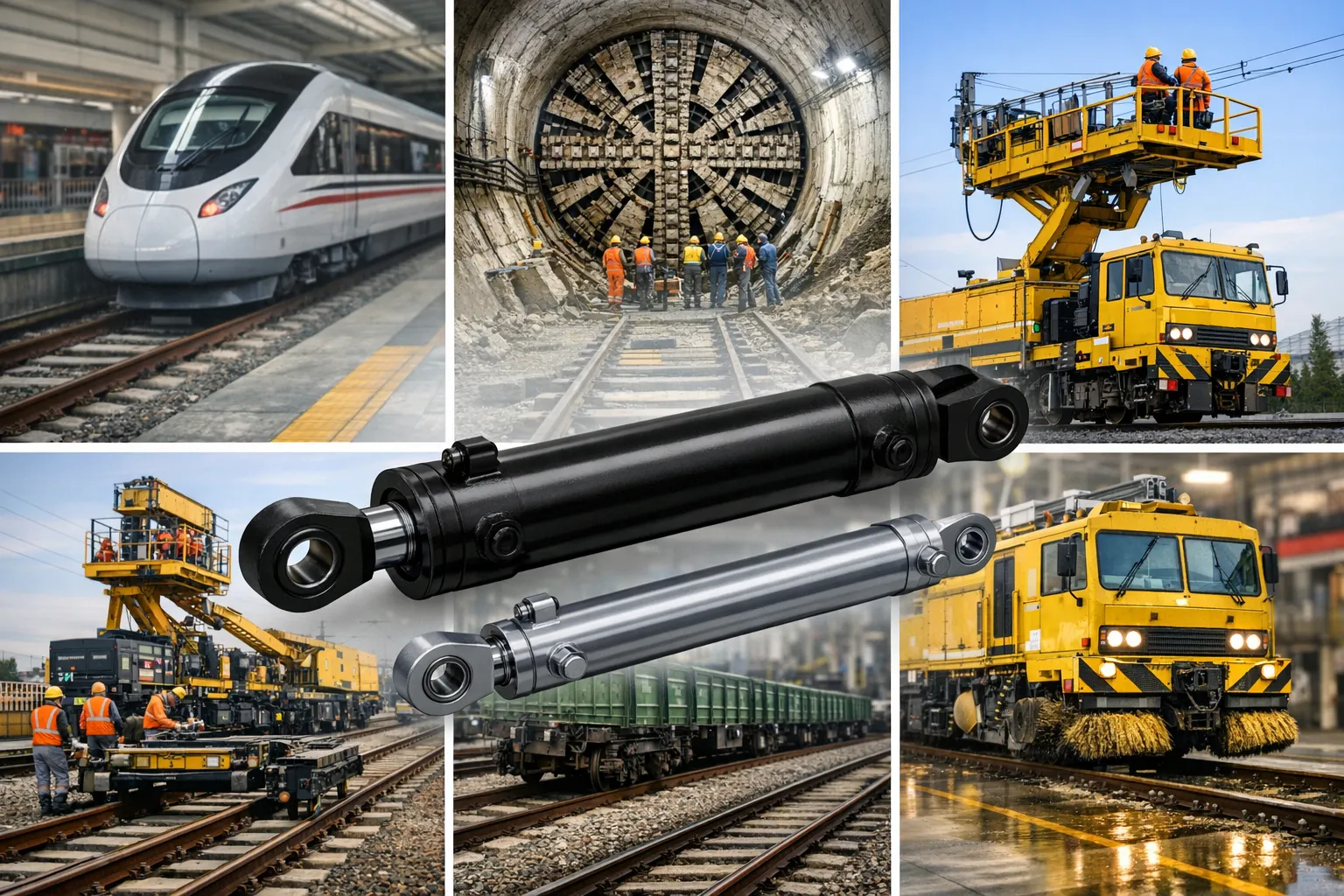
As a globally recognized and dedicated hydraulic cylinder manufacturer, our engineering foundation relies on bridging the gap between heavy industrial strength and fail-safe aerospace-level reliability. We have engineered our high-performance Coupler Locking Cylinder to completely eradicate the risk of pressure loss and lock failure under severe dynamic stress. By seamlessly integrating a high-strength welded alloy steel architecture with a proprietary, integrated hydraulic control lock, we deliver an actuator that guarantees flawless operation over millions of high-speed transit cycles. For procurement directors and fleet maintenance teams aiming to permanently elevate transit safety while aggressively optimizing the long-term hydraulic cylinder price through drastically extended maintenance intervals, our specialized fluid power solutions represent the ultimate engineering choice.
Technical Parameters & Customization Envelope
To ensure seamless mechanical integration into modern rolling stock coupler heads and bogie architectures, exact and uncompromising specifications are absolutely essential. The operational parameters of our locking actuators are heavily optimized to endure the extreme mechanical shear loads, thermal spikes, and corrosive environments characteristic of high-speed rail travel. The following table provides a comprehensive outline of our core engineering specifications for the Coupler Locking Hydraulic Cylinder. As a fully autonomous hydraulic cylinder manufacturer, we maintain the complete operational flexibility to adjust stroke lengths, mounting trunnion geometries, pin hole diameters, and fluid port threads to perfectly accommodate your unique train coupling designs.
| Engineering Category | Specification Details & Customization Range |
|---|---|
| Industry Segment | Rail Transit |
| Equipment Category | High-Speed Trains & Heavy Commuter Rail |
| Subsystem / Subsystem Action | Coupler System / Locking Coupler Mechanism |
| Cylinder Designation | Coupler Locking Cylinder |
| Action Mechanism | Double Acting Hydraulic Cylinder (Ensures positive, active hydraulic extension and retraction) |
| Structure Type | Piston Cylinder structure optimized for compact coupler head integration |
| Manufacturing Structure | Welded assembly (Vibration-proof, deep penetration monolithic design) |
| Material System | High-strength Alloy Steel forgings for maximum yield strength |
| Surface Treatment | Heavy-duty Nickel Plated running surfaces and exterior housing |
| Environmental Adaptability Level | Safety Critical (High-shock, all-weather operability from -40°C to +80°C) |
| Working Condition Feature | Locking Coupler with sustained holding force during transit |
| Typical Failure Mode Prevented | Lock Failure (Unintended decoupling and mechanical separation) |
| Recommended Internal Configuration | Hydraulic Control Lock (Pilot-operated check valve block integrated into cylinder head) |
Operational Mechanics & Advanced Fluid Dynamics
Understanding the internal fluid dynamics and physical mechanics of the Coupler Locking Cylinder clarifies exactly why ordinary industrial components fail so rapidly in railway environments. When the train’s central electronic control unit initiates a coupling sequence, electro-hydraulic proportional valves open instantly. These valves route highly pressurized, fire-resistant synthetic fluid directly into the extension chamber of the actuator. Because hydraulic fluid is functionally incompressible, this rapid influx generates an enormous hydrostatic force that pushes evenly against the full surface area of the precision-machined hydraulic cylinder piston.
This linear kinetic energy violently forces the hardened, nickel-plated alloy steel rod outward, directly driving the mechanical locking wedge or pin deep into the interlocking jaws of the coupler assembly. Once this mechanical engagement occurs, the carriages are physically joined. However, the most vital phase of the operation is maintaining that lock. Standard cylinders rely on continuous pump pressure; if a hose bursts or a pump fails, the cylinder retracts under load. Our design integrates a sophisticated hydraulic control lock directly into the cylinder head. This pilot-operated check valve allows fluid to enter, but the millisecond the directional valve closes, the check valve snaps shut, mechanically trapping the high-pressure fluid inside the cylinder. The actuator becomes a rigid, unyielding strut. Even if the entire train loses hydraulic power or the external lines are completely severed by flying track debris, the Coupler Locking Hydraulic Cylinder remains solidly extended, physically preventing lock failure.
The decoupling release phase is equally critical to depot efficiency. Our design relies exclusively on a sophisticated double acting hydraulic cylinder architecture. When the uncoupling command is electronically transmitted, pressurized fluid is intentionally routed into the rod-side retraction chamber, while a simultaneous pilot pressure signal forces the check valve open to vent the trapped fluid back to the reservoir. This active hydraulic pressure instantly and forcefully pulls the piston backward. This engineering choice is vastly superior to a single acting hydraulic cylinder that utilizes a mechanical return spring. Internal springs suffer from progressive metallurgical fatigue and cold-weather sluggishness, frequently causing the locking pin to jam. The active fluid retraction of our double-acting system guarantees absolute release in milliseconds, regardless of freezing weather or mechanical binding.
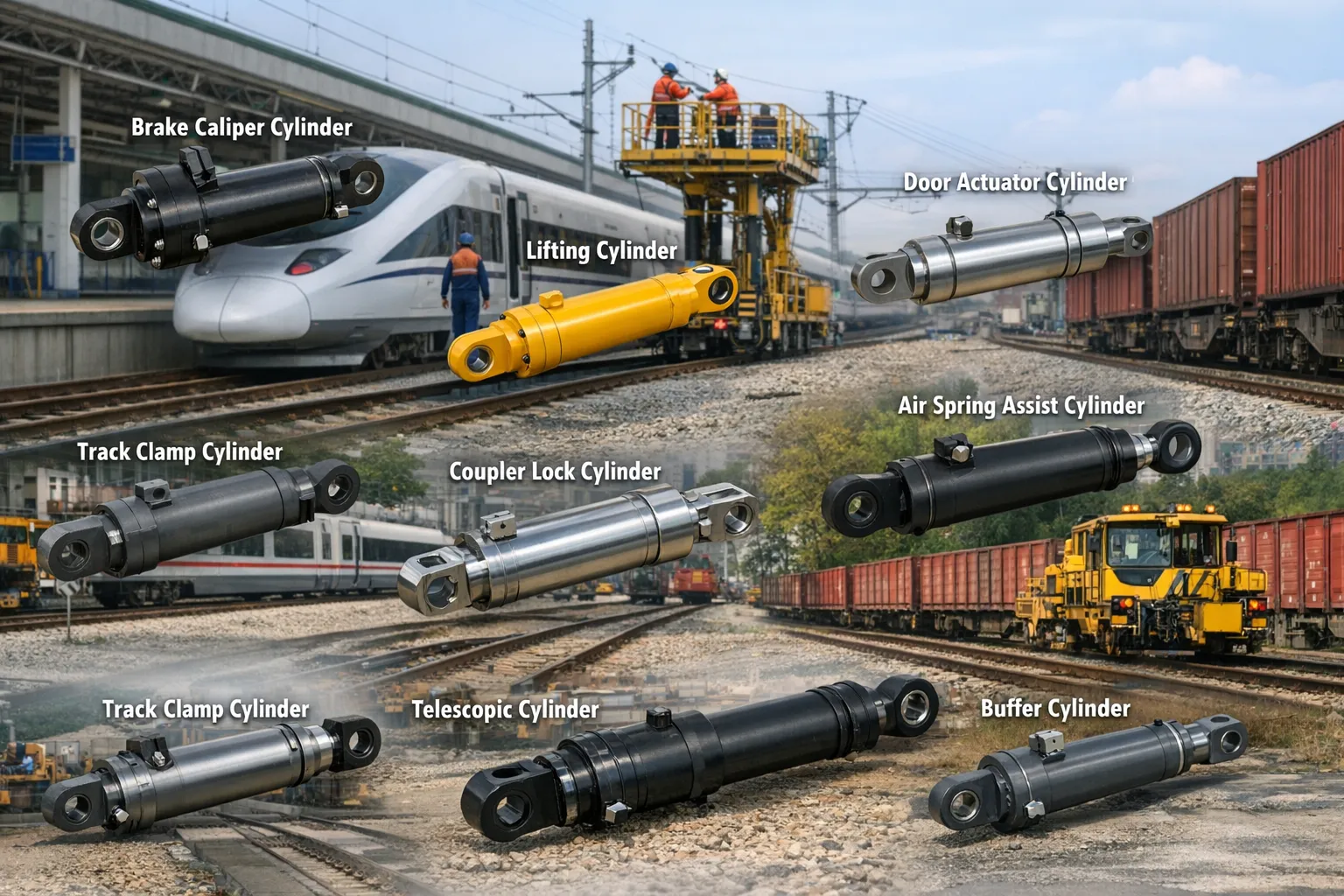
Seamless Replacement & Legacy Equipment Compatibility
Rolling stock maintenance managers and transit procurement teams frequently struggle with the logistical nightmare of sourcing specialized replacement components from legacy original equipment manufacturers located in Europe or North America. Lengthy international lead times stretching into several months, strict minimum order quantities, and excessive monopoly pricing routinely cripple depot overhaul schedules and inflate operational budgets. We specifically engineer our hydraulic parts to serve as precise, high-performance drop-in replacements, thoroughly eliminating these costly supply chain bottlenecks.
Our mechanical reverse-engineering division meticulously maps the mounting trunnions, stroke profiles, pin diameters, and fluid port threading to ensure our actuators align flawlessly with the coupler structures of major global rail brands. If your maintenance technicians are currently tasked with fixing hydraulic cylinders originally supplied by legacy coupling names such as Voith Turbo, Dellner Couplers, Scharfenberg, or Knorr-Bremse, our engineered units will fit perfectly without requiring a single structural modification or adapter plate to the train’s undercarriage. (Please note that referencing these specific corporate brands is done solely to assist depot engineers with dimensional cross-referencing and equipment compatibility identification. We operate as an independent hydraulic cylinder manufacturer and do not claim any trademark affiliation, sponsorship, or endorsement from these respective corporations.)
By systematically opting for our engineered components during your next scheduled hydraulic cylinder repair cycle, you are not simply swapping out a broken part; you are actively upgrading the operational lifespan and safety threshold of the entire coupling subsystem. You achieve unmatched reliability while securing a highly attractive hydraulic cylinder price, allowing your annual procurement budget to stretch significantly further and keep your fleet operational without exorbitant OEM markups.
Core Technical Advantages of Our Actuators
What exactly transforms a standard piece of industrial fluid power equipment into a safety-critical railway component capable of securing a high-speed train? It is the culmination of rigorous material science, advanced fluid dynamic optimization, and a zero-tolerance approach to mechanical failure. Below are the definitive technical advantages built into every Coupler Locking Cylinder we produce.
- Integrated Fail-Safe Hydraulic Lock: The primary safety feature. By machining a pilot-operated check valve directly into the cylinder head, we physically trap the hydraulic fluid. This guarantees the lock cannot fail or retract even in the event of total external hydraulic hose rupture or pump failure.
- Advanced Nickel Plated Surface Treatment: Standard hard chrome plating naturally possesses micro-cracks that allow corrosive moisture to penetrate. We apply a specialized, thick-film electroless nickel plating to the exterior housing and exposed rod. This provides an absolutely uniform, non-porous shield, offering extraordinary resistance to the corrosive salt-spray environments found in coastal rail routes and aggressive chemical washdowns.
- Heavy-Duty Welded Alloy Steel Structure: High-speed trains generate immense, relentless harmonic vibration. Traditional tie-rod cylinders inevitably shake apart under these conditions. Our cylinders utilize automated deep-penetration welding to permanently fuse high-strength alloy steel caps directly to the barrel, creating a monolithic body immune to harmonic destruction.
- Ultra-Low Friction High-Life Sealing Technology: Internal fluid seals are crafted from a proprietary PTFE and advanced polyurethane blend. This drastically reduces stick-slip friction against the honed bore, ensuring smooth, instant actuation when coupling, while completely preventing fluid bypass over millions of static holding hours.
- Exceptional Thermal Stability: Engineered to operate flawlessly across extreme temperature gradients. From the freezing, sub-zero winters of the Korean peninsula to the intense summer heat radiating off the tracks, the specially selected internal elastomers maintain their full elasticity and sealing integrity, preventing winter weeping leaks.
- Precision Composite Guide Rings: To combat slight lateral loads that can occur within the coupler housing, we integrate wide, reinforced composite guide rings inside the gland and directly on the piston. This prevents metal-to-metal contact, halting internal scoring before it can start.
- Extended Fatigue Lifespan through FEA: Through exhaustive finite element analysis (FEA), we have optimized all internal fluid port pathways, radii, and weld transitions to eliminate microscopic stress concentration points. The physical metal structure is rated to endure decades of intense pressure pulsations without succumbing to structural fatigue.
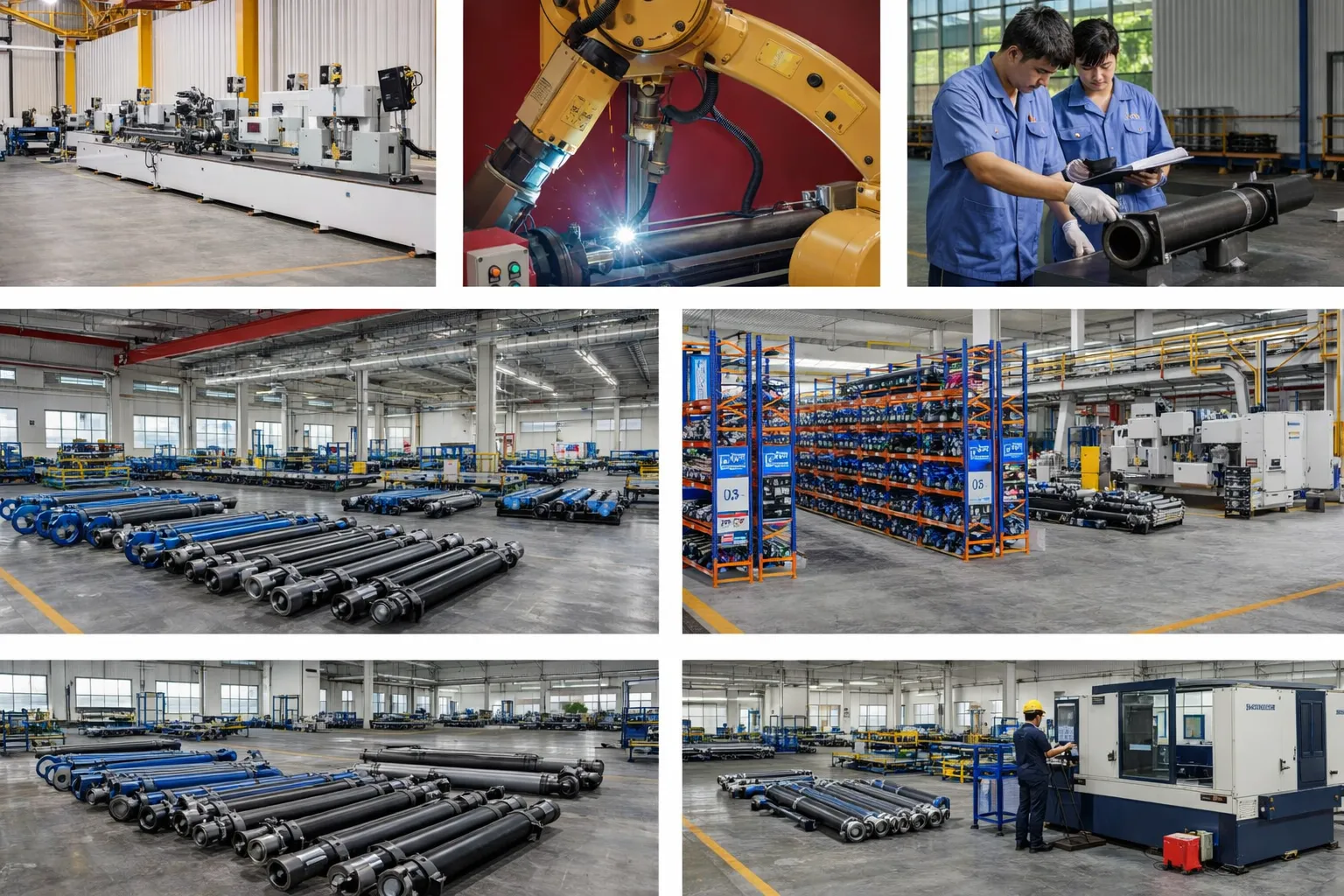
Autonomous Manufacturing & Unyielding Quality Control
The exceptional reliability of our hydraulic rams is not simply assembled; it is meticulously forged on our factory floor. As a fully autonomous and vertically integrated hydraulic cylinder manufacturer, we do not rely on third-party outsourcing for our critical load-bearing components. Raw high-strength alloy steel billets are subjected to rigorous spectrographic chemical analysis and deep ultrasonic flaw detection to ensure zero internal voids before they are permitted to enter our machining line. We utilize state-of-the-art multi-axis CNC turning and milling centers to achieve dimensional tolerances measured strictly in micrometers, ensuring perfect geometric concentricity.
To ensure the high-life seals perform flawlessly, the internal bore of every cylinder barrel undergoes deep-hole boring followed by a highly specialized skiving and roller burnishing process. This physically compresses the metal grain surface, creating an incredibly hard, mirror-like finish with a roughness average (Ra) of less than 0.2µm. Assembly of all sensitive hydraulic cylinder components, including the hydraulic control locks, is conducted exclusively in positive-pressure clean rooms to prevent any airborne particulate matter from contaminating the vital hydraulic pathways.
Furthermore, our commitment to quality control is absolute. Because these are safety-critical railway components, we categorically reject random batch sampling. Every single Coupler Locking Cylinder is subjected to a 100% computerized end-of-line testing protocol. We simulate extreme dynamic locking pressures, constantly monitoring for response latency, internal fluid bypass, and the absolute holding integrity of the hydraulic lock at 150% of the maximum rated working pressure. Upon passing, each cylinder is laser-etched with a unique serial number, guaranteeing full digital traceability linking the final product back to its original steel heat codes and pressure test graphs.
Expansive Cross-Industry Applications
While the specific engineering model detailed here is heavily calibrated for the high-speed rail transit sector, the core fluid power principle of delivering massive, fail-safe, zero-leakage holding force holds immense practical value across a wide variety of demanding heavy industrial landscapes.
For example, the unyielding structural integrity and fail-safe locking mechanisms developed for train couplers are highly sought after in the construction machinery industry. Heavy earth-moving excavators rely on this exact level of durability in their primary boom and heavy-duty lift cylinder mechanisms to ensure safe, continuous operation without the risk of boom drop if a hose bursts. Similarly, the extreme thermal tolerance and leak-free reliability of our welded designs translate directly into superior performance for the metallurgical and iron industry, where massive clamping cylinders must securely hold red-hot steel slabs in alignment despite intense radiant heat. We also engineer heavy-duty bespoke cylinders with heavy nickel plating for the marine and offshore sector, proving our corrosion-resistant sealing technology against the harshest ocean environments.
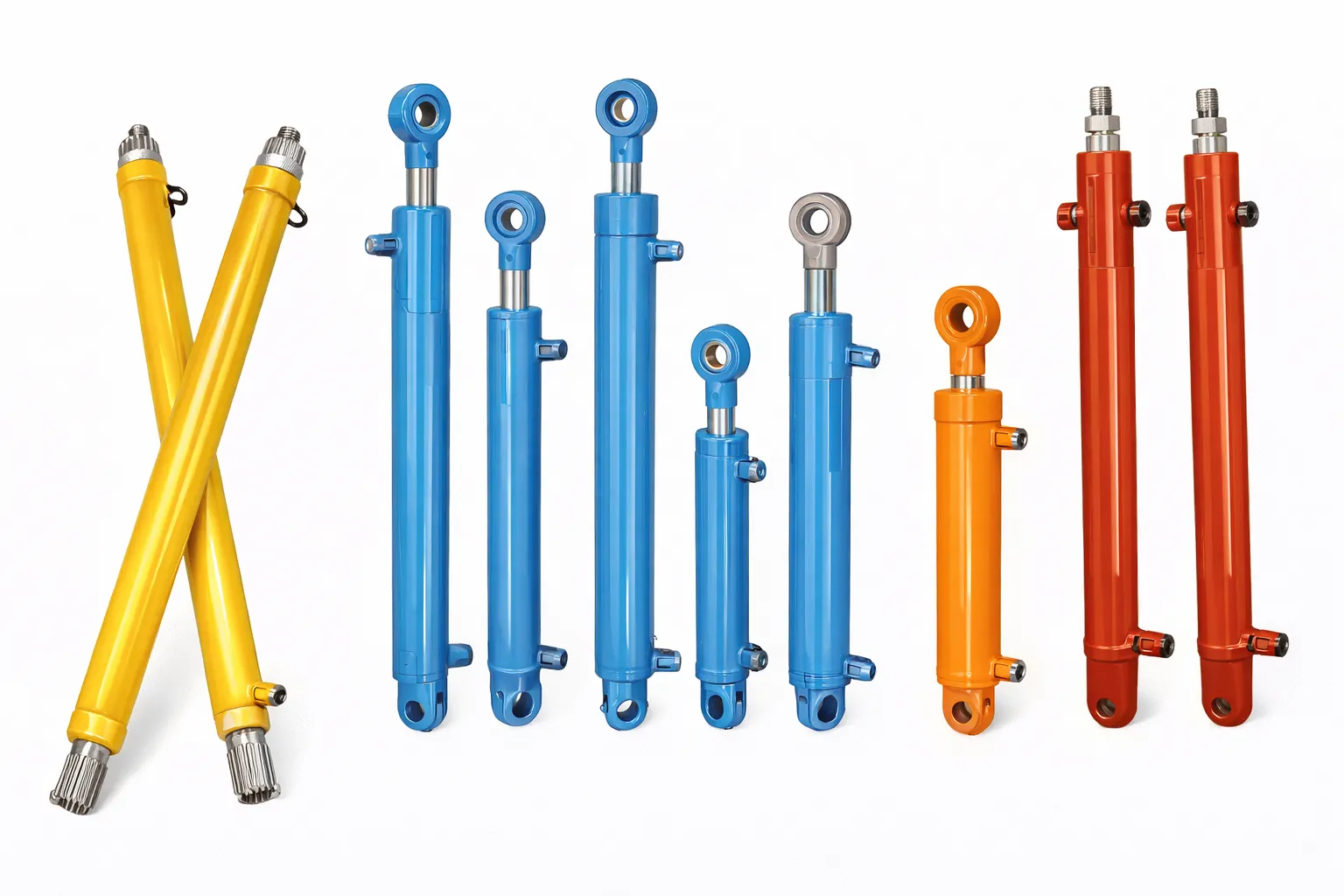
Comparative Analysis: Standard Cylinder vs. Our High-Performance Locking Cylinder
To clearly illustrate the exceptional value proposition of our specialized engineering, the following table directly compares standard off-the-shelf industrial cylinders with our customized high-speed rail coupling components. These differences heavily impact both the total cost of ownership and absolute passenger safety.
| Performance Metric | Standard Commercial Hydraulic Cylinder | Our High-Performance Locking Cylinder |
|---|---|---|
| Pressure Holding (Fail-Safe) | Relies entirely on external pump pressure. Retracts instantly if the main hose is cut. | Integrated Hydraulic Lock completely traps fluid. Mechanically secure even during total power loss. |
| Corrosion Resistance | Standard thin hard chrome. Micro-cracks allow rapid pitting and rust in rail environments. | Heavy-duty Nickel Plated treatment. Non-porous, providing exceptional resistance to track salt and grime. |
| Structural Rigidity | Tie-rod assembly; vibration frequently causes the caps to stretch and rattle loose. | Automated deep-penetration welded alloy steel; monolithic unyielding strength against vibration. |
| Sealing Technology (Winter) | Standard NBR O-rings; harden and shrink in freezing winter temperatures causing bypass. | Advanced low-friction wide-temperature PTFE matrix. Zero leakage down to -40 Celsius. |
| Total Cost of Ownership | High. Requires frequent train downtime for resealing and constant depot repair. | Very Low. Extreme Mean Time Between Failures (MTBF) yields outstanding long-term ROI. |
Proven Field Performance: Real-World Case Studies
Rigorous engineering specifications on paper must always be validated by flawless execution in the field. Our fluid power solutions are actively trusted by leading railway authorities and rolling stock maintenance contractors across Asia. Here are specific implementations demonstrating our success in resolving critical operational challenges for our B2B clients.
Case Study 1: Resolving Winter Freezing Lock Failures on KTX High-Speed Fleets
Location & Client: National High-Speed Rail Maintenance Division, Seoul, South Korea (October 2024).
The Challenge: The operator’s high-speed KTX train fleet was suffering from dangerous pressure drops in their coupler locking systems. The original OEM seals were shrinking and hardening drastically during the severe freezing temperatures of the Korean winter, causing fluid weeping. The procurement lead executed an extensive search for a specialized hydraulic cylinder manufacturer capable of engineering a robust cold-weather solution.
Our Solution & Result: We rapidly engineered a customized batch of 250 double acting hydraulic cylinder units incorporating our specialized low-temperature resilient seal matrix and calibrated hydraulic lock blocks. Following a rigorous field trial, the units exhibited absolutely zero external leakage and zero pressure drop over a full year of intensive winter operation, entirely eliminating lock drift.
“The transition to these new cylinders was flawless. Their deep understanding of cold-weather tribology is clearly evident. The locks hold perfectly, and we have achieved a 35% reduction in our annual hydraulic maintenance budget. A truly impressive display of rapid engineering.” — Park Jun-ho, Lead Procurement Engineer.
Case Study 2: Extending MTBF for High-Frequency Commuter Metros
Location & Client: Regional Commuter Metro Authority, Osaka, Japan (April 2025).
The Challenge: Commuter trains face fundamentally different challenges than bullet trains—they couple and decouple multiple times a day to adjust train lengths for rush hour. This exceedingly high-frequency actuation was severely destroying the internal components of their standard tie-rod cylinders within just 12 months, causing sluggish uncoupling that disrupted the tightly controlled transit schedule.
Our Solution & Result: We supplied units featuring our heavy-duty monolithic welded structure combined with wide composite guide rings. This completely prevented internal lateral wear caused by the frequent locking pin engagement. The operational lifespan of the coupler locking mechanism was successfully extended to over 48 months, effectively quadrupling the Mean Time Between Failures (MTBF).
“Finding a manufacturer that truly understands the nuances of high-frequency friction wear is exceedingly rare. Their heavy-duty cylinders perform flawlessly under relentless commuter scheduling. We are exclusively sourcing our replacement hydraulic parts from them moving forward.” — Kenji Sato, Fleet Operations Director.
Case Study 3: Overcoming Severe Coastal Saltwater Corrosion
Location & Client: Coastal Rail Maintenance Contractor, Kaohsiung, Taiwan (January 2026).
The Challenge: Regional trains running along exposed coastal routes were subjected to constant sea-salt spray. The resulting severe corrosion was deeply pitting the standard chrome rods of their European-supplied cylinders. When these pitted rods retracted, they subsequently shredded the internal fluid seals, causing massive leaks and grounding the carriages.
Our Solution & Result: We engineered a highly customized Coupler Locking Cylinder utilizing our proprietary thick-film nickel plating for the exterior housing and the moving piston rod. Following two full years of harsh coastal deployment, the transit authorities reported zero functional corrosion, no pitting, and complete preservation of internal fluid integrity.
“Their engineers delivered exactly what they promised—a completely rust-proof, fail-safe actuation solution. The communication during the CAD design phase was stellar, and the final hydraulic cylinder price was exceptionally competitive compared to our previous suppliers.” — Lin Wei, Senior Mechanical Engineer.
Case Study 4: Overcoming OEM Supply Chain Paralysis in Singapore
Location & Client: MRT Overhaul Engineering Firm, Singapore (August 2025).
The Challenge: A major rolling stock overhaul project was paralyzed when the original European manufacturer quoted a lead time of 9 months for replacement coupling actuators, alongside a massive price hike. Facing severe contractual penalties for late delivery, the engineering firm needed a reliable alternative for hydraulic cylinder repair and rapid replacement.
Our Solution & Result: Leveraging their dimensional schematics, our reverse-engineering team rapidly mapped the required design. We forged, machined, welded, pressure-tested, and delivered a complete batch of exact-fit replacement hydraulic cylinder components in just 5 weeks, completely saving the project schedule.
“The turnaround time was nothing short of miraculous, and the geometric fit was absolutely flawless on the bogie frames. Their capability in rapidly manufacturing high-end parts is unmatched in the region. We avoided disastrous penalty fees entirely.” — David Chen, Senior Project Manager.
Frequently Asked Questions
For procurement managers, lead engineers, and transit maintenance directors tasked with upgrading their fleet systems, we have compiled comprehensive answers to the most common technical inquiries regarding our fluid power solutions and manufacturing processes.
1. What is the typical lead time for a fleet-wide replacement order of coupler locking cylinders?
2. Exactly how does the integrated hydraulic control lock operate during a total power loss?
3. Are your locking cylinders compatible with specific fire-resistant railway hydraulic fluids?
4. Why do you use a double acting cylinder configuration instead of a single acting spring return?
5. Do you offer comprehensive hydraulic cylinder repair capabilities and spare parts?
6. How do you scientifically verify the quality of the alloy steel used in production?
7. Why is Nickel Plating superior to standard Hard Chrome for this specific train component?
8. Can we purchase individual hydraulic cylinder components for our own depot repairs?
Secure the Ultimate Reliability for Your Fleet Today
Do not compromise on passenger safety or let persistent hydraulic leaks inflate your annual depot maintenance costs. Partner directly with an industry-leading manufacturer capable of delivering engineered excellence precisely tailored to your high-speed transit demands. Provide us with your technical drawings or legacy part numbers, and let us demonstrate how our fluid power solutions can elevate your operational efficiency while reducing your procurement budget.
Editor: Cxm