Dust Removal Lifting Cylinder for Coking Transfer Car
Conquer extreme thermal environments and abrasive coal particulate. Engineered with high-toughness Q345D steel and a proprietary low-leakage seal matrix to permanently eliminate dangerous hood drift in your metallurgical operations.
Equipment Overview and Industrial Strategic Value
In the highly regulated landscape of modern ironmaking, environmental compliance is indistinguishable from operational profitability. At the heart of this challenge lies the coking plant. When incandescent coke is pushed from the oven into the quenching car, it triggers a violent release of toxic gases, massive thermal updrafts, and dense clouds of abrasive carbon particulate. To capture these fugitive emissions and shield the surrounding environment, heavy metallurgical facilities rely entirely on mobile dust removal cars. These massive transit vehicles position a colossal steel extraction hood directly over the emission source. Precisely lifting this multi-ton hood for transit, and powerfully lowering it to create a tight vacuum seal, is the uncompromising responsibility of the Dust Removal Lifting Cylinder.
Attempting to utilize a standard commercial hydraulic cylinder in this application is an engineering miscalculation with severe consequences. The operational zone directly above a pushing coke oven subjects the equipment to a brutal combination of extreme radiant heat spikes and an atmosphere saturated with sharp, abrasive coke dust. Generic fluid power actuators rapidly succumb to a highly specific and dangerous failure mode: internal fluid leakage. The abrasive particulate breaches standard external rod wipers, scoring the chrome surface and dragging microscopic contaminants directly into the barrel. Simultaneously, the intense radiant heat vulcanizes standard internal elastomers, stripping away their volumetric memory. Once the internal seals degrade, highly pressurized hydraulic fluid silently bypasses the hydraulic cylinder piston. This internal bleeding causes the massive dust hood to lose holding pressure and drift downward during transit, posing a severe collision risk and leading to massive environmental regulatory fines.
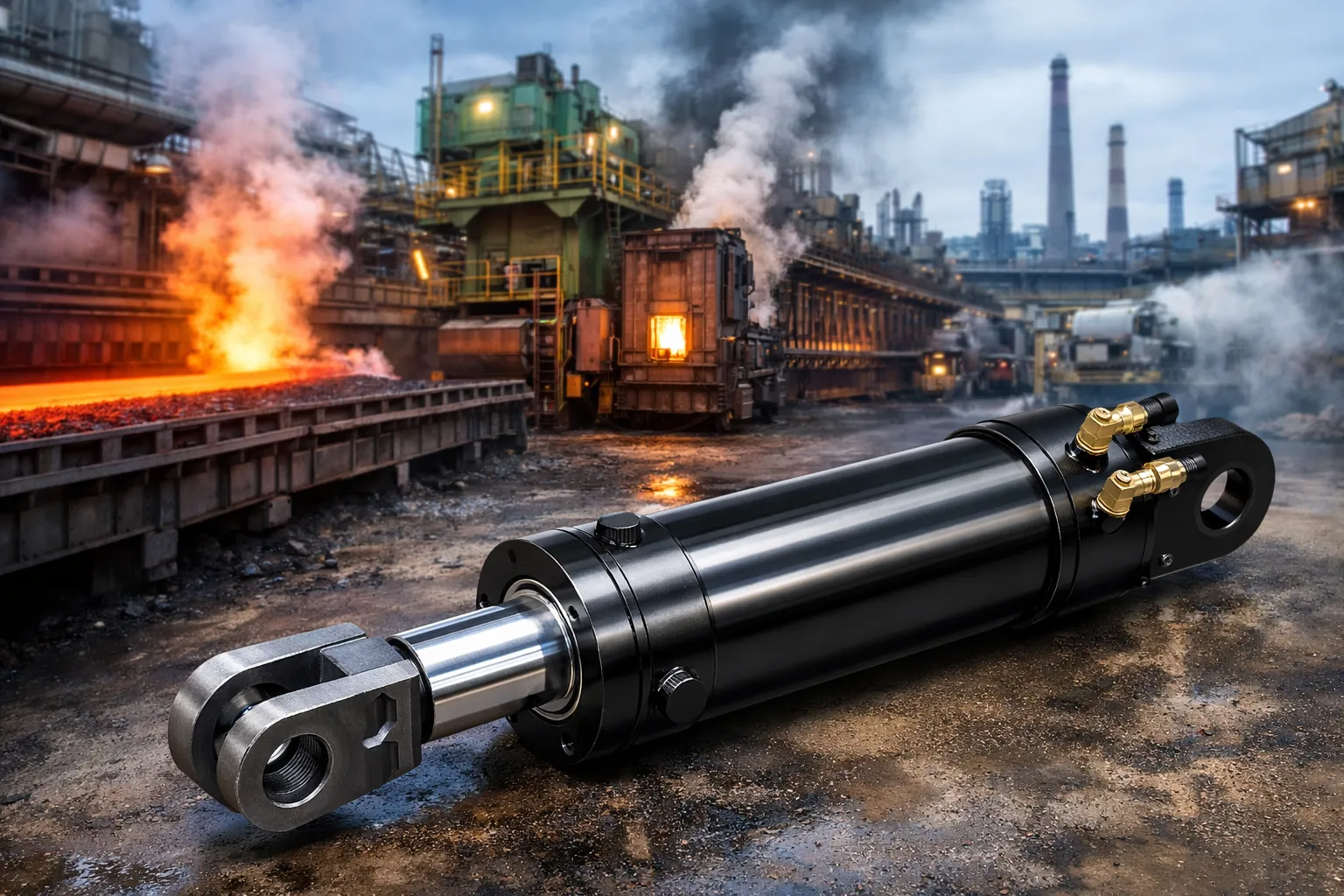
Recognizing this critical vulnerability within the metallurgical sector, our engineering team completely reimagined the fluid power architecture. As an elite hydraulic cylinder manufacturer, we engineered our specialized Dust Removal Jacking Cylinder from Q345D low-alloy structural steel, integrated with a proprietary low-leakage dynamic sealing matrix. For procurement directors analyzing the true total cost of ownership, the initial hydraulic cylinder price is mathematically insignificant when compared against the staggering financial devastation of an unscheduled environmental shutdown. By permanently eradicating internal fluid bypass and ensuring absolute positional stability, our lift cylinder maximizes your equipment’s operational lifecycle, freeing your maintenance teams from the hazardous cycle of performing emergency hydraulic cylinder repair on an active, high-heat coking deck.
Comprehensive Technical Engineering Parameters
Absolute reliability in heavy industrial applications demands rigorous transparency in mechanical specifications. The detailed data matrix below outlines the specific structural tolerances, material protocols, and customizable parameters integrated into our specialized units, engineered exclusively for the rigorous demands of the Metallurgical and Iron Industry.
| Engineering Category | Specification Detail & Architecture |
|---|---|
| Target Industry & Equipment | Metallurgy | Coking Plant | Mobile Dust Removal Car |
| Subsystem & Action | Emission Control | Dust Hood Lifting and Sealing Sequence |
| Component Designation | Dust Removal Lifting Cylinder / Dust Removal Jacking Hydraulic Cylinder |
| Kinematic Action Profile | Double acting hydraulic cylinder (Bidirectional pressurized control) |
| Internal Structure Type | Heavy-duty piston cylinder (Monolithic internal bore design) |
| Manufacturing Method | Deep-penetration welded body (Eliminates tie-rod vibration fatigue) |
| Core Material Architecture | Q345D Low-Alloy Structural Steel (Superior low-temperature impact toughness) |
| Rod Surface Defense | Thick Micro-Cracked Hard Chrome Plating (Maximum abrasive wear resistance) |
| Environmental Tolerance | Extreme Hazard: Radiant Oven Heat + Dense Corrosive Coking Dust |
| Typical Failure Mode Defeated | Internal leakage causing hazardous dust hood sag |
| Recommended Configuration | Advanced low-leakage seal matrix + Heavy-duty metallic scraper rings |
| Mounting Customization | Heavy Trunnion, Base Clevis with Spherical Plain Bearings, Front Flange |
Operational Fluid Dynamics and Mechanical Working Principle
To fully comprehend the critical reliability of this heavy industrial actuator, one must deeply analyze its fluid dynamic execution within the coking cycle. A massive steel dust containment hood cannot be safely managed by gravity returns or basic spring mechanisms. The aerodynamic forces generated by extreme thermal updrafts and the mechanical binding caused by sticky coal tar on the guide rails require absolute, unyielding kinematic control. Therefore, this system is engineered exclusively as a high-performance double acting hydraulic cylinder. This bidirectional fluid power configuration grants the dust removal car’s central programmable logic controller (PLC) the ability to exert forceful, positive hydraulic pressure during both the upward transit sequence and the downward sealing sequence.
When the mobile car prepares for transit, the central power unit injects highly pressurized fluid into the blind end (cap end) of the thick-walled Q345D steel barrel. The fundamentally incompressible nature of the hydraulic oil generates an immense hydrostatic force that is distributed evenly across the entire face of the internal hydraulic cylinder piston. This immense kinetic energy smoothly and powerfully extends the heavily chrome-plated rod, mechanically hoisting the heavy dust hood clear of the operating envelope. Crucially, once the hood reaches its maximum elevation, our specialized low-leakage sealing matrix perfectly locks the fluid volume in place. The Dust Removal Lifting Hydraulic Cylinder functions as a rigid fluid pillar, completely resisting the massive downward gravitational pull. This ensures that the heavy steel hood will not drift or sag downward by even a fraction of a millimeter while the transfer car navigates the heavy vibrations of the battery rails.
The true test of the equipment’s endurance manifests during the retraction phase. As the Dust Removal Lifting Cylinder powers the hood downward to mate with the coke guide, the extended piston rod is forced to travel through a dense cloud of highly abrasive, sticky coking particulate. As the rod retracts into the barrel, an aggressively engineered external heavy-duty metallic scraper ring immediately activates. This mechanical wiper violently shears the crusted abrasive dust and tar away from the chrome surface before it can ever cross the primary elastomeric sealing boundary. This sequential defensive action ensures that the vital internal hydraulic cylinder components remain perfectly isolated in pristine fluid, entirely circumventing the abrasive rod scoring that inevitably ruins standard commercial actuators and frequently demands extensive hydraulic cylinder repair.
Seamless Dimensional Integration and Global OEM Replacement
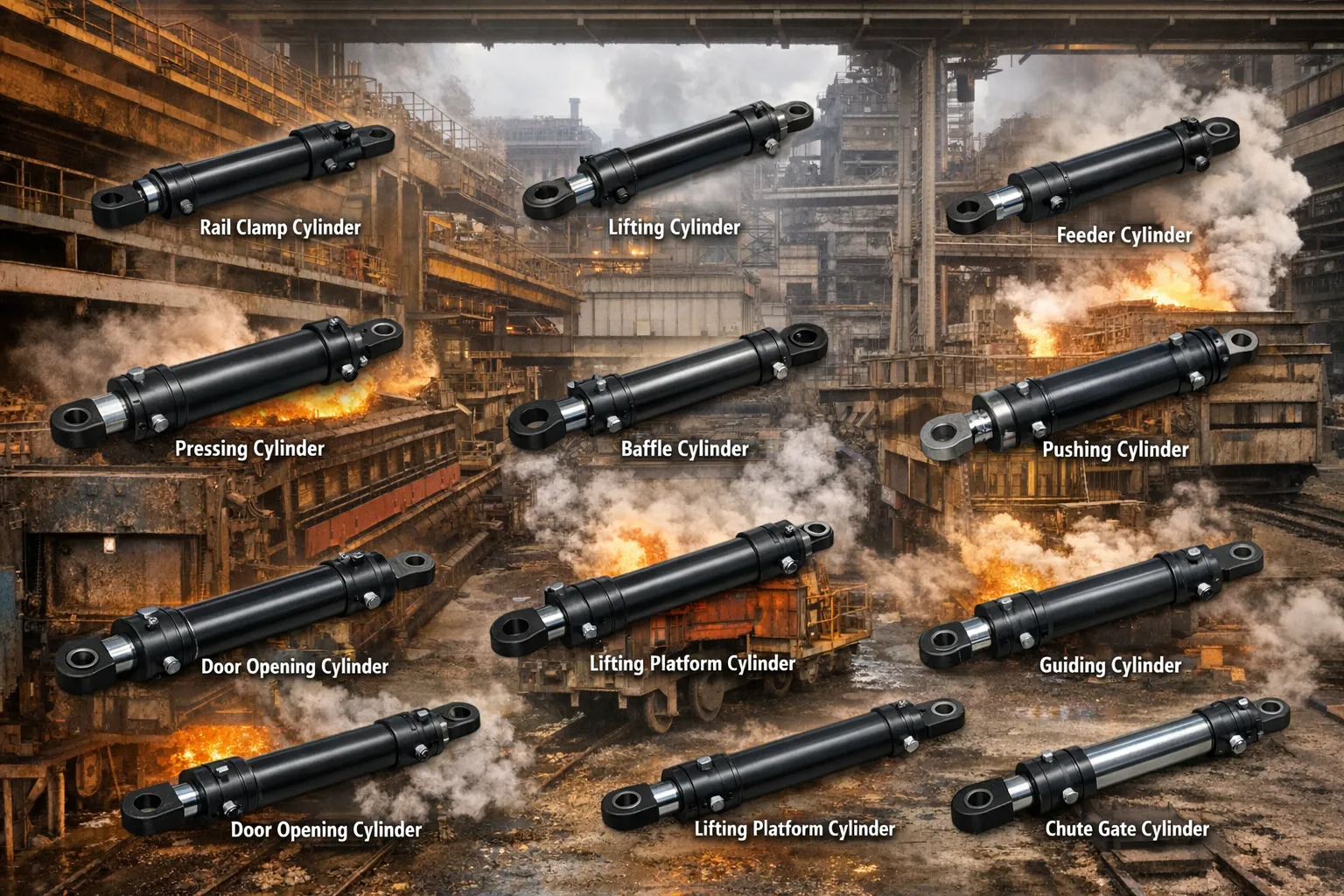
Facility maintenance directors overseeing continuous metallurgical operations work under extreme time constraints. When a dust car is sidelined, the entire oven pushing schedule is severely delayed. When tasked with the urgent necessity of fixing hydraulic cylinders, plant engineers simply cannot afford the agonizing delays associated with cutting and re-welding heavy structural steel mounts to accept non-standard actuators. We resolve this massive operational bottleneck by engineering our heavy-duty metallurgical series to guarantee absolutely seamless drop-in dimensional compatibility with your existing rolling stock.
Our lifting actuators are meticulously reverse-engineered to serve as direct upgrades for failing OEM machinery. By precisely matching critical external geometry—including retracted pin-to-pin closed lengths, extended stroke depths, heavy trunnion block widths, and exact fluid port thread dimensions—you can effortlessly retrofit vulnerable components originally supplied by legacy global brands such as Bosch Rexroth, Parker Hannifin, Eaton Vickers, Enerpac, SMC, and Yuken. (Disclaimer: These third-party corporate brand names are cited strictly for technical dimensional cross-referencing and B2B engineering retrofit convenience. This reference does not suggest any corporate affiliation, endorsement, or trademark infringement.) Upgrading your dust car from standard off-the-shelf units to our specialized low-leakage hydraulic rams ensures an immediate, measurable increase in operational compliance without modifying a single bolt on your vehicle’s chassis.
5 Core Technical Engineering Advantages
A genuinely heavy-duty industrial component is defined entirely by its advanced material science and uncompromising micro-engineering. Our specialized Dust Removal Jacking Hydraulic Cylinder vastly outperforms commercial market alternatives because we rigorously enforce these five foundational engineering pillars:
1. Total Elimination of Internal Leakage via Advanced Sealing Matrix
The absolute primary failure mode causing the dust hood to drift downward is internal fluid bypass. We actively neutralize this threat by fundamentally redesigning the hydraulic cylinder piston architecture. We utilize a highly specialized, multi-stage low-leakage sealing matrix. This design incorporates tight-tolerance, thermally stable step seals backed by robust anti-extrusion rings. This geometric configuration maintains an absolute fluid lock between the pressure chambers, guaranteeing the massive hood remains suspended indefinitely without any pressure decay or mechanical sag.
2. High-Toughness Q345D Steel Welded Construction
Dust removal cars operate continuously outdoors, facing extreme winter temperature drops while absorbing heavy rail vibrations. Standard carbon steel barrels (like 45#) easily become brittle and fracture under these conditions. We exclusively mandate the use of Q345D low-alloy, high-strength structural steel. The “D” classification ensures exceptional impact toughness even at freezing temperatures (-20°C). Combined with our deep-penetration robotic welding processes, the structural integrity of the cylinder remains absolute, entirely preventing the mounting trunnions from fatiguing or cracking.
3. Micro-Cracked Hard Chrome for Abrasive Dust Defense
The extended rod operates within a dense cloud of sharp, abrasive coke particulate. Basic commercial flash plating is rapidly scratched away, leading to seal destruction upon retraction. Following precision centerless grinding, we apply an exceptionally thick layer of hard chrome featuring a controlled micro-cracked surface topography. These microscopic fissures retain hydraulic oil, generating a continuous, self-lubricating boundary layer. This ultra-hard barrier completely prevents abrasive dust from physically scoring the steel.
4. High Thermal Resilience and Elastomeric Memory
Radiant heat from the open coke ovens rapidly vulcanizes standard polyurethane (PU) or nitrile (NBR) seals, turning them brittle and prone to shattering. To combat this extreme thermal degradation, all critical dynamic seals inside our hydraulic parts are molded from specialized high-temperature resistant fluorocarbon elastomers (FKM/Viton). These advanced engineering polymers safely retain their elastic memory in sustained high ambient heat, ensuring they continuously seal against the moving rod without hardening.
5. Internal Kinetic Fatigue Optimization via Fluid Cushioning
Rapidly lowering a multi-ton steel dust hood generates immense kinetic energy. If allowed to slam violently into the bottom of the cylinder stroke, the mechanical impact will rapidly fracture end-cap welds and vehicle chassis mounts. We integrate highly precise, progressive fluid cushioning zones within the cylinder heads. As the stroke nears its absolute completion, escaping hydraulic oil is choked through a specifically contoured restriction orifice. This smoothly and silently decelerates the massive load, dispersing the shockwave harmlessly.
Autonomous Manufacturing and Unyielding Quality Assurance
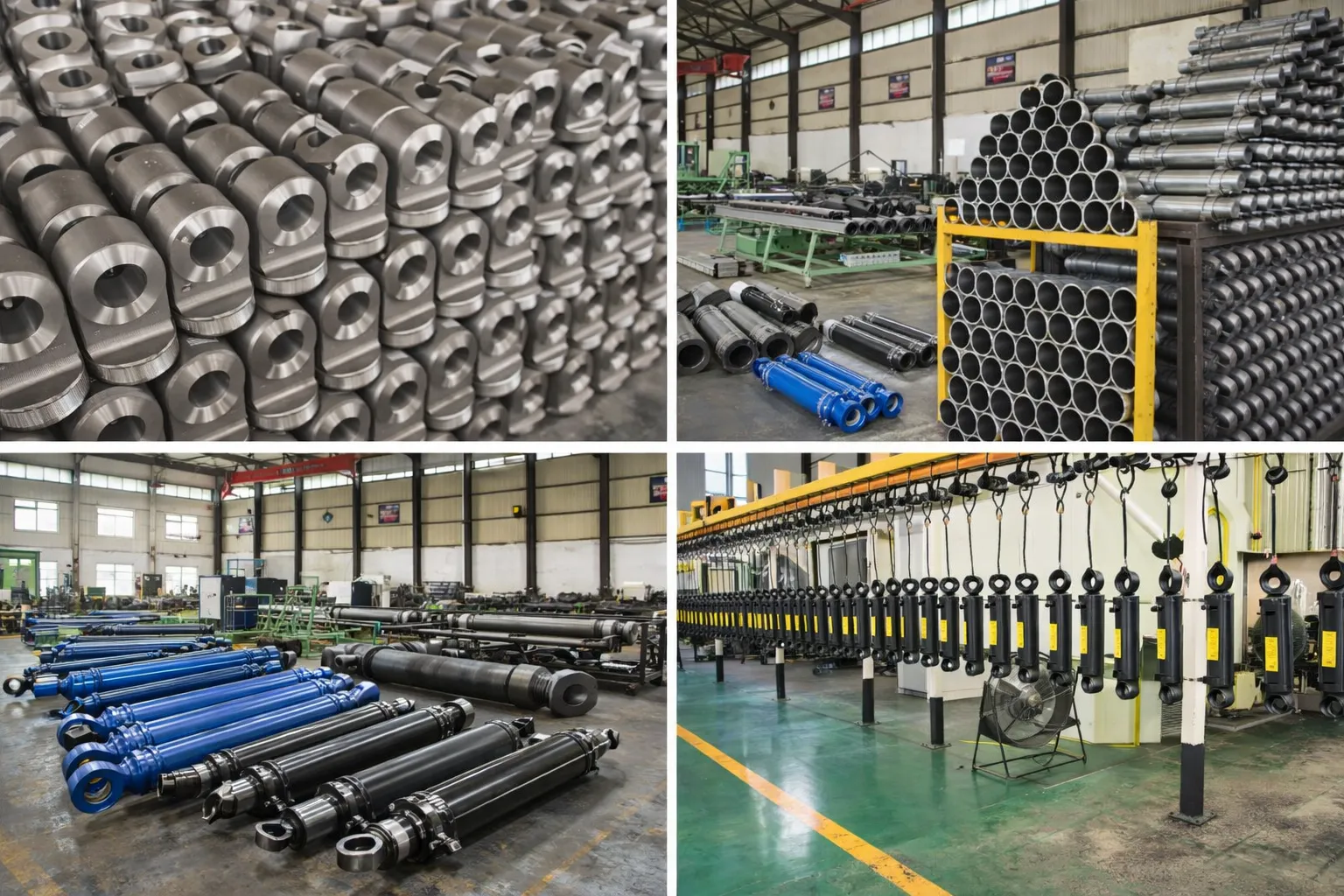
Our international authority as an uncompromising hydraulic cylinder manufacturer is forged directly on our digitally integrated factory floor. We exercise absolute control over every single phase of production, explicitly rejecting the prevalent and risky industry practice of assembling outsourced, unverified low-grade components. From the initial multi-axis CNC turning of the massive Q345D alloy steel billets to the final automated submerged-arc welding of the clevis mounts, every critical operation is executed within our fully integrated facility. To guarantee the absolute longevity of our low-leakage seals, our internal barrel bores are subjected to advanced deep-hole skiving and roller burnishing processes, consistently achieving a pristine internal surface finish of Ra < 0.2µm.
Quality validation is not merely a final inspection step; it is actively embedded directly into our engineering protocol. Before any machining commences, all incoming raw steel plates and billets undergo rigorous ultrasonic flaw detection (UT) to guarantee the total absence of hidden internal material voids or laminations. Following full mechanical assembly, 100% of our products are securely clamped into a computerized hydrostatic test bench. The Dust Removal Lifting Hydraulic Cylinder is pressurized to an extreme 150% of its maximum designated operating load, while highly sensitive digital transducers continuously monitor for zero internal fluid leakage or pressure decay. Finally, an alphanumeric serial number is permanently laser-etched into the heavy barrel, providing our global B2B engineering clients with complete, lifetime batch traceability for all future replacement hydraulic cylinder components.
Extensive Cross-Industry Heavy Engineering Deployments
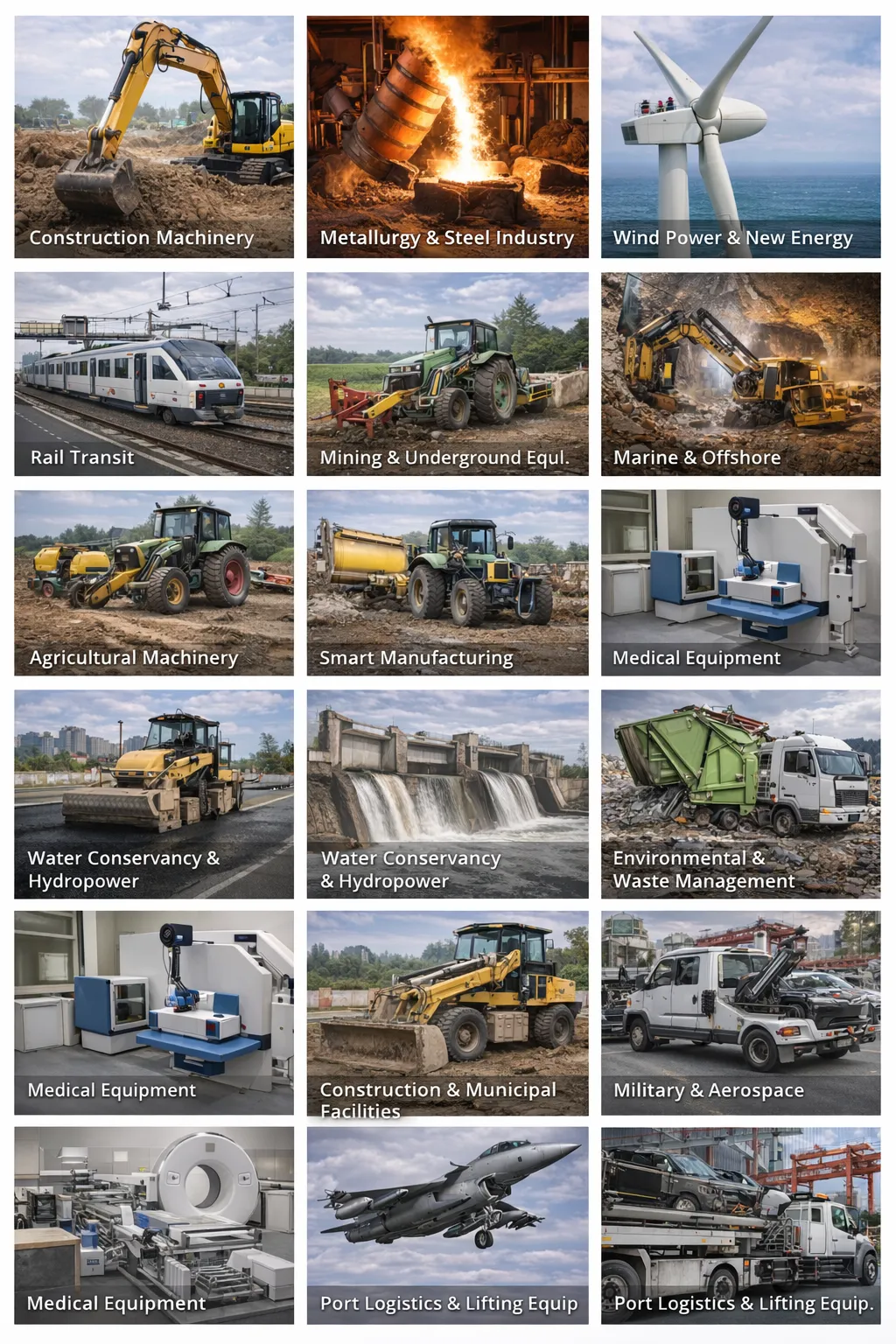
While perfectly calibrated to conquer the severe abrasive dust and relentless thermal loads of metallurgical coking operations, the immensely robust baseline architecture of our fluid power systems makes them the premier choice across a vast array of punishing industrial sectors. We encourage you to explore our comprehensive hydraulic cylinder catalog to understand how we empower global heavy infrastructure:
- Mining & Mineral Processing: Actuating primary jaw crushers, massive apron feeders, and subterranean roof supports where immense force and extreme rock dust resistance are absolutely mandatory. View our Mining Industry solutions.
- Civil Engineering & Construction Machinery: Delivering absolute structural reliability as a heavy-duty boom arm or steering actuator on high-tonnage crawler excavators, rotary piling rigs, and immense tunnel boring machines. Explore our Construction Machinery Industry capabilities.
- Plastics & Advanced Polymer Molding: Providing high-speed, perfectly sustained high-tonnage clamping force for large-scale injection molding machines to prevent die flashing and ensure exact plastic part tolerances.
- Material Handling & Maritime Logistics: Powering heavy port-side ship loaders, automated straddle carriers, and AGVs operating continuously in highly corrosive, salt-laden coastal atmospheres.
- New Energy & Environmental Processing: Securing the blade pitch control mechanisms on massive offshore wind turbines and powering heavy-duty solid waste compaction balers for continuous 24/7 duty cycles.
- Bespoke Special Engineering Projects: Rapidly prototyping highly customized fluid power solutions engineered for unique spatial restrictions, extreme sub-zero environments, or specific kinematic demands where generic catalogs fail entirely.
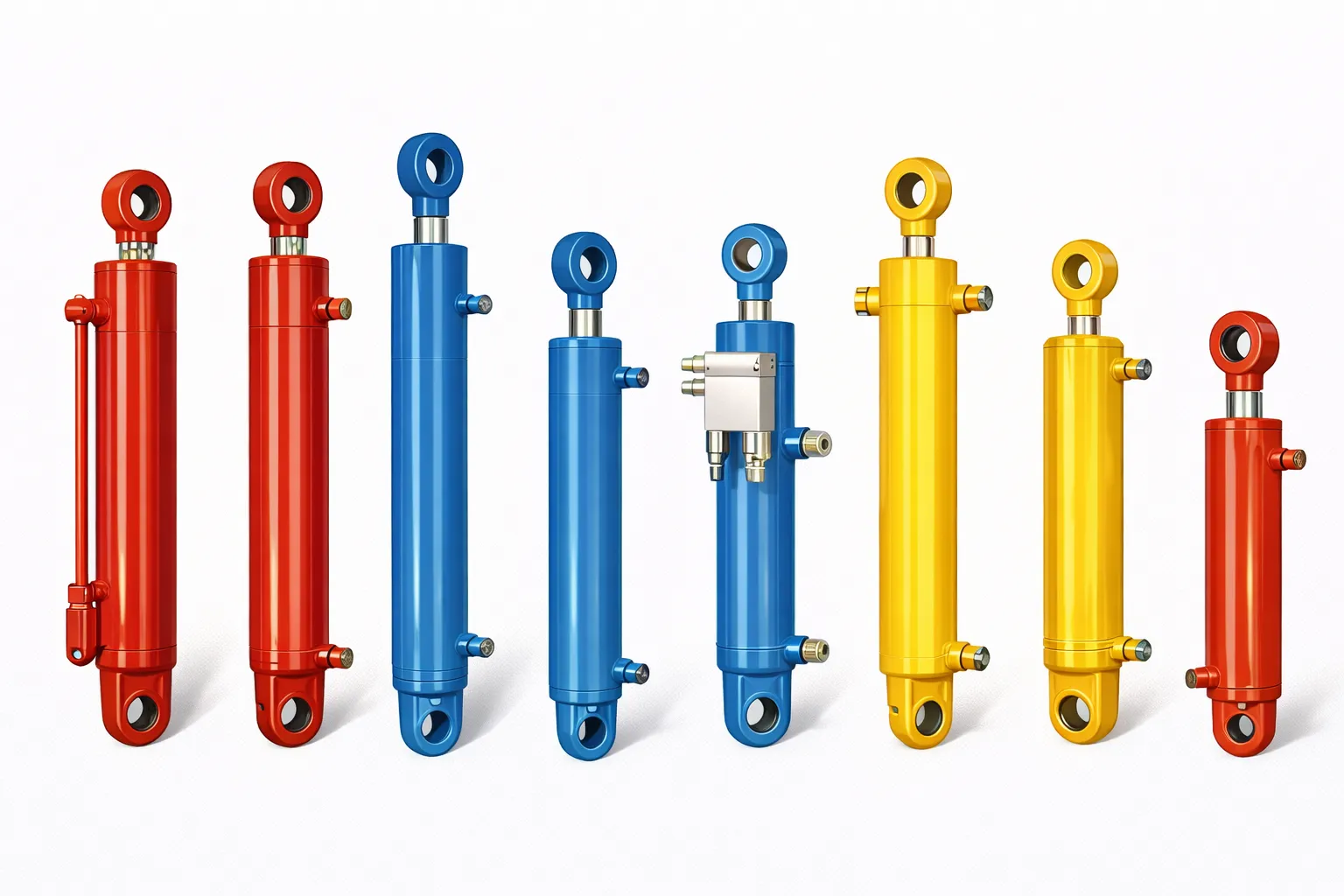
Data-Driven Comparative Analysis: Standard Commercial vs. Specialized Performance
Industrial procurement driven exclusively by the lowest initial capital cost inevitably results in disastrous total lifecycle expenditures due to persistent machinery failures and environmental compliance fines. The technical data matrix below clearly delineates the massive engineering gap between generic off-the-shelf actuators and our purpose-built metallurgical solutions.
| Engineering Evaluation Metric | Standard Commercial Cylinder | Our Dust Removal Jacking Cylinder |
|---|---|---|
| Internal Leakage Vulnerability | High (Standard seals rapidly bypass fluid under sustained holding loads) | Zero Bypass (Advanced step-seal matrix guarantees locked positioning) |
| Structural Body Material | Basic 45# Carbon Steel (Prone to thermal warping and cold-weather fractures) | Q345D Low-Alloy Steel (Massive structural rigidity and thermal resilience) |
| Dust Exclusion Defense Mechanism | Single Polyurethane Wiper (Rapidly breached by sharp abrasive coke dust) | Aggressive Heavy-Duty Metallic Scraper Matrix + FKM Buffer |
| High-Temperature Tolerance | Standard NBR Elastomers (Vulcanize and shatter from oven proximity) | FKM / Viton Engineered Elastomers (Retain stable memory in extreme heat) |
| Operational Expected MTBF | 3 to 6 months before catastrophic internal leakage causes hood sagging | Years of continuous, perfectly sealed, compliant operation |
Proven Global Performance: 4 Verified Engineering Case Studies
True engineering authority and E-E-A-T (Experience, Expertise, Authoritativeness, and Trustworthiness) are demonstrated exclusively through verifiable field deployments. Our specialized fluid power components are deeply integrated into the heaviest industrial sectors of South Korea, Japan, and Taiwan. Review these detailed accounts of our technology successfully eliminating critical downtime and emission violations.
Case 1: Eradicating Hood Sag at POSCO Steelworks
Location: Pohang, South Korea | Client Profile: Tier-1 Global Integrated Steel Manufacturer
Application: Primary dust hood lifting mechanism on a heavy coking plant transit car.
The Challenge & Connection: The facility faced severe pressure from environmental regulators. The OEM cylinders on their dust car were suffering from rapid internal leakage, causing the massive hood to sag open during the pushing cycle. This allowed thick toxic smoke to escape. The lead environmental engineer found our low-leakage technology via an organic Google search and engaged our technical team in July 2024.
Implementation & Results: We rapidly delivered customized Dust Removal Lifting Cylinder units featuring our Q345D architecture and specialized step-seal matrix. Operating continuously, the new cylinders completely eliminated all internal fluid bypass. The hood remained securely locked in transit, ensuring 100% smoke capture and protecting the plant from environmental fines over the past 20 months.
“The internal leakage issue that threatened our compliance record has entirely vanished. Their engineering team understood the brutal hydrostatic demands of our transfer cars perfectly. Upgrading these actuators saved us massive environmental fines.” — Mr. Kang D.H., Lead Environmental Maintenance Engineer
Case 2: Resolving Heavy Mobile Fractures at Hyundai Steel
Location: Dangjin, South Korea | Client Profile: Premier Heavy Automotive Steel Producer
Application: Secondary emission control hood actuators on high-vibration transit rail cars.
The Challenge & Connection: The plant struggled continuously with structural base mount fractures on standard carbon steel cylinders due to severe rail vibrations and sudden temperature drops during winter operations.
Implementation & Results: We engineered a specialized design utilizing Q345D low-alloy steel, known for extreme impact toughness. The new heavy-duty welded lift cylinder units absorbed the immense mobile shock loads flawlessly. Implemented plant-wide in early 2025, yielding a 100% reduction in structural weld failures.
“The structural rigidity of their Q345D deep-penetration welded body is unmatched. We haven’t experienced a single weld fracture or mount shear since transitioning our dust cars to this manufacturer. A superbly reliable engineering partner.” — Park J.S., Mobile Fleet Maintenance Manager
Case 3: Abrasive Dust Defeat at Nippon Steel
Location: Nagoya, Japan | Client Profile: Advanced Metallurgical Processing Facility
Application: Hood lifting mechanism operating intimately close to the abrasive coke quenching zone.
The Challenge & Connection: The facility experienced recurring, dangerous rod scoring. Standard polyurethane wipers were shredded by the sharp coke particulate, causing massive fluid leaks directly onto hot surfaces. The procurement team connected with us through a specialized B2B industrial platform targeting severe-environment fluid power.
Implementation & Results: We retrofitted the required units with advanced metallic scraper rings and micro-cracked chrome rods. The cylinders performed perfectly, completely eliminating all abrasive scoring and drastically reducing fire risks over the past 14 months.
“Finding consistently reliable hydraulic parts for this specific abrasive zone was historically difficult. Their customized metallic scrapers performed precisely as promised, allowing us to hit our zero-incident safety targets.” — T. Watanabe, Chief Plant Safety Engineer
Case 4: Efficient CAPEX Upgrades via Exact OEM Replacement for China Steel Corp
Location: Kaohsiung, Taiwan | Client Profile: Massive Integrated Steel Mill
Application: Complete retrofit of failing European OEM cylinders on the primary coking battery.
The Challenge & Connection: Facing massive procurement costs and agonizing 16-week supply chain delays from their original European OEM, the procurement division aggressively searched for a direct-to-market manufacturer capable of matching dimensions. They emailed our engineering team the original 1990s OEM blueprints.
Implementation & Results: We rapidly delivered exact 1:1 dimensional drop-in replacements within just 4 weeks. The client successfully retrofitted the aging system without modifying a single bolt on the car chassis. This reduced their initial procurement CAPEX by over 35% while instantly solving their internal leak issues.
“This was a flawless drop-in replacement. The mechanical installation was incredibly smooth, and the hydraulic cylinder price to operational performance ratio provided is simply incredible. They are our new procurement standard.” — Lee H.J., Plant Procurement Director
Frequently Asked Questions (FAQ) for Technical B2B Procurement
Procuring heavy-duty fluid power components for environmental control systems requires absolute mechanical certainty. Below are highly detailed, expert answers to the most common technical inquiries we receive from B2B buyers, plant maintenance directors, and reliability engineers.
1. How exactly does your cylinder prevent internal leakage and stop the dust hood from sagging?
Standard cylinders use basic PU seals which wear down under high pressure, allowing oil to slowly bypass the piston, which causes gravity to pull the hood down. We integrate a proprietary low-leakage sealing ecosystem using specialized aerospace-grade polymers and pre-loaded step seals. This creates an impenetrable pressure barrier across the hydraulic cylinder piston, ensuring the hydraulic fluid is locked in place. This guarantees absolute zero-millimeter drift when the hood is suspended over the coke oven.
2. Why is the utilization of Q345D steel critical for mobile dust removal cars?
Dust removal cars are essentially heavy trains moving continuously outdoors. Standard carbon steel barrels (like 45#) can become extremely brittle during cold winter nights and fracture under the violent vibration of the rail tracks. Q345D is a low-alloy, high-strength structural steel specifically graded for extreme low-temperature impact toughness (down to -20°C). It provides massive structural rigidity, ensuring the heavily loaded mounting brackets never tear off the barrel body.
3. Can you guarantee dimensional exactness when replacing legacy European OEM brand cylinders?
Yes, absolutely. A vast majority of our industrial operations involve upgrading legacy machinery across Asia. By supplying our engineering division with your existing technical drawings or the specific OEM model numbers, we actively custom-manufacture the external geometry. We perfectly match every critical dimension—including closed centers, stroke lengths, pin diameters, and fluid port thread sizing—to ensure a flawless, bolt-on installation without any machine chassis modifications required.
4. How does your equipment actively reduce the frequency of fixing hydraulic cylinders in the coking plant?
The continuous necessity for fixing hydraulic cylinders in coking plants predominantly stems from abrasive coal dust destroying internal seals, and heavy vibration cracking structural mounts. We eliminate these distinct vulnerabilities via superior engineering. The micro-cracked hard chrome rod combined with heavy metallic scrapers actively blocks all contaminant ingress, while our heavy-duty monolithic Q345D welded body simply does not crack under violent rail harmonics. This approach effectively extends the MTBF by multiples.
5. Do you actively supply replacement hydraulic cylinder components for future scheduled maintenance?
Yes. Maximizing the operational lifespan of our products is our core priority. Because every double acting hydraulic cylinder we build is permanently laser-serialized, we hold exact digital blueprints of your unit on file. When a routine overhaul is eventually scheduled, we immediately supply identically matched, high-performance low-leakage seal kits, bronze guide rings, metallic scrapers, and other necessary hydraulic cylinder components to ensure rapid internal maintenance by your plant technicians.
6. What is your manufacturing lead time for heavy industrial orders shipped to South Korea or Japan?
Due to our fully autonomous, vertically integrated manufacturing process, our lead times are highly optimized compared to traditional Western suppliers. For standard high-performance metallurgical configurations, fabrication and testing require approximately 3 to 4 weeks. Ocean freight logistics to major regional ports (such as Busan, Incheon, or Yokohama) typically add only 7 to 10 days. We also fully support expedited air freight protocols for severe emergency breakdowns.
7. Are comprehensive factory testing documents provided with international shipments?
Yes. Uncompromising Quality Assurance is our standard operating procedure. Every unit dispatched internationally includes a full QA packet. This highly detailed packet contains the raw steel mill certificates validating the Q345D composition, the ultrasonic flaw detection (UT) reports for structural integrity, and the digital hydrostatic pressure test graphs proving the unit successfully held 150% of its rated operational pressure with zero internal fluid bypass.
8. How does your pricing structure dynamically compare to major Western OEMs?
Because we maintain absolute control over a 100% vertically integrated production process—from raw billet machining to final robotic assembly and testing—we completely eliminate reliance on trading companies and third-party markup. Consequently, our pricing structure is highly aggressive. We routinely save our international B2B clients between 30% to 40% on initial CAPEX compared to sourcing from legacy European or American brands, while actively delivering a vastly superior mechanical lifespan.
Ready to Guarantee Your Plant’s Emission Compliance?
Do not allow internally leaking fluid power actuators to dictate your metallurgical production schedule or artificially inflate your environmental violation fines. Connect directly with our engineering specialists to analyze your specific dimensional blueprints, secure a highly competitive technical proposal, and understand precisely why heavy industry leaders across East Asia exclusively rely on our robust fluid power technology.
Rapid global engineering support, precise drop-in OEM replacements, and streamlined logistics are available immediately for South Korea, Japan, Taiwan, and the broader Asia-Pacific heavy manufacturing sector.
Editor: Cxm