Heavy Duty Lift Cylinder for Track Maintenance Vehicle
Eradicate cylinder ear fatigue with our premium 27SiMn forged ear seat solutions, engineered for maximum vertical stability and safety in rail transit infrastructure operations.
Product Overview: The Backbone of Railway Transit Safety
In the highly specialized and exceptionally demanding sector of rail transit and metropolitan infrastructure networks, the continuous operational readiness of track maintenance vehicles is absolutely vital. These heavy-duty vehicles operate during incredibly narrow nighttime windows, tasked with safely hoisting personnel, diagnostic tools, and heavy replacement components to inspect overhead catenary systems, repair tunnel roofs, and maintain elevated bridge architectures. The mechanical heart that powers this critical vertical mobility is the lifting device, driven by a highly dependable lift cylinder. A failure in this mechanism does not merely cause logistical delays; it presents an unacceptable, severe safety hazard to the maintenance technicians suspended above the high-voltage tracks.
Based on extensive field engineering data, it is evident that standard commercial-grade fluid power actuators degrade rapidly when subjected to the severe dynamic loads and continuous, high-frequency vibrations inherent in railway environments. A generic hydraulic cylinder often suffers from catastrophic structural failures under these harsh conditions, primarily due to intense lateral stress and uneven payload distribution on the elevated lifting maintenance platform. The most prevalent and dangerous failure mode plaguing this specific industry is cylinder ear fatigue, where the mounting brackets literally shear or develop micro-fractures under repetitive mechanical stress.
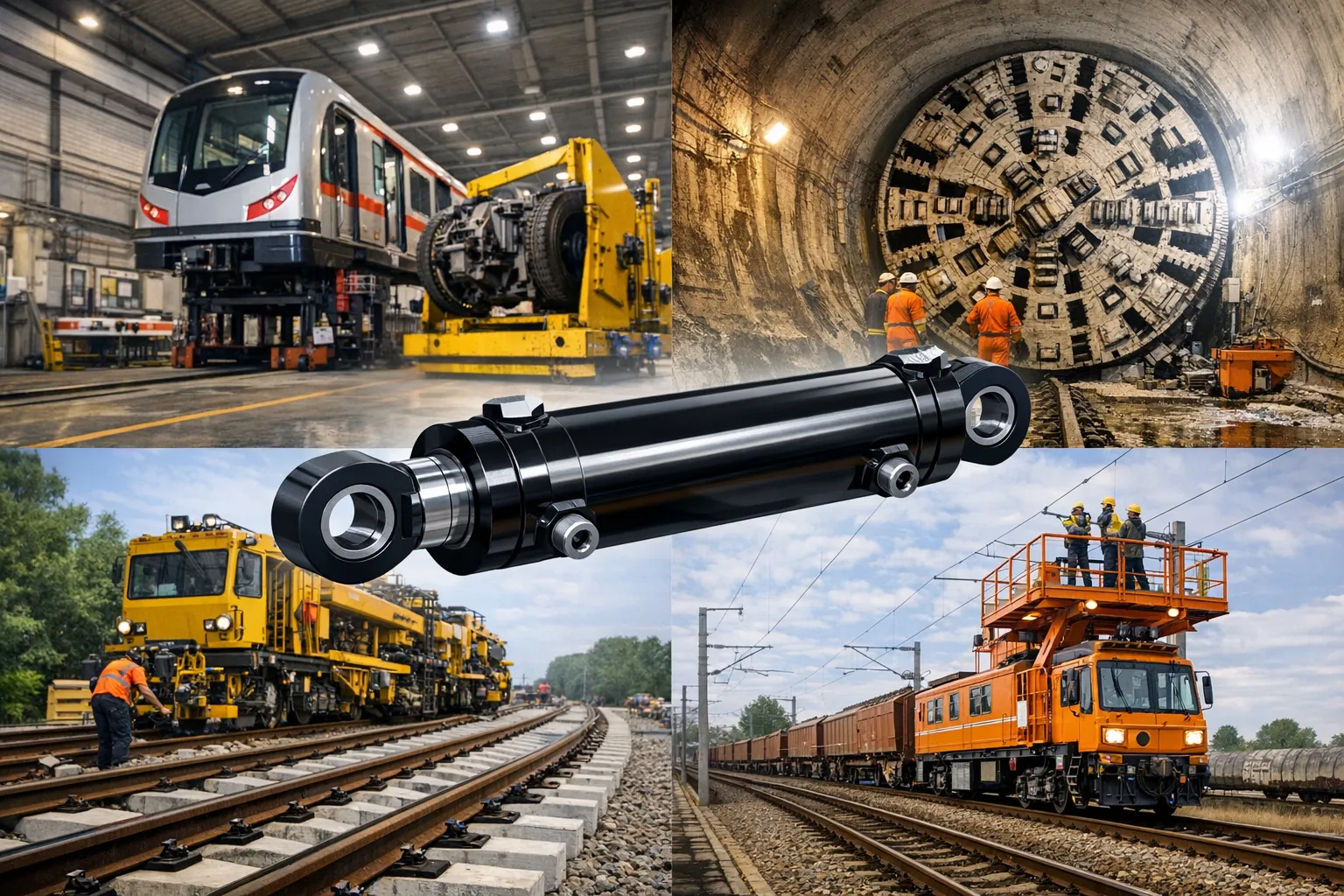
Our specialized lifting hydraulic cylinder is purposefully engineered to overcome these exact industry-specific challenges. We do not assemble generic fluid power parts; we meticulously analyze root failure modes. By transitioning to a robust piston-type welded architecture and incorporating a proprietary solid forged ear seat, we have definitively eliminated this critical vulnerability, providing unparalleled structural stability for the lifting platform. Partnering with a dedicated, expert hydraulic cylinder manufacturer ensures your fleet benefits from components designed expressly for heavy-duty environments, ultimately optimizing your total hydraulic cylinder price over the entire lifespan of the machine. We strongly encourage you to explore our comprehensive manufacturing capabilities in our hydraulic cylinder category to discover exactly how we redefine industrial reliability.
Technical Parameters & Configuration Scope
When specifying a lift cylinder for a track maintenance vehicle, generic metrics are insufficient. The operational environment demands precise engineering tailored specifically to heavy-duty transit applications. The technical parameters outlined in the table below represent the definitive baseline specifications for our products, reflecting our commitment to utilizing superior metallurgical materials like 27SiMn steel and advanced surface treatments. These highly customizable specifications are engineered to combat specific field issues, ensuring the seamless operation of your lifting device.
| Engineering Parameter | Specification Details & Customization Range |
|---|---|
| Target Industry Sector | Rail Transit / Metropolitan Infrastructure |
| Equipment Category | Track Maintenance Vehicle |
| Subsystem / Action | Lifting Device / Vertical Platform Elevation |
| Component Nomenclature | Lift cylinder |
| Action Configuration | Double acting hydraulic cylinder |
| Structure Type | Piston type |
| Manufacturing Architecture | Welded structure (High structural rigidity) |
| Core Material System | 27SiMn Alloy Steel |
| Rod Surface Treatment | Chrome plated (Corrosion and wear resistant) |
| Environmental Rating | Heavy duty (Tolerant to metal dust, extreme temps, and moisture) |
| Specific Working Condition | Lifting maintenance platform |
| Typical Failure Mode Prevented | Cylinder ear fatigue |
| Recommended Configuration | Forged ear seat (Eliminates weld-zone stress concentrations) |
Kinematic Working Principle & Fluid Dynamics
Understanding the precise kinematic working principle of this double acting hydraulic cylinder reveals exactly why it is the superior, uncompromising choice for track maintenance vehicles. Unlike a standard single acting hydraulic cylinder, which heavily relies on gravity or an unpredictable external mechanical load to retract the rod, our double-acting configuration utilizes pressurized hydraulic fluid to actively and forcefully control both the extension and retraction strokes. This active, powered control is non-negotiable when dealing with the balance and safety of elevated personnel.
When the machinery operator initiates the lifting sequence to elevate the platform, high-pressure hydraulic fluid is pumped into the cap end (the blind base) of the cylinder barrel. This incompressible fluid exerts a tremendous, uniform kinetic force against the large surface area of the hydraulic cylinder piston. This immense hydrostatic pressure drives the piston forward, smoothly extending the chrome-plated rod and raising the heavy platform to the required altitude. During this entire phase, internal load-holding check valves and counterbalance mechanisms ensure that the heavy payload is held securely, actively preventing any potential pressure drop.
During the critical descent phase, fluid is carefully directed into the rod end while simultaneously, the control valves meter the fluid exiting the cap end. This dual-sided fluid control guarantees a stable, shudder-free retraction, mitigating any jerky movements that could easily destabilize the vehicle on the tracks. If you ever face wear issues over decades of rigorous use, routine hydraulic cylinder repair is dramatically simplified due to our modular internal gland design, minimizing expensive track downtime and ensuring that your hydraulic parts remain serviceable for the long haul.
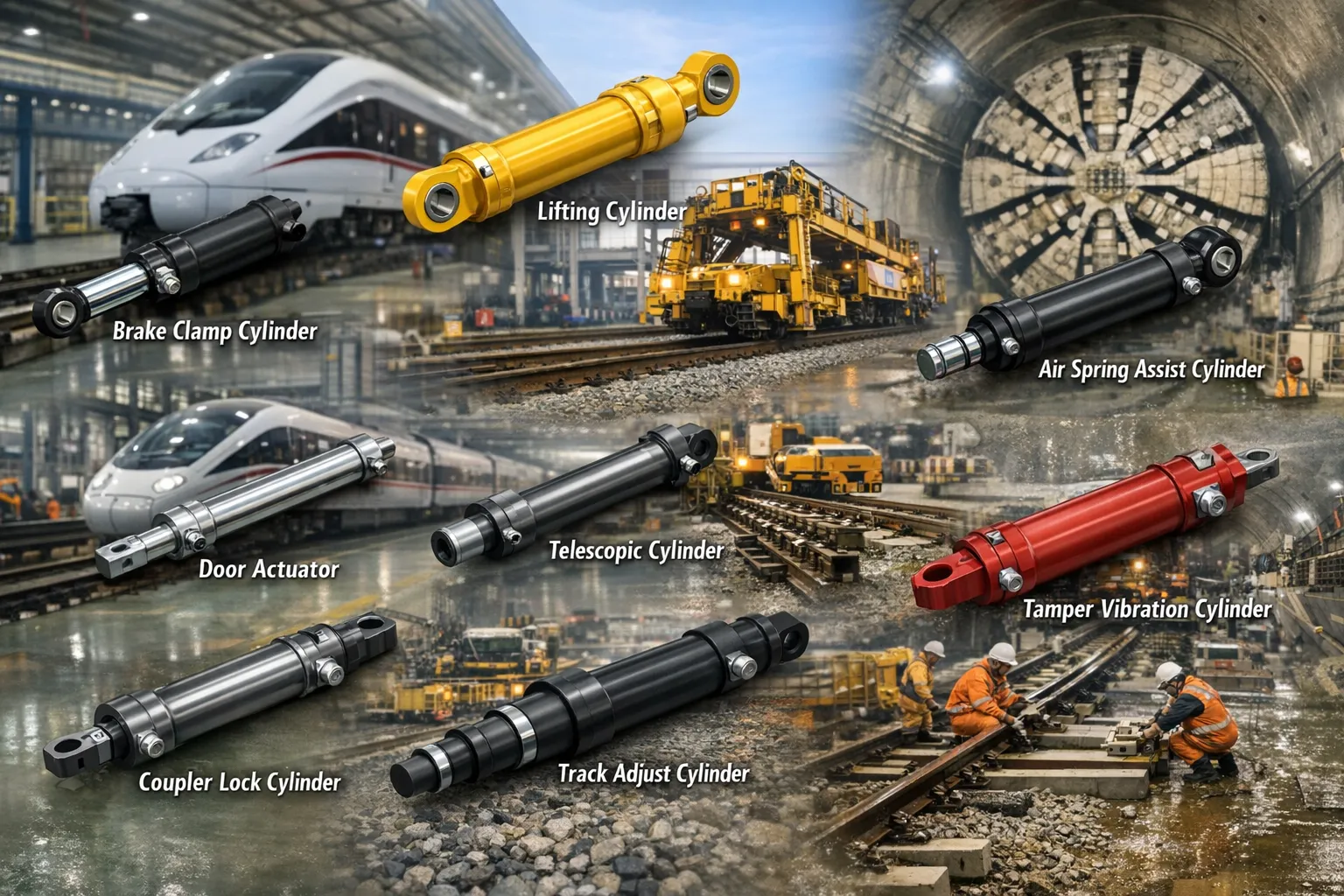
Seamless Brand Replacement & System Integration
Fleet standardization and maintenance efficiency are critical operational concerns. Upgrading your track maintenance vehicle should absolutely not require extensive chassis modifications or complete hydraulic system overhauls. As an elite and experienced manufacturer, our engineering department has meticulously mapped the dimensional footprints, mounting pin configurations, and fluid port specifications of the world’s leading fluid power equipment brands.
Our heavy-duty lift cylinder is explicitly engineered to serve as a direct, seamless drop-in replacement for equivalent heavy-duty models originally produced by major industry brands such as Parker Hannifin, Bosch Rexroth, Enerpac, Eaton Vickers, and Palfinger. (Please note clearly: The mention of these specific brand names is strictly for the purpose of technical cross-referencing, dimensional compatibility verification, and assisting engineers in accurate model selection. We operate as a fully independent manufacturer and do not claim any affiliation with the trademarks of these respected corporate entities.)
By strategically choosing our direct replacement actuators, procurement managers can successfully bypass exorbitant OEM markups, drastically reducing the overall hydraulic cylinder price and avoiding crippling supply chain lead times that keep essential vehicles offline while significantly upgrading the structural capabilities of your lifting system.
Core Engineering & Metallurgical Advantages
What truly separates our premium lifting hydraulic cylinder from conventional, mass-produced hydraulic rams? The definitive answer lies in our uncompromising, scientific approach to material science, tribology, and structural engineering. Here are the core technical advantages that make our lifting components the definitive choice for rigorous rail transit applications:
-
1. Forged Ear Seat Architecture (Eradicating Fatigue Failure)
As previously stated, cylinder ear fatigue is the leading cause of catastrophic structural failure in track lifting mechanisms. Standard commercial cylinders utilize cast or welded mounting clevises, which inevitably develop microscopic heat-affected fissures under high-frequency rail vibration. We exclusively utilize a solid, one-piece forged ear seat. The industrial forging process aligns the molecular grain structure of the steel continuously through the mount, exponentially increasing its fatigue limit and entirely eliminating the risk of sudden ear shearing under heavy offset loads.
-
2. 27SiMn High-Yield Alloy Steel Construction
While many conventional manufacturers attempt to cut costs by using standard 45# carbon steel for the cylinder barrel, we exclusively utilize 27SiMn (Silicon-Manganese) alloy steel. This advanced metallurgical choice provides vastly superior tensile and yield strength, allowing the cylinder barrel to comfortably withstand extreme internal pressure spikes and fiercely resist lateral deflection when the elevated maintenance platform faces uneven wind shear or rapid weight shifts.
-
3. Ultra-Low Friction Composite Sealing Matrix
The functional integrity of any double acting hydraulic cylinder depends entirely on its internal seals. We employ an advanced, heavy-duty step-seal configuration utilizing specialized polyurethane and PTFE composite blends imported from top-tier global suppliers. This ultra-low friction matrix completely eliminates the dangerous “stick-slip” phenomenon, ensuring micrometer-level precision when adjusting the platform height, and guarantees zero internal fluid bypass.
-
4. Advanced Hard Chrome Plating Protection
Rail environments relentlessly expose machinery to abrasive metallic rail dust, acid rain, and corrosive atmospheric elements. Our hydraulic cylinder piston rods undergo a meticulous, multi-layer hard chrome plating process (typically 30-50 microns thick), achieving a surface hardness exceeding HRC 65. This heavy-duty plating defends against micro-pitting, absolutely prevents rust, and drastically extends the lifecycle of the dynamic wiper seals, reducing the need for fixing hydraulic cylinders.
-
5. Precision Submerged Arc Welded Construction
The piston-type structure is integrated and assembled using automated, robotic submerged arc welding. This guarantees exceptionally deep, void-free penetration at the base and mounting points, ensuring the cylinder can easily withstand the severe mechanical shock loads typical of heavy-duty railway applications without ever risking weld seam blowouts or fluid leakage.
-
6. Optimized Thermal Stability for Continuous Operation
The internal fluid pathways and bronze bearing surfaces are geometrically optimized to dissipate heat highly efficiently during rapid, continuous operational duty cycles. This intelligent thermal management prevents the degradation of the hydraulic fluid, thereby substantially extending the overall fatigue life of all delicate internal hydraulic cylinder components.
Manufacturing Craftsmanship & Stringent Quality Control
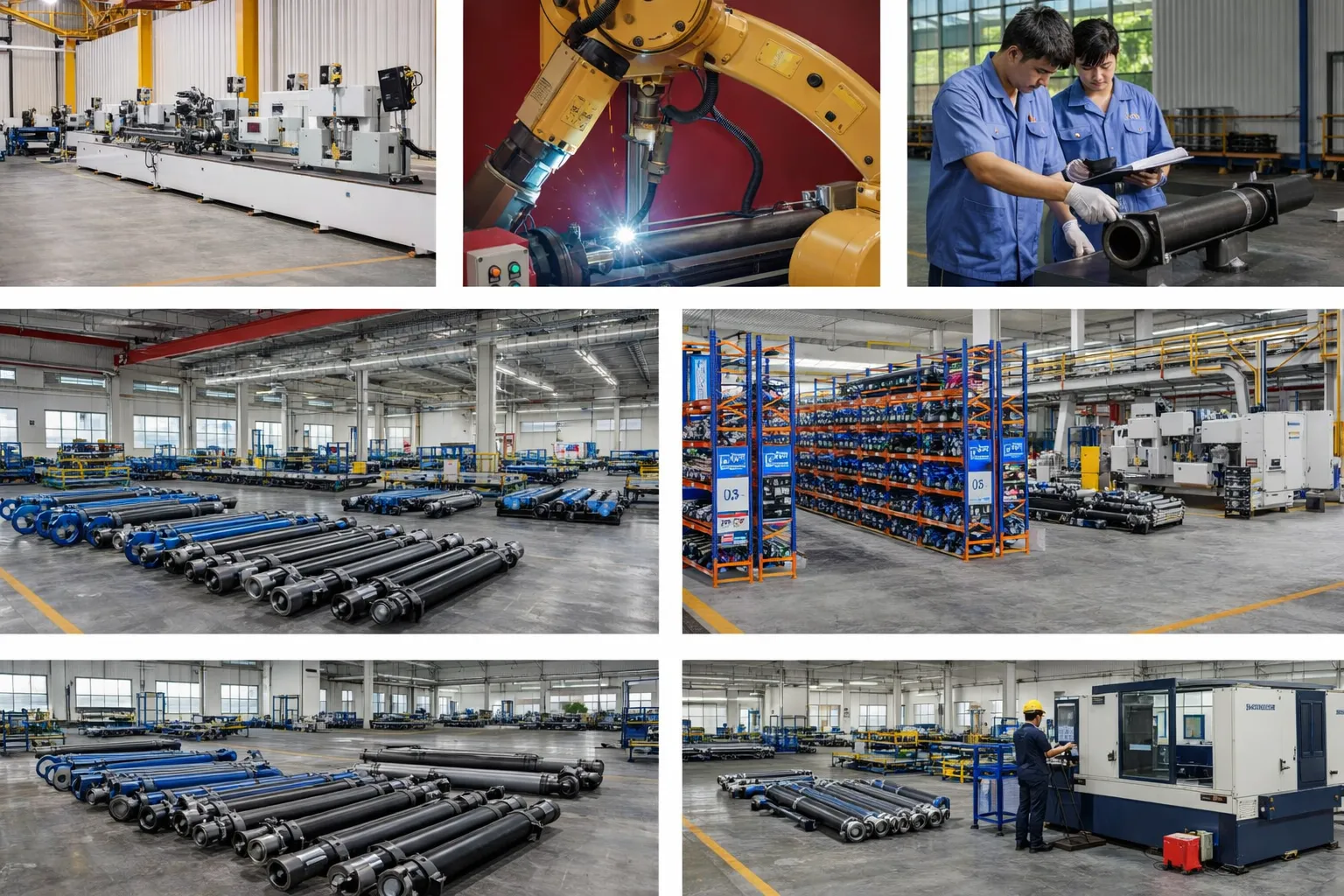
True excellence in fluid power cannot be achieved through mere assembly; it strictly requires absolute, uncompromising control over the entire manufacturing ecosystem. Our globally recognized reputation as a trusted hydraulic cylinder manufacturer is built upon a fully vertically integrated production facility, rigorously governed by stringent ISO 9001:2015 quality management protocols. We do not outsource critical pressure-bearing components.
During the machining phase, we utilize advanced, multi-axis CNC turning and milling centers to ensure zero-tolerance deviations. The inner bore of the cylinder barrel undergoes deep-hole boring, followed by high-precision skiving and roller burnishing. This process achieves a flawless, mirror-like internal surface finish. This ultra-smooth finish is absolutely critical for maximizing internal seal life and drastically reducing the necessity for premature hydraulic cylinder repair in the field.
Furthermore, quality control is deeply embedded in every single production step. All structural welds undergo rigorous Ultrasonic Non-Destructive Testing (NDT) to ensure complete metal fusion. Finally, 100% of our produced hydraulic rams are subjected to exhaustive factory acceptance testing before packaging. Each unit is securely placed on a computerized hydrostatic test bench and violently pressurized to 150% of its rated maximum operating pressure to guarantee absolutely zero internal or external fluid leakage. Full metallurgical traceability is attached to the serial number of every unit.
Broader Cross-Industry Deployments
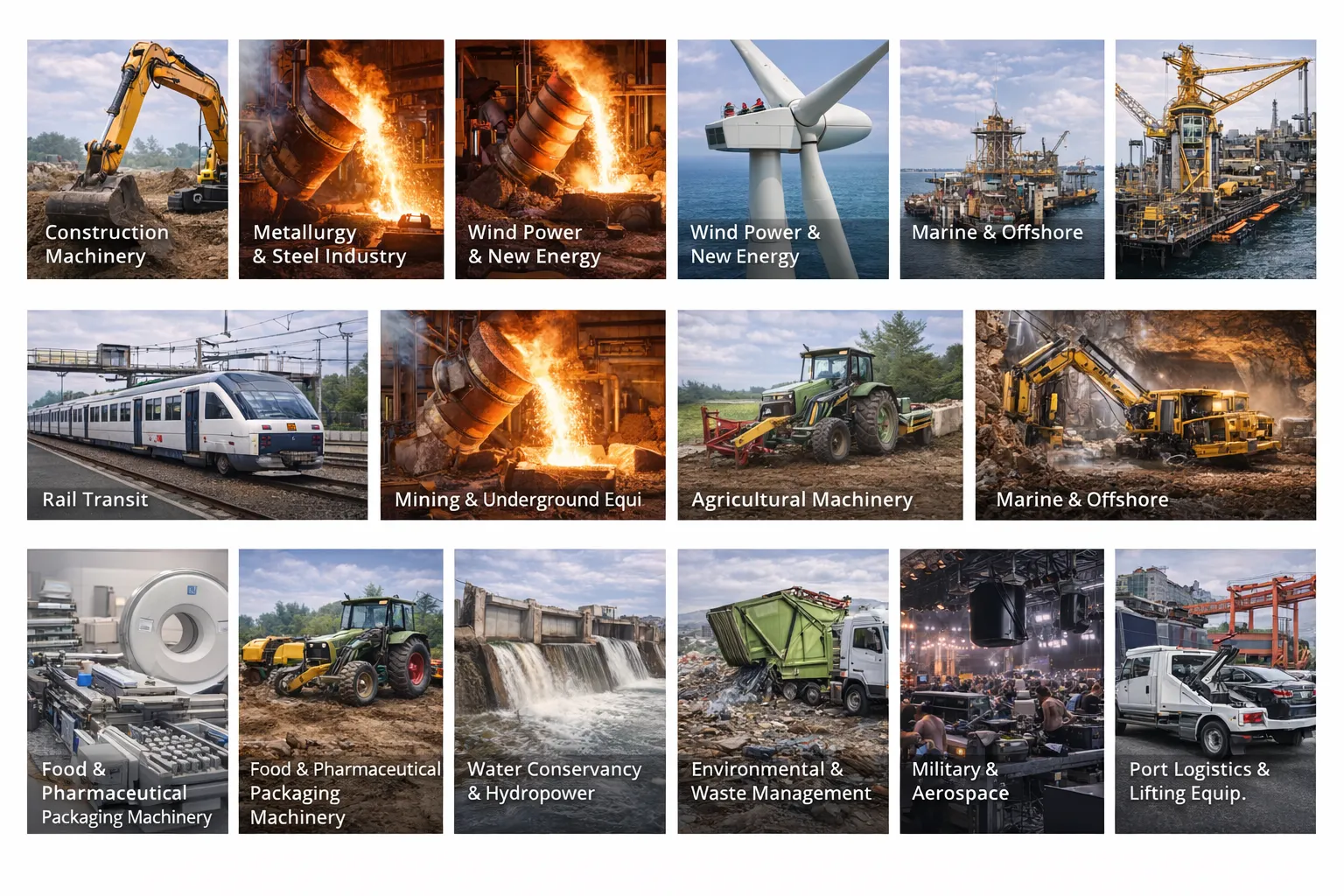
While this specific heavy-duty lift cylinder is meticulously purpose-built to conquer the unique physical challenges of the rail transit sector, its immensely robust architectural foundation makes it highly adaptable. Industries that demand zero-failure fluid power solutions frequently adopt our proprietary technology to secure their lifting mechanisms.
For example, the unmatched structural rigidity provided by our forged ear seats and 27SiMn steel is highly valued in the construction machinery industry, where towering excavators, aerial boom lifts, and heavy wheel loaders face similarly violent dynamic, multi-directional stresses. Likewise, the incredibly harsh, abrasive conditions found in subterranean extraction make our heavily sealed, chrome-plated cylinders the ideal choice for the mining industry. Additionally, the extreme thermal stability of our components makes them perfectly suited for the intense ambient heat characterizing the metallurgical and iron industry.
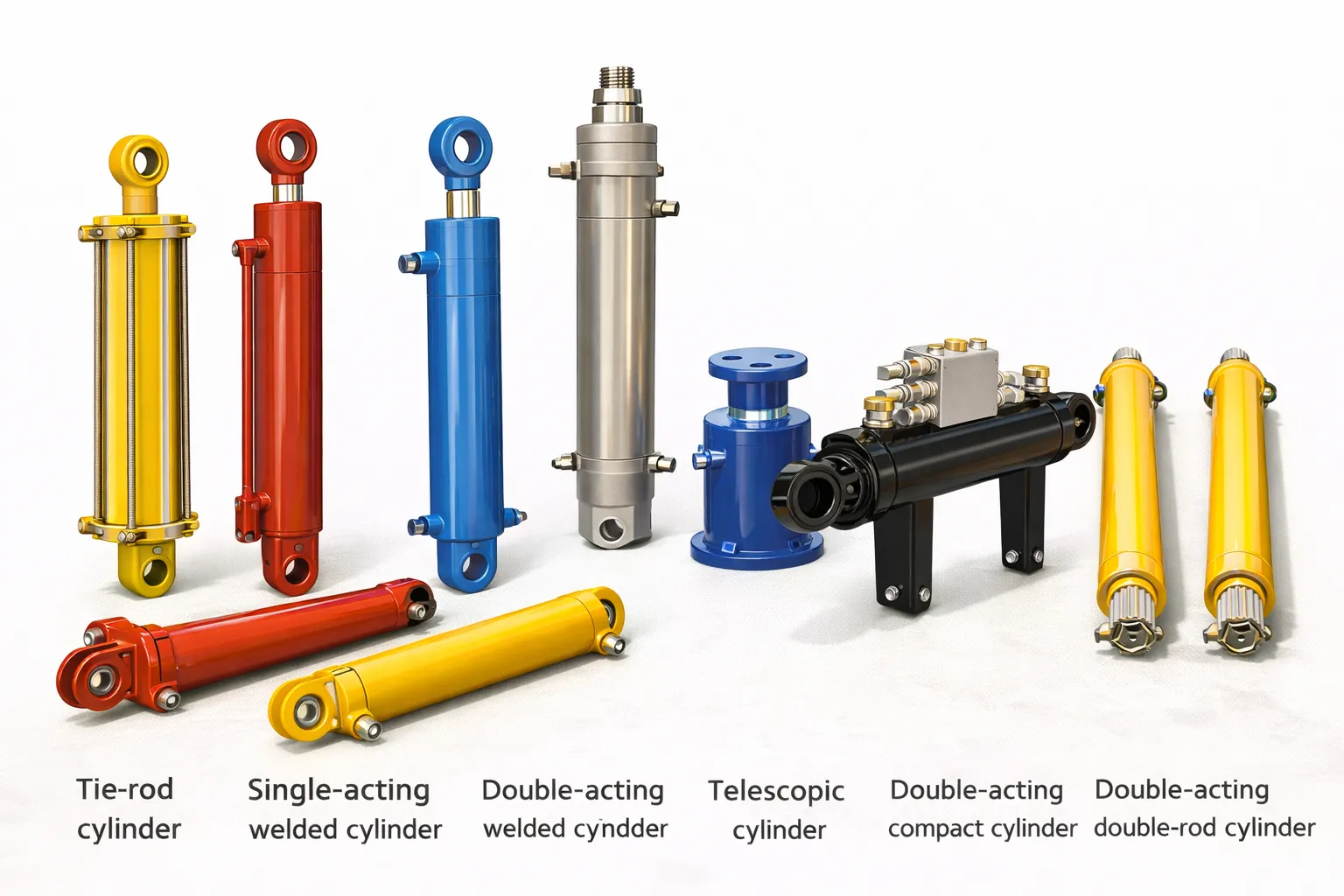
Comparative Analysis: Standard Commercial Actuators vs. Our High-Performance Solution
Understanding the vast technological gap between standard commercial-grade actuators and our specialized lifting devices is crucial for procurement engineers aiming to reduce long-term costs. The following comparative matrix clearly illustrates why upgrading your track maintenance vehicle yields a massive return on investment.
| Critical Feature Metric | Standard Industrial Cylinder | Our Track Maintenance Lift Cylinder |
|---|---|---|
| Cylinder Barrel Material | Standard 45# Carbon Steel (Susceptible to pressure ballooning under shock) | High-Yield 27SiMn Alloy Steel (Prevents structural deformation entirely) |
| Mounting Interface Architecture | Welded or Cast Clevis (High risk of cylinder ear fatigue and shearing) | Solid Forged Ear Seat (Maximum continuous fatigue resistance, zero shear risk) |
| Dynamic Sealing Technology | Basic NBR O-rings (High friction, highly prone to rapid stick-slip wear) | Ultra-low friction PTFE & Polyurethane Step-Seals (Flawless precision) |
| Environmental Rod Protection | Thin commercial chrome plating (High potential for early outdoor corrosion) | Multi-layer Hard Chrome (Superior anti-pitting, rust prevention & lubrication) |
| Factory Quality Assurance | Random batch sampling testing (Leaves room for defective units) | 100% Individual Hydrostatic Pressure & Leakage Tested before shipment |
Global Field Success: Authentic Deployment Case Studies
Theoretical engineering must continuously translate into tangible, undeniably reliable field performance. Across South Korea, Japan, and neighboring East Asian industrial transit hubs, our fluid power solutions are actively resolving critical infrastructure bottlenecks.
Case 1: Seoul Metropolitan Subway Network Overhaul (South Korea)
Client Identity: Principal Rail Infrastructure Contractor
The Engineering Challenge: The client was experiencing dangerously recurrent cylinder ear fatigue on their heavily utilized European-supplied standard lift cylinders. The constant swaying of the elevated platform during operations caused micro-fractures in the welded trunnions, necessitating hazardous and incredibly costly replacements every ten months.
Our Direct Solution: Leveraging our expertise, we quickly supplied custom-dimensioned double acting hydraulic cylinders featuring our signature one-piece forged ear seat and robust 27SiMn bodies in October 2024.
The Operational Result: After 18 months of rigorous, freezing nightly operation, absolutely zero structural failures have been reported. The fleet manager officially noted: “The forged mounts completely neutralized the stress fractures we battled for years. The operational stability is exceptional, and we have permanently eliminated the constant, budget-draining need for fixing hydraulic cylinders mid-season.”
Case 2: Busan Port Authority Heavy Rail Logistics (South Korea)
Client Identity: Heavy Freight Rail Maintenance Division
The Engineering Challenge: Operating in a highly corrosive, salt-laden coastal environment, the standard commercial chrome plating on their hydraulic cylinder piston rods was pitting rapidly. This pitting acted like sandpaper on the rod movements, leading to completely torn dynamic seals and massive, hazardous fluid leaks onto the tracks.
Our Direct Solution: In early 2025, we engineered and delivered premium lifting hydraulic cylinders exclusively equipped with our proprietary 50-micron multi-layer hard chrome plating and heavy-duty metallic scraper rings specifically selected to physically block salt crystals.
The Operational Result: The newly installed hydraulic rams effortlessly survived multiple brutal monsoon seasons with absolutely zero signs of rod corrosion or fluid bypass, cutting their annual maintenance seal replacement budget by over 40%.
Case 3: High-Speed Shinkansen Track Upkeep (Japan)
Client Identity: Specialized Shinkansen Track Maintenance Subcontractor
The Engineering Challenge: The client suffered from severe stick-slip (shuddering and jerking) when carefully lowering the maintenance platform, posing a massive safety risk to technicians handling live high-voltage components, making precise altitude positioning nearly impossible.
Our Direct Solution: We comprehensively engineered a flawless drop-in replacement lift cylinder utilizing our ultra-low friction PTFE tandem seals combined with a highly polished mirror-finish inner barrel and specialized internal mechanical cushioning.
The Operational Result: The high-altitude platform descent became perfectly smooth, predictable, and remarkably linear. The procurement director enthusiastically stated: “The precision control is exactly what we needed to ensure our worker safety, and the offered hydraulic cylinder price was highly competitive against domestic OEMs.”
B2B Technical Frequently Asked Questions (FAQ)
If you are a procurement specialist, fleet director, or lead engineer evaluating fluid power options for your transit network, total transparency is key. These frequently asked questions directly address the most common B2B concerns regarding mechanical integration, longevity, and supply chain logistics.
1. What exactly makes 27SiMn alloy superior to standard 45# steel for a lift cylinder?
27SiMn (Silicon-Manganese) is a high-strength, low-alloy structural steel. Compared to conventional carbon steels like 45#, it offers a significantly higher yield strength and immense tensile strength. This means the cylinder walls can successfully withstand intense internal pressure spikes and severe shock loads from the track vehicle without suffering permanent deformation or ballooning.
2. Can you definitively customize the lift cylinder to fit older, obsolete track maintenance vehicles?
Absolutely. Provided we receive the original mechanical drawings, OEM part numbers, or accurate physical measurements, we can manufacture the unit to perfectly match exact pin diameters, retracted/extended lengths, and port sizes. It acts as a flawless, direct mechanical drop-in replacement, entirely avoiding any costly need to cut or modify the vehicle’s structural chassis.
3. How exactly does the forged ear seat proactively prevent cylinder ear fatigue?
Cast iron or cast steel components inevitably contain micro-porosities formed during the cooling phase. Under the continuous, heavy vibration of railway maintenance, these microscopic porosities become aggressive stress concentrators, rapidly leading to cracks. The industrial forging process utilizes immense pressure to compress the hot steel, perfectly aligning the metallic grain structure along the intended load path, virtually eliminating fatigue fracturing and ensuring your platform never drops.
4. What is the typical manufacturing lead time for customized orders shipped to South Korea or Japan?
For standard dimensional configurations where we actively hold the raw 27SiMn steel tubes and forged blanks in stock, production and testing typically require merely 3 to 4 weeks. Sea freight to major East Asian ports like Busan or Yokohama adds minimal time, ensuring your maintenance fleet experiences minimal downtime during an overhaul.
5. Do you actively provide spare hydraulic cylinder components and seal kits for future maintenance?
Yes. As a comprehensive, full-service hydraulic cylinder manufacturer, we meticulously supply dedicated repair kits containing all necessary premium O-rings, guide rings, rod seals, and metallic wipers specific to the exact serial number you purchase. This ensures that your local maintenance crews can perform routine rebuilds flawlessly years down the line.
6. Are these units fully capable of operating safely in extreme freezing conditions?
Yes, absolutely. For operations frequently conducted in freezing winter climates, we specifically configure the actuators with specialized low-temperature polyurethane seals and recommend appropriate cold-rated hydraulic fluids. The heavy-duty metallic scraper rings are engineered to aggressively chip away accumulated ice on the rod before it can retract and damage the primary pressure seals.
Ready to Upgrade Your Railway Equipment Fleet?
Do not allow underperforming, commercial-grade hydraulic parts to compromise the safety of your elevated maintenance crews, or delay the efficiency of your rail transit network. Stop accepting structural fatigue failures, slow pressure drops, and fluid leaks as inevitable operating costs.
Editor: Cxm