Loading Arm Cylinder for Scraper
Engineered with a robust 27SiMn alloy structure and an extended guide architecture to permanently eliminate rod eccentric wear in continuous medium-load, extreme vibration, and heavy dust earthmoving environments.
Component Overview and Industrial Value
In the demanding sector of heavy civil infrastructure, mass excavation, and highway grading, equipment reliability directly dictates project profitability. The motorized scraper is an indispensable asset on these job sites, responsible for aggressively cutting, loading, hauling, and rapidly discharging bulk earth material. The operational efficiency of this massive machine depends entirely on the precise, uninterrupted articulation of its mechanical loading linkages. The loading arm cylinder acts as the central linear actuator responsible for manipulating the structural framework that forces soil into the scraper bowl. Unlike stationary industrial machinery operating in clean factories, a heavy-duty scraper operates under constant dynamic stress. The loading mechanism must articulate accurately while the machine travels at high speeds over heavily rutted, rocky terrain, subjecting all structural joints and fluid power actuators to continuous, high-frequency vibration and enveloping them in abrasive silica dust.
A prevalent and highly destructive engineering challenge in this specific medium-load earthmoving application is rod eccentric wear, frequently referred to by mechanics as side-loading wear. When the scraper engages highly compacted clay or hidden rock shelves, the resistance forces the extending rod out of its perfectly linear axis. Standard commercial fluid power units lack the internal bearing support to manage this severe lateral deflection. Consequently, the pressurized rod grinds heavily against the metallic head gland. This intense friction rapidly scores the chrome surface, destroys the primary high-pressure seals, and leads to catastrophic fluid blowouts. As a specialized hydraulic cylinder manufacturer, we have entirely re-engineered the internal geometry of our loading arm hydraulic cylinder to eradicate this specific failure mode. By integrating a mathematically optimized extended guide design, we dramatically increase the internal bearing surface area, securely holding the rod concentric and completely neutralizing the destructive effects of lateral vibration and off-axis loads.

Procurement directors and fleet maintenance managers clearly understand that the initial hydraulic cylinder price is mathematically insignificant when compared to the massive financial penalties incurred when an entire earthmoving operation halts due to a blown gland seal. Our dedicated focus on resolving rod eccentric wear through superior metallurgical selection—specifically utilizing 27SiMn alloy steel—positions our premium hydraulic parts as the definitive, cost-effective solution for contractors demanding maximum return on their heavy machinery investments across South Korea, Japan, and the broader Asian infrastructure market.
Technical Parameters and Customization Range
Seamless integration of aftermarket fluid power components requires absolute adherence to original equipment dimensional tolerances, stroke geometries, and pressure ratings. The detailed data matrix below outlines the core technical specifications for our scraper loading arm actuators. We operate a highly agile, digitally integrated manufacturing facility, allowing our engineers to rapidly customize stroke lengths, bore diameters, fluid port threads, and mounting clevis configurations to align perfectly with your specific machinery models.
| Specification Category | Standard Parameter | Engineering Details & Optimization Options |
|---|---|---|
| Target Industry | Engineering Machinery | Optimized exclusively for heavy civil construction, highway grading, and bulk earthmoving. |
| Equipment Category | Scraper | Fully compatible with tractor-drawn, elevating, and twin-engine motorized scrapers. |
| Subsystem / Action | Loading Arm Articulation | Manages the dynamic structural linkage required for continuous earth payload loading. |
| Component Designation | Loading Arm Cylinder | Engineered as the primary lifting muscle to sustain constant mechanical vibration. |
| Action Type | Double acting hydraulic cylinder | Provides active, pressurized hydrostatic force in both the extension and retraction phases. |
| Structure Type | Piston Cylinder | Utilizes a heavy-duty forged piston with advanced anti-extrusion composite sealing rings. |
| Manufacturing Structure | Welded Assembly | Automated robotic submerged arc welding ensures maximum joint integrity against fatigue. |
| Material System | 27SiMn Alloy Steel | Offers vastly superior tensile yield strength and structural rigidity compared to carbon steels. |
| Surface Treatment | Chrome Plated | Micro-cracked thermal chrome provides extreme hardness to resist abrasive rock scoring. |
| Environmental Grade | Vibration + Dust | Fitted with heavy-duty metal-encased polyurethane wiper seals to actively eject silica sand. |
| Working Condition Characteristic | Medium Load Continuous | Engineered for high-frequency loading cycles without suffering fluid thermal degradation. |
| Typical Failure Mode Addressed | Rod Eccentric Wear | Mathematically prevents the piston rod from contacting the gland metal under lateral offset forces. |
| Recommended Configuration | Extended Guide | Dramatically increases the internal bearing surface area to perfectly distribute mechanical loads. |
Operational Kinematics and Fluid Dynamics
A deep, technical understanding of the mechanical kinematics and internal fluid dynamics of the loading arm cylinder is critical for diagnosing systemic performance drops in a scraper fleet and scheduling proactive maintenance. Because the heavy loading arm must exert powerful, controlled force both to engage the hard, compacted soil and to quickly lift the heavy steel mechanism clear of the payload, a simple gravity-return system—such as a basic single acting hydraulic cylinder—is fundamentally insufficient. Therefore, our engineered component is strictly configured as a high-performance double acting hydraulic cylinder. Pressurized hydraulic oil from the machine’s primary implement pump is directed through heavily fortified directional control valves to either the cap end or the rod end of the 27SiMn steel barrel housing.
When the operator commands the loading mechanism to engage the earth, high-pressure fluid enters the cap end (the blind end). The hydrostatic pressure acts uniformly upon the full surface area of the hydraulic cylinder piston, generating massive linear extending force. This extension physically pushes the structural linkages, driving the loading apparatus downward into the soil. Once the bowl is fully loaded and grading is complete, the directional control valve shifts, routing fluid into the rod end. The hydraulic pressure now acts on the smaller annular area of the piston (the total bore area minus the rod cross-section), forcing the rod to retract smoothly and lifting the loading arm safely away from the ground terrain.
During these continuous medium-load earthmoving cycles, the heavy machine bounces and vibrates violently across ungraded bedrock and clay. This chaotic dynamic movement causes immense lateral stress on the extended piston rod. If the internal guiding system is inadequate, the rod will bend microscopically, pressing hard against one side of the cylinder head gland. This is the exact root cause of rod eccentric wear. Our engineering intervention involves an elongated internal gland structure lined with self-lubricating, high-strength composite bearing materials. This extended guide mathematically reduces the leverage of the side load, keeping the rod perfectly centered. By protecting the precise alignment of all internal hydraulic cylinder components, we ensure that the high-pressure fluid seals remain evenly compressed, completely preventing the internal bypass and external weeping that rapidly destroy lesser aftermarket actuators.
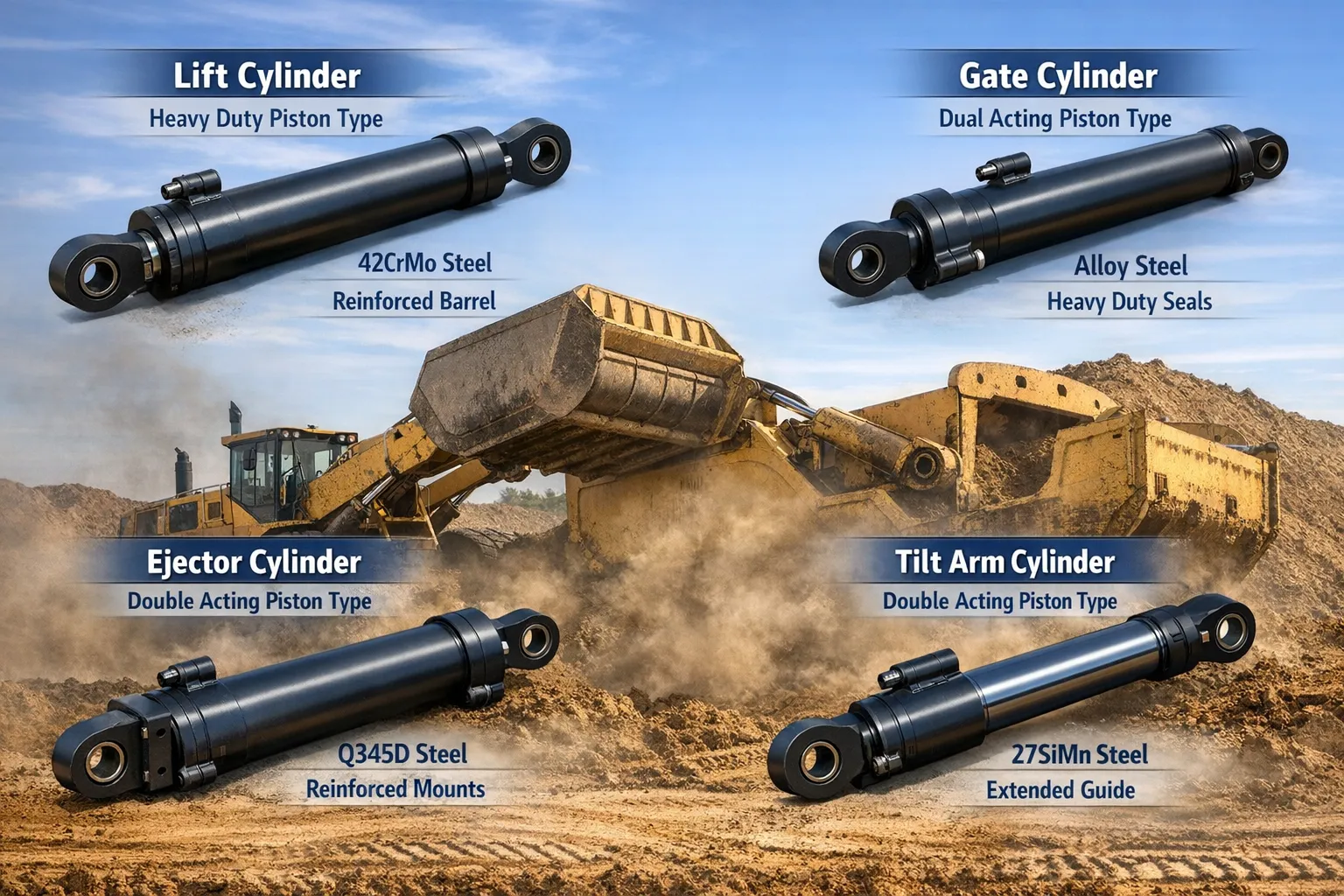
Direct Drop-In Replacement Capability for Leading Machinery Brands
Heavy fleet maintenance relies entirely on operational velocity. When a fluid power component fails in the dirt, the mechanical service crew requires an immediate, dimensionally exact replacement. Modifying structural mounting pins, welding new trunnions, or cutting hydraulic hardlines in the field is simply not a viable option for profitable contractors. Our engineered loading arm cylinder units provide an absolute, millimeter-perfect drop-in fit for your existing equipment architecture.
To facilitate rapid engineering cross-referencing and precise dimensional matching for our enterprise clients, our heavy-duty cylinders are explicitly designed to perfectly replace original equipment units on globally recognized scraper platforms. We provide seamless integration for machines manufactured by Caterpillar (CAT), Komatsu, Volvo Construction Equipment, John Deere, and Terex. (We explicitly note that the mention of these specific corporate machinery brands is provided solely for the technical convenience of component selection and dimensional verification. It does not constitute trademark infringement, nor does it imply an official corporate endorsement. We operate globally as a highly specialized, independent manufacturer producing premium aftermarket fluid power upgrades).
By utilizing our extensive database of OEM specifications, you bypass the notoriously long lead times associated with primary equipment dealer networks. You acquire an upgraded component that solves the fundamental design flaws of standard factory parts, drastically reducing the total hours your technicians spend on fixing hydraulic cylinders in austere, muddy environments. This direct replacement strategy ensures your heavy scrapers return to maximum earthmoving productivity without delay.
Core Technical and Engineering Advantages
Surviving the brutal combination of continuous machine vibration, extreme abrasive silica dust, and offset mechanical medium loads requires an uncompromising approach to metallurgical selection and mechanical design. We have developed five core engineering advantages that establish our hydraulic rams as the premier choice for heavy civil grading applications.
1. Extended Internal Guide Geometry
To aggressively combat the destructive effects of rod eccentric wear caused by heavy side-loading, we significantly increase the distance between the internal piston bearing bands and the rod gland bearing bands. This extended guide acts like a widened vehicle wheelbase, mathematically distributing offset leverage across a much larger surface area. It absolutely prevents the hardened steel rod from making physical contact with the inner metal of the gland, preserving seal integrity and completely eliminating internal barrel scoring.
2. Premium 27SiMn Alloy Steel Construction
Standard commercial cylinders often utilize basic 1045 carbon steel. We fabricate our barrel and mounting structures exclusively from 27SiMn (Silicon Manganese) alloy steel. This specific metallurgy provides superior tensile strength and significantly higher yield strength. Most importantly, 27SiMn offers exceptional weldability. When subjected to the high-frequency vibrations of a scraper in motion, the automated robotic welds on our 27SiMn cylinders strongly resist the micro-fracturing and structural fatigue that destroy inferior units.
3. Ultra-Low Friction Dust Sealing Architecture
Airborne silica dust is highly abrasive and pervasive on grading sites. We deploy an advanced tandem sealing package featuring a heavily reinforced, metal-encased polyurethane outer wiper. This aggressive lip shears baked mud and abrasive dust from the retracting rod. Behind the wiper, we utilize specialized low-friction PTFE (Teflon) composite step seals. These seals maintain perfect fluid retention while dramatically reducing dynamic friction, allowing for smooth, jitter-free articulation of the heavy loading arm under medium load.
4. Micro-Cracked Hard Chrome Plating
The extending piston rod is continuously bombarded by flying rock chips and corrosive soils. We apply a thick layer of micro-cracked hard chrome over a deeply induction-hardened alloy rod core. This produces an exceptionally high Rockwell hardness surface that shrugs off physical impacts. The microscopic fissures inherent in this specific plating technique hold a molecular film of hydraulic oil, constantly lubricating the primary seals as the rod cycles, significantly extending the lifespan of all internal hydraulic parts.
5. Thermal Stability and Fatigue Resistance Optimization
Continuous medium-load scraping operations generate substantial heat within the hydraulic fluid. High temperatures rapidly degrade standard nitrile rubber components. We utilize high-temperature synthetic elastomers and precision-machined internal porting that reduces fluid turbulence and velocity-induced heat. Combined with massive bronze-infused wear bands that eliminate metal-to-metal friction, our cylinders maintain optimal thermal equilibrium, ensuring reliable mechanical power delivery through long, punishing construction shifts.
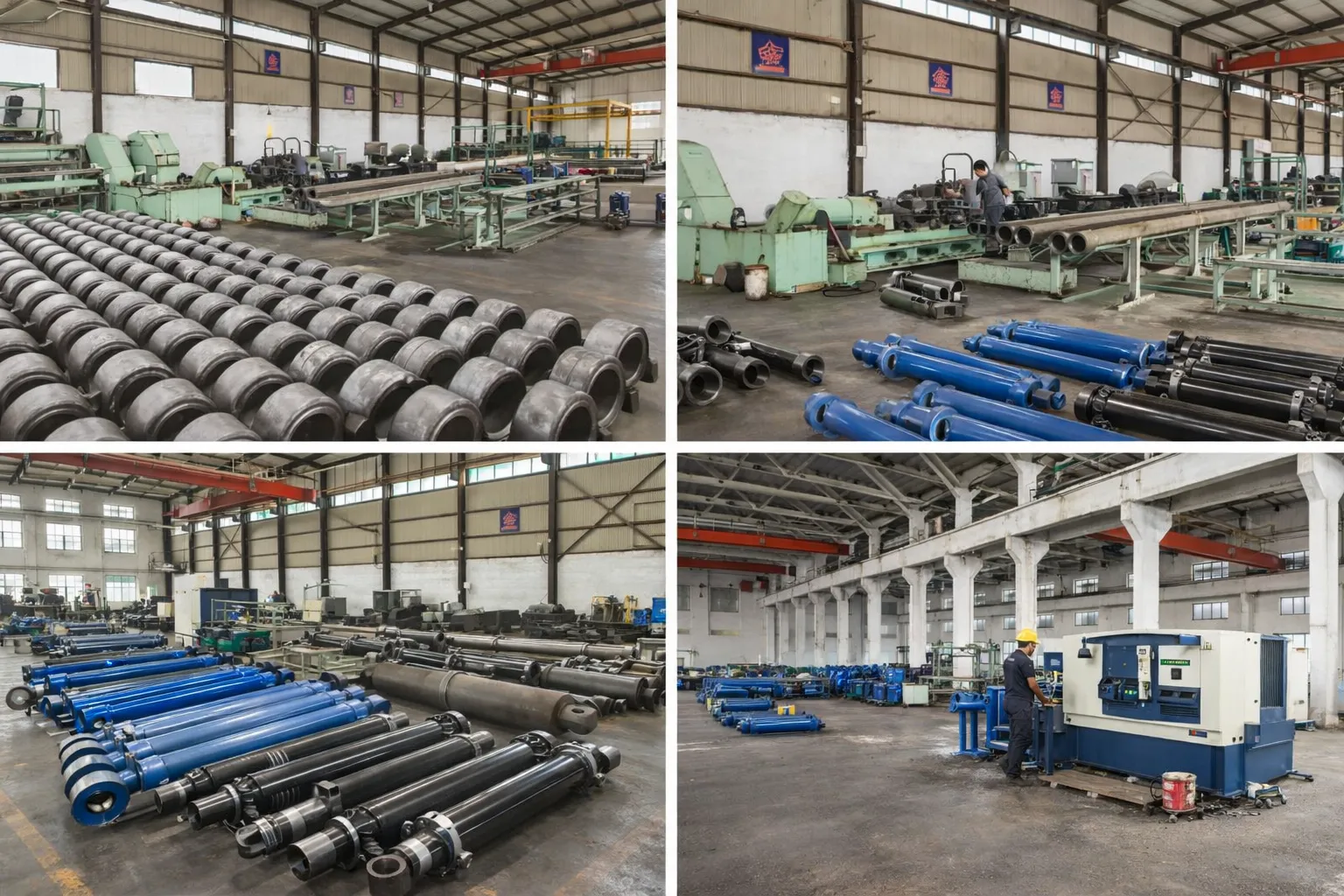
Manufacturing Precision and Quality Control Protocols
Achieving complete immunity to rod eccentric wear requires absolute control over concentricity and heavy machining tolerances. As a fully integrated, primary hydraulic cylinder manufacturer, we maintain strict oversight over every phase of production. From the initial metallurgical laboratory testing of the 27SiMn billets to the final application of industrial-grade polyurethane coatings, we execute all processes strictly within our advanced ISO-certified facilities.
Our state-of-the-art machine park employs multi-axis CNC turning centers to machine the hydraulic cylinder piston, heavy-duty end caps, and precision fluid glands to exacting micrometric standards. The 27SiMn inner barrel undergoes an advanced deep-hole skiving and roller burnishing process. This creates an incredibly smooth, work-hardened internal mirror finish (Ra 0.1-0.2) that is absolutely crucial for minimizing dynamic friction and preventing pressure seal degradation. The structural clevises and trunnions are joined to the barrel using automated, multi-pass robotic submerged arc welding, ensuring deep penetration and zero weld porosity, effectively countering high-frequency vibration.
Our uncompromising quality assurance culminates in a mandatory 100 percent hydrostatic factory testing protocol. Every single loading arm cylinder is mounted to a dynamic testing rig and subjected to hydraulic pressures well beyond its specified operational threshold. We meticulously verify zero internal fluid bypass, zero external weeping, and perfectly smooth stroke action under simulated side loads. To support comprehensive lifecycle management, every unit receives a permanent laser-etched serial number. This digital traceability ties the component back to its specific material heat logs and testing data, drastically simplifying the procurement of replacement components for future hydraulic cylinder repair and fleet maintenance operations.
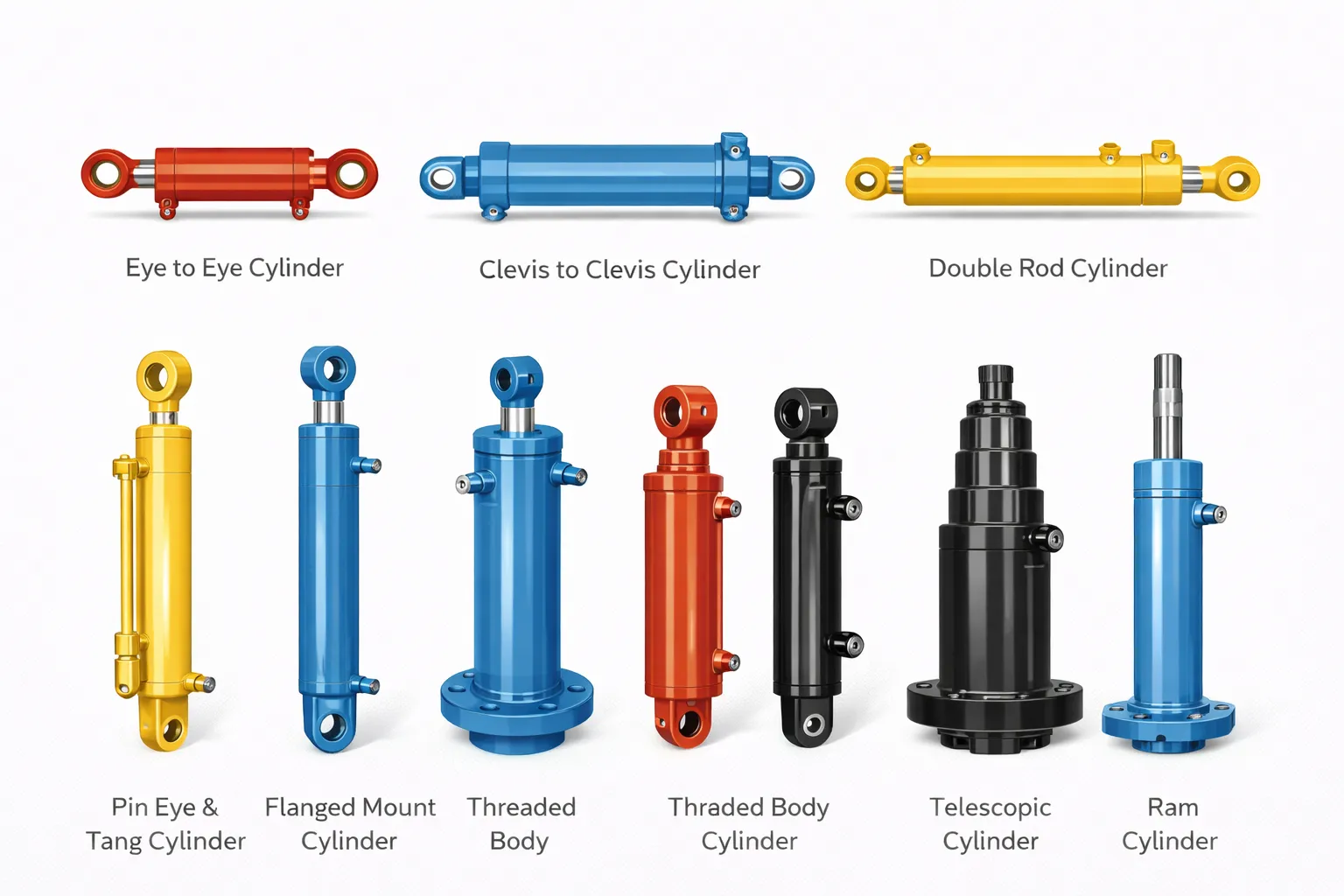
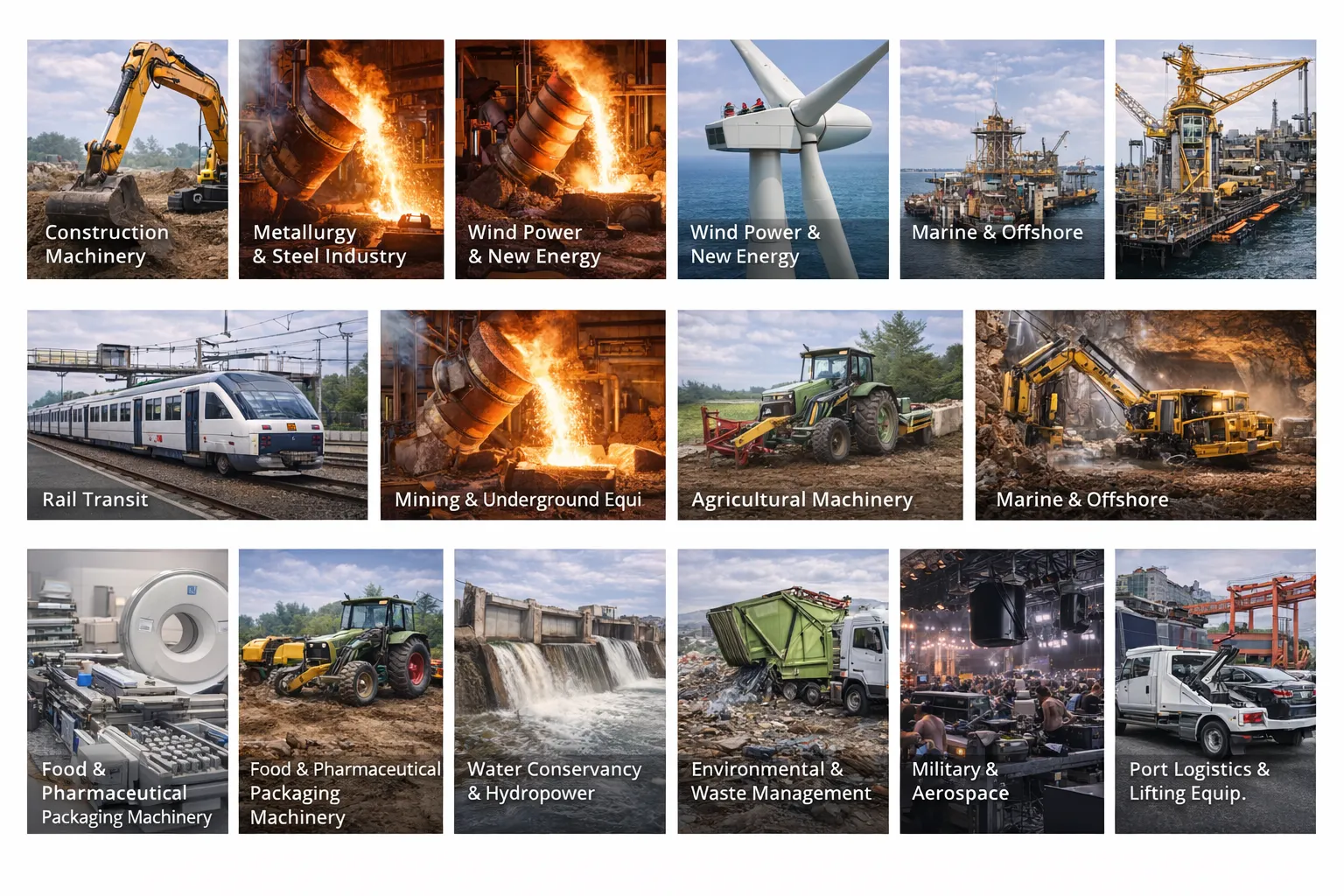
Broad Industry Applications Beyond Earthmoving Scrapers
The rigorous structural enhancements that make our loading arm actuators impervious to intense vibration and side-loading translate flawlessly to a multitude of severe-duty industrial applications. An actuator built specifically to survive an earthmoving scraper will deliver exceptional longevity in any highly challenging environment. Discover more about our targeted fluid power solutions on our dedicated construction machinery industry sector page.
- Engineering and Heavy Construction: Beyond scrapers, our vibration-resistant technology is highly effective for excavator dipper sticks, large wheel loader lift arms, and articulated dump truck steering systems operating in highly abrasive, medium-load terrains.
- Metallurgy and Heavy Forging: Engineered to withstand extreme ambient radiant heat and massive mechanical shocks in continuous steel casting lines, slag handling equipment, and high-tonnage industrial presses.
- Plastics and Rubber Manufacturing: Delivering perfectly concentric, high-frequency clamping forces with absolute zero pressure drop for massive injection molding and extrusion machinery.
- Material Handling and Port Logistics: Providing leak-free, high-stability vertical lifting power for heavy-duty reach stackers, automated straddle carriers, and maritime container handlers exposed to corrosive coastal salt spray.
- New Energy and Environmental Processing: Highly resistant to chemical degradation and continuous high-cycle fatigue, making our cylinders ideal for massive solid waste compactors, industrial metal balers, and solar tracking arrays.
- Specialized Target Scenarios: Our engineering team designs bespoke fluid power systems for underground tunnel boring machines, subsea trenching equipment, and explosive-environment compliant applications in the offshore energy sector.
Comparative Analysis: Standard Market Cylinders vs. Our Upgraded Solution
Procurement strategies based solely on the lowest initial hydraulic cylinder price frequently result in massive unforeseen maintenance costs. Installing standard commercial cylinders in a heavy scraper guarantees premature failure directly due to rod eccentric wear. The comparative analysis below clearly demonstrates the critical operational and financial advantages of deploying our engineered 27SiMn solution.
| Evaluation Metric | Standard Aftermarket Cylinder | Our Extended Guide Cylinder |
|---|---|---|
| Resistance to Rod Eccentric Wear | Poor. Short internal guides allow side loads to deflect the rod, heavily scoring the barrel. | Exceptional. Extended internal guide geometry perfectly distributes offset mechanical loads. |
| Material & Structural Integrity | Basic carbon steel. Welds prone to micro-cracking under continuous machine vibration. | Premium 27SiMn alloy steel. Automated robotic welding provides massive fatigue resistance. |
| Sealing Technology for Dust | Basic rubber wipers quickly degrade, allowing silica sand to enter and destroy primary seals. | Metal-encased aggressive polyurethane wiper paired securely with low-friction PTFE step seals. |
| Piston Rod Hardness | Standard commercial plating. Highly vulnerable to deep rock strikes and rapid fluid corrosion. | Deeply induction-hardened alloy core permanently protected by thick, micro-cracked hard chrome. |
| Lifecycle Total Cost of Ownership | High. Requires frequent mechanical labor and lost days for completely fixing hydraulic cylinders. | Very Low. Drastically extends continuous uptime and maximizes grading profitability. |
Global B2B Success Stories: Proven in the Dirt
Our rigorous engineering claims are validated daily on heavy construction sites across Asia. We partner directly with large fleet operators in South Korea, Japan, Taiwan, and Vietnam to eliminate chronic equipment failures. Below are five documented case studies highlighting our successful field deployments.
Case 1: Highway Expansion Grading, Incheon, South Korea (August 2025)
Client and Application: Incheon Infrastructure Group, operating twin-engine scrapers cutting a new highway path through dense, rocky clay under constant vibration.
The Challenge: The intense side loads generated when hitting hidden bedrock were causing severe rod eccentric wear. The OEM replacement cylinders were failing every 600 hours due to blown glands and heavily scored rods.
Contact Method: Their procurement team contacted our engineering desk directly through our secure B2B web portal after searching online for heavy-duty replacement options.
Result: We delivered our upgraded cylinders featuring the extended internal guide geometry. The increased bearing surface completely neutralized the side loads. The units have now surpassed 2,500 hours with zero fluid weeping.
“The difference in structural rigidity is obvious. The extended guide solved a massive headache for our maintenance crew. We have effectively eliminated our mid-shift downtime.” — Choi Min-su, Chief Fleet Engineer
Case 2: Volcanic Soil Leveling, Hokkaido, Japan (April 2025)
Client and Application: Northern Terrain Solutions, utilizing tractor-drawn scrapers to level vast agricultural lands composed of highly abrasive volcanic ash.
The Challenge: The airborne volcanic dust acted as a grinding compound, rapidly destroying the standard wiper seals on their loading arms, leading to catastrophic internal fluid bypass and scratched rods.
Contact Method: Met with our technical representatives during an international heavy machinery components exposition in Tokyo.
Result: We retrofitted their machines with cylinders equipped with our severe-duty tandem polyurethane sealing package. The aggressive metal-encased wipers completely blocked the volcanic ash, reducing their annual budget for fixing hydraulic cylinders by nearly 60%.
“Standard parts simply disintegrate in volcanic soil. Your sealing architecture is phenomenal. The hydraulic oil stays completely clean, and the rods show zero scoring after months of use.” — Hiroshi Tanaka, Lead Mechanic
Case 3: Industrial Park Development, Taichung, Taiwan (August 2024)
Client and Application: Formosa Earthworks Inc., performing bulk earthmoving and precise site preparation for a massive new semiconductor manufacturing facility.
The Challenge: Continuous medium load, high-cycle operation under the hot summer sun caused rapid thermal degradation of standard nitrile seals. The machines were losing clamping force mid-afternoon due to internal fluid leakage.
Contact Method: Reached out via email after discovering our comprehensive technical documentation regarding high-temperature fluid power solutions via our website.
Result: By utilizing our low-friction PTFE step seals and bronze-infused wear bands, the dynamic heat generation was drastically reduced. The double acting hydraulic cylinder maintained perfect pressure retention throughout the longest and hottest operational shifts.
“Heat fade used to cost us hours of productivity every day. These units run incredibly cool, and the power delivery remains perfectly consistent. An excellent, reliable engineering upgrade.” — Lin Chen-wei, Operations Manager
Case 4: Highway Construction Grading, Hanoi, Vietnam (February 2026)
Client and Application: Northern Delta Constructors, building a new national highway using motorized scrapers in extremely wet, dusty, and chaotic conditions.
The Challenge: The combination of sticky clay and constant machine vibration was causing severe weld micro-fractures on the mounting clevises of their commercial replacement cylinders.
Contact Method: Expedited sourcing request submitted to our sales team for structurally reinforced, vibration-resistant actuators.
Result: We supplied units fabricated entirely from 27SiMn alloy steel with automated submerged arc welds. The superior yield strength of the 27SiMn completely eliminated the weld fatigue issues, allowing uninterrupted construction of the critical infrastructure.
“The metallurgy makes a massive difference. The 27SiMn alloy takes incredible physical abuse and constant vibration without breaking a sweat. Extremely impressive build quality.” — Tran Van Nam, Project Director
Case 5: Airport Runway Expansion, Seoul, South Korea (October 2025)
Client and Application: Han-Seoul Civil Works, requiring hyper-accurate grading for a massive new runway sub-base.
The Challenge: The automated laser-control system on their scrapers was struggling because cheap replacement cylinders suffered from severe stick-slip friction, causing jerky, inaccurate loading arm movements.
Contact Method: Contacted our engineering team via the homepage link, specifically inquiring about low-friction sealing profiles for precision work.
Result: Our highly burnished internal barrel finish combined with Teflon-based primary seals provided perfectly smooth, linear actuation. The scrapers could maintain millimeter-level grading accuracy without over-correcting, accelerating the overall project timeline.
“The linear response is flawlessly smooth. The highly competitive hydraulic cylinder price allowed us to upgrade multiple machines simultaneously. Perfect for precision laser-guided work.” — Park Jung-ho, Automation Specialist
Frequently Asked Questions
We emphasize absolute technical transparency in all our commercial partnerships. Below are detailed answers to the most common questions our engineering team receives regarding our heavy earthmoving fluid power solutions.
1. How exactly does your design prevent rod eccentric wear in scrapers?
2. Why do you utilize 27SiMn alloy instead of standard carbon steel?
3. Can my in-house mechanics handle routine hydraulic cylinder repair on these units?
4. Do you manufacture custom replacement cylinders for obsolete machinery?
5. What are the shipping logistics and lead times for South Korea?
6. How does your pricing structure compare to sourcing from main equipment dealers?
7. Are your fluid seals compatible with standard heavy machinery oils?
8. Do you also manufacture single-acting cylinders for other applications?
Eradicate Downtime. Upgrade Your Earthmoving Fleet Today.
Stop allowing inferior commercial cylinders to sabotage your grading schedules and massively inflate your maintenance budgets. Partner directly with an engineering team that understands exactly how to physically neutralize rod eccentric wear, survive brutal machine vibration, and block abrasive silica dust. Whether you need an immediate replacement loading arm cylinder or are planning to overhaul an entire fleet of aging scrapers, we have the advanced manufacturing capacity to deliver unparalleled structural reliability.
Our technical application specialists typically respond with precise engineering specifications and direct B2B pricing within 24 hours.
Editor: Cxm