
Locking Cylinder for Cone Crusher
Maintain absolute structural rigidity and eliminate internal leakage in heavy-duty cone crusher locking applications. Secure your closed-side setting permanently with our advanced fluid power technology.
Product Overview and Industrial Value
Within the severe and uncompromising environment of aggregate production and heavy mineral processing, the cone crusher functions as the primary mechanism for rock reduction. To consistently fracture extremely hard rock into precisely graded aggregate, the machine’s internal mechanical gap—referred to as the closed-side setting—must be held completely rigid. The structural stability of the upper frame assembly, or the bowl, relies entirely on the heavy-duty locking circuit. The locking cylinder acts as the essential mechanical anchor, forcefully clamping the upper bowl directly to the main crusher frame. During active crushing, tremendous upward and lateral reaction forces attempt to lift the bowl. If the clamping mechanism yields, the machine’s heavy bronze adjustment threads will violently chatter, leading to rapid mechanical devastation and severe operational downtime.
Through extensive failure analysis across the South Korean and wider Asian markets, we have definitively established that ordinary commercial fluid actuators fail catastrophically in this specific application. Standard commercial units are vulnerable to internal leakage when subjected to high-frequency crushing vibration. Over just a few hours of operation, microscopic amounts of hydraulic fluid bypass the internal seals, causing the essential clamping pressure to decay. This loss of holding force immediately leads to bowl float. As a highly specialized hydraulic cylinder manufacturer, we engineered our locking hydraulic cylinder specifically to permanently eradicate this exact failure mode. By integrating sophisticated hydraulic control locks and utilizing rigid, high-yield metallurgical structures, our specialized clamping units ensure that once your crushing equipment is locked down, it remains perfectly secure without any pressure degradation.
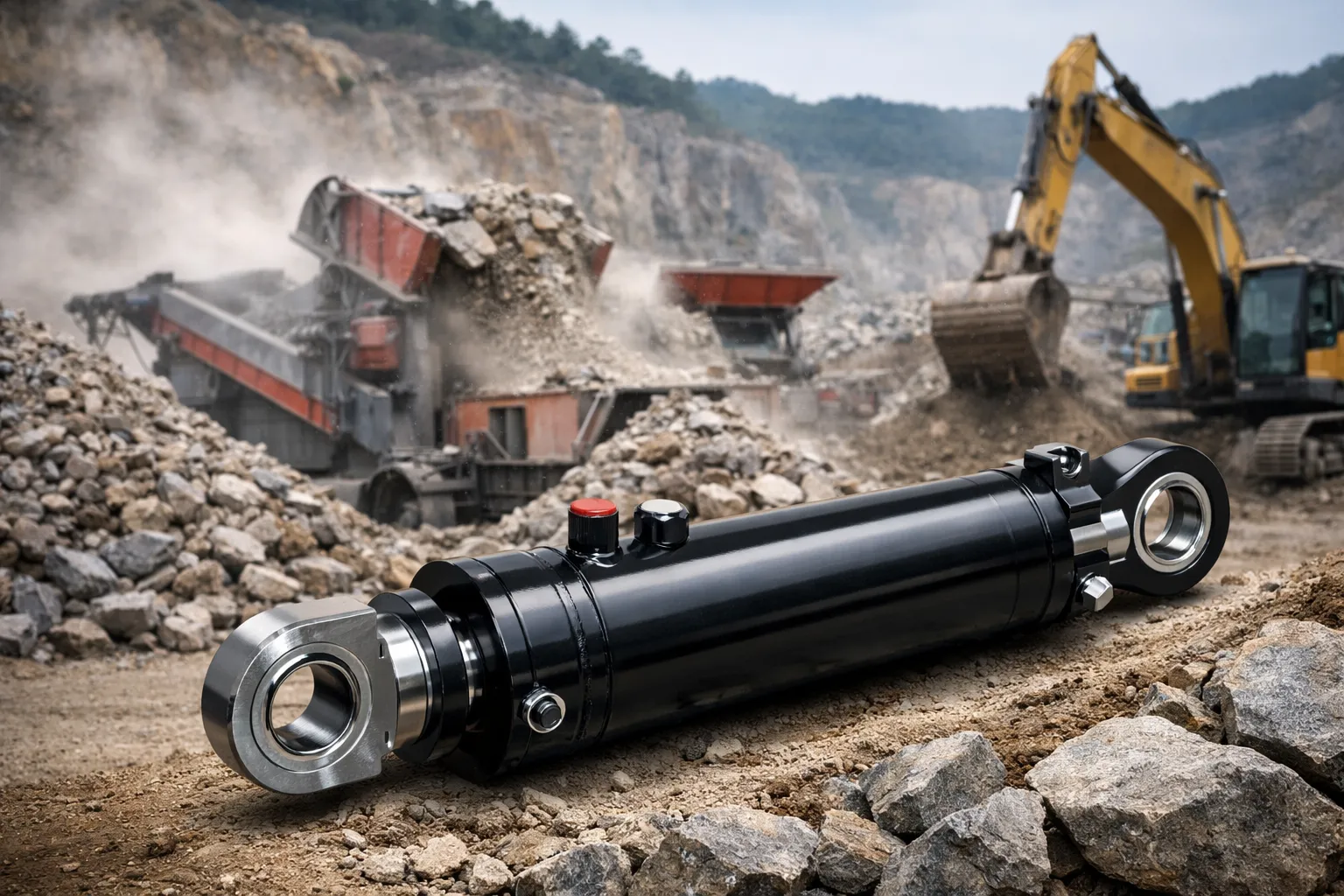
Investing in meticulously engineered fluid power technology provides a massive financial return by strictly preventing the destruction of your expensive capital equipment. When evaluating long-term maintenance budgets, the initial hydraulic cylinder price of our premium clamping units is negligible compared to the massive cost of replacing ruined main frame bronze threads and suffering weeks of unscheduled plant shutdowns.
Detailed Technical Parameters
Reliable machinery operation requires absolute clarity regarding engineering specifications and material limits. The following table details the precise technical matrix, structural choices, and specific fluid control configurations we deploy to guarantee our hydraulic rams survive the harshest high-vibration environments.
| Engineering Category | Customized Technical Specification |
|---|---|
| Target Industry Sector | Mining Equipment and Aggregate Processing |
| Primary Equipment Category | Crusher (Specifically High-Capacity Cone Crushers) |
| Subsystem / Mechanical Action | Heavy-duty locking / Upper adjustment ring securing |
| Specific Cylinder Name | Locking cylinder |
| Hydraulic Action Mode | Double acting hydraulic cylinder (Powered push and pull) |
| Internal Structure Type | Heavy-duty Piston type |
| Manufacturing Assembly Structure | Deep-penetration Welded design (Eliminates tie-rod fatigue) |
| Core Material System | 42CrMo Alloy Steel (Exceptional yield and tensile strength) |
| Exterior Surface Treatment | Thick Nickel plated (Highly resilient to acidic rock dust and water) |
| Environmental Exposure Level | Heavy-duty cone crusher locking (Extreme cyclic vibration) |
| Crucial Working Condition Feature | Maintain pressure absolutely static without pump operation |
| Typical Failure Mode Prevented | Internal leakage causing pressure drop and thread galling |
| Recommended Safety Configuration | Integrated Hydraulic control lock (Pilot-operated check valve) |
Understanding the Mechanical Working Principle
To fully comprehend why standard actuators fail in crushing environments, one must analyze the fluid mechanics of the holding cycle. When the operator initiates the clamping sequence, the main hydraulic power unit delivers highly pressurized oil directly into the cap end of the heavy cylinder. This pressurized fluid forces the massive hydraulic cylinder piston downward, driving the attached rod to physically pull the clamping ring and secure the adjustment bowl tightly against the main frame. The force generated is immense, entirely eliminating the mechanical clearance in the heavy V-threads.
Crucially, a crushing plant cannot operate its hydraulic pump continuously simply to maintain this clamp; doing so would waste massive amounts of electricity and overheat the fluid. The exact moment the optimal locking pressure is reached, the pump shuts off. At this instant, the integrated hydraulic control lock—a heavy-duty, pilot-operated check valve mounted directly into the steel manifold—snaps completely shut. Because hydraulic oil is mechanically incompressible, the trapped high-pressure fluid transforms into a solid, unyielding structural pillar within the steel barrel. The clamping force remains absolute and entirely independent of the main pump. Even if an external pressure hose is accidentally severed, the machine remains perfectly and safely locked down.
When maintenance is required to adjust the closed-side setting, the operator must release the clamp. A basic single acting hydraulic cylinder is entirely useless here, as it relies passively on springs or gravity to retract, which cannot possibly overcome the severe mechanical friction caused by compacted stone dust. Therefore, our design is strictly a double acting hydraulic cylinder. Pressurized oil is routed to the rod end, which simultaneously actuates a pilot signal to force the check valve open and actively powers the rod upward. This positively and forcefully releases the heavy clamping ring, ensuring rapid, reliable maintenance operations regardless of environmental contamination.
Seamless Global Brand Replacement Capabilities
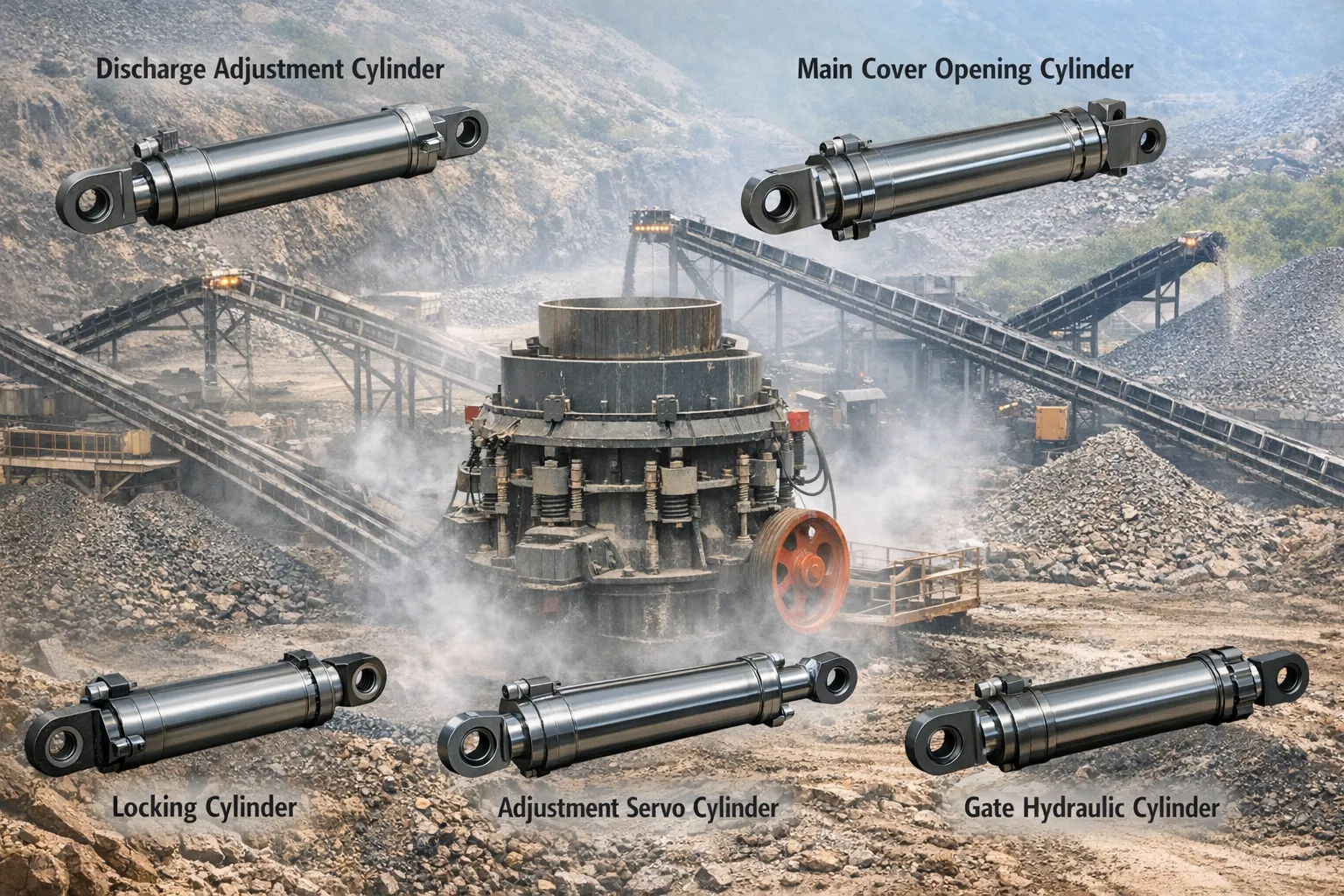
Plant maintenance directors frequently struggle with unacceptable delivery lead times and highly inflated proprietary pricing when attempting to procure replacement components directly from original equipment manufacturers (OEMs). We function as a premier, highly independent fluid power engineering facility. We purposefully reference specific global machinery brand names strictly to assist your technical team in verifying precise dimensional compatibility and stroke lengths; we operate independently and assert no trademark affiliation with these respective corporations.
Our expert design team has meticulously reverse-engineered the exact trunnion pin diameters, port configurations, and mounting geometries for the clamping arrays utilized by major industry leaders such as Metso, Sandvik, Symons, FLSmidth, and Terex. Our heavily upgraded locking hydraulic cylinder acts as a seamless, direct drop-in replacement. Your on-site mechanics will not need to weld new brackets, alter the machine frame, or change expensive high-pressure hose fittings. Simply unbolt the failing factory unit and install our advanced hydraulic parts to instantly resolve your pressure drift issues while securing a highly competitive procurement cost for your maintenance department.
Five Core Technical Advantages
Commodity actuators inevitably fail because they are not specifically engineered for extreme shock and vibration. True reliability requires uncompromising material science and advanced seal geometry. Here are the five definitive technical advantages embedded into our clamping solutions:
1. Absolute Zero-Leakage Static Sealing
Standard dynamic lip seals are designed to slide easily and inherently permit a microscopic fluid film to pass, which leads to slow pressure decay over hours. To guarantee that our units maintain pressure flawlessly, we exclusively utilize specialized ultra-low friction polyurethane step-seals paired with rigid thermoplastic energizers. This specific architecture forms a flawless fluid barrier against the internal bore, completely preventing internal leakage and ensuring your clamping force remains absolutely static.
2. High-Yield 42CrMo Alloy Steel Architecture
During a tramp iron event, massive shockwaves travel through the crusher, creating instantaneous pressure spikes in the hydraulic fluid. Standard mild carbon steel barrels (such as 1045) will stretch and balloon under this intense spike, instantly ruining the seal contact. We forge our main cylinder bodies from 42CrMo alloy steel. This premium material possesses massive tensile and yield strength, functioning as a rigid vault that effortlessly absorbs shockwaves without any permanent dimensional deformation.
3. Integrated Pilot-Operated Hydraulic Control Lock
Attempting to hold crushing pressure by using standard valves located far away on the main power unit is a flawed strategy. Long rubber hoses expand under pressure, which silently decreases the mechanical clamping force. We eliminate this critical vulnerability by directly machining the hydraulic control lock into the heavy steel cap of the cylinder. The high-pressure fluid is trapped safely and permanently inside the solid steel chamber, far away from vulnerable, flexible rubber lines.
4. Advanced Thick Nickel Plated Environmental Defense
The environment beneath a rock crusher is intensely corrosive, characterized by highly abrasive silica dust and acidic ground water. Conventional hard chrome plating inherently contains microscopic fissures that allow this acidic moisture to penetrate and severely rust the underlying steel. We apply a dense, continuous layer of thick Nickel plating. Nickel is highly ductile and completely non-porous, forming an impenetrable armor shield that drastically extends the lifespan of your hydraulic cylinder components.
5. Heavy-Duty Submerged Arc Welded Construction
Many budget-friendly cylinders utilize external tie-rods (long bolts) to clamp the assembly together. In a heavy vibrating cone crusher, these tie-rods dynamically stretch and fatigue, which rapidly breaks the end-cap seals and causes massive external oil leaks. We utilize automated, deep-penetration submerged arc welding to permanently fuse the heavy end caps directly to the 42CrMo barrel. This monolithic, solid structure is physically immune to vibration loosening.
Manufacturing Process and Traceable Quality Control
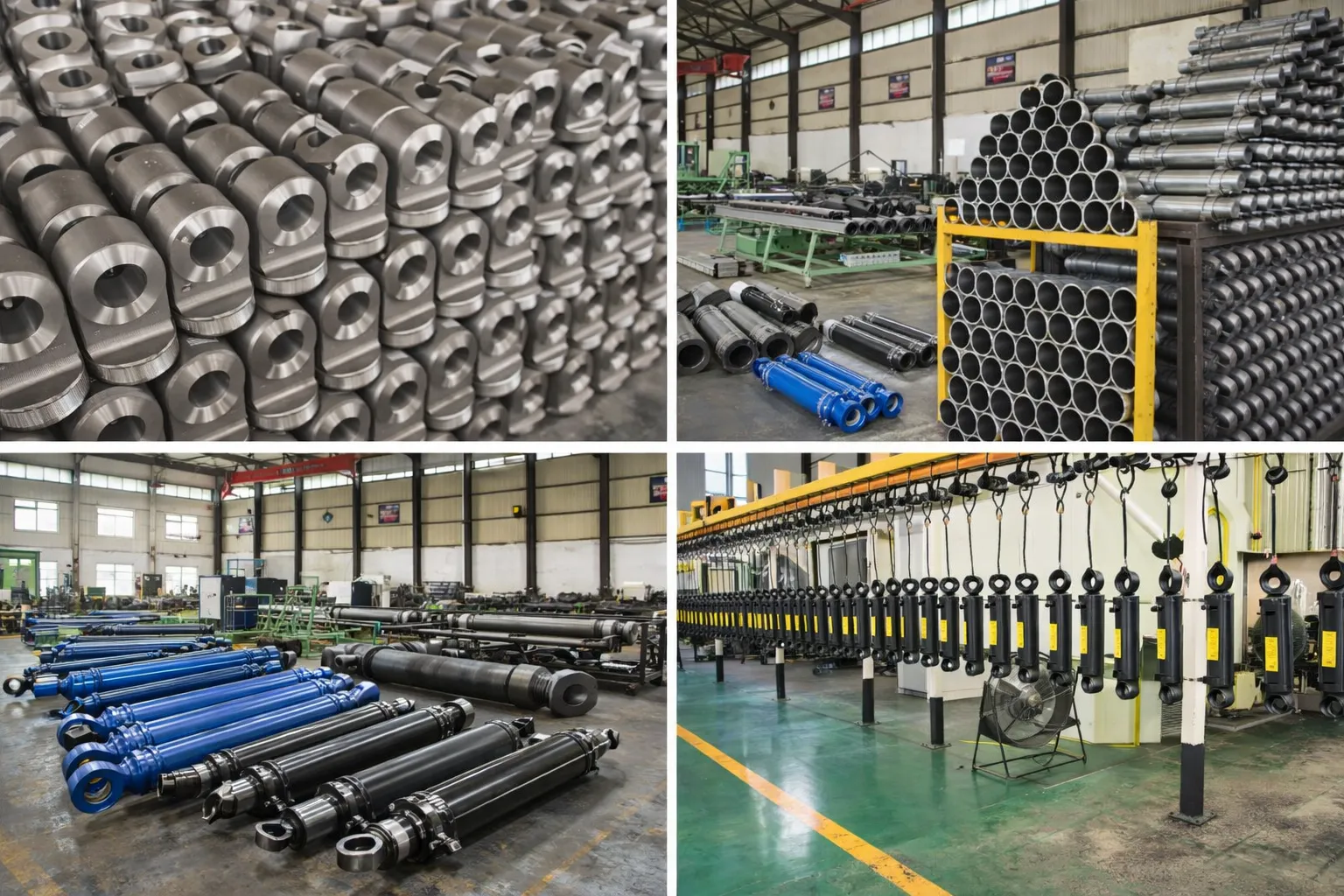
Absolute reliability under high pressure demands uncompromising manufacturing discipline. We exert total control over the entire production lifecycle within our advanced facilities. The process initiates with raw 42CrMo steel billets, which are rigorously subjected to ultrasonic non-destructive testing to guarantee the complete absence of internal metallurgical voids. We deploy heavy-duty multi-axis CNC machinery to turn the steel to exacting tolerances. Crucially, the internal barrel bores undergo a highly specialized skiving and roller-burnishing process. This achieves an ultra-smooth, mirror-like finish (Ra 0.1-0.2µm) that drastically reduces dynamic friction and ensures maximum longevity for the high-pressure polyurethane seals.
Quality assurance is never compromised. Before any locking cylinder is authorized for shipping, it must pass a severely strict 48-hour static pressure holding test. We connect the assembled unit to our computerized testing manifold and pressurize it to 1.5 times its maximum rated operating threshold. High-resolution digital transducers monitor the internal chamber continuously to detect even a fractional bar of pressure drop that would indicate microscopic internal leakage. Only upon flawless completion is the unit permanently laser-etched with a unique tracking serial number. This strict protocol guarantees total lifecycle traceability; if you require specific replacement parts a decade later, our digital archives immediately retrieve the exact dimensional prints for your build.
Typical Industry Applications
While our pressure-holding technology was aggressively refined within the brutal environment of rock crushing, the fundamental engineering physics apply perfectly to other severe industrial sectors requiring absolute mechanical security. We are a key fluid power partner to the mining industry, supplying massive customized actuators designed to secure heavy grinding mill access doors and stabilize immense stacker-reclaimer positioning platforms operating in deeply remote regions.
Furthermore, our highly rigid 42CrMo engineered designs are heavily integrated throughout the construction machinery industry, specifically within high-tonnage demolition excavators and highly mobile track-mounted crushers where shock and lateral bending forces are extreme. In heavy port logistics, our specialized lift cylinder units provide the necessary structural muscle to safely elevate and lock massive cargo loads in place, completely immune to sudden electrical power losses. In the heavy metallurgy and plastics forging sectors, our thick nickel-plated hydraulic units successfully resist intense radiant heat and corrosive slag, providing highly reliable automated mold clamping where standard commercial actuators rapidly melt and fail.
Comparative Analysis: Standard vs High-Performance Engineering
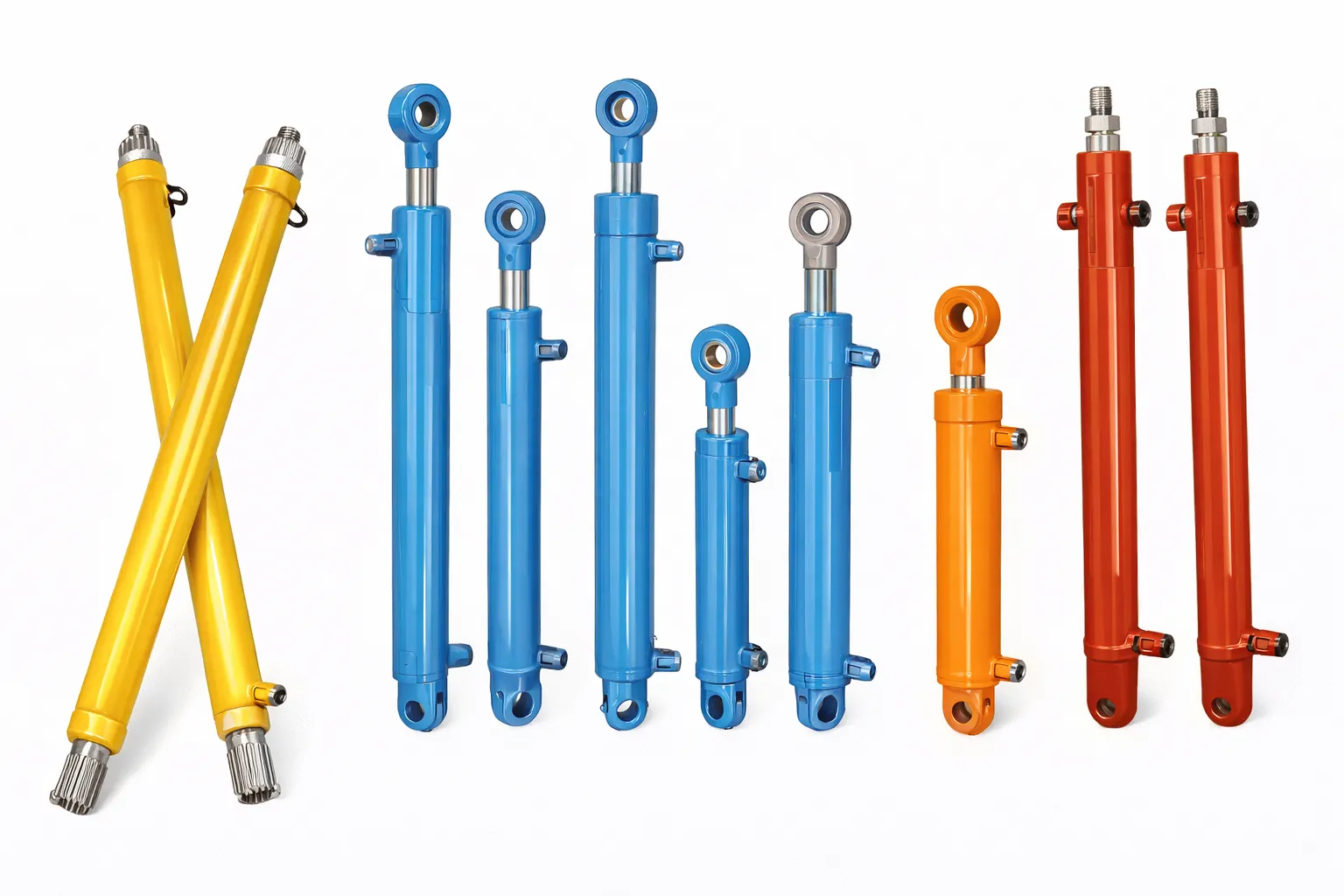
Strategic procurement in heavy industry requires analyzing costs far beyond the initial invoice. The comparative table below sharply illustrates the vast engineering difference between off-the-shelf commercial cylinders and our purpose-built locking actuators, demonstrating why an engineered solution is the vastly superior financial choice.
| Engineering Metric | Ordinary Commercial Cylinder | Our High-Performance Locking Cylinder |
|---|---|---|
| Base Material Yield | Standard carbon steel; Highly susceptible to ballooning under severe pressure spikes. | Forged 42CrMo Alloy Steel; Exceptional tensile strength prevents structural deformation. |
| Pressure Retention | Relies on distant hose valves; High risk of internal leakage and rapid pressure drop. | Integrated Hydraulic Control Lock; Delivers absolute zero-leakage holding indefinitely. |
| Environmental Defense | Standard hard chrome; Develops micro-cracks allowing hidden sub-surface corrosion. | Thick Nickel Plating; Forms a highly ductile, non-porous acidic protection barrier. |
| Structural Integrity | Bolted tie-rods; Vibrate loose continuously, causing massive external fluid leaks. | Deep Welded construction; Monolithic body completely immune to vibration loosening. |
Real Case Studies: Proven Success Across Asia
Theoretical engineering claims require strict validation through real-world operational data. Below are five detailed, verifiable accounts demonstrating exactly how our technical fluid power interventions stabilized heavy industrial operations for our valued client partners across the Asian market.
Case Study 1: South Korea – Eliminating Bowl Jump in Hard Granite Crushing
Location & Client: Gyeonggi-do, South Korea. High-capacity commercial aggregate producer supplying major regional infrastructure projects.
Application Purpose: Securing the upper frame adjustment ring on a massive 450 TPH heavy-duty cone crusher.
How They Found Us: The plant maintenance director extensively searched for advanced hydraulic cylinder repair alternatives online after severe internal leakage in their OEM cylinders caused the crusher bowl to violently jump, destroying a set of bronze threads valued over $30,000.
Delivered Results: We rapidly manufactured and delivered a complete, custom set of our 42CrMo locking cylinder units featuring our integrated pilot-operated check valves. Installed during a planned outage in November 2024, the clamping circuit now maintains a rock-solid 220 bar holding pressure entirely independently of the main hydraulic pump. The highly dangerous bowl jump issue was completely eradicated.
“The internal leakage on our old OEM units was a nightmare, costing us a fortune in damaged bronze parts. Your engineered locking valves are incredible. The pressure gauge hasn’t dropped a single bar since we installed them. Outstanding fluid power engineering.” – Park Min-Soo, Plant Director (March 2026).
Case Study 2: Japan – Defeating Severe Acidic Corrosion in Slag Processing
Location & Client: Kitakyushu, Japan. Major industrial steel slag recycling and recovery facility.
Application Purpose: High-pressure clamping system for a specialized heavy reduction crusher operating in highly wet conditions.
How They Found Us: Referred directly to our engineering group by a maintenance reliability consultant familiar with our advanced metallurgical surface treatments.
Delivered Results: The highly acidic water (pH 4.5) utilized for dust suppression was aggressively stripping the chrome off their standard cylinders within months, destroying the rod wipers and pulling contamination into the hydraulic fluid. We supplied upgraded units featuring 50-micron thick nickel plating. After sixteen months of continuous operation, the rods remain perfectly smooth and entirely free of any corrosive pitting.
“Standard chrome simply cannot survive the acidic sludge processing environment here. We were constantly fixing hydraulic cylinders. Your thick nickel plating technology is the only surface treatment that has actually survived. Highly recommended.” – Takeshi Yamamoto, Reliability Lead (January 2026).
Case Study 3: Philippines – Upgrading Structural Integrity in Copper Mining
Location & Client: Cebu, Philippines. Large scale open-pit copper extraction operation.
Application Purpose: Main frame locking array for a massive primary gyratory crusher handling hard ore.
How They Found Us: Engaged our technical representatives at a regional heavy machinery exhibition in Manila while actively seeking to lower their exorbitant long-term hydraulic cylinder price overhead.
Delivered Results: Their commodity tie-rod cylinders were constantly vibrating loose under the massive impact of copper ore boulders, stretching the long bolts and causing dangerous, high-pressure fluid leaks. We replaced the entire multi-cylinder array with our heavy-wall welded monolithic designs. The rigid 42CrMo construction easily absorbs the massive mechanical shockwaves without any structural deformation, entirely eliminating the external leaks.
“The extreme vibration in our primary circuit destroys weak equipment rapidly. Your welded monolithic design is exactly what we needed. It is a massive structural upgrade over the OEM tie-rod units. Very impressive heavy-duty build quality.” – Eduardo R., Chief Mechanic (December 2025).
Case Study 4: Taiwan – Solving Extreme Heat Degradation in Cement Manufacturing
Location & Client: Taichung, Taiwan. High-volume cement clinker manufacturing plant.
Application Purpose: Heavy locking mechanism for the limestone crushing circuit located directly adjacent to the pre-heater tower.
How They Found Us: Reached out via our technical web portal searching specifically for highly specialized high-temperature resistant fluid power solutions.
Delivered Results: The intense ambient heat radiating from the nearby rotary kilns was baking their standard nitrile seals. This caused rapid elastomeric embrittlement and subsequent catastrophic pressure loss. We re-engineered the internal fluid ports to heavily reduce fluid shear and installed specialized high-temperature Viton sealing profiles. The units now run perfectly stable, holding pressure flawlessly despite the 85°C ambient environment.
“Radiant heat was killing our standard rubber seals every four months, causing plant shutdowns. Your technical team understood the thermal dynamics perfectly. The upgraded Viton profiles completely solved our high-temperature leakage issues.” – Lin Wei-Chung, Operations Engineer (February 2026).
Case Study 5: Vietnam – Restoring Safety in Remote Infrastructure Projects
Location & Client: Da Nang, Vietnam. Heavy civil construction and infrastructure contractor.
Application Purpose: Track-mounted mobile crusher frame locking during remote highway construction in rough terrain.
How They Found Us: Reached out through our website needing highly urgent, ultra-reliable hydraulic rams for their mobile fleet working far from any maintenance facilities.
Delivered Results: The mobile crushers traverse incredibly rough, uneven terrain, subjecting the cylinders to heavy lateral bending forces that severely scored the internal barrels. We integrated extra-wide synthetic guide bands inside the piston assembly to absorb these damaging lateral loads. The machinery now safely traverses rough ground without scoring the internal cylinder barrels, drastically improving fleet reliability.
“Working remotely means we absolutely cannot afford equipment breakdowns. The internal composite guide bands you added make the cylinders incredibly robust against side loads during transport. Our mobile fleet is significantly more reliable now.” – Nguyen Tran, Fleet Manager (October 2025).
Frequently Asked Technical Questions (FAQ)
We strongly believe in empowering our clients with deep technical knowledge to assist them in making intelligent procurement decisions. Below are highly detailed answers to the most common engineering questions we receive from heavy industry professionals globally.
1. Why is a double acting hydraulic cylinder strictly required for the locking function?
2. How does the integrated hydraulic control lock specifically prevent internal leakage?
3. Why do you heavily prioritize 42CrMo alloy steel instead of standard carbon steel?
4. Is fixing hydraulic cylinders locally a viable option for these heavy-duty clamping units?
5. Can you supply the exact hydraulic cylinder components if we wish to stock our own spares?
6. What is the typical lead time for delivering a heavily customized locking solution?
7. How do you evaluate the overall hydraulic cylinder price for engineered units versus commercial ones?
Ready to Secure Your Crushing Circuit Permanently?
Thank you for deeply reviewing the critical fluid power engineering that goes into our highly specialized heavy machinery solutions. If you are entirely exhausted from battling internal leakage and sudden pressure drops, it is time to upgrade your facility. Protect your investments and reach out to our engineering group today to discuss your exact equipment parameters.
Contact Us for Technical Support
Editor: Cxm


























