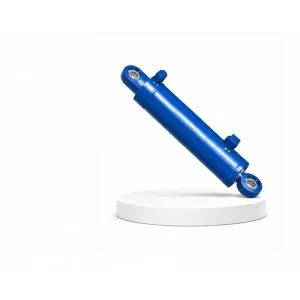
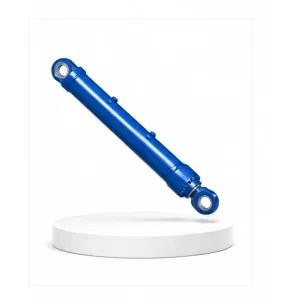
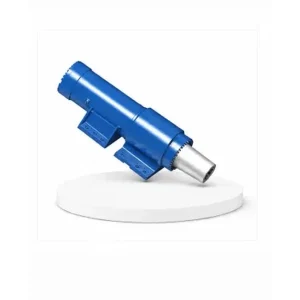
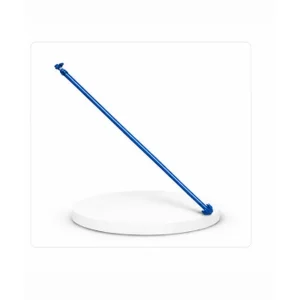
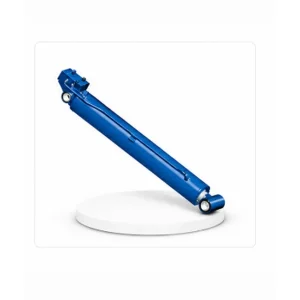
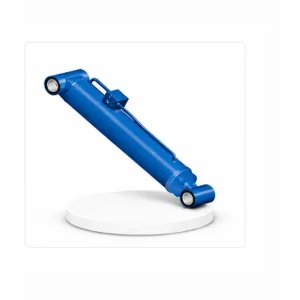
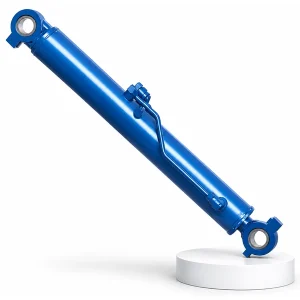
Mobile Crane Telescopic Cylinder
How a 12-Metre Boom Becomes a 60-Metre Reach
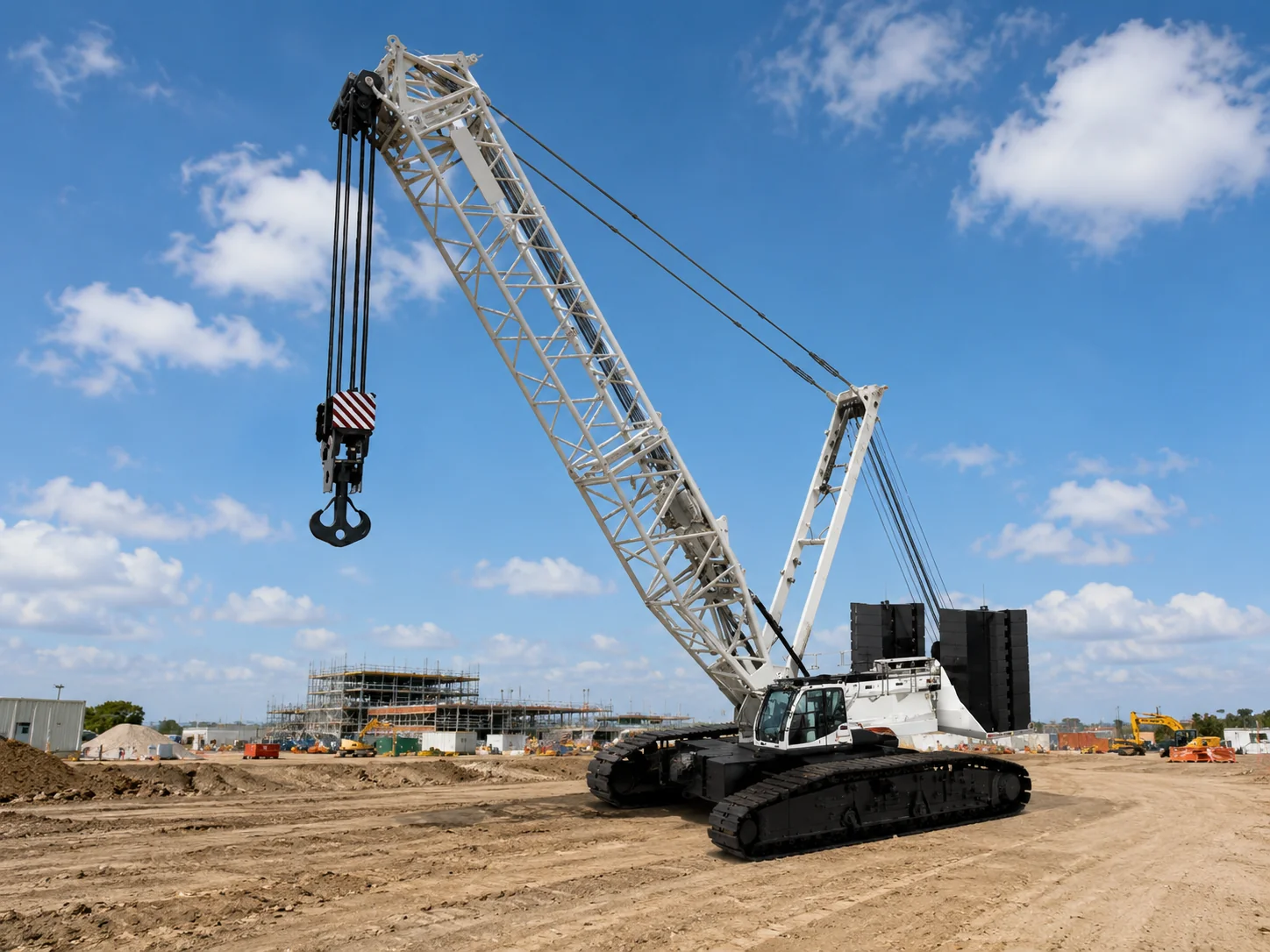
A mobile crane must travel on public roads — where legal width is 2.5–3.0 metres and legal length is 12–16 metres depending on the country. The boom must fit within these transport dimensions. But once on site, the same crane must reach 40, 50, or 60 metres to place steel beams on the tenth floor of a building under construction. The telescopic cylinder solves this contradiction.
Inside the boom, 3–6 nested tube sections slide inside each other — like a radio antenna. The telescopic cylinder pushes these sections outward, one at a time or simultaneously, extending the boom from its transport length to its full working length. The cylinder itself is also telescopic — its nested stages match the boom sections, with each stage pushing the corresponding boom section outward. A 5-section boom with 4 telescopic stages produces up to 22 metres of total cylinder stroke.
Korea Ever-Power manufactures the telescopic cylinder as the longest-stroke component in the mobile machinery hydraulic cylinder range.
Technical Specifications
| Parameter | Specification |
|---|---|
| Product | Mobile Crane Telescopic Cylinder |
| Function | Linear telescopic extension of the boom sections |
| Bore Diameter | 75 mm – 360 mm |
| Rod Diameter | 50 mm – 320 mm |
| Stroke | ≤ 22,000 mm (multi-stage) |
| Working Pressure | Maximum 42 MPa (highest in family) |
| Application | Mobile Crane (truck, all-terrain, rough-terrain, crawler) |
| Certification | ISO 9001 · 100% hydrostatic tested |
Multi-Stage Construction — Nested Tubes That Multiply Stroke
A single-stage hydraulic cylinder produces stroke equal to its barrel length. A 5-metre cylinder produces 5 metres of stroke. To produce 22 metres of stroke from a single-stage design, the cylinder would need to be 22 metres long — far too long to fit inside any boom. The multi-stage telescopic cylinder solves this by nesting multiple stages inside each other:
The first stage has the largest bore diameter (up to 360 mm) and the thickest walls. It is fixed to the boom base section. When pressurised, it pushes the second stage outward — which in turn pushes the first movable boom section. This stage produces the highest force (largest piston area × system pressure) and extends first under load.
Each subsequent stage nests inside the previous one — smaller bore, thinner walls, lighter weight. Each stage pushes the next boom section. The bore decreases from the base to the tip — which means the available force decreases at each stage. This is acceptable because each successive boom section is lighter (shorter, thinner-walled) and carries less load (the outer sections only support themselves plus the hook load, not the entire boom).
The final stage extends the boom tip section — the lightest section, carrying only the hook and the load. Its smaller bore produces less force, but less force is needed. When fully extended, all stages are deployed end-to-end, and the total stroke is the sum of all individual stage strokes. Contact the Korea Ever-Power engineering team for multi-stage telescopic cylinder design.
42 MPa — Why the Telescopic Cylinder Needs More Pressure Than Any Other Crane Cylinder
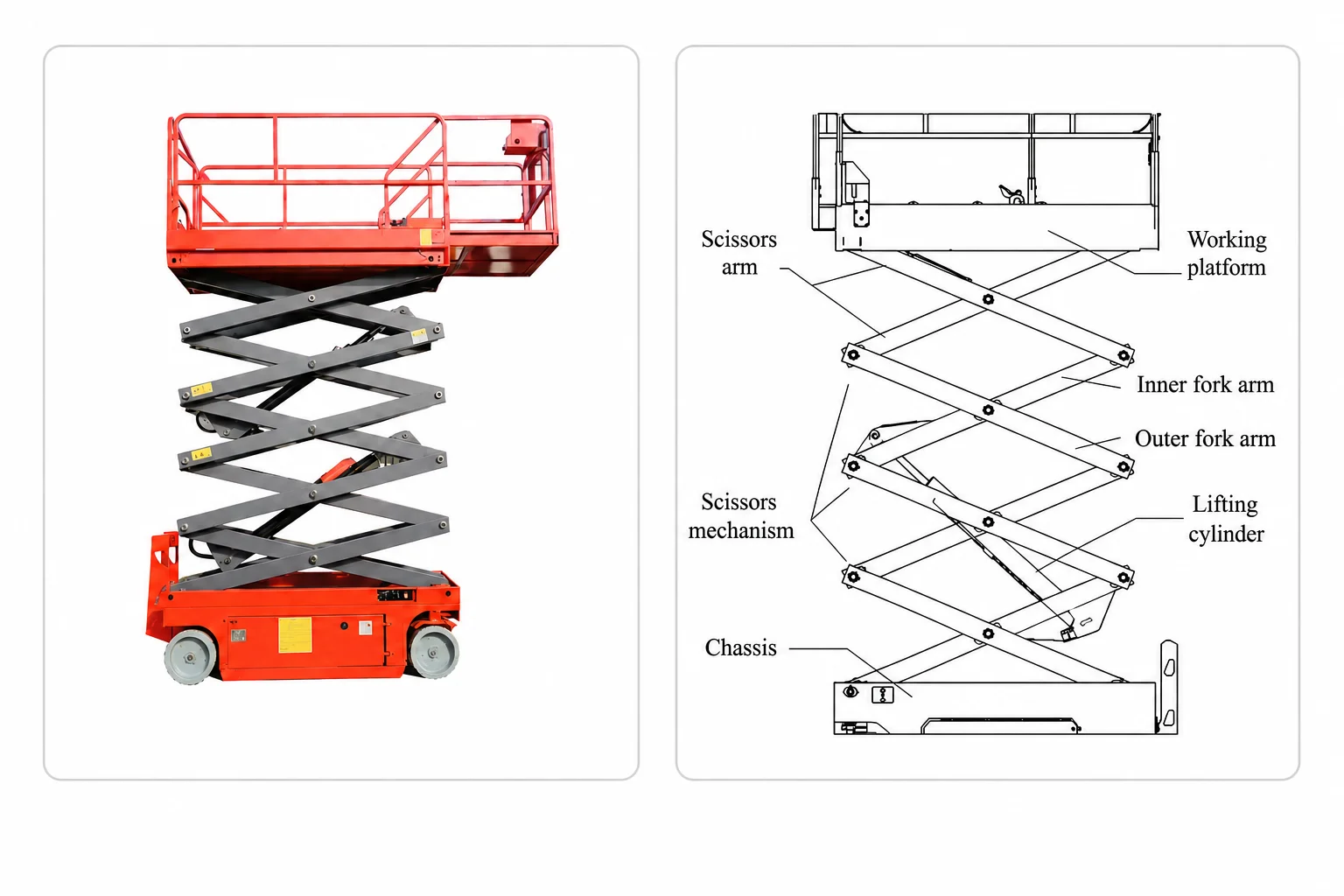
The luffing cylinder (#17) operates at 36 MPa. The telescopic cylinder operates at 42 MPa — 17% higher. The reason is friction. When the telescopic cylinder extends the boom, each nested boom section slides against the section inside it. The sliding friction between boom sections — steel on polymer wear pads, across contact areas of several square metres — produces a resistance force that the cylinder must overcome in addition to the gravitational load.
On a 5-section boom, the telescopic cylinder must overcome the friction of 4 sliding interfaces simultaneously. Each interface adds 5–15% to the required extension force. The cumulative friction of all 4 interfaces can add 20–50% to the gravitational load — which is why the telescopic cylinder needs higher system pressure than the luffing cylinder despite often having a similar or smaller bore diameter.
The 42 MPa rating also provides a force margin for extending the boom while the crane is lifting — a "telescoping under load" operation that some crane configurations require. Telescoping under load is the most demanding operating condition for the telescopic cylinder, and the 42 MPa pressure ensures adequate force even at the innermost (smallest-bore) stage.
Boom Section Sequencing — Which Section Extends First, and Why It Matters
The boom sections do not all extend simultaneously. The extension sequence — which section moves first, second, third — is controlled by the cylinder's internal sequencing mechanism and affects the crane's stability, load capacity, and boom deflection:
The outermost section extends fully before the next section begins. This produces the stiffest boom geometry at each intermediate length — because each extended section is fully supported by the section behind it before the next section begins moving. Most crane manufacturers specify sequential extension for maximum structural rigidity.
All sections extend simultaneously at proportional speeds. This is faster (the boom reaches full length in less time) but produces a less rigid intermediate geometry. Some cranes use synchronous extension for the initial deployment and switch to sequential control for fine-length adjustment under load.
The sequencing mechanism — typically a system of internal pins, cams, or sequencing valves — is integrated into the telescopic cylinder and the boom sections. Korea Ever-Power designs the cylinder staging and port arrangement to match the crane manufacturer's specified sequencing logic.
Actuator and Structure — The Cylinder That Becomes Part of the Boom
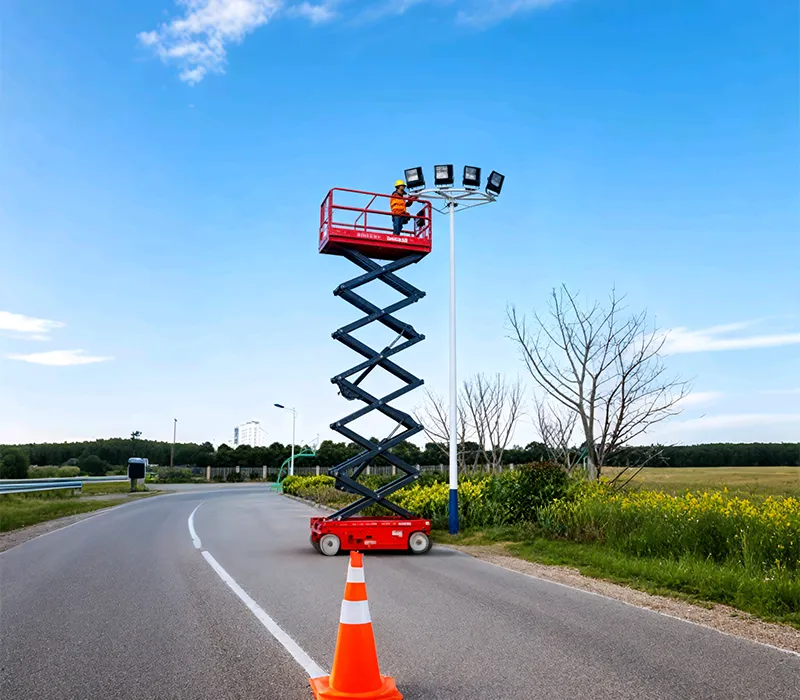
Most hydraulic cylinders are pure actuators — they produce force and motion, but the structure they are attached to carries the load. The telescopic cylinder is different. When fully extended inside the boom, its nested stages form a continuous column from the boom base to the boom tip. This column carries a portion of the boom's bending load — the cylinder is simultaneously an actuator (providing the extension force) and a structural member (supporting the boom).
This dual role imposes structural requirements that no other cylinder in the mobile machinery hydraulic cylinder family shares: the cylinder stages must be stiff enough to resist lateral deflection under the boom's bending loads, the stage overlap joints must transmit shear forces without excessive play, and the entire column must remain straight under combined axial compression and lateral bending.
Korea Ever-Power verifies the structural performance of every telescopic cylinder design using FEA — modelling the combined axial, bending, and pressure loads at the most severe boom angle and load configuration in the crane's load chart.
Manufacturing Process
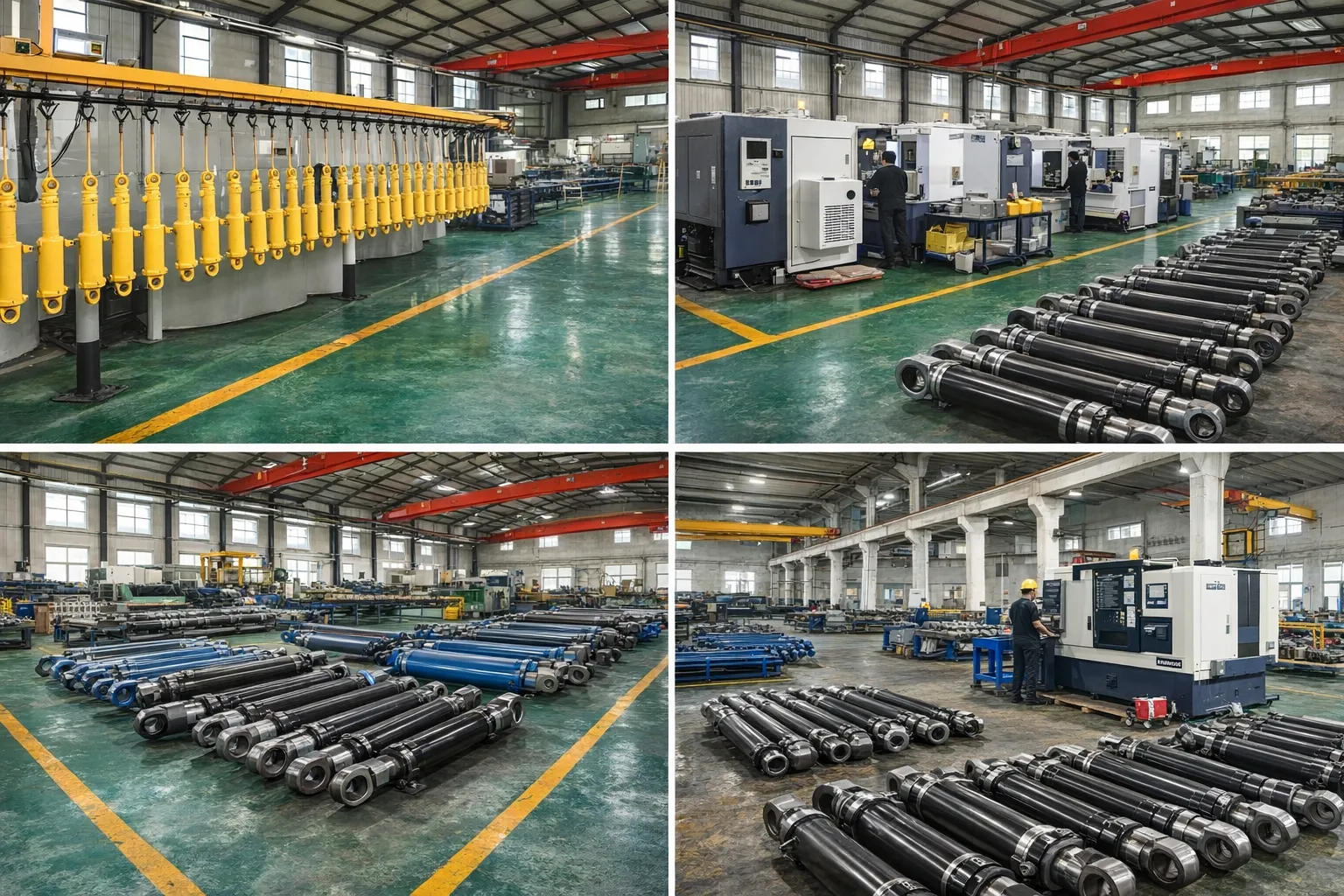
Each stage of the telescopic cylinder is manufactured as a precision tube — bore honed to Ra 0.2–0.4 µm, outer diameter chrome-plated (each inner stage slides inside the next outer stage, so the outer surface of each stage is a bearing surface). The concentricity between bore and outer diameter of each stage is held to ≤0.1 mm TIR — any eccentricity creates uneven wear on the guide rings and seals, leading to premature leakage.
Stage overlap length (the distance each stage remains inside the next when fully extended) is a critical design parameter — longer overlap = more structural support but less usable stroke. Korea Ever-Power optimises the overlap for each crane application, balancing maximum stroke against structural stiffness. Seals between stages use combined pressure seal + wiper + guide ring sets rated for 42 MPa and -30 °C to +80 °C outdoor service. Every telescopic cylinder is hydrostatic tested at 1.5× rated pressure (63 MPa) at each stage individually, then functionally tested for full sequential and simultaneous extension and retraction.
OEM & ODM
FAQ
Related Categories
Additional information
| Editor |
|---|