Ridger Blade Lift Cylinder for Agricultural Hilling Machines
Q345D structural steel with oversized chrome piston rod and heavy-duty dust scraper. Engineered for sustained lateral soil loads and abrasive field conditions during hilling operations.
Halfway Through the Field, the Ridge Goes Crooked. The Cylinder Told You It Would.
The first sign is usually subtle. One ridge comes out a few centimeters lower than the one beside it. The operator compensates, adjusts the depth setting, and keeps going. Two passes later, the low ridge is back, and now the blade on that side is visibly wobbling as it cuts through the soil. By the time the tractor reaches the headland, there is a thin line of hydraulic oil tracing down the cylinder body from the rod seal. The rod itself, when the operator checks it, has a slight curve that was not there at the start of the day.
This scenario repeats across potato, sweet potato, and peanut hilling operations every season. Ridger blades do not push straight down like a cultivator shank. They move soil laterally, scooping it from between rows and piling it against the crop stems to form the ridge. This sideways earth-moving creates a sustained lateral force on the hydraulic cylinder rod that standard-diameter rods simply cannot withstand over multiple seasons. The rod bends, the seal gets chewed up by the misaligned rod surface, and the cylinder starts leaking. All because a general-purpose farm cylinder was asked to do a job it was never designed for.
Our ridger blade lift cylinder is built from Q345D low-alloy structural steel with a piston rod diameter deliberately oversized to resist the bending forces that hilling generates. The chrome plating is 20 micrometers minimum, ground and polished to withstand the abrasive dust that ridging throws up in clouds. A heavy-duty metal-cased scraper ring at the gland stops soil from reaching the primary seal. This is a double acting hydraulic cylinder engineered specifically for the combined vertical and lateral loading that ridging equipment experiences in every soil type, every pass, every season.
How a Ridger Blade Lift Cylinder Controls Hilling Depth
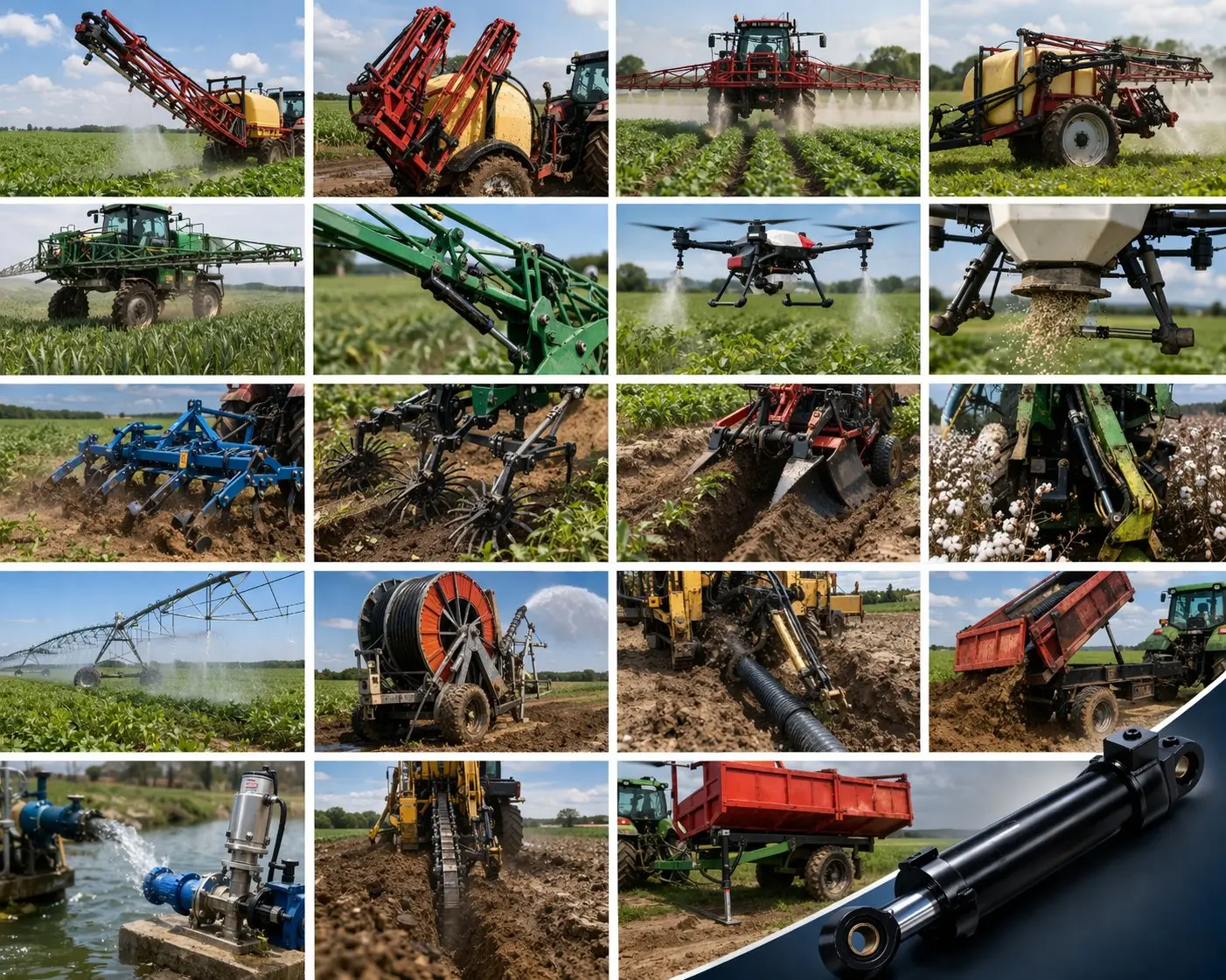
The ridger blade assembly mounts to the machine toolbar through a hinged arm or parallelogram linkage. The lift cylinder connects between the toolbar and this linkage, controlling how far the blade enters the soil. When the operator selects a hilling depth, hydraulic oil extends the cylinder rod, pushing the linkage downward and driving the blade into the ground. The valve locks oil in the cylinder to hold the set depth.
During hilling, the blade displaces large volumes of soil laterally. Unlike a cultivator that cuts downward in a narrow slot, a ridger blade works like a plow, wedging soil sideways to build up the ridge. The soil reaction has a significant horizontal component that pushes back against the blade at an angle. This angled force is transmitted through the linkage directly into the cylinder rod as a combined axial compression and lateral bending load.
In clay-heavy soils, this lateral force can reach 40 to 55 percent of the vertical downforce. For a ridger operating at 15 kN vertical load, the lateral rod bending force can exceed 8 kN. Sustained over hundreds of meters of ridge per pass, this bending load fatigues standard-diameter rods until they take a permanent set. Once a rod starts bending, it scores the bore surface, destroys the rod seal, and the cylinder begins leaking, all in a cascade that accelerates with every subsequent pass.
Hilling Depth and Cylinder Load Reference by Crop and Soil Type
Selecting the correct cylinder bore, rod diameter, and working pressure depends on the hilling depth, soil type, and crop being grown. This reference table provides starting-point recommendations based on field measurements from hilling operations across Korea, Japan, and Southeast Asia.
| Crop | Soil Type | Hilling Depth | Vertical Load | Lateral Factor | Suggested Bore |
|---|---|---|---|---|---|
| Potato | Sandy Loam | 120 – 180 mm | 8 – 12 kN | 25 – 35% | 50 – 63 mm |
| Sweet Potato | Clay Loam | 150 – 250 mm | 12 – 20 kN | 35 – 50% | 63 – 80 mm |
| Peanut | Sandy Silt | 80 – 120 mm | 6 – 10 kN | 20 – 30% | 40 – 50 mm |
| Sugarcane | Heavy Clay | 200 – 350 mm | 18 – 30 kN | 40 – 55% | 80 – 100 mm |
All values are field-tested guidelines. For help selecting the optimal cylinder configuration for your specific hilling machine, request custom cylinder specifications through our technical inquiry form.
Technical Specifications
| Specification | Available Range |
|---|---|
| Bore Diameter | 40 mm – 100 mm |
| Rod Diameter (Oversized) | 28 mm – 70 mm |
| Stroke Length | 80 mm – 450 mm |
| Working Pressure | Up to 20 MPa (2,900 PSI) |
| Action Type | Double Acting |
| Structure | Welded Piston Cylinder |
| Body Material | Q345D Low-Alloy Structural Steel |
| Piston Rod | Q345D, Hard Chrome 20+ micron, Micro-Polished |
| Body Finish | Black Oxide + Epoxy Paint |
| Piston Seal | High-Strength PU + PTFE Wear Ring |
| Rod Seal | NBR + PTFE Back-up Ring |
| Scraper | Metal-Cased Polyurethane |
| Gland Guide | Extended Bearing Length (1.5x rod diameter) |
| Mounting | Clevis, Pin Eye, Trunnion, Custom |
| Port Thread | BSP / NPT / Metric |
| Operating Temperature | -20 C to +80 C |
| Environment Rating | Dust + Hard Soil / Lateral Loading |
Six Engineering Advantages for Hilling and Ridging Duty
Oversized Piston Rod for Lateral Bending Resistance
Rod diameter selected one standard size above axial load requirement. For a 63 mm bore, we use 40 mm or 45 mm rod instead of standard 35 mm. Bending resistance scales with the fourth power of diameter, providing roughly double the deflection resistance of a standard rod. This keeps the rod within its elastic range even under the sustained lateral loads of heavy clay hilling.
Extended Gland Bearing for Side-Load Distribution
Gland bushing length extended to 1.5 times rod diameter (standard is 1.0x). This distributes lateral force over a wider contact area, preventing the concentrated wear grooves and rod scoring that short-guided designs develop under sustained side loading. PTFE-bronze composite bushing material for self-lubrication and high load capacity.
Q345D Structural Steel Body and Rod
Q345D provides 345 MPa minimum yield with Charpy impact toughness at -20 C. Superior weldability produces stronger barrel-to-cap joints. The low-alloy composition accepts chrome plating and epoxy coating adhesion better than plain carbon steel.
Metal-Cased Heavy-Duty Dust Scraper
Hilling operations throw massive volumes of soil past the cylinder. The metal-cased scraper is mechanically retained and cannot dislodge from vibration. The PU scraper lip shears caked clay and embedded grit from the rod surface, protecting the primary seal from abrasive ingress.
PTFE Wear Rings on Piston and Gland
Sustained lateral loading pushes the piston and rod against the bore wall. Without wear rings, this metal-to-metal contact scores the bore. PTFE-bronze wear rings absorb lateral loads, eliminate metal contact, and maintain bore surface integrity for 3,000+ operating hours.
Reinforced Port Bosses
Port bosses reinforced with additional weld material to resist fatigue from vibration transmitted through connected hoses. CNC-machined threads with tight tolerances after welding. Port chamfers protect O-rings during fitting installation.
Application Scenarios
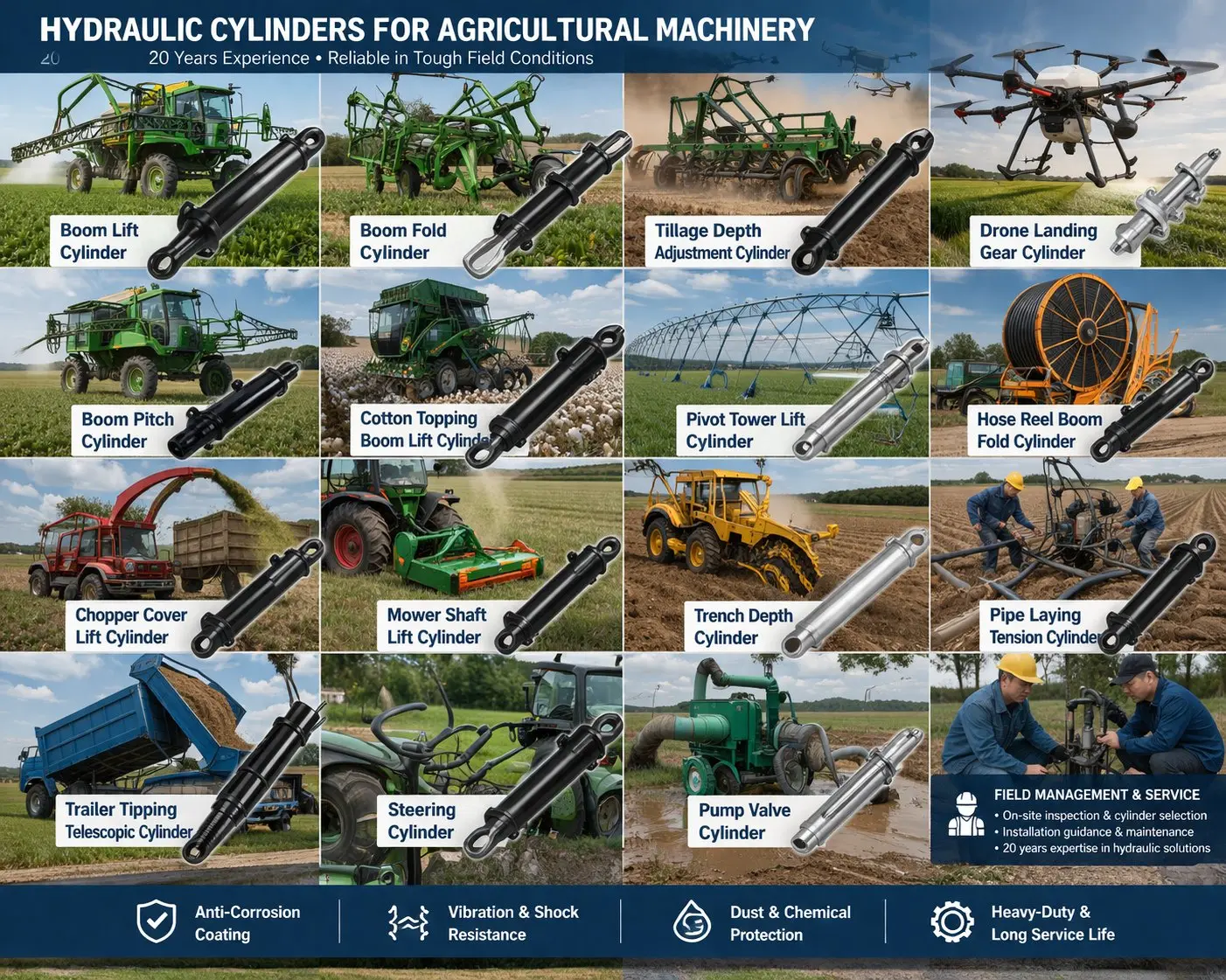
Potato and Sweet Potato Ridgers: The primary application. Single and double-row ridgers forming raised beds for tuber crops. Our cylinder maintains consistent ridge height across varying soil densities within the same field.
Peanut Hilling Machines: Mid-season hilling passes that cover developing pegs require precise blade depth control in sandy soils. The dust scraper and polished chrome rod address the fine abrasive sand environment of peanut fields.
Sugarcane Earthing-Up Equipment: Heavy-duty ridgers used for sugarcane hilling move massive volumes of soil at each pass. The extreme lateral loads make the oversized rod and extended bearing essential for this application. These cylinders can also serve custom hydraulic cylinder requirements for related sugarcane field equipment.
Vegetable Bed Formers: Raised-bed forming machines for lettuce, garlic, and onion production use blade lift cylinders with similar lateral loading characteristics.
Drainage Ditch Forming: Machines that cut shallow field drainage channels generate lateral blade loads comparable to ridging, making the oversized-rod design equally suitable.
Manufacturing and Quality Control
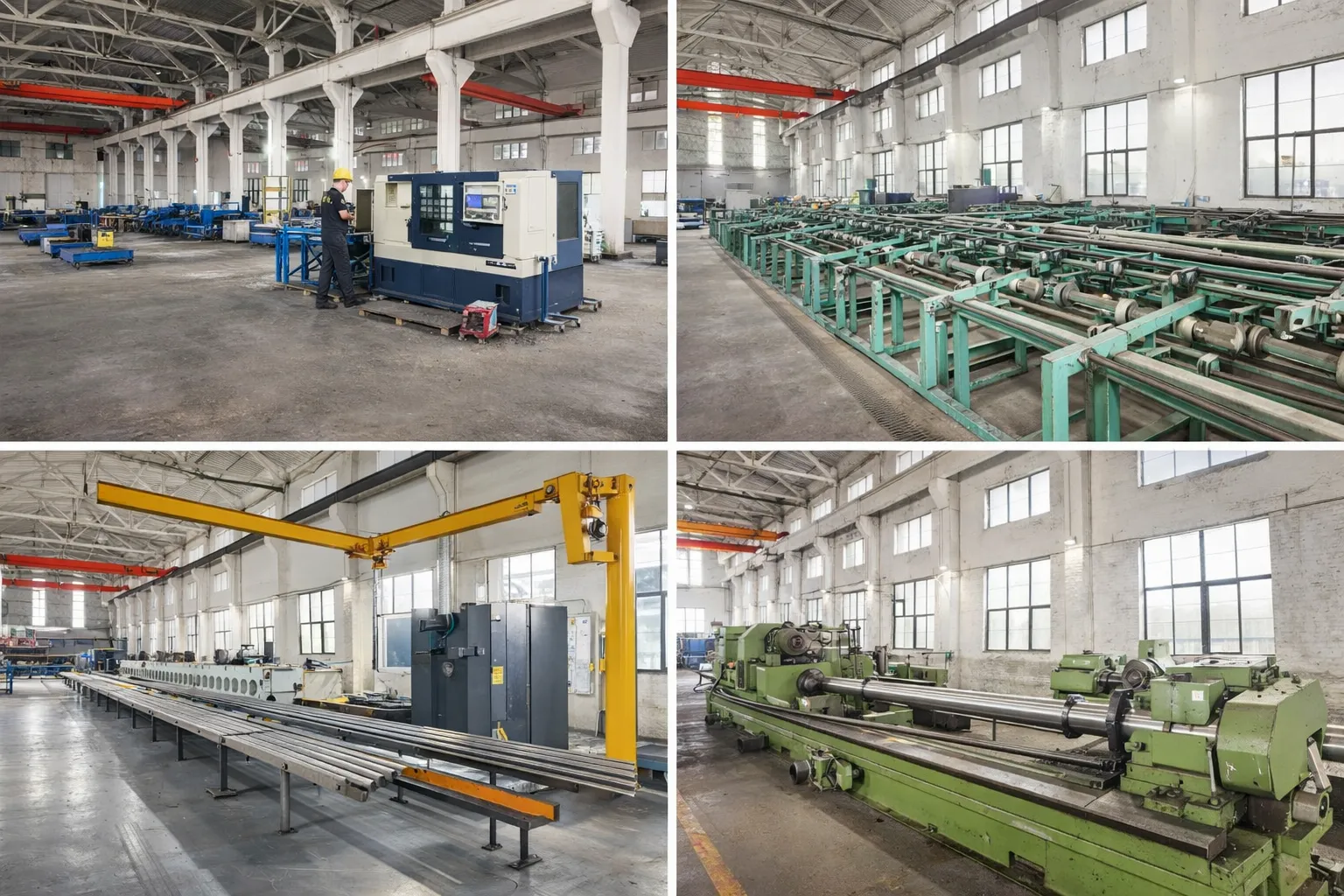
Built entirely in our ISO 9001 certified facility. Q345D tube and rod stock verified by spectrometer on every batch. Bores honed to Ra 0.2 in single-setup runs. Rods ground to h7 and chrome plated to 20+ micron with micro-polish. MIG welded by certified operators with visual and sampling-based magnetic particle inspection. Clean-room assembly with filtered oil flush. 100% pressure tested at 1.5 times rated pressure for three minutes. Serial numbered with ten-year material-to-test traceability. Material certificates and pressure test reports included with every shipment.
Standard Lift Cylinder vs. Our Ridger Blade Lift Cylinder
| Hilling-Specific Metric | Standard Cylinder | Our Ridger Cylinder |
|---|---|---|
| Rod Lateral Bending Capacity | Axial load only | Combined axial + lateral rated |
| Gland Bearing Length | 1.0x rod diameter | 1.5x rod diameter |
| Dust Scraper | Rubber wiper (loosens) | Metal-cased PU (retained) |
| PTFE Wear Rings | None | Piston + gland |
| Rod Bending Incidents per Season (clay) | 3 – 8 per machine | 0 – 1 per machine |
| Seal Life in Dusty Soil | 1 – 2 seasons | 4 – 5 seasons |
Customer Case Studies
Frequently Asked Questions
Why do ridger cylinder rods bend more than cultivator rods?
What bore size for a potato or sweet potato ridger?
Can I replace existing ridger cylinders with your oversized-rod version?
What is the lead time for ridger blade lift cylinders?
Build Straight Ridges With a Cylinder That Handles the Side Load
Share your ridger model, crop type, and soil conditions. Our engineering team will recommend a matched oversized-rod cylinder and provide a quotation within 48 hours.
Editor: Cxm