Rotary Tiller Side Shift Cylinder for Tillage Machinery
Master the demands of medium-load, high-dust agricultural environments. Engineered with premium spherical hinge structures and alloy bushings to permanently eradicate trunnion wear and guarantee absolute lateral implement precision.
Product Overview: The Backbone of Precision Inter-Tillage Navigation
Modern agricultural soil preparation demands an extraordinary level of spatial and mechanical control. In farming territories characterized by terraced landscapes, confined orchard perimeters, and highly irregular field boundaries—conditions that dominate the agricultural sectors of South Korea, Japan, and Southeast Asia—machinery operators face relentless spatial constraints. A tractor cannot always be driven directly over the desired tilling path without risking devastating collisions with mature tree trunks, greenhouse foundations, or concrete retaining walls. To successfully cultivate the earth within these restricted margins, the equipment relies completely on a cultivator side-shift mechanism. This dynamic steel linkage physically slides the heavy rotary tiller implement horizontally across a mounting rail, operating entirely independently of the tractor’s forward heading. The critical fluid power component executing this immense lateral movement is the Rotary Tiller Side Shift Cylinder.
Deploying a fluid power actuator in this specific location exposes it to a brutally unforgiving mechanical ecosystem. The operational reality is defined by a persistent medium load compounded by an extremely dense, abrasive dust atmosphere. Furthermore, as the PTO-driven rotary tiller blades aggressively strike compacted hardpan soil and subterranean rocks, massive, high-frequency vibratory shockwaves travel directly up the implement framework. These chaotic kinetic forces concentrate squarely on the cylinder’s mounting linkage. Standard commercial-grade hydraulic parts rapidly deteriorate under these forces. The rigid clevis pins commonly utilized on factory-supplied cylinders simply cannot absorb the continuous twisting and micro-vibrations generated by the soil drag. This structural deficiency leads directly to the most prevalent failure mode in this application: severe trunnion wear. The mounting holes quickly stretch into oval configurations, a process known as metal galling. This inevitably results in structural snapping, uncontrollable implement drifting, and devastating seasonal delays.
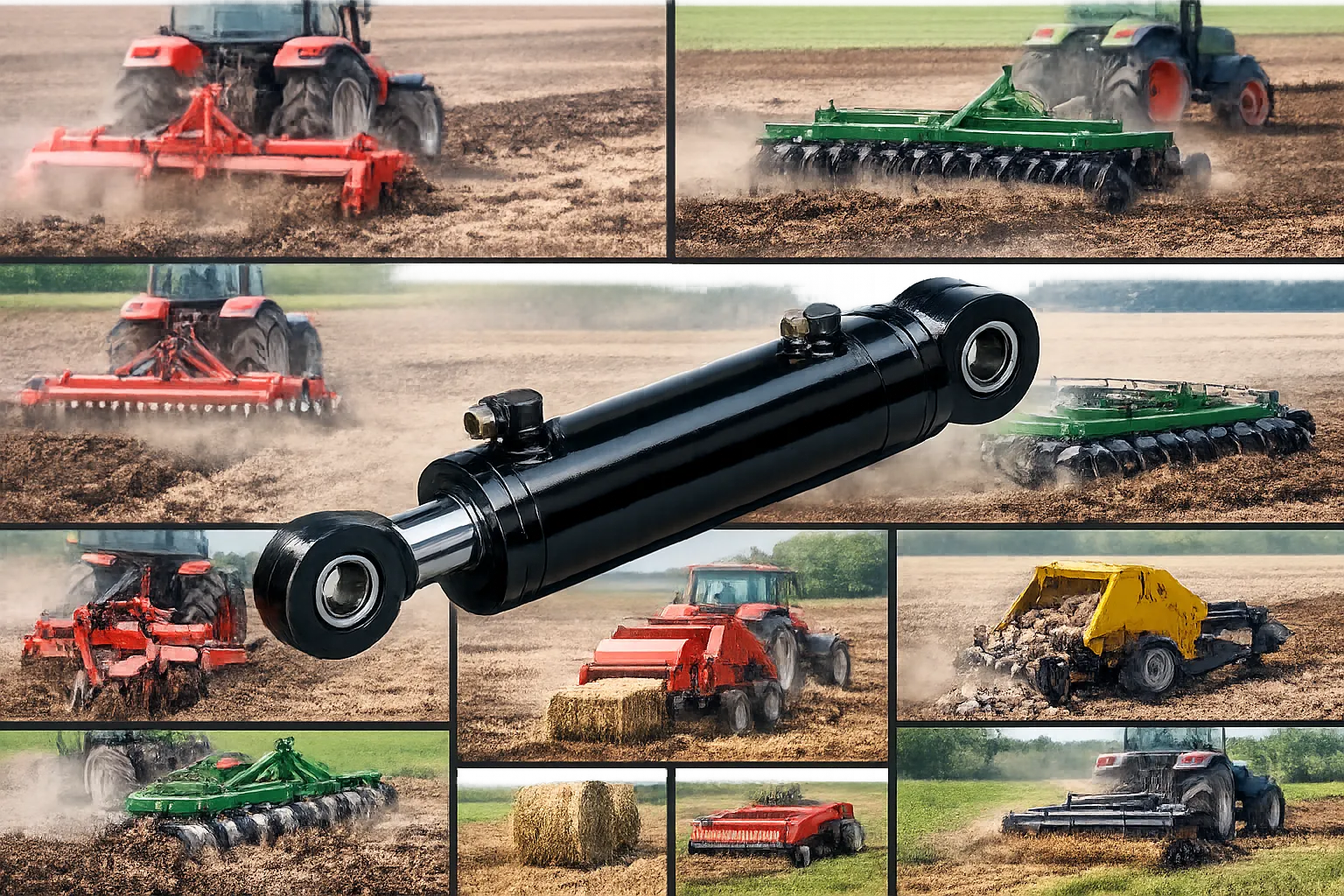
Operating as a globally recognized and deeply experienced hydraulic cylinder manufacturer, our engineering division recognized that agricultural side-shift mechanisms require a fundamentally different structural approach. We have systematically re-engineered the Rotary Tiller Side Shift Hydraulic Cylinder to neutralize these specific environmental failure modes. By replacing vulnerable, solid pin mounts with a sophisticated spherical hinge structure encapsulated by heavy-duty alloy bushings, our design safely and smoothly absorbs multi-axis vibratory shocks. This targeted engineering innovation entirely eliminates the grinding friction at the pivot points. When agricultural fleet managers evaluate the true cost of machinery downtime and the relentless labor drain associated with continually fixing hydraulic cylinders mid-harvest, our fortified fluid power solutions deliver an unmatched return on investment.
Definitive Technical Parameters
Ensuring absolute structural compatibility and fluid system safety is paramount for equipment designers and procurement specialists. The matrix below delineates the precise technical parameters and metallurgical specifications of our standard severe-duty lateral actuator. As a primary manufacturer, we maintain extensive in-house CNC machining capabilities to modify retracted lengths, stroke dimensions, and bearing diameters to perfectly align with your specific implement framework.
| System Attribute | Engineering Specification Details |
|---|---|
| Primary Industry Sector | Agriculture / Advanced Farm Mechanization |
| Equipment Category | Tillage Machinery (Rotary Tillers, Offset Cultivators) |
| Subsystem Application | Inter-Tillage Rotary Tiller Side Shift System |
| Official Product Designation | Rotary Tiller Side Shift Cylinder |
| Kinematic Action Type | Double acting hydraulic cylinder |
| Internal Architecture | Heavy-Duty Piston Cylinder |
| Assembly Manufacturing | Fully Welded Rigid Construction (Submerged Arc) |
| Core Material System | 27SiMn (Silicon-Manganese Alloy Steel) |
| Rod Surface Metallurgy | Micro-Cracked Hard Chrome Plating (Anti-Corrosion) |
| Environmental Survival Rating | Medium Load + Severe Airborne Dust Exposure |
| Primary Functional Objective | Control the exact left and right lateral shift of the active implement |
| Typical Industry Failure Mode | Ear Shaft Wear / Trunnion Grinding / Mount Breakage |
| Recommended Structural Upgrade | Spherical Hinge Structure (Ball Joint) + Alloy Bushing Integration |
Dynamic Operational Mechanics & Fluid Flow
Grasping the internal fluid dynamics is vital to comprehending exactly why specialized engineering is required for this subsystem. The side-shift carriage operates horizontally along thick steel guide rails mounted at the rear of the tractor’s three-point linkage. When an operator in the cabin actuates the directional control valve to adjust the implement’s lateral position, highly pressurized fluid from the tractor’s primary hydraulic pump surges through reinforced hoses directly into the cylinder’s steel ports.
Because lateral movement requires active, forceful mechanical pushing and pulling against the massive friction coefficient of the soil, a single acting hydraulic cylinder is functionally useless in this position. Gravity cannot pull a heavy tiller horizontally across a field. Instead, this system mandates the use of a dedicated double acting hydraulic cylinder. To push the rotary tiller carriage to the right, fluid is channeled into the cap end (base) of the cylinder barrel. The pressurized oil exerts immense volumetric force across the full surface area of the internal hydraulic cylinder piston. This pressure converts into a linear mechanical force, driving the hard chrome rod outward and sliding the heavy framework smoothly across the rails. Conversely, to retract the implement back to the left, fluid is diverted into the rod end. The fluid pressure acts on the smaller annular area of the piston, forcefully retracting the rod while the fluid located on the cap end is smoothly vented back to the tractor’s central reservoir.
The supreme metallurgical test of the cylinder occurs the exact moment the directional valve closes. The trapped fluid must act as an unbreakable steel column, holding the heavy tiller perfectly rigid in its offset position, despite the violent, chaotic forces generated by the spinning blades chewing through the earth. If the internal hydraulic cylinder components allow even microscopic fluid bypass, the implement will slowly drift back toward the center, ruining the cultivation path and potentially destroying adjacent crops. Our precision-machined internal seal grooves and heavy-duty wear bands guarantee zero-drift holding power under continuous dynamic shock.
Seamless Fleet Integration and OEM Interoperability
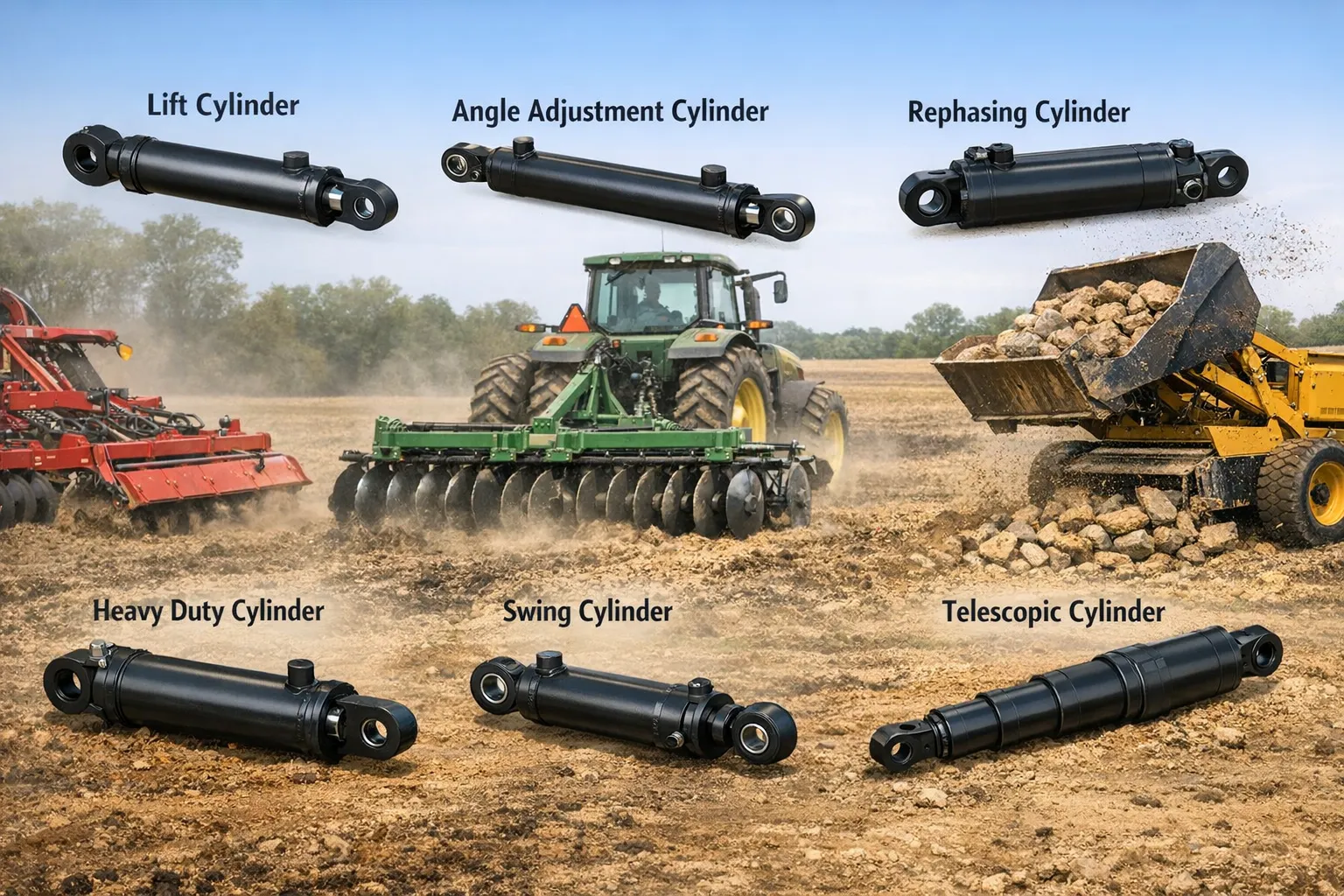
When a mechanical linkage failure occurs during the heavily compressed planting window, agricultural cooperatives cannot afford the time required to cut, weld, or irreversibly modify their implement frames to fit mismatched aftermarket parts. We have meticulously analyzed and mapped the dimensional geometric tolerances of the most prevalent rotary tiller mechanisms utilized across the Asian continent and globally.
By verifying precise retracted closed lengths, operational stroke boundaries, and exact bearing pin hole diameters, our customized hydraulic rams serve as direct, high-performance drop-in replacements for standard equipment. We continuously manufacture heavy-duty upgrades that seamlessly integrate with side-shifting implements pulled by leading tractor brands, including Kubota, Yanmar, LS Tractor, TYM, Iseki, and Daedong (KIOTI). (Please Note: The explicit mention of these agricultural equipment manufacturers is provided strictly to assist maintenance personnel in identifying dimensional compatibility for replacement parts; it does not constitute trademark infringement or imply official OEM endorsement.)
Core Engineering Advantages: Forged for the Field
Generic, commodity hydraulic actuators are built to function in clean, stationary industrial environments; they rapidly disintegrate when dragged into the field. To guarantee multi-season reliability, we have embedded a comprehensive suite of highly specific metallurgical and structural defenses directly into the architecture of our Rotary Tiller Side Shift Cylinder.
1. Spherical Hinge Structure (Anti-Trunnion Wear)
Standard rigid mounting pins transfer 100% of the tiller’s chaotic vibration directly into the mounting bracket, causing rapid metal grinding and hole elongation. We completely resolve this by integrating specialized spherical plain bearings (heim joints) housed within self-lubricating alloy bushings at both ends of the cylinder. This structural upgrade allows for multi-axis micro-articulation, safely absorbing the violent twisting forces and preventing the mounting holes from galling.
2. 27SiMn High-Yield Alloy Tubing
Standard 1045 carbon steel barrels are highly susceptible to denting from flying rocks and can permanently balloon under hydraulic shock spikes. We construct our pressure barrels exclusively from 27SiMn (Silicon-Manganese alloy) steel. The inclusion of manganese drastically elevates the metal’s elastic yield strength. This ensures the barrel can endure intense physical impacts and sudden internal pressure spikes without permanent deformation.
3. Aggressive “Medium Load + Dust” Sealing Matrix
Rotary tillers operate in a perpetual cloud of abrasive, dry silica dust. Basic rubber wiper seals are quickly bypassed. We deploy a severe-duty, multi-lip polyurethane scraper system. The rigid outer lip functions as a physical chisel, aggressively clearing caked mud off the retracting rod, while the tightly toleranced inner lips create an absolute labyrinth barrier against microscopic dust ingress.
4. Micro-Cracked Hard Chrome Plating
To defend against physical scoring from thrown debris and chemical corrosion from fertilizers, the piston rods receive an extra-thick layer of hard chrome. Crucially, our specialized plating process intentionally induces a network of microscopic surface cracks. These invisible fissures retain trace amounts of lubricating fluid, which dramatically lowers dynamic seal friction and heat generation under continuous load.
5. Fully Welded Monolithic Architecture
The continuous, high-frequency vibration of agricultural implements will literally shake threaded tie-rod cylinders apart. We utilize an automated submerged arc welding process to achieve 100% full penetration at all base mounts and hydraulic ports. This deep-fusion technique eliminates internal void spaces and ensures the entire assembly remains completely rigid and leak-proof.
6. Advanced Internal Piston Guidance
To combat internal scoring when the cylinder is fully extended, we integrate wide PTFE (Polytetrafluoroethylene) wear bands onto the piston head. These bands provide an incredibly low-friction bearing surface between the steel piston and the barrel wall, ensuring perfect concentricity and preventing metal-to-metal contact even when intense side-loads attempt to deflect the rod.
Autonomous Manufacturing and Uncompromising Traceability
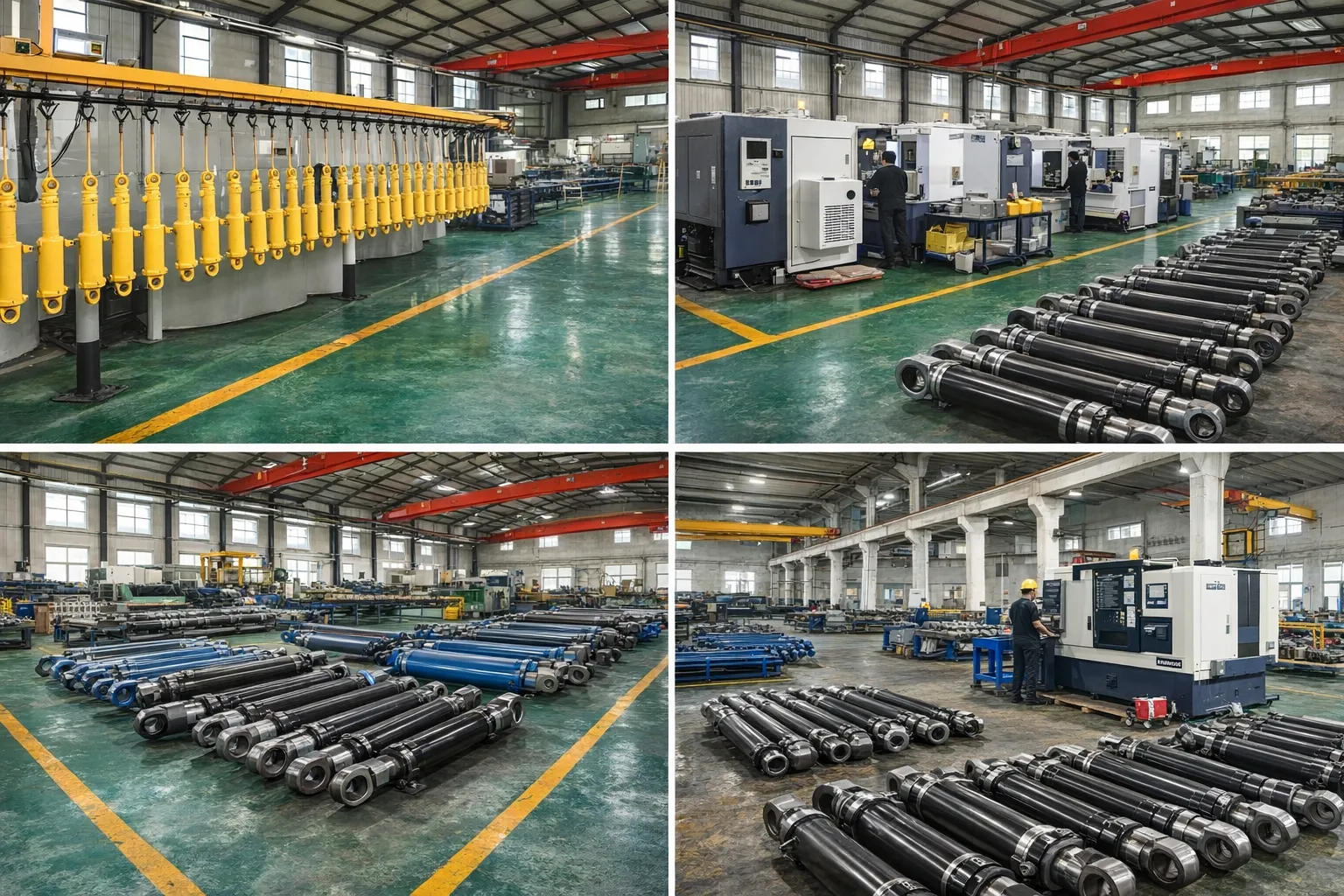
Achieving flawless mechanical reliability requires absolute control over the production supply chain. We do not operate as a mere assembly facility for outsourced, generic components; we are a fully vertically integrated manufacturing powerhouse. From the initial multi-axis CNC lathing of the raw 27SiMn steel billets to the highly automated submerged arc welding of the heavy-duty end caps, every step is rigorously controlled within our ISO-certified facilities to guarantee aerospace-grade dimensional concentricity.
Our quality control methodology is unrelenting. We enforce a mandatory 100% factory hydrostatic testing protocol on every single unit. We absolutely refuse to rely on statistical batch testing. Before any Rotary Tiller Side Shift Hydraulic Cylinder is approved for packaging, it is securely mounted on a dynamic test rig, pressurized to 1.5 times its maximum rated operational limit, and actively stroked under resistance.
Our quality assurance technicians monitor high-precision digital transducers to verify the complete absence of internal fluid bypass across the piston seals and zero external weeping at the rod gland. Only units that survive this punishing evaluation receive a permanent, laser-etched serial code. This meticulous process guarantees total metallurgical and assembly traceability, ensuring that you receive a component capable of dominating the field and eliminating the need for constant hydraulic cylinder repair.
Expansive Versatility Across Heavy Industries
While the sophisticated spherical bearing architecture and aggressive dust-defense sealing packages were expressly developed to survive the brutal vibration of agricultural tillage, these core engineering concepts translate perfectly to other severe-duty industrial sectors. Any operational environment plagued by lateral mechanical shock, high vibration, and heavy abrasive contamination demands this level of structural reinforcement.
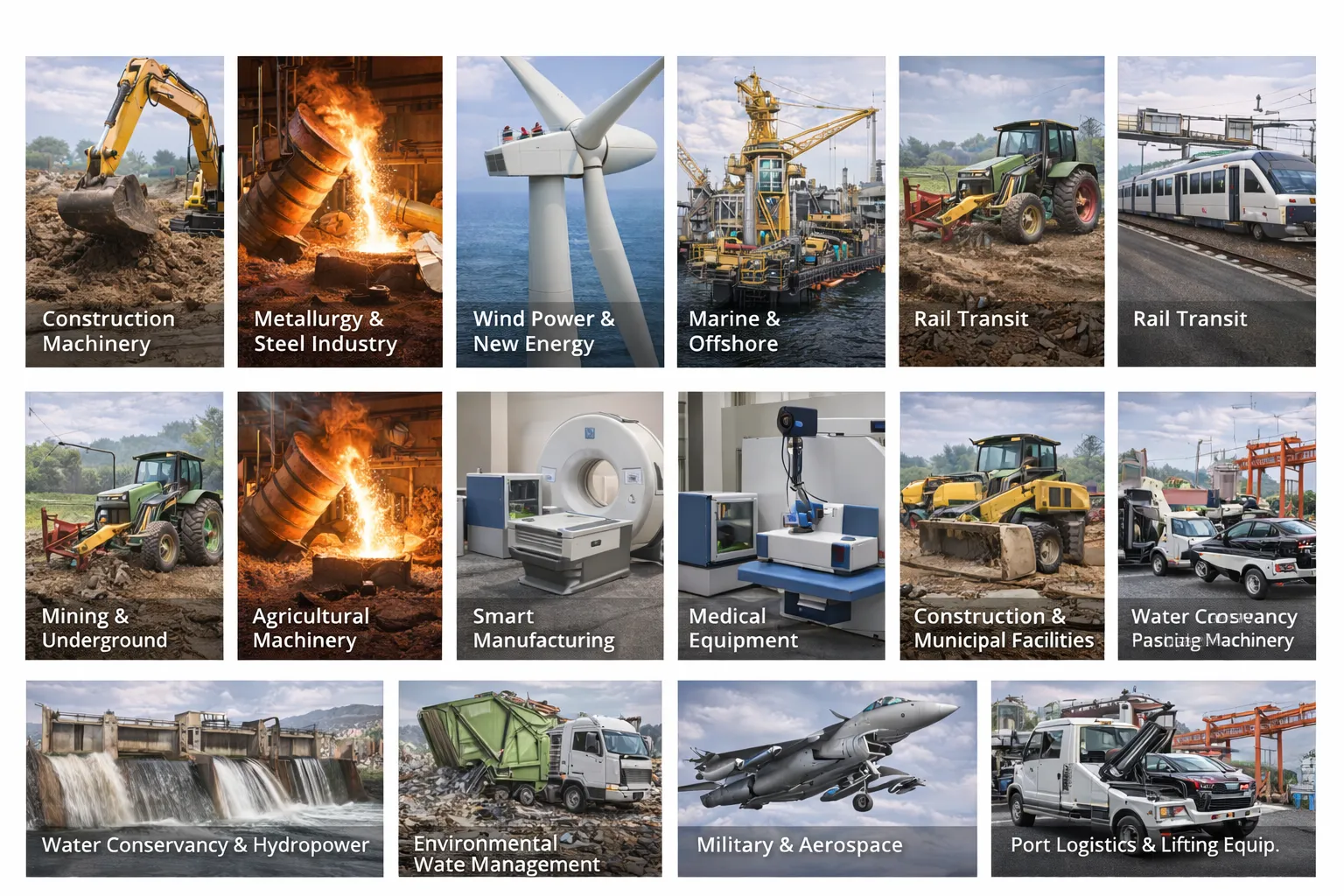
Our engineering teams regularly modify our robust core designs to serve the rigorous demands of the construction machinery industry, where earthmoving excavators and trenchers encounter identical dust and shock profiles. The incredible thermal stability and high-cycle fatigue resistance of our 27SiMn units make them highly prized for continuous operations within the metallurgical and iron industry. Furthermore, we provide specialized positioning actuators for the mining industry. Whether you require complex lateral shift control or simply a massive, high-capacity lift cylinder for automated warehouse logistics, our proven fluid power philosophy delivers unmatched durability.
Comparative Analysis: Standard Commodity vs. High-Performance Engineered
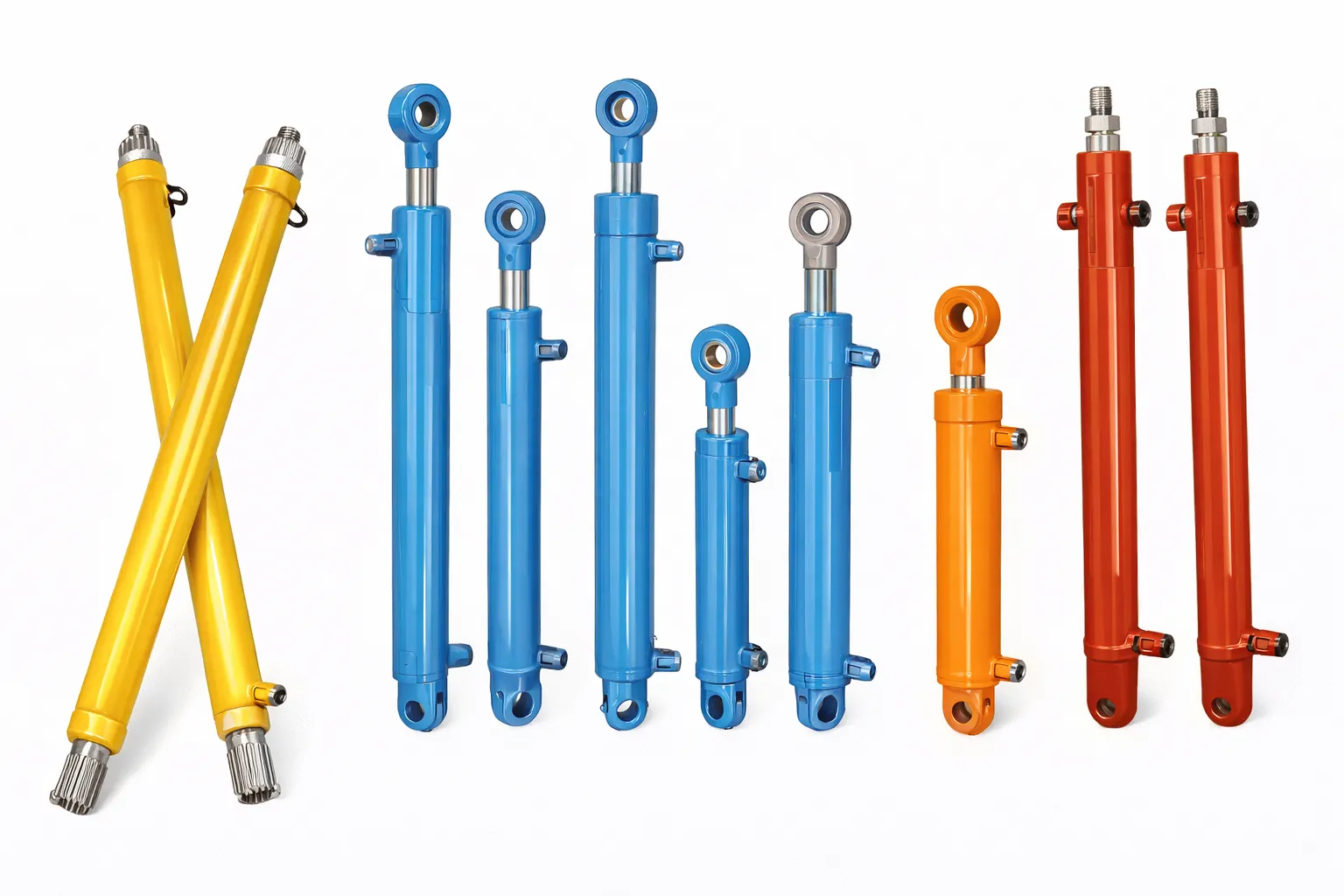
Evaluating procurement solely on the initial hydraulic cylinder price is a critical oversight that ignores the devastating financial impact of unscheduled machinery downtime. This side-by-side analysis clearly outlines why upgrading your fleet to our highly engineered solutions provides a vastly superior long-term return on investment.
| Engineering Feature | Standard OEM Commodity Cylinder | Our Engineered Precision Cylinder |
|---|---|---|
| Mounting Interface | Rigid pin connections. Highly susceptible to torsional stress and immediate trunnion galling. | Spherical Bearing + Alloy Bushing. Absorbs multi-axis misalignment; eliminates pin shearing. |
| Barrel Metallurgy | Standard 1045 Carbon Steel. Low elasticity; deforms and balloons under heavy agricultural shockloads. | Premium 27SiMn Alloy. Exceptionally high yield strength; easily absorbs intense pressure spikes. |
| Contaminant Defense | Basic single-lip nitrile wipers. Quickly destroyed by dense silica dust from tilling operations. | Multi-lip Polyurethane Scraper system specifically designed to repel “Medium Load + Extreme Dust”. |
| Structural Integrity | Superficial surface welds. Prone to internal fatigue cracking under continuous high-frequency vibration. | 100% Full Penetration Welds. Monolithic structural integrity guarantees zero weld failures. |
| Lifecycle & ROI | High failure rate requiring frequent, tedious internal repairs and massive labor costs every season. | Engineered for 4+ intensive seasons of flawless operation with minimal basic maintenance required. |
Proven Field Dominance: Real B2B Case Studies
Theoretical engineering is meaningless without rigorous validation in the dirt. We have partnered with extensive agricultural cooperatives, independent fleet managers, and robust aftermarket distributors across East Asia to permanently resolve their chronic machinery failures. The following cases document the tangible impact of our technology in real-world scenarios.
Case 1: Eradicating Trunnion Failure in South Korean Apple Orchards
Client Profile: A large-scale commercial apple orchard cooperative operating in Gyeongsangbuk-do, South Korea.
Application Environment: Operating a fleet of compact tractors with heavy rotary tillers. Operators must continuously side-shift the tilling deck laterally to weave precisely around tightly planted, low-hanging apple tree trunks over extremely hard, rocky terrain.
The Technical Challenge: The constant lateral shifting, combined with the tiller hitting buried rocks, created immense torsional twisting. Standard OEM cylinders were rigidly mounted. Within a month, the twisting force caused catastrophic trunnion wear, shearing the mounting pins and destroying the cylinder base, stranding expensive equipment mid-row.
Connection & Solution: The cooperative’s chief mechanic bypassed local dealers and searched directly online for a reliable manufacturer capable of custom structural upgrades. We delivered a batch of customized units featuring our signature spherical bearing and alloy bushing mounts. This allowed the cylinder to articulate slightly, safely absorbing the chassis twist without grinding the pins.
The Result: After 1,200 hours of intensive spring tilling across the 2024 season, they reported a 100% survival rate with zero pin shearing and perfectly rigid implement control.
“The spherical bearing design completely solved our biggest headache. Instead of the mounts fighting the chassis twist and snapping, these cylinders simply absorb it. Our fleet uptime has never been higher, and we’ve stopped wasting money on replacements.” — Mr. Kang, Cooperative Maintenance Lead (August 2024)
Case 2: Defeating Abrasive Volcanic Dust in Hokkaido Potato Farms
Client Profile: An extensive commercial potato farming enterprise located in Hokkaido, Japan.
Application Environment: Intensive dry-soil rotary tilling in volcanic ash soil profiles prior to planting. The environment generates a perpetual, choking cloud of highly abrasive fine silica dust.
The Technical Challenge: The abrasive dust rapidly bypassed standard single-lip rubber wiper seals. The silica contaminated the hydraulic fluid, acting like liquid sandpaper that completely destroyed the internal seals and severely scored the rods. The constant need for hydraulic cylinder repair was draining their profit margins and halting field prep.
The Result: We supplied units equipped with our severe-duty polyurethane multi-lip scraper systems. The aggressive outer profile physically scraped the dust away, while the inner lips maintained zero fluid leakage. The fleet completed the entire planting window without a single seal failure.
“The sealing technology is vastly superior to anything we’ve bought locally. Even working in absolute dustbowls, the cylinder rods stay perfectly clean and bright, and we haven’t lost a drop of oil to contamination.” — K. Sato, Fleet Owner (November 2023)
Case 3: Premium Aftermarket Reliability in the Mekong Delta, Vietnam
Client Profile: A major regional distributor of agricultural machinery parts and aftermarket equipment upgrades.
Application Environment: Providing reliable aftermarket parts for an aging fleet of imported tractors utilized primarily in deeply flooded rice paddies and heavy clay soils.
The Technical Challenge: Local farmers were frustrated with cheaply made, thin-walled replacement cylinders that ballooned under pressure or cracked at the welds. The distributor needed a highly reliable, heavy-duty product to build their brand reputation without exceeding local budget constraints.
The Result: After analyzing the local market’s required specifications, we provided bulk shipments of our 27SiMn Rotary Tiller Side Shift Cylinder with fully welded end caps. By offering an incredibly competitive B2B factory hydraulic cylinder price, the distributor dominated their local market, providing an OEM-level upgrade that local farmers could easily afford.
“Partnering directly with the primary manufacturer allowed us to provide an incredibly thick, heavily built cylinder to our clients. The weld quality is flawless. It is easily the most reliable aftermarket part we carry in our catalog.” — Nguyen V., Purchasing Director (January 2025)
Frequently Asked Questions
We maintain total engineering transparency with our commercial partners. Below are detailed answers to the most common technical inquiries raised by fleet managers and procurement directors regarding our severe-duty lateral fluid power solutions.
1. How exactly does the spherical bearing + alloy bushing solve trunnion wear?
2. Why is 27SiMn alloy steel significantly better than standard 1045 carbon steel for agricultural cylinders?
3. Can these custom units act as direct, drop-in replacements for my specific tractor implements?
4. Is it more cost-effective to continue fixing hydraulic cylinders or to replace them entirely?
5. How do your units handle extreme agricultural dust without failing?
6. Do you supply replacement parts like seal kits for future maintenance needs?
7. What are the expected logistics and delivery lead times to major Asian ports (e.g., Busan, Keelung)?
Ready to Permanently Eliminate Implement Downtime?
Stop allowing structurally inferior, mass-produced commodity parts to dictate the speed of your agricultural operations and inflate your seasonal maintenance budget. Whether you require a single specialized prototype for a rigorous field test or a massive bulk shipment of reliable replacement cylinders for your distribution network, our engineering team is fully prepared to execute. Partner with a dedicated fluid power expert that understands the brutal reality of dirt, shock, and high-impact farming.
Editor: Cxm