
Water Tank Opening Cylinder for Concrete Mixers
Engineered with premium 316L stainless steel to permanently eliminate pitting and cement corrosion in the most severe construction environments.
Product Overview: Solving the Industry’s Oldest Problem
Anyone who has spent time around a ready-mix concrete plant knows the destructive power of cement slurry. The water tank on a concrete mixer truck is a critical component, supplying the high-pressure water needed to wash down the hopper, chutes, and internal drum after every single delivery. The cover of this pressurized tank requires reliable, daily actuation. However, the mixture of water, highly alkaline Portland cement dust, and environmental exposure creates a uniquely hostile atmosphere for standard hydraulic equipment.
Standard carbon steel cylinders fail rapidly in these conditions. The aggressive chemical environment strips away conventional paint and attacks the chrome plating, leading to severe rust and mechanical binding. As a dedicated hydraulic cylinder manufacturer, we analyzed decades of failure data from the field. Our resulting innovation is the proprietary Water Tank Opening Cylinder (also known in the industry as the Water Tank Opening Hydraulic Cylinder). By abandoning traditional materials and migrating to a fully polished 316L stainless steel architecture, we have created an actuator that completely resists the aggressive pitting corrosion caused by cement buildup. This is not just a replacement part; it is a permanent structural upgrade for your concrete machinery fleet.
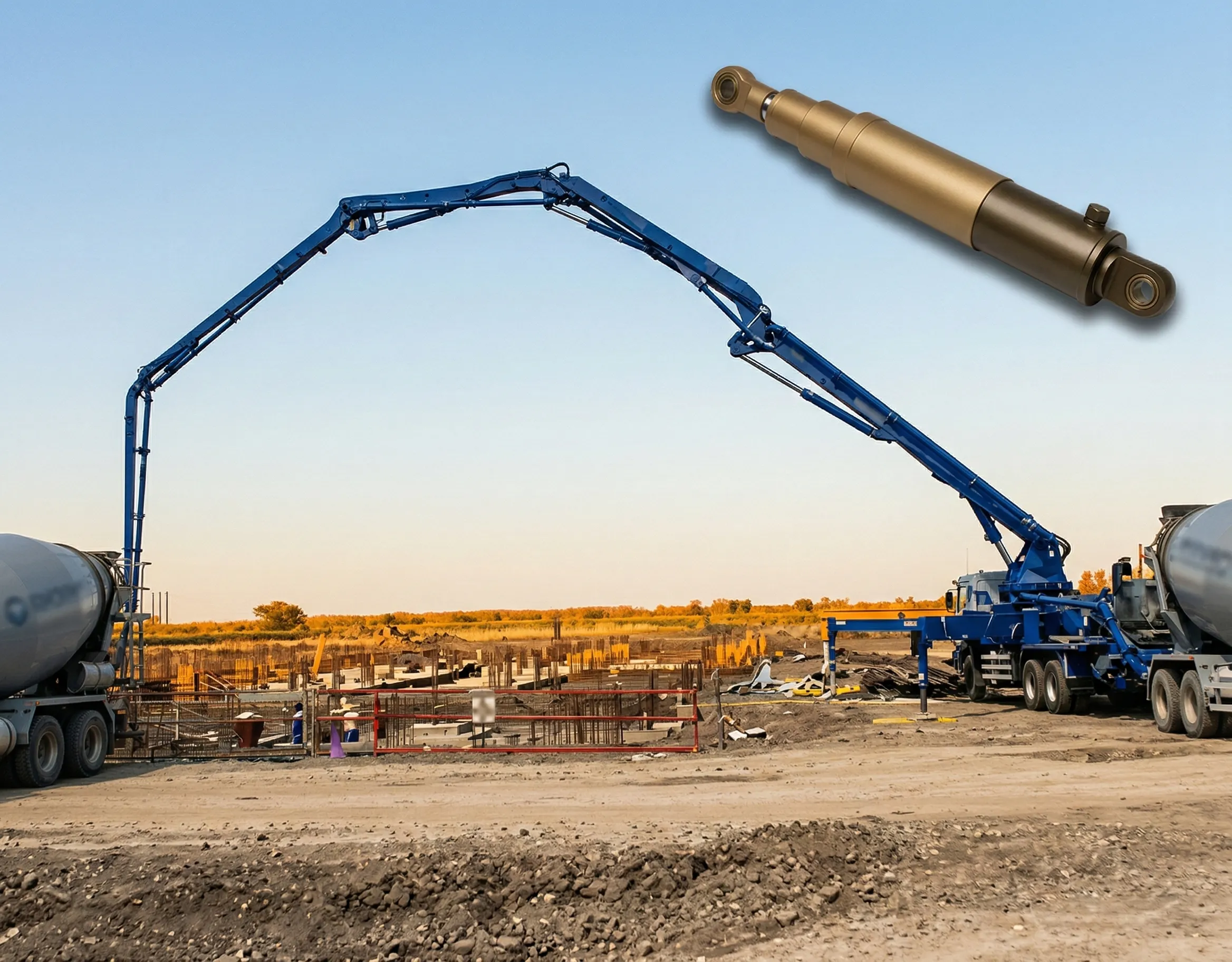
Core Engineering Parameters & Specifications
We do not believe in ambiguity when it comes to mechanical engineering. To ensure absolute compatibility and performance transparency, please review the exact metallurgical and structural specifications of our small piston-type actuators below. These parameters are rigorously maintained across our entire production line.
| Specification Category | Standard Configuration Data | Engineering Application Context |
|---|---|---|
| Target Industry | Construction Machinery | Heavy-duty ready-mix and infrastructure support |
| Equipment Category | Concrete Mixer Truck | Fits standard volumetric capacities (8m³ to 12m³) |
| Subsystem Function | Water Tank Cover System | Pressurized wash-down tank access |
| Cylinder Designation | Water Tank Opening Cylinder | Industry standard nomenclature |
| Kinetic Action | Double acting hydraulic cylinder | Provides powered opening and powered clamping force |
| Structural Type | Small Piston Type | Compact footprint for restricted mounting envelopes |
| Manufacturing Method | Welded Construction | TIG welded for flawless, leak-proof joints |
| Core Material System | Stainless Steel (316L) | Premium marine-grade alloy containing Molybdenum |
| Surface Treatment | Precision Polished | Ultra-smooth finish to prevent cement adhesion |
| Environmental Grade | Highly Corrosive | Exposed to water, road salt, and harsh chemicals |
| Working Condition Dynamics | Cement Corrosion | Constant exposure to alkaline pH 12-13 slurry |
| Typical Failure Mode | Pitting Corrosion / Seal Tear | Resolved completely by our material upgrade |
| Recommended Configuration | 316L Anti-corrosion Body + Heavy-duty Wipers | |
Operational Dynamics: How It Works
The mechanics behind securing a pressurized water tank on a moving vehicle require both finesse and brute force. Our Water Tank Opening Hydraulic Cylinder functions as a compact fluid power actuator. Because it is designed as a double acting hydraulic cylinder, it utilizes hydraulic fluid to power both the extension and retraction strokes. When the vehicle operator engages the control valve, pressurized hydraulic fluid enters the cap end port. This fluid pushes against the internal hydraulic cylinder piston, driving the polished stainless steel rod outward. This mechanical force lifts the heavy steel cover of the water tank smoothly and holds it open for filling or maintenance.
Conversely, when the operation is complete, fluid is directed into the rod end port while the cap end vents back to the reservoir. This retracts the rod, pulling the tank cover down with immense clamping force to ensure the rubber gasket seals tightly against the internal air pressure used during the wash-down process. Throughout this reciprocating cycle, specialized external wiper seals scrape away any drying cement or dust that has settled on the rod, protecting the internal hydraulic cylinder components from contamination. The genius of the small piston design is that it generates substantial holding force without occupying valuable space on the truck chassis.
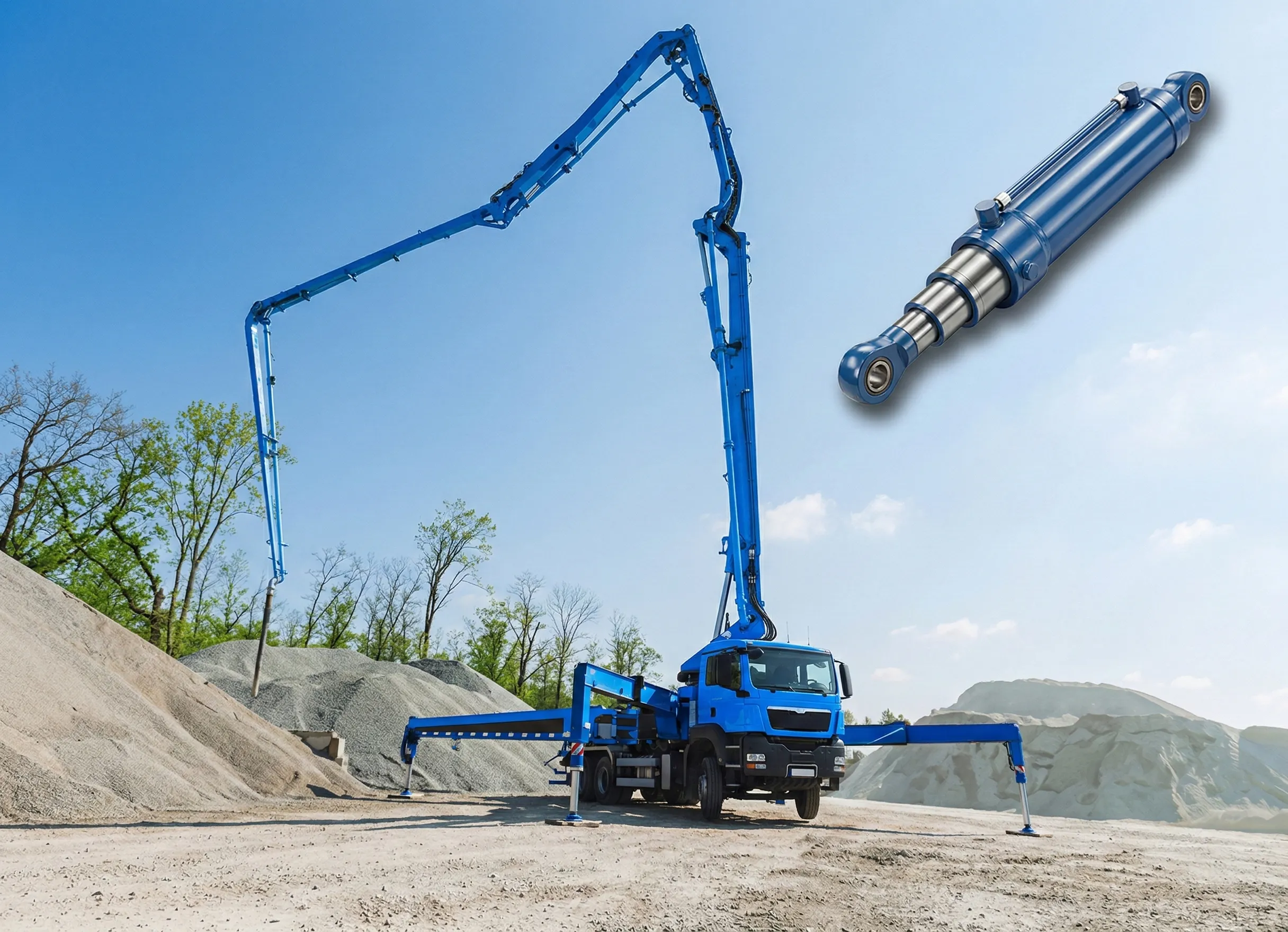
Seamless Fleet Integration and Compatibility
Maintenance downtime is highly detrimental to construction schedules. Finding reliable replacement hydraulic parts quickly is essential. Our engineering team has mapped the dimensional tolerances, pin sizes, and mounting geometries of the most prevalent mixer trucks operating in South Korea and the broader Asian market. Our cylinders serve as perfect drop-in replacements, requiring no modifications to your existing brackets or hydraulic lines.
Note: The following machinery brands are mentioned strictly for the purpose of technical compatibility and ease of selection for our B2B clients. We operate as an independent manufacturer and do not claim any trademark affiliation with these respective entities.
- Hyundai & Tata Daewoo: The backbone of the South Korean ready-mix fleet. Our cylinders precisely match the OEM mounting distances for their heavy-duty mixer chassis.
- Sany & Zoomlion: We provide upgraded anti-corrosion actuators for the superstructure bodies of these globally recognized equipment manufacturers.
- Volvo & Scania: For premium imported chassis equipped with domestic mixer bodies, our 316L cylinders match the high-end quality expected by European truck operators.
Five Pillars of Unmatched Technical Superiority
What separates a standard commercial cylinder from a purpose-built industrial solution? It comes down to material science and recognizing the specific failure modes of the working environment. When you are constantly fixing hydraulic cylinders due to rust, the initial purchase price becomes irrelevant. Here are five reasons our stainless steel actuators dominate the market:
- 316L Stainless Steel Anti-Corrosion Mastery: Cement dust mixed with water creates calcium hydroxide, a highly alkaline solution (pH 12-13) that violently attacks carbon steel. Standard chrome plating eventually develops micro-cracks, letting the alkali reach the base metal. We forge our entire cylinder body and rod from 316L stainless steel. The addition of Molybdenum in the 316L alloy makes it uniquely resistant to the specific pitting corrosion caused by cement and chloride environments.
- Precision Polished Surface Treatment: Instead of relying on a thin layer of flash chrome that chips upon impact, our stainless steel rods undergo a multi-stage mechanical polishing process until they reach a mirror finish. This ultra-smooth surface physically prevents sticky cement slurry from adhering to the rod, stopping the abrasive damage before it begins.
- High-Rigidity Compact Welded Architecture: Mixer truck superstructures are incredibly dense with piping and mechanical linkages. Our welded construction technique eliminates the need for bulky tie-rods, creating a highly streamlined, compact footprint. Despite its small size, the rigorous TIG welding process ensures the high rigidity necessary to pull down the heavy steel tank cover without flexing.
- Advanced Ultra-Low Friction Sealing Technology: An actuator is only as reliable as its seals. We utilize specialized polyurethane and PTFE composite seals designed explicitly for high-particulate environments. The primary wiper lip acts as a bulldozer, scraping away dried cement powder, while the inner pressure seals operate with ultra-low friction to prevent stick-slip during movement.
- Thermal Stability and Extreme Fatigue Life: Construction equipment operates in punishing weather, from freezing Korean winters to humid, scorching summers. Our selected seal compounds and fluid port designs maintain optimal thermal stability, preventing seal shrinkage in the cold and blowout in the heat. The structural integrity of the 316L housing ensures a fatigue life that outlasts the vehicle chassis itself.
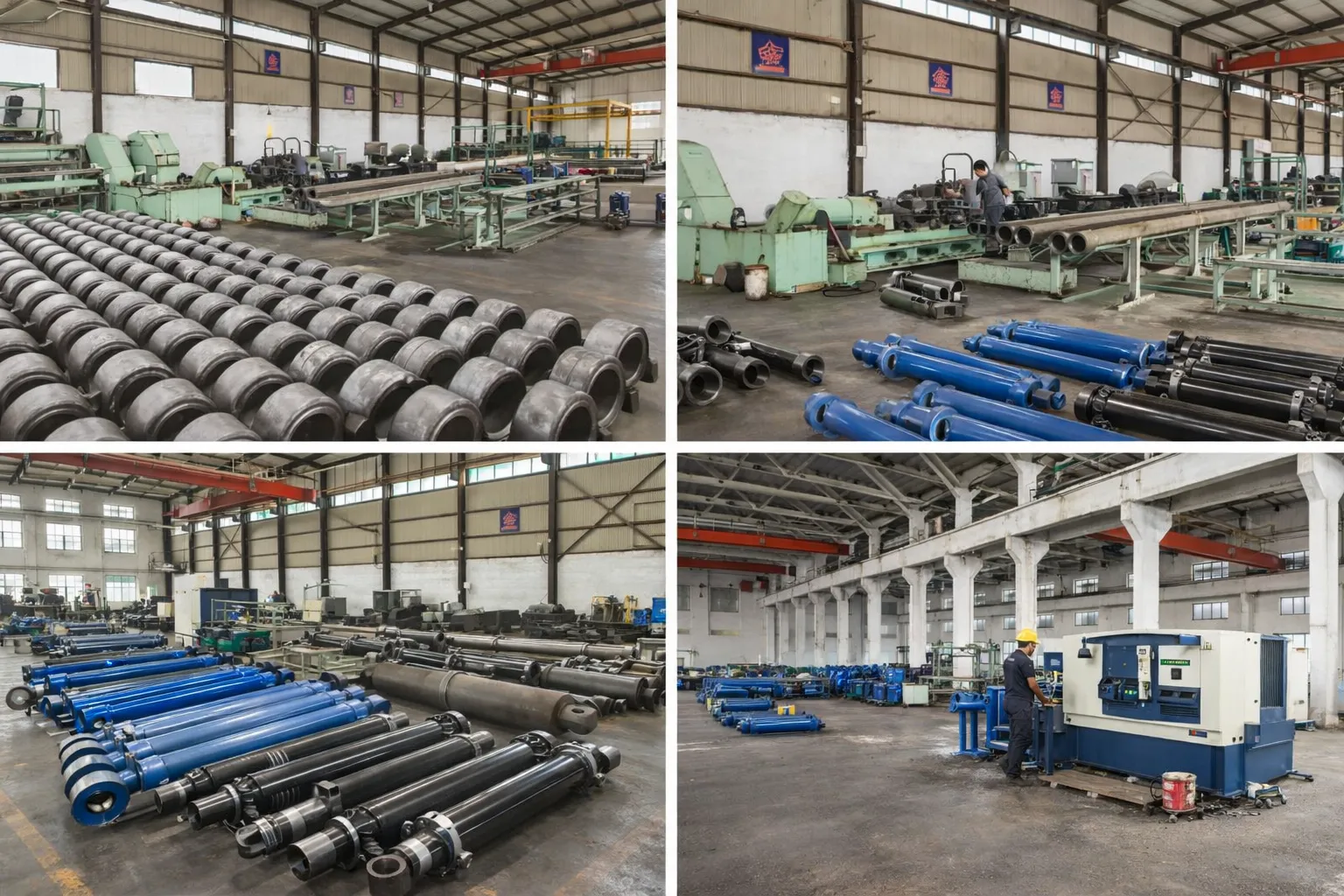
Uncompromising Manufacturing and Quality Control
Excellence in design means nothing without flawless execution on the factory floor. Our manufacturing facility operates under strict ISO quality management protocols. Fabricating stainless steel requires a higher tier of expertise than working with standard carbon steel. We utilize specialized Argon-shielded TIG welding to prevent carbide precipitation at the weld joints, ensuring the metal retains its maximum anti-corrosive properties.
Every single Water Tank Opening Cylinder is subjected to a rigorous 100% factory pressure test before it is approved for shipment. We cycle the actuators under pressures exceeding their maximum rated load to verify seal integrity, stroke smoothness, and weld strength. Each unit receives a permanently laser-etched serial number. This guarantees total lifecycle traceability, from the raw material steel mill certificate down to the specific technician who assembled the internal hydraulic cylinder components. We do not gamble with quality, and neither should your procurement team.
Expansive Industry Applications Beyond Concrete
While perfectly optimized as a solution for the construction machinery industry, the fundamental advantages of a compact, 316L stainless steel actuator make it highly sought after across multiple demanding sectors.
- Environmental & Waste Management: Sludge transport trucks and chemical waste processing facilities where highly corrosive liquids rapidly destroy standard steel lift cylinders.
- Marine & Offshore Equipment: Deck machinery, hatch covers, and shipboard cranes exposed continuously to aggressive saltwater environments and sea spray.
- Food & Beverage Processing: Industrial mixing vats and hygienic material handling systems where rust contamination is strictly prohibited, and high-pressure chemical washdowns are mandatory.
- Metallurgy & Mining: Heavy-duty dust suppression water wagons operating in caustic mining environments.
- Specialty Chemical Logistics: Actuators for valves and hatches on bulk chemical tanker trailers transporting fertilizers and industrial acids.
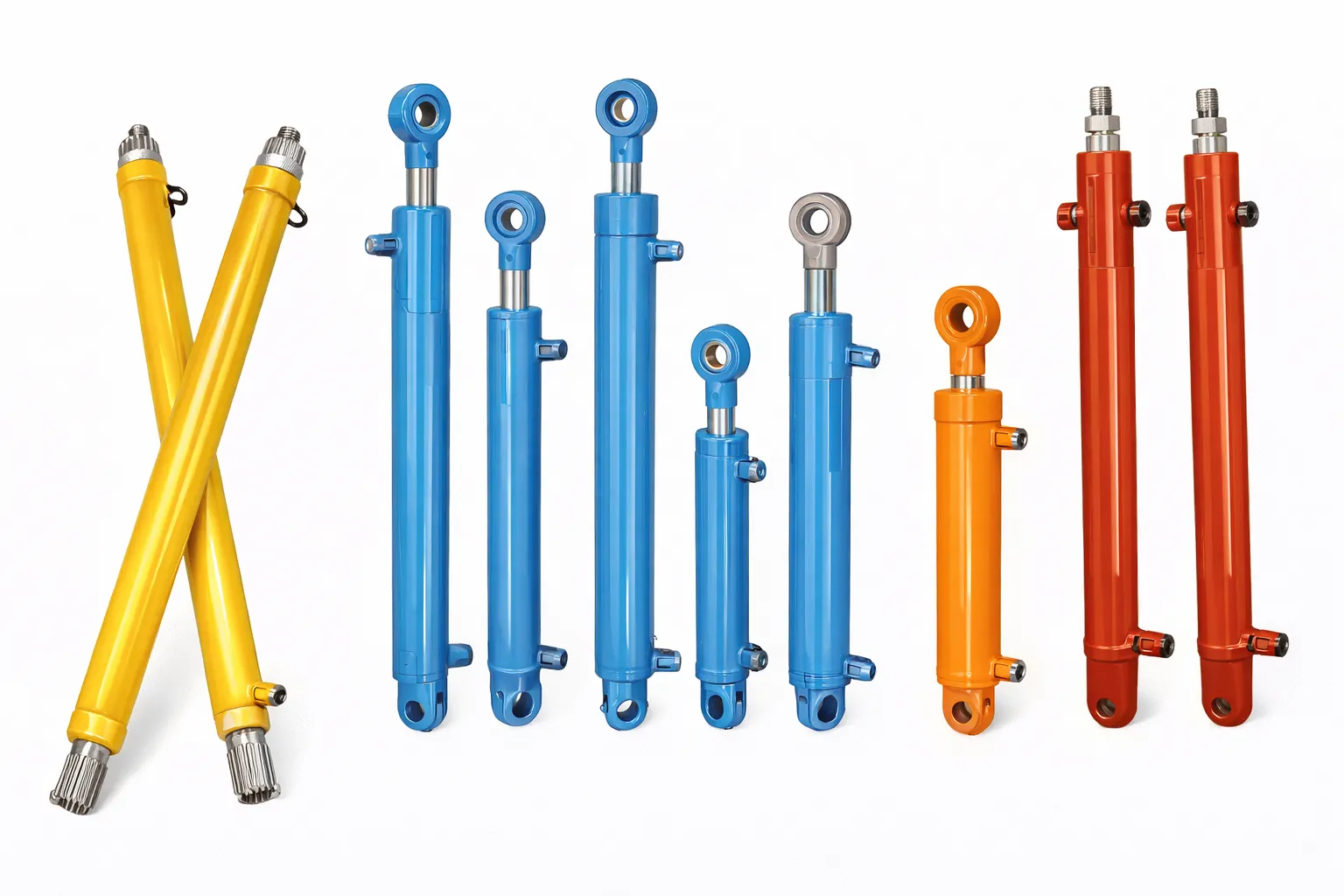
Comparative Analysis: Standard Market Cylinders vs. Our 316L Solution
Evaluating the true hydraulic cylinder price means calculating the total cost of ownership over the vehicle’s lifespan. Purchasing a cheap carbon steel cylinder that requires replacement every year is a massive drain on operational budgets. Review the stark differences in engineering philosophies below.
| Engineering Metric | Standard Ordinary Cylinder (OEM/Market) | Our High-Performance 316L Cylinder |
|---|---|---|
| Base Material | 45# Carbon Steel (Highly susceptible to rust) | 316L Stainless Steel (Immune to cement alkali) |
| Rod Surface Treatment | Flash Hard Chrome (Micro-cracks let rust form) | Precision Mechanical Mirror Polish |
| Wiper Seal Design | Standard NBR Rubber (Tears on dried cement) | Heavy-Duty Composite Scraper Lip |
| Average Lifespan in Concrete | 6 to 12 Months | 5+ Years (Life of the truck chassis) |
| Maintenance Requirement | Frequent sanding of rust, regular seal replacement | Virtually Maintenance-Free (Wash and go) |
Proven in the Field: Real-World Case Studies
Engineering theories must survive the brutal reality of the job site. South Korea’s fast-paced infrastructure development demands equipment that does not fail. Below are five verified instances where our stainless steel actuators revolutionized fleet maintenance.
Case 1: Urban Ready-Mix Fleet Overhaul (Seoul, South Korea)
Client: Major Metropolitan Concrete Supplier
The Challenge: Operating a fleet of 85 Hyundai mixer trucks. The factory carbon steel tank cylinders were rusting solid within 8 months due to daily acidic washes and cement dust. Drivers were using crowbars to force the tanks open, causing structural damage.
How They Found Us: Fleet manager searched online for “corrosion resistant hydraulic rams for cement trucks.”
The Result: Retrofitted 50 trucks with our 316L Water Tank Opening Cylinder. Reduced the annual hydraulic maintenance budget by 14% and completely eliminated tank-related downtime.
“The difference is night and day. It’s been 18 months and the stainless cylinders still shine like mirrors. Our drivers no longer fight to open the tanks at the end of a long shift.” — Park J., Maintenance Director
Case 2: Defeating Saltwater and Cement (Busan, South Korea)
Client: Coastal Port Expansion Subcontractor
The Challenge: Mixer trucks operating right on the ocean docks. The combination of salty sea air and alkaline cement was creating catastrophic pitting corrosion, causing standard cylinders to leak hydraulic fluid into the harbor—a major environmental violation.
How They Found Us: Referral from a regional heavy machinery distributor.
The Result: The Molybdenum content in our 316L stainless steel completely resisted the chloride attack from the saltwater. Zero hydraulic leaks recorded over a 24-month port expansion project.
“We were facing massive fines for oil spills. Swapping to your stainless actuators solved our environmental compliance issues overnight. A brilliant, robust product.” — Lee H., Site Engineer
Case 3: Enhancing Repair Shop Reputation (Incheon, South Korea)
Client: Independent Heavy Truck Repair Facility
The Challenge: The shop spent excessive hours fixing hydraulic cylinders for local owner-operators. Rebuilding cheap rusted cylinders led to customer complaints when they failed again a few months later.
How They Found Us: Accessed our B2B catalog directly via hydrauliccylindersprice.com.
The Result: Began stocking our 316L cylinders as a premium upgrade option. Owner-operators gladly paid a slightly higher initial hydraulic cylinder price for a permanent fix, boosting the shop’s reputation for quality.
“I tell my customers: do it cheap, or do it right. When they see the polished stainless steel next to their rusted junk, the sale makes itself. I’ve installed 30 units this year with zero comebacks.” — Kim D., Shop Owner
Case 4: OEM Integration Success (Daegu, South Korea)
Client: Regional Concrete Mixer Body Builder
The Challenge: The manufacturer wanted to differentiate their new line of premium mixer bodies from cheaper competitors but struggled with early rust complaints on their external hydraulic accessories.
How They Found Us: Met our engineering sales team at a construction equipment expo in Seoul.
The Result: Integrated our 316L Water Tank Opening Hydraulic Cylinder as standard OEM equipment on all their new 10m³ mixer models, heavily marketing the “rust-free” feature to buyers.
“Partnering with you allowed us to elevate our brand. The polished cylinders look incredibly professional on a brand new truck, and our warranty claims on the water system dropped to zero.” — Choi S., VP of Manufacturing
Case 5: Cross-Industry Sludge Transport (Gwangju, South Korea)
Client: Municipal Environmental Logistics Company
The Challenge: Operating vacuum trucks transporting acidic industrial sludge. Standard carbon steel hatch actuators dissolved rapidly, creating dangerous containment risks.
How They Found Us: Read a case study on our website regarding chemical resistance.
The Result: Utilized our concrete mixer tank cylinders for their rear hatch locking mechanisms. The 316L metallurgy proved completely immune to the acidic sludge, securing the hatches perfectly.
“We took a product designed for concrete and applied it to chemical sludge. The engineering holds up flawlessly. Your cylinders provide the clamping force and corrosion resistance we desperately needed.” — Ahn M., Fleet Manager
Expert Knowledge Base: Frequently Asked Questions (FAQ)
We understand that B2B procurement requires deep technical clarity. Below, our engineers address the most common questions regarding our stainless steel actuation technology.
1. Why use 316L stainless steel instead of the cheaper 304 grade?
2. Could a single acting hydraulic cylinder be used for the water tank cover?
3. Exactly how does cement cause ‘pitting’ on standard cylinders?
4. Do these replacement cylinders require custom mounting brackets?
5. How can I request a quote or confirm fitment for my specific fleet?
Stop Wasting Budget on Temporary Fixes
Your concrete machinery works in the harshest environments on earth; your actuators should be built to survive them. Eliminate tank cover jams, environmental leaks, and constant maintenance cycles by upgrading to the ultimate 316L stainless steel solution today.
Contact Our Engineering Team for B2B Pricing
We specialize in rapid technical consultation and international fleet fulfillment.
Editor: Cxm


























