
Electric Furnace Cover Lifting Cylinder
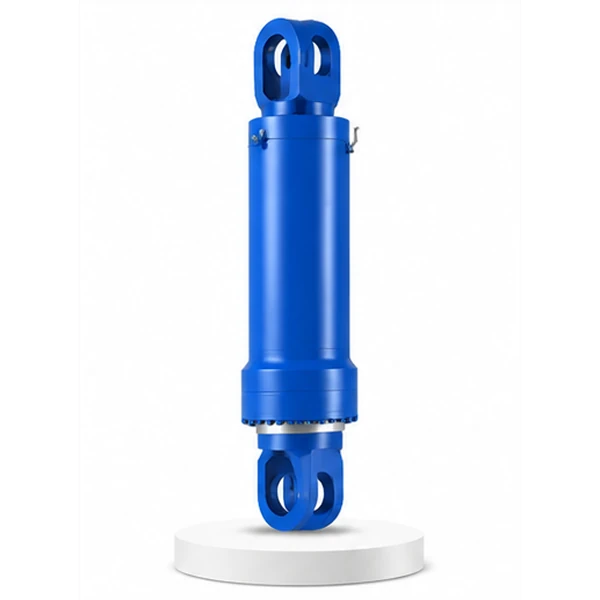
Cover Lifting Cylinder
The Rod Is 96% of the Bore.
This Is a Column, Not Just a Cylinder.
Bore 580 mm. Rod 560 mm. The rod fills nearly the entire bore — leaving just 10 mm of annular clearance per side. This is not a design error. The 560 mm rod is a structural column that holds the entire furnace cover overhead while scrap metal is charged into the furnace below. The hydraulics lift the cover; the rod holds it there.
What Happens Inside an Electric Arc Furnace
An electric arc furnace (EAF) melts scrap steel using electric arcs — currents of 30,000–80,000 amperes jumping between graphite electrodes and the metal charge. The interior temperature reaches 1,600–1,800 °C. The furnace cover (roof) sits on top of the furnace shell, containing the heat, fume, and molten metal splash. The electrodes pass through holes in the cover.
The cover must be lifted every time the furnace needs to be charged with fresh scrap metal — which happens 2–4 times per heat (each heat is one melt cycle, typically 40–70 minutes). The cover lifting cylinder raises the entire cover — typically weighing 20–80 tonnes including refractory lining — high enough for the charging bucket to swing over the open furnace and dump scrap into the shell. The cover is then lowered back into position for the next melt phase. This is the most extreme thermal environment any industrial engineering hydraulic cylinder must survive.
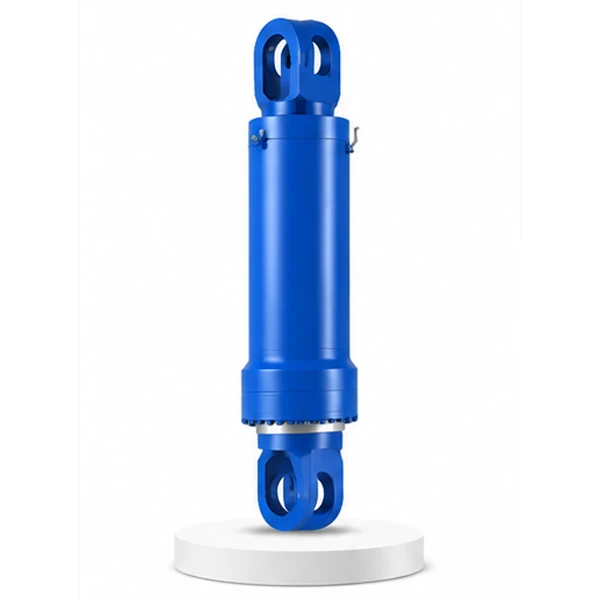
Technical Specifications
| Parameter | Value |
|---|---|
| Product | Electric Furnace Cover Lifting Cylinder |
| Function | Raise and lower the furnace cover for scrap charging |
| Bore Diameter | 580 mm |
| Rod Diameter | 560 mm (96.6% of bore) |
| Working Pressure | 14 MPa (lowest in range) |
| Maximum Thrust | 3,448 KN |
| Application | Electric Arc Furnace (EAF) |
| Certification | ISO 9001 · 100% hydrostatic tested |
Why the Rod Is 96% of the Bore — Hydraulic Actuator Meets Structural Column
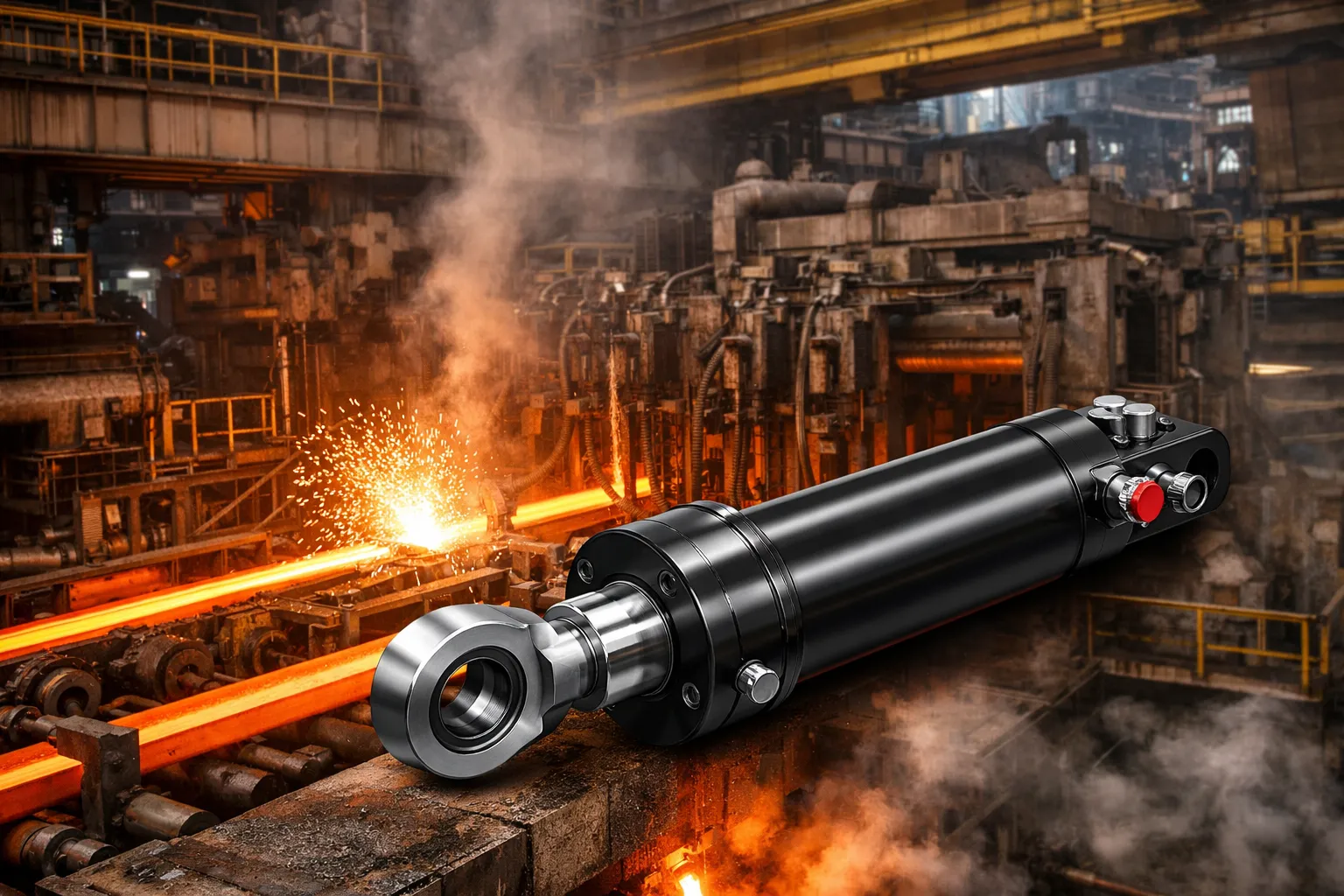
On a standard hydraulic cylinder, the rod diameter is typically 50–70% of the bore diameter — leaving substantial annular area on the rod side for retraction force. On this cover lifting cylinder, the rod is 560 mm in a 580 mm bore — leaving only 10 mm of annular clearance per side. This looks extreme, but it reflects the cylinder's dual role.
When the furnace cover is lifted, the entire weight of the cover — 20–80 tonnes of steel shell and refractory lining — hangs from the cylinder rod. The rod must support this weight as a structural compression column without buckling. A 560 mm diameter solid steel rod has enormous column strength — far more than a standard 300 mm rod in a 580 mm bore would have. The rod is sized for structural column strength, not for hydraulic annular area.
The working pressure is correspondingly low — 14 MPa, the lowest in the Korea Ever-Power range. But the full bore area at 580 mm is 264,208 mm², so even 14 MPa produces 3,448 KN of thrust — more than enough to lift the heaviest furnace covers. The design philosophy is: large bore for adequate force at low pressure, massive rod for structural integrity. The hydraulic function and the structural function are inseparable — this cylinder is as much a load-bearing column as it is a hydraulic actuator.
Surviving Beside a 1,800 °C Furnace
The cover lifting cylinder is mounted on the furnace support structure — typically within 2–5 metres of the furnace shell. During melting, the furnace interior reaches 1,600–1,800 °C, and the shell exterior radiates heat that raises the ambient temperature around the cylinder to 60–120 °C. When the cover is lifted for charging, the open furnace exposes the cylinder to direct radiant heat from the molten metal bath. The cylinder must survive this environment for 15–20 years of service life.
The cylinder barrel and rod are protected by heat shields — steel plates with insulation backing — mounted between the furnace and the cylinder. These shields reduce the radiant heat reaching the cylinder surface from 600+ °C (unshielded) to under 80 °C (shielded). Korea Ever-Power designs the cylinder mounting with heat shield provisions as standard.
For furnaces where heat shielding alone is insufficient (large EAFs, close-mounted cylinders), Korea Ever-Power offers a water-cooled barrel jacket — a welded-on cooling channel that circulates plant cooling water around the cylinder barrel, maintaining the barrel temperature below 60 °C even during extended melting campaigns.
During charging, molten metal splash and slag particles can reach the cylinder. The rod is protected by a bellows boot or telescopic shroud that prevents hot particles from landing on the chrome surface. Any metal splash that contacts the rod would bond to the chrome and score the seal on the next stroke — a single splash event can cause a seal failure.
The cylinder uses FKM (Viton) seals rated for sustained temperatures up to 200 °C — well above the 80–120 °C that the shielded cylinder surface experiences. The hydraulic fluid is a high-VI (viscosity index) mineral oil or fire-resistant fluid (HFC or HFD) selected to maintain viscosity at elevated operating temperatures.
The Cover Lift Cycle — 60 Seconds That Cannot Fail
The cover lift is one of the most time-critical operations in EAF steelmaking. Every second the cover is open, the furnace loses heat (wasting energy and extending the melt time) and exposes the melt shop to fume and radiant heat. The cylinder must lift fast, hold reliably, and lower smoothly — with zero tolerance for malfunction.
The cylinder extends, raising the cover to full height. Speed must be fast enough to minimise heat loss, but controlled enough to prevent the cover from swinging or oscillating. A load-holding valve locks the cylinder at full extension — the cover must stay up without pump pressure while the charging bucket swings into position.
The charging bucket, loaded with 30–60 tonnes of scrap steel, is positioned over the open furnace and dumped. The cover cylinder holds the cover motionless throughout — the bucket swing, the dump impact, and the vibration from scrap hitting the furnace shell must not affect the cover position.
The cylinder retracts, lowering the cover onto the furnace shell rim. The final 50 mm of descent must be slow and controlled — the cover must seat precisely on the furnace rim seal without impact. A hard landing damages the refractory lining on the cover's underside and can crack the seal ring. Contact the hydraulic cylinder engineering team for cover lift cycle time specifications.
Manufacturing for Extreme-Temperature Service
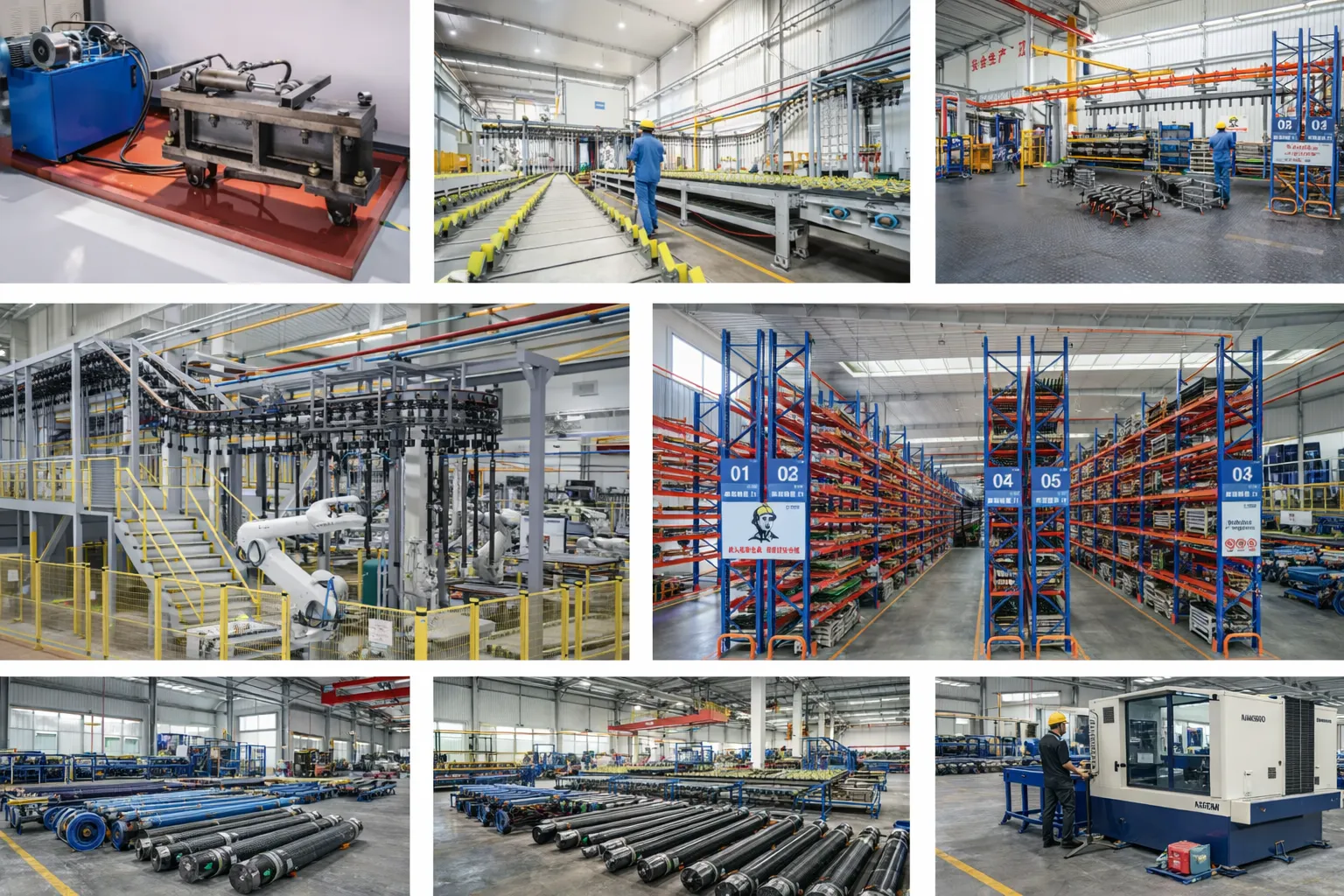
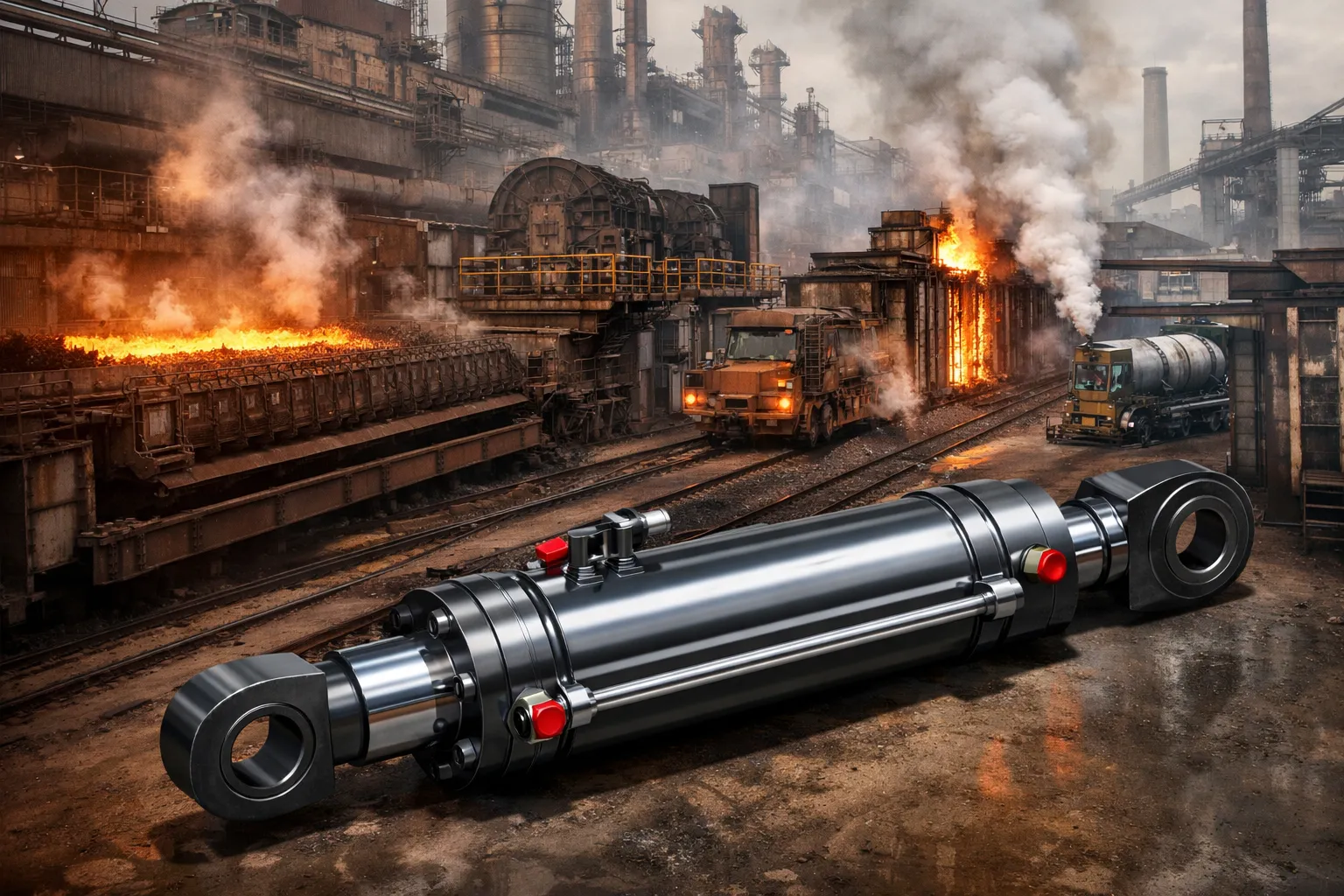
The 580 mm bore and 560 mm rod create a unique machining challenge: the rod guide bearing and seal gland must maintain precise concentricity over a 560 mm diameter — any eccentricity causes the massive rod to load the seals unevenly, accelerating wear on one side. Korea Ever-Power machines the rod gland bore on CNC equipment with verified concentricity to the barrel bore within 0.1 mm total indicated runout.
The 560 mm rod is forged, rough-machined, stress-relieved, finish-ground, and chrome plated (80–100 µm for EAF service). The straightness is critical — at 560 mm diameter and column-loading duty, even 0.5 mm of bow concentrates stress on one side of the guide bearing during the structural hold phase. Rod stock is verified for bow ≤0.2 mm/metre before chrome plating.
Every cover lifting cylinder is hydrostatic tested at 1.5× working pressure (21 MPa) with a sustained hold test. For EAF customers, Korea Ever-Power also performs a structural load test — applying the rated cover weight to the extended rod and verifying zero deflection and zero pressure drop during a simulated hold period.
OEM & ODM
FAQ
Related Categories
Lisainfo
| Editor |
|---|
Seotud tooted
-
Pressurized Hydraulic Cylinder for Vulcanizing Machine
-
Electric Furnace Cover Rotating Cylinder
-
Hydraulic Press Clamping Cylinder
-
Electric Furnace Mast Cylinder
-
Cement Equipment Vertical Mill Cylinder
-
Hydraulic Press Rear Side Shift Cylinder
-
Injection Molding Machine Shooting Cylinder
-
Electric Furnace Tipping Cylinder


























