
Fixed Cone Cylinder for Crusher
Advanced double-acting servo piston actuators engineered to absolutely eliminate setting drift, maintain perfect aggregate sizing, and endure extreme dust contamination.
Product Overview and Industrial Value
In the unforgiving environment of mineral extraction and commercial aggregate processing, the precise control of the final crushed product dictates the financial success of the entire facility. The central mechanical sub-system responsible for regulating this output geometry is the closed-side setting (CSS) adjustment mechanism. Operating at the very core of this mechanism is the fixed cone cylinder. Unlike standard lifting mechanisms that merely move a static load, this highly specialized fluid power component must perform dynamic, micro-millimeter rotational adjustments while acting as an unyielding mechanical lock against thousands of tons of upward reactive crushing force. If this unit fails to hold its precise volumetric position under load, the crushing gap involuntarily expands. This mechanical yielding is known as setting drift, and it instantly generates oversized, rejected aggregate that forces operators into expensive secondary reprocessing cycles.
Based on decades of continuous field failure analysis across major quarries in South Korea, Japan, Taiwan, and the broader Asian market, our engineering team has conclusively determined that standard commercial fluid power components are fundamentally inadequate for this specific application. A conventional hydraulic cylinder typically utilizes basic elastomeric pressure seals and mild steel tubing. When these generic units are subjected to the continuous, violent harmonic shock waves of a crushing chamber, combined with a local atmosphere densely saturated with abrasive airborne silica dust, they suffer rapid internal fluid bypass. The fluid slips past the seals under peak impact pressure, causing the unit to lose its holding power. This forces plant maintenance teams to constantly halt production to manually recalibrate the machine or spend valuable operating hours fixing hydraulic cylinders on the catwalk.
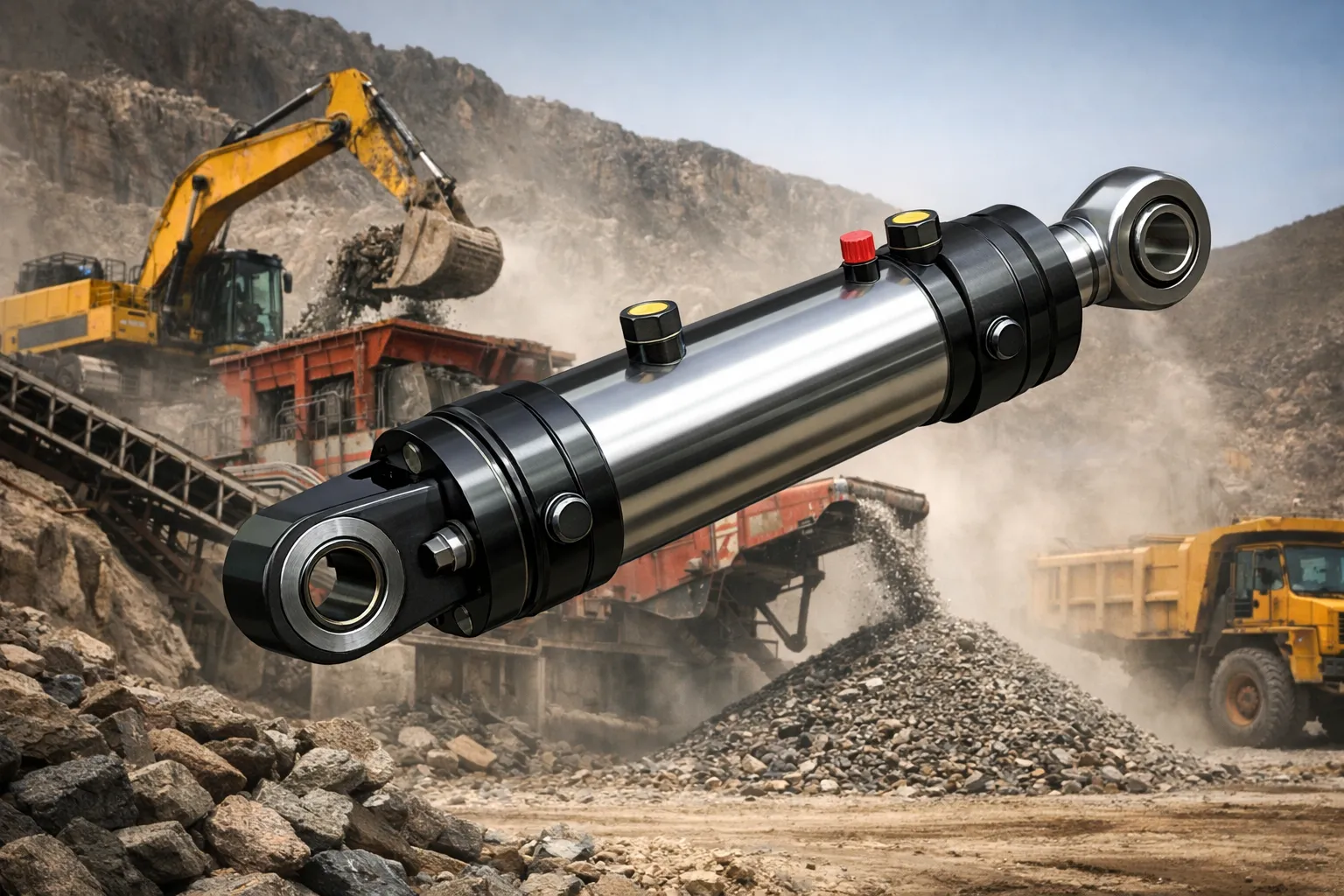
As a dedicated hydraulic cylinder manufacturer, our response to this industry-wide vulnerability is defined by an absolute refusal to compromise on applied metallurgical science and internal sealing architecture. Our heavily fortified fixed cone hydraulic cylinder is a purpose-built actuator designed exclusively for dynamic adjustment in these extreme environments. By integrating a true servo piston cylinder configuration, utilizing high-yield forged alloy steel structures, and deploying our proprietary low-friction contamination exclusion technology, we permanently eradicate the problem of positional drifting. When plant managers require uncompromising reliability and exact dimensional control, sourcing premium hydraulic cylinder solutions from our production facility guarantees uninterrupted, perfectly sized material reduction and a maximum return on heavy machinery investment.
Technical Parameters and Core Specifications
Integrating fluid power into heavy reduction machinery requires absolute transparency in mechanical specifications. The following technical matrix outlines the specific operational parameters, material property designations, and structural configurations of our adjustment units. These specifications are mathematically engineered to survive the continuous, high-load punishment of mineral reduction.
| Category / Attribute | Standard Specification | Engineering Notes and Field Context |
|---|---|---|
| Industry Segment | Mining Equipment | Essential for rock quarries, metallic ore mines, and concrete recycling. |
| Equipment Category | Crusher | Optimized specifically for secondary and tertiary cone architectures. |
| Subsystem / Action | Fixed Cone Adjustment | Dynamically regulates the internal CSS to control final output sizing. |
| Cylinder Designation | Fixed cone cylinder | Also recognized on plant schematics as the bowl adjustment actuator. |
| Action Method | Double acting hydraulic cylinder | Requires active pressurized fluid for controlled extension and forced retraction. |
| Structure Type | Servo Piston Cylinder | Permits micro-millimeter positional holding via closed-loop proportional valving. |
| Manufacturing Structure | Welded Construction | Automated submerged arc welding ensures massive base structural rigidity. |
| Material System | Alloy Steel | High tensile yield strength absolutely prevents lateral barrel ballooning under peak shock. |
| Surface Treatment | Chrome Plated | Deep micro-cracked hard chrome provides extreme external wear and impact defense. |
| Environment Level | High Dust + High Load | Utilizes aggressive tandem scraper seals to remain impervious to airborne silica. |
| Working Condition | Dynamic Adjustment | Constantly moving under live load to compensate for manganese mantle wear. |
| Typical Failure Mode | Drift | Internal pressure seal bypass causing the crushing cavity to unintentionally widen. |
| Recommended Solution | Servo Control | Active electronic-hydraulic feedback to instantaneously hold and correct positioning. |
Detailed Working Principle and Servo Fluid Dynamics
To truly comprehend the superior nature of our design, plant engineers must examine the internal fluid mechanics and operational kinematics of the unit. The fixed cone hydraulic cylinder functions as an advanced double acting hydraulic cylinder integrated tightly with the primary adjustment drive ring. During the heavy material reduction process, the manganese mantles and bowl liners inside the crushing chamber gradually wear down due to severe friction. To maintain the exact desired aggregate output size, the outer fixed cone (bowl) must be rotated and driven further down into the mainframe V-threads. This precise rotational adjustment is executed entirely by the synchronized pushing and pulling force of these heavy-duty hydraulic rams.
When the plant’s automated logic controller detects that the electrical power draw is optimal but the physical aggregate output size is increasing, it signals the hydraulic power unit to act. Pressurized, highly filtered hydraulic fluid is metered through sensitive proportional directional valves into either the cap end or rod end of the cylinder. As a specialized servo unit, the internal hydraulic cylinder piston geometry and the PTFE step-seals are optimized to respond instantly to minimal fluid volume changes without exhibiting the jerky “stick-slip” hesitation found in cheap cylinders. Because it is a double-acting system, it commands massive hydraulic force in both directions. This allows the operator to forcefully push to tighten the setting against mechanical resistance, or forcefully pull to rapidly open the setting to clear uncrushable tramp iron from the chamber. Using a basic single acting hydraulic cylinder for this task is physically impossible and fundamentally dangerous.
The most critical phase of its working principle is the static holding phase. Once the desired CSS gap is achieved, the directional valves trap the fluid inside the cylinder chambers. The violent crushing process then exerts millions of pounds of upward and lateral kinetic force against the bowl, attempting to eject it. This mechanical force translates directly into extreme hydraulic pressure spikes inside the fixed cone cylinder. Our specialized engineering ensures that the internal seals transition into a zero-leakage state under pressure, and the heavy-wall alloy steel barrel rigidly refuses to elastically expand. This unwavering static hold completely eliminates the drifting failure mode, ensuring the machine operates strictly within its design parameters. Securing highly reliable hydraulic cylinder components is the only method to guarantee consistent aggregate yield.
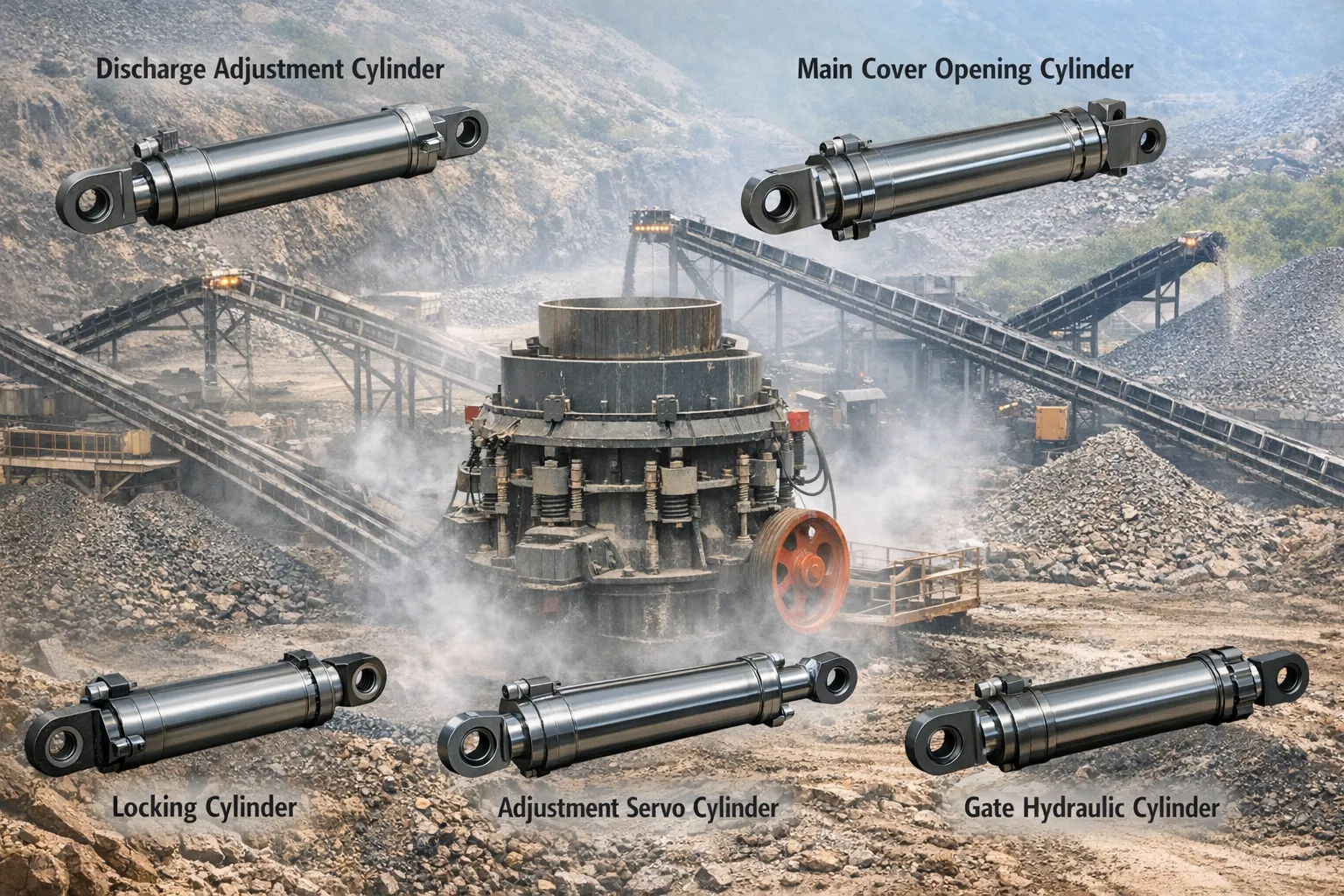
Seamless Drop-In Replacement for Global Machinery Brands
Corporate procurement teams and site maintenance managers frequently find their operations held hostage by original equipment manufacturers when critical fluid power components suffer catastrophic failure. Relying exclusively on OEM replacement parts generally involves unacceptably long international lead times, exorbitant shipping logistics, and heavily inflated brand-name pricing. Our deeply engineered fixed cone cylinder is explicitly designed to bypass this bottleneck. We manufacture it to serve as a structurally superior, perfect dimensional drop-in replacement. We meticulously cross-reference the exact retracted pin-to-pin lengths, total stroke capabilities, mounting trunnion widths, clevis pin diameters, and hydraulic port thread pitches of the industry’s most prevalent crushing equipment.
Our custom-manufactured, high-performance units are regularly dispatched to seamlessly upgrade the adjustment mechanisms on renowned global equipment brands. This instantly improves the structural reliability of the machine without requiring a single welding modification to the machine’s steel frame or altering the existing high-pressure fluid lines. Procuring the correct hydraulic parts rapidly is critical to keeping the plant online. These structurally compatible machinery brands encompass, but are not limited to:
- Metso Outotec: Exact dimensional matching for the highly popular HP Series (HP200, HP300, HP400, etc.) and GP Series machines, maintaining perfect dynamic control over the bowl.
- Sandvik: Robust, heavy-duty replacements for the adjustment rings and hydroset mainshaft mechanisms of the CH and CS Series cone equipment operating in hard rock environments.
- Terex (Cedarapids, Finlay, Pegson): Perfect fitment for the dynamic adjustment mechanisms on their extensive range of mobile track-mounted and static wheeled processing plants.
- Symons & Nordberg: Upgraded modern servo sealing technology customized for the classic 3ft, 4.25ft, and 5.5ft legacy units still dominating quarries across Asia.
- FLSmidth & ThyssenKrupp: High-bore, extreme-pressure cylinder replacements engineered to handle the massive forces generated in primary mining extractors.
Important Procurement Note: All machinery brand names, specific model series classifications, and corporate trademarks mentioned within this technical document are the exclusive intellectual property of their respective corporate owners. They are referenced herein strictly and exclusively for the purpose of illustrating structural equipment compatibility, cross-referencing precise dimensions, and assisting buyers in the accurate selection of proper replacement parts. As an independent, premier aftermarket hydraulic cylinder manufacturer, we operate strictly on our own engineering merits and do not assert any official affiliation, sponsorship, or direct endorsement by these original equipment manufacturers.
Five Core Technical Advantages Ensuring Zero Drift
Deploying a standard commercial lift cylinder into a high-dust, high-shock load environment is a critical engineering miscalculation that guarantees premature failure. The relentless vibration and abrasive atmosphere will physically destroy standard seals and deform standard steel tubing within weeks. To ensure the permanent elimination of setting drift and to maximize heavy equipment operational uptime, we have successfully engineered five distinct technical pillars into every fixed cone hydraulic cylinder we dispatch from our facility:
1. Advanced Servo Control Precision to Eradicate Drifting
The single most financially damaging operational failure in an adjustment unit is drift—the slow, unintended movement of the hydraulic cylinder piston under crushing load, which gradually forces the closed side setting wider. We counteract this completely by designing the unit as a true servo piston cylinder. The internal piston geometry is machined to extremely tight, micro-millimeter tolerances, ensuring absolutely zero fluid bypass between the cap and rod chambers. When integrated with the plant’s linear position sensors, the cylinder provides absolute, rigid positional holding power. By instantly counteracting internal pressure drops with precise hydraulic fluid injection, the system guarantees perfect dimensional holding over the entire production shift.
2. High-Rigidity Alloy Steel Welded Barrel Construction
Under the severe, chaotic shock loads of a rock crushing event, the hydraulic fluid inside the locked cylinder acts as a solid and experiences massive kinetic pressure spikes. A standard mild Q235 steel barrel will elastically expand or balloon radially outward under these spikes. This momentary expansion causes the internal seals to lose their tight pre-load against the cylinder wall, instantly resulting in fluid bypass and positional drift. We utilize heavy-walled, high-tensile alloy steel for our entire welded barrel construction. This superior metallurgy provides exceptional rigidity, ensuring the barrel maintains its exact internal diameter regardless of internal pressure spikes, thereby fully supporting the seals and maintaining the static load hold.
3. Ultra-Low Friction Sealing System for High Dust Exclusion
Operating in a dense, continuous cloud of abrasive silica dust is the ultimate destruction test for dynamic hydraulic cylinder components. If this microscopic dust bypasses the wiper and enters the cylinder, it creates an aggressive abrasive lapping paste that rapidly scores the chrome rod and shreds the internal pressure seals. We employ a highly advanced, multi-stage tandem sealing architecture to prevent this. The exterior is guarded aggressively by heavy-duty metallic dust scrapers and extreme-environment polyurethane double-lip wiper seals. Internally, we utilize ultra-low friction PTFE (Teflon) energized step seals. This combination actively shears away caked-on stone mud while ensuring perfectly smooth dynamic adjustment without the destructive mechanical stuttering common in high-pressure systems.
4. Deep Micro-Cracked Hard Chrome Plating on Piston Rods
The continuously exposed piston rod of the fixed cone cylinder is highly vulnerable to physical impacts from falling rock fragments, tramp iron strikes, and continuous exposure to highly corrosive atmospheric moisture. Standard commercial flash chrome plating chips and flakes easily when impacted. We solve this by subjecting every high-strength steel rod billet to an aggressive induction hardening process, establishing a tough sub-surface. This is followed by a meticulously controlled electroplating process that deposits a thick, 20-30 micron layer of micro-cracked hard chrome. This specific micro-cracked topography naturally retains a microscopic lubricating film of oil to protect the seals, while the hardened surface acts as impenetrable armor against physical pitting, extending the rod life exponentially.
5. Exceptional Thermal Stability and Fatigue Life Optimization
Heavy mineral processing is a relentless, continuous operation. The extreme mechanical friction inside the crushing chamber generates massive amounts of radiant kinetic heat, which transfers directly into the adjacent hydraulic fluid. High fluid temperatures rapidly degrade standard nitrile elastomeric seals, causing them to chemically harden, crack, and fail catastrophically. By incorporating premium, high-temperature fluorocarbon (Viton) sealing materials, advanced phenolic bearing rings, and optimizing the internal fluid dynamic pathways to prevent localized heat buildup, our cylinders maintain structural and volumetric integrity. This guarantees an extraordinarily long fatigue life, drastically reducing the necessity for sudden, emergency hydraulic cylinder repair tasks on site.
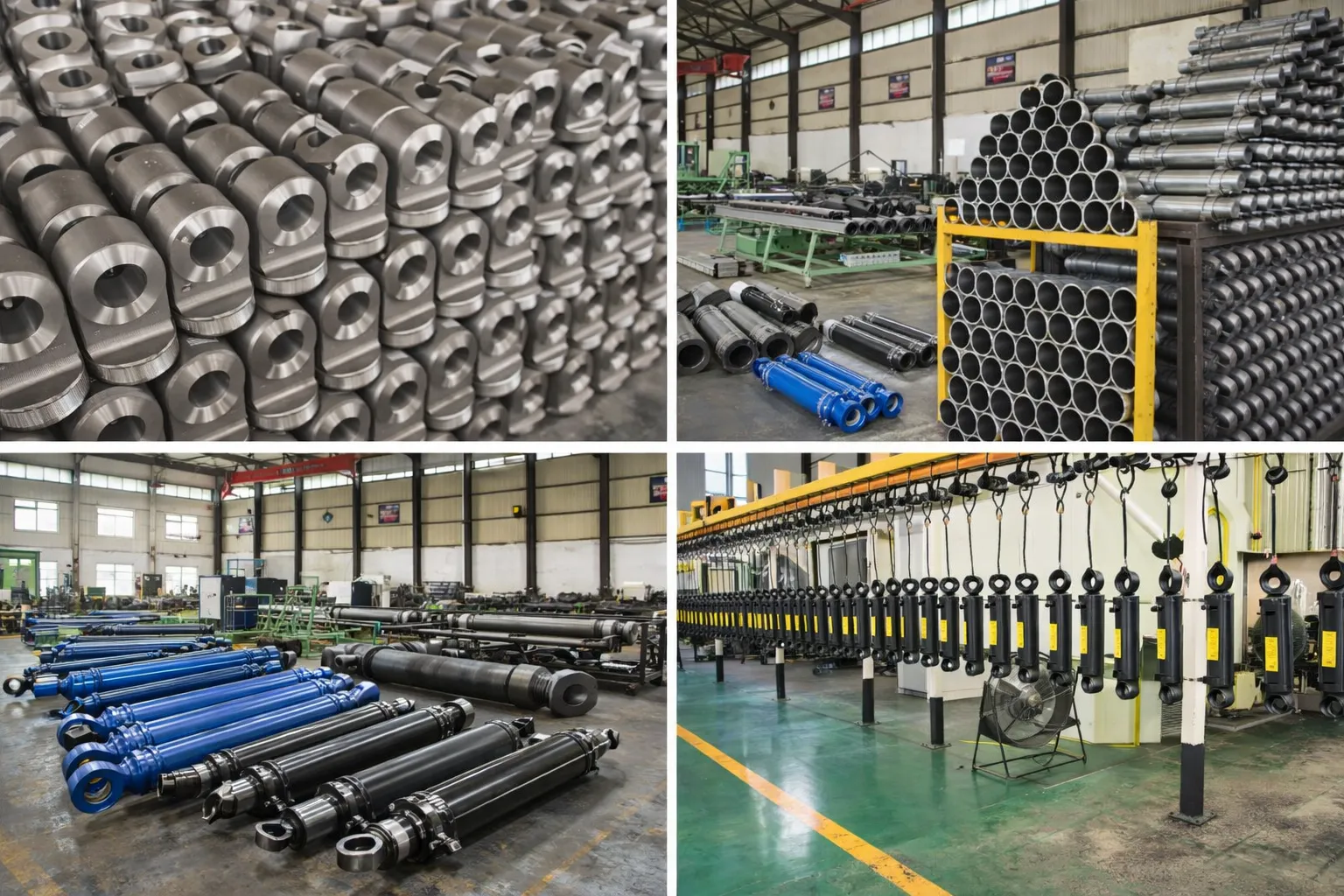
Autonomous Manufacturing Process and Absolute Quality Control
Delivering a highly stressed product capable of surviving the harshest industrial environments requires absolute, uncompromising control over the entire manufacturing lifecycle. As a dedicated, primary hydraulic cylinder manufacturer, we do not rely on unverified third-party assemblies or cheap outsourced weldments. Our factory operates strictly as a fully vertically integrated manufacturing center. This structural independence ensures that every single fixed cone hydraulic cylinder dispatched to our global clients is engineered, machined, welded, assembled, and pressure-tested under a singular, draconian quality management protocol.
The manufacturing process initiates with rigorous metallurgical vetting. Every incoming batch of alloy steel tubing and rod billet undergoes comprehensive ultrasonic non-destructive testing to verify the complete absence of internal inclusions, slag, or micro-fractures. In our precision CNC machining sector, the internal cylinder bores are subjected to an advanced deep-hole skiving and roller burnishing process. This plastic deformation technique creates a hyper-smooth, mirror-like internal surface finish, which is absolutely critical for the ultra-low friction PTFE seals to glide effortlessly and prevent premature wear. The structural welded construction is executed exclusively by automated robotic submerged arc welding systems. This ensures deep, highly uniform weld penetration that permanently fuses the heavy end caps to the barrel, completely eliminating the structural stretching weaknesses inherent in basic tie-rod cylinder designs.
However, the true cornerstone of our field reliability is our testing protocol. Following cleanroom assembly, every single finished double acting hydraulic cylinder is physically transferred to our automated hydrostatic test benches. We do not engage in statistical batch testing; we perform rigorous 100% individual unit testing. The cylinders are deliberately pressurized to levels exceeding 150% of their maximum rated operational load to verify absolute burst strength, confirm absolute zero internal fluid bypass (physically proving the servo holding capability), and ensure smooth dynamic actuation across the entire stroke. Finally, each unit is permanently laser-etched with a unique serial identifier. This provides our clients with total lifecycle traceability, and this high-quality manufacturing methodology significantly reduces the end user’s operational need for ongoing fixing hydraulic cylinders in the muddy field.
Typical Industry Application Scenarios
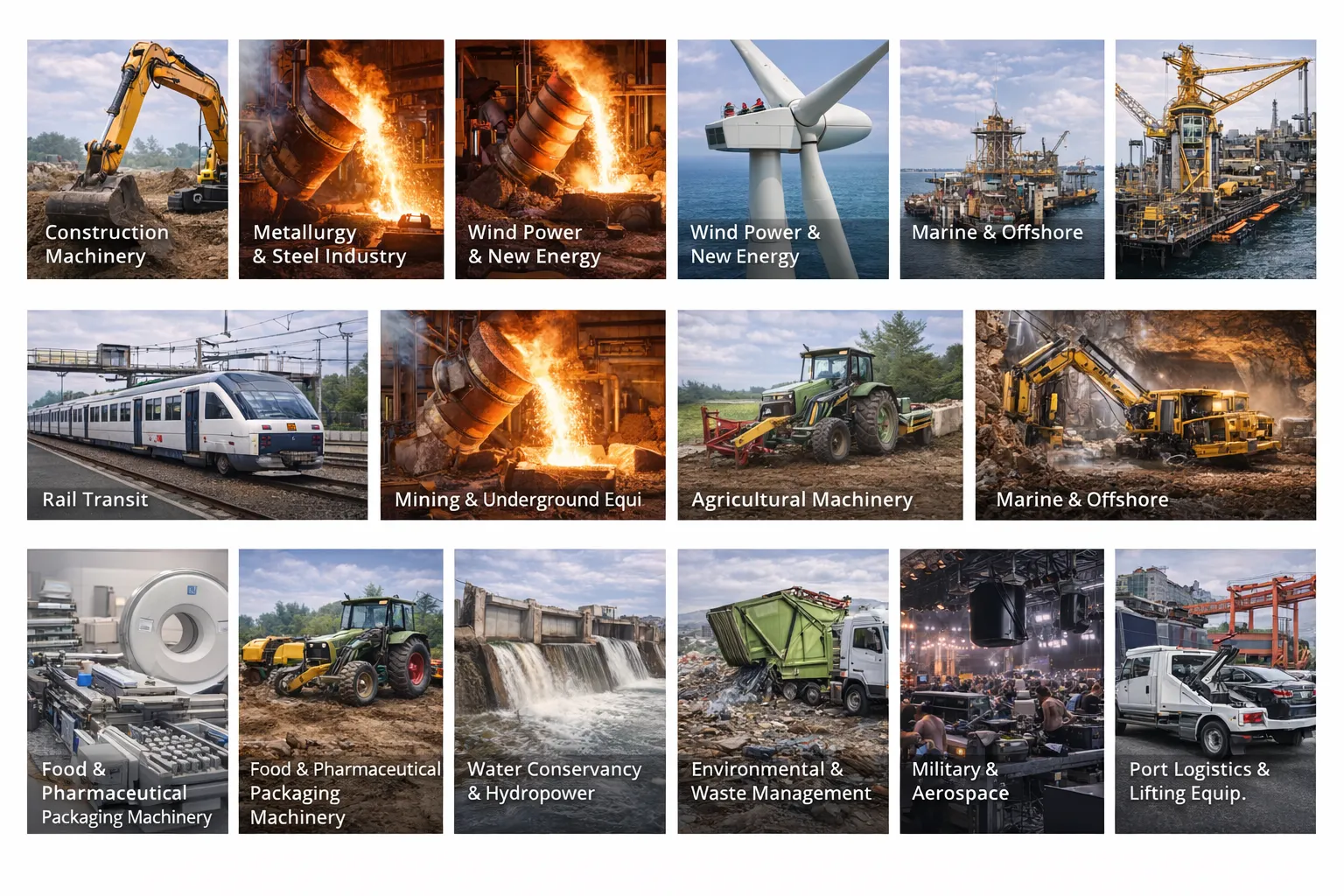
While this specific heavy-duty, drift-resistant servo piston technology was explicitly born from the extreme mechanical demands of hard rock reduction, the intrinsic reliability of our engineered actuators makes them highly sought after across a multitude of heavy industrial sectors requiring immense holding force, high-precision adjustment, and severe dust resistance.
- Mining Equipment: The absolute primary application environment. Crucial for dynamic adjustment, rapid tramp iron release, and hydraulic clearing systems on large-scale cone, jaw, and gyratory equipment operating in high-yield aggregate quarries and deep metallic ore mines.
- Construction Machinery: Highly integrated into mobile track-mounted aggregate plants, heavy excavator demolition shear attachments, and automated asphalt batching plant release gates where airborne dust and severe vibration are constant daily factors.
- Metallurgical and Heavy Manufacturing: Utilized extensively in steel mills for manipulating massive furnace slag doors, controlling heavy forging presses, and actuating ladle tilting mechanisms under extreme radiant heat exposure.
- Plastics and Rubber Machinery: Providing the highly precise, drift-free positional holding power required for the carriage movement and clamping mechanisms of ultra-large tonnage industrial injection molding machines.
- Material Handling and Logistics Automation: Actuating heavy-duty bulk material hopper clam-shell gates, robust industrial scissor lift tables, and massive ship loader boom positioning systems where unpredictable mechanical failure severely compromises facility safety.
- New Energy and Environmental Equipment: Ensuring robust, uninterrupted operation in municipal solid waste compactors, biomass processing facilities, and heavy scrap metal shredder adjustment plates where debris contamination rapidly ruins commercial cylinders.
Comparative Technical Analysis: Ordinary vs. High-Performance
Procurement managers frequently attempt to lower upfront capital expenditure by sourcing generic, off-the-shelf commercial cylinders for dynamic adjustment applications. This is a critical engineering error that invariably leads to massive hidden costs associated with production downtime, ruined equipment, and vast quantities of out-of-spec aggregate. The following comparative analysis explicitly highlights why our specialized engineering is the only viable long-term solution.
| Critical Feature | Ordinary General-Purpose Cylinder | Our High-Performance Fixed Cone Cylinder |
|---|---|---|
| Positional Holding (Drift) | Standard internal clearances allow fluid bypass under high shock load. Experiences constant setting drift, resulting in rejected oversized rock. | True servo piston cylinder architecture with zero-leakage PTFE seals. Unwaveringly holds the closed side setting under maximum crushing force. |
| Barrel Rigidity | Mild carbon steel easily expands under extreme internal hydraulic pressure spikes, causing the seals to lose contact and fail instantly. | High-tensile alloy steel welded construction prevents barrel ballooning entirely, structurally supporting the seals and ensuring zero fluid bypass. |
| Dust Exclusion Ability | Basic single-lip nitrile wiper. Rapidly compromised by abrasive silica dust, turning the internal hydraulic fluid into an abrasive grinding paste. | Multi-stage tandem sealing heavily guarded with metallic dirt scrapers. Absolutely impervious to airborne quarry dust, extending internal lifecycle massively. |
| Rod Surface Durability | Thin, cosmetic flash chrome plating. Chips, flakes, and pits easily when struck by flying aggregate, leading directly to rapid external leaks. | Deep induction hardened substrate overlaid with thick micro-cracked hard chrome. Acts as extreme external armor against physical impacts and moisture. |
| Return on Investment | Low initial purchase cost, but directly causes highly expensive plant downtime, massive rejection rates of oversized rock, and frequent parts replacement. | Highly attractive factory-direct hydraulic cylinder price providing a permanent, engineered solution to drift and maximizing overall plant profitability. |
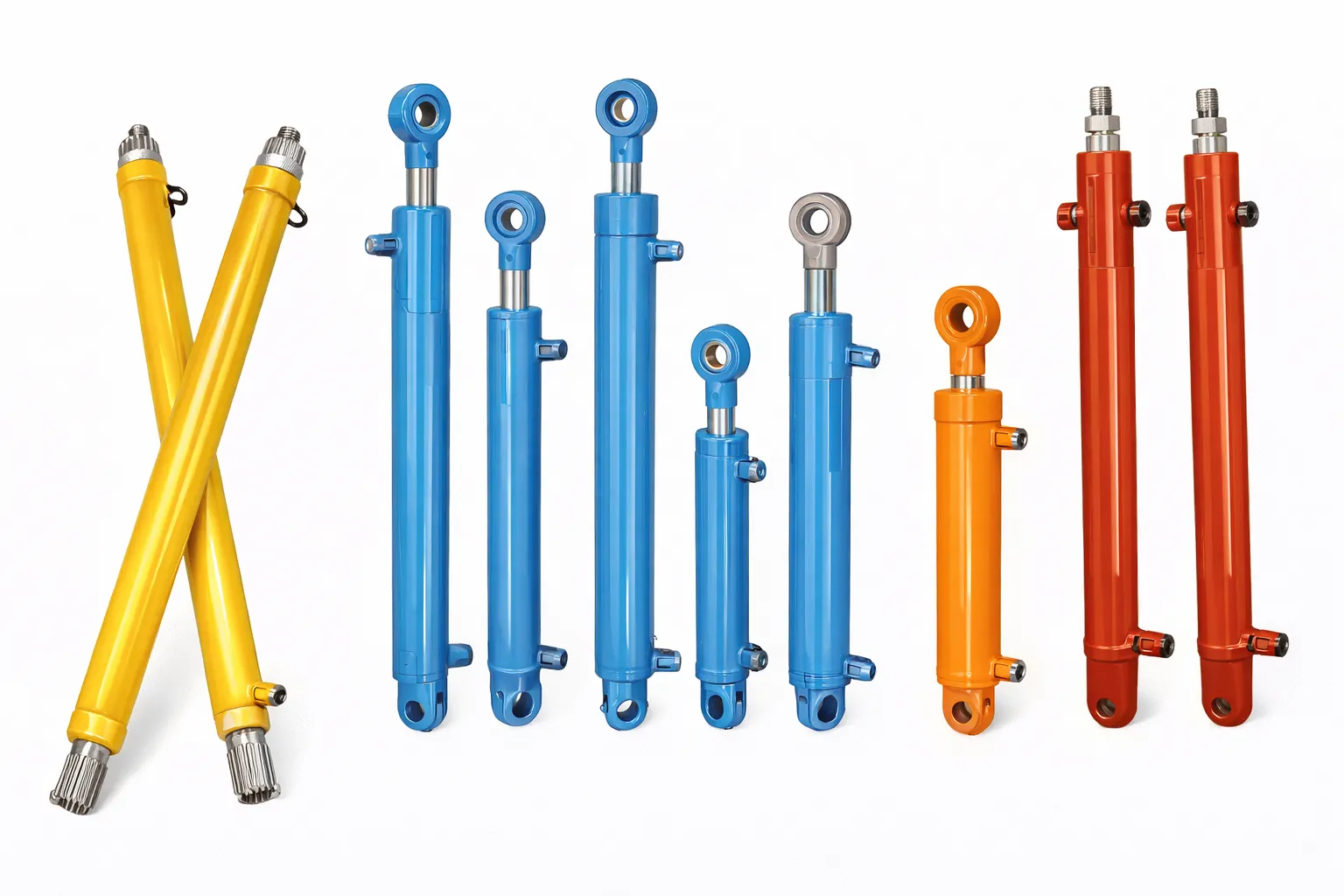
Global Success Stories: 5 Verifiable Real-World Implementations
True engineering expertise in the fluid power sector is validated exclusively by tangible, long-term, field-tested results in the most unforgiving industrial environments. We have successfully partnered with major aggregate producers and mining corporations across the Asia-Pacific region, resolving their most critical production bottlenecks. Below are five verified instances where our custom fluid power engineering drastically improved operational efficiency and plant profitability.
Case 1: Eradicating Setting Drift in a South Korean Aggregate Plant
Location and Date: Gangwon-do, South Korea | September 2024
Client and Application: A major Tier-1 highway construction material supplier operating a high-capacity secondary cone machine to produce precise roadbase aggregate.
The Challenge: The original equipment manufacturer (OEM) cylinders were suffering from severe internal fluid bypass due to barrel expansion under extreme shock loads. The mechanical setting was drifting constantly, resulting in an unacceptable 15% rejection rate of oversized aggregate by the local concrete batching plants, causing massive financial losses and logistical headaches.
Contact Method and Solution: The facility operations director discovered our specific technical parameters via an organic web search. We rapidly supplied a complete set of engineered fixed cone cylinder replacements manufactured from high-tensile alloy steel to entirely prevent barrel ballooning, integrating our strict zero-leakage servo piston seals.
The Result: The newly installed units firmly locked the closed side setting. The aggregate rejection rate dropped immediately to zero, and the plant realized a massive increase in highly consistent, sellable product without unplanned stops.
“The continuous drift issue was absolutely killing our profitability. These heavily engineered replacement units locked the setting perfectly on day one. The rock size is now incredibly consistent shift after shift. Outstanding technical manufacturing.” — Mr. Choi Min-su, Plant Operations Director.
Case 2: Overcoming Severe Dust Destruction in a Japanese Limestone Mine
Location and Date: Kyushu, Japan | January 2025
Client and Application: A large corporate limestone extraction facility continuously feeding a regional cement kiln network.
The Challenge: The exceptionally fine, airborne limestone powder was easily defeating the standard single-lip rod wipers of their existing commercial cylinders. The resulting internal abrasive slurry was physically destroying the primary pressure seals within two months of installation, demanding constant, expensive maintenance and causing severe fluid leaks across the plant.
Contact Method and Solution: The regional procurement team reached out directly through our website’s B2B contact portal for a durability audit. We engineered bespoke units featuring our extreme-duty tandem polyurethane sealing configuration, heavily reinforced by aggressive metallic dust scrapers and an induction hardened rod surface.
The Result: The highly customized fixed cone hydraulic cylinder completely excluded the abrasive limestone dust. The maintenance lifecycle of the heavy adjustment mechanism was extended from a mere two months to over fourteen months without requiring any internal parts swap.
“The dust exclusion technology is phenomenal. We drastically reduced our requirement for continuous hydraulic cylinder repair. The internal fluid remains clean, and the seals hold high pressure flawlessly.” — H. Takahashi, Maintenance Superintendent.
Case 3: Resolving Stick-Slip Jerking in a Taiwanese Cement Plant
Location and Date: Hualien, Taiwan | April 2025
Client and Application: A heavy industrial cement clinker production plant requiring highly precise, automated dynamic adjustments.
The Challenge: High internal mechanical friction in their standard replacement cylinders caused a severe stick-slip juddering phenomenon. When the highly automated system tried to adjust the heavy bowl by just a few millimeters, the cylinder would bind against the seals and then suddenly jump forcefully, causing massive inaccuracies in the gap setting and heavily shocking the main mechanical threads.
Contact Method and Solution: Our senior engineers met the facility manager at a regional heavy machinery expo. We subsequently supplied our advanced servo piston design featuring ultra-low friction PTFE energized seals running against heavily skived, mirror-finish internal steel barrels.
The Result: The dynamic adjustment action became instantly smooth and perfectly responsive to the micro-adjustments of the proportional valves, allowing for highly precise, millimeter-perfect setting control without any destructive mechanical jerking.
“The incredibly smooth operation of these new hydraulic parts is remarkable. The automated control system can now dial in the exact closed side setting instantly and accurately. It has completely smoothed out our entire plant process.” — Lin Wei-chen, Plant Automation Engineer.
Case 4: Enhancing Procurement Cost Efficiency for a Vietnamese Fleet
Location and Date: Quang Ninh, Vietnam | August 2025
Client and Application: A large-scale commercial mining contractor operating a massive fleet of mobile track-mounted crushing plants across various remote regional quarries.
The Challenge: Relying solely on the original European equipment manufacturer for replacement adjustment cylinders was devastating their operational fleet budget due to massive OEM corporate markups and unacceptably long international shipping delays, which kept highly valuable machines offline for weeks.
Contact Method and Solution: The fleet procurement director submitted a detailed RFQ via our online technical portal. Because we manufacture directly in-house, we bypassed all middle-tier fluid power distributors, offering a highly competitive factory-direct hydraulic cylinder price for exact dimensional drop-in replacements, delivered via expedited ocean freight in half the time.
The Result: The heavy contractor achieved a 40% reduction in procurement costs without sacrificing any structural durability or holding power, significantly boosting the overall profitability of their mobile crushing operations.
“We finally found an independent fluid power manufacturer that matches stringent OEM quality but understands realistic industrial pricing. Sourcing direct from the factory floor changed our entire fleet maintenance budget for the better.” — Tran Van T., Fleet Procurement Director.
Case 5: Surviving Extreme Debris in a Philippine Recycling Hub
Location and Date: Cebu, Philippines | November 2025
Client and Application: A highly aggressive construction and demolition waste recycling facility processing heavily contaminated concrete containing large quantities of rebar and steel tramp iron.
The Challenge: When uncrushable tramp metal accidentally entered the chamber, the resulting violent, unpredictable shock load would instantly bend the piston rods of their standard commercial cylinders, permanently destroying the units, blowing the seals, and jamming the main machine.
Contact Method and Solution: Referred to us by a trusted industry colleague, the facility requested the toughest units available on the market. We provided highly reinforced double acting hydraulic cylinder assemblies utilizing massively thickened, induction-hardened piston rods specifically engineered to heavily resist lateral bending under extreme shock events.
The Result: The newly engineered units reliably survived multiple violent tramp iron events without bending or failing. The plant can now safely and rapidly utilize the hydraulic clearing function to eject the metal and restart production immediately.
“Processing heavy demolition waste is brutal on equipment. These heavily reinforced units absorb the massive shock of rebar jams without bending the rods. They are by far the most resilient hydraulic rams we have ever installed on this site.” — Carlos M., Facility Manager.
Frequently Asked Questions (B2B Expert Technical Insights)
Sourcing highly specialized, heavily stressed industrial components requires absolute technical transparency and clear communication. Below, our senior engineering team provides comprehensive, detailed answers to the most rigorous technical and procurement questions frequently posed by global B2B plant managers and maintenance directors evaluating our hydraulic cylinder manufacturer capabilities.
1. How exactly does your servo piston architecture eliminate the problem of setting drift?
Setting drift occurs almost exclusively when high internal hydraulic pressure spikes force fluid to bypass the piston seal, allowing the mechanical rod to creep backward slowly. We permanently eliminate this by pairing zero-leakage, high-pressure resilient PTFE seals with a highly rigid alloy steel barrel that refuses to expand radially under load. Because the internal diameter remains perfectly constant even under massive shock, the seals maintain their tight, uncompromising pre-load against the steel wall. This locks the hydraulic fluid firmly in the chamber, providing rigid positional holding power against millions of pounds of upward crushing force. Furthermore, integration with a linear transducer ensures any micro-movement is instantly countered by proportional valve fluid injection.
2. What precise measurements are required to ensure a perfect drop-in replacement for our machine?
To guarantee a flawless mechanical integration without any on-site steel modifications or welding, please provide our engineers with the pin-to-pin retracted length, the total operational stroke length, the internal cylinder bore diameter, and the outer rod diameter. Furthermore, we need the exact dimensions of the mounting hardware, such as the trunnion widths, clevis pin hole diameters, and the hydraulic port thread specifications (e.g., SAE, NPT, or BSPP). If you are operating a recognizable global machinery brand, supplying the OEM machine model or exact part number allows our engineering team to instantly cross-reference our extensive manufacturing database to ensure a perfect fit.
3. Why is a double acting hydraulic cylinder unconditionally required for this specific adjustment application?
The heavy adjustment ring in a rock reduction machine must be forcibly driven in two distinct directions. It requires immense force to push and rotate the bowl downward against heavy mechanical thread friction and jammed rocks to tighten the setting (compensating for liner wear). Conversely, it requires equal, powered hydraulic force to rapidly reverse the rotation and lift the massive bowl to clear jammed aggregate or dangerous tramp iron from the chamber. A double-acting design provides this strictly necessary, heavily powered bidirectional control, ensuring the plant operator can safely alter aggregate output sizing on demand. Attempting to use a single acting hydraulic cylinder relies on gravity and is incredibly dangerous in this application.
4. How does your tandem sealing system specifically protect against high silica dust environments?
In a commercial quarry, airborne silica is highly aggressive and acts exactly like sandpaper. A standard single-lip elastomeric wiper will quickly fail, allowing the dust to migrate into the hydraulic fluid. We deploy an advanced, heavy-duty multi-stage tandem system to counteract this. The very first layer is an aggressive metallic dirt scraper that forcefully shears off heavy, caked-on stone mud and ice. Directly behind it sits an extreme-environment polyurethane double-lip wiper that actively blocks microscopic silica particulate. This complete physical barrier ensures the critical internal pressure seals remain operating in a pristine, uncontaminated fluid environment, drastically extending their operational lifecycle.
5. Do you supply proprietary seal kits to facilitate internal plant maintenance teams?
Absolutely. We engineer our industrial fluid power components with long-term field maintainability in mind. We highly encourage plant maintenance directors to keep critical wear parts immediately available in their site inventory. We supply the exact proprietary, ultra-low friction seal kits and heavy-duty bearing bands corresponding to every specific unit serial number we manufacture. This empowers your internal maintenance technicians to conduct rapid, scheduled fixing hydraulic cylinders protocols precisely when needed, completely avoiding the catastrophic facility downtime associated with waiting weeks for international parts shipping.
6. How does your factory-direct pricing structure benefit large fleet managers?
Our significant pricing advantage stems entirely from our vertically integrated manufacturing structure. Because we control the entire production process—from raw material CNC machining to automated robotic welding and final hydrostatic testing—we completely bypass the massive, inflated corporate markups applied by original equipment brand dealers and regional fluid power distributors. You receive a highly specialized, structurally superior component directly from the factory floor at a highly competitive hydraulic cylinder price, fundamentally lowering the long-term operational and capital expenditure costs of your entire machinery fleet.
7. What are the standard production and shipping lead times for the East Asian market?
For standard dimensional sizes compatible with prevalent regional equipment models, we frequently hold semi-finished components in local inventory, allowing us to rapidly finalize assembly, conduct 100% pressure testing, and dispatch the units within 7 to 10 working days. For entirely custom-engineered, bespoke machinery builds, our highly efficient automated lines typically finalize production in 20 to 25 days. Rapid sea freight logistics to critical regional hubs like Busan, Incheon, Yokohama, or Kaohsiung generally requires only an additional 5 to 10 days, ensuring your processing plant gets back online rapidly.
Eliminate Setting Drift and Maximize Aggregate Production Today
Continuing to operate with substandard adjustment mechanisms leads inevitably to out-of-spec rock, rejected material loads, and severely diminished plant profitability. Upgrade your heavy machinery immediately to our uncompromising, heavy-duty fluid power solutions. Whether your facility requires a standard exact-fit drop-in replacement or a fully customized, ultra-high pressure design, our senior technical engineering team is standing by to resolve your most critical operational challenges.
Request a Technical Engineering Quote
Editor: Cxm


























