Flat Board Lift Cylinder for Laser Land Leveler Edge
Achieve absolute millimeter-level topographic precision in smart farming operations. Eradicate internal fluid bypass and eliminate mechanical stick-slip with our engineered, ultra-low friction agricultural fluid power solutions.
Product Overview: The Core Engine of Agronomic Precision
Modern agricultural water management and high-yield farming absolutely depend on perfectly graded topsoil. In advanced broadacre farming and intensive rice cultivation—particularly across the sophisticated agricultural landscapes of South Korea, Japan, and Southeast Asia—laser land levelers are deployed to eliminate high spots and fill topographical depressions. A perfectly leveled field reduces water consumption by up to 30%, prevents expensive fertilizer runoff, and ensures highly uniform seed germination. The entire objective of this massive, heavy steel implement is to drag a scraping blade across the earth, constantly adjusting its cutting height based on signals from a rotating laser transmitter. The sole mechanical actuator responsible for translating these high-speed electronic signals into physical blade movement is the Flat Board Lift Cylinder.
Operating a fluid power component in this specific precision application presents an exceptionally demanding engineering paradox. The cylinder must possess the sheer structural brute force to continuously support the multi-ton weight of the leveling blade while it drags through highly compacted dirt. Simultaneously, it must operate like a delicate surgical instrument. As the heavy tractor traverses naturally uneven ground, the laser receiver sends rapid-fire micro-adjustments to the hydraulic proportional valve. The Flat Board Lift Hydraulic Cylinder must react instantly to these pulses—often moving the massive blade just a few millimeters at a time. Standard commercial actuators fail completely in this severe environment. They suffer immensely from “stick-slip” friction, causing the blade to jerk unpredictably, and they rapidly develop microscopic internal leaks under heavy draft loads. Even a single drop of fluid bypassing the piston means the blade drifts downward uncommanded, ruining the grade and forcing the operator to make costly, time-consuming second passes.
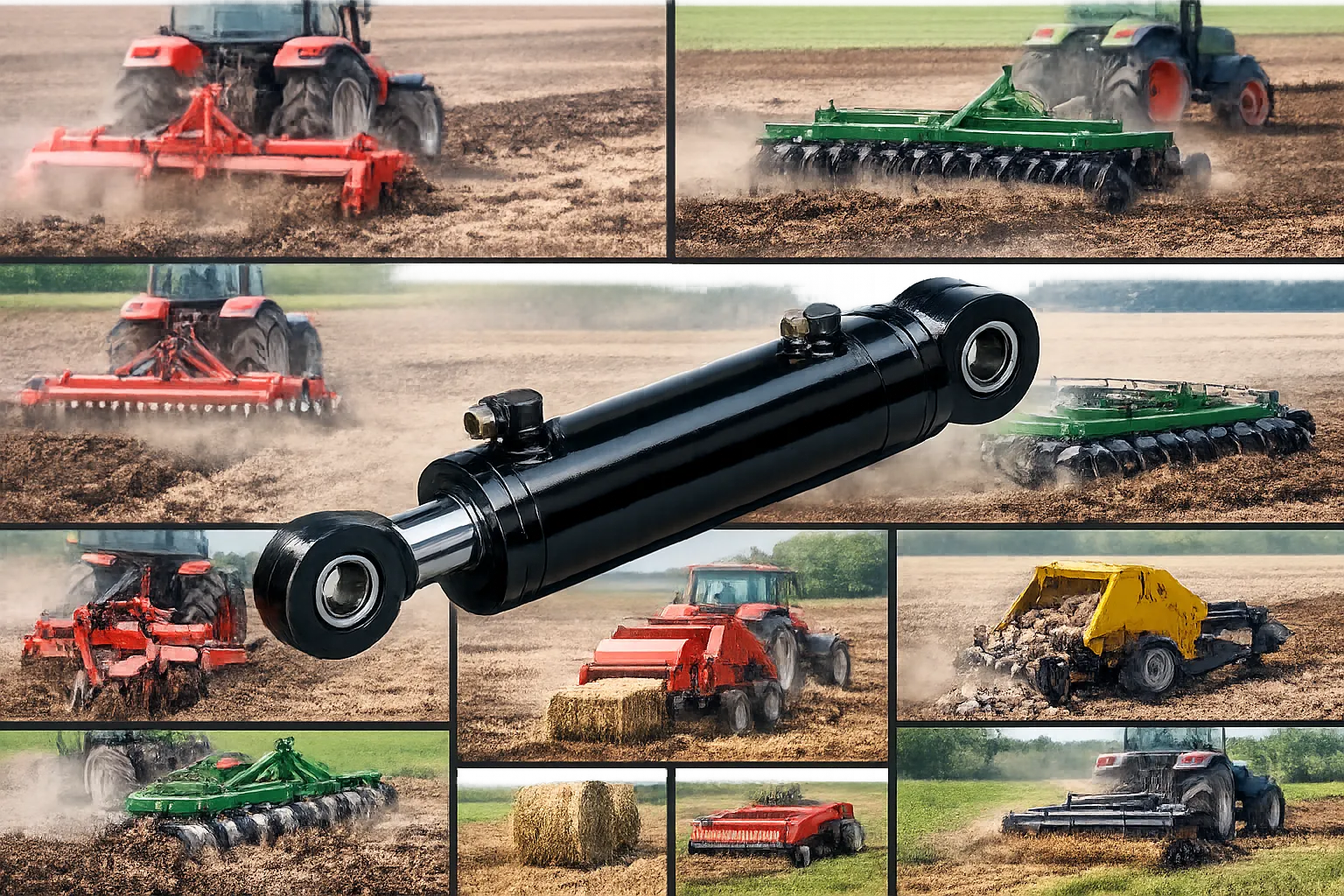
Operating globally as a highly specialized hydraulic cylinder manufacturer with decades of heavy industry expertise, our engineering division has completely reimagined the architecture of the leveling actuator. We specifically target the dual threats of heavy ambient silica dust and the absolute necessity for extreme finishing precision. Our customized leveling actuators are expertly built from high-yield 27SiMn alloy steel and feature a proprietary low-friction sealing matrix integrated with built-in position sensor reservations for next-generation smart farming autonomy. By proactively upgrading your agricultural fleet with true precision-grade hydraulic parts, you permanently eliminate the constant inaccuracies that lead to wasted fuel, diminished crop yields, and the maddening need for constant fixing hydraulic cylinders mid-season. When calculating long-term operational profitability, our optimized hydraulic cylinder price combined with flawless grade control delivers an unmatched return on investment for large-scale agricultural contractors.
Definitive Technical Parameters
Achieving sub-millimeter accuracy requires absolute transparency in mechanical specifications. The data matrix below details the highly specialized configuration of our laser leveler actuators. Because we manufacture completely in-house, we maintain the operational flexibility to adapt bore diameters, stroke lengths, and exact mounting geometries to perfectly match your specific OEM implement chassis and control systems.
| System Attribute | Engineering Specification Details |
|---|---|
| Primary Industry Sector | Agriculture / Precision Land Management |
| Equipment Category | Tillage Machinery (Laser Land Levelers, GPS Scrapers) |
| Subsystem Application | Laser Leveler Leveling Blade Edge Control |
| Official Product Designation | Flat Board Lift Cylinder |
| Kinematic Action Type | Double acting hydraulic cylinder |
| Internal Structural Format | Precision Piston Cylinder |
| Manufacturing Assembly Method | Fully Welded Rigid Construction (Submerged Arc) |
| Core Material System | 27SiMn (Silicon-Manganese Alloy Steel) |
| Rod Surface Metallurgy | High-Polish Hard Chrome Plating (Micro-Cracked) |
| Environmental Survival Rating | Severe Dust Exposure + Precision Finishing Operations |
| Primary Working Condition Focus | Accurately control the height difference of the flat board blade |
| Typical Industry Failure Mode | Internal Leakage Leading to Decreased Control Precision |
| Recommended Engineering Setup | Adopt Low-Friction Seals + Built-in Position Sensor Reservation |
Operational Dynamics: The Physics of Millimeter Control
Understanding the unique fluid dynamics of a laser leveler exposes exactly why standard agricultural cylinders fail so rapidly in this specific role. The process begins with a rapidly rotating laser beacon set up on the edge of the field, projecting a perfectly level, invisible plane of light. The tractor pulls the implement, which utilizes a sensitive receiver mast that constantly reads this laser plane. As the tractor’s tires inevitably sink into soft dirt or roll over hard clods, the receiver moves up or down relative to the fixed laser plane. The onboard computer calculates this elevation deviation in milliseconds and sends immediate electrical pulses to a highly responsive proportional hydraulic valve.
This valve snaps open and closed, sending rapid micro-bursts of pressurized fluid into the Flat Board Lift Hydraulic Cylinder. To raise the blade and shed excess dirt, fluid is forcefully routed into the cap end. The pressure acts on the full face of the hydraulic cylinder piston, smoothly pushing the rod outward and levering the heavy steel blade up. To lower the blade into a depression, fluid is channeled directly to the rod end, actively retracting the rod. In this high-speed, dynamic feedback loop, utilizing a single acting hydraulic cylinder is entirely impossible. A single-acting unit relies solely on gravity to drop the blade, which is far too slow and completely lacks the active downward cutting force required for modern laser systems to penetrate dry clay; active, pressurized pushing and pulling is mandatory to maintain the exact grade.
The critical engineering challenge is overcoming static friction. When the proportional valve sends a tiny burst of fluid meant to move the blade exactly 2 millimeters, the internal seals inside standard hydraulic rams often grip the steel rod too tightly. The fluid pressure builds up until the seal suddenly breaks loose, causing the rod to jump 10 millimeters instead of 2. This stick-slip action creates a wavy, corrugated pattern in the soil. Furthermore, if the piston seals wear down and allow high-pressure fluid to slowly bypass internally from the cap end to the rod end, the heavy blade will slowly sink while driving, totally destroying the level grade. Our custom hydraulic oil cylinder architecture is mathematically modeled and physically tested to completely eradicate both stick-slip friction and internal fluid bypass, ensuring perfect, flawless response.
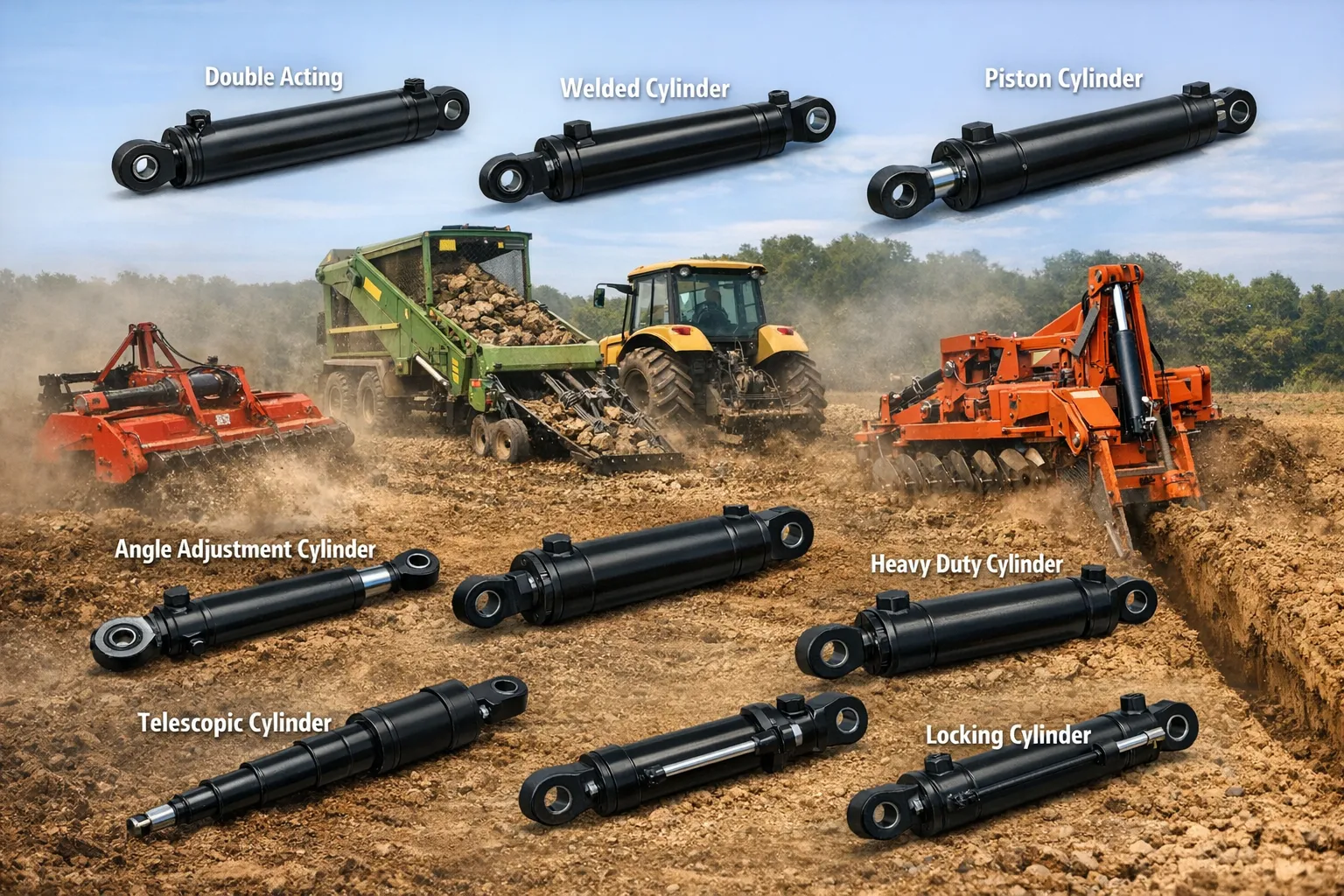
Flawless OEM Interoperability & Fleet Integration
Agricultural contractors cannot afford to rebuild their implement frames or reprogram their expensive laser control computers simply to accommodate an aftermarket replacement part that fails to fit. We have extensively mapped the dimensional requirements and fluid volume metrics of the global laser leveling machinery market. By strictly adhering to exact closed pin-to-pin lengths, identical operational strokes, and matched cylinder bore volumes, our units interface perfectly with your existing hydraulic pumps and proportional valves without altering the critically tuned reaction speed of the implement.
Our precision-engineered Flat Board Lift Cylinder serves as a direct, high-performance upgrade for leveling implements pulled by the industry’s most trusted tractor platforms. We regularly supply hydraulic components that seamlessly integrate with systems powered by Kubota, Yanmar, LS Mtron, TYM, Daedong (KIOTI), John Deere, and Case IH machinery. (Please Note: The explicit mention of these equipment brands is strictly for the purpose of demonstrating precise dimensional compatibility and assisting maintenance teams in proper parts selection; it does not imply official OEM sponsorship or trademark infringement.)
Core Engineering Advantages: The Architecture of Absolute Control
Delivering sub-centimeter leveling accuracy in a field shrouded in choking dust requires significantly more than standard metal fabrication. We have integrated highly specialized fluid control and metallurgical defenses into the very DNA of our precision actuators to ensure your field grade is flawless from the first pass to the last.
1. Ultra-Low Friction Sealing Matrix
To completely eliminate the “stick-slip” phenomenon that causes blade jumping, we abandon standard rubber piston seals entirely. Instead, we utilize advanced PTFE (Teflon) composite step seals paired with specialized bronze-filled wear rings. This engineered matrix generates an incredibly low coefficient of friction against the barrel wall, allowing the rod to respond to micro-pulses of fluid smoothly and instantly, ensuring perfect grading accuracy without any mechanical juddering.
2. Smart Farming Sensor Reservation
Modern agriculture is rapidly advancing toward full autonomy and robotic tractor integration. Our precision cylinders are engineered with integrated internal boring and specialized gland ports designed to cleanly accept linear position sensors (such as magnetostrictive transducers). This allows the tractor’s onboard computer to read the absolute exact extension of the cylinder in real-time, closing the electronic feedback loop and providing ultimate implement control.
3. 27SiMn High-Rigidity Barrel Construction
A leveling blade acts like a massive anchor dragging through the soil, exerting tremendous lateral pushing force onto the cylinder structure. Standard 1045 steel barrels can micro-flex or balloon under this load, altering the blade geometry and causing seal bypass. We utilize thick-walled 27SiMn alloy steel. The high yield strength and structural rigidity of this specific alloy ensure the barrel remains perfectly straight under heavy draft loads, preserving the exact geometry of the laser plane.
4. Severe Dust Isolation Technology
Laser leveling in dry seasons creates an absolute blackout of silica dust. If this abrasive dust enters the gland, it scores the rod and shreds the low-friction seals, leading immediately to internal fluid bypass. We protect our precision internals with an aggressive multi-lip polyurethane excluder seal. This robust system physically scrapes hardened dirt away upon retraction while maintaining an impenetrable labyrinth barrier against microscopic airborne particulates.
5. High-Frequency Fatigue Resistance
Because the proportional valve is constantly sending high-pressure micro-bursts of fluid to the hydraulic cylinder components, the welded end caps are subjected to continuous, high-frequency pressure pulsations that will quickly crack cheap surface welds. We utilize automated submerged arc welding to achieve 100% full penetration at all critical joints, creating a monolithic structure that is completely immune to high-cycle hydraulic fatigue and structural tearing.
6. Honed Micro-Finish Tubing
The performance of a low-friction PTFE seal relies entirely on the internal surface finish of the barrel. Standard commercial cylinders are roughly honed. We utilize advanced multi-stage internal skiving and roller burnishing to achieve a mirror-like Ra 0.2 micrometer surface finish inside our 27SiMn tubes. This extreme smoothness guarantees an absolute, zero-leak fluid seal while allowing the piston bands to glide with virtually zero resistance.
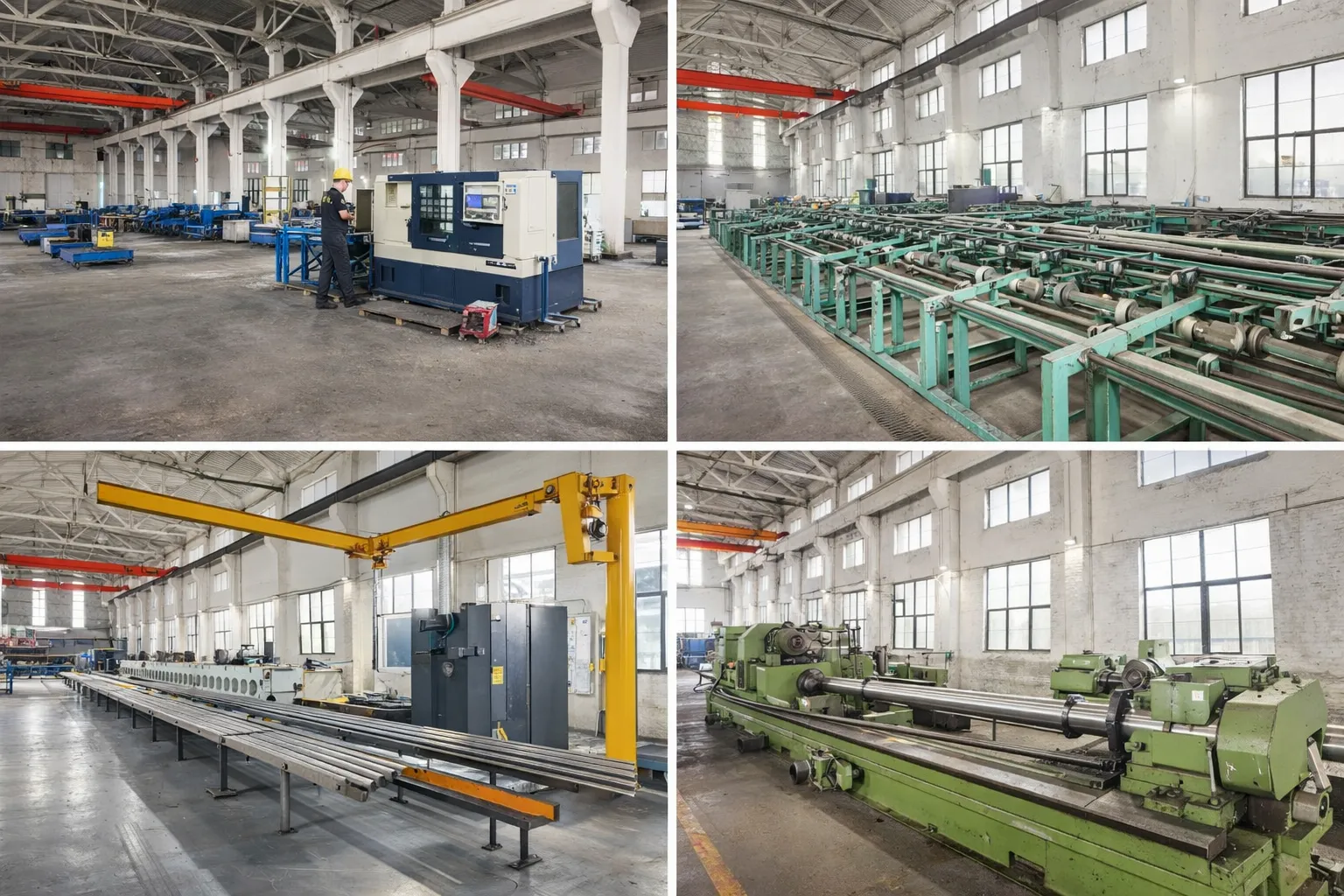
Autonomous Manufacturing and Absolute Traceability
Producing a component that requires both heavy industrial strength and surgical-level fluid precision cannot be outsourced to fragmented, low-cost assembly shops. We maintain total vertical integration over our entire production supply chain. From the initial CNC cutting of the raw 27SiMn billets to the clean-room assembly of our low-friction sealing matrices, every phase is rigorously controlled within our ISO-certified facilities to ensure uncompromising concentricity and absolute internal cleanliness.
Because internal fluid leakage is the primary, fatal failure mode for laser leveling equipment, our quality control protocols are famously aggressive. We strictly enforce a 100% factory hydrostatic testing policy. Before any Flat Board Lift Hydraulic Cylinder is boxed for global dispatch, it is securely mounted on a highly sensitive dynamic test rig. The unit is pressurized to 1.5 times its maximum rated operational limit and actively stroked under heavy loads.
We utilize high-resolution digital flow transducers to monitor the piston. We require absolutely zero detectable internal fluid bypass. Only units that survive this punishing evaluation receive a permanent, laser-etched serial code. This process provides total metallurgical and testing traceability, guaranteeing our B2B partners receive a premium component that eliminates unpredictable blade drift and effectively ends the constant requirement for hydraulic cylinder repair in the field.
Expansive Precision Applications
The unique combination of extreme structural rigidity, heavy dust exclusion, and low-friction, stick-slip-free movement makes this specific cylinder architecture highly desirable well beyond agricultural fields. Any industrial application that demands exact spatial positioning while operating in heavily contaminated environments benefits immediately from our engineered technology.
Equipment manufacturers frequently adapt our precision fluid power designs for the construction machinery industry, particularly for equipping GPS-guided motor graders and automated concrete laser screeds where millimeter-level flatwork is mandated by contract. Furthermore, the extreme reliability and smooth stroke control make these units highly effective within the heavy continuous processing of the metallurgical and iron industry. We also supply customized, high-accuracy actuators for massive tunneling and extraction rigs in the mining industry. When exact vertical or horizontal positioning is critical, our proven lift cylinder designs remain the industry benchmark.
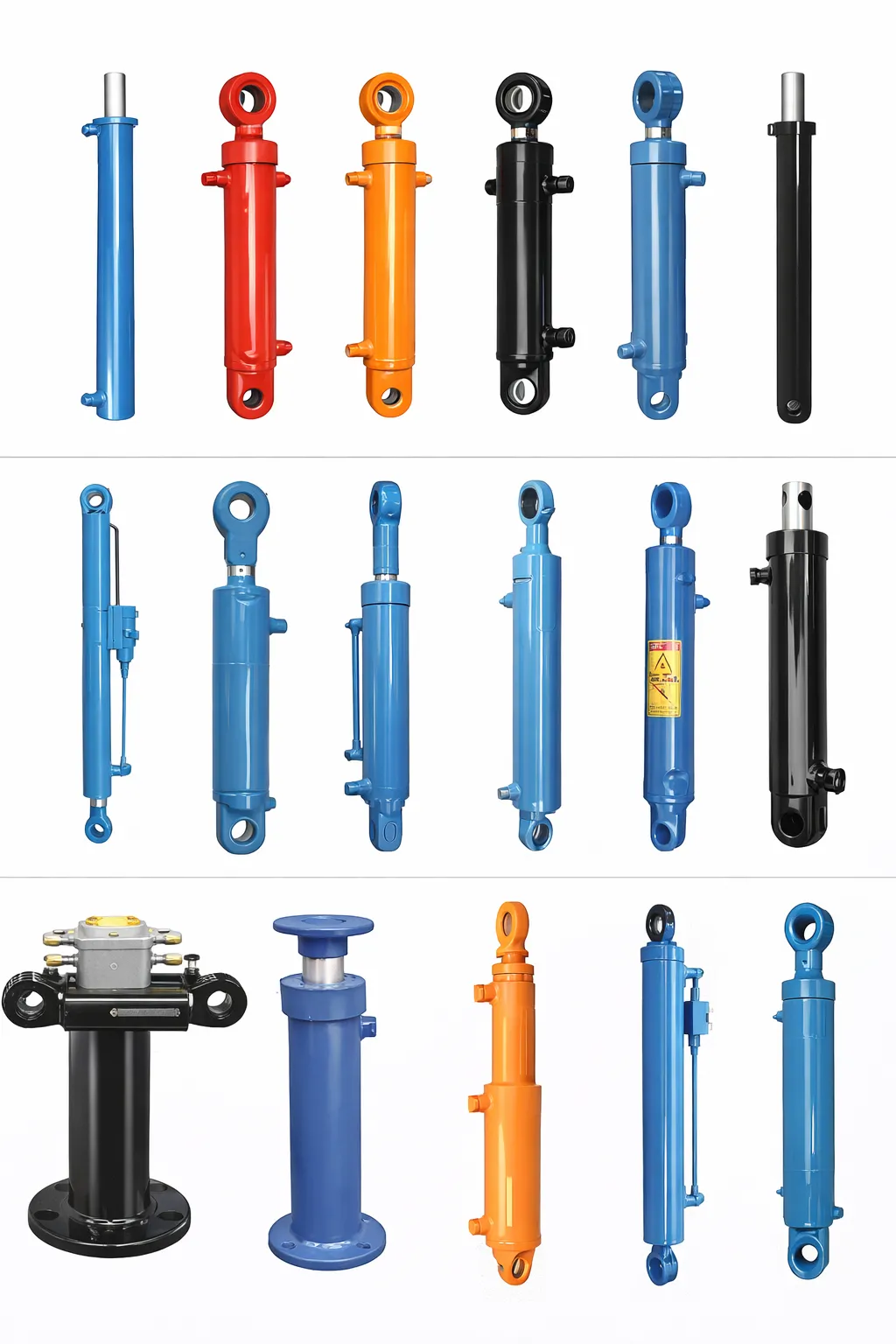
Comparative Analysis: Standard Commodity vs. Precision Engineered
In laser leveling, the true cost of a cheap cylinder is realized in the extra tractor fuel burned making corrective passes and the crop yield lost to uneven water distribution. This comparative table clearly outlines why investing upfront in our precision-engineered solutions is an absolute economic necessity for serious farming operations.
| Engineering Metric | Standard OEM Commodity Cylinder | Our Precision Engineered Cylinder |
|---|---|---|
| Friction & Control | Standard rubber seals create severe “stick-slip”. The blade jumps unevenly, ruining the laser grade. | PTFE low-friction bands allow seamless, micro-millimeter response to fast valve pulses. |
| Internal Leakage | Rough internal honing wears out seals quickly. High-pressure fluid bypasses, causing the blade to drift down. | Ra 0.2 mirror-finish barrels + precise piston tolerances guarantee absolute zero fluid bypass holding power. |
| Automation Readiness | No internal porting. Cannot interface directly with modern smart-farming position sensors. | Built-in internal port reservations ready to accept linear magnetostrictive position sensors seamlessly. |
| Structural Rigidity | Standard 1045 steel slightly flexes under heavy soil draft loads, shifting the blade geometry off the laser plane. | Thick-walled 27SiMn alloy provides immense yield strength, maintaining perfect geometric rigidity under load. |
| Economic Reality | Forces operators to make multiple passes to achieve a level field, burning massive amounts of diesel fuel. | Achieves perfect grade on the first or second pass, saving hours of labor and thousands in fuel costs. |
Proven Field Dominance: Real Case Studies
Engineering theories are solely validated by actual performance in the dirt. We have partnered with extensive agricultural cooperatives, heavy earthmoving fleets, and major machinery distributors across East Asia to permanently resolve their precision grading failures. Here are documented examples of our solutions actively performing in the field.
Case 1: Eradicating Blade Drift for a South Korean Rice Cooperative
Client Profile: A large-scale rice farming cooperative operating heavily in Chungcheongnam-do, South Korea.
Application & Challenge: Preparing extensive flooded paddies. Strict water management requires the field to be perfectly level within +/- 1.5 cm. Standard OEM cylinders developed severe internal leakage within a month. As the tractor drove, the blade would slowly drift downward under its own weight, completely ruining the laser grade and causing massive water pooling and uneven crop growth.
Connection & Solution: The cooperative’s lead agronomist contacted us after finding our technical breakdown on fluid bypass online. We produced a batch of our engineered cylinders with mirror-finish honing and premium internal step seals to guarantee absolute holding power.
The Result: After outfitting their entire fleet for the 2024 planting season, they reported zero blade drift incidents. Fields were leveled flawlessly in half the usual passes.
“The precision is phenomenal. When the laser locks the valve, that blade does not drop a single millimeter, no matter how hard the soil is pushing against it. We saved an estimated 15% on our water pumping costs simply because the fields are actually flat now.” — Mr. Lee, Head of Operations (July 2024)
Case 2: Defeating Stick-Slip in Japanese Smart Farming
Client Profile: A specialized agricultural earthmoving contractor based in Hokkaido, Japan.
Application & Challenge: Preparing the highly exact foundation grades required for massive commercial greenhouse installations. The problem was mechanical “stick-slip”. When the laser system sent micro-adjustments, the standard rubber cylinder seals gripped the rod too tightly. The blade would stick, then suddenly jump half an inch, leaving a corrugated, wavy pattern in the dirt that failed inspection.
The Solution & Results: We rapidly supplied our Flat Board Lift Cylinder equipped with our proprietary PTFE low-friction wear bands. The rods instantly responded to the smallest valve pulses with silky, continuous movement. The sensor reservations also allowed them to plug directly into their autonomous tractor ECUs.
“The difference in control is night and day. The blade glides exactly where the laser tells it to, without any of the jarring stutters we had before. We are passing our grade inspections on the very first try.” — T. Yamada, Contractor Fleet Owner (October 2023)
Case 3: Unmatched Reliability for Vietnamese Equipment Distributors
Client Profile: A primary regional distributor of high-end agricultural machinery and aftermarket parts in the Mekong Delta, Vietnam.
The Challenge: Local farmers were adopting laser technology, but the locally sourced replacement actuators were failing rapidly due to extreme dust ingress and poor internal honing, forcing them into a maddening cycle of constant fixing hydraulic cylinders.
The Solution & Results: We provided bulk, OEM-matched units featuring our aggressive heavy dust multi-lip wipers and fully welded end caps. By dealing directly with us as the primary factory, the distributor secured an incredibly competitive hydraulic cylinder price while delivering a product that completely outperformed standard local parts. They effectively cornered the regional aftermarket.
“The build quality is exceptional, particularly the dust seals. We are supplying these to contractors working in the driest, dustiest conditions imaginable, and we have not had a single unit returned for internal leakage.” — Tran H., Purchasing Director (February 2025)
Frequently Asked Questions
We maintain total engineering transparency with our commercial partners. Below are detailed answers to the most common technical inquiries raised by fleet managers and procurement directors regarding our precision grading solutions.
1. Why is internal fluid leakage the most critical failure mode for a laser leveler?
2. What exactly is “stick-slip” friction, and how do your cylinders solve it?
3. Can these custom units interface directly with my existing tractor’s GPS or laser valve block?
4. Why do you use 27SiMn alloy steel instead of standard 1045 tubing?
5. Are your actuators equipped to handle smart-farming linear position sensors?
6. Is it more cost-effective to continue hydraulic cylinder repair or replace the unit?
7. Do you supply replacement parts like low-friction seal kits for future maintenance?
8. What are the expected logistics and delivery lead times for bulk shipments to Asia?
Ready to Command Absolute Grading Precision?
Stop allowing structurally inferior, mass-produced commodity parts to dictate the speed of your agricultural operations and compromise your agronomic yields. Whether you require a single specialized prototype for a rigorous field test or a massive bulk shipment of reliable, zero-drift actuators for your distribution network, our engineering team is fully prepared to execute. Partner with a dedicated fluid power expert that genuinely understands the brutal reality of precision farming.
Editor: Cxm